
Tags
Bruno Kocher, Charity, Conspicuous Consumption, Conspicuous Virtue, Corporate Social Responsibility, Daniel Effron, Fair Trade, Freakonomics, Henrik Hagtveft, Humblebrags, John List, Joseph Rago, Keith Wilcox, License Effects, Moral License, Niceness, Prius Effect, Thales, The Declination, Theory of the Leisure Class, Thorstein Veblen
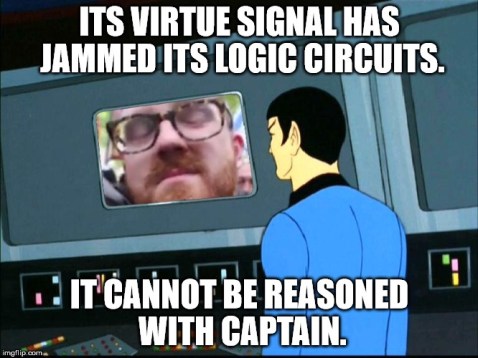
Altruism is an admirable quality, but advertising one’s altruism too much is rather unseemly. Social media has a way of coaxing humblebrags out of people, as well as not-so-humble brags: Everyone wants everyone to know that they care. That they give. That they support defenseless animals… and value diversity… and tread lightly upon the earth… and live “sustainably”… and despise polluters… and condemn racists… and want to shut down puppy mills…. and sneer upon bourgeois, consumerist values. They pay it forward!! And they want you to know!
These expressions of goodness come in many forms, and they are so common on social media that a bit of training permits a fairly rapid scroll rate through the news feed. People just can’t help but lay it on. Companies do too. So do politicians. Everyone wants everyone else to know how nice they are. It’s known as conspicuous virtue, or virtue signaling.
For now, let’s confine the discussion to relatively uncontroversial ideas or causes. If you are truly generous and perform good works on behalf of those less fortunate, that is all to the good. Racism is abhorrent. Sympathy for victims of crime, disease and natural disaster is a fine thing, including the puppies. Then what’s the harm in a little conspicuous virtue? Is it simply that it’s gauche?
Experimental economic research has discovered some nasty “license effects” associated not only with brags, but even good works with which one may be associated, such as an employer’s corporate social responsibility (CSR) efforts. That means, for example, that by announcing your goodness, you give yourself license to do bad. This interesting transcript of a Freakonomics Radio podcast includes an interview with University of Chicago economist John List and comments from social psychologist Daniel Effron of the London Business School. Both discuss research findings that should temper our enthusiasm for purposeful shows of virtue, as innocuous as those displays might seem.
First, however, List found a “supply side” benefit for employers when informing potential job seekers about the firm’s good works. He actually obtained a contract to perform a task, set up a company to do it, and then he recruited applicants. One group was told about the firm’s good works and a control group was not. The former group was significantly more productive on the job. So far, so good! However, in a separate experiment involving a more tedious task, some of the “CSR workers” had a tendency to cheat, perhaps subconsciously, in ways that made the job easier and faster, offsetting their own productivity advantage. These workers apparently felt that they had moral license to cheat, one conferred by the knowledge that the company was performing good works. Daniel Effron says:
“… people have surprisingly low standards for what counts as a moral license. It’s not just actively doing things that feel like good deeds. People feel like they have license when they reflect on the bad things they could have done, but didn’t.“
Effron describes an experiment demonstrating that consumers who declare a preference for green products have a greater likelihood of lying, cheating and stealing in a later task. Separately, those subjects who expressed support for Barrack Obama in 2008 felt more at liberty to express a seemingly prejudiced view on the hiring of a white or a black police officer. In another case, List notes that charitable deductions are associated with cheating on taxes in other ways.
It’s possible that all efforts to signal positive qualities to the world are associated with some offsetting, negative behavior. This possibility is illustrated by the research findings of Keith Wilcox, Henrik Hagtvedt, and Bruno Kocher in “The Less Conspicuous Road to Virtue: The Influence of Luxury Consumption on Socially Valued Behavior“. They find that while luxury consumption of goods is associated with greater work effort and acts of charity, conspicuous luxury consumption is associated with less effort and charity. This is a slightly different mechanism, as the signaling seems to be a show of one’s economic worth as opposed to a show of altruism or goodness. Nevertheless, the intent to signal reflects an other-directedness, not always a positive quality, and it also seems bound up with some negative social propensities.
Conspicuous consumption is a phenomenon described in 1899 by Thorstein Veblen in The Theory of the Leisure Class. Today, conspicuous virtue seems to inform a certain kind of conspicuous consumption. Joseph Rago notes the following:
“Conspicuous consumption stays with us today. But increasingly, it seems to me, many consumers are not seeking an outright demonstration of wealth. Instead, they consume to demonstrate their innate goodness. They spend not to suggest the deepness of their pockets but the deepness of their hearts. We inhabit, to update Veblen, an age of conspicuous virtue.
… Conspicuous virtue offers to those with guilty consciences a way to feel OK about consumerism. A fine scotch is vulgar. A “fair trade” scotch is righteous.”
A post on the Freakonomics blog in 2011 acknowledged a so-called “Prius” effect: people pay thousands of dollars above the economic value to the owner and the conservation value of the vehicle in order to signal to others their environmental commitment. Clearly, some consumers were willing to pay dearly for this conspicuous virtue.
Efforts to signal one’s virtue involve a desire to come off as “nice”. A recent post on the Declination blog discusses a so-called “niceness effect” under which observers seem to prefer facially “nice” points of view over the application of logic and dispassionate analysis. This brings us back into the more controversial forms of virtue signaling. A simple example: an expressed, “nice” preference for more generous public aid over proposals that improve work incentives. Unfortunately, the “niceness effect” leads to preferences for any number of irrational policies, as the author “Thales” at Declination so ably discusses. People are cowed by the appearance of “niceness” and want to look “nice” to their peers, damn the unintended consequences.
Negative license effects have been shown to exist as a dark underbelly associated with: the knowledge that one’s employer performs acts of social responsibility; not doing a bad thing that one could have done; stating a preference for goods presumed to be environmentally-sound; declaring support for electing the first African American candidate as president; claiming charitable tax deductions; and conspicuous luxury consumption. Still, granting oneself “moral license” almost surely does not offset the social benefits of real charitable acts. That’s pure conjecture on my part, of course, and it might not always be true. And I’m not so sure that acts of professing good works, intentions, and “niceness” do anything more than reassure self-nominated apostles of their goodness, while granting them license to please themselves in ways that might be regarded as sociopathic.
We live in an age of rampant narcissism, and social media can serve to magnify those tendencies. So please, promote your causes, but speak softly about your own contributions and good intentions, and try to resist the temptation to take moral license. Now where did I put the scotch?
 Sacred Cow Chips