• About

Sacred Cow Chips

Sacred Cow Chips

Tag Archives: Neonics

Honeybees Are and Have Been Thriving

09 Thursday Jun 2022

Posted by Nuetzel in Agriculture

≈ Leave a comment

Tags

Beepocalypse, Bill Wirtz, Colony Collapse Disorder, Consumer Choice Center, Dose Dependence, Honey Prices, Honeybees, Insecticides, Neonicitinoids, Neonics, Parasitic Mites, Randy Oliver, Saccharine Scare, ScientificBeekeeping.com, Seed Dust, Seed Treatment, Sublethal Effects
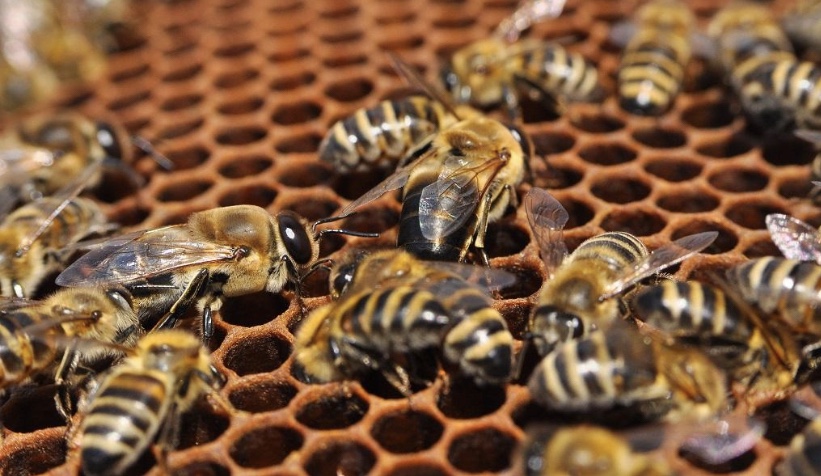
It’s been a while since I’ve heard much about the “beepocalypse”, but apparently many remain under the misapprehension that honeybee populations have languished under the threat of modern farming techniques. Some recent fake news on that subject appears at this link. There are two related contentions here, and both are false. One is that honeybee populations are dwindling. The other is the claim that productivity-enhancing insecticides used in modern agriculture are killing bees.

Bill Wirtz of the Brussels-based Consumer Choice Center notes the following:

“… looking at the statistics of the Food and Agriculture Organization of the United Nations, beehives are on the rise worldwide. The data show that as of 2020, there has been an increase of beehives by 17% since 2010, 35% since 2000, and 90% since 1961.”

He also points out that efforts to prove the wild bee population in the U.S. declined over the five years ending in 2013 were based on a model laden with assumptions, as opposed to actual statistics. In any case, even if it had been true, a five-year period is hardly proof of a secular decline. Both wild and managed bee populations go through cycles based on natural conditions, and in the case of managed bees, conditions in the market for honey. In fact, high honey prices could favor growth ahead in managed bee populations, though cost factors make that less certain.

As for the insecticides widely blamed for the beepocalypse, there is no real world, field-level evidence of any link to declining bee populations. In a separate article, Wirtz cites reports from the U.S. EPA and agencies in Canada and Australia finding that the widely-blamed neonicotinoids could not be linked to harms to bee colonies. This study found that “neonics” had no lethal or “sublethal” effects on honeybees at field-level dosages, despite reports of such effects in the lab. The lab work cited sort of reminds me of the outrageous tests that led to the saccharine scare of the 1970s, when the saccharine-equivalent of 800 sugar-free soft drinks a day was fed to lab rats. Dose dependence means everything under actual field conditions.

Randy Oliver of ScientificBeekeeping.com has written several thorough analyses of the impact of neonics on bees over the years. In 2012, he posted an important article entitled “The Extinction of the Honeybee?”, in which he reported that “… honeybees were thriving at Ground Zero of neonicitinoid use”. Neonics have definite advantages relative to older pesticides: they are much safer for humans, they are more effective at targeting insects that bore and suck sap, and they can be used as seed treatments with less leaching into the surrounding environment relative to sprays.

Oliver followed that up his first piece with two companion articles in which he documented issues related to regulation, testing regimes, the field applicability of tests, problems in methodology, and interpretation of results. He identified seed planting dust as a serious problem for bees, but one that is easily managed. In the second post, Oliver evaluated a number of characteristics of bee and colony health, including learning performance, orientation, foraging, immune function, social interaction, task allocation, and effects upon brood. He summarized his review thusly (his emphasis):

“Any number of scientists have diligently tried to find any sorts of sublethal effects of neonics on bees, but have failed to demonstrate adverse effects at the colony level at doses produced by seed.”

At the last link, Oliver discusses specific issues with respect to different crops, as well as other potential harms of neonics. However, seed treatments have never been implicated by researchers in bee colony collapse.

Finally, from a more recent presentation, Oliver reviews the history of bee population numbers and factors that drove them. That included infestation by two different parasitic mites in the 1980s and another pathogen in the early 2000s. These invasive waves led to use of the term Colony Collapse Disorder. While neonics had nothing to do with it, there were claims that it did. Oliver is not shy about noting other problems he identifies with the use of neonics, and he is strongly in favor of pest management approaches that rely less on pesticides. This is partly because farmers recognize the consumer resistance to pesticides, rational or otherwise. When neonics are applied properly, however, bee colony collapse is not one of those problems.

Honey prices were up strongly in 2021 (see here) and have remained strong in 2022 (here). That would bode well for the managed bee population. However, costs have increased sharply as well, blunting beekeeper incentives. Suppliers of beekeeping equipment are also facing higher costs. Given these pressures, it’s not clear whether the managed bee population will expand this year, but there is no threat to the long-term health of the bees in the proper use of neonics.

Beepocamyth: Neonics Don’t Kill the Buzz

08 Saturday Feb 2020

Posted by Nuetzel in Agriculture, Biodiversity, Environment, Risk

≈ 1 Comment

Tags

Beepocalypse, Colony Collapse Disorder, Fish & Wildlife Service, Genetic Literacy Project, Glyphosate, Jon Entine, Junk Science, Kayleen Schreiber, National Wildlife Refuges, Neonicotiniods, Neonics, Nydia Velázquez, Paul Driessen, Pesticides, Sierra Club

False claims that a certain class of pesticides threaten the world’s bee populations are commonplace, and we hear the same more recently about various species of birds. The origins of the “beepocalypse” rumor were not based on scientific evidence, but on a narrative that developed among environmental activists in response to a phenomenon called Colony Collapse Disorder (CCD) that began around 2006, roughly a decade after neonicotinoid pesticides (so-called neonics) replaced earlier, more toxic compounds as the pesticides of choice. But Jon Entine writes at The Genetic Literacy Project:

“What causes CCD? It still remains a mystery, in part. But researchers turned up historical examples of CCD-like bee die offs across the globe over hundreds of years, well before the introduction of pesticides, but activist groups would have none of it.”

CCD essentially tapered off by 2009, according to Entine, and the number of honeybee colonies are higher now that before the introduction of neonics. See Entine’s charts at the link showing changes in honeybee populations over time. In Australia, where the use of neonics has been especially heavy, bee populations have grown steadily and remain quite healthy.

Entine’s article provides a nice summary of the real and imagined threats to the world’s bee populations as well as distorted claims associated with normal winter die-offs. He provides a number of useful links on these subjects, and he summarizes research showing the lack of any real threat to bees from neonics:

“Over the past seven years, there have been a flood of studies about the potential impact of neonics on bees. Many small-scale, forced-feeding studies that generally overdosed bees with neonics found various negative effects; not a surprise, many entomologists have said, as they do not replicate real world impacts.

In contrast, a multitude of large-population field studies—the ‘gold-standard’ of bee research—have consistently demonstrated there are no serious adverse effects of neonic insecticides on honeybees at the colony level from field-realistic neonic exposure. …

By last year, even the Sierra Club—for years one of the leading proponents of the honeybee Armageddon narrative—was backpeddling, writing: ‘Honeybees are at no risk of dying off. While diseases, parasites and other threats are certainly real problems for beekeepers, the total number of managed honeybees worldwide has risen 45% over the last half century.'”

Then Entine turns his attention to another front in the war on pesticides: a Canadian study in which white-crowned sparrows were force-fed a mixture of seeds and pesticide via gavage — ie, through a tube:

“Only sparrows force-fed the highest dosage were affected, and then only temporarily. They stopped eating, quickly lost body weight and fat, became disoriented and paused their migratory flight—all after tube full of chemicals was forced down their throat and into their stomach. … That said, within a few days of what was likely a trauma-inducing experience, all recovered completely and continued their migration normally.”

Yet the authors reported that the very existence of some wild birds is threatened by neonics, and the media, always eager to report a crisis, ran with it.

Paul Driessen also describes the junk science underlying misleading narratives regarding pesticide use. It is a driving force behind legislation in the House and Senate that would ban the use of neonics in National Wildlife Refuges, where the Fish & Wildlife Service permits farmers to grow various crops. Driessen has some advice for Rep. Nydia Velázquez (D-NY), a sponsor of the legislation:

“She should also recognize potentially serious threats to bees, wildlife, soils, waters and plants in refuges from sources that she, her colleagues and their environmentalist and media allies routinely ignore: solar panels, for instance. Not only do they blanket many thousands of acres, allowing little to grow beneath or between them. They can also leach cadmium and other metals into soils and waters. They should no longer be built near wildlife refuges.

Finally, it’s not just bees. It’s also birds, and bats – which are already being killed and even eradicated in many areas by America’s 56,000 wind turbines. Imagine what Green New Deal turbine numbers would do.”

More perspective is offered in this excellent six-part (and growing?) “Pesticides and Food” series (all at the link) by Kayleen Schreiber:

  1. Has pesticide use decreased? Yes, dramatically in per capita and per unit of output.
  2. Have pesticides improved?  Yes, with dramatically lower toxicity, improved biodegradability, and lower use rates.
  3. How dangerous is glyphosate (a herbicide)? Not very. Covered in my last post. Glyphosate is only 1/10th as toxic as caffeine.
  4. How do organic pesticides compare to synthetic pesticides? It’s a mixed bag, with great variability across both classes. Organics are more toxic in some applications, and synthetics are more toxic in others.
  5. Soil health: Are synthetic pesticides more sustainable than “natural” organics?  Organics require more tillage, which creates sustainability problems.
  6. Pesticide residues — Something to worry about? The USDA finds little residue in its testing, with extremely low detection rates for both organics and synthetics.


Follow Sacred Cow Chips on WordPress.com

Recent Posts

  • The Case Against Interest On Reserves
  • Immigration and Merit As Fiscal Propositions
  • Tariff “Dividend” From An Indigent State
  • Almost Looks Like the Fed Has a 3% Inflation Target
  • Government Malpractice Breeds Health Care Havoc

Archives

  • January 2026
  • December 2025
  • November 2025
  • October 2025
  • September 2025
  • August 2025
  • July 2025
  • June 2025
  • May 2025
  • April 2025
  • March 2025
  • February 2025
  • January 2025
  • December 2024
  • November 2024
  • October 2024
  • September 2024
  • August 2024
  • July 2024
  • June 2024
  • May 2024
  • April 2024
  • March 2024
  • February 2024
  • January 2024
  • December 2023
  • November 2023
  • August 2023
  • July 2023
  • June 2023
  • May 2023
  • April 2023
  • March 2023
  • February 2023
  • January 2023
  • December 2022
  • November 2022
  • October 2022
  • September 2022
  • August 2022
  • July 2022
  • June 2022
  • May 2022
  • April 2022
  • March 2022
  • February 2022
  • January 2022
  • December 2021
  • November 2021
  • October 2021
  • September 2021
  • August 2021
  • July 2021
  • June 2021
  • May 2021
  • April 2021
  • March 2021
  • February 2021
  • January 2021
  • December 2020
  • November 2020
  • October 2020
  • September 2020
  • August 2020
  • July 2020
  • June 2020
  • May 2020
  • April 2020
  • March 2020
  • February 2020
  • January 2020
  • December 2019
  • November 2019
  • October 2019
  • September 2019
  • August 2019
  • July 2019
  • June 2019
  • May 2019
  • April 2019
  • March 2019
  • February 2019
  • January 2019
  • December 2018
  • November 2018
  • October 2018
  • September 2018
  • August 2018
  • July 2018
  • June 2018
  • May 2018
  • April 2018
  • March 2018
  • February 2018
  • January 2018
  • December 2017
  • November 2017
  • October 2017
  • September 2017
  • August 2017
  • July 2017
  • June 2017
  • May 2017
  • April 2017
  • March 2017
  • February 2017
  • January 2017
  • December 2016
  • November 2016
  • October 2016
  • September 2016
  • August 2016
  • July 2016
  • June 2016
  • May 2016
  • April 2016
  • March 2016
  • February 2016
  • January 2016
  • December 2015
  • November 2015
  • October 2015
  • September 2015
  • August 2015
  • July 2015
  • June 2015
  • May 2015
  • April 2015
  • March 2015
  • February 2015
  • January 2015
  • December 2014
  • November 2014
  • October 2014
  • September 2014
  • August 2014
  • July 2014
  • June 2014
  • May 2014
  • April 2014
  • March 2014

Blogs I Follow

  • Passive Income Kickstart
  • OnlyFinance.net
  • TLC Cholesterol
  • Nintil
  • kendunning.net
  • DCWhispers.com
  • Hoong-Wai in the UK
  • Marginal REVOLUTION
  • Stlouis
  • Watts Up With That?
  • Aussie Nationalist Blog
  • American Elephants
  • The View from Alexandria
  • The Gymnasium
  • A Force for Good
  • Notes On Liberty
  • troymo
  • SUNDAY BLOG Stephanie Sievers
  • Miss Lou Acquiring Lore
  • Your Well Wisher Program
  • Objectivism In Depth
  • RobotEnomics
  • Orderstatistic
  • Paradigm Library
  • Scattered Showers and Quicksand

Blog at WordPress.com.

Passive Income Kickstart

OnlyFinance.net

TLC Cholesterol

Nintil

To estimate, compare, distinguish, discuss, and trace to its principal sources everything

kendunning.net

The Future is Ours to Create

DCWhispers.com

Hoong-Wai in the UK

A Commonwealth immigrant's perspective on the UK's public arena.

Marginal REVOLUTION

Small Steps Toward A Much Better World

Stlouis

Watts Up With That?

The world's most viewed site on global warming and climate change

Aussie Nationalist Blog

Commentary from a Paleoconservative and Nationalist perspective

American Elephants

Defending Life, Liberty and the Pursuit of Happiness

The View from Alexandria

In advanced civilizations the period loosely called Alexandrian is usually associated with flexible morals, perfunctory religion, populist standards and cosmopolitan tastes, feminism, exotic cults, and the rapid turnover of high and low fads---in short, a falling away (which is all that decadence means) from the strictness of traditional rules, embodied in character and inforced from within. -- Jacques Barzun

The Gymnasium

A place for reason, politics, economics, and faith steeped in the classical liberal tradition

A Force for Good

How economics, morality, and markets combine

Notes On Liberty

Spontaneous thoughts on a humble creed

troymo

SUNDAY BLOG Stephanie Sievers

Escaping the everyday life with photographs from my travels

Miss Lou Acquiring Lore

Gallery of Life...

Your Well Wisher Program

Attempt to solve commonly known problems…

Objectivism In Depth

Exploring Ayn Rand's revolutionary philosophy.

RobotEnomics

(A)n (I)ntelligent Future

Orderstatistic

Economics, chess and anything else on my mind.

Paradigm Library

OODA Looping

Scattered Showers and Quicksand

Musings on science, investing, finance, economics, politics, and probably fly fishing.

  • Subscribe Subscribed
    • Sacred Cow Chips
    • Join 128 other subscribers
    • Already have a WordPress.com account? Log in now.
    • Sacred Cow Chips
    • Subscribe Subscribed
    • Sign up
    • Log in
    • Report this content
    • View site in Reader
    • Manage subscriptions
    • Collapse this bar
 

Loading Comments...