• About

Sacred Cow Chips

Sacred Cow Chips

Category Archives: Marxism

The Dubious 1917 Redemption of Karl Marx

27 Sunday Nov 2022

Posted by Nuetzel in Marxism

≈ Leave a comment

Tags

Bolsheviks, Class Struggle, Das Kapital, Das Karl Marx Problem, Fidel Castro, Google Ngram, John Maynard Keynes, Josef Stalin, Karl Marx, Labor Theory of Value, Lenin, Marxism, Michael Makovi, Phil Magness, Philip Hobsbawm, Pol Pot, Workers’ Paradise
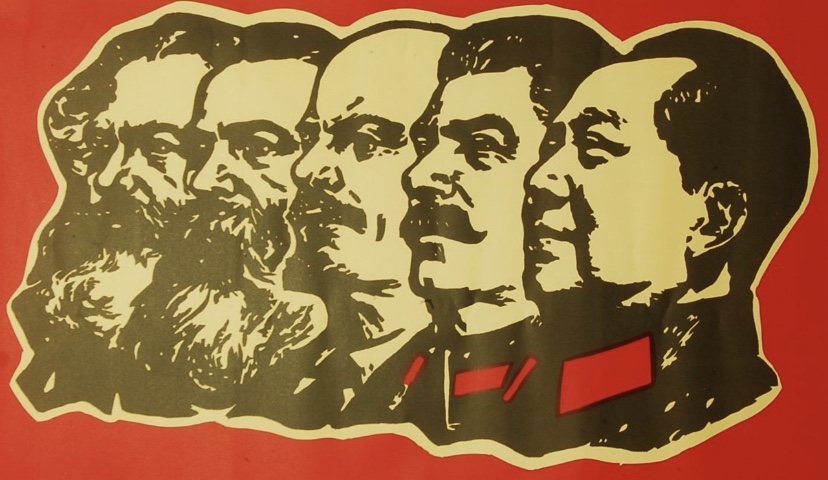
Karl Marx has long been celebrated by the Left as a great intellectual, but the truth is that his legacy was destined to be of little significance until his writings were lauded, decades later, by the Bolsheviks during their savage October 1917 revolution in Russia. Vladimir Lenin and his murderous cadre promoted Marx and brought his ideas into prominence as political theory. That’s the conclusion of a fascinating article by Phil Magness and Michael Makovi (M&M) appearing in the Journal of Political Economy. The title: “The Mainstreaming of Marx: Measuring the Effect of the Russian Revolution on Karl Marx’s Influence“.

The idea that the early Soviet state and other brutal regimes in its mold were the main progenitors of Marxism is horrifying to its adherents today. That’s the embarrassing historical reality, however. It’s not really clear that Marx himself would have endorsed those regimes, though I hesitate to cut him too much slack.

A lengthy summary of the M&M paper is given by the authors in “Das Karl Marx Problem”. The “problem”, as M&M describe it, is in reconciling 1) the nearly complete and well-justified rejection of Marx’s economic theories during his life and in the 34 years after his death, with 2) the esteem in which he’s held today by so many so-called intellectuals. A key piece of the puzzle, noted by the authors, is that praise for Marx comes mainly from outside the economics profession. The vast majority of economists today recognize that Marx’s labor theory of value is incoherent as an explanation of the value created in production and exchange.

The theoretical rigors might be lost on many outside the profession, but a moments reflection should be adequate for almost anyone to realize that value is contributed by both labor and non-labor inputs to production. Of course, it might have dawned on communists over the years that mass graves can be dug more “efficiently” by combining labor with physical capital. On the other hand, you can bet they never paid market prices for any of the inputs to that grisly enterprise.

Marx never thought in terms of decisions made at the margin, the hallmark of the rational economic actor. That shortcoming in his framework led to mistaken conclusions. Second, and again, this should be obvious, prices of goods must incorporate (and reward) the value contributed by all inputs to production. That value ultimately depends on the judgement of buyers, but Marx’s theory left him unable to square the circle on all this. And not for lack of trying! It was a failed exercise, and M&M provide several pieces of testimony to that effect. Here’s one example:

“By the time Lenin came along in 1917, Marx’s economic theories were already considered outdated and impractical. No less a source than John Maynard Keynes would deem Marx’s Capital ‘an obsolete economic textbook . . . without interest or application for the modern world’ in a 1925 essay.”

Marxism, with its notion of a “workers’ paradise”, gets credit from intellectuals as a highly utopian form of socialism. In reality, it’s implementation usually takes the form of communism. The claim that Marxism is “scientific” socialism (despite the faulty science underlying Marx’s theories) is even more dangerous, because it offers a further rationale for authoritarian rule. A realistic transition to any sort of Marxist state necessarily involves massive expropriations of property and liberty. Violent resistance should be expected, but watch the carnage when the revolutionaries gain the upper hand.

What M&M demonstrate empirically is how lightly Marx was cited or mentioned in printed material up until 1917, both in English and German. Using Google’s Ngram tool, they follow a group of thinkers whose Ngram patterns were similar to Marx’s up to 1917. They use those records to construct an expected trajectory for Marx for 1917 forward and find an aberrant jump for Marx at that time, again both in English and in German material. But Ngram excludes newspaper mentions, so they also construct a database from Newspapers.com and their findings are the same: newspaper references to Marx spiked after 1917. There was nothing much different when the sample was confined to socialist writers, though M&M acknowledge that there were a couple of times prior to 1917 during which short-lived jumps in Marx citations occurred among socialists.

To be clear, however, Marx wasn’t unknown to economists during the 3+ decades following his death. His name was mentioned here and there in the writings of prominent economists of the day — just not in especially glowing terms.

“… absent the events of 1917, Marx would have continued to be an object of niche scholarly inquiry and radical labor activism. He likely would have continued to compete for attention in those same radical circles as the main thinker of one of its many factions. After the Soviet boost to Marx, he effectively crowded the other claimants out of [the] socialist-world.”

Magness has acknowledged that he and Makovi aren’t the first to have noticed the boost given to Marx by the Bolsheviks. Here, Magness quotes Eric Hobsbawm’s take on the subject:

“This situation changed after the October Revolution – at all events, in the Communist Parties. … Following Lenin, all leaders were now supposed to be important theorists, since all political decisions were justified on grounds of Marxist analysis – or, more probably, by reference to textual authority of the ‘classics’: Marx, Engels, Lenin, and, in due course, Stalin. The publication and popular distribution of Marx’s and Engels’s texts therefore become far more central to the movement than they had been in the days of the Second International [1889 – 1914].”

Much to the chagrin of our latter day Marxists and socialists, it was the advent of the monstrous Soviet regime that led to Marx’s “mainstream” ascendency. Other brutal regimes arising later reinforced Marx’s stature. The tyrants listed by M&M include Joseph Stalin, Mao Zedong, Fidel Castro, and Pol Pot, and they might have added several short-lived authoritarian regimes in Africa as well. Today’s Marxists continue to assure us that those cases are not representative of a Marxist state.

Perhaps it’s fair to say that Marx’s name was co-opted by thugs, but I posit something a little more consistent with the facts: it’s difficult to expropriate the “means of production” without a fight. Success requires massive takings of liberty and property. This is facilitated by means of a “class struggle” between social or economic strata, or it might reflect divisions based on other differences. Either way, groups are pitted against one another. As a consequence, we witness an “othering” of opponents on one basis or another. Marxists, no matter how “pure of heart”, find it impossible to take power without demanding ideological purity. Invariably, this requires “reeducation”, cleansing, and ultimately extermination of opponents.

Karl Marx had unsound ideas about how economic value manifests and where it should flow, and he used those ideas to describe what he thought was a more just form of social organization. The shortcomings of his theory were recognized within the economics profession of the day, and his writings might have lived on in relative obscurity were it not for the Bolshevik’s intellectual pretensions. Surely obscurity would have been better than a legacy shaped by butchers.

The Leninists Among Us

29 Sunday Sep 2019

Posted by Nuetzel in Leftism, Marxism, Tyranny

≈ Leave a comment

Tags

Bolshevik Revolution, Coercion, Dictatorship of the Proletariat, Gary Saul Morson, Glenn Reynolds, Identity Politics, Karl Marx, Leninthink, Redistribution, Social Justice, The New Criterion, Vladimir Lenin, Zero-Sum Economics, Zero-Sum Society

I suggested recently that the pursuit of zero-sum gains, and zero-sum thinking generally, is a form of social rot. How timely that Gary Saul Morson has offered this interesting essay on “Leninthink” in the October issue of The New Criterion. It validates my conviction that a zero-sum view of the world invites social brutalism and economic cannibalism. Vladimir Ilyich Ulyanov, better known as Vladimir Lenin, was of course the first premier of the Soviet Union after the Bolshevik Revolution in 1917. His philosophy was a practical derivative of Marxism, a real-world implementation of a “dictatorship of the proletariat“. Morson describes Lenin’s view of social relations thusly:

“Lenin regarded all interactions as zero-sum.To use the phrase he made famous, the fundamental question is always ‘Who Whom?’—who dominates whom, who does what to whom, ultimately who annihilates whom. To the extent that we gain, you lose. Contrast this view with the one taught in basic microeconomics: whenever there is a non-forced transaction, both sides benefit, or they would not make the exchange. For the seller, the money is worth more than the goods he sells, and for the buyer the goods are worth more than the money. Lenin’s hatred of the market, and his attempts to abolish it entirely during War Communism, derived from the opposite idea, that all buying and selling is necessarily exploitative. When Lenin speaks of ‘profiteering’ or ‘speculation’ (capital crimes), he is referring to every transaction, however small. Peasant ‘bagmen’ selling produce were shot.

Basic books on negotiation teach that you can often do better than split the difference, since people have different concerns. Both sides can come out ahead—but not for the Soviets, whose negotiating stance John F. Kennedy once paraphrased as: what’s mine is mine; and what’s yours is negotiable. For us, the word ‘politics’ means a process of give and take, but for Lenin it’s we take, and you give. From this it follows that one must take maximum advantage of one’s position. If the enemy is weak enough to be destroyed, and one stops simply at one’s initial demands, one is objectively helping the enemy, which makes one a traitor. Of course, one might simply be insane. Long before Brezhnev began incarcerating dissidents in madhouses, Lenin was so appalled that his foreign minister, Boris Chicherin, recommended an unnecessary concession to American loan negotiators, that he pronounced him mad—not metaphorically—and demanded he be forcibly committed. ‘We will be fools if we do not immediately and forcibly send him to a sanatorium.'”

The ruthlessness of Lenin’s mindset was manifested in his unwillingness to engage in rationalizations or even civil debate:

“Lenin’s language, no less than his ethics, served as a model, taught in Soviet schools and recommended in books with titles like Lenin’s Language and On Lenin’s Polemical Art. In Lenin’s view, a true revolutionary did not establish the correctness of his beliefs by appealing to evidence or logic, as if there were some standards of truthfulness above social classes. Rather, one engaged in ‘blackening an opponent’s mug so well it takes him ages to get it clean again.’ Nikolay Valentinov, a Bolshevik who knew Lenin well before becoming disillusioned, reports him saying: ‘There is only one answer to revisionism: smash its face in!’

When Mensheviks objected to Lenin’s personal attacks, he replied frankly that his purpose was not to convince but to destroy his opponent. In work after work, Lenin does not offer arguments refuting other Social Democrats but brands them as ‘renegades’ from Marxism. Marxists who disagreed with his naïve epistemology were ‘philosophic scum.’ Object to his brutality and your arguments are ‘moralizing vomit.’ You can see traces of this approach in the advice of Saul Alinsky—who cites Lenin—to ‘pick the target, freeze it, personalize it.'”

This offers a useful perspective on why it’s so difficult to have civil discussions with leftists today. They have inherited versions of Lenin’s polemic style. You’re more likely to be verbally attacked by the Left than to be engaged in a productive exchange of ideas, as I’m constantly reminded by observing the behavior of SJWs on social media. Leftist retribution is swift. Glenn Reynolds has mused, “As the old saying has it, the left looks for heretics and the right looks for converts, and both find what they’re looking for.” That might be too optimistic!

The richest source of zero-sum gains is through the levers of government, which possesses the necessary coercive power to achieve that aim. When coercive power is so ruthlessly exercised, the appearance of loyalty to those in power becomes paramount for survival. This can make it necessary to display an outward acceptance of fanciful claims:

“Lenin’s idea that coercion is not a last resort but the first principle of Party action. Changing human nature, producing boundless prosperity, overcoming death itself: all these miracles could be achieved because the Party was the first organization ever to pursue coercion without limits. In one treatise Stalin corrects the widespread notion that the laws of nature are not binding on Bolsheviks, and it is not hard to see how this kind of thinking took root. And, given an essentially mystical faith in coercion, it is not hard to see how imaginative forms of torture became routine in Soviet justice.

Dmitri Volkogonov, the first biographer with access to the secret Lenin archives, concluded that for Lenin violence was a goal in itself. He quotes Lenin in 1908 recommending ‘real, nationwide terror, which invigorates the country and through which the Great French Revolution achieved glory.'”

Morson provides this revealing quote from the madman Lenin himself:

“The kulak uprising in [your] 5 districts must be crushed without pity. . . . 1) Hang (and I mean hang so that the people can see) not less than 100 known kulaks, rich men, bloodsuckers. 2) Publish their names. 3) Take all their grain away from them. 4) Identify hostages . . . . Do this so that for hundreds of miles around the people can see, tremble, know and cry . . . . Yours, Lenin. P. S. Find tougher people.”

At least today the Lefties try to dox people first, rather than #2. The hanging might have to come later.

There is a real danger in encouraging such zero-sum notions as redistribution and class warfare. Even today’s preoccupation with identity politics is one of zero-sum emphasis. Furthermore, the concepts of mass victimization and social justice promote a delusion of righteousness, a necessary precondition to the kind of monstrous acts of a Lenin. Anyone truly interested in promoting an atmosphere of social cooperation should recognize the echos of Leninism we see today from Leftists on social media and in the streets. These tyrants must be resisted before we’re all on the wrong side of the ultimate zero sum outcome.

Francis, Papal Perónista, Courts Redistributional Mirage

15 Thursday Mar 2018

Posted by Nuetzel in Markets, Marxism, Redistribution, statism, Welfare State

≈ Leave a comment

Tags

Argentina, Che Guevara, Daniel J. Mitchell, Economic Freedom, Eva Peron, Juan Peron, Judialismo, Maureen Mullarkey, Pope Francis, Property Rights, Robert P. Murphy, Vatican, World Bank, World Poverty

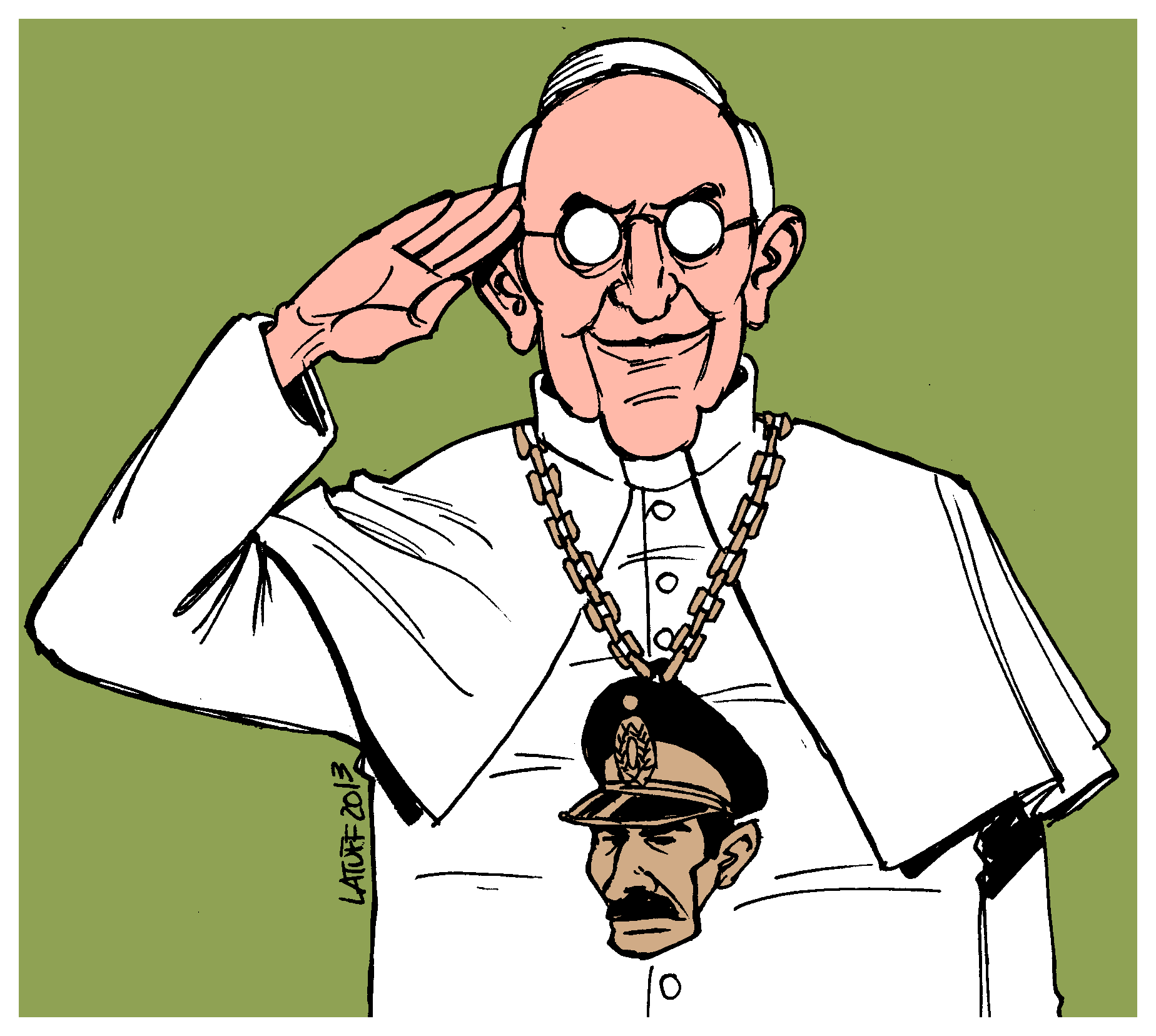
Is world poverty really increasing? Actually, no, quite the opposite, and you can blame economic liberalism, capitalism, and free markets for that. Yet we hear exactly the contrary from Pope Francis who, despite his evident compassion, has an amazingly poor understanding of economics. He misstates basic facts, offers dimly reasoned analyses of human rights, and promotes ill-considered policies. Now that the Vatican is set to release the Pope’s first feature film, no doubt a stirring piece of social justice propaganda, it seems as good a time as any to review the confounded state of Francis’ economic reasoning. This is not the first time I’ve discussed the Pope’s policy views: this link contains three previous posts from SacredCowChips on which Francis was tagged.

The False Narrative

My inspiration for this post comes from Robert P. Murphy, whose recent commentary on Francis’ pronouncements is trenchant. Murphy covers this speech written by Francis for the World Economic Forum, but delivered by a Vatican proxy, in which the Pope asserts the following:

“… governments must confront … the growth of unemployment, the increase in various forms of poverty, the widening of the socio-economic gap and new forms of slavery, often rooted in situations of conflict, migration and various social problems.“

Francis refers to increasing unemployment and poverty, and I could let that phrase pass if he was referring to certain nations or locales that have experienced chronically depressed economic growth. But Francis’ description is rather general, as evidenced by his diagnosis of causes. More on that below. Regarding his statement about trends in poverty, he is flatly incorrect. Here is Murphy:

“As the World Bank reports, the global “extreme poverty” rate in 1990 was cut in half by 2010. Back in 1990, 1.85 billion people lived on less than $1.90 per day, but by 2013, the figure had dropped to 767 million such people—meaning that more than a billion people had been lifted out of crushing poverty.“

After the Great Recession, world unemployment decreased from 2009-2015, according to the World Bank, though it is estimated to have crept up slightly in 2016-17. Again, the Pope’s woeful tale of growing unemployment and increasing poverty is nonsense.

But the world is a difficult place. In the underdeveloped world, the range and quality of goods available is extremely limited, and $1.90 represents bare subsistence, yet it’s a condition that exceeds the historical norm in many places. Movement above that threshold can represent a meaningful improvement in economic well-being.

Francis may lack an appreciation for the general enrichment in material conditions that has been taking place over the last two centuries, which is ongoing, or perhaps he believes that even greater achievements are easily within reach but for certain injustices, though he offers no qualifications. Perhaps he is mistakenly generalizing specific instances of exploitation in the underdeveloped world, which often occur with the explicit blessing of the state apparatus in exchange for kickbacks.

Rights and Markets

Even more egregious is the Pope’s presumption that private markets are at fault for any stagnation that he has identified. A notable difference between countries with successful, growing economies and those mired in stagnation is the degree to which their citizens enjoy freedoms, especially economic freedom. That is a well-established empirical fact, as Murphy explains. But the Pontiff goes further with preposterous dogma on the meaning of human rights. Again, from Murphy:

“Although inspired by concern for the poor and the marginalized, the Vatican’s message is seriously flawed…. On a conceptual level, Pope Francis posits a false dichotomy between economic freedom and human rights. … ‘Economic freedom must not prevail over the practical freedom of man and over his rights, and the market must not be absolute, but honour the exigencies of justice.’ 

What does the concept of “economic freedom” entail? It means freedom to work in any occupation of one’s choice, without permission from the government, and certainly without being conscripted into service against one’s will. It means the freedom to start a business. It means the freedom to keep what you have produced, without having your assets seized by a rapacious regime. It means the freedom to trade with people who live in another country. It means the rule of law, where contracts are interpreted fairly and government officials can’t exercise arbitrary power.“

Economic freedom, more than anything else, means that individuals are endowed with property rights. To deny such rights is to banish any reward for work and differential rewards for work well done. If free individuals are rewarded, it is a matter of their own discretion as to whether they immediately consume the reward or save it in order to accumulate wealth. Yet Francis takes the misanthropic and childish view that economic freedom, private property and markets imply exploitation. He lacks a basic understanding of the revolutionary power of markets as a form of social organization.

Within just a few hundred years, a small fraction of the many millennia during which mankind was mired in poverty and pestilence, markets have dramatically transformed the existence of most human populations. Peaceful, arms length transactions made in mutual self-interest exploit only one thing: gains from trade that would otherwise be wasted. And only a form of social organization that enables those gains can dovetail with the human rights and justice that Francis so strongly desires. The denial of economic freedom, property rights, and self-interest prohibits those gains, however, denying humanity of the wealth necessary to achieve anything like justice.

Pope Francis is a redistributionist, and that goes well beyond the charitable giving, good works and service performed voluntarily by individuals. In fact, he is a statist, advocating an economic system in which property rights are abrogated, wholly or in part, and wages above a politically determined threshold are confiscated.

The Pope and Perón

Francis is often described as a “Perónist”, after Juan Perón of Argentina, the so-called “right-wing socialist” (and sometime associate of the murderous Che Guevara). Anyone familiar with the economic history of Argentina should know that’s not praise. Here is Maureen Mullarkey from the last link:

“Both Juan and Eva understood the enchantments of populism. A charismatic pair, they ruled more by dint of personality—personalismo—than democratic procedure. Ushers of an ‘option for the poor,’ they glorified the lower classes and denigrated the wealthy. (This, while they amassed a huge personal fortune from the Eva Perón Welfare Foundation.) …

When Francis speaks of ‘the people’ as a revolutionary vanguard that ‘overflows the logical procedures of formal democracy,’ he is lapsing toward that ecstatic Peronist vision of a Third Way—justicialismo. That the disposition and design of it ended in economic collapse and misery is nothing against the splendor of the mystique.

In his youth, Francis absorbed the myth but not its lessons. Chief among them is how much Argentina’s fiscal catastrophe owed to an extravagant welfare system that favored enforced wealth redistribution over development. Among the many factors of Argentina’s historic economic crisis, one cries for attention: Perón’s increasing reliance on redistributing income, not only between industries and occupations but between skilled and unskilled workers.“

For further perspective on Francis, Perónism, and the disastrous Argentine “experiment”, see this piece by Daniel J. Mitchell.

For many years, naive Marxists have accepted the myth that central economic planners could and would direct productive and distributional activities with foresight, efficiency, and integrity. None of those is possible. The only form of social organization capable of registering and processing the myriad and dynamic signals on preferences and scarcity is free market capitalism. It is the only system capable of spontaneously harnessing appropriate responses based on the complex incentives faced by consumers and producers, and all at a minimal administrative cost for society, free of the government intervention that typifies the Peronist welfare state and corporatism.

Conclusion

Pope Francis should know better than to make claims having no empirical support. He should also have the wisdom to understand and advocate for the empowering nature of private property rights and markets. Elevating the human condition is possible only by allowing people to be free — economically free — and endowed with opportunities to earn private rewards and build wealth. Francis should realize that the massive private gains afforded by the market mechanism enable rewards which spill over, inuring to the benefit of parties external to a given exchange. On the other hand, state domination and control of economic activity gives over decision-making to selfish and ill-informed public commandants, who are all too pleased to grant special advantages to those in a position to return private favors. Such graft and mismanagement of resources comes at the expense of others. That way lies decay and a return to the much more brutal conditions of the past, unlike the mutually beneficial promise of market exchange.

Willing Exchange With Capitalists

18 Wednesday May 2016

Posted by Nuetzel in Capitalism, Marxism

≈ Leave a comment

Tags

Capitalism, competition, Free Markets, Gary Galles, Government Monopoly, Karl Marx, Labor Theory of Value, Legitimized Coercion, Leonard Read, Liberalism, Limits on Government, Market Power, Marxism, Misuse of Words, Patrick Barron, Robert Murphy, Social Organization, statism, The Beacon, Voluntary Exchange, Willing Exchange

marx1

Now and then I’m inspired to blog on the misshapen language of political discourse. I recently wrote about the misuse of words by the American left, including their use of the term “liberalism”. This time, the particular word in play is “capitalism”, which I use to describe the ideal laissez faire economic order. I have always viewed it as a force for good. Real capitalism means free markets, consumer choice, strong private property rights, rewards to private initiative, and competition among producers. Even under conditions of concentrated market power, capitalism is preferable to government monopoly. Nevertheless, Gary Galles writes at The Beacon that capitalism is an inferior description of the laissez-faire ideal than”willing exchange“, or alternatively, unforced or voluntary exchange. Perhaps he has a point.

Capital and labor are the primary factors of production and both must be compensated. Labor earns a wage and capital earns a profit. Generally, the more capital a worker has available on the job, the greater the worker’s productivity and the greater the worker’s wage. However, any profit or return to capital is viewed by the left as an undeserved rent. The question of compensation is quite aside from the valuable social role profits play in directing resources to their most valued uses. Robert Murphy’s drives this home in an excellent recent essay entitled “There’s No Such Thing As Excessive Profits“. Here, here! In another post related to the crucial social role played by capital and profit, Patrick Barron explains “Why We Need Private Property To Deal With Scarce Resources“.

Again, any return to capital, normal or extra-normal, is seen by the left as a reward that should flow to labor in a just world. That is the upshot of Karl Marx’s labor theory of value. Thus, owners of capital are characterized as “takers”. Galles notes the belief that Marx coined the term “capitalism” in order to:

“…falsely imply that the system benefited capitalists at others’ expense, when, in fact, workers have been the greatest gainers from all the productivity enhancements the system has generated.“

He quotes Leonard Read on the value of “willing versus unwilling exchange” as an effective way to delineate and contrast the positions of adherents of laissez faire and statism:

“Standing for willing exchange, on the one hand, or for unwilling exchange, on the other, more nearly accents our ideological differences than does the employment of the terms in common usage…there is a minimum of verbal facade to hide behind.

Willing exchange…has not yet been saddled with emotional connotations …Further, its antithesis, unwilling exchange…no one, not even a protagonist, proudly acknowledges he favors that; it does offense to his idealism.

If we cut through all the verbiage used to report and analyze political and economic controversy…much of it boils down to a denial of willing and the insistence upon unwilling exchange. …

The concept of willing exchange unseats Napoleonic behavior—all forms of authoritarianism—and enthrones the individual. The consumer becomes king. Individual freedom of choice rules economic affairs… [It] is for me, and a willing seller, to decide; it is no one else’s business!“

The hallmark of the state as an actor is coercion. After all, it derives its power via “legitimized” coercion. Individuals are bound under its authority to participate in involuntary exchanges and to make do with a constrained set of willing exchanges. As much as we might amuse ourselves with the notion that our Constitution keeps the state in check, it grows and grows, and where it stops, nobody knows. One wonders how strongly the demonization of so-called “capitalists” plays into this process.

I often refer to voluntary exchange in one form or another. The term recommends itself by virtue of its implication of mutual benefit among parties. Nevertheless, I would have a difficult time abandoning the term “capitalism” in my writing. Here’s the thing: capitalism and free markets have had tremendous success over the last two centuries in improving material conditions and ending human poverty around the globe. Meanwhile, Marxism as a philosophy, and collectivism as a form of social organization, have done nothing to recommend themselves to humankind. So the joke’s on Marx, though we haven’t heard the last of the efforts to besmirch capitalism.

Follow Sacred Cow Chips on WordPress.com

Recent Posts

  • Immigration and Merit As Fiscal Propositions
  • Tariff “Dividend” From An Indigent State
  • Almost Looks Like the Fed Has a 3% Inflation Target
  • Government Malpractice Breeds Health Care Havoc
  • A Tax On Imports Takes a Toll on Exports

Archives

  • December 2025
  • November 2025
  • October 2025
  • September 2025
  • August 2025
  • July 2025
  • June 2025
  • May 2025
  • April 2025
  • March 2025
  • February 2025
  • January 2025
  • December 2024
  • November 2024
  • October 2024
  • September 2024
  • August 2024
  • July 2024
  • June 2024
  • May 2024
  • April 2024
  • March 2024
  • February 2024
  • January 2024
  • December 2023
  • November 2023
  • August 2023
  • July 2023
  • June 2023
  • May 2023
  • April 2023
  • March 2023
  • February 2023
  • January 2023
  • December 2022
  • November 2022
  • October 2022
  • September 2022
  • August 2022
  • July 2022
  • June 2022
  • May 2022
  • April 2022
  • March 2022
  • February 2022
  • January 2022
  • December 2021
  • November 2021
  • October 2021
  • September 2021
  • August 2021
  • July 2021
  • June 2021
  • May 2021
  • April 2021
  • March 2021
  • February 2021
  • January 2021
  • December 2020
  • November 2020
  • October 2020
  • September 2020
  • August 2020
  • July 2020
  • June 2020
  • May 2020
  • April 2020
  • March 2020
  • February 2020
  • January 2020
  • December 2019
  • November 2019
  • October 2019
  • September 2019
  • August 2019
  • July 2019
  • June 2019
  • May 2019
  • April 2019
  • March 2019
  • February 2019
  • January 2019
  • December 2018
  • November 2018
  • October 2018
  • September 2018
  • August 2018
  • July 2018
  • June 2018
  • May 2018
  • April 2018
  • March 2018
  • February 2018
  • January 2018
  • December 2017
  • November 2017
  • October 2017
  • September 2017
  • August 2017
  • July 2017
  • June 2017
  • May 2017
  • April 2017
  • March 2017
  • February 2017
  • January 2017
  • December 2016
  • November 2016
  • October 2016
  • September 2016
  • August 2016
  • July 2016
  • June 2016
  • May 2016
  • April 2016
  • March 2016
  • February 2016
  • January 2016
  • December 2015
  • November 2015
  • October 2015
  • September 2015
  • August 2015
  • July 2015
  • June 2015
  • May 2015
  • April 2015
  • March 2015
  • February 2015
  • January 2015
  • December 2014
  • November 2014
  • October 2014
  • September 2014
  • August 2014
  • July 2014
  • June 2014
  • May 2014
  • April 2014
  • March 2014

Blogs I Follow

  • Passive Income Kickstart
  • OnlyFinance.net
  • TLC Cholesterol
  • Nintil
  • kendunning.net
  • DCWhispers.com
  • Hoong-Wai in the UK
  • Marginal REVOLUTION
  • Stlouis
  • Watts Up With That?
  • Aussie Nationalist Blog
  • American Elephants
  • The View from Alexandria
  • The Gymnasium
  • A Force for Good
  • Notes On Liberty
  • troymo
  • SUNDAY BLOG Stephanie Sievers
  • Miss Lou Acquiring Lore
  • Your Well Wisher Program
  • Objectivism In Depth
  • RobotEnomics
  • Orderstatistic
  • Paradigm Library
  • Scattered Showers and Quicksand

Blog at WordPress.com.

Passive Income Kickstart

OnlyFinance.net

TLC Cholesterol

Nintil

To estimate, compare, distinguish, discuss, and trace to its principal sources everything

kendunning.net

The Future is Ours to Create

DCWhispers.com

Hoong-Wai in the UK

A Commonwealth immigrant's perspective on the UK's public arena.

Marginal REVOLUTION

Small Steps Toward A Much Better World

Stlouis

Watts Up With That?

The world's most viewed site on global warming and climate change

Aussie Nationalist Blog

Commentary from a Paleoconservative and Nationalist perspective

American Elephants

Defending Life, Liberty and the Pursuit of Happiness

The View from Alexandria

In advanced civilizations the period loosely called Alexandrian is usually associated with flexible morals, perfunctory religion, populist standards and cosmopolitan tastes, feminism, exotic cults, and the rapid turnover of high and low fads---in short, a falling away (which is all that decadence means) from the strictness of traditional rules, embodied in character and inforced from within. -- Jacques Barzun

The Gymnasium

A place for reason, politics, economics, and faith steeped in the classical liberal tradition

A Force for Good

How economics, morality, and markets combine

Notes On Liberty

Spontaneous thoughts on a humble creed

troymo

SUNDAY BLOG Stephanie Sievers

Escaping the everyday life with photographs from my travels

Miss Lou Acquiring Lore

Gallery of Life...

Your Well Wisher Program

Attempt to solve commonly known problems…

Objectivism In Depth

Exploring Ayn Rand's revolutionary philosophy.

RobotEnomics

(A)n (I)ntelligent Future

Orderstatistic

Economics, chess and anything else on my mind.

Paradigm Library

OODA Looping

Scattered Showers and Quicksand

Musings on science, investing, finance, economics, politics, and probably fly fishing.

  • Subscribe Subscribed
    • Sacred Cow Chips
    • Join 128 other subscribers
    • Already have a WordPress.com account? Log in now.
    • Sacred Cow Chips
    • Subscribe Subscribed
    • Sign up
    • Log in
    • Report this content
    • View site in Reader
    • Manage subscriptions
    • Collapse this bar
 

Loading Comments...