• About

Sacred Cow Chips

Sacred Cow Chips

Category Archives: Wildfires

Climate Change Did Not Cause the Maui Fires

15 Tuesday Aug 2023

Posted by Nuetzel in Climate, Wildfires

≈ Leave a comment

Tags

Arson, Cliff Mass, Firebreaks, Hawaii Fire Risk, Hurricane Dora, Invasive Grasses, James Steele, Josh Green, Lahaina, Maui, Mick Fleetwood, Steve Parrish, Trade Winds, West Maui Wildfires
Several years ago my wife and I dined on the roof of Mick Fleetwood’s restaurant in beautiful Lahaina on Maui. Sadly, that restaurant was destroyed by this week’s wildfire, along with the famous banyan tree and most of the town. The death toll keeps climbing in what was an unimaginably tragic event.

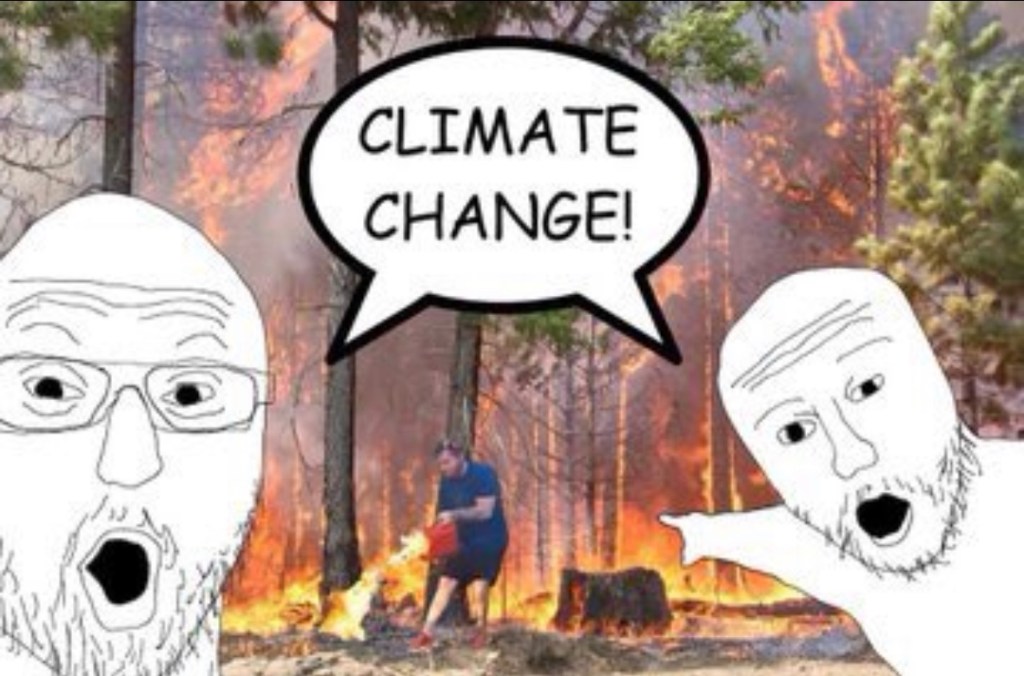
Climate alarmists, including Hawaii Governor Josh Green and one of my favorite personalities, Steve Parrish, jumped to the immediate and wrong-headed conclusion that this fire was caused by climate change. They believe that sounds so sensible, but nothing could be further from the truth. As I noted in a post last week, this year has seen relatively little burning around the globe. It just so happens that the western side of Maui is particularly prone to grass fires, and this one happened to be huge.

Here’s a good explanation from James Steele of the circumstances which culminated in the fire that destroyed Lahaina. He first acknowledges that wildfires are quite common in Hawaii, but very few are caused by lightning strikes:

“According to Hawaii Wildfire Management Organization, 98% of all Hawaiian fires are started by people, of which 75% are due to carelessness. .. As retirees flock to Hawaii seeking the health benefits of a warmer climate, the population has tripled since 1980, which only increases the probability of a careless fire being started.”

Arson is part of the story, but I don’t know of any reports of arson that might be implicated in this conflagration. Fires from electrical lines have also been mentioned as possible triggers.

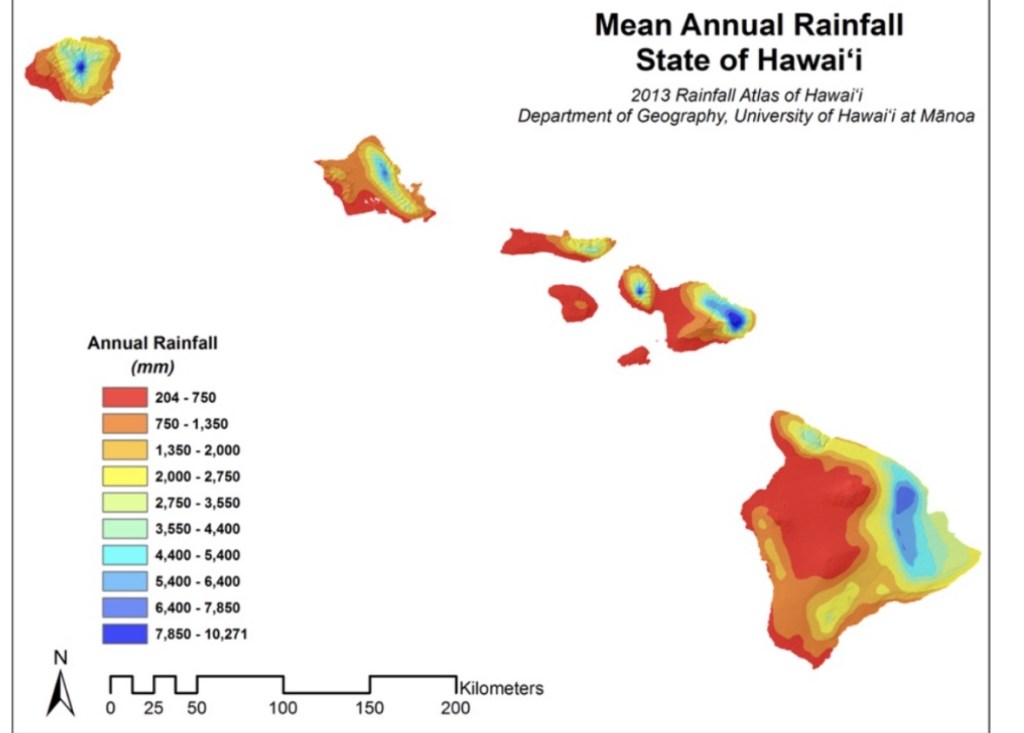
The western part of Maui tends to be much drier than more eastern parts of the island. Here’s Steele again:

“Lahaina is situated on the leeward side of Maui’s mountains. These highlands wring out the moisture carried by the trade winds, with only 15” of rain falling in Lahaina compared to 300” on the mountains to the east.”

Expanding acreage of invasive grasses has led to excessive fire risk. This has occurred with declining production of agricultural products like pineapples and sugar cane. These “small diameter” grasses dry-out very quickly and become dangerous fuel for wind-blown fires. Even worse, a very wet spring led to more growth in the grasses than normally occurs. Once dry weather set in, a tinder box was created in western Maui.

Cliff Mass makes some of the same points, and he offers some detail on strong trade winds that developed last week between a powerful high-pressure system to the north of Maui and Hurricane Dora to the south. And no, climate change is not increasing the frequency or severity of hurricanes. Maui’s position between other islands, and the mountains east of Lahaina, create a funneling effect for the winds. Mass speculates that these high winds blew down power lines, igniting the fires.

The risk of catastrophic fires in West Maui has been known for years. The link summarizes statements made by a director of a non-profit involved in planning and preparing earlier reports on fire risk:

“… significant progress in implementing the community-based work since [her] organizations inception in 2002. But the necessary ‘enormous infrastructure’ investments have not come.

‘I don’t know if I understood the urgency of those bigger investments.’ ….”

The recommended investments included 70 miles of fire breaks and 90 miles of fuel breaks. Essentially, these breaks would be bare land intended to reduce fire spread and intensity. Apparently that work was never initiated, nor was work begun on other types of infrastructure needed to minimize risk.

The tragic fire in West Maui resulted from a confluence of declining agriculture, invasive and fire-prone grasses, an especially wet spring followed by a dry summer, a few days of unusually strong trade winds, and geography that funnels and focuses the intensity of those winds. The “spark” or “sparks” might well have been from downed power lines, or possibly some other kind of accident, carelessness, or even arson. It was not caused by global warming, as much as the climate change activists might like to convince you. The assertion that fires are becoming more frequent and severe has absolutely no basis in fact.
Canadian Wildfires, Smoky Days Are Recurring Events

11 Sunday Jun 2023

Posted by Nuetzel in Forest Fires, Global Warming, Wildfires

≈ Leave a comment

Tags

Anthropomorphic Global Warming, Boreal Forests, Canadian Fires, Climate Change, Dark Days, David Marcus, Edward Struzik, Fire Suppression, Forest Management, Prescribed Burns, Québec Fires, rent seeking, Wildfires

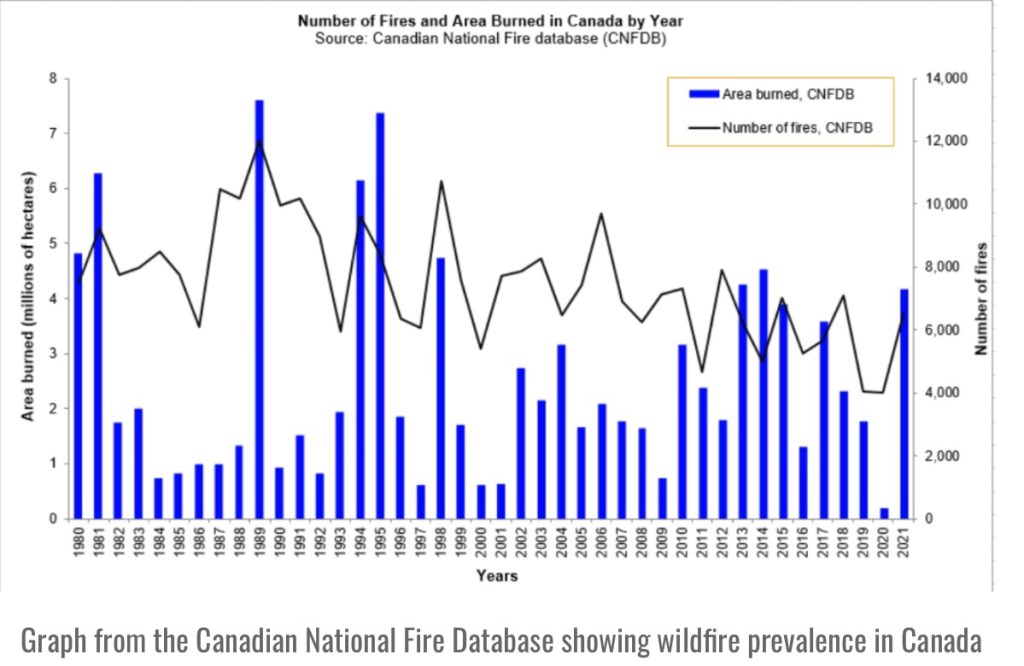
Smoke from this spring’s terrible forest fires in Canada has fouled the air in much of the country and blown into the northeastern U.S. and mid-Atlantic coastal states. The severity of the fires, if they continued at this pace over the rest of the fire season, would break Canadian records for number of fires and burned area.

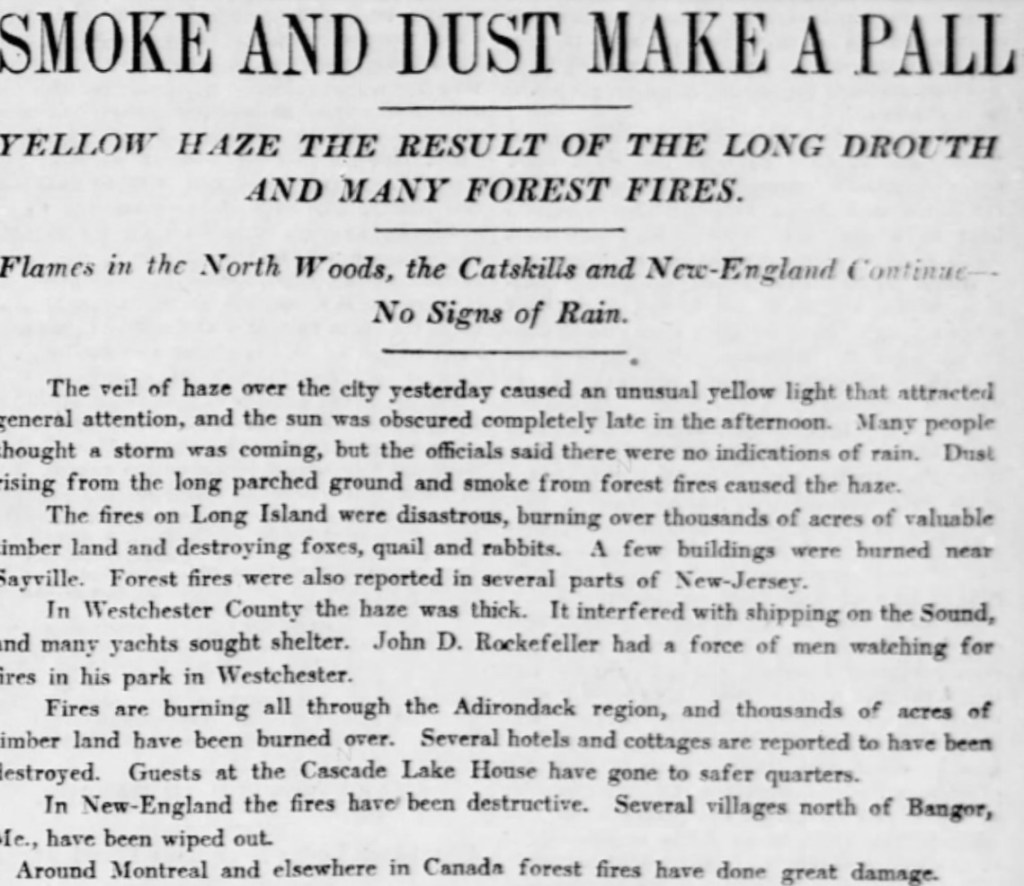
Large wildfires with smoky conditions occur in these in regions from time-to-time, and it’s not unusual for fires to ignite in the late spring. The article shown above appeared in the New York Tribune on June 5, 1903. Other “dark day” episodes were recorded in New England in 1706, 1732, 1780, 1814, 1819, 1836, 1881, 1894, and 1903, and several times in the 20th century. I list early years specifically because they preceded by decades (even centuries) the era of supposed anthropomorphic global warming, now euphemistically known as “climate change”.

More recently, however, in the past 10 years, Quebec experienced relatively few wildfires. That left plenty of tinder in the boreal forests with highly flammable, sappy trees. In May, a spell of sunshine helped dry the brush in the Canadian forests. Then lightning and human carelessness sparked the fires, along with multiple instances of arson, some perpetrated by climate change activists.

On top of all that, poor forest management contributed to the conflagrations. So-called fire suppression techniques have done more harm than good over the years, as I’ve discussed on this blog in the past. David Marcus emphasizes the point:

“For years, Canadian parks officials have been warning that their country does not do enough to cull its forests and now we’re witnessing the catastrophic results.

It’s simple really. Edward Struzik, author of ‘Dark Days at Noon, The Future of Fire’ lays it out well.

‘We have been suppressing fires for so many decades in North America that we have forests that are older than they should be,’ he said. …

‘Prescribed burns are one of the best ways to mitigate the wildfire threat,’ he added.”

Nevertheless, the media are eager to blame climate change for any calamity. That’s one part simple naïveté on the part of young journalists, fresh off the turnip truck as it were, with little knowledge or inclination to understand the history and causes of underlying forest conditions. But many seasoned reporters are all too ready to support the climate change narrative as well. There’s also an element of calculated political misinformation in these claims, abetted by those seeking rents from government climate policies.

Wildfires are as old as time; without good forest management practices they are necessary for forest renewal. Agitation to sow climate panic based on wildfires is highly unscrupulous. There is no emergency except for the need to reform forest management, reduce the fuel load, and more generally, put an end to the waste of resources inherent in government climate change initiatives.

See this tweet! Hmmm.

Feckless Greens Burn Aussie Bush

09 Thursday Jan 2020

Posted by Nuetzel in Forest Fires, Global Warming, Wildfires

≈ 1 Comment

Tags

Arson, Arson Raptors, Australia, Black Kite, CO2 Forcings, David Packham, David Ward, Dead Vegetation, Eucalyptus, Gasoline Trees, Human Ignitions, Invasive Grasses, James Morrow, Jennifer Marohasy, Leslie Eastman, Marc Lallanilla, Massachusetts, Mike Shedlock, Mishtalk, Myron Ebell, New South Wales, Patrick Michaels, Prescribed Burns, Queensland, Roy Spencer, Victoria, Whistling Kite, Willis Eschenbach

The raging Australian bush fires have been expansive and deadly. Country-wide, over 12 million acres have burned over the past few months, an area approaching twice the size of Massachusetts. The burnt areas in some regions rival or exceed individual fires of the past, such as the Black Friday fire of 1939, which burned about 5 million acres. As bad as the recent fires have been, note that various outlets in the U.S. have felt it necessary to exaggerate the size of the burnt area (also see here). And the season’s burnt area has not even approached the total for 1974-1975, when over 250 million acres burned.

So what causes these bush fires? Dry weather and plenty of fuel from dead vegetation create the hazard, of course. A spark is needed, as from lightning, an accident, an arsonist, or perhaps even a blistering sun, but warm temperatures are unnecessary. Nevertheless, the narrative we hear year-in and year-out is that global warming is to blame for wildfires. My commentary on the climate-change hubbub over the 2018 California fires is here. As for Australia’s fires, there is similarly ample evidence that climate change or warming has nothing to do with it. Rather, as in California, there is a pattern of mismanagement of forests and brush combined with population growth, accidents, and arson, and of course a dry spell. This dry spell has been severe, but the trend in Australia over the past 120 years has been toward more precipitation, not less, and the past 25 years have been relatively rainy. The rain comes with a downside, however: it encourages growth in vegetation, much of which dies every dry season, leaving plenty of fuel for fires. And the fuel has been accumulating.

Mike Shedlock at Mishtalk offers some pertinent observations. First, he quotes James Morrow in the Wall Street Journal:

“Byzantine environmental restrictions prevent landholders from clearing scrub, brush and trees. State governments don’t do their part to reduce the fuel load in parks. Last November a former fire chief in Victoria slammed that state’s ‘minimalist approach’ to hazard-reduction burning in the off-season. That complaint is heard across the country.“

Prescribed burns have been in decline and focused on areas adjacent to suburbs, leaving vast areas of accumulating fuel. This is a product of wrongheaded conservation efforts and resistance to CO2 emissions. These policymakers haven’t done favors for Australia or the world on either count. Shedlock reinforces this point with the following statement from Patrick Michaels and Myron Ebell:

“Australia has been ready to explode for years. David Packham, former head of Australia’s National Rural Fire Research Centre, warned in a 2015 article in the Age that fire fuel levels had climbed to their most dangerous levels in thousands of years. He noted this was the result of ‘misguided green ideology.'”

Eucalyptus trees grow thickly in many fire-prone areas of Australia, and Shedlock says these trees act as a multiplier on the fire hazard. Yet these trees remain a favorite landscape feature for suburbians even in fire-prone areas. He quotes Marc Lallanilla in LiveScience:

“Fallen eucalyptus leaves create dense carpets of flammable material, and the trees’ bark peels off in long streamers that drop to the ground, providing additional fuel that draws ground fires up into the leaves, creating massive, fast-spreading ‘crown fires’ in the upper story of eucalyptus forests. … Additionally, the eucalyptus oil that gives the trees their characteristic spicy fragrance is a flammable oil: This oil, combined with leaf litter and peeling bark during periods of dry, windy weather, can turn a small ground fire into a terrifying, explosive firestorm in a matter of minutes. That’s why eucalyptus trees — especially the blue gums (Eucalyptus globulus) that are common throughout New South Wales — are sometimes referred to wryly as ‘gasoline trees.’“

The introduction of non-native invasive grasses has also been blamed for increasing the fuel load in the bush. And as incredible as it may seem, certain birds native to Australia are spreading bushfires by carrying and dropping burning sticks in grasslands to flush out prey. Birds are indeed tool users! The Whistling Kite and the Black Kite are sometimes called “arson raptors”, according to Leslie Eastman at this link.

The hypothesis that climate warming from CO2 emissions is the cause of the bushfires is undermined by all of the above. Then, of course, there are the arsonists and accidental fires. Over 180 people have been arrested for setting recent brushfires intentionally in New South Wales alone, and 103 others in Queensland. (Also see here.) Jim Steele reports that human ignitions account for 66% of bush fires, while just 11% are caused by lightning. Population growth has brought more people into close proximity with the bush, which increases the exposure of humans to fire danger and might well add to the number of accidents and potential arsonists. Obviously, human and avian arson, and accidents, are not within the line of causation that climate alarmists have in mind.

Roy Spencer addresses some of the inconsistencies in the claimed link between climate warming and the Australian bushfires. First, of course, is the trend in rainfall. Climate models based on CO2 forcings predict no long-term trend in Australia’s rainfall, but again, rainfall has increased in Australia during the era of accelerated forcings. Interestingly, the fires of 1974-75 occurred during a period that was quite rainy, but that rain might have added so much to the annual vegetation cycle that it exacerbated the effect of dry season. Temperatures in Australia were quite warm in 2019, but the climate models cannot account for that variation, especially as Australian temperatures are subject to high variability from year-to-year. It’s been hotter before, though the temperature records in Australia have been subject to some controversial “editing”. Finally, Spencer notes that global wildfire activity has been in decline for many years, despite the mild warming we’ve experienced over the past 50 years (also see here).

Australia has bush fires every year, and this year has been particularly bad, but it might not reach the proportions of the fires in 1974-75. The causes are: poor burn management practices, or sometimes neglect and no burn management at all, allowing dead vegetation to accumulate to dangerous levels; arson, which has been implicated in a large number of fires this year; and 2019 was a very dry year. The contention that global warming or climate change is responsible for these bush fires is a dangerous distraction from reforms that can minimize fire hazards in the future.

For additional reading of interest, see “Australia Fires … and Misfires” by Willis Eschenbach and “The Mathematics of Connectivity and Bush Fires: A Note From David Ward” a post from Jennifer Marohasy’s blog.

The Disastrous Boomerang Effect of Fire Suppression

15 Thursday Nov 2018

Posted by Nuetzel in Environment, Wildfires

≈ Leave a comment

Tags

Biomass Harvesting, Camp Fire, Climate Change, Donald Trump, Fire Suppression, Forest Fires, Forest Management, George E. Gruell, PG&E, Prescribed Burns, Sierra Nevada, Spontaneous Combustion, Timber Harvest, U.S. Forest Service, Warren Meyer, Wildfires

We can lament the tragic forest fires burning in California, but a discussion of contributing hazards and causes is urgent if we are to minimize future conflagrations. The Left points the finger at climate change. Donald Trump, along with many forestry experts, point at forest mismanagement. Whether you believe in climate change or not, Trump is correct on this point. However, he blames the state of California when in fact a good deal of the responsibility falls on the federal government. And as usual, Trump has inflamed passions with unnecessarily aggressive rhetoric and threats:

“There is no reason for these massive, deadly and costly forest fires in California except that forest management is so poor. Billions of dollars are given each year, with so many lives lost, all because of gross mismanagement of the forests. Remedy now or no more Fed payments.”

Trump was condemned for his tone, of course, but also for the mere temerity to discuss the relationship between policy and fire hazards at such a tragic moment. Apparently, it’s a fine time to allege causes that conform to the accepted wisdom of the environmental Left, but misguided forest management strategy is off-limits.

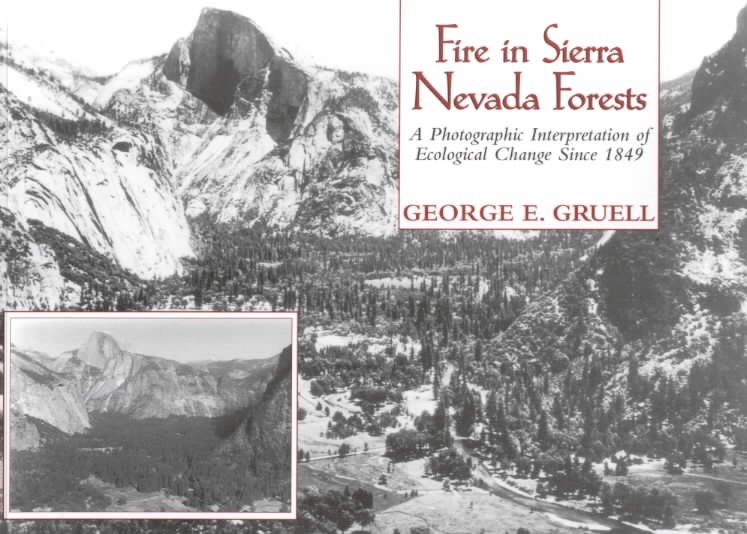
The image at the top of this post is from the cover of a book by wildlife biologist George E. Gruell, published in 2001. The author includes hundreds of historical photos of forests in the Sierra Nevada range from as early as 1849. He pairs them with photos of the same views in the late 20th century, such as the photo inset on the cover shown above. The remarkable thing is that the old forests were quite thin by comparison. The following quote is from a review of the book on Amazon:

“Even the famed floor of Yosemite is now mostly forested with conifers. I myself love conifers but George makes an interesting point that these forests are “man made” and in many ways are unhealthy from the standpoint that they lead to canopy firestorms that normally don’t exsist when fires are allowed to naturally burn themselves out. Fire ecology is important and our fear of forest fires has led to an ever worsening situation in the Sierra Nevada.”

I posted this piece on forest fires and climate change three months ago. There is ample reason to attribute the recent magnitude of wildfires to conditions influenced by forest management policy. The contribution of a relatively modest change in average temperatures over the past several decades (but primarily during the 1990s) is rather doubtful. And the evidence that warming-induced drought is the real problem is weakened considerably by the fact that the 20th century was wetter than normal in California. In other words, recent dry conditions represent something of a return to normal, making today’s policy-induced overgrowth untenable.

Wildfires are a natural phenomenon and have occurred historically from various causes such as lightning strikes and even spontaneous combustion of dry biomass. They are also caused by human activity, both accidental and intentional. In centuries past, Native Americans used so-called controlled or prescribed burns to preserve and restore grazing areas used by game. In the late 19th and early 20th centuries, fire suppression became official U.S. policy, leading to an unhealthy accumulation of overgrowth and debris in American forests over several decades. This trend, combined with a hot, dry spell in the 1930s, led to sprawling wildfires. However, Warren Meyer says the data on burnt acreage during that era was exaggerated because the U.S. Forest Service insisted on counting acres burned by prescribed burns in states that did not follow its guidance against the practice.

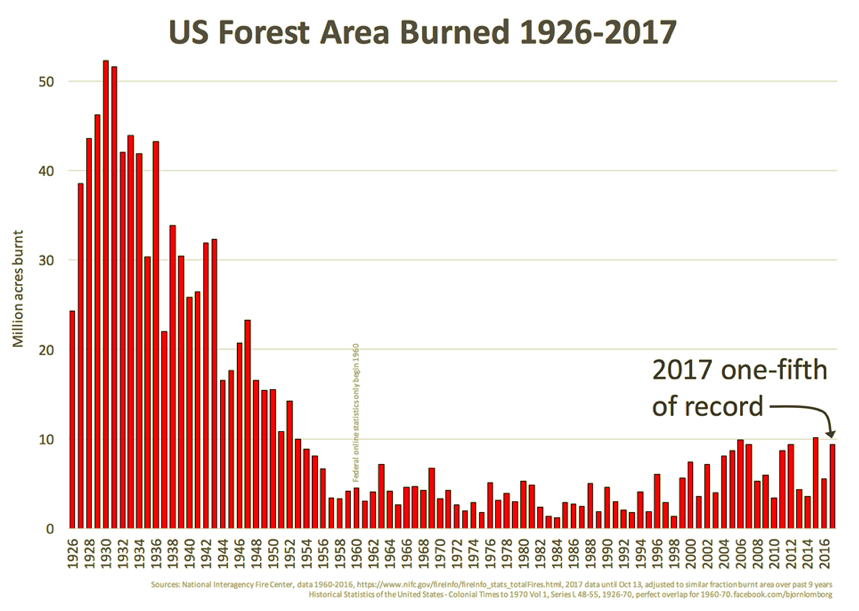
The total acreage burned by wildfires in the U.S. was minimal from the late 1950s to the end of the century, when a modest uptrend began. In California, while the number of fires continued to decline over the past 30 years, the trend in burnt acreage has been slightly positive. Certainly this year’s mega-fires will reinforce that trend. So the state is experiencing fewer but larger fires.

The prior success in containing fires was due in part to active logging and other good forest management policies, including prescribed burns. However, the timber harvest declined through most of this period under federal fire suppression policies, California state policies that increased harvesting fees, and pressure from environmentalists. The last link shows that the annual “fuel removed” from forests in the state has declined by 80% since the 1950s. But attitudes could be changing, as both the state government and environmentalists (WSJ, link could be gated) are beginning to praise biomass harvesting as a way to reduce wildfire risk. Well, yes!

The reason wildfire control ever became a priority is the presence of people in forest lands, and human infrastructure as well. Otherwise, the fires would burn as they always have. Needless to say, homes or communities surrounded by overgrown forests are at great risk. In fact, it’s been reported that the massive Camp Fire in Northern California was caused by a PG&E power line. If so, it’s possible that the existing right-of-way was not properly maintained by PG&E, but it may also be that rights-of-way are of insufficient width to prevent electrical sparks from blowing into adjacent forests, and that’s an especially dangerous situation if those forests are overgrown.

Apparently Donald Trump is under the impression that state policies are largely responsible for overgrown and debris-choked forests. In fact, both federal and state environmental regulations have played a major role in discouraging timber harvesting and prescribed burns. After all, the federal government owns about 57% of the forested land in California. Much of the rest is owned privately or is tribal land. Trump’s threat to withhold federal dollars was his way of attempting to influence state policy, but the vast bulk of federal funds devoted to forest management is dedicated to national forests. A relatively small share subsidizes state and community efforts. Disaster-related funding is and should be a separate matter, but Trump made the unfortunate suggestion that those funds are at issue. Nevertheless, he was correct to identify the tremendous fire hazard posed by overgrown forests and excessive debris on the forest floor. Changes to both federal and state policy must address these conditions.

For additional reading, I found this article to give a balanced treatment of the issues.

Forest Fires Ignite Climate Change Delusions

10 Friday Aug 2018

Posted by Nuetzel in Global Warming, Wildfires

≈ 5 Comments

Tags

Arson, Bob Zybach, Cal Fire, Controlled Burns, Dust Bowl, Fire Suppression, Forest Fires, Forest Management, Grazing, High Pressure System, Logging, Megafires, Mendocino Complex Fire, Thomas Fire, Wildfires

The geographic extent of this summer’s forest fires won’t come close to the aggregate record for the U.S. Far from it. Yes, there are some terrible fires now burning in California, Oregon, and elsewhere, and the total burnt area this summer in the U.S. is likely to exceed the 2017 total. But as the chart above shows, the burnt area in 2017 was less than 20% of the record set way back in 1930. The same is true of the global burnt area, which has declined over many decades. In fact, this 2006 paper reported the following:

“Analysis of charcoal records in sediments [31] and isotope-ratio records in ice cores [32] suggest that global biomass burning during the past century has been lower than at any time in the past 2000 years. Although the magnitude of the actual differences between pre-industrial and current biomass burning rates may not be as pronounced as suggested by those studies [33], modelling approaches agree with a general decrease of global fire activity at least in past centuries [34]. In spite of this, fire is often quoted as an increasing issue around the globe [11,26–29].”

People have a tendency to exaggerate the significance of current events. Perhaps the youthful can be forgiven for thinking hot summers are a new phenomenon. Incredibly, more “seasoned” folks are often subject to the same fallacies. The fires in California have so impressed climate alarmists that many of them truly believe global warming is the cause of forest fires in recent years, including the confused bureaucrats at Cal Fire, the state’s firefighting agency. Of course, the fires have given fresh fuel to self-interested climate activists and pressure groups, an opportunity for greater exaggeration of an ongoing scare story.

This year, however, and not for the first time, a high-pressure system has been parked over the West, bringing southern winds up the coast along with warmer waters from the south, keeping things warm and dry inland. It’s just weather, though a few arsonists and careless individuals always seem to contribute to the conflagrations. Beyond all that, the impact of a warmer climate on the tendency for biomass to burn is considered ambiguous for realistic climate scenarios.

And what of the “mega-fires” burning in the West, like the huge Mendocino Complex Fire and last year’s Thomas Fire? Unfortunately, many decades of fire suppression measures — prohibitions on logging, grazing, and controlled burns — have left the forests with too much dead wood and debris, especially on public lands. From the last link:

“Oregon, like much of the western U.S., was ravaged by massive wildfires in the 1930s during the Dust Bowl drought. Megafires were largely contained due to logging and policies to actively manage forests, but there’s been an increasing trend since the 1980s of larger fires.

Active management of the forests and logging kept fires at bay for decades, but that largely ended in the 1980s over concerns too many old growth trees and the northern spotted owl. Lawsuits from environmental groups hamstrung logging and government planners cut back on thinning trees and road maintenance.

[Bob] Zybach [a forester] said Native Americans used controlled burns to manage the landscape in Oregon, Washington and northern California for thousands of years. Tribes would burn up to 1 million acres a year on the west coast to prime the land for hunting and grazing, Zybach’s research has shown.

‘The Indians had lots of big fires, but they were controlled,’ Zybach said. ‘It’s the lack of Indian burning, the lack of grazing’ and other active management techniques that caused fires to become more destructive in the 19th and early 20th centuries before logging operations and forest management techniques got fires under control in the mid-20th Century.”

The annual burnt area from wildfires has declined over the past ninety years both in the U.S. and globally. Even this year’s wildfires are unlikely to come close to the average burn extent of the 1930s. The large wildfires this year are due to a combination of decades of poor forest management along with a weather pattern that has trapped warm, dry air over the West. The contention that global warming has played a causal role in the pattern is balderdash, but apparently that explanation seems plausible to the uninformed, and it is typical of the propaganda put forward by climate change interests.

Follow Sacred Cow Chips on WordPress.com

Recent Posts

  • Immigration and Merit As Fiscal Propositions
  • Tariff “Dividend” From An Indigent State
  • Almost Looks Like the Fed Has a 3% Inflation Target
  • Government Malpractice Breeds Health Care Havoc
  • A Tax On Imports Takes a Toll on Exports

Archives

  • December 2025
  • November 2025
  • October 2025
  • September 2025
  • August 2025
  • July 2025
  • June 2025
  • May 2025
  • April 2025
  • March 2025
  • February 2025
  • January 2025
  • December 2024
  • November 2024
  • October 2024
  • September 2024
  • August 2024
  • July 2024
  • June 2024
  • May 2024
  • April 2024
  • March 2024
  • February 2024
  • January 2024
  • December 2023
  • November 2023
  • August 2023
  • July 2023
  • June 2023
  • May 2023
  • April 2023
  • March 2023
  • February 2023
  • January 2023
  • December 2022
  • November 2022
  • October 2022
  • September 2022
  • August 2022
  • July 2022
  • June 2022
  • May 2022
  • April 2022
  • March 2022
  • February 2022
  • January 2022
  • December 2021
  • November 2021
  • October 2021
  • September 2021
  • August 2021
  • July 2021
  • June 2021
  • May 2021
  • April 2021
  • March 2021
  • February 2021
  • January 2021
  • December 2020
  • November 2020
  • October 2020
  • September 2020
  • August 2020
  • July 2020
  • June 2020
  • May 2020
  • April 2020
  • March 2020
  • February 2020
  • January 2020
  • December 2019
  • November 2019
  • October 2019
  • September 2019
  • August 2019
  • July 2019
  • June 2019
  • May 2019
  • April 2019
  • March 2019
  • February 2019
  • January 2019
  • December 2018
  • November 2018
  • October 2018
  • September 2018
  • August 2018
  • July 2018
  • June 2018
  • May 2018
  • April 2018
  • March 2018
  • February 2018
  • January 2018
  • December 2017
  • November 2017
  • October 2017
  • September 2017
  • August 2017
  • July 2017
  • June 2017
  • May 2017
  • April 2017
  • March 2017
  • February 2017
  • January 2017
  • December 2016
  • November 2016
  • October 2016
  • September 2016
  • August 2016
  • July 2016
  • June 2016
  • May 2016
  • April 2016
  • March 2016
  • February 2016
  • January 2016
  • December 2015
  • November 2015
  • October 2015
  • September 2015
  • August 2015
  • July 2015
  • June 2015
  • May 2015
  • April 2015
  • March 2015
  • February 2015
  • January 2015
  • December 2014
  • November 2014
  • October 2014
  • September 2014
  • August 2014
  • July 2014
  • June 2014
  • May 2014
  • April 2014
  • March 2014

Blogs I Follow

  • Passive Income Kickstart
  • OnlyFinance.net
  • TLC Cholesterol
  • Nintil
  • kendunning.net
  • DCWhispers.com
  • Hoong-Wai in the UK
  • Marginal REVOLUTION
  • Stlouis
  • Watts Up With That?
  • Aussie Nationalist Blog
  • American Elephants
  • The View from Alexandria
  • The Gymnasium
  • A Force for Good
  • Notes On Liberty
  • troymo
  • SUNDAY BLOG Stephanie Sievers
  • Miss Lou Acquiring Lore
  • Your Well Wisher Program
  • Objectivism In Depth
  • RobotEnomics
  • Orderstatistic
  • Paradigm Library
  • Scattered Showers and Quicksand

Blog at WordPress.com.

Passive Income Kickstart

OnlyFinance.net

TLC Cholesterol

Nintil

To estimate, compare, distinguish, discuss, and trace to its principal sources everything

kendunning.net

The Future is Ours to Create

DCWhispers.com

Hoong-Wai in the UK

A Commonwealth immigrant's perspective on the UK's public arena.

Marginal REVOLUTION

Small Steps Toward A Much Better World

Stlouis

Watts Up With That?

The world's most viewed site on global warming and climate change

Aussie Nationalist Blog

Commentary from a Paleoconservative and Nationalist perspective

American Elephants

Defending Life, Liberty and the Pursuit of Happiness

The View from Alexandria

In advanced civilizations the period loosely called Alexandrian is usually associated with flexible morals, perfunctory religion, populist standards and cosmopolitan tastes, feminism, exotic cults, and the rapid turnover of high and low fads---in short, a falling away (which is all that decadence means) from the strictness of traditional rules, embodied in character and inforced from within. -- Jacques Barzun

The Gymnasium

A place for reason, politics, economics, and faith steeped in the classical liberal tradition

A Force for Good

How economics, morality, and markets combine

Notes On Liberty

Spontaneous thoughts on a humble creed

troymo

SUNDAY BLOG Stephanie Sievers

Escaping the everyday life with photographs from my travels

Miss Lou Acquiring Lore

Gallery of Life...

Your Well Wisher Program

Attempt to solve commonly known problems…

Objectivism In Depth

Exploring Ayn Rand's revolutionary philosophy.

RobotEnomics

(A)n (I)ntelligent Future

Orderstatistic

Economics, chess and anything else on my mind.

Paradigm Library

OODA Looping

Scattered Showers and Quicksand

Musings on science, investing, finance, economics, politics, and probably fly fishing.

  • Subscribe Subscribed
    • Sacred Cow Chips
    • Join 128 other subscribers
    • Already have a WordPress.com account? Log in now.
    • Sacred Cow Chips
    • Subscribe Subscribed
    • Sign up
    • Log in
    • Report this content
    • View site in Reader
    • Manage subscriptions
    • Collapse this bar
 

Loading Comments...