
Tags
Arson, Cliff Mass, Firebreaks, Hawaii Fire Risk, Hurricane Dora, Invasive Grasses, James Steele, Josh Green, Lahaina, Maui, Mick Fleetwood, Steve Parrish, Trade Winds, West Maui Wildfires
Several years ago my wife and I dined on the roof of Mick Fleetwood’s restaurant in beautiful Lahaina on Maui. Sadly, that restaurant was destroyed by this week’s wildfire, along with the famous banyan tree and most of the town. The death toll keeps climbing in what was an unimaginably tragic event.
Climate alarmists, including Hawaii Governor Josh Green and one of my favorite personalities, Steve Parrish, jumped to the immediate and wrong-headed conclusion that this fire was caused by climate change. They believe that sounds so sensible, but nothing could be further from the truth. As I noted in a post last week, this year has seen relatively little burning around the globe. It just so happens that the western side of Maui is particularly prone to grass fires, and this one happened to be huge.
Here’s a good explanation from James Steele of the circumstances which culminated in the fire that destroyed Lahaina. He first acknowledges that wildfires are quite common in Hawaii, but very few are caused by lightning strikes:
“According to Hawaii Wildfire Management Organization, 98% of all Hawaiian fires are started by people, of which 75% are due to carelessness. .. As retirees flock to Hawaii seeking the health benefits of a warmer climate, the population has tripled since 1980, which only increases the probability of a careless fire being started.”
Arson is part of the story, but I don’t know of any reports of arson that might be implicated in this conflagration. Fires from electrical lines have also been mentioned as possible triggers.
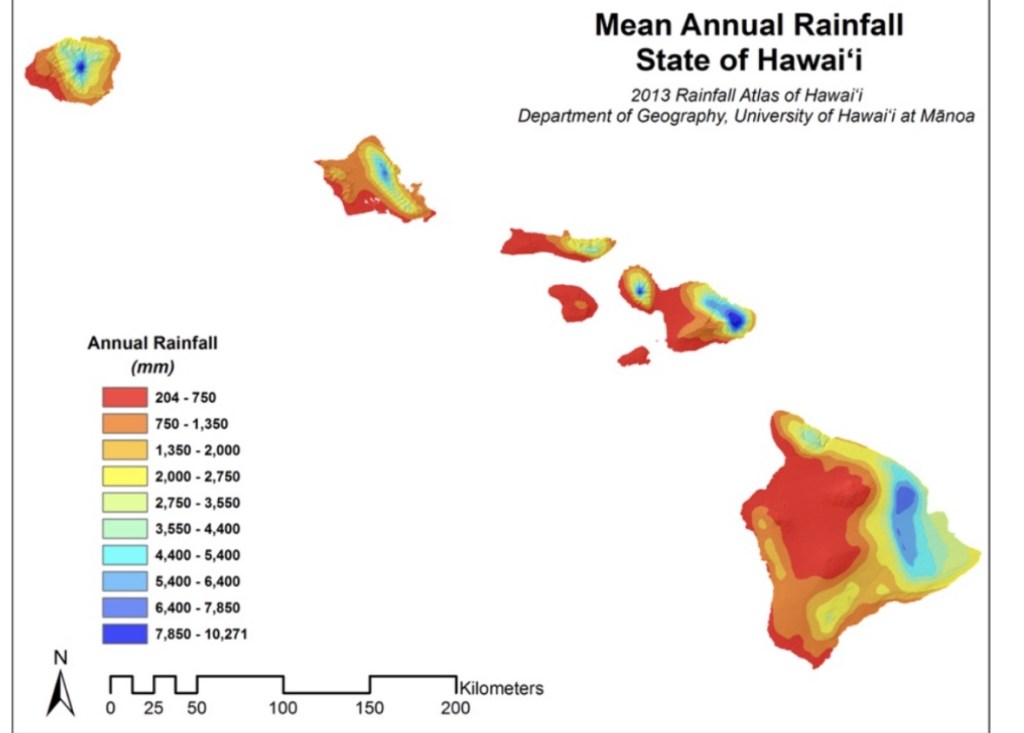
The western part of Maui tends to be much drier than more eastern parts of the island. Here’s Steele again:
“Lahaina is situated on the leeward side of Maui’s mountains. These highlands wring out the moisture carried by the trade winds, with only 15” of rain falling in Lahaina compared to 300” on the mountains to the east.”
Expanding acreage of invasive grasses has led to excessive fire risk. This has occurred with declining production of agricultural products like pineapples and sugar cane. These “small diameter” grasses dry-out very quickly and become dangerous fuel for wind-blown fires. Even worse, a very wet spring led to more growth in the grasses than normally occurs. Once dry weather set in, a tinder box was created in western Maui.
Cliff Mass makes some of the same points, and he offers some detail on strong trade winds that developed last week between a powerful high-pressure system to the north of Maui and Hurricane Dora to the south. And no, climate change is not increasing the frequency or severity of hurricanes. Maui’s position between other islands, and the mountains east of Lahaina, create a funneling effect for the winds. Mass speculates that these high winds blew down power lines, igniting the fires.
The risk of catastrophic fires in West Maui has been known for years. The link summarizes statements made by a director of a non-profit involved in planning and preparing earlier reports on fire risk:
“… significant progress in implementing the community-based work since [her] organizations inception in 2002. But the necessary ‘enormous infrastructure’ investments have not come.
‘I don’t know if I understood the urgency of those bigger investments.’ ….”
The recommended investments included 70 miles of fire breaks and 90 miles of fuel breaks. Essentially, these breaks would be bare land intended to reduce fire spread and intensity. Apparently that work was never initiated, nor was work begun on other types of infrastructure needed to minimize risk.
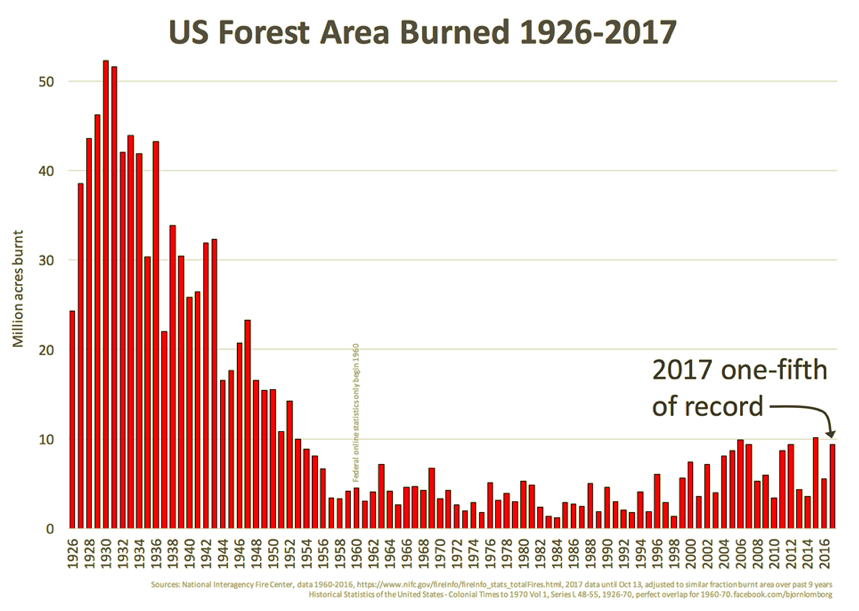
The tragic fire in West Maui resulted from a confluence of declining agriculture, invasive and fire-prone grasses, an especially wet spring followed by a dry summer, a few days of unusually strong trade winds, and geography that funnels and focuses the intensity of those winds. The “spark” or “sparks” might well have been from downed power lines, or possibly some other kind of accident, carelessness, or even arson. It was not caused by global warming, as much as the climate change activists might like to convince you. The assertion that fires are becoming more frequent and severe has absolutely no basis in fact.

 Sacred Cow Chips