
Tags
Antifa, ArmaLite Rifle, Assault Rifles, Auto Sears, Auto Switch, Black Market, Black on Black Violence, BLM, Brownshirts, Bump Stock, Defensive Gun Use, Defund the Police, Due Process, Enumerated Right, Feral Hogs, Fully Automatic, Gun Ownership, Gun-Free Zones, KKK, Machine Guns, Magazine Capacity, Mass Shootings, Mental Health, Politico, Rand Corporation, Red Flag Laws, Rep. Dan Crenshaw, Self-Defense, Semi-Automatic, Sporting Rifles, Tyranny, War on Drugs, Well-Regulated Militia
It’s long past time for me to revisit a few key issues surrounding gun rights, as well as a few sacred cows accepted uncritically by the press and nurtured by interventionists. Tragic gun violence and mass shootings have given rise to strong public reaction, but one undeniable result is that gun purchases have surged, bringing household gun ownership rates up sharply to levels of the 1980s and 1990s. This owes in part to the growing reality that police in many communities are under-resourced, unable to respond effectively to crimes and disorder in the wake of defunding and activist sentiment opposing police use of force. Under these circumstances, many private citizens believe they must be ready to defend themselves. And after all, even under better circumstances, counting on the ability of police to arrive and act promptly at a time of extreme need is a crap shoot.
As a preview, here’s a list of the sections/topics addressed below. You can skip what might not interest you, though earlier sections might provide more context.
- What’s An “Assault Weapon”?
- Deadlier Gun Modifications
- Homicide Data
- Crime and Gun Violence
- Lone Wolf Psychopaths
- Private Intervention and Reporting
- Red Flag Laws
- Defensive Gun Uses
- Invitations To Kill
- Second Amendment Protections
Modern Sporting Rifles
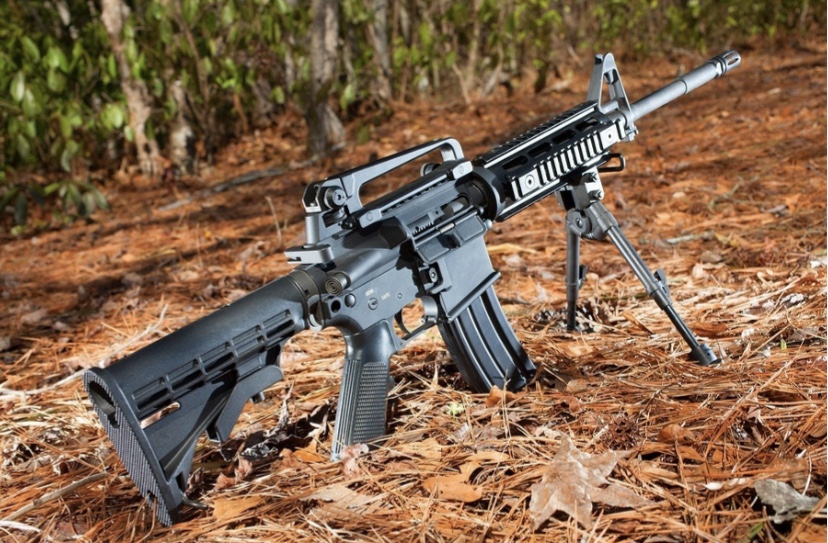
Not many politicians or people can define exactly what they mean by “assault weapons”, even those strongly opposed to … whatever they are. Scary looking things. Contrary to the implication promoted by the anti-gun lobby, what they call “assault rifles” today are not machine guns. Those have been heavily regulated since 1934, must be registered, and are now illegal for civilians to own if produced after May 19, 1986. In other words, what are frequently called “assault rifles” are not fully automatic weapons that fire a continuous stream of bullets. Rather, they are semiautomatic, which means they load the next bullet automatically but do not fire multiple bullets with a single pull of the trigger. You have to pull the trigger each time you fire a bullet. There are many semiautomatic handguns as well. Here’s a little history on semi-automatics:
“Semi-automatic, magazine-fed rifles were introduced to the civilian market here in the US in 1905. The US military adopted them about three decades later for use in World War II. … The civilian version of the modern sporting rifle, the AR-15, was introduced in 1956 so it has been with us for over six decades.”
So… it’s also misleading to call semiautomatics “military rifles” because they were originally produced for the civilian market. By the way, “AR” stands for ArmaLite Rifle, NOT “assault rifle”.
It’s more accurate to use the term “modern sporting rifle” for a semiautomatic today, rather than “assault rifle”. The vast bulk of the 15 million semiautomatic rifles held by the public were purchased for sport shooting, and people actually think they’re a lot of fun to shoot. Of course, they are also kept as a defensive weapons. By defensive, I include their use as a weapon against predators or invasive species on farms and ranches. If you don’t think that kind of weapon is especially useful for that purpose, remember that the task often involves firing with accuracy over a significant range. A modern sporting rifle is far superior to alternatives under those circumstances, especially when multiple shots at a moving target are likely to be necessary.
Obviously, a semiautomatic rifle is advantageous if there are multiple intruders. I was reminded of this by a recent article about feral hogs and the destruction they’re causing in the south, and especially in Texas. They breed fast and are so numerous that they are wreaking unprecedented damage to farms, ranches, and even suburban lawns and gardens. A handgun, shotgun, or a bolt action rifle won’t be nearly as effective against these beasts because they travel in groups of two to 30+.
Deadly Modifications
An accessory called an “auto sears” or “auto switch” can transform a semiautomatic pistol or rifle into a fully automatic weapon, but it’s a felony to possess an unregistered auto sears. Bump stocks allow semiautomatic rifles to fire more rapidly, sort of like machine guns, but they sacrifice accuracy. Bump stocks were outlawed a few years ago under an ATF rule, but their legality is still pending in court. These modifications do have legitimate uses, but I won’t argue the soundness of these bans other than to note their consistency with prior restrictions on machine guns. However, illegal bump stocks and auto sears circulate and they are easy to produce, so it’s not clear that these laws can ever produce their hoped-for result.
There are restrictions on magazine capacity in 13 states. The biggest problem with these restrictions is that they limit the effectiveness of defensive gun use. People miss their targets in high-pressure situations… a lot. Furthermore, dangerous confrontations often involve more than one attacker to defend against. Changing a magazine in the middle of all that presents a challenge that should be unnecessary. It’s no coincidence that 15+ bullet magazines are standard issue with some of the most popular guns on the market.
Homicide Data
It’s difficult to get refined data on the use of sporting rifles in gun homicides because reported categories of weapons are too broad. Nevertheless, we know semiautomatic rifles are not commonly used in violent crimes. There were 20,138 firearm deaths in the U.S. in 2022 excluding suicides, which is obviously tragic. In 2020, handguns were used in 59% of all gun homicides, while rifles (including semiautomatics) were used in just 3%. It’s possible these percentages undercount, as there is a sizable category labeled as “Type Not Stated”.
Mass shootings, defined by the FBI as four or more people killed, accounted for 3.2% of firearm deaths, for a total of 648 including deaths of shooters themselves. Rifles were used in about 30% of the mass shootings. That’s roughly consistent with the range of estimates shown in this 2021 report from the RAND Corporation.
It’s important to note that internationally, the U.S. has not been the outlier in mass public shootings that many believe it to be. In any case, you’ll hope in vain if you think a ban on sporting rifles will put a stop to mass shootings. In addition to interfering with the rights of millions of law-abiding gun owners, the decade-long ban on so-called assault weapons ending in 2004 had no impact on mass public shootings or any other type of crime (also see this post). Of course, there are plenty of other available means of committing mass murder, and there are plenty of illegal guns on the street, so this shouldn’t be a surprise.
One more important fact to bear in mind: despite efforts to convince us otherwise, gun violence is not the leading cause of death among children. By that I mean real children, not 18 – 19 year-old gang members. Kids age 12 and under die in car crashes at double the rate of gun deaths, for example.
Crime and Gun Violence
Gun violence has many causes, and criminal activity is foremost. According to this analysis, arguments or gang-related incidents accounted for 57% of 303 mass shooting deaths over a six-month period in 2021, while also accounting for more than 75% of the injuries. Much of this mayhem is black-on-black violence, and it’s odd that few seem willing to admit it. Law-abiding inner-city households and minorities just might have the most to gain from gun ownership.
A poorly conceived and politically motivated article in Politico claimed that gun violence was heavily concentrated in southern “red states”. The author’s heavy-handed attempt to focus on state-level statistics blurred more relevant distinctions. For example, he failed to emphasize the heavy concentration of gun violence in urban areas (which are heavily “blue”) and crime-ridden neighborhoods populated by those at the lowest rungs of the socioeconomic ladder.
The predominance of criminal and gang-related shootings suggests that major solutions to gun violence can be found within the criminal justice system: stiff bail, aggressive prosecution, and long sentences for criminal actions, whether gang-related or otherwise. Lately, we’ve been veering in the other direction.
On the other hand, gangs would be far less active and deadly if black market opportunities were minimized. Those tend to be created by government when it interferes with otherwise voluntary transactions. Most conspicuous in this regard is the prosecution of the drug war. This creates risk-fueled profits for dealing and trafficking that are highly enticing to hard-luck gang members. Unfortunately, competitive pressure on the black market often takes violent forms. Legalization or even decriminalization of a wider assortment of drugs would undercut black market profitability, however. This approach would be far more effective if governments avoid imposing high taxes on newly-legalized drugs, because taxes simply recreate black-market opportunities.
Psychopathic Homicide
It’s no secret that severe mental illness can lead to acts of violence, including mass shootings. One analysis found that so-called “lone wolf” attacks accounted for 15% of mass shooting deaths and less than 5% of injuries during the first half of 2021.
We can probably all agree that anyone in the grips of a severe psychosis should not be in possession of guns. The obvious problem is that we can’t easily identify such persons without severe infringements on constitutional rights. Furthermore, we won’t always accurately identify true threats and we’ll mistakenly finger some harmless individuals. So how do we decide who’s really and legally crazy? Can we agree on some threshold of craziness and who meets it? Respect for civil liberties demands restraint in limiting individual rights without just cause. The revocation of a person’s Second Amendment rights should require a high degree of certainty that the individual is a threat.
Not all disturbed individuals seek or ever receive care, and not all disturbed individuals are dangerous, so attempting to identifying them through their utilization of mental health care is imperfect at best. Indeed, most mass shooters are thought to have had an undiagnosed disorder. Should a therapist be required to report to authorities a patient whom they’ve diagnosed as psychotic or dangerous? Would that be sufficient cause to confiscate a patient’s guns? That is not as straightforward for therapists as it might seem:
“Mandatory reporting of persons believed to be at imminent risk for committing violence or attempting suicide can pose an ethical dilemma for physicians, who might find themselves struggling to balance various conflicting interests. Legal statutes dictate general scenarios that require mandatory reporting to supersede confidentiality requirements, but physicians must use clinical judgment to determine whether and when a particular case meets the requirement. In situations in which it is not clear whether reporting is legally required, the situation should be analyzed for its benefit to the patient and to public safety. Access to firearms can complicate these situations, as firearms are a well-established risk factor for violence and suicide yet also a sensitive topic about which physicians and patients might have strong personal beliefs.”
If physicians or therapists approach these questions with the greatest deference to public safety, we’re liable to see a lot fewer people seeking therapy. I would not rule out, however, that such deference might be the best for society.
Private Intervention and Reporting
Less formal mechanisms to promote public safety require vigilance by private individuals, families, and other groups. A large number of perpetrators of mass killings were known to be deeply troubled well beforehand by family and/or acquaintances. Signs of maladjustment in loved ones are easily dismissed or forgiven, but families must take great responsibility for the potential actions of their own. Seeking therapeutic help is one thing, but when a family member shows more obvious signs of psychosis, then it might be time for contact with authorities and possibly institutionalization.
There have also been many cases in which mass killers have previewed their violent thoughts on-line. Anyone connected with such an individual on social media or witnessing deranged behavior should not hesitate to contact police to intervene. Of course, things aren’t always clear cut, but it’s important to be attentive and take responsible action when an individual’s behavior appears to take an ominous turn. This too can be abused, and authorities must be fair-minded about reviewing reports of threats to be sure they aren’t motivated by petty differences, whether personal, business, or political. This is at the heart of the right to due process of law under the Fifth and Fourteenth Amendments of the Constitution.
Red Flag Laws
Among the proposals for reducing gun violence are additional measures for controlling ownership and access to guns. Red flag laws are intended to restrict more formally and comprehensively the ability of persons at risk of harming themselves or others from owning or acquiring guns. At present, 19 states and DC have some form of red flag law(s), while one state (OK) has enacted an anti-red flag law.
Broadly, restrictions on gun possession, whether technically part of a red flag law or otherwise, can be invoked on account of age (< 21), a federal or state criminal record, a documented alcohol or drug addiction, a formally diagnosed mental illness, or a pattern of threatening or suicidal behavior. The latter may include threats arising from domestic disputes. All of these possibilities are potentially troublesome from the perspective of civil liberty, but under red flag laws, usually a court order is required to enforce the restriction. The key point is that the individual in question must have due process rights before restrictions are imposed or guns are confiscated. Otherwise, as Rep. Dan Crenshaw (TX) objects:
“What you’re essentially trying to do with the red flag law is enforce the law before the law has been broken. And it’s a really difficult thing to do, it’s difficult to assess whether somebody is a threat. Now if they are such a threat that they’re threatening somebody with a weapon already, well, then they’ve already broken the law. So why do you need this other law?”
The answer to Crenshaw’s question is that mere threats are difficult to prosecute. Likewise, it should be difficult to revoke anyone’s Second Amendment rights. Red flag laws should ensure that anyone whose gun rights are under review will receive due process. A huge difficulty is that such reviews must be speedy. If a real danger is convincingly shown to exist, then guns are confiscated and/or the individual is placed on a red flag list, at least temporarily.
Defensive Gun Use
One of the most under-reported phenomena in the gun debate is that of defensive gun uses (DGUs), which are hard to count because they often go unreported. One component of DGUs is so-called justifiable homicide by police and private citizens, which (when reported) typically contribute 700 – 800 deaths to total homicides each year. However, a DGU does not imply that a shot is fired or that a gun is pointed in the direction of a criminal threat. At a minimum, it means a threat was deterred by the presence of an armed defender.
The 2021 Georgetown National Firearms Survey reported an estimated 1.67 million DGUs per year. Of these, 25% occur inside the gun owner’s home and another 54% on their property. There is no question that DGUs save lives, and probably many thousands of lives every year. There is also no doubt that the prospect of an armed defender inside a home or business deters criminals.
Killing Zones
As one might gather from the evidence on DGUs, one of the most misguided efforts to promote safety within environments like schools and churches is their designation as “gun-free zones”. This is an invitation to anyone crazy enough to perpetrate deadly violence against large numbers of innocents, as we learned once more in the recent Nashville school shooting. Someone on staff should be trained and always armed with a gun, whether that be a resource officer, another employee, or a volunteer. Preferably several designated individuals would be armed in buildings such as large schools, or perhaps one or two trusted and designated volunteers at gatherings in houses of worship.
Second Amendment Protections
Second Amendment rights are critical to effective self-defense, which is usually a matter of protecting one’s life and property from thieves, home invaders, and predatory or destructive beasts. Anti-gun radicals find even this rationale objectionable, demonstrating no regard for gun rights whatsoever. Another claim is that the right to bear arms was given specific purpose only by the need to maintain “a well-regulated militia”, and it is further asserted that this need is out-dated.
Despite those objections, a right’s stated purpose in the text of the Constitution does not by itself define any limit on its applicability. The fact that the Second Amendment recognizes and enumerates gun rights gives emphasis to the founders’ awareness that gun-grabbers might push any advantage were that right to be left unenumerated. Furthermore, a civilian militia, whether formal or informal, might well be needed to defend against any tyrannical force as might arise in the event of a breakdown of the constitutional order.
I’m willing to stipulate that there is no immediate threat today of physical coercion by government intended to subjugate classes of individuals, or of any federal military aggression against the sovereignty of any state. That may owe in part to private gun ownership, however, which deters against open acts of tyranny. It also tends to foster a preference for more nuanced applications of government power. There’s no need for privately-owned tanks, fighter aircraft, and missiles to offer meaningful deterrence. Direct, bloody confrontations are a bad look and no way to gain broad support for other forms of coercion by government.
A better alternative for regimes or political movements who wish to radically change the social order is to offer subtle and plausibly deniable encouragement of destructive or coercive acts by proxy forces (e.g., Brownshirts, Antifa, BLM, KKK). While possession of guns by these proxies can make them more dangerous, a general public under arms is not as vulnerable as an unarmed population. Private gun owners can defend themselves more effectively and represent a significant and healthy impediment to extensions of political power of this nature.

 Sacred Cow Chips