• About

Sacred Cow Chips

Sacred Cow Chips

Tag Archives: Constitution

Tariff Challenges at the High Court

12 Friday Sep 2025

Posted by Nuetzel in Executive Authority, Tariffs

≈ Leave a comment

Tags

Article I, Constitution, Donald Trump, Eric Boehm, Executive Power, Greg Ip, Greta Peisch, IEEPA, Ilya Somin, Power of the Purse, Protectionism, Richard Nixon, SCOTUS, Supreme Court, Tariff Revenue, Tariffs, V.O.S. Selections, Volokh Conspiracy, VOS Selections Inc. v. Trump
The world doesn’t ordinarily revolve around tariffs, but so much has happened to make tariffs into an economic and political linchpin of the moment. Donald Trump put them in the spotlight, of course, and while he’s still seeing roses, things won’t turn out entirely the way he hopes. At the tariff levels he’s instituted, this shouldn’t be too surprising.

While tariff revenue is helping to shave the federal budget deficit, the tax falls largely on the backs of American consumers and businesses with all the attending distortions that entails. Sadly, the extra revenue also seems to have offered a handy excuse to put spending cuts on the back burner. Tariffs and tariff uncertainty have businesses attempting to compromise between reduced margins and price hikes. Thinning margins due to tariffs have played a role in the weak employment numbers we’ve seen over the past few months. And tariffs, at least until now, have quite rightly reinforced the Federal Reserve’s cautious stance toward easing policy. However, the weak labor market has likely convinced the Fed to cut its short-term interest rate target, despite inflation stubbornly remaining well above the Fed’s 2% objective. That upward price pressure will remain.

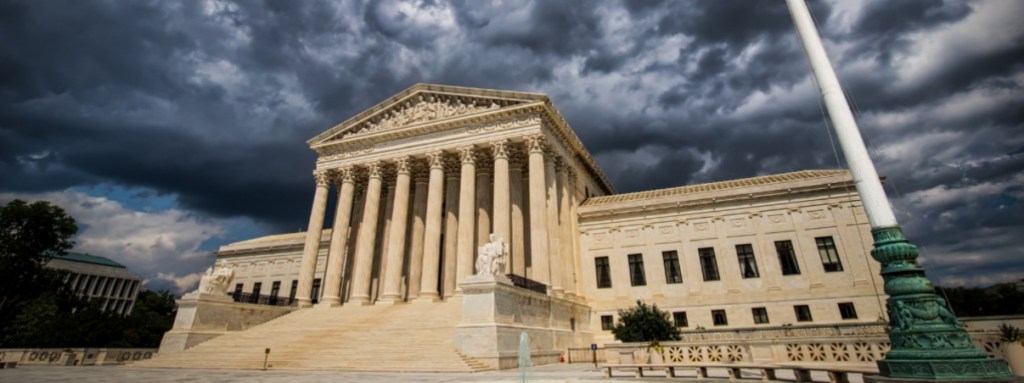
Now, the legal battle over Trump’s tariff authority is about to reach a climax. That’s what I’ll focus on here. The Supreme Court has agreed to fast track the challenge to the President’s discretion to impose retaliatory tariffs unilaterally. There are two cases at hand: V.O.S. Selections, Inc. v. Trump, and Learning Resources, Inc., et al. v. Donald Trump et al. In both cases, small business plaintiffs contend that Trump’s invocation of the International Emergency Economic Powers Act (IEEPA) is unwarranted, and that “most” of the tariff actions taken by Trump have usurped Congress’ power of the purse under Article I of the Constitution. Here’s Ilya Somin, who is a Volokh Conspiracy regular and one of the attorneys representing the plaintiffs:

“… IEEPA doesn’t even mention tariffs and has never previously been used to impose them, that there is no ‘unusual and extraordinary threat’ of the kind required to invoke IEEPA, the major questions doctrine, the constitutional nondelegation doctrine, and more.“

This isn’t the first time a U.S. president has imposed tariffs unilaterally, but it is easily the most drastic such action. Historically, nearly all tariffs were levied by acts of Congress. Prior to Trump II, perhaps the broadest tariff imposed by a President was Richard Nixon’s brief 10% surcharge on all imports, but that was lifted quickly. Presidents Johnson and Obama imposed some selective tariffs. All of these episodes seem piddling compared to Trump’s tariffs, which are both sweeping and in many cases painfully selective.

Eric Boehm notes that when it comes to major constitutional questions, the Court has taken the position that

“… executive power should be construed narrowly, not broadly …. Rather than tying itself into knots to affirm nearly unlimited executive powers over commerce, the Supreme Court should tell the Trump administration to get permission from Congress before imposing new tariffs.“

I believe that will be the general shape of the outcome here. Maybe there’s a way for the Court to allow the tariffs to stand until Congress decides to “man up”, acting one way or the other. SCOTUS would probably like to do just that! Or maybe the Court could stay the lower court’s injunction until the case is heard by the Court in full on the regular docket, or until Congress acts.

There’s a decent chance, however, that Trump’s tariffs will be struck down, leaving it up to tariff supporters in Congress to lay down statutory rules rather than put up with the impulsive craziness we’ve witnessed thus far. If the Court lets the tariffs stand, it leaves the door open for new tests on the limits of executive discretion. Here is Greg Ip at the link:

“There would also be no end to uncertainty. ‘Unlike most other tariff authorities, these tariffs are not enshrined in statute, there’s no process to change them, and they can change very rapidly, in a day, without much notice, as we’ve seen,’ said Greta Peisch, a trade attorney at Wiley Rein and former general counsel for the U.S. trade representative.“

We’ve already seen strong hints that the Administration would like to force businesses to eat the cost of the tariffs rather than pass them along to consumers in higher prices. There hasn’t been any formal action of this kind by the Administration, at least not yet. Still, one can hardly blame businesses who might perceive an implicit threat if they fail to comply. That kind of bullying represents an a massive abuse of power. The Court could do everyone a big favor by clarifying that the authority to impose tariffs rests with Congress.

State Compact Aims To Subvert Electoral College

09 Tuesday Apr 2019

Posted by Nuetzel in Constitution, Voting Rights

≈ Leave a comment

Tags

Alexander Hamilton, Carroll Andrew Morse, Congressional Term Limits, Constitution, Elections Clause, Electoral College, Fourteenth Amendment, George W. Bush, Justin Yang, National Popular Vote Interstate Compact, Norman R. Williams, State Powers, Supreme Court, U.S. Term Limits Inc v Thornton, Virginia v Tennessee, Voting Rights

The map shows the number of electoral votes by state, one vote per square. The states colored green are participants in a gambit that would, if successful, vitiate the Electoral College (EC). They hope to execute an end-run around Article V of the Constitution, which otherwise would require an amendment to replace the EC with the national popular vote. Such an amendment is highly unlikely to win approval, as I noted last week. The green states are members of the so-called National Popular Vote Interstate Compact (NPVC). This group of 13 states plus the District of Columbia would pledge their electors to the winner of the national popular vote, but only if and when enough states join the Compact to enable it to carry an election.

The big question is whether an electoral action by the NPVC would be constitutional. Article I, Section 10 of the Constitution prohibits states from entering treaties or compacts with other states without the approval of Congress. However, supporters of the NPV such as Justin Yang focus on an 1893 Supreme Court decision (Virginia v. Tennessee) that found congressional approval is unnecessary as long as a compact does not infringe on federal powers. NPVC advocates go on to assert that elsewhere, in Article II, Section 1, state legislatures are empowered to allocate electoral votes “in any way they want“, as Yang puts it.

There are strong reasons to doubt the NPVC’s interpretation, however. Carroll Andrew Morse raises a basic constitutional issue: the NPVC amounts to a denial of voting rights to the citizens of a Compact member-state. It is obviously true that a member-state’s voters would contribute to the national vote totals. Nevertheless, awarding state electors to the winner of the national vote, regardless of the in-state outcome, certainly could deprive state residents of their preference. The Fourteenth Amendment provides that a state’s denial of voting rights to any citizen or group of citizens would require the state to relinquish its representation in the legislature by a proportionate amount. That is a harsh remedy that the voters of any state should consider when weighing the benefits of membership in the NPVC.

This BYU Law Review article by Norman R. Williams covers some other areas of contention. It provides a review of some constitutional provisions bearing on the legality of interstate compacts as well as excellent background on the EC and its history. Some brief thoughts on the issue from Williams also appear in the Harvard Law Review here. According to Williams:

“… the states’ power to regulate the manner of presidential elections is far more limited than the proponents of the NPVC contend. In fact, just as the U.S. Supreme Court has narrowly interpreted the states’ power to regulate congressional elections to prevent states from destabilizing the constitutional structure, so too should it deny states the power to undermine the stability of the presidential election process.”

Williams cites a 1995 Supreme Court decision (U.S. Term Limits, Inc. v. Thornton) limiting state power over questions such as congressional term limits. The ruling stated that state-regulated limits create additional qualifications for holding office that are not authorized under the Elections Clause in Article I, Section 4. Williams contends that the process of choosing electors is analogous to other provisions regarding state powers, so it should be subject to the same limitations. He also says that if the Court followed the same method of reasoning as in Thornton, which focused on the founders intent as well as subsequent developments, it would reject the actions of the NPVC as unconstitutional.

Williams also argues that the NPVC may interfere with the rights of voters in other, non-Compact states. He says the history of Article II is inconsistent with an interpretation that the founders would have intended to allow states to exercise such broad, extra-state powers in electing a president:

“If a group of states can agree to pledge their presidential electors on the basis of the national vote, then they must likewise be able to agree to pledge their electors to a candidate only from those states, only from one political party, or only in accordance with the wishes of a designated committee of ‘presidential experts.’ In short, any interstate compact regarding the manner in which presidential electors are selected threatens to exclude the wishes of voters in nonsignatory states, and, therefore, it seems inconceivable that a Constitution that specifies how the President is to be elected and that lays out a process for amending its requirements would permit a group of states to alter so fundamental a part of our constitutional structure.”

Williams concludes with a quote from the Court’s decision in the Thornton case:

“As the Court admonished in Thornton, change, if it is to be undertaken, ‘must come not by legislation adopted either by Congress or by an individual State, but rather—as have other important changes in the electoral process—through the amendment procedures set forth in Article V.'”

Any legal challenge to the NPVC will have to wait until it is effective, that is, when and if it ever exercises 270 electoral votes. It now has a total of 189 electoral votes. The most recent addition was New Mexico, and a proposed ballot measure in Ohio could bring total Compact electors to 207. Fans of the NPVC hope that Michigan, Minnesota, and Wisconsin might join as well, though none of those is imminent. But if they did it would bring another 46 electoral votes to the Compact. Apparently Pennsylvania has rejected membership for now.

Almost all of the states already in the NPVC are solidly “blue”, having voted for the Democrat in presidential elections, at least over recent cycles. Of course, that means the Compact might quickly disintegrate if a Republican is expected to win the popular vote. Right now, however, Colorado and New Mexico are the only states that might qualify as swing states, and even those are a stretch. Some of the other states in which the NPVC is under debate are legitimate swing states, and legislation enabling the change will be risky for many lawmakers in those states. Ballot measures might be more preferable to the NPVC due to the possibility of limited turnout. We’ll see how it goes.

If states with 270 or more electors vote as a block, it diminishes the importance of each state’s voters, who might well disagree with the national popular vote in the future if not already. For example, members of the NPVC, including California, would have had to cast their electoral votes for George W. Bush in 2004, despite the desires expressed by their citizens at the polls. Voters at-large in any non-Compact state have more leverage over the outcome of a presidential election than if they follow the national popular vote. Alexander Hamilton would not have approved of the NPVC; he wrote that a state’s electors should not be influenced by parties outside the state. That was the intent of the founders.

Court challenges would undoubtedly follow any exercise of votes through the NPVC. Presumably that would occur only in the event of another conflict between the national popular vote and the EC, as constituted prior to the adoption of the NPVC. That would occur only if at least one Compact state had an in-state popular vote conflicting with the national vote. There is almost no doubt that such a dispute would make its way to the Supreme Court. Thus, a presidential election might someday be undecided until a final ruling is passed down by the high court. I strongly suspect that the NPVC would be found unconstitutional.


Success In The Enlightened West

08 Wednesday Aug 2018

Posted by Nuetzel in Free markets, Liberalism, Liberty

≈ Leave a comment

Tags

Constitution, Enlightenment, Individual Rights, Joe Lonsdale, Liberalism, Patriarchy, The Cicero Institute, The Economist, Western Civilization

The Left is engaged in a full attack on true liberalism and it is an attack on the rights of the individual: life, liberty, property, speech, due process of law, and other enumerated and unenumerated rights enshrined in the U.S. Constitution. These rights are themselves the very underpinnings of Western civilization and are together an unambiguous force for good in the world. Joe Lonsdale has written a declaration regarding the powerful legal, political, and economic philosophies that have served as the bases of Western civilization and its successes and which have, as a consequence, been adopted around the globe. Lonsdale, in his mid-30s, is an “American entrepreneur and technology investor” and founder of The Cicero Institute, an organization dedicated to encouraging “public-sector entrepreneurship to address America’s most pressing problems.”

I love Lonsdale’s full-throated advocacy for Western principles. Their articulation over three centuries ago by an enlightened “patriarchy” (as today’s social justice warriors might call them) managed to upset an entrenched and rapacious oligarchy, over time lifting whole populations out of subjugation and penury. Ultimately, this upheaval made possible the legal recognition of the same rights for all individuals, regardless of race and gender. Lonsdale’s insistence on the appropriate use of the word “liberal” is refreshing. It should (but won’t) serve as a corrective to the towering ignorance of those who accept “liberalism” when used as a cover for statism.

I’m going to quote “liberally” from Lonsdale’s piece because it speaks so well for itself, but if you’ve made it this far then you should read Lonsdale’s essay in its entirety.

“[John] Locke’s moral insight is ‘liberalism’, a principle of mutual restraint inspired by the inviolable rights of others to design their own lives. Freedom is life in accordance with reason; reason compels us to respect the freedoms of others. By respecting the rights of others, we guarantee our own.

This Enlightenment thinking was put into practice in the Glorious Revolution in 1688 in Britain, and especially in the founding of America, where Locke’s liberalism formed the backbone of the new republic. To be sure, in practice there were deep contradictions—the founders were simultaneously freedom fighters and slave-owners—but the institutional architecture was in place. The West’s new framework of property rights and political freedoms unleashed a surge of creative energy, enabling a three-century miracle of growth, prosperity and unimaginable wonders of innovation.

It didn’t have to happen that way. The natural order of things is for life to be ‘solitary, poor, nasty, brutish and short’ (in the words of Thomas Hobbes, a contemporary of Locke). Western civilisation is a great artifice: a liberal framework that enshrines property rights, allowing us to restrain most forms of tribalism, participate in free markets and prosper by serving others regardless of their identities.

These political rights of treating people equally and letting them get on with their business had a hugely beneficial effect on society and the economy. Consider that historically speaking, it is actually unnatural for the best ideas to dominate and spread, thus allowing entrepreneurs to displace incumbent, vested interests. More common is for force or hierarchy, not the meritocracy of ideas, to win. However, the West established a cultural and legal environment where a competition of clever ideas and activities could flourish. 

Lonsdale offers several examples of the malignant effects of forsaking these Western ideals. The hallmark of all these failures is an abandonment of the individual as the true and natural rights-holder and productive force. Here are Lonsdale’s  closing paragraphs:

“As pre-Enlightenment modes of value-signaling, tribalism and power-politics come to the fore on campus and social media, we must reaffirm our commitment to Western liberal values by actually putting them into practice. Only a rational order which enshrines individual rights to person and property, and expands opportunities for all, will create the stability and economic progress necessary to quell populist discontent.  

Unsurprisingly the anti-liberal, top-down parts of our society are experiencing cost-disease and decay. The West enabled a market order where the best ideas win, no matter whose idea it was. We need to remind ourselves of how unusual the miracle of our political economy is and enact its lessons. Only then can we save the concept of ‘Western civilisation’ and spread its benefits of freedom and prosperity—not just for people in the West, but for everyone.”

Follow Sacred Cow Chips on WordPress.com

Recent Posts

  • Immigration and Merit As Fiscal Propositions
  • Tariff “Dividend” From An Indigent State
  • Almost Looks Like the Fed Has a 3% Inflation Target
  • Government Malpractice Breeds Health Care Havoc
  • A Tax On Imports Takes a Toll on Exports

Archives

  • December 2025
  • November 2025
  • October 2025
  • September 2025
  • August 2025
  • July 2025
  • June 2025
  • May 2025
  • April 2025
  • March 2025
  • February 2025
  • January 2025
  • December 2024
  • November 2024
  • October 2024
  • September 2024
  • August 2024
  • July 2024
  • June 2024
  • May 2024
  • April 2024
  • March 2024
  • February 2024
  • January 2024
  • December 2023
  • November 2023
  • August 2023
  • July 2023
  • June 2023
  • May 2023
  • April 2023
  • March 2023
  • February 2023
  • January 2023
  • December 2022
  • November 2022
  • October 2022
  • September 2022
  • August 2022
  • July 2022
  • June 2022
  • May 2022
  • April 2022
  • March 2022
  • February 2022
  • January 2022
  • December 2021
  • November 2021
  • October 2021
  • September 2021
  • August 2021
  • July 2021
  • June 2021
  • May 2021
  • April 2021
  • March 2021
  • February 2021
  • January 2021
  • December 2020
  • November 2020
  • October 2020
  • September 2020
  • August 2020
  • July 2020
  • June 2020
  • May 2020
  • April 2020
  • March 2020
  • February 2020
  • January 2020
  • December 2019
  • November 2019
  • October 2019
  • September 2019
  • August 2019
  • July 2019
  • June 2019
  • May 2019
  • April 2019
  • March 2019
  • February 2019
  • January 2019
  • December 2018
  • November 2018
  • October 2018
  • September 2018
  • August 2018
  • July 2018
  • June 2018
  • May 2018
  • April 2018
  • March 2018
  • February 2018
  • January 2018
  • December 2017
  • November 2017
  • October 2017
  • September 2017
  • August 2017
  • July 2017
  • June 2017
  • May 2017
  • April 2017
  • March 2017
  • February 2017
  • January 2017
  • December 2016
  • November 2016
  • October 2016
  • September 2016
  • August 2016
  • July 2016
  • June 2016
  • May 2016
  • April 2016
  • March 2016
  • February 2016
  • January 2016
  • December 2015
  • November 2015
  • October 2015
  • September 2015
  • August 2015
  • July 2015
  • June 2015
  • May 2015
  • April 2015
  • March 2015
  • February 2015
  • January 2015
  • December 2014
  • November 2014
  • October 2014
  • September 2014
  • August 2014
  • July 2014
  • June 2014
  • May 2014
  • April 2014
  • March 2014

Blogs I Follow

  • Passive Income Kickstart
  • OnlyFinance.net
  • TLC Cholesterol
  • Nintil
  • kendunning.net
  • DCWhispers.com
  • Hoong-Wai in the UK
  • Marginal REVOLUTION
  • Stlouis
  • Watts Up With That?
  • Aussie Nationalist Blog
  • American Elephants
  • The View from Alexandria
  • The Gymnasium
  • A Force for Good
  • Notes On Liberty
  • troymo
  • SUNDAY BLOG Stephanie Sievers
  • Miss Lou Acquiring Lore
  • Your Well Wisher Program
  • Objectivism In Depth
  • RobotEnomics
  • Orderstatistic
  • Paradigm Library
  • Scattered Showers and Quicksand

Blog at WordPress.com.

Passive Income Kickstart

OnlyFinance.net

TLC Cholesterol

Nintil

To estimate, compare, distinguish, discuss, and trace to its principal sources everything

kendunning.net

The Future is Ours to Create

DCWhispers.com

Hoong-Wai in the UK

A Commonwealth immigrant's perspective on the UK's public arena.

Marginal REVOLUTION

Small Steps Toward A Much Better World

Stlouis

Watts Up With That?

The world's most viewed site on global warming and climate change

Aussie Nationalist Blog

Commentary from a Paleoconservative and Nationalist perspective

American Elephants

Defending Life, Liberty and the Pursuit of Happiness

The View from Alexandria

In advanced civilizations the period loosely called Alexandrian is usually associated with flexible morals, perfunctory religion, populist standards and cosmopolitan tastes, feminism, exotic cults, and the rapid turnover of high and low fads---in short, a falling away (which is all that decadence means) from the strictness of traditional rules, embodied in character and inforced from within. -- Jacques Barzun

The Gymnasium

A place for reason, politics, economics, and faith steeped in the classical liberal tradition

A Force for Good

How economics, morality, and markets combine

Notes On Liberty

Spontaneous thoughts on a humble creed

troymo

SUNDAY BLOG Stephanie Sievers

Escaping the everyday life with photographs from my travels

Miss Lou Acquiring Lore

Gallery of Life...

Your Well Wisher Program

Attempt to solve commonly known problems…

Objectivism In Depth

Exploring Ayn Rand's revolutionary philosophy.

RobotEnomics

(A)n (I)ntelligent Future

Orderstatistic

Economics, chess and anything else on my mind.

Paradigm Library

OODA Looping

Scattered Showers and Quicksand

Musings on science, investing, finance, economics, politics, and probably fly fishing.

  • Subscribe Subscribed
    • Sacred Cow Chips
    • Join 128 other subscribers
    • Already have a WordPress.com account? Log in now.
    • Sacred Cow Chips
    • Subscribe Subscribed
    • Sign up
    • Log in
    • Report this content
    • View site in Reader
    • Manage subscriptions
    • Collapse this bar
 

Loading Comments...