• About

Sacred Cow Chips

Sacred Cow Chips

Tag Archives: Deforestation

Carbon Credits Are Still Largely Fake

06 Wednesday Mar 2024

Posted by Nuetzel in Climate, Renewable Energy

≈ 4 Comments

Tags

Carbon Credits, Carbon Offsets, CO2, Credible CO2 Offsets, Deforestation, Double Counting of Offsets, ESG Variance, Excess Power, Global Greening, Greenhouse Gases, Inelastic Power Demand, Intermitancy, Net Zero, Paul Mueller, Renewable energy, Renewables Utilization, Taylor Swift, Water Vapor
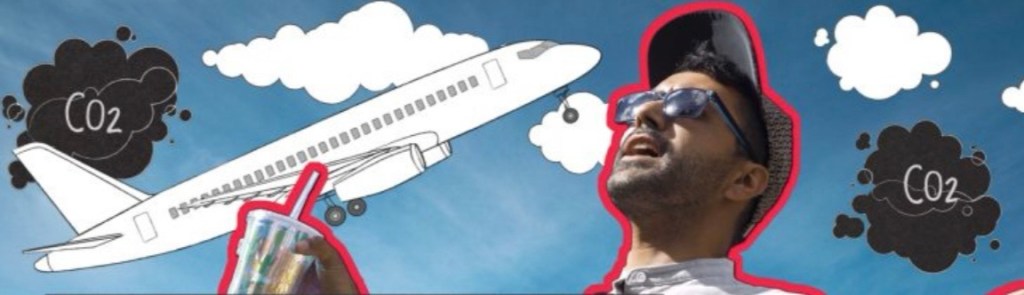
About a year ago I wrote about the sketchy nature of carbon credits (or “offsets”), which are purchased by people or entities whose actions generate CO2 emissions they’d like to offset. Those actions would include Taylor Swift’s private air travel, electric power generation, and many other activities whose participants wish to have “greenwashed”.

One short digression before I get started: see those black clouds of CO2 in the image above? Well, carbon dioxide doesn’t really look like that. In fact, CO2 is transparent. Trees breathe it! Visually, it’s less obvious than the greenhouse gas known as water vapor in those puffy white clouds, but virtually every image you’ll ever see on-line depicting CO2 emissions shows dark, roiling smoke. I just hate to spoil the scary effect, but there it is.

Back to carbon credits, which help fund projects that offset CO2 emissions (at least theoretically), such as planting new forest acreage (which would absorb CO2 … someday) or preventing deforestation. Other types of offset activities include investment in renewable energy projects and carbon capture technology. So, for example, if a utility’s power generation emits CO2, the creation or preservation of some amount of forested acreage can serve as a carbon sink adequate to offset the utility’s emissions. Net zero! Or so the utility might claim.

If only it were that simple! Paul Mueller explains that the incentive structure of these arrangements is perverse. What if credits are sold on the basis of supposed efforts to preserve forests that were never at risk to begin with? In fact, the promise of revenue from the sale of credits may be a powerful incentive to falsely present forested lands as targets for development. For that matter, cutting forestland for lumber makes more sense if it can be replanted immediately in exchange for revenue from the sale of carbon credits. And newly planted acreage won’t lead to absorption of much CO2 for many years, until the trees begin to mature. Then there are the risks of forest fires or disease that could compromise a forest’s ultimate value as a carbon sink.

Whether through fraud, calamity, or mismanagement, the sad truth is that projects serving as a basis for credits have done far less to reduce deforestation than promised. On top of that, another issue plaguing carbon markets for some time has been double counting of offsets, which can occur under several circumstances. Ultimately, CO2 emissions themselves may have done more to promote the growth of forests than purchases of carbon credits, because CO2 gives life to vegetation!

Obviously, the purchase of offsets raises the incremental cost of any project having CO2 emissions. The incidence of this added cost is borne to a large extent by consumers, especially because power demand is fairly inelastic. The craziness of offset logic may even dictate the purchase of offsets when a plant emitting more CO2 (e.g., coal) is replaced by a plant emitting less (natural gas), because the replacement would still emit carbon!

Some carbon offsets help pay for the construction of renewable power facilities like wind and solar farms. These renewable power facilities contribute to the power supply, of course, but wind turbines and solar farms typically operate at a small fraction of nameplate capacity due to the intermittency of wind and sunshine. Thus, these offsets are far less than complete. And from that low rate of renewable utilization we can deduct another fraction: periods of actual utilization often occur when no one wants the power, and while utilities can sell that excess power into the grid, it doesn’t replace other power at those times and it therefore doesn’t contribute to reductions in CO2 emissions.

Claims of achieving net zero are very much in vogue in the corporate world, and for a few related reasons. One is that they help keep activists and protesters away from the gates. There are, however, plenty of activists serving on corporate boards, in the executive suite, and among regulators.

The purchase of carbon offsets by “socially responsible corporations” might put stakeholder pressure on competitors who are “insufficiently green”. That would help to compensate for the higher costs imposed by offsets. After all, carbon credits are not cheap. In fact, smaller competitors might struggle to fund additional outlays for the credits.

Finally, claims of carbon neutrality also help with another constituency: “woke” investors. “Achieving” net zero boosts a firm’s so-called ESG score, presumed to reflect soundness in terms of environmental (E) and social (S) responsibility, as well as the quality of internal governance (G). With firms jockeying for ESG improvements, they help keep the offset charade going.

There is no common standard for calculating ESG, and there is considerable variance in ESG scores across rating firms. This should be cause for great skepticism, but too many investors are vulnerable to suggestions that screening on ESGs can enable both social responsibility and better returns. Sadly, they are sometimes paying higher fees for the privilege. The ESG fad among these investors might have helped fulfill hopes of greater returns for a while, but the imagined ESG advantage may have faded.

Carbon credits or offsets are plagued by bad incentives that often lead to wasteful outlays if not outright fraud. At present, they generally fail to reduce atmospheric CO2 as promised and they contribute to higher costs, which are passed on to consumers. They also serve as an unworthy basis for higher ESG scores, which are something of a sham in any case.

There have been efforts underway to improve the quality and legitimacy of carbon offsets. Some of this is voluntary due diligence on the part of purchasers. The effort also includes various NGOs and regulators. Ultimately, the push for quality is likely to push the price of offsets upward dramatically. Perhaps offsets will become more credible, but they won’t come cheap. The cost of achieving net zero targets will largely come out of consumers’ pockets, and those net zeros will still be nominal at best.


Carbon Credits and Green Bonds Are Largely Fake

06 Monday Mar 2023

Posted by Nuetzel in Climate, Environment

≈ 2 Comments

Tags

Blake Lovewall, Carbon Credits, Carbon Offsets, Caveat Emptor, Climate Change Opportunism, Deforestation, Die Zeit, Environmental Committments, ESG Scores, Fiduciary Duty, Green Bonds, Green Investing, greenfraud.blogspot.com, Greenwashing, Net Zero, Paris Climate Accords, Recycling Mandates, REDD, SourceMaterial, The Guardian

It doesn’t take much due diligence to reveal that certain green “commitments” are flimsy gestures at best. I discussed the poor economics of recycling mandates in a post a few days ago. Here I discuss two other prominent examples of fake virtue: so-called carbon offsets and green bonds. These are devices often utilized by private actors to assuage activists, gain favor with public policymakers., or simply to claim and promote themselves as “zero-footprint”. No doubt many well-intentioned people believe in the goodness of these instruments, blissfully ignorant of the underlying fakery. Of course, this is dwarfed by the broad flimsiness (and cost implications) of claims about climate catastrophe, which is what motivates carbon credits and most green bonds in the first place. The includes “commitments” made by various nations under the Paris Climate Accords, but that is a subject for another day.

Climate Credits

I mentioned Blake Lovewall’s interesting commentary on carbon credits recently. Purchasing these credits is a way of “greenwashing” activities that emit carbon dioxide. Also known as carbon offsets, this is a $2 billion market with growth fueled by a desire by businesses to appeal to environmental activists and “green” investors, and to boost their ESG scores. I’ll quote here from my own piece, which had as it’s main thrust the waste inherent in wind and solar projects (Lovewall quotes are in blue type):

“The resulting carbon emissions are, in reality, unlikely to be offset by any quantity of carbon credits these firms might purchase, which allow them to claim a ‘zero footprint’. Blake Lovewall describes the sham in play here:

‘The biggest and most common Carbon offset schemes are simply forests. Most of the offerings in Carbon marketplaces are forests, particularly in East Asian, African and South American nations. …

The only value being packaged and sold on these marketplaces is not cutting down the trees. Therefore, by not cutting down a forest, the company is maintaining a ‘Carbon sink’ …. One is paying the landowner for doing nothing. This logic has an acronym, and it is slapped all over these heralded offset projects: REDD. That is a UN scheme called “Reduce Emissions from Deforestation and Forest Degradation”. I would re-name it to, “Sell off indigenous forests to global investors”.’

Lovewall goes on to explain that these carbon offset investments do not ensure that forests remain pristine by any stretch of the imagination. For one thing, the requirements for managing these ‘preserves’ are often subject to manipulation by investors working with government; as such, the credits are often vehicles for graft. In Indonesia, for example, carbon credited forests have been converted to palm oil plantations without any loss of value to the credits! Lovewall also cites a story about carbon offset investments in Brazil, where the credits provided capital for a massive dam in the middle of the rainforest. This had severe environmental and social consequences for indigenous peoples. It’s also worth noting that planting trees, wherever that might occur under carbon credits, takes many years to become a real carbon sink.”

Lovewall makes a strong case that carbon credits are a huge fraud. This was reinforced by a recent investigation conducted by the Guardian, Die Zeit and SourceMaterial, a “non-profit investigative journalism organization”, according to the Guardian. The investigation was based on independent research studies as well as interviews with various parties. They found that at least 90% of “rainforest credits” do not represent carbon reductions. Two studies found no abatement whatsoever in deforestation under the credits. Furthermore, the deforestation threats (absent credits) had been overstated by some 400%. The investigation also noted serious human rights violations associated with the offset projects. Rainforest credits are only one kind of carbon offset, but similar problems plague other types of credits as well, such as those earned by shuttering fossil fuel plants in developing countries desperately short on power generation.

That so much of the carbon credit market is fraudulent should infuriate climate change radicals. The findings also are a disgrace to participants in these markets, revealing that much of the “net zero” propaganda trumpeted by corporate PR organizations is a charade. Regrettably, it is motivated by an unnecessary panic over carbon dioxide emissions and their presumed role in global warming. Spending on environmental initiatives should be a warning flag for investors. The resources firms dedicate to those credits deserve careful scrutiny. The fascination with ESG scores is another sign that corporate managers have lost sight of their fundamental mission: to maximize shareholder value by serving their customers well.

Green Bonds

Another suspicious form of “commitment” is embodied in the issuance of so-called “green bonds” to raise funds for environmental initiatives. This form of investing is so ostensibly “virtuous” that these bonds are demanded even with specific commitments that are quite “soft”. This just released study finds that green bonds offer little assurance of any positive environmental impact:

“… we find a concerning lack of enforceability of green promises. Moreover, these promises have been getting weaker over time. Green bonds often make vague commitments, exclude failures to live up to those commitments from default events, and disclaim an obligation to perform in other parts of the document. These shortcomings are known to market participants. Yet, demand for these instruments has been growing. We ask why green bond promises are so weak, while the same investors demand strong promises from the same issuers in other settings.”

Green bonds are “virtue ornaments” typically purchased by institutional investors with some sort of environmental or ESG objective. Apparently, earning returns is an afterthought. Unfortunately, these funds managers are usually investing on behalf of other people. While some of those clients might wholly support the environmental objectives, many others have no clue.

Fortunately, there are alternatives, and I’m tempted to say caveat emptor applies here. However, it really is a remarkable breach of fiduciary duty to manage funds based on objectives other than maximizing expected returns, or to in any way sacrifice returns in favor of “green” objectives. That is happening before our very eyes. Even clients who wish to invest funds for green objectives are being shaken down here. According to the research cited above, the green bond “commitments” are hardly worth the paper they’re written on.

Institutional investors go right along, scrambling to add green bonds to their portfolios. This helps drive down the effective cost of funds to the green bond issuers. Thus, highly speculative climate or environmental initiatives can be funded on the cheap. They do, however, produce lucrative opportunities for the climate crisis industry.

One More Time

People save to build wealth, typically for their retirement years. If that’s your objective, you probably shouldn’t invest in firms expending their resources on carbon credits. At best, the credits are a buy-off to activists. who are just as ignorant of the whole sham.

One might plausibly ask whether I should love carbon credits because they allow, at least, certain forms of beneficial economic activity to avoid challenge by crazies. Perhaps that’s true taking the world as it is, but my hope is that exposing various layers of climate hysteria and craziness is one way to change the world. The whole carbon credit enterprise enables extraction of still greater rents by climate change opportunists, to say nothing of human rights abuses taking place under the guise of these credits.

Like carbon offsets, green bonds promote fictitious virtue, They are another way in which green profiteers extract rents from well-meaning savers and investors, some of whom are unaware that ESG objectives are undermining their returns. Even if investors prefer to sacrifice returns in the pursuit of green goals, the initiatives thus funded often have no environmental merit, particularly when it comes to reducing carbon emissions. Despite the efforts of these bonds issuers to convince us of their green bona fides, their “commitments” to green results are usually flimsy.

HT: Green Fraud blog for the image above.

.

Green Climate Policy Wreaks Poverty

03 Friday Sep 2021

Posted by Nuetzel in Climate science, Environmental Fascism

≈ 6 Comments

Tags

Assessment Report #6, Carbon Emissions, Cooling the Past, Deforestation, Democratic Republic of Congo, Diablo Canyon, Disparate impact, Economic Development, Energy Poverty, Fossil fuels, Hügo Krüger, Intergovernmental Panel on Climate Change, IPCC, Jennifer Marohasy, Jim Crow Environmentalism, Joel Kotkin, Judith Curry, Michael Schellenberger, Natural Gas, Net Zero Carbon, Nuclear power, Rare Earth Minerals, Regressive Policy, Remodeled Temperatures, Renewable energy, Steve Koonin

Have no doubt: climate change warriors are at battle with humanity itself, ostensibly on behalf of the natural world. They would have us believe that their efforts to eliminate the use of fossil fuels are necessary to keep our planet from becoming a blazing hothouse. However, the global temperature changes we’ve witnessed over the past 150 years, based on the latest Assessment Report (AR6) from the Intergovernmental Panel on Climate Change (IPCC), are well within the range of historical variation.

“Remodeled” History

Jennifer Marohasy posted an informative discussion of the IPCC’s conclusions last month, putting them into a broader climatological context and focusing in particular on measurement issues. In short, discussing “global” temperatures with any exactitude is something of a sham. Moreover, the local temperature series upon which the global calculations are based have been “remodeled.” They are not direct observations. I don’t think it’s too crude to say they’ve been manipulated because the changed records are almost always in one direction: to “cool” the past.

Judith Curry is succinct in her criticism of the approach to climate change adopted by alarmist policymakers and many climate researchers: 

“In a nutshell, we’ve vastly oversimplified both the problem and its solutions. The complexity, uncertainty, and ambiguity of the existing knowledge about climate change is being kept away from the policy and public debate. The solutions that have been proposed are technologically and politically infeasible on a global scale.”

We need a little more honesty!

The Real Victims

I want to focus here on some of the likely casualties of the war on fossil fuels. Those are, without a doubt, the world’s poor, who are being consigned by climate activists to a future of abject suffering. Joel Kotkin and Hügo Krüger are spot-on in their recent piece on the inhumane implications of anti-carbon ideology.

Energy-poor areas of the world are now denied avenues through which to enhance their peoples’ well being. Attempts to fund fossil-fuel power projects are regularly stymied by western governments and financial institutions in the interests of staving off political backlash from greens. Meanwhile, far more prosperous nations power their economies with traditional carbon-based energy sources. Most conspicuously, China continues to fuel its rapid growth with coal and other fossil fuels, getting little pushback from climate activists. If you’re wondering how the composition of energy output has evolved, this time-lapse chart is a pretty good guide.

One of the most incredible aspects of this situation is how nuclear energy has been spurned, despite its status as a proven and safe solution to carbon-free power. This excellent thread by Michael Schellenberger covers the object lesson in bad public policy offered by the proposed closing of the Diablo Canyon nuclear plant in California.

In both the U.S. and other parts of the world, as Kotkin and Krüger note, it is not just the high up-front costs that lead to the rejection of these nuclear projects. The green lobby and renewable energy interests are now so powerful that nuclear energy is hardly considered. Much the same is true of low-carbon natural gas: 

“Sadly, the combination of virtue-signaling companies and directives shaped by green activists in rich countries – often based on wildly exaggerated projections, notes former Barack Obama advisor Steve Koonin – make such a gradual, technically feasible transition all but impossible. Instead, it is becoming increasingly unlikely that developing countries will be able to tap even their own gas.”

Energy is the lifeblood of every economy. Inadequate power creates obstacles to almost any form of production and renders some kinds of production impossible. And ironically, the environmental consequences of “energy poverty” are dire. Many under-developed economies are largely dependent on deforestation for energy. Without a reliable power grid and cheap energy, consumers must burn open fires in their homes for heat and cooking, a practice responsible for 50% of child pneumonia deaths worldwide, according to Kotkin and Krüger.

Green Environmental Degradation

Typically, under-developed countries are reliant on the extraction of natural resources demanded by the developed world:

“The shift to renewables in the West, for example, has increased focus on developing countries as prime sources for critical metals – copper, lithium, and rare-earth minerals, in particular – that could lead to the devastation of much of the remaining natural and agricultural landscape. … Lithium has led to the depletion of water resources in Latin America and the further entrenchment of child labor in the Democratic Republic of the Congoas the search for cobalt continues.”

Unfortunately, the damage is not solely due to dependence on resource extraction:

“The western greens, albeit unintentionally, are essentially turning the Third World into the place they send their dirty work. Already, notes environmental author Mike Shellenberger, Africans are stuck with loads of discarded, highly toxic solar panels that expose both the legions of rag-pickers and the land itself to environmental degradation – all in the name of environmentalism.”

Battering the Poor In the West

Again, wealthy countries are in far better shape to handle the sacrifices required by the climate calamitists, but it still won’t be easy. In fact, lower economic strata will suffer far more than technocrats, managers, and political elites. The environmental left leans on the insidious lever of energy costs in order to reduce demand, but making energy more costly takes a far larger bite out of the budgets of the poor. In another recent piece, “Jim Crow Returns to California,” Kotkin discusses the disparate impact these energy policies have on minorities. 

“This surge in prices derives from the state’s obsession — shared by the ruling tech oligarchs — with renewable energy and the elimination of fossil fuels. Yet as a recent Massachusetts Institute of Technology (MIT) report has shown, over-reliance on renewables is costly, because it requires the production of massive (and environmentally unfriendly) battery-storage capacity — the price of which is invariably passed on to the taxpayer.

This is not bad news for the tech oligarchs, who have been prominent among those profiting from ‘clean energy’ investments. But many other Californians, primarily those in the less temperate interior, find themselves falling into energy poverty or are dependent on state subsidies that raise electricity prices for businesses and the middle class. Black and Latino households are already forced to pay from 20 to 43% more of their household incomes on energy than white households. Last year, more than 4 million households in California (30% of the total) experienced energy poverty.”

Kotkin touches on other consequences of these misguided policies to minority and non-minority working people. In addition to jobs lost in the energy sector, a wide variety of wage earners will suffer as their employers attempt to deal with escalating energy costs. The immediate effects are bad enough, but in the long-run the greens’ plans would scale back the economy’s productive machinery in order to eliminate carbon emissions — net zero means real incomes will decline! 

Energy costs have a broad impact on consumer’s budgets. Almost every product imaginable is dependent on energy, and consumer prices will reflect the higher costs. In addition, the “green” effort to curtail development everywhere except in high-density transit corridors inflates the cost of housing, inflicting more damage on workers’ standards of living.

Tighten Your Belts

These problems won’t be confined to California if environmental leftists get their version of justice. Be prepared for economic stagnation for the world’s poor and a sharply reduced standard of living in the developed world, but quite unnecessarily. We’ll all pay in the long run, but the poor will pay much more in relative terms.

Amazon Fire Fraud

02 Monday Sep 2019

Posted by Nuetzel in Forest Fires, Global Greening

≈ Leave a comment

Tags

Al Gore, Alexander Hammond, Amazon Basin, Amazon Fires, Brazil, Climate Change, Coyote Blog, Deforestation, FEE, Global Fire Emissions Database, Jair Bolsonaro, Leonardo DiCaprio, Michael Shellenberger, P.T. Barnum, Reforestation, Sugar Cane, U.S. Ethanol Mandates, Warren Meyer

Leftist activists recently pounced on another opportunity to mischaracterize events, this time in the Amazon Basin, where recent fires were held to be unprecedented. The fires were also characterized as evidence of a massive conspiracy between capitalists and the new government of President Jair Bolsonaro to open the rain forest to commercial exploitation. Warren Meyer squares away the facts at this Coyote Blog post, which is where I found the chart above. Forest clearing in Brazil has been much lower over the past 10 years than during period 1988-2008. It stepped-up somewhat during the first half of 2019, but it still ran at a rate well below 2008. A key reason for the increase is fascinating, but I’ll merely tease that for now.

As for the fires, Meyer provides the following quote about this year’s fires from NASA in a statement accompanying a satellite photo:

“As of August 16, 2019, satellite observations indicated that total fire activity in the Amazon basin was slightly below average in comparison to the past 15 years. Though activity has been above average in Amazonas and to a lesser extent in Rondônia, it has been below average in Mato Grosso and Pará, according to the Global Fire Emissions Database.“

So what was the cause of all the alarm? Meyer points to a August 22 story in the Washington Post, though WaPo might not have been the first. The article was either poorly researched and “fact checked” or it was a deliberate attempt to raise alarm. The sloppy story was picked up elsewhere, of course, and distorted memes spread on social media condemning the Brazilian government and capitalism generally.

The burning that is taking place has been started by farmers preparing land for crops, a process that occurs every year. Meyer quotes the New York Times on this point, which noted that very little of the burning was taking place in old-growth forests.

What’s really ironic and crazy about all this is that U.S. environmental policy is responsible for some of the burning that is taking place in the Amazon. Meyer notes that U.S. ethanol mandates have subsidized a years-long trend of increased sugar cane production in the Amazon Basin. Of course, burning is a regular part of the normal sugar cane harvest. Moreover, that production has contributed to land clearance, offsetting some of the forces that have brought the rate of deforestation in Brazil down overall.

The whole episode dovetails with the ongoing narrative that fires are burning out of control across the globe due to climate change. We heard similar propaganda last year after several large fires in California. Michael Shellenberger does his best to set the record straight, demonstrating that the annual land area burned worldwide has declined by 25% since 2003. He contrasts that record with the hopelessly errant reporting by major media organizations.

As P.T. Barnum once said, a sucker’s born every minute. He might as well have been talking about the armies of well-meaning but gullible greenies who fall for every scare story told by the likes of Al Gore and Leonardo DiCaprio. And scare stories are exactly what these tales of a global conflagration amount to. Meanwhile, as Alexander Hammond explains, global reforestation has taken hold. In what is apparently a paradox to some, this is largely the result of economic growth. Hammond discusses the logical connections between economic development and environmental goods, including reforestation and biodiversity. The bottom line is that the best policies for reforestation are not those imposing obstacles to growth, as the environmental Left would have it. Rather, it is policies that promote development and income growth, which are generally more compatible with individual liberty, that will encourage growth in the world’s forests.

Follow Sacred Cow Chips on WordPress.com

Recent Posts

  • Immigration and Merit As Fiscal Propositions
  • Tariff “Dividend” From An Indigent State
  • Almost Looks Like the Fed Has a 3% Inflation Target
  • Government Malpractice Breeds Health Care Havoc
  • A Tax On Imports Takes a Toll on Exports

Archives

  • December 2025
  • November 2025
  • October 2025
  • September 2025
  • August 2025
  • July 2025
  • June 2025
  • May 2025
  • April 2025
  • March 2025
  • February 2025
  • January 2025
  • December 2024
  • November 2024
  • October 2024
  • September 2024
  • August 2024
  • July 2024
  • June 2024
  • May 2024
  • April 2024
  • March 2024
  • February 2024
  • January 2024
  • December 2023
  • November 2023
  • August 2023
  • July 2023
  • June 2023
  • May 2023
  • April 2023
  • March 2023
  • February 2023
  • January 2023
  • December 2022
  • November 2022
  • October 2022
  • September 2022
  • August 2022
  • July 2022
  • June 2022
  • May 2022
  • April 2022
  • March 2022
  • February 2022
  • January 2022
  • December 2021
  • November 2021
  • October 2021
  • September 2021
  • August 2021
  • July 2021
  • June 2021
  • May 2021
  • April 2021
  • March 2021
  • February 2021
  • January 2021
  • December 2020
  • November 2020
  • October 2020
  • September 2020
  • August 2020
  • July 2020
  • June 2020
  • May 2020
  • April 2020
  • March 2020
  • February 2020
  • January 2020
  • December 2019
  • November 2019
  • October 2019
  • September 2019
  • August 2019
  • July 2019
  • June 2019
  • May 2019
  • April 2019
  • March 2019
  • February 2019
  • January 2019
  • December 2018
  • November 2018
  • October 2018
  • September 2018
  • August 2018
  • July 2018
  • June 2018
  • May 2018
  • April 2018
  • March 2018
  • February 2018
  • January 2018
  • December 2017
  • November 2017
  • October 2017
  • September 2017
  • August 2017
  • July 2017
  • June 2017
  • May 2017
  • April 2017
  • March 2017
  • February 2017
  • January 2017
  • December 2016
  • November 2016
  • October 2016
  • September 2016
  • August 2016
  • July 2016
  • June 2016
  • May 2016
  • April 2016
  • March 2016
  • February 2016
  • January 2016
  • December 2015
  • November 2015
  • October 2015
  • September 2015
  • August 2015
  • July 2015
  • June 2015
  • May 2015
  • April 2015
  • March 2015
  • February 2015
  • January 2015
  • December 2014
  • November 2014
  • October 2014
  • September 2014
  • August 2014
  • July 2014
  • June 2014
  • May 2014
  • April 2014
  • March 2014

Blogs I Follow

  • Passive Income Kickstart
  • OnlyFinance.net
  • TLC Cholesterol
  • Nintil
  • kendunning.net
  • DCWhispers.com
  • Hoong-Wai in the UK
  • Marginal REVOLUTION
  • Stlouis
  • Watts Up With That?
  • Aussie Nationalist Blog
  • American Elephants
  • The View from Alexandria
  • The Gymnasium
  • A Force for Good
  • Notes On Liberty
  • troymo
  • SUNDAY BLOG Stephanie Sievers
  • Miss Lou Acquiring Lore
  • Your Well Wisher Program
  • Objectivism In Depth
  • RobotEnomics
  • Orderstatistic
  • Paradigm Library
  • Scattered Showers and Quicksand

Blog at WordPress.com.

Passive Income Kickstart

OnlyFinance.net

TLC Cholesterol

Nintil

To estimate, compare, distinguish, discuss, and trace to its principal sources everything

kendunning.net

The Future is Ours to Create

DCWhispers.com

Hoong-Wai in the UK

A Commonwealth immigrant's perspective on the UK's public arena.

Marginal REVOLUTION

Small Steps Toward A Much Better World

Stlouis

Watts Up With That?

The world's most viewed site on global warming and climate change

Aussie Nationalist Blog

Commentary from a Paleoconservative and Nationalist perspective

American Elephants

Defending Life, Liberty and the Pursuit of Happiness

The View from Alexandria

In advanced civilizations the period loosely called Alexandrian is usually associated with flexible morals, perfunctory religion, populist standards and cosmopolitan tastes, feminism, exotic cults, and the rapid turnover of high and low fads---in short, a falling away (which is all that decadence means) from the strictness of traditional rules, embodied in character and inforced from within. -- Jacques Barzun

The Gymnasium

A place for reason, politics, economics, and faith steeped in the classical liberal tradition

A Force for Good

How economics, morality, and markets combine

Notes On Liberty

Spontaneous thoughts on a humble creed

troymo

SUNDAY BLOG Stephanie Sievers

Escaping the everyday life with photographs from my travels

Miss Lou Acquiring Lore

Gallery of Life...

Your Well Wisher Program

Attempt to solve commonly known problems…

Objectivism In Depth

Exploring Ayn Rand's revolutionary philosophy.

RobotEnomics

(A)n (I)ntelligent Future

Orderstatistic

Economics, chess and anything else on my mind.

Paradigm Library

OODA Looping

Scattered Showers and Quicksand

Musings on science, investing, finance, economics, politics, and probably fly fishing.

  • Subscribe Subscribed
    • Sacred Cow Chips
    • Join 128 other subscribers
    • Already have a WordPress.com account? Log in now.
    • Sacred Cow Chips
    • Subscribe Subscribed
    • Sign up
    • Log in
    • Report this content
    • View site in Reader
    • Manage subscriptions
    • Collapse this bar
 

Loading Comments...