• About

Sacred Cow Chips

Sacred Cow Chips

Tag Archives: Voluntary Exchange

Insurance Subsidies: Taxes vs. High Premiums

16 Tuesday May 2017

Posted by Nuetzel in Health Care, Subsidies, Taxes

≈ Leave a comment

Tags

Charity, Guaranteed Issue, Individual Mandate, Kevin Williamson, Managed Health Care, Megan McArdle, monopoly, Pre-Existing Conditions, Right To Health Care, Single-Payer, Voluntary Exchange, Woodrow Wilson

Here’s a question a friend posed: Why do we care whether health care coverage for high-risk individuals is subsidized by taxpayers versus premium payers via common (community) rating in a combined risk pool? For convenience, let’s call those two scenarios T and C. Under C there is no segmentation whatsoever, while T involves a division of individuals into two groups: standard and high risk. Both scenarios involve guaranteed issue, though T assumes that high-risk individuals must purchase their coverage in the appropriate market. I’ll tackle T first because separate treatment of the distinct risk archetypes yields results that are useful as a baseline.

Taxpayers Subsidize Pre-Existing Conditions

Under scenario T, suppose that all standard risks face the same expected outcome in each period. Everyone in that group pays based on their expected health care costs. In the end, some will have greater health care needs than others, but only a few will be truly unlucky, incurring extremely high health care expenses. On balance, the pooling of risk makes the arrangement sustainable. People enter into these contracts voluntarily because they are risk averse. No one forces them; they are capturing value from protection against financial ruin. The paid-in cash can be invested by the plan in the interim between premium and claims payments. The combination of premium payments and investment income must be enough to cover claims and allow the managers of the plan to defray their administrative costs and make a tidy profit. The profit matters because it attracts voluntary resources to bear on the problem of health-expense risk. Therefore, these insurance transactions are mutually beneficial to the insured and the owners of the insurer.

Conceivably, the smaller high-risk group could be handled the same way, as long as their aggregate health care expenses are predictable. Those expenses will be high, however, so the cost of coverage for individuals in such a pool might be prohibitive. One solution is to force taxpayers to subsidize coverage for this group. The transactions in this market are also mutually beneficial to the insureds and the insurers, just as in the market for standard risks. In both cases, the value to purchasers of coverage is no less than the cost of providing it, including compensation for any capital employed in the process.

In the simplified world of scenario T, we have an optimal insurance outcome for both standard and high-risk individuals. The downside is the cost of the subsidies to taxpayers, which distort a variety of incentives, including labor supply, saving and investment. These lead to misallocations, but they are spread across the economy rather than concentrated on the outcomes in a single market. Is this better than simply pooling all risks, as in Scenario C (common rating)?

Common (Community) Rating

Common rating means that all risks are combined into one pool and everyone is charged the same premium. High-risk individuals get to participate just as if they are standard risks. However, because the combined risk pool has greater expected health care costs on average than the standard risk population, the premium must be greater than the one charged to standard risks in Scenario T. Otherwise, the plan could not cover all expenses nor earn a profit. Worse yet, the standard risks now have an incentive to exit the market while high-risk individuals have every reason to leap in. This is called adverse selection, and it leads to the sort of insurance death spiral we’ve witnessed under Obamacare. And not only does the risk pool deteriorate: the incentive to offer coverage is diminished as well. Thus, an entire industry is rendered dysfunctional. Those who wish to pool together voluntarily in order to efficiently hedge their risks are, by law, prohibited from doing so. The next step might well be for government to mandate participation in an attempt to keep the plan afloat.

Those who favor forced redistribution (not my set) might have other reasons to prefer Scenario T, as it creates greater latitude for progressive tax funding of the subsidies. However, the subsidies themselves could be sensitive to income such that the risky but well-heeled pay more.

From a libertarian perspective, Scenario C has obvious drawbacks, starting with the coercion of insurers to provide coverage to the high-risk population at rates that do not compensate for risk. Then, too, the mis-pricing of risk places a burden on individuals of standard risk. With the pooling of all risks, community rating and coverage mandates result in individual and aggregate over-insurance against most types of risk, tying up scarce resources in insurance assets that could be invested more productively in other uses. In addition, resources are absorbed by compliance costs as authorities find it necessary to enforce the many rules made in hopes of proping-up an otherwise unsustainable arrangement.

Then There’s Single-Payer

It’s often argued that going beyond this point in Scenario C to a single-payer system will yield better outcomes at lower costs. Megan McArdle shreds this idea in a recent column: well over 40% of health care spending in the U.S. is paid by government already; the average growth of that share is even higher than private health care spending; the quality of care is often lower in the government health sector, and in any case, single payer systems around the world do not enjoy slower growth in costs. Rather, they started from lower levels of health care costs. Our relatively high level of costs in the U.S. evolved many years ago, before single-payer systems were adopted abroad. We have many more private and semi-private hospital rooms in the U.S., we often have greater availability of advanced technology, and waiting times for care tend to be significantly shorter.

The high standard of living in the U.S., i.e., our level of consumption, explains a lot of the gap in health care spending. Overall, our health care outcomes are good relative to other developed countries. Unfortunately, we’ve also pushed-up costs from the demand side by offering tax subsidies on employer-provided care, and government in the U.S. has had a role in “managing” health care since the time of the Woodrow Wilson Administration, largely to the detriment of cost control. Government control stultifies competition, creating monopoly-like conditions in both insurance and the provision of care. That manifests in higher profits, safer profits, or slovenly performance by organizations and agents that lack accountability to customers and market forces. Costs rise.

Liberty or Coercion

Libertarians will object to the tax in Scenario T, which like all taxation is coerced, but the taxes necessary to pay for adequate coverage for pre-existing conditions is minor relative to the potential costs of distorting the entire health insurance industry, repleat with the costs of government regulation and compliance that entails, and the potential for still more encroachment of government in health care.

Finally, the question posed by my friend about tax subsidies versus common insurance rating was prompted by a presumed “right to health care”. One must ask whether that right is legitimate. Kevin Williamson argues that scarcity interferes with any such claim. More to the point, in a free society, one cannot simply demand health care from another free individual. Our choices for distributing scarce health care fall into one of only two categories: voluntary and coerced. We should always prefer the former, which may take the form of charity or a mechanism under which care is provided via free exchange. The latter works very well when incentives are clear and pricing is efficient. For those who cannot participate in exchange for any reason, including pre-existing conditions that make coverage prohibitive, private charity is an alternative to government subsidies. At a minimum, charity should serve as an important relief valve for the burden on taxpayers. The Left, however, is always quick to condemn private charity as if it is somehow an illegitimate mechanism for solving social problems, but it is often superior to government action.
Willing Exchange With Capitalists

18 Wednesday May 2016

Posted by Nuetzel in Capitalism, Marxism

≈ Leave a comment

Tags

Capitalism, competition, Free Markets, Gary Galles, Government Monopoly, Karl Marx, Labor Theory of Value, Legitimized Coercion, Leonard Read, Liberalism, Limits on Government, Market Power, Marxism, Misuse of Words, Patrick Barron, Robert Murphy, Social Organization, statism, The Beacon, Voluntary Exchange, Willing Exchange

marx1

Now and then I’m inspired to blog on the misshapen language of political discourse. I recently wrote about the misuse of words by the American left, including their use of the term “liberalism”. This time, the particular word in play is “capitalism”, which I use to describe the ideal laissez faire economic order. I have always viewed it as a force for good. Real capitalism means free markets, consumer choice, strong private property rights, rewards to private initiative, and competition among producers. Even under conditions of concentrated market power, capitalism is preferable to government monopoly. Nevertheless, Gary Galles writes at The Beacon that capitalism is an inferior description of the laissez-faire ideal than”willing exchange“, or alternatively, unforced or voluntary exchange. Perhaps he has a point.

Capital and labor are the primary factors of production and both must be compensated. Labor earns a wage and capital earns a profit. Generally, the more capital a worker has available on the job, the greater the worker’s productivity and the greater the worker’s wage. However, any profit or return to capital is viewed by the left as an undeserved rent. The question of compensation is quite aside from the valuable social role profits play in directing resources to their most valued uses. Robert Murphy’s drives this home in an excellent recent essay entitled “There’s No Such Thing As Excessive Profits“. Here, here! In another post related to the crucial social role played by capital and profit, Patrick Barron explains “Why We Need Private Property To Deal With Scarce Resources“.

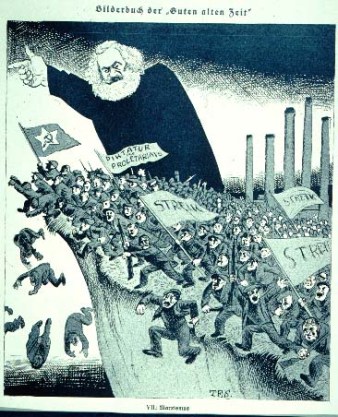
Again, any return to capital, normal or extra-normal, is seen by the left as a reward that should flow to labor in a just world. That is the upshot of Karl Marx’s labor theory of value. Thus, owners of capital are characterized as “takers”. Galles notes the belief that Marx coined the term “capitalism” in order to:

“…falsely imply that the system benefited capitalists at others’ expense, when, in fact, workers have been the greatest gainers from all the productivity enhancements the system has generated.“

He quotes Leonard Read on the value of “willing versus unwilling exchange” as an effective way to delineate and contrast the positions of adherents of laissez faire and statism:

“Standing for willing exchange, on the one hand, or for unwilling exchange, on the other, more nearly accents our ideological differences than does the employment of the terms in common usage…there is a minimum of verbal facade to hide behind.

Willing exchange…has not yet been saddled with emotional connotations …Further, its antithesis, unwilling exchange…no one, not even a protagonist, proudly acknowledges he favors that; it does offense to his idealism.

If we cut through all the verbiage used to report and analyze political and economic controversy…much of it boils down to a denial of willing and the insistence upon unwilling exchange. …

The concept of willing exchange unseats Napoleonic behavior—all forms of authoritarianism—and enthrones the individual. The consumer becomes king. Individual freedom of choice rules economic affairs… [It] is for me, and a willing seller, to decide; it is no one else’s business!“

The hallmark of the state as an actor is coercion. After all, it derives its power via “legitimized” coercion. Individuals are bound under its authority to participate in involuntary exchanges and to make do with a constrained set of willing exchanges. As much as we might amuse ourselves with the notion that our Constitution keeps the state in check, it grows and grows, and where it stops, nobody knows. One wonders how strongly the demonization of so-called “capitalists” plays into this process.

I often refer to voluntary exchange in one form or another. The term recommends itself by virtue of its implication of mutual benefit among parties. Nevertheless, I would have a difficult time abandoning the term “capitalism” in my writing. Here’s the thing: capitalism and free markets have had tremendous success over the last two centuries in improving material conditions and ending human poverty around the globe. Meanwhile, Marxism as a philosophy, and collectivism as a form of social organization, have done nothing to recommend themselves to humankind. So the joke’s on Marx, though we haven’t heard the last of the efforts to besmirch capitalism.

Follow Sacred Cow Chips on WordPress.com

Recent Posts

  • The Case Against Interest On Reserves
  • Immigration and Merit As Fiscal Propositions
  • Tariff “Dividend” From An Indigent State
  • Almost Looks Like the Fed Has a 3% Inflation Target
  • Government Malpractice Breeds Health Care Havoc

Archives

  • January 2026
  • December 2025
  • November 2025
  • October 2025
  • September 2025
  • August 2025
  • July 2025
  • June 2025
  • May 2025
  • April 2025
  • March 2025
  • February 2025
  • January 2025
  • December 2024
  • November 2024
  • October 2024
  • September 2024
  • August 2024
  • July 2024
  • June 2024
  • May 2024
  • April 2024
  • March 2024
  • February 2024
  • January 2024
  • December 2023
  • November 2023
  • August 2023
  • July 2023
  • June 2023
  • May 2023
  • April 2023
  • March 2023
  • February 2023
  • January 2023
  • December 2022
  • November 2022
  • October 2022
  • September 2022
  • August 2022
  • July 2022
  • June 2022
  • May 2022
  • April 2022
  • March 2022
  • February 2022
  • January 2022
  • December 2021
  • November 2021
  • October 2021
  • September 2021
  • August 2021
  • July 2021
  • June 2021
  • May 2021
  • April 2021
  • March 2021
  • February 2021
  • January 2021
  • December 2020
  • November 2020
  • October 2020
  • September 2020
  • August 2020
  • July 2020
  • June 2020
  • May 2020
  • April 2020
  • March 2020
  • February 2020
  • January 2020
  • December 2019
  • November 2019
  • October 2019
  • September 2019
  • August 2019
  • July 2019
  • June 2019
  • May 2019
  • April 2019
  • March 2019
  • February 2019
  • January 2019
  • December 2018
  • November 2018
  • October 2018
  • September 2018
  • August 2018
  • July 2018
  • June 2018
  • May 2018
  • April 2018
  • March 2018
  • February 2018
  • January 2018
  • December 2017
  • November 2017
  • October 2017
  • September 2017
  • August 2017
  • July 2017
  • June 2017
  • May 2017
  • April 2017
  • March 2017
  • February 2017
  • January 2017
  • December 2016
  • November 2016
  • October 2016
  • September 2016
  • August 2016
  • July 2016
  • June 2016
  • May 2016
  • April 2016
  • March 2016
  • February 2016
  • January 2016
  • December 2015
  • November 2015
  • October 2015
  • September 2015
  • August 2015
  • July 2015
  • June 2015
  • May 2015
  • April 2015
  • March 2015
  • February 2015
  • January 2015
  • December 2014
  • November 2014
  • October 2014
  • September 2014
  • August 2014
  • July 2014
  • June 2014
  • May 2014
  • April 2014
  • March 2014

Blogs I Follow

  • Passive Income Kickstart
  • OnlyFinance.net
  • TLC Cholesterol
  • Nintil
  • kendunning.net
  • DCWhispers.com
  • Hoong-Wai in the UK
  • Marginal REVOLUTION
  • Stlouis
  • Watts Up With That?
  • Aussie Nationalist Blog
  • American Elephants
  • The View from Alexandria
  • The Gymnasium
  • A Force for Good
  • Notes On Liberty
  • troymo
  • SUNDAY BLOG Stephanie Sievers
  • Miss Lou Acquiring Lore
  • Your Well Wisher Program
  • Objectivism In Depth
  • RobotEnomics
  • Orderstatistic
  • Paradigm Library
  • Scattered Showers and Quicksand

Blog at WordPress.com.

Passive Income Kickstart

OnlyFinance.net

TLC Cholesterol

Nintil

To estimate, compare, distinguish, discuss, and trace to its principal sources everything

kendunning.net

The Future is Ours to Create

DCWhispers.com

Hoong-Wai in the UK

A Commonwealth immigrant's perspective on the UK's public arena.

Marginal REVOLUTION

Small Steps Toward A Much Better World

Stlouis

Watts Up With That?

The world's most viewed site on global warming and climate change

Aussie Nationalist Blog

Commentary from a Paleoconservative and Nationalist perspective

American Elephants

Defending Life, Liberty and the Pursuit of Happiness

The View from Alexandria

In advanced civilizations the period loosely called Alexandrian is usually associated with flexible morals, perfunctory religion, populist standards and cosmopolitan tastes, feminism, exotic cults, and the rapid turnover of high and low fads---in short, a falling away (which is all that decadence means) from the strictness of traditional rules, embodied in character and inforced from within. -- Jacques Barzun

The Gymnasium

A place for reason, politics, economics, and faith steeped in the classical liberal tradition

A Force for Good

How economics, morality, and markets combine

Notes On Liberty

Spontaneous thoughts on a humble creed

troymo

SUNDAY BLOG Stephanie Sievers

Escaping the everyday life with photographs from my travels

Miss Lou Acquiring Lore

Gallery of Life...

Your Well Wisher Program

Attempt to solve commonly known problems…

Objectivism In Depth

Exploring Ayn Rand's revolutionary philosophy.

RobotEnomics

(A)n (I)ntelligent Future

Orderstatistic

Economics, chess and anything else on my mind.

Paradigm Library

OODA Looping

Scattered Showers and Quicksand

Musings on science, investing, finance, economics, politics, and probably fly fishing.

  • Subscribe Subscribed
    • Sacred Cow Chips
    • Join 128 other subscribers
    • Already have a WordPress.com account? Log in now.
    • Sacred Cow Chips
    • Subscribe Subscribed
    • Sign up
    • Log in
    • Report this content
    • View site in Reader
    • Manage subscriptions
    • Collapse this bar
 

Loading Comments...