• About

Sacred Cow Chips

Sacred Cow Chips

Tag Archives: Censorship

Fake News and Fake Virtue

28 Monday Nov 2016

Posted by Nuetzel in Free Speech, Propaganda

≈ 2 Comments

Tags

A. Barton Hinkle, Censorship, Donald Trump, Dumb News, Edward Morrissey, Facebook, Fake News, Fidel Castro, Free Speech, Hamilton, Hate Speech, Mark Zuckerberg, Melissa Zimdars, Mike Pence, Noah Rothman, Propaganda, Roger Simon, Scott Shackford

hillary-clinton-tells-the-truth

Suddenly, since the election, “fake news” has become all the rage. Not that it’s a new phenomenon. All of us have come across it on social media. Most of us think we know it when we see it, and the recent election probably sensitized a great many of us to its cheap seduction. Some of it is satire, some is sincerely-held conspiracy theory, some is cooked-up, milli-penny click bait, and some of it is intended to drive an agenda.

Those forms of “fake news” are only the most obvious. I believe, for example, that the dangers of positively fake news are no greater than those posed by omission or demotion of news. It was rather obvious during the recent election campaign that news networks often ignored important stories that did not favor their own points of view. And since the death of the tyrant Fidel Castro, we’ve heard pronouncements that he was a “great leader” from a variety of sources who should know better; we’ve heard very little from them about his oppressive and murderous regime.

News as reported, and not reported, is often manipulated or mischaracterized to suit particular agendas. Reporters have their sources, and sources usually have agendas and stratagems in mind, which include rewarding reporters to get the coverage they desire. The manipulation even extends to news about science: grant-hungry and media-savvy members of the scientific community, and the pop-science community, know how to leverage it to their advantage.

Given the universal human capacity for bias, Roger Simon asks, only half in jest, whether all news is fake news. You can rely on so-called fact-checkers in an attempt to verify stories you find suspicious, but choose your fact checkers wisely because they are no better than the biases they bring to their duties. Let’s face it: facts are not always as clear-cut as we’d like. Simon makes his advisory on bias in reporting in the context of Mark Zuckerberg’s new-found passion to identify “fake news” and purveyors of “fake news”, and potentially to ban them from Facebook. No doubt his concern stems from accusations from angry Hillary Clinton supporters that Facebook failed to control the flow of “fake news” during the presidential campaign. He wants users to “flag” fake stories, but he knows that won’t always yield definitive conclusions. Simon quotes the Wall Street Journal:

“Facebook is turning to outside groups for help in fact-checking… It is also exploring a product that would label stories as false if they have been flagged as such by third-parties or users, and then show warnings to users who read or share the articles.

‘The problems here are complex, both technically and philosophically,’ [Zuckerberg] wrote. ‘We believe in giving people a voice, which means erring on the side of letting people share what they want whenever possible.’“

Well, that’s a relief! But what kind of chilling effect might be inflicted when the fact priests assign their marks? And what kind of fact-check/flagging escalation might be engendered among users? In the end, users and third-party “authorities” have biases. You can’t take any proscriptive action that will please them all. Better for hosts to keep their fingers off the scale, avoid censorship, and let users please themselves!

Zuckerberg should know better than to think that “facts” are always easily discerned, that “fake” news is solely the province of crank blogs and flakey “new media” organizations, or that “fake news” has any political affiliation. Consider the following examples offered by A. Barton Hinkle at Reason.com:

“The [New York] Times’ record for disseminating agitprop dates back at least to the early 1930s, when Walter Duranty won a Pulitzer for his reporting that denied the existence of famines in Soviet Russia—during a period when millions were dying of starvation.

More recently, The Times has given the nation the Jayson Blair fabrications—which it followed up with the infamous 2004 story, ‘Memos on Bush Are Fake But Accurate, Typist Says.’ It followed that up four years later with a story implying that GOP presidential candidate John McCain had had an affair with a lobbyist. (The lobbyist sued, and reached a settlement with the paper.)

Over the years other pillars of the media also have fallen on their faces. NBC News had to confess that it rigged GM trucks with incendiary devices for an explosive Dateline segment. The Washington Post gave up a Pulitzer after learning that Janet Cooke’s reporting about an 8-year-old heroin addict was false. In 1998 the Cincinnati Enquirer renounced its own series alleging dark doings by the Chiquita banana company. That same year, CNN retracted its story alleging ‘that the U.S. military used nerve gas in a mission to kill American defectors in Laos during the Vietnam War.’ The San Jose Mercury News had to denounce its own series alleging that the CIA was to blame for the crack cocaine epidemic. Rolling Stone just got hit with a big libel judgment for its now-retracted story about a rape at U.Va. And so on.“

Retractions are good, of course, but they aren’t always forthcoming, and they often receive little notice after the big splash of an initial report. The damage cannot be fully undone. Yet no one proposes to censor “the paper of record” or, with the exception of Fox News, the major television networks.

Edward Morrissey, writing at The Week, notes that the Trump election represented such a total breakdown in the accepted political wisdom that the identification of scapegoats was inevitable:

“Over the past week, the consensus Unified Theory from the media is this: Blame fake news. This explanation started with BuzzFeed’s analysis of Facebook over the past three months, which claimed that the top 20 best-performing ‘fake news’ articles got more engagement than the top 20 ‘mainstream news’ stories. …

There are also serious problems with the evidence BuzzFeed presents. As Timothy Carney points out at the Washington Examiner, the “real news” that Silverman uses for comparison are, in many cases, opinion pieces from liberal columnists. The top ‘real’ stories — which BuzzFeed presented in a graphic to compare against the top ‘fake’ stories — consist of four anti-Trump opinion pieces and a racy exposé of Melania Trump’s nude modeling from two decades ago.“

In Reason, Scott Shackford considers a proposed list of “fake news” sources compiled by a communications professor. Shackford says:

“… [Professor] Zimdars’ list is awful. It includes not just fake or parody sites; it includes sites with heavily ideological slants like Breitbart, LewRockwell.com, Liberty Unyielding, and Red State. These are not “fake news” sites. They are blogs that—much like Reason—have a mix of opinion and news content designed to advance a particular point of view. Red State has linked to pieces from Reason on multiple occasions, and years ago I wrote a guest commentary for Breitbart attempting to make a conservative case to support gay marriage recognition.“

Warren Meyer rightfully identifies the “fake news” outrage as an exercise in idealogical speech suppression, much like the left’s cavalier use of the term “hate speech”:

“The reason it is such a dangerous term for free speech is that there is no useful definition of hate speech, meaning that in practice it often comes to mean, ‘confrontational speech that I disagree with.’“

Worries about “fake” news are one thing, but perhaps we should be just as concerned about the “scourge of dumb news“, and the way it often supplants emphasis on more serious developments. Did the fracas over the Hamilton cast’s treatment of Mike Pence distract the media, and the public, from stories about Donald Trump’s potential conflicts of interest around the globe, which broke at about the same time? Here are some other examples of “dumb” news offered by Noah Rothman, the author of the last link:

“Colin Kaepernick, the Black Lives Matter movement, college-age adults devolving into their childlike selves, or pretentious celebrities politicizing otherwise apolitical events; for the right, these and other similar stories masquerade as and suffice for intellectual stimulation and political engagement. The left is similarly plagued by mock controversies. The faces printed on American currency notes, minority representation in film adaptations of comic books, and astrophysicists insensitive enough to announce feats of human engineering while wearing shirts with cartoon depictions of scantily clad women on them. This isn’t politics but, for many, it’s close enough.“

Okay, so what? We all choose news sources we prefer or discern to be reliable, interesting, or entertaining, and that’s wonderful. No one should presume to question the degree to which news and entertainment ought to intersect. I do not want protection from “fake news”, “dumb news”, or any news source that I prefer, least of all from the government. After all, if there is any entity that might wish to “control the narrative” it’s the government, or anyone who stands to gain from it’s power to coerce.
Who Brought the Melting Pot To the Pow Wow?

11 Wednesday May 2016

Posted by Nuetzel in Censorship, Free Speech

≈ 1 Comment

Tags

Bollywood, Censorship, Chinese New Year, Cinco de Mayo, Cultural Appropriation, Cultural Exchange, Delta Blues, Eugene Volokh, Exclusivity, Fighting Words, Flower Drum Song, Hate Speech, Huckleberry Finn, Intellectual Property, Jewish Community Center, Mardi Gras Indians, Moon Festival, Native Americans, Neverland, Peter Pan, Pow Wow, Rivalrous goods, Separate But Equal, The Grateful Dead, The King and I, Ugg-a-Wugg, Washington Redskins

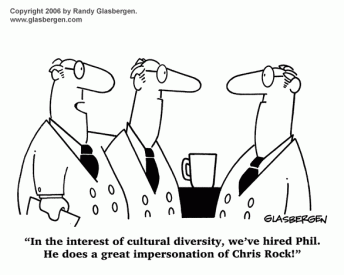
Chris Rock

I ran into a Chinese colleague in a break room at work and mentioned that I’d seen her engaged in a “pow wow” with a senior staffer, and she asked, “Pow wow?” I tried to explain the Native American origins of the term for a gathering or meeting, and I think she liked that, but I joked that my use of the term might represent “cultural appropriation” (CA). A second colleague who’d entered the kitchen glanced at me with a raised eyebrow. Knowing them well, I’m not sure either of them knew what I meant. As it happens, describing the pow wow as a celebration is more accurate, so my use of the term to describe a meeting was too narrow. In fact, in modern usage by Native Americans, it is a celebration of culture, but meetings take place at these events as well.

CA occurs when aspects of one culture are used in some way by others. It is criticized for trivializing the traditions or symbols of the source culture or because it robs it’s members of intellectual property (IP) rights. I can think of examples of cultural trivialization, such as the “Ugg-a-Wugg” song from the musical Peter Pan. Such complaints strike me as hyper-sensitive, but perhaps the umbrage taken by Native Americans to this song is understandable. Nevertheless, I stand more strongly behind the right of free expression. This song, which is rarely performed today out of respect for Native Americans, was part of a larger Neverland fantasy that has great appeal. And after all, the Indians were good guys in the story!

Works such as Peter Pan and Huckleberry Finn are historical and reflect the times in which they were created. As such, some argue that they should be left in their original form. And I agree, in general. However, in the case of a musical that is performed publicly again and again by various professional and amateur groups, I am sympathetic to the notion that potentially offensive elements can be excised if the changes do not do great damage to the story. If it is not in the public domain, the owners of the story’s rights have the final say.

The IP argument is flawed to the extent that IP arguments are always flawed: ideas are non-rivalrous and non-exclusive. Moreover, even IP rights recognized under U.S. law are limited to individual “property”; they do not extend to the traditions and symbols of various cultures that coexist in society.

Another area emphasized by critics of CA has to do with historical grievances against a dominant culture, often without regard to current circumstances. Apparently, such grievances place the minority culture off-limits. Under this view, cultural exchange is fundamentally bad, which is fundamentally absurd. It has the faint ring of “separate but equal” — paradoxical given the avowed desire among critics of CA for an end to racial and social division.

While European colonialists certainly exploited the native inhabitants in many lands, today’s liberal order in the West is attractive to members of different cultures around the globe.They adopt similar institutions and practices at home, and some of them bring their cultures to us. We all gain in the exchange.

Strong condemnation of CA has been all the rage on college campuses over the past few years (see several of the links here). It reflects a hyper-sensitivity about the normal mixing of cultures. Cultural exchange tends to elevate appealing aspects of all cultures into the larger society. Should we really condemn any of the following harmless activities?

  • Yoga classes at the Jewish Community Center?
  • Cinco de Mayo celebrations by non-Mexicans?
  • Caucasians celebrating the Chinese New Year or Moon Festival?
  • St. Patrick’s Day celebrations by non-Irish, non-Catholics?
  • Flower Drum Song or The King and I?
  • Caucasians playing Delta Blues?
  • African American Mardi Gras Indians?
  • Caucasians watching Bollywood movies?
  • The Grateful Dead at the Pyramids?
  • Caucasians cooking “ethnic” foods?

I grant that respect dictates avoiding use of another group’s sacred symbols. Beyond that, it is difficult to conceive of any objections to activities like those above. They are all forms of cultural cross-pollination, even if they seem to trivialize in some cases. This sometimes  involves cultural interpretation by “others” that might not be accurate, but that is always the case when cultures mix. People incorporate or adapt features of other cultures that they enjoy, which is hardly a sin.

Curious about pow wow, I found the following qualification in the Wikipedia entry for pow-wow:

“…the term has also been used by non-Natives to describe any gathering of Native Americans, or to refer to any type of meeting among non-Natives (such as military personnel). However, such use may be viewed as cultural appropriation, and disrespectful to Native peoples.“

Well, well, well! Pow wow is used in conversational english to lend an air of informality or lightness to certain proceedings. It may simultaneously convey a serious diplomatic purpose and an opportunity to resove differences. Sometimes, non-Natives might even use the term to sound clever, like using the French term soirée rather than “party”. Or perhaps they are amused by the image of corporate managers seated akimbo around a camp fire, passing a peace pipe. Or any pipe. Trivial? Maybe, but if that possibility outrages Native Americans, it strikes me as an over-reaction. After all, the joke is partly on “the suits”, and there isn’t much the Indians can do about it under the law.

I have always been fascinated by American Indian history and culture. I do not use the term pow-wow in disrespect. I use it because it’s colorful and I like it. The cross-pollination of language and culture is borne out of the utility of a particular word or practice. It can hardly be bad that a few shards of Native American language and culture are incorporated into broader American society.

My sister has a beautiful scarf bearing the profile of an American Indian in full head dress. She has always had an interest in the art and culture of the American southwest, which has benefitted from the heavy influence of Indians who are native to that region. So it was unsurprising to me that she would be drawn to the beauty of the scarf. It is a work of art and she does not wear it out of disrespect for American Indians.

Certain acts of CA are thought to intersect with racism, however. How about the Washington Redskins football team name? The team logo and merchandise use Native American symbols. The same goes for the Atlanta Braves and other teams. However, the term Redskin almost certainly has overtly racist origins as a description of an enemy thought to be savage, much as “Nips” was a derogative used by Allied soldiers in World War II as a term for the Japanese.  Defenders of the team claim that “Redskin” is not meant to trivialize or denigrate Native Americans, but instead to recognize their honor and ferocity in battle. The team owner and many fans insist that the tradition of the team name should continue in tribute to American Indians. Nevertheless, the name is understandably objectionable to Native Americans today as a crude description of their genealogy. My friend John Crawford tells me of a proposal to change the team logo to a red-skinned potato, but apparently the idea was rejected by the U.S. Patent Office.

In all of these matters, free speech outweighs all other considerations. While cultural appropriation is sometimes regarded with hostility, that does not give the aggrieved special rights to prevent it. The same is true of racism, however regrettable it is. Even so-called hate speech is protected under the U.S. Constitution, short of “fighting words”. Critics of cultural appropriation can seek to educate, influence, boycott and to shame those believed to have run afoul of their standards. In most cases, however, I think the best advice is to chill out.


Social Media Content Control

06 Friday May 2016

Posted by Nuetzel in Censorship, Marketplace of Ideas

≈ Leave a comment

Tags

Blacklisting, Block & Report Spam, Censorship, Community Standards, Content Neutrality, Content Standards, Gizmodo, Marketplace of ideas, Mobbing, News Curators, Social Media

censorship

Do social media and networking platforms unfairly restrict speech and content by users expressing certain political views? Is the “marketplace of ideas” subject to entry barriers imposed by the platforms themselves? Twitter has been in the news recently for a “Block & Report Spam” feature whereby complaints can trigger a suspension. Some claim that leftists are gaming the system to take down certain posters. Twitter claims to never filter or moderate content proactively, but the system seems to invite abuse by activists at either end of the political spectrum.

Facebook admits that it attempts to enforce a set of “community standards” that cover the general areas of safety, respect (covering hate speech and nudity), security, and intellectual property. There is ample evidence, however, that enforcement of these standards is “arbitrary and capricious“. Examples range from inconsistent treatment of “Death to Israel” posts, images of buttocks, sculptures or drawings of body parts vs. actual body parts, and a variety of gay-themed images. These cases and many others are likely a consequence of different moderators responding to complaints differently in attempts to interpret and enforce rules that are vague by necessity. In addition, decisions to censor or suspend users are sometimes reversed by committee at higher levels, only to be made again later. And there have been allegations that content from advertisers is treated with a “lighter touch” than from non-advertisers. Perhaps the organization is simply trying to find a fair way to moderate the complicated social thicket, but the effort seems largely misplaced. A broader policy of content neutrality and allowing users to censor their feeds for themselves, as they are empowered to do, would avoid many of the inconsistencies.

Facebook also admits to employing contractors as “news curators”. This, and the mysterious disappearance of certain “trending topics” having a conservative bent, have led to strong complaints of blacklisting and censorship. The curators’ instructions from Facebook are described by Gizmodo:

“They were also told to select articles from a list of preferred media outlets that included sites like the New York Times, Time, Variety, and other traditional outlets. They would regularly avoid sites like World Star Hip Hop, The Blaze, and Breitbart, but were never explicitly told to suppress those outlets….  News curators also have the power to “deactivate” (or blacklist) a trending topic—a power that those we spoke to exercised on a daily basis. A topic was often blacklisted if it didn’t have at least three traditional news sources covering it, but otherwise the protocol was murky—meaning a curator could ostensibly blacklist a topic without a particularly good reason for doing so.“

This has the potential to create a bias in favor of certain viewpoints. If a trending topic comes from a source or involves a viewpoint that is not in favor, “news curation” amounts to a distasteful cover for outright political censorship. The Facebook system is also vulnerable to the sort of “mobbing” by activists that has been problematic for Twitter. Some of the complaints against unfair treatment by Facebook undoubtedly have merit. Such bias could have an influence sufficiently great to alter election outcomes.

Some forms of censorship on these platforms may be justified, such as preventing threats, abuse or harassment. As well, the platforms are required to comply with laws that are more restrictive in certain countries. Nevertheless, whatever the content standards, and whatever political bias might be created, the platforms are operated by private entities. They can do whatever they want, as much as anyone might hate it. The accusers are entitled to complain, of course, but they should bear in mind that these platforms are not exactly an open marketplace or a public square, however tempting it is to think of them that way. They could be open and free, given a more enlightened approach by the organizations that run them, but as things stand they are not. Positive action remains an option for those who object: agitate, package your content more carefully, or get off the platform and find an on-line community to your liking.

Pornography, Respect, and Censorship

03 Sunday Apr 2016

Posted by Nuetzel in Censorship, Equality, Liberty

≈ Leave a comment

Tags

Brendan Watts, Censorship, Eugene Volokh, First Amendment, Gail Dines, Gender Egalitariansim, Jodie L. Baera, Journal of Sex Research, Non-egalitarianism, Pornography, Prurient Interests, Radical Feminism, Sexual Aggression, Taylor Kohuta, Women-Hating Ideology

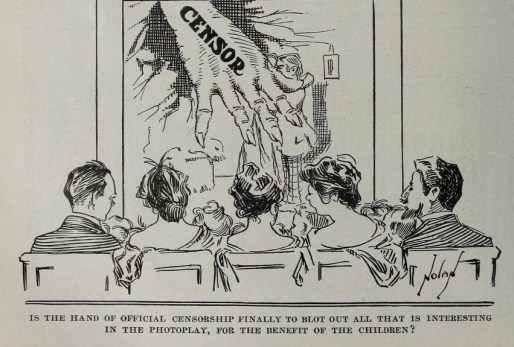
CensorCartoonMPMag14

A study in The Journal of Sex Research reinforces the libertarian view that pornography “artists”, purveyors and users should be left alone, free to engage in their private activities without censorship or harassment by the state. The study is entitled “Is Pornography Really about ‘Making Hate to Women’? Pornography Users Hold More Gender Egalitarian Attitudes Than Nonusers in a Representative American Sample“. It can be downloaded free-of-charge at the link. Here’s the abstract:

“According to radical feminist theory, pornography serves to further the subordination of women by training its users, males and females alike, to view women as little more than sex objects over whom men should have complete control. Composite variables from the General Social Survey were used to test the hypothesis that pornography users would hold attitudes that were more supportive of gender nonegalitarianism than nonusers of pornography. Results did not support hypotheses derived from radical feminist theory. Pornography users held more egalitarian attitudes—toward women in positions of power, toward women working outside the home, and toward abortion—than nonusers of pornography. Further, pornography users and pornography nonusers did not differ significantly in their attitudes toward the traditional family and in their self-identification as feminist. The results of this study suggest that pornography use may not be associated with gender nonegalitarian attitudes in a manner that is consistent with radical feminist theory.“

The study did not deal with child pornography in any way. The study focused strictly on attitudes toward women among porn users in general, attitudes that are clearly relevant to divergent opinions regarding the need for activist social policy with respect to adult pornography:

“Some clinicians, researchers, and social commentators have adopted the view that pornography can improve sexual functioning by providing frank sexual information, reducing shame and anxiety associated with sex, and invigorating libido (… citations). In contrast, others have cautioned that the use of such materials can be associated with risky sexual behavior, poor mental health and well-being, degraded relationship functioning, and, of course, sexual aggression (… citations).“

The authors, Taylor Kohuta, Jodie L. Baera and Brendan Watts, quote feminist Gail Dines as an example of the rhetoric used by porn prohibitionists:

“Porn is the most succinct and crisp deliverer of a woman-hating ideology. While we have other places that encode such an ideology, nowhere does it quite as well as porn, as this delivers messages to men’s brain via the penis—a very powerful method.“

The paper includes a lengthy review of previous research on pornography, sexual attitudes, and “non-egalitarian” attitudes toward women. Earlier research was generally based on small samples or those confined to limited demographic segments, but support for the radical feminist view was inconsistent at best.

Kohuta, et al, attempt to extend earlier work with a large sample of males and females (porn is viewed by both genders) from the General Social Survey (GSS), described in detail at the link, and a more thorough set of attitudinal measures. The five measures are listed in the abstract quoted above. In none of the five cases did the use of pornography correspond to “less egalitarian views” toward women, and in three cases it corresponded to more egalitarian views, though I’d quibble with the abortion measure, which might not be meaningful in that context.

The findings are robust to gender and run contrary to the assertions of radical feminists and other moralistic busybodies: pornography does not encourage “woman hatred” or attitudes that might lead to aggressive behavior toward women, nor is viewership of porn consistent with a predisposition toward those attitudes:

“Of the five high-powered statistical tests conducted in this study, a total of three tests indicated that individuals who had viewed a pornographic film in the past year held more egalitarian attitudes than those who had not—a pattern of results that directly contradicts the predictions generated from radical feminist theory. Of the remaining two tests, neither was statistically significant. Taken together, the results of this study fail to support the view that pornography is an efficient deliverer of ‘women-hating ideology’.

Instead of demonstrating strong associations between pornography use and support of nonegalitarianism, if anything the current findings actually suggest weak associations in the opposite direction. Compared to nonusers, participants who reported viewing a pornographic film in the previous year also reported more positive attitudes toward women in positions of power, less negative attitudes toward women in the workforce, and less negative attitudes toward abortion…. “

The authors make a strong value judgment by assuming that a favorable attitude toward abortion represents a more egalitarian attitude toward women. They rationalize this treatment by noting that radical feminists consider “reproductive autonomy” to be a critical test of gender equality. However, abortion is not always a decision made solely by the woman. Furthermore, porn viewers of either gender, and participants in recreational sex, are likely to find the idea of a pregnancy something of a buzz kill, so the attitude maybe one of convenience. More fundamentally, abortion involves the rights of a human fetus versus the right of the parent(s) to terminate the pregnancy. If one’s ethical convictions are such that the fetus’ rights are paramount, it may not reflect a non-egalitarian attitude toward women.

I find the other four attitudinal measures used in the study unobjectionable. Identification as a “feminist” might mean different things to different people, but it nearly always means a generally strong support for women’s rights. In any case, those four tests indicate no association between porn use and an attitude favoring an inferior role for women in society.

Pornography use was defined by Kohuta, et al by whether the subject admitted to viewing any X-rated film over the past year. There was no distinction between different types of porn, such as depictions of sadomasochism, violent sex, or nonconsensual sex. Therefore, the study does not address whether a taste for these forms is associated with less egalitarian attitudes toward women. Whether viewership of porn or violent forms of porn is associated with acts of aggression against women is much harder to establish. However, as a general question, the attitudes found to be associated with porn in this study suggest that users are unlikely to be inclined toward nonconsensual sex or aggression toward women.

Porn viewers obviously find the subject matter entertaining; it may appeal to their fantasies and might serve as a prelude to sex. Whether those are “prurient” interests is a subjective matter. Porn viewing is a private activity that shouldn’t matter to anyone else. Whether they admit it or not, most adults have had at least a peak at porn, perhaps unintentionally. It might have offended them, but they know how to avoid it; if they have children they should know how to utilize parental controls. I’m skeptical that it hurts anyone. Those who like it even a little bit should be able to enjoy it privately.

In 2012, Eugene Volokh wrote a practical criticism of an idea in the Republican Party platform that “current laws on all forms of pornography and obscenity need to be vigorously enforced”, as well as an earlier Bush Administration effort to crack down on porn. He concluded that such policies could have three possible outcomes:

“1) The crackdown on porn is doomed to be utterly ineffective at preventing the supposedly harmful effects of porn on its viewers, and on the viewers’ neighbors [because porn is available from many foreign and domestic sources].
2) The crackdown on porn will be made effective — by implementing a comprehensive government-mandated filtering system run by some administrative agency that constantly monitors the Net and requires private service providers to block any sites that the agency says are obscene.
3) The crackdown on porn will turn into a full-fledged War on Smut that will be made effective by prosecuting, imprisoning, and seizing the assets of porn buyers.“

Volokh’s conclusions apply to all forms of porn, not just non-violent porn. He underlines the draconian implications of attempts to censor porn:

“I’m asking: How can the government’s policy possibly achieve its stated goals, without creating an unprecedentedly intrusive censorship machinery, one that’s far, far beyond what any mainstream political figures are talking about right now?“

While Volokh does not address the question of whether porn users have a constitutional right to do so, the First Amendment should protect it as free expression. The paper discussed here implies that porn is no threat to women based on the attitudes expressed by users in the GSS. This is consistent with the libertarian principle that free people must be unencumbered by any authority in their choice of entertainment.

Leftists Propose New Ministry of Speech Approval

18 Saturday Jul 2015

Posted by Nuetzel in Liberty, Marketplace of Ideas

≈ Leave a comment

Tags

Andrew Gripp, Book burners, Censorship, Fact Checkers, Fox News, Kevin D. Williamson, Marketplace of ideas, Politifact, Snopes

FactCheckers

I witness so many calls for censorship on a day-to-day basis that I find it astonishing. This in a free society, and from people who fancy themselves liberal. They prefer a form of censorship that carries criminal penalties for speech that does not meet with approval by media “fact checkers”. Which fact checkers shall we choose? Will they be fact-checking juries of our peers, or a new cadre of officials donning armbands?

Does anyone truly believe that the branch of the media engaged in “fact-checking” is objective? Andrew Gripp covers this topic, demonstrating that the assessment of “facts” often doesn’t stand the test of time. Fact checkers will call a statement false, only to rule otherwise years later, or vice versa. That’s just how it went down with President Obama’s pronouncement that “if you like your plan, you can keep your plan”. True in 2008, false in 2013. Would Obama receive an exemption under this approach?

But that is just one way in which the fact checkers go wrong. More basic is the fact that the assessments they make are essentially opinions! Gripp puts his finger on the primary weakness of the fact-checking industry:

“… it is important to remember that old Enlightenment figure Giambattista Vico’s verum factum principle: the truth is made — made by people with their own biases, limitations, and subjective standards.“

As part of the same censorious narrative, I sometimes hear that Canada “bans” Fox News. This is patently false, as Snopes asserts. Another trope is that Fox News lies 50% of the time, or 82% of the time, or some such claim that should immediately set off the BS alarm of any discerning observer. I get aggravated with certain things I hear on Fox too, but as an empiricist, this just smells like BS. Kevin Williamson shreds these reports as exercises in bias in a piece entitled “How Stupid Happens“:

“The most obvious problem — though certainly not the only problem, not even close — is selection bias: PolitiFact is a readership-driven online publication, and thus it exercises a great deal of discretion about which statements it chooses to evaluate and why. The most obvious factor is that it evaluates only statements that are disputed. Specifically, it evaluates only statements that are disputed and that its editors believe will be of some interest or benefit to its readers. …

But the fact is that unsupportable, boneheaded claims … will live forever, because people are mostly interested in having their biases confirmed and their values affirmed rather than learning new things about the world and how it works. True, much as I like yelling at people on television, it is pretty hard to feel too bad for Fox News and MSNBC over an exercise in confirmation bias, but this sort of sloppy thinking and malicious manipulation does have the effect of leaving the polity a little dumber than it absolutely has to be. And that is an unforgivable sin.“

In many respects, it feels like this topic is hardly worth a blog post, because the wannabe censors exist in an impenetrable ideological bubble. But on the other hand, they are little tyrants, not merely content to seek a monopoly over the market place of ideas, which is bad enough. They also seek to criminalize statements with which they happen to disagree. There is no doubt that they would burn books. Their ideas are dangerous and should not be treated with respect in a free society.


Does the Left Wish To Preserve Basic Freedoms?

09 Friday May 2014

Posted by Nuetzel in Uncategorized

≈ 1 Comment

Tags

Campus Culture, Censorship, Due Process, FEC, First Amendment, Political Speech

Image

Certainly not first amendment rights, and they prove it every day. This warning is from FEC Chairman Lee E. Goodman, as told by the Ace of Spades: “The Left Will Not Stop Until It Enlists the Power of Government to ‘Regulate’ Political Speech by Conservative Media, and Even Conservative Blogs.” A collection of hypocrites of the first-order, the Left’s tolerance of speech depends of course on how much they like your rap. Equal treatment by tax authorities? No. Neutral media regulation? No. Even-handed grants of waivers for political contributions? No. Harassment by law enforcement based on the content of speech? Why yes. Just ask Nakoula Basseley Nakoula and Dinesh D’Souza.

Here’s Daniel Henninger on the Left’s role in degrading free speech, and even the right to due process, at American universities. “Make no mistake, universities under constant pressure from the Obama administration and the most driven members of their “communities” will comply and define due process downward.”

Newer posts →
Follow Sacred Cow Chips on WordPress.com

Recent Posts

  • The Case Against Interest On Reserves
  • Immigration and Merit As Fiscal Propositions
  • Tariff “Dividend” From An Indigent State
  • Almost Looks Like the Fed Has a 3% Inflation Target
  • Government Malpractice Breeds Health Care Havoc

Archives

  • January 2026
  • December 2025
  • November 2025
  • October 2025
  • September 2025
  • August 2025
  • July 2025
  • June 2025
  • May 2025
  • April 2025
  • March 2025
  • February 2025
  • January 2025
  • December 2024
  • November 2024
  • October 2024
  • September 2024
  • August 2024
  • July 2024
  • June 2024
  • May 2024
  • April 2024
  • March 2024
  • February 2024
  • January 2024
  • December 2023
  • November 2023
  • August 2023
  • July 2023
  • June 2023
  • May 2023
  • April 2023
  • March 2023
  • February 2023
  • January 2023
  • December 2022
  • November 2022
  • October 2022
  • September 2022
  • August 2022
  • July 2022
  • June 2022
  • May 2022
  • April 2022
  • March 2022
  • February 2022
  • January 2022
  • December 2021
  • November 2021
  • October 2021
  • September 2021
  • August 2021
  • July 2021
  • June 2021
  • May 2021
  • April 2021
  • March 2021
  • February 2021
  • January 2021
  • December 2020
  • November 2020
  • October 2020
  • September 2020
  • August 2020
  • July 2020
  • June 2020
  • May 2020
  • April 2020
  • March 2020
  • February 2020
  • January 2020
  • December 2019
  • November 2019
  • October 2019
  • September 2019
  • August 2019
  • July 2019
  • June 2019
  • May 2019
  • April 2019
  • March 2019
  • February 2019
  • January 2019
  • December 2018
  • November 2018
  • October 2018
  • September 2018
  • August 2018
  • July 2018
  • June 2018
  • May 2018
  • April 2018
  • March 2018
  • February 2018
  • January 2018
  • December 2017
  • November 2017
  • October 2017
  • September 2017
  • August 2017
  • July 2017
  • June 2017
  • May 2017
  • April 2017
  • March 2017
  • February 2017
  • January 2017
  • December 2016
  • November 2016
  • October 2016
  • September 2016
  • August 2016
  • July 2016
  • June 2016
  • May 2016
  • April 2016
  • March 2016
  • February 2016
  • January 2016
  • December 2015
  • November 2015
  • October 2015
  • September 2015
  • August 2015
  • July 2015
  • June 2015
  • May 2015
  • April 2015
  • March 2015
  • February 2015
  • January 2015
  • December 2014
  • November 2014
  • October 2014
  • September 2014
  • August 2014
  • July 2014
  • June 2014
  • May 2014
  • April 2014
  • March 2014

Blogs I Follow

  • Passive Income Kickstart
  • OnlyFinance.net
  • TLC Cholesterol
  • Nintil
  • kendunning.net
  • DCWhispers.com
  • Hoong-Wai in the UK
  • Marginal REVOLUTION
  • Stlouis
  • Watts Up With That?
  • Aussie Nationalist Blog
  • American Elephants
  • The View from Alexandria
  • The Gymnasium
  • A Force for Good
  • Notes On Liberty
  • troymo
  • SUNDAY BLOG Stephanie Sievers
  • Miss Lou Acquiring Lore
  • Your Well Wisher Program
  • Objectivism In Depth
  • RobotEnomics
  • Orderstatistic
  • Paradigm Library
  • Scattered Showers and Quicksand

Blog at WordPress.com.

Passive Income Kickstart

OnlyFinance.net

TLC Cholesterol

Nintil

To estimate, compare, distinguish, discuss, and trace to its principal sources everything

kendunning.net

The Future is Ours to Create

DCWhispers.com

Hoong-Wai in the UK

A Commonwealth immigrant's perspective on the UK's public arena.

Marginal REVOLUTION

Small Steps Toward A Much Better World

Stlouis

Watts Up With That?

The world's most viewed site on global warming and climate change

Aussie Nationalist Blog

Commentary from a Paleoconservative and Nationalist perspective

American Elephants

Defending Life, Liberty and the Pursuit of Happiness

The View from Alexandria

In advanced civilizations the period loosely called Alexandrian is usually associated with flexible morals, perfunctory religion, populist standards and cosmopolitan tastes, feminism, exotic cults, and the rapid turnover of high and low fads---in short, a falling away (which is all that decadence means) from the strictness of traditional rules, embodied in character and inforced from within. -- Jacques Barzun

The Gymnasium

A place for reason, politics, economics, and faith steeped in the classical liberal tradition

A Force for Good

How economics, morality, and markets combine

Notes On Liberty

Spontaneous thoughts on a humble creed

troymo

SUNDAY BLOG Stephanie Sievers

Escaping the everyday life with photographs from my travels

Miss Lou Acquiring Lore

Gallery of Life...

Your Well Wisher Program

Attempt to solve commonly known problems…

Objectivism In Depth

Exploring Ayn Rand's revolutionary philosophy.

RobotEnomics

(A)n (I)ntelligent Future

Orderstatistic

Economics, chess and anything else on my mind.

Paradigm Library

OODA Looping

Scattered Showers and Quicksand

Musings on science, investing, finance, economics, politics, and probably fly fishing.

  • Subscribe Subscribed
    • Sacred Cow Chips
    • Join 128 other subscribers
    • Already have a WordPress.com account? Log in now.
    • Sacred Cow Chips
    • Subscribe Subscribed
    • Sign up
    • Log in
    • Report this content
    • View site in Reader
    • Manage subscriptions
    • Collapse this bar
 

Loading Comments...