• About

Sacred Cow Chips

Sacred Cow Chips

Tag Archives: Corporate Social Responsibility

Evil HR: Organizational Fetters, Social Fabians

27 Wednesday Feb 2019

Posted by Nuetzel in Identity Politics, Progressivism, Social Justice

≈ Leave a comment

Tags

Best Practices, Centers of Excellence, Core Competencies, Corporate Social Responsibility, Corporatism, Disparate impact, Diversity Training, Fast Company, Glenn Reynolds, Human Resources, Jordan Peterson, Kyle Smith, Social Justice, Stakeholders

It is with deepest apologies to my friends in Human Resources (HR) that I admit to a long-standing bias: HR can exert a corrosive influence on a company’s ability to serve customers well and profit at it. I’m sure there are exceptions, but HR often pursues missions that are incompatible with the firm’s primary objectives. I’ve had my own difficulties with HR at employers for whom I’ve worked, and those have been of a mere bureaucratic variety. Today, the dysfunction goes much deeper. Many HR departments are engaged in a sort of Fabian gradualism, subverting free enterprise from within and promoting the doctrine of social justice.

Here are a few reasons for casting a skeptical eye on the contributions of HR:

  • It adds little value in screening applicants for certain kinds of jobs, helping to explain why so many job matches occur via professional networks and external recruiters.
  • I have witnessed HR scuttle simple plans to add interns, paid or unpaid, asserting that our department had no authority to institute such a program.
  • HR dreams up ridiculously ambiguous and complex performance assessment methods, which in the end make very little difference in the structure of rewards.
  • HR insists that “promoting diversity” is a key component of every job assessment, forcing staff to engage in written exercises of creative fluffery.
  • It creates incentives that distort hiring and firing decisions based on demographic characteristics rather than actual job qualifications and performance.
  • HR requires staff time for “diversity training”, an effort that is often resented as an insulting and patronizing intrusion on the time employees have to do their jobs.
  • HR emphasizes rewards to “stakeholders”, with little deference to the primacy of shareholders. It’s one thing for a company to maximize its value proposition to customers and prospects and to provide employees with handsome incentives. Those are fully consistent with maximizing the value of the firm. But “stakeholders” includes … just about everyone. Come and get it!
  • And HR relentlessly promotes the creed of “corporate social responsibility“, which ultimately involves a high order of virtue signaling on environmental and other social issues having little to do with the firm’s business.

It is true that HR is tasked with responsibilities that include minimizing a company’s exposure to various legal and regulatory risks. For example, one objective is to avoid any appearance of “disparate impact”. Even policies having a legitimate business purpose might be challenged if results have a statistical association with demographic characteristics. It’s an unfortunate fact that through efforts to manage that risk, HR serves as a spearhead of government intrusion into the affairs of private companies.

HR has thus become a tool through which collectivist ideals infiltrate business practices, to the detriment of the firm’s performance. These are exactly the kinds of things meant by Fast Company when they say HR isn’t working for you.  

Kyle Smith makes no bones about it: companies should simply fire their HR departments. And many can do just that by outsourcing HR functions. Smith’s arguments are couched in the most practical of terms:

“They speak gibberish.” Yes they do. Nowhere is corporate-speak more pervasive than in HR, where they’ll tell you that the organization’s “core competences” must be “leveraged” via “best practices” by “empowered contributors” within “centers of excellence”.

“They revel in red tape.” To paraphrase Smith, HR could rightfully be renamed “Compliance Resources”. These “paper pushing” functions are drivers of bloat and cost escalation, a manifestation of the familiar cost disease endemic to all bureaucracies.

“They live in a bubble.” HR managers have an inflated view of their role in the organization. Smith quotes an HR executive: ”The organization reports to us. It must meet our demands for information, documents, numbers.” Sounds like a classic central planner. Unfortunately, many companies acquiesce to the tyranny of HR bureaucrats, much to their detriment. But Smith’s point here is that HR executives are often out of touch with the way employees truly feel about the company for whom they work, with an exaggerated view of employee enthusiasm. Yet those executives are given responsibilities for which they should know better.

“They aren’t really in your business.” The skill emphasized as most important for success in HR is communications skills, according to Smith (“… what you and I call talking.“) Knowledge of finance, engineering or technology is noncritical. Fair enough, you might say: their role is different, but this goes a long way toward explaining why HR generally fails so miserably in evaluating job candidates. Can you really expect them to craft policies designed to optimize a business’ use of professional talent?

Jordan Peterson takes an extremely dim view of HR. I share his concern that HR, and HR policies, have a tendency to become heavily politicized. Ultimately, this cannot be of value to a competitive firm. As Glenn Reynolds likes to say, “Get woke, go broke“. Peterson’s perspective is societal, however, and he goes so far as to say HR departments are “dangerous”:

“I see that the social justice etiology that’s destroyed a huge swath of academia is on the march in a major way through corporate America. …

… they’ve become ethics departments. And people who take to themselves the right to determine the propriety of ethical conduct end up with a lot more power — especially if you cede it to them — than you think. And that’s happening at a very rapid rate.

The doctrines that are driving hiring decisions, for example — any emphasis, for example, on equity, or equality of outcome — it’s unbelievably dangerous. You don’t just pull that in and signal to society that you’re now acting virtuously without bringing in the whole pathological ideology.”

The value extracted from firms in the service of achieving “social justice” is essentially stolen from its rightful owners. The penalties don’t end with shareholders; employees and suppliers lose a measure of security from a weakened firm, and customers may suffer a loss in the quality of the product. It is as if reparations must be made to parties who are completely external to, and completely unharmed by, the success of the business.

It’s little wonder that companies are outsourcing their HR functions. A classic case is the use of recruiting firms that specialize in identifying talent in particular professions. Another is the outsourcing of benefits management, and there are other functions that can be farmed out. Eliminating bureaucratic bloat is often a focus of firms seeking to rationalize HR. Ultimately, a leaner HR department improves cost control, and keeping it lean reduces its latitude to divert company resources toward endeavors that promote the philosophy of collectivism.
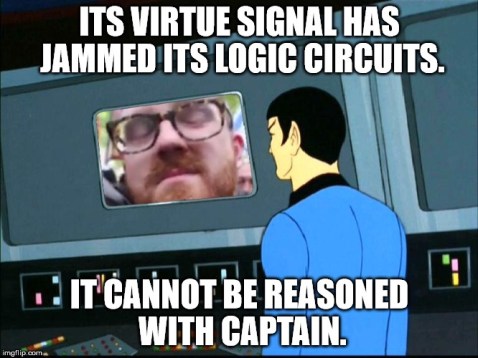
You’re So Virtuous… I’ll Bet You Think This Post Is About You

21 Monday May 2018

Posted by Nuetzel in Moral License

≈ Leave a comment

Tags

Bruno Kocher, Charity, Conspicuous Consumption, Conspicuous Virtue, Corporate Social Responsibility, Daniel Effron, Fair Trade, Freakonomics, Henrik Hagtveft, Humblebrags, John List, Joseph Rago, Keith Wilcox, License Effects, Moral License, Niceness, Prius Effect, Thales, The Declination, Theory of the Leisure Class, Thorstein Veblen

Altruism is an admirable quality, but advertising one’s altruism too much is rather unseemly. Social media has a way of coaxing humblebrags out of people, as well as not-so-humble brags: Everyone wants everyone to know that they care. That they give. That they support defenseless animals… and value diversity… and tread lightly upon the earth… and live “sustainably”… and despise polluters… and condemn racists… and want to shut down puppy mills…. and sneer upon bourgeois, consumerist values. They pay it forward!! And they want you to know!

These expressions of goodness come in many forms, and they are so common on social media that a bit of training permits a fairly rapid scroll rate through the news feed. People just can’t help but lay it on. Companies do too. So do politicians. Everyone wants everyone else to know how nice they are. It’s known as conspicuous virtue, or virtue signaling.

For now, let’s confine the discussion to relatively uncontroversial ideas or causes. If you are truly generous and perform good works on behalf of those less fortunate, that is all to the good. Racism is abhorrent. Sympathy for victims of crime, disease and natural disaster is a fine thing, including the puppies. Then what’s the harm in a little conspicuous virtue? Is it simply that it’s gauche?

Experimental economic research has discovered some nasty “license effects” associated not only with brags, but even good works with which one may be associated, such as an employer’s corporate social responsibility (CSR) efforts. That means, for example, that by announcing your goodness, you give yourself license to do bad. This interesting transcript of a Freakonomics Radio podcast includes an interview with University of Chicago economist John List and comments from social psychologist Daniel Effron of the London Business School. Both discuss research findings that should temper our enthusiasm for purposeful shows of virtue, as innocuous as those displays might seem.

First, however, List found a “supply side” benefit for employers when informing potential job seekers about the firm’s good works. He actually obtained a contract to perform a task, set up a company to do it, and then he recruited applicants. One group was told about the firm’s good works and a control group was not. The former group was significantly more productive on the job. So far, so good! However, in a separate experiment involving a more tedious task, some of the “CSR workers” had a tendency to cheat, perhaps subconsciously, in ways that made the job easier and faster, offsetting their own productivity advantage. These workers apparently felt that they had moral license to cheat, one conferred by the knowledge that the company was performing good works. Daniel Effron says:

“… people have surprisingly low standards for what counts as a moral license. It’s not just actively doing things that feel like good deeds. People feel like they have license when they reflect on the bad things they could have done, but didn’t.“

Effron describes an experiment demonstrating that consumers who declare a preference for green products have a greater likelihood of lying, cheating and stealing in a later task. Separately, those subjects who expressed support for Barrack Obama in 2008 felt more at liberty to express a seemingly prejudiced view on the hiring of a white or a black police officer. In another case, List notes that charitable deductions are associated with cheating on taxes in other ways.

It’s possible that all efforts to signal positive qualities to the world are associated with some offsetting, negative behavior. This possibility is illustrated by the research findings of Keith Wilcox, Henrik Hagtvedt, and Bruno Kocher in “The Less Conspicuous Road to Virtue: The Influence of Luxury Consumption on Socially Valued Behavior“. They find that while luxury consumption of goods is associated with greater work effort and acts of charity, conspicuous luxury consumption is associated with less effort and charity. This is a slightly different mechanism, as the signaling seems to be a show of one’s economic worth as opposed to a show of altruism or goodness. Nevertheless, the intent to signal reflects an other-directedness, not always a positive quality, and it also seems bound up with some negative social propensities.

Conspicuous consumption is a phenomenon described in 1899 by Thorstein Veblen in The Theory of the Leisure Class. Today, conspicuous virtue seems to inform a certain kind of conspicuous consumption. Joseph Rago notes the following:

“Conspicuous consumption stays with us today. But increasingly, it seems to me, many consumers are not seeking an outright demonstration of wealth. Instead, they consume to demonstrate their innate goodness. They spend not to suggest the deepness of their pockets but the deepness of their hearts. We inhabit, to update Veblen, an age of conspicuous virtue.

… Conspicuous virtue offers to those with guilty consciences a way to feel OK about consumerism. A fine scotch is vulgar. A “fair trade” scotch is righteous.”

A post on the Freakonomics blog in 2011 acknowledged a so-called “Prius” effect: people pay thousands of dollars above the economic value to the owner and the conservation value of the vehicle in order to signal to others their environmental commitment. Clearly, some consumers were willing to pay dearly for this conspicuous virtue.

Efforts to signal one’s virtue involve a desire to come off as “nice”. A recent post on the Declination blog discusses a so-called “niceness effect” under which observers seem to prefer facially “nice” points of view over the application of logic and dispassionate analysis. This brings us back into the more controversial forms of virtue signaling. A simple example: an expressed, “nice” preference for more generous public aid over proposals that improve work incentives. Unfortunately, the “niceness effect” leads to preferences for any number of irrational policies, as the author “Thales” at Declination so ably discusses. People are cowed by the appearance of “niceness” and want to look “nice” to their peers, damn the unintended consequences.

Negative license effects have been shown to exist as a dark underbelly associated with: the knowledge that one’s employer performs acts of social responsibility; not doing a bad thing that one could have done; stating a preference for goods presumed to be environmentally-sound; declaring support for electing the first African American candidate as president; claiming charitable tax deductions; and conspicuous luxury consumption. Still, granting oneself “moral license” almost surely does not offset the social benefits of real charitable acts. That’s pure conjecture on my part, of course, and it might not always be true. And I’m not so sure that acts of professing good works, intentions, and “niceness” do anything more than reassure self-nominated apostles of their goodness, while granting them license to please themselves in ways that might be regarded as sociopathic.

We live in an age of rampant narcissism, and social media can serve to magnify those tendencies. So please, promote your causes, but speak softly about your own contributions and good intentions, and try to resist the temptation to take moral license. Now where did I put the scotch?

Follow Sacred Cow Chips on WordPress.com

Recent Posts

  • Immigration and Merit As Fiscal Propositions
  • Tariff “Dividend” From An Indigent State
  • Almost Looks Like the Fed Has a 3% Inflation Target
  • Government Malpractice Breeds Health Care Havoc
  • A Tax On Imports Takes a Toll on Exports

Archives

  • December 2025
  • November 2025
  • October 2025
  • September 2025
  • August 2025
  • July 2025
  • June 2025
  • May 2025
  • April 2025
  • March 2025
  • February 2025
  • January 2025
  • December 2024
  • November 2024
  • October 2024
  • September 2024
  • August 2024
  • July 2024
  • June 2024
  • May 2024
  • April 2024
  • March 2024
  • February 2024
  • January 2024
  • December 2023
  • November 2023
  • August 2023
  • July 2023
  • June 2023
  • May 2023
  • April 2023
  • March 2023
  • February 2023
  • January 2023
  • December 2022
  • November 2022
  • October 2022
  • September 2022
  • August 2022
  • July 2022
  • June 2022
  • May 2022
  • April 2022
  • March 2022
  • February 2022
  • January 2022
  • December 2021
  • November 2021
  • October 2021
  • September 2021
  • August 2021
  • July 2021
  • June 2021
  • May 2021
  • April 2021
  • March 2021
  • February 2021
  • January 2021
  • December 2020
  • November 2020
  • October 2020
  • September 2020
  • August 2020
  • July 2020
  • June 2020
  • May 2020
  • April 2020
  • March 2020
  • February 2020
  • January 2020
  • December 2019
  • November 2019
  • October 2019
  • September 2019
  • August 2019
  • July 2019
  • June 2019
  • May 2019
  • April 2019
  • March 2019
  • February 2019
  • January 2019
  • December 2018
  • November 2018
  • October 2018
  • September 2018
  • August 2018
  • July 2018
  • June 2018
  • May 2018
  • April 2018
  • March 2018
  • February 2018
  • January 2018
  • December 2017
  • November 2017
  • October 2017
  • September 2017
  • August 2017
  • July 2017
  • June 2017
  • May 2017
  • April 2017
  • March 2017
  • February 2017
  • January 2017
  • December 2016
  • November 2016
  • October 2016
  • September 2016
  • August 2016
  • July 2016
  • June 2016
  • May 2016
  • April 2016
  • March 2016
  • February 2016
  • January 2016
  • December 2015
  • November 2015
  • October 2015
  • September 2015
  • August 2015
  • July 2015
  • June 2015
  • May 2015
  • April 2015
  • March 2015
  • February 2015
  • January 2015
  • December 2014
  • November 2014
  • October 2014
  • September 2014
  • August 2014
  • July 2014
  • June 2014
  • May 2014
  • April 2014
  • March 2014

Blogs I Follow

  • Passive Income Kickstart
  • OnlyFinance.net
  • TLC Cholesterol
  • Nintil
  • kendunning.net
  • DCWhispers.com
  • Hoong-Wai in the UK
  • Marginal REVOLUTION
  • Stlouis
  • Watts Up With That?
  • Aussie Nationalist Blog
  • American Elephants
  • The View from Alexandria
  • The Gymnasium
  • A Force for Good
  • Notes On Liberty
  • troymo
  • SUNDAY BLOG Stephanie Sievers
  • Miss Lou Acquiring Lore
  • Your Well Wisher Program
  • Objectivism In Depth
  • RobotEnomics
  • Orderstatistic
  • Paradigm Library
  • Scattered Showers and Quicksand

Blog at WordPress.com.

Passive Income Kickstart

OnlyFinance.net

TLC Cholesterol

Nintil

To estimate, compare, distinguish, discuss, and trace to its principal sources everything

kendunning.net

The Future is Ours to Create

DCWhispers.com

Hoong-Wai in the UK

A Commonwealth immigrant's perspective on the UK's public arena.

Marginal REVOLUTION

Small Steps Toward A Much Better World

Stlouis

Watts Up With That?

The world's most viewed site on global warming and climate change

Aussie Nationalist Blog

Commentary from a Paleoconservative and Nationalist perspective

American Elephants

Defending Life, Liberty and the Pursuit of Happiness

The View from Alexandria

In advanced civilizations the period loosely called Alexandrian is usually associated with flexible morals, perfunctory religion, populist standards and cosmopolitan tastes, feminism, exotic cults, and the rapid turnover of high and low fads---in short, a falling away (which is all that decadence means) from the strictness of traditional rules, embodied in character and inforced from within. -- Jacques Barzun

The Gymnasium

A place for reason, politics, economics, and faith steeped in the classical liberal tradition

A Force for Good

How economics, morality, and markets combine

Notes On Liberty

Spontaneous thoughts on a humble creed

troymo

SUNDAY BLOG Stephanie Sievers

Escaping the everyday life with photographs from my travels

Miss Lou Acquiring Lore

Gallery of Life...

Your Well Wisher Program

Attempt to solve commonly known problems…

Objectivism In Depth

Exploring Ayn Rand's revolutionary philosophy.

RobotEnomics

(A)n (I)ntelligent Future

Orderstatistic

Economics, chess and anything else on my mind.

Paradigm Library

OODA Looping

Scattered Showers and Quicksand

Musings on science, investing, finance, economics, politics, and probably fly fishing.

  • Subscribe Subscribed
    • Sacred Cow Chips
    • Join 128 other subscribers
    • Already have a WordPress.com account? Log in now.
    • Sacred Cow Chips
    • Subscribe Subscribed
    • Sign up
    • Log in
    • Report this content
    • View site in Reader
    • Manage subscriptions
    • Collapse this bar
 

Loading Comments...