• About

Sacred Cow Chips

Sacred Cow Chips

Tag Archives: Fair Trade

You’re So Virtuous… I’ll Bet You Think This Post Is About You

21 Monday May 2018

Posted by Nuetzel in Moral License

≈ Leave a comment

Tags

Bruno Kocher, Charity, Conspicuous Consumption, Conspicuous Virtue, Corporate Social Responsibility, Daniel Effron, Fair Trade, Freakonomics, Henrik Hagtveft, Humblebrags, John List, Joseph Rago, Keith Wilcox, License Effects, Moral License, Niceness, Prius Effect, Thales, The Declination, Theory of the Leisure Class, Thorstein Veblen

Altruism is an admirable quality, but advertising one’s altruism too much is rather unseemly. Social media has a way of coaxing humblebrags out of people, as well as not-so-humble brags: Everyone wants everyone to know that they care. That they give. That they support defenseless animals… and value diversity… and tread lightly upon the earth… and live “sustainably”… and despise polluters… and condemn racists… and want to shut down puppy mills…. and sneer upon bourgeois, consumerist values. They pay it forward!! And they want you to know!

These expressions of goodness come in many forms, and they are so common on social media that a bit of training permits a fairly rapid scroll rate through the news feed. People just can’t help but lay it on. Companies do too. So do politicians. Everyone wants everyone else to know how nice they are. It’s known as conspicuous virtue, or virtue signaling.

For now, let’s confine the discussion to relatively uncontroversial ideas or causes. If you are truly generous and perform good works on behalf of those less fortunate, that is all to the good. Racism is abhorrent. Sympathy for victims of crime, disease and natural disaster is a fine thing, including the puppies. Then what’s the harm in a little conspicuous virtue? Is it simply that it’s gauche?

Experimental economic research has discovered some nasty “license effects” associated not only with brags, but even good works with which one may be associated, such as an employer’s corporate social responsibility (CSR) efforts. That means, for example, that by announcing your goodness, you give yourself license to do bad. This interesting transcript of a Freakonomics Radio podcast includes an interview with University of Chicago economist John List and comments from social psychologist Daniel Effron of the London Business School. Both discuss research findings that should temper our enthusiasm for purposeful shows of virtue, as innocuous as those displays might seem.

First, however, List found a “supply side” benefit for employers when informing potential job seekers about the firm’s good works. He actually obtained a contract to perform a task, set up a company to do it, and then he recruited applicants. One group was told about the firm’s good works and a control group was not. The former group was significantly more productive on the job. So far, so good! However, in a separate experiment involving a more tedious task, some of the “CSR workers” had a tendency to cheat, perhaps subconsciously, in ways that made the job easier and faster, offsetting their own productivity advantage. These workers apparently felt that they had moral license to cheat, one conferred by the knowledge that the company was performing good works. Daniel Effron says:

“… people have surprisingly low standards for what counts as a moral license. It’s not just actively doing things that feel like good deeds. People feel like they have license when they reflect on the bad things they could have done, but didn’t.“

Effron describes an experiment demonstrating that consumers who declare a preference for green products have a greater likelihood of lying, cheating and stealing in a later task. Separately, those subjects who expressed support for Barrack Obama in 2008 felt more at liberty to express a seemingly prejudiced view on the hiring of a white or a black police officer. In another case, List notes that charitable deductions are associated with cheating on taxes in other ways.

It’s possible that all efforts to signal positive qualities to the world are associated with some offsetting, negative behavior. This possibility is illustrated by the research findings of Keith Wilcox, Henrik Hagtvedt, and Bruno Kocher in “The Less Conspicuous Road to Virtue: The Influence of Luxury Consumption on Socially Valued Behavior“. They find that while luxury consumption of goods is associated with greater work effort and acts of charity, conspicuous luxury consumption is associated with less effort and charity. This is a slightly different mechanism, as the signaling seems to be a show of one’s economic worth as opposed to a show of altruism or goodness. Nevertheless, the intent to signal reflects an other-directedness, not always a positive quality, and it also seems bound up with some negative social propensities.

Conspicuous consumption is a phenomenon described in 1899 by Thorstein Veblen in The Theory of the Leisure Class. Today, conspicuous virtue seems to inform a certain kind of conspicuous consumption. Joseph Rago notes the following:

“Conspicuous consumption stays with us today. But increasingly, it seems to me, many consumers are not seeking an outright demonstration of wealth. Instead, they consume to demonstrate their innate goodness. They spend not to suggest the deepness of their pockets but the deepness of their hearts. We inhabit, to update Veblen, an age of conspicuous virtue.

… Conspicuous virtue offers to those with guilty consciences a way to feel OK about consumerism. A fine scotch is vulgar. A “fair trade” scotch is righteous.”

A post on the Freakonomics blog in 2011 acknowledged a so-called “Prius” effect: people pay thousands of dollars above the economic value to the owner and the conservation value of the vehicle in order to signal to others their environmental commitment. Clearly, some consumers were willing to pay dearly for this conspicuous virtue.

Efforts to signal one’s virtue involve a desire to come off as “nice”. A recent post on the Declination blog discusses a so-called “niceness effect” under which observers seem to prefer facially “nice” points of view over the application of logic and dispassionate analysis. This brings us back into the more controversial forms of virtue signaling. A simple example: an expressed, “nice” preference for more generous public aid over proposals that improve work incentives. Unfortunately, the “niceness effect” leads to preferences for any number of irrational policies, as the author “Thales” at Declination so ably discusses. People are cowed by the appearance of “niceness” and want to look “nice” to their peers, damn the unintended consequences.

Negative license effects have been shown to exist as a dark underbelly associated with: the knowledge that one’s employer performs acts of social responsibility; not doing a bad thing that one could have done; stating a preference for goods presumed to be environmentally-sound; declaring support for electing the first African American candidate as president; claiming charitable tax deductions; and conspicuous luxury consumption. Still, granting oneself “moral license” almost surely does not offset the social benefits of real charitable acts. That’s pure conjecture on my part, of course, and it might not always be true. And I’m not so sure that acts of professing good works, intentions, and “niceness” do anything more than reassure self-nominated apostles of their goodness, while granting them license to please themselves in ways that might be regarded as sociopathic.

We live in an age of rampant narcissism, and social media can serve to magnify those tendencies. So please, promote your causes, but speak softly about your own contributions and good intentions, and try to resist the temptation to take moral license. Now where did I put the scotch?
Trump Bumbles On Trade With Tariffs

02 Friday Mar 2018

Posted by Nuetzel in Free Trade, Protectionism, Tariffs

≈ 1 Comment

Tags

Carve-Outs, central planning, Fair Trade, Import Quotas, monopoly power, Protectionism, Tariffs, Trade Barriers, Trade War, Trading Partners, Trump Tariffs

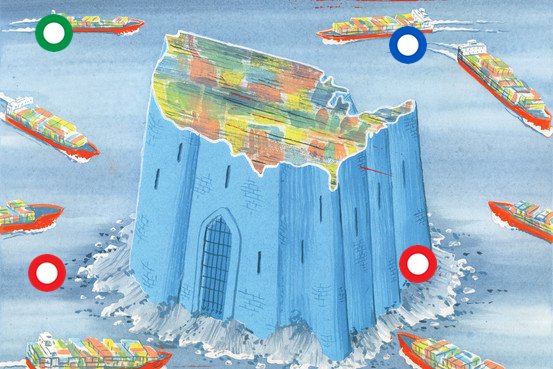
You can get away with lousy policy by calling it a “negotiating tactic” for only so long. But that dubious ploy is one of the rationales offered last week by the Trump Administration for imposing a 25% tariff on imported steel and a 10% tariff on imported aluminum. Sure, the tariffs are like gifts rendered onto American steel and aluminum producers, their shareholders, and their unionized workers. The tariffs allow them to compete more effectively, without any effort, with foreign steel and aluminum in the domestic market, and the tariffs may also give them leeway to raise prices. The tariffs are also forgiving of degraded performance by domestic producers, since reduced competition relieves pressure for efficiency, a primary social cost of monopoly power.

So who pays for these gifts to the domestic steel and aluminum industries? A tariff, of course, is a tax, and a significant portion of it will be passed along into higher prices of both imported and domestically-produced steel and aluminum. Therefore, the burden of that tax will be borne to a large extent by domestics users, including every domestic industry that uses steel or aluminum as an input, and by consumers who purchase those products. That erodes the job security of many domestic workers outside of the steel and aluminum industries. In fact, the tariffs are unlikely to create more jobs even in the steel and aluminum industries given the negative impact of higher prices on the quantities of those metals demanded.

The desperate story line in support of tariffs also includes the assertion that the U.S. steel and aluminum industries are in such dire straits that they are in danger of vanishing. Statistics on U.S. production hardly suggest that is the case, however. Steel output in the U.S. has been reasonably steady since recovering from the last recession, though it has not achieved its pre-recession level. While aluminum output has been declining, it is hardly in a free fall. The stock prices of major steel and aluminum producers, which are forward-looking, have not demonstrated a particular need for government aid (as if that could ever justify a too-big or too-important-to-fail mentality).

Defenders of the tariffs claim that one effect will include additional direct investment in the U.S. by foreign producers of steel and aluminum, because they can avoid the tariffs by setting up production within our borders. Perhaps a few will, but capital is mobile in other sectors as well. Producers in other industries requiring intensive use of steel or aluminum inputs will now have an incentive to shift production overseas, where the tariffs won’t apply. Attempting to prevent such shifts via import tariffs on final products would quickly become a nightmare of central planning.

Apologists for the tariffs go even further, noting that our new regulatory and tax environment will bring foreign producers to the U.S., essentially making the tariffs irrelevant. If that’s the case, why bother imposing the tariffs at all? And why penalize consumers and industries requiring intensive use of steel or aluminum?

The argument that tariffs provide a stronger position from which to negotiate with foreign “trading partners” (or rather, their governments) is tenuous at best. More likely, the tariffs will prompt retaliation by foreign governments against a range of American products. The very notion that “trade wars are good”, tweeted by President Trump on Friday morning, is as nonsensical as a suggestion that voluntary exchange is destructive. Already, the EU has announced plans to retaliate by imposing tariffs  on bourbon and motorcycles produced in the U.S.

Negotiations are unlikely to be successful. Perhaps some foreign governments who subsidize their steel and aluminum producers could be persuaded to enter talks. Our own domestic producers are penalized by various tariffs and quotas in place abroad, and those might be used by foreign interests as a lever in negotiations. However, the most fundamental foreign trade advantages, when they exist, have to do with low wages, less regulation, more efficient production facilities, and sometimes a more favorable tax environment. Wage levels reflect labor productivity, but those wage levels are valued more highly in their home countries than in the U.S, and penalizing these countries with trade sanctions merely penalizes their workers. Not all dimensions of a cost advantage can be negotiated, and in any case, healthy competition in any industry is always in the interests of a nation’s consumers.

National security is another standard argument in favor of protectionist measures. We’re told, for example, that we cannot allow China to produce all of the steel, but China provides only a small fraction of U.S. steel imports. Canada, Brazil and Mexico provide far more. In fact, China was in 11th place on that list in 2017. So our sources of steel are fairly well diversified. A domestic shortage of steel or aluminum caused by a breakdown in relations with one or more steel-exporting countries would lead to higher prices, but it would bring forth greater supplies from other countries and even from high-cost domestic sources. That is not a national emergency.

It’s possible that the Trump Administration will create “carve-outs”, exempting goods from certain countries from the tariffs. Presumably, those would be based on an assessment of each country’s trade policies and whether they are consistent with “fair” trade, in the judgement of U.S. trade authorities. However, all nations play the protectionist game in one form or another, including the U.S. Any carve outs would be better than none at all, but the remaining tariffs imposed by the administration will be a net burden to the U.S. economy.

Up till now, I have been pleasantly surprised by the Trump Administration’s efforts to de-tax and deregulate the U.S. economy. However, the threat that Donald Trump would adopt protectionist trade policies was one of my major trepidations about his candidacy. And here it is, as he promised. The dilemma often expressed by protectionists is that foreign producers can put elements of the domestic economy out of business by selling below cost. That drain on a country’s resources cannot span all industries — the U.S. has a comparative advantage in many areas. Such an effort cannot last forever or else these nations would cannibalize their own industrial base. Foreign governments quite simply cannot afford it economically and politically. On our end, the best advice is to accept the gift of low-cost goods. With access to ultra-cheap goods, whether steel, sorghum, or some finished product, American consumers and producers who use those imports gain unambiguously, and the purchasing power released can be spent on other goods and services.

Anti-Capitalists Prescribe Third-World Phlebotomy

12 Monday Oct 2015

Posted by Nuetzel in Free Trade, Human Welfare

≈ Leave a comment

Tags

Benjamin Powell, Economic Development, Fair Trade, Huffington Post, International Food Policy Research Institute, James Bovard, Johan Norberg, Penn Jillette, Protectionism, Sweatshops, Texas Tech University, The Freeman, Third-World Wages, World Bank

nike-sweatshop-cartoon3

Working conditions and wages in the third-world usually look so undesirable to observers in developed countries that we commonly use the term “sweatshops” to describe production facilities serving global markets in developing countries. Those facilities, however, are relatively modern by their domestic standards. The wages and working conditions are far superior to traditional opportunities available to the workers, offering them a rare opportunity to get out of poverty. But it is not uncommon to hear a narrow view that these workers are “exploited”, as if shutting down those operations was a better alternative. Calls for boycotts and other measures to punish firms with ties to those facilities are a common refrain from the Left, but if successful, the real victims of such activists would be the very workers whose interests they claim to represent.

Johan Norberg makes this all too clear in the Huffington Post, in “How Your T-Shirt Saves the World“, citing reports from the World Bank and the International Food Policy Research Institute: 

“The number of extremely poor in Bangladesh fell from 44 to 26 million between 2000 and 2010, despite the population growing by 15 million. Since 2004, the level of poverty in Cambodia has more than halved, from 52 to just over 20 percent. It is ‘one of the best performers in poverty reduction worldwide’, according to the World Bank.

This is a stunning success in the countries that need it the most, and the export sector has been instrumental in bringing it about. It increases the workers’ productivity, and therefore also their wages and working conditions, which has been especially important for women. In a study from the International Food Policy Research Institute, the researchers show that the increase in Bangladeshi wages from the garment sector ‘dwarfed’ the rise attributed to government programs. …

Obviously even the best jobs in very poor countries look bad compared to what we are used to in Europe and America, but that is not the alternative in an economy at a low level of capital and education. As a worker I interviewed in Vietnam once put it, the main complaint to management was that she wanted the factories to expand so that her relatives could get the same kinds of jobs.“

This is a very basic lesson in the process of economic development, and no one pretends that it’s easy. In this interview of Professor Benjamin Powell of Texas Tech University in The Freeman, he quotes Penn Jillette of Penn & Teller:

“The way Penn … put it once when he interviewed me is that ‘it’s better than tilling the soil with Grandpa’s femur.’ That is a bit crass . . . but true. Wishing away reality doesn’t give these workers better alternatives. Workers choose to work in sweatshops because it is their best available option. Sweatshops, however, are better than just the least bad option. They bring with them the proximate causes of economic development (capital, technology, the opportunity to build human capital) that lead to greater productivity—which eventually raises pay, shortens working hours, and improves working conditions.“

When you hear anyone talk about “exploitation” of workers in the third world by capitalists, ask them what alternatives they have in mind for lifting those workers out of poverty. Chances are they will pretend that firms can offer pay at levels far exceeding the current productivity of the workers — a prescription for closing the operations. Or they might offer naive suggestions that rely heavily on government as a benefactor, which are unlikely to succeed in ending poverty. They might even advocate for “fair trade”, which is leftist ear-candy code for protectionism. Nothing could be worse for first-world consumers or more harmful to the cause of economic development in the third world. As Norberg says of the so-called “sweatshops”: “The world needs more jobs like these, not fewer.“

Follow Sacred Cow Chips on WordPress.com

Recent Posts

  • Immigration and Merit As Fiscal Propositions
  • Tariff “Dividend” From An Indigent State
  • Almost Looks Like the Fed Has a 3% Inflation Target
  • Government Malpractice Breeds Health Care Havoc
  • A Tax On Imports Takes a Toll on Exports

Archives

  • December 2025
  • November 2025
  • October 2025
  • September 2025
  • August 2025
  • July 2025
  • June 2025
  • May 2025
  • April 2025
  • March 2025
  • February 2025
  • January 2025
  • December 2024
  • November 2024
  • October 2024
  • September 2024
  • August 2024
  • July 2024
  • June 2024
  • May 2024
  • April 2024
  • March 2024
  • February 2024
  • January 2024
  • December 2023
  • November 2023
  • August 2023
  • July 2023
  • June 2023
  • May 2023
  • April 2023
  • March 2023
  • February 2023
  • January 2023
  • December 2022
  • November 2022
  • October 2022
  • September 2022
  • August 2022
  • July 2022
  • June 2022
  • May 2022
  • April 2022
  • March 2022
  • February 2022
  • January 2022
  • December 2021
  • November 2021
  • October 2021
  • September 2021
  • August 2021
  • July 2021
  • June 2021
  • May 2021
  • April 2021
  • March 2021
  • February 2021
  • January 2021
  • December 2020
  • November 2020
  • October 2020
  • September 2020
  • August 2020
  • July 2020
  • June 2020
  • May 2020
  • April 2020
  • March 2020
  • February 2020
  • January 2020
  • December 2019
  • November 2019
  • October 2019
  • September 2019
  • August 2019
  • July 2019
  • June 2019
  • May 2019
  • April 2019
  • March 2019
  • February 2019
  • January 2019
  • December 2018
  • November 2018
  • October 2018
  • September 2018
  • August 2018
  • July 2018
  • June 2018
  • May 2018
  • April 2018
  • March 2018
  • February 2018
  • January 2018
  • December 2017
  • November 2017
  • October 2017
  • September 2017
  • August 2017
  • July 2017
  • June 2017
  • May 2017
  • April 2017
  • March 2017
  • February 2017
  • January 2017
  • December 2016
  • November 2016
  • October 2016
  • September 2016
  • August 2016
  • July 2016
  • June 2016
  • May 2016
  • April 2016
  • March 2016
  • February 2016
  • January 2016
  • December 2015
  • November 2015
  • October 2015
  • September 2015
  • August 2015
  • July 2015
  • June 2015
  • May 2015
  • April 2015
  • March 2015
  • February 2015
  • January 2015
  • December 2014
  • November 2014
  • October 2014
  • September 2014
  • August 2014
  • July 2014
  • June 2014
  • May 2014
  • April 2014
  • March 2014

Blogs I Follow

  • Passive Income Kickstart
  • OnlyFinance.net
  • TLC Cholesterol
  • Nintil
  • kendunning.net
  • DCWhispers.com
  • Hoong-Wai in the UK
  • Marginal REVOLUTION
  • Stlouis
  • Watts Up With That?
  • Aussie Nationalist Blog
  • American Elephants
  • The View from Alexandria
  • The Gymnasium
  • A Force for Good
  • Notes On Liberty
  • troymo
  • SUNDAY BLOG Stephanie Sievers
  • Miss Lou Acquiring Lore
  • Your Well Wisher Program
  • Objectivism In Depth
  • RobotEnomics
  • Orderstatistic
  • Paradigm Library
  • Scattered Showers and Quicksand

Blog at WordPress.com.

Passive Income Kickstart

OnlyFinance.net

TLC Cholesterol

Nintil

To estimate, compare, distinguish, discuss, and trace to its principal sources everything

kendunning.net

The Future is Ours to Create

DCWhispers.com

Hoong-Wai in the UK

A Commonwealth immigrant's perspective on the UK's public arena.

Marginal REVOLUTION

Small Steps Toward A Much Better World

Stlouis

Watts Up With That?

The world's most viewed site on global warming and climate change

Aussie Nationalist Blog

Commentary from a Paleoconservative and Nationalist perspective

American Elephants

Defending Life, Liberty and the Pursuit of Happiness

The View from Alexandria

In advanced civilizations the period loosely called Alexandrian is usually associated with flexible morals, perfunctory religion, populist standards and cosmopolitan tastes, feminism, exotic cults, and the rapid turnover of high and low fads---in short, a falling away (which is all that decadence means) from the strictness of traditional rules, embodied in character and inforced from within. -- Jacques Barzun

The Gymnasium

A place for reason, politics, economics, and faith steeped in the classical liberal tradition

A Force for Good

How economics, morality, and markets combine

Notes On Liberty

Spontaneous thoughts on a humble creed

troymo

SUNDAY BLOG Stephanie Sievers

Escaping the everyday life with photographs from my travels

Miss Lou Acquiring Lore

Gallery of Life...

Your Well Wisher Program

Attempt to solve commonly known problems…

Objectivism In Depth

Exploring Ayn Rand's revolutionary philosophy.

RobotEnomics

(A)n (I)ntelligent Future

Orderstatistic

Economics, chess and anything else on my mind.

Paradigm Library

OODA Looping

Scattered Showers and Quicksand

Musings on science, investing, finance, economics, politics, and probably fly fishing.

  • Subscribe Subscribed
    • Sacred Cow Chips
    • Join 128 other subscribers
    • Already have a WordPress.com account? Log in now.
    • Sacred Cow Chips
    • Subscribe Subscribed
    • Sign up
    • Log in
    • Report this content
    • View site in Reader
    • Manage subscriptions
    • Collapse this bar
 

Loading Comments...