• About

Sacred Cow Chips

Sacred Cow Chips

Tag Archives: Gab

Containing An Online Viper Pit of Antisemites

05 Thursday Jan 2023

Posted by Nuetzel in Free Speech, Social Media

≈ Leave a comment

Tags

Andrew Torba, Antisemitism, Christian Nationalism, Corporatism, Dan Frankel, fascism, Fighting Words, Free Speech, Gab, GabPro, Israel, Judeo-Bolshevism, Kanye West, Kristallnach, Pittsburgh Jewish Chronicle, racism, Religious Liberty, Rothschild Family, Theocracy, Zionism

This post is about a particular social media platform and a terrible oversight on my part. I signed up for Gab at least two years ago as I tried to find social media platforms that respected free speech rights and on which I could promote my blog. I haven’t paid for a subscription to “GabPro”, but I’m embarrassed to have completely missed some of the stink emanating from within the platform until recently. It’s not as if it hadn’t been reported, but somehow, I was oblivious.

I knew pretty quickly that Gab was an odd fit for me because so many posters there are on the very religious right. That’s fine, as I’m a strong believer in religious liberty and free speech. My views sometimes conflict with the religious right, but we’re in alignment on some key issues.

I never really scrolled Gab for more than a few moments at any time, having maintained my account there primarily for cross-posting my blog. I joined a particular Gab “fan” group of a band I love, and I have an old friend who happens to be on Gab. I also joined the “Libertarians of Gab” group. Occasionally, something raised my antennae right at the top of my feed, prompting me to look more closely, but I knew this much: like many other social media platforms, Gab is a meme-fest with lots of repetition, so I seldom wasted time scrolling there.

A year or so ago, a Jewish acquaintance on Gab mentioned a few antisemitic posts he’d seen there, but he’s a staunch free-speech advocate and had other reasons to stick with it. At the time, I might have begun to notice a few posters on Gab who were clearly anti-Zionist, but there’s a real distinction between anti-Zionism and antisemitism. Antisemites are bound to be anti-Zionist; the reverse doesn’t always follow. But again, I hadn’t yet found any real fault with Gab itself at that time.

(Note: I’m not hyphenating “antisemitism”, nor am I capitalizing “semitism”, because there is no such thing as a “semite” or “semitism”. The word was concocted by political factions in 19th century Germany in an attempt to “other” German Jews as “Orientals”.)

Over the next several months, however, at the top of my feed, I began to see a few antisemitic posts. Sometimes these amounted to silly assertions, such as the Rothschild family’s supposed world domination, a claim that would be harmless enough if not for indignation that the Rothschilds happen to be Jewish. A few posts were much worse. My knee-jerk reaction to offensive content is to block the poster, as I did a few times.

More recently, in the wake of Kanye West’s crazy tweets about Jews, I was a recipient of a group email from Andrew Torba, the founder and CEO of Gab. Torba, as it happens, is a self-styled “Christian Nationalist”. His email essentially portrayed West as a messenger from God. Here are some excerpts:

“God is using Ye, formerly known as Kanye West, for a big purpose…. He talks about the need for our leaders to uphold Christian values, not Zionist ones. … Ye is using the influence and talents that God has given him to speak the Truth and glorify Jesus Christ.”

It’s interesting that Torba referred to “Zionist” values. Though he is almost certainly anti-Zionist, that’s not really what he meant here. This bit of nut-jobbery, as I learned, had been preceded by many other wild statements from Torba over the years. For instance, over a year ago he tweeted the following and then disabled his Twitter account, a stunt he’s repeated several times:

“We’re building a parallel Christian society because we are fed up and done with the Judeo-Bolshevik one.”

The author at the link above, who reviewed some of Torba’s antics, noted that Judeo-Bolshevism was a term thrown around by the Nazis in the 1930s. But even putting that aside, Torba has an unfortunate tendency to paint with an extremely broad brush in promoting his very own brand of identity politics. That point is established clearly in this “Open Letter” to Torba from a “Hebraic-oriented evangelical Christian attorney”. If anything, the letter is far too gentle with Torba. The writer concludes:

“… I do hope you will reconsider your gratuitous exclusionary rhetoric regarding our spiritual cousins in the House of Judah, treating at least the many who share our cultural values and all-important Creationist paradigm with the same basic respect and camaraderie you show to atheists in the MAGA and conservative movements.”

Torba’s perspective seems to be that all Jews are unworthy, or worse. Here’s one of his posts:

From my perspective, Torba’s recent email regarding “Ye” served as a permission slip to antisemites on Gab to engage in blatant hatred of Jews. Since then, I’ve seen truly antisemitic content appear in my feed with increasing frequency, as if it’s being promoted by the platform. I’m not sure it always sinks to the level of brown-shirts on Kristallnach, but it has that nauseating flavor. Much to my dismay, a few of these posts were from users with whom I’d established earlier connections, or it was content they reposted. Others might have appeared on my feed courtesy of an effort to “introduce” users to one another and to promote certain content.

I didn’t save screenshots of the offensive posts I’ve seen on Gab. I probably should have, but here’s a sampling of a few of the wholesome users I’ve blocked:

One recent post expressed anger with so-called “elites”, an understandable sentiment shared by many in an age of corporatist fascism with the imposition of “woke” ideology in many institutions. However, the poster’s real point was to admonish others for not identifying the target of their anger as “the Jews”.

I became aware of another piece of disturbing information about the perpetrator of a mass killing in Pittsburgh a few years ago, and I can’t believe I missed it:

“The man accused of killing 11 Jews in the Tree of Life building posted antisemitic messages on Gab before the Oct. 27, 2018, massacre. In his Gab bio, he described Jews as the ‘children of satan.’”

Related to these murders, Torba reposted this article on Gab not long ago, from the Pittsburgh Jewish Chronicle. It stated that Pennsylvania Representative Dan Frankel was the target of hateful and threatening posts on the platform. Some of the posts quoted at the link are awful.

But why did Torba repost that article? Well, it motivated a large number of Torba’s followers on Gab to subject the Chronicle to a series of antisemitic replies. This would appear to have been Torba’s intent, but he subsequently removed the repost of the article (along with the hateful replies). That’s a familiar pattern.

Torba’s original comments on the Chronicle article included the following:

“People are done caring about your eternal victimhood complex … Free speech means the right to offend…Stop conflating offensive memes with ‘threats’…Gab is what free speech looks like, the good, the bad, and the ugly are all included.”

Well, you’re right about free speech, Mr. Torba, but subject to an important qualification: “fighting words” are not protected speech under the Constitution. Maybe that’s why you took down your repost, and most importantly the replies. Did you come to your senses relative to the limits of free speech?

It’s not surprising, but the hatred on Gab is not reserved solely for Jews. Since I’ve been on the lookout, I’ve witnessed overt racism of several other varieties on Gab, and I’ve duly blocked those posters. There is also a complement of hatred for individuals falling under the LGBTQ+ banner.

Gab is not the only province of this sort of behavior on social media, but it might be a hotbed. Is it that easy to learn to hate others? Is the distinction between arguing policy versus revilement and ad hominem too subtle for them?

I have Jewish friends across the political spectrum and Jews in my extended family. Few of them are deeply religious. Likewise, many of my friends raised as Christians are not deeply religious. These individuals are entitled to the liberty to practice any or no religion at all. Their choices are no cause for hostility unless they make some effort to impose their views or will upon others. But that kind of theocratic, coercive power seems to be precisely what Andrew Torba and his Christian Nationalist followers on Gab wish to have for themselves.

I’m happy to report that I’ve seen far fewer offensive posts since blocking a number of antisemitic and racist posters. Maybe the platform is “learning” about me. However, there are many well-intentioned people on Gab, and even a few who actively call-out the bigots. I might have to join in that effort. I support Torba’s right to express his views, short of threats or incitement of violence. I have no desire to be affiliated with Torba, however, and I’ll never pay him for GabPro. I’ll remain on Gab for the time being, and we’ll see how the content evolves.
On Quitting Facebook, One Year Later

25 Friday Feb 2022

Posted by Nuetzel in Censorship, Social Media, Uncategorized

≈ Leave a comment

Tags

Censorship, CIA, CloutHub, Common Carrier, Content Moderation, Eugene Volokh, Facebook, Facebook Jail, Fact Checkers, FireEye, First Amendment, Frenemies, Friend Requests, Gab, GETTR, Hosting Function, Meta, MeWe, Parler, Public Square, Recommendation Function, Section 230 Immunity, Telecommunications Act of 1996, Telegram, Truth Social, Vivek Ramaswamy

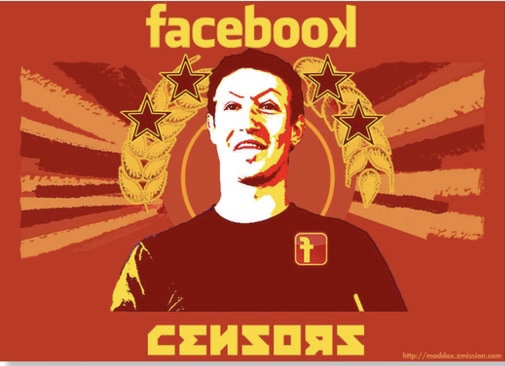
I’m very happy to be off Facebook, or “Meta” as it now calls itself. The platform has become, effectively, a propaganda arm of governments, and one that appears to be engaging in unconstitutional censorship. More on that below.

One year ago my profile dropped off of FB entirely. I had decided to quit in January 2021 after about 15 years. I downloaded everything from my profile and wrote a blog post called “On Quitting Facebook”. It was my last entry there, so that’s really when I quit, but it took a month before they completely deactivated me.

You have to resist the temptation to go back during that interim month or it starts all over again — a new interim period, that is — when you finally decide to get out. I knew immediately that I loved being free of it, so that part was easy. My feelings haven’t changed a bit.

F-R-Double E

I no longer have to put up with the propaganda that FB prioritizes nor the “demoted post” phenomenon. None of my posts had actually been blocked outright, but I knew “Facebook jail” was happening to users with increasing frequency, as well as post blocking and “red flags” authorized by politically-motivated FB “fact checkers”.

Free of FB, I no longer have to put up with various “frenemies” I’d somehow collected. And quitting FB allowed me to reclaim precious time I’d been wasting on an obsession that one would think avoidable: scrolling through my news feed, sometimes more than once a day, to view an assortment of photos of meals, puppies, and peoples’ lovely feet propped-up in “relax mode”, plus huge dollops of left-wing political and economic BS, often delivered with snark. But of course the lefty BS is almost everywhere in media.

There was one other disturbing anomoly on FB that became more frequent for me: friend requests from exceptionally gruesome-looking characters. I think they were fake requests, but I had tight security on my profile, so the source and motive is anyone’s guess. The increasing frequency led me to wonder whether someone had information about me, which my security settings should not have allowed. That would have meant it was partly an “inside job” on FB, perhaps designed to intimidate me in one way or another. I have no idea, but I don’t miss those requests.

So there’s a lot to like about quitting FB! It certainly brought a few disappointments and challenges. Unfortunately, I did lose touch with some good people. In what follows I elaborate on certain legal ramifications of FB’s poor conduct in hosting users both privately and within what’s purported to serve as a “public square”; the social media frustrations I’ve experienced since quitting; and my impressions of a few other platforms.

Government Censorship?

FB is a private company, so the usual libertarian position is that it can run its platform any way it wants. It is therefore no business of the government’s whether FB moderates content, bans certain users, or takes editorial positions. However, FB benefits from immunity to prosecution under Section 230 of the Telecommunications Act of 1996, which was traditionally intended for common carriers like telephone companies. That means they can’t be held liable for anything a third party might say on their network. Say what you want on the phone, because liability-free carriers shouldn’t care. FB and other social media platforms receive this same protection. But should they?

While we can think of FB as a kind of modern public square, in some respects it looks more like a common carrier. By that I mean much of the communication that takes place on the platform is voluntary and between private contacts, or groups of “friends”. The voluntary nature of these connections is a key aspect of what Eugene Volokh calls the “hosting function”. No one is forced to look at what you post. Yet FB makes a habit of moderating the content of those posts and conversations and still receives immunity under Section 230.

In other respects, FB does resemble a public square. Content posted by one party can be shared by each contact with their own network of friends, and thus can “go viral”. But if FB moderates content, censors users, or takes political positions of its own via the “recommendation function” often exercised by social media platforms, then it is not acting purely as a public square. Indeed, in that case it is more like a publisher, which otherwise would not be immune from lawsuits.

The case against FB is even stronger than that, however. It has acted as a de facto agent of the government in several respects. A recent FOIA request has revealed a White House email showing:

“… Facebook, Merck, and the CDC Foundation, whose corporate partners includes Pfizer, have formed an alliance ‘to use social media and digital platforms to build confidence in and drive uptake of vaccines.’”

FB has also acted to delete user accounts at the behest of the U.S. and Israeli governments. And FB has partnered with a security firm called FireEye, which is funded by the CIA. There are other areas of “cooperation” between entities performing government-funded activities described at the last link.

The topic of social media giants censoring speech on behalf of the U.S. and other governments has been discussed by Vivek Ramiswamy, who notes the obvious breach of constitutional rights that it represents. It’s fine for a private firm to regulate speech on its own premises, but conducting censorship at the behest of government is equivalent to censorship by government and a flat out a violation of the First Amendment.

Moreover, FB has had the audacity to propose government “oversight” in its effort to moderate content. What, in the name of regulatory capture, could go wrong? I’d say the whole thing is Orwellian, but perhaps no more than what we’ve already seen. The best policy response, as Volokh suggests, might be to separate the hosting and conversation functions of social media from the recommendation function. The former can be treated as “common carrier” functions for the purpose of applying Section 230, with an obligation for non-discrimination and minimal content moderation, while the latter function would receive no immunity under Section 230.

My Post-FB Social Media Escapades

My blog lost a lot of readership when I quit FB. Last spring, however, I began a roughly five-month stint as a contributing blogger on a site that brought a jump in my readership. Unfortunately, it became clear, over time, that it was largely an audience unwilling to entertain more objective and sometimes technical considerations. I also became disillusioned after finding myself writing posts to debunk certain conspiratorial fantasies of other contributing bloggers on the site. I didn’t want to be associated with those writers, so I cut ties. My readership crashed again, but I’m not sure I lost many high-quality readers in that instance.

I joined various “free speech” social media platforms: first Parler (until it was taken down by Amazon, and I haven’t been back), and I’d been on MeWe, but then Gab, CloutHub, GETTR, and Telegram. MeWe, Gab, and CloutHub sponsor groups with shared interests, and I’ve made it a point to join Libertarian groups when I can find them. Those groups are not very active on CloutHub. GETTR feels a bit more like Twitter to me, and there are no group pages. Telegram is a secure messaging app with extra features. I just started a so-called “channel” there to which I can post my content. Users can view and subscribe to my channel if they wish, but I have to cross-post to other channels to find them. We’ll see how it goes, but there are a lot of people who LOVE Telegram!

A few friends from my FB days followed me to one or two of the “free speech” platforms, but only one of them seems to have maintained any presence there. Most of them became entirely inactive from what I can tell. I know some went back to FB, upon which so many people are dependent. Sometimes that’s for business reasons, which is both understandable and regrettable. Anyway, at least one of my former FB connections is still cross-posting some of my articles to FB, which is fine and I truly appreciate it.

Like FB, the alternative platforms I’ve tried are dominated by meme warriors. While a few trolls lurk there, MeWe, Gab, and CloutHub are very much echo chambers. But at least dissident voices have a place where they aren’t censored! In an ideal world we’d have diversity of thought and civility.

I’ve grown kind of numb to all the memes. I tend to scroll right past them in search of meatier fare. Memes tend to over-simplify complex issues and appeal to mood affiliations. They generally offer zero evidence in support of their messages. Even worse is their impact on attention span. It’s extremely difficult to get users to read anything longer than a meme blurb. In fact, there are people who notice the headlines on my posts and make immediate comments on that basis, as if I’m posting memes! But again, FB is very much a hall of memes, so I don’t mean to imply that there’s been any change for me in that respect … I just like to bitch about memes!

There are a few anti-semites on some of the “free-speech” sites, Gab in particular. In fact, Gab is thoroughly dominated by the religious right, so the anti-semitism is all the more striking. Excepting the Jew haters, whom I can block, I respect the religious right, and our interests are often aligned. However, a steady diet of posts with Christianity as an emphasis makes Gab less than ideal for me. Besides, every time I click on the Gab app it takes like 15 seconds to load on my phone!

I joined MeWe well before I quit FB. Nevertheless, I’ve had trouble getting traction there and I’m thinking of dropping out just to simplify my life. So far, CloutHub seems a little better in terms of generating visits to my blog.

It’s hard for a small-time blogger like me to get much notice on GETTR. There are some well-known conservative personalities there, so there are some decently informative posts. I have not been very active on Telegram, but that might change, as I said above.

I’ve been on LinkedIn for many years, but I’ve only recently decided to begin posting my articles there. I’ve lost a handful of connections as a result! That’s okay. As I like to say, eventually I’ll piss everyone off! I do get some views from LinkedIn, but users who might agree with my point of view are often too chickenshit to say so. That’s more understandable on a platform oriented toward career and professional contacts. However, I think the perception of social pressure is not very much different than the intimidation some people feel on FB.

I’ve considered joining the Truth Social platform, Donald Trump’s foray into social media. It’s billed as a “big tent”, but it will be another echo chamber, I’m sure. It’s also been a technical mess so far (not unique among new apps in that respect). I’m no Trump hater by any means, but any post that might be critical of him is almost certain to attract some hate on Truth Social (the link no is satire, btw). That’s not censorship per se, but TS might not be a great place for some of my posts.

No Going Back

Maybe the last section above was more self-assessment than anything else. As a personal decision, quitting FB was unequivocally positive for me. It hurt my blog readership, but I still hope to gain momentum on other platforms and to promote Sacred Cow Chips by placing links on other sites. In any case, I blog for myself as much as anyone else, just because I enjoy writing, thinking about issues, and occasionally doing a “deep dive” to research an issue.

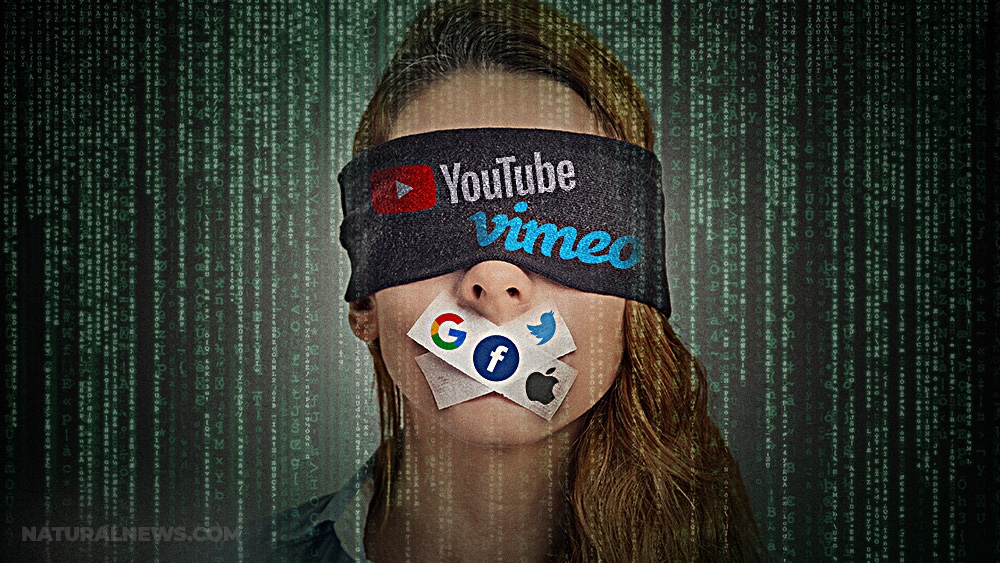
The censorship occurring on the big social media platforms is simply unacceptable, and I wish more people would rise-up against it. I experienced some schadenfreude when I saw that Meta’s (Facebook’s) financials were a disappointment last quarter. The number of active users declined ever so slightly, but that was a first for FB. One can only hope it’s a trend in the making. And see this, though it might be a bit over-optimistic. Damn the censorship!

An Internet for Users, Not Gatekeepers and Monopolists

09 Wednesday Jun 2021

Posted by Nuetzel in Censorship, Social Media, Uncategorized

≈ Leave a comment

Tags

Alphabet, Amazon, Anti-Trust, Biden v. Knight First Amendment Institute, Big Tech, Censor Track, Censorship, Clarence Thomas, Clubhousse, Common Carrier, Communications Decency Act, Daniel Oliver, Department of Justice, Exclusivity, Facebook, Fairness Doctrine, Gab, Google, Google Maps, Internet Accountability Project, Josh Hawley, Katherine Mangu-Ward, Media Research Center, MeWe, monopoly, Muhammadu Buhari, Murray Rothbard, My Space, Net Neutrality, Public Accommodation, Public Forum, Quillet, Right to Exclude, Ron DeSantis, Scholar, Section 230, Social Media, Statista, Street View, Telegram, TikTok, Twitter, Tying Arrangement

Factions comprising a majority of the public want to see SOMETHING done to curb the power of Big Tech, particularly Google/Alphabet, Facebook, Amazon, and Twitter. The apprehensions center around market power, censorship, and political influence, and many of us share all of those concerns. The solutions proposed thus far generally fall into the categories of antitrust action and legislative changes with the intent to protect free speech, but it is unlikely that anything meaningful will happen under the current administration. That would probably require an opposition super-majority in Congress. Meanwhile, some caution the problem is blown out of proportion and that we should not be too eager for government to intervene. 

Competition

There are problems with almost every possible avenue for reining in the tech oligopolies. From a libertarian perspective, the most ideal solution to all dimensions of this problem is organic market competition. Unfortunately, the task of getting competitive platforms off the ground seems almost insurmountable. In social media, the benefits to users of a large, incumbent network are nearly overwhelming. That’s well known to anyone who’s left Facebook and found how difficult it is to gain traction on other social media platforms. Hardly anyone you know is there!

Google is the dominant search engine by far, and the reasons are not quite as wholesome as the “don’t-be-evil” mantra goes. There are plenty of other search engines, but some are merely shells using Google’s engine in the background. Others have privacy advantages and perhaps more balanced search results than Google, but with relatively few users. Google’s array of complementary offerings, such as Google Maps, Street View, and Scholar, make it hard for users to get away from it entirely.

Amazon has been very successful in gaining retail market share over the years. It now accounts for an estimated 50% of retail e-commerce sales in the U.S., according to Statista. That’s hardly a monopoly, but Amazon’s scale and ubiquity in the online retail market creates massive advantages for buyers in terms of cost, convenience, and the scope of offerings. It creates advantages for online sellers as well, as long as Amazon itself doesn’t undercut them, which it is known to do. As a buyer, you almost have to be mad at them to bother with other online retail platforms or shopping direct. I’m mad, of course, but I STILL find myself buying through Amazon more often than I’d like. But yes, Amazon has competition.

Anti-Trust

Quillette favors antitrust action against Big Tech. Amazon and Alphabet are most often mentioned in the context of anti-competitive behavior, though the others are hardly free of complaints along those lines. Amazon routinely discriminates in favor of products in which it has a direct or indirect interest, and Google discriminates in favor of its own marketplace and has had several costly run-ins with EU antitrust enforcers. Small businesses are often cited as victims of Google’s cut-throat business tactics.

The Department of Justice filed suit against Google in October, 2020 for anti-competitive and exclusionary practices in the search and search advertising businesses. The main thrust of the charges are:

  • Exclusivity agreements prohibiting preinstallation of other search engines;
  • Tying arrangements forcing preinstallation of Google and no way to delete it;
  • Suppressing competition in advertising;

There are two other antitrust cases filed by state attorneys general against Google alleging monopolistic practices benefitting its own services at the expense of sellers in various lines of business. All of these cases, state and federal, are likely to drag on for years and the outcomes could take any number of forms: fines, structural separation of different parts of the business, and divestiture are all possibilities. Or perhaps nothing. But I suppose one can hope that the threat of anti-trust challenges, and of prolonged battles defending against such charges, will have a way of tempering anti-competitive tendencies, that is, apart from actual efficiency and good service.

These cases illustrate the fundamental tension between our desire for successful businesses to be rewarded and antitrust. As free market economists such as Murray Rothbard have said, there is something “arbitrary and capricious” about almost any anti-trust action. Legal thought on the matter has evolved to recognize that monopoly itself cannot be viewed as a crime, but the effort to monopolize might be. But as Rothbard asserted, claims along those lines tend to be rather arbitrary, and he was quite right to insist that the only true monopoly is one granted by government. In this case, many conservatives believe Section 230 of the Communications Decency Act of 1996 was the enabling legislation. But that is something anti-trust judgements cannot rectify.

Revoking Immunity

Section 230 gives internet service providers immunity against prosecution for any content posted by users on their platforms. While this provision is troublesome (see below), it is not at all clear why it might have encouraged monopolization, especially for web search services. At the time of the Act’s passage, Larry Page and Sergey Brin had barely begun work on Backrub, the forerunner to Google. Several other search engines had already existed and others have sprung up since then with varying degrees of success. Presumably, all of them have benefitted from Section 230 immunity, as have all social media platforms: not just Facebook, but Twitter, MeWe, Gab, Telegram, and others long forgotten, like MySpace.

Nevertheless, while private companies have free speech rights of their own, Section 230 confers undeserved protection against liability for the tech giants. That protection was predicated on the absence of editorial positioning and/or viewpoint curation of content posted by users. Instead, Section 230 often seems designed to put private companies in charge of censoring the kind of speech that government might like to censor. Outright repeal has been used as a threat against these companies, but what would it accomplish? The tech giants insist it would mean even more censorship, which is likely to be the result. 

Other Legislative Options

Other legislative solutions might hold the key to establishing true freedom of speech on the internet, a project that might have seemed pointless a decade ago. Justice Clarence Thomas’s concurring opinion in Biden v. Knight First Amendment Institute suggested the social media giants might be treated as common carriers or made accountable under laws on public accommodation. This seems reasonable in light of the strong network effects under which social media platforms operate as “public squares.” Common carrier law or a law designating a platform as a public accommodation would prohibit the platform from discriminating on the basis of speech.

I do not view such restrictions in the same light as so-called net neutrality, as some do. The latter requires carriers of data to treat all traffic equally in terms of priority and pricing of network resources, despite the out-sized demands created by some services. It is more of a resource allocation issue and not at all like managing traffic based on its political content.

The legislation contemplated by free speech activists with respect to big tech has to do with prohibiting viewpoint discrimination. That could be accomplished by laws asserting protections similar to those granted under the so-called Fairness Doctrine. As Daniel Oliver explains:

“A law prohibiting viewpoint discrimination (Missouri Senator Josh Hawley has introduced one such bill) would be just as constitutional as the Fairness Doctrine, an FCC policy which adjusted the overall balance of broadcast programming, or the Equal Time Rule, which first emerged in the Radio Act of 1927 and was established by the Communications Act of 1934. Under such a law, a plaintiff could sue for viewpoint discrimination. That plaintiff would be someone whose message had been suppressed by a tech company or whose account had been blocked or cancelled….”

Ron DeSantis just signed a new law giving the state of Florida or individuals the right to sue social media platforms for limiting, altering or deleting content posted by users, as well as daily fines for blocking candidates for political office. It will be interesting to see whether any other states pass similar legislation. However, the fines amount to a pittance for the tech giants, and the law will be challenged by those who say it compels speech by social media companies. That argument presupposes an implicit endorsement of all user content, which is absurd and flies in the face of the very immunity granted by Section 230. 

Justice Thomas went to pains to point out that when the government restricts a platform’s “right to exclude,” the accounts of public officials can more clearly be delineated as public forums. But in an act we wouldn’t wish to emulate, the government of Nigeria just shut down Twitter for blocking President Buhari’s tweet threatening force against rebels in one part of the country. Still, any law directly restricting a platform’s editorial discretion must be enforceable, whether that involves massive financial penalties for violations or some other form of discipline.

Private Action

There are private individuals who care enough about protecting speech online to do something about it. For example, these tech executives are fighting against internet censorship. You can also complain directly to the platforms when they censor content, and there are ways to react to censored posts by following prompts — tell them the information provided on their decision was NOT helpful and why. You can follow and support groups like the Media Research Center and its Censor Track service, or the Internet Accountability Project. Complain to your state and federal legislators about censorship and tell them what kind of changes you want to see. Finally, if you are serious about weakening the grip of the Big Tech, ditch them. Close your accounts on Facebook and Twitter. Stop using Google. Cancel your Prime membership. Join networks that are speech friendly and stick it out.

Individual action and a sense of perspective are what Katherine Mangu-Ward urges in this excellent piece:

“Ousted from Facebook and Twitter, Trump has set up his own site. This is a perfectly reasonable response to being banned—a solution that is available to virtually every American with access to the internet. In fact, for all the bellyaching over the difficulty of challenging Big Tech incumbents, the video-sharing app TikTok has gone from zero users to over a billion in the last five years. The live audio app Clubhouse is growing rapidly, with 10 million weekly active users, despite being invite-only and less than a year old. Meanwhile, Facebook’s daily active users declined in the last two quarters. And it’s worth keeping in mind that only 10 percent of adults are daily users of Twitter, hardly a chokehold on American public discourse.

Every single one of these sites is entirely or primarily free to use. Yes, they make money, sometimes lots of it. But the people who are absolutely furious about the service they are receiving are, by any definition, getting much more than they paid for. The results of a laissez-faire regime on the internet have been remarkable, a flowering of innovation and bountiful consumer surplus.”

Conclusion

The fight over censorship by Big Tech will continue, but legislation will almost certainly be confined to the state level in the short-term. It might be some time before federal law ever recognizes social media platforms as the public forums most users think they should be. Federal legislation might someday call for the wholesale elimination of Section 230 or an adjustment to its language. A more direct defense of First Amendment rights would be strict prohibitions of online censorship, but that won’t happen. Instead, the debate will become mired in controversy over appropriate versus inappropriate moderation, as Mangu-Ward alludes. Antitrust action should always be viewed with suspicion, though some argue that it is necessary to establish a more competitive environment, one in which free speech and fair search-engine treatment can flourish.

Organic competition is the best outcome of all, but users must be willing to vote with their digital feet, as it were, rejecting the large tech incumbents and trying new platforms. And when you do, try to bring your friends along with you!

Note: This post also appears at The American Reveille.

On Quitting Facebook

22 Friday Jan 2021

Posted by Nuetzel in Censorship, Social Media

≈ 4 Comments

Tags

Amazon, Antifa, Big Tech, BLM, Cartman, Censorship, Chinese Communist Party, Deactivation, Deplatforming, Donald Trump, Facebook, First Amendment, Gab, Google, Instagram, Market Power, Messenger, MeWe, Parler, Rumble, Sacred Cow Chips, Section 230, Shadow Bans, Signal, Telecommunications Act, Telegram, Third Reich, Twitter, Weimar Republic, WhatsApp

Cartman is awesome! Haha! But really, that kind of reaction to the dominant social media platforms is well deserved, especially given their recent behavior. Listen to this: my wife’s church held a service of hymns and prayer for “healing the nation” on Tuesday. The church’s IT administrator posted an advance notice about the service on the church’s Facebook wall. There was nothing overtly political about the notice or the service itself. Nevertheless, somehow FB deemed the notice subversive and blocked it! We are not dealing with decent or reasonable people here. They are pigs, and we don’t have to do business with them.

FaceHook

A number of years ago, a woman told me FB was “the Devil!” She was very good natured and I laughed at the time. But there are many reasons for people to wean themselves from social media, or at least from certain platforms. The web abounds with testimony on lives improved by quitting FB, for example, and there are forums for those who’ve quit or would like to. There’s also plenty of practical advice on “how to leave”, so there is definitely some interest in getting out.

Ditching FB offers a certain freedom: you can eliminate the compulsion to check your news feed and escape those feelings of obligation to “like” or comment on certain posts. These are distractions that many can do without. No more efforts to “unsee” expressions of foot fetish narcissism! Free of the pathetic virtue signals that seem to dominate the space. And quitting might be especially nice if you’re keen on cutting ties with certain “frenemies”. Almost all of us have had a few. This study found that quitting FB results in less time online (surprise!) and more time with family and friends (pre-COVID lockdowns, of course). It also found that quitting leads to less political polarization! Imagine that!

There’s no question that FB helped me make new friends and reconnect with old ones. It also led to overdue severing of ties with a few toxic individuals. I know I’m likely to lose contact with people I truly like, and that’s too bad, but in most cases I must leave it up to them to stay in touch (read on). Obviously, there are many ways to stay in contact with friends you really want to keep.

FacePurge

As for politics (and seemingly every aspect of life has been politicized), now is a very good time to quit FB if you believe in free expression, the value of diverse opinion, and a free marketplace of ideas. FB doesn’t want that. As the episode at my wife’s church demonstrates, FB has been brazenly selective in suppressing opinion, like other prominent social media platforms. It was obvious well before the presidential election, and it has become intolerable since.

How To Defacebook

There are voices that counsel patience with the tech giants. They recommend a strategy of diversification across platforms, without necessarily quitting any of them. I can understand why certain people might prefer that route. It’s well nigh impossible to migrate an extended family to another platform, for example. However, juggling several accounts can be a problem of time management. And for me, this all boils down to a matter of disgust. It’s time to stick it to FB.

This rest of this post offers some practical advice on quitting FB and more thoughts on how and why I’m doing it. This will also appear on some speech-friendly platforms, so if you see it there and you haven’t quit FB, do it! You’re already halfway there.

The first decision is whether to quit outright or deactivate. Many don’t have the fortitude to stay away if they merely deactivate, and maybe they just need a break. For others, FB has earned an enmity that can only be satisfied by leaving for good. Count me among the latter.

You should reclaim all of your data before you quit: you can download it to a zip file, which will include all of your photos, chats, “About” information, your friends’ birthdays, etc… While it’s been claimed that shutting your account will cleanse Facebook of all your data, that’s not entirely the case. For example, your friends might still retain chats in which you participated. In fact, I’m not convinced all of your data isn’t permanently in FB’s possession, if not the NSA’s, but we might never know.

You should also change your login credentials on other online accounts linked to FB. You should be able to identify some or maybe all of those by looking at the password section in “Settings”. I’m not sure whether scrolling though and checking all the apps listed in Settings will help — it didn’t help me identify anything that the password section did not.

It’s a good idea to keep Messenger up for a while in case any of your friends want to inquire or find a way to stay in touch. That’s fine, but to really rid yourself of FB, you must part with Messenger eventually. Of course, you’ll lose Instagram and WhatsApp when you quit FB. I don’t use those, so it won’t be a problem for me.

Then there are the “I’m Going To Quit!” status updates, sometimes laced with sadness or anger. I haven’t found those particularly appealing in the past… I’ve often wondered if they were merely ploys to get attention. But things have changed. I will add this post to my wall and leave it there for a few days. My *noble* intent is to help others quit, and to do my small part to foster a more competitive social media environment. Another way to communicate your departure would be to use Messenger to inform selected friends, but that’s more work. And by the way, in anticipation of my stop date, I’ve been culling my friends list more aggressively than ever.

Once you pull the trigger and click “Delete”, your account will remain active for a few days. Don’t be a sucker. Delete the app on your phone. Wait it out. Forget about it!

Not OurBook

Again, there was never a better time to dump FB. Beyond any emotionally corrosive aspects of social media, the last straw should be the selective censorship of political views, shadow bans, outright bans, and deletion of groups. Lately, it’s been like witnessing the early transition from Weimar to the Third Reich. We can only hope the full transition will remain unfulfilled.

For a company protected from liability under Section 230 of the Telecommunications Act, FB’s refusal to respect First Amendment rights and to abide diversity of opinion is shocking. Don’t tell me about fact checking! Facebook fact checkers are politically motivated hacks, and the new “oversight board” is not likely to help you and me. The presumption underlying Section 230 is that these platforms are not publishers, but having abandoned all pretense of impartiality, they should not be entitled to immunity. Moreover, they have tremendous market power, and they are colluding in an effort to consolidate political power and protect their dominant market position.

Big Tech, and not just FB, has been flagrant in this hypocrisy. These firms have deplatformed individuals who’ve questioned the legitimacy of the presidential election, and there is plenty to question. But they refuse to censor Antifa and BLM rioters, antisemites, state terrorists, and genocidal tyrants from around the world, including the Chinese Communist Party. More recently, FB and other platforms have condemned supporters of President Trump, as if that support was equivalent to endorsing those who stormed the Capital on June 6th. And even if it were, would an objective arbiter not also condemn leftist violence? How about equal condemnation of the Antifa and BLM rioters who ravaged American cities throughout last summer? Or those who rioted at the time of Trump’s inauguration?

The social media platforms won’t do that. FB is bad, but Twitter is probably the worst of them all. I quit using Google years ago due to privacy concerns, but also because it became obvious to me that it’s search results are heavily biased. Amazon pulled the rug out from under Parler, and I will quit using Amazon when my Prime membership is up for renewal unless Jeff Bezos starts singing a different tune by then. These companies are anticompetitive, but there are other ways to buy online, and there is plenty of other video programming.

Let’s Book

The power of Big Tech is not absolute. Remember, there are alternatives if you choose to quit or diversify: check out MeWe, Clouthub, Rumble (video hosting), Gab, Signal, and Telegram, for example (see this interesting story on the latter two). And Parler, of course, if it manages to find a new hosting service or wins some kind of emergency relief against Amazon.

Message me for my contact information or my identity on other platforms, or you can always find my ruminations at SacredCowChips.net. You can even share them on FB (if they’ll let you), at the risk of alienating your “woke” friends! So long.

Follow Sacred Cow Chips on WordPress.com

Recent Posts

  • The Case Against Interest On Reserves
  • Immigration and Merit As Fiscal Propositions
  • Tariff “Dividend” From An Indigent State
  • Almost Looks Like the Fed Has a 3% Inflation Target
  • Government Malpractice Breeds Health Care Havoc

Archives

  • January 2026
  • December 2025
  • November 2025
  • October 2025
  • September 2025
  • August 2025
  • July 2025
  • June 2025
  • May 2025
  • April 2025
  • March 2025
  • February 2025
  • January 2025
  • December 2024
  • November 2024
  • October 2024
  • September 2024
  • August 2024
  • July 2024
  • June 2024
  • May 2024
  • April 2024
  • March 2024
  • February 2024
  • January 2024
  • December 2023
  • November 2023
  • August 2023
  • July 2023
  • June 2023
  • May 2023
  • April 2023
  • March 2023
  • February 2023
  • January 2023
  • December 2022
  • November 2022
  • October 2022
  • September 2022
  • August 2022
  • July 2022
  • June 2022
  • May 2022
  • April 2022
  • March 2022
  • February 2022
  • January 2022
  • December 2021
  • November 2021
  • October 2021
  • September 2021
  • August 2021
  • July 2021
  • June 2021
  • May 2021
  • April 2021
  • March 2021
  • February 2021
  • January 2021
  • December 2020
  • November 2020
  • October 2020
  • September 2020
  • August 2020
  • July 2020
  • June 2020
  • May 2020
  • April 2020
  • March 2020
  • February 2020
  • January 2020
  • December 2019
  • November 2019
  • October 2019
  • September 2019
  • August 2019
  • July 2019
  • June 2019
  • May 2019
  • April 2019
  • March 2019
  • February 2019
  • January 2019
  • December 2018
  • November 2018
  • October 2018
  • September 2018
  • August 2018
  • July 2018
  • June 2018
  • May 2018
  • April 2018
  • March 2018
  • February 2018
  • January 2018
  • December 2017
  • November 2017
  • October 2017
  • September 2017
  • August 2017
  • July 2017
  • June 2017
  • May 2017
  • April 2017
  • March 2017
  • February 2017
  • January 2017
  • December 2016
  • November 2016
  • October 2016
  • September 2016
  • August 2016
  • July 2016
  • June 2016
  • May 2016
  • April 2016
  • March 2016
  • February 2016
  • January 2016
  • December 2015
  • November 2015
  • October 2015
  • September 2015
  • August 2015
  • July 2015
  • June 2015
  • May 2015
  • April 2015
  • March 2015
  • February 2015
  • January 2015
  • December 2014
  • November 2014
  • October 2014
  • September 2014
  • August 2014
  • July 2014
  • June 2014
  • May 2014
  • April 2014
  • March 2014

Blogs I Follow

  • Passive Income Kickstart
  • OnlyFinance.net
  • TLC Cholesterol
  • Nintil
  • kendunning.net
  • DCWhispers.com
  • Hoong-Wai in the UK
  • Marginal REVOLUTION
  • Stlouis
  • Watts Up With That?
  • Aussie Nationalist Blog
  • American Elephants
  • The View from Alexandria
  • The Gymnasium
  • A Force for Good
  • Notes On Liberty
  • troymo
  • SUNDAY BLOG Stephanie Sievers
  • Miss Lou Acquiring Lore
  • Your Well Wisher Program
  • Objectivism In Depth
  • RobotEnomics
  • Orderstatistic
  • Paradigm Library
  • Scattered Showers and Quicksand

Blog at WordPress.com.

Passive Income Kickstart

OnlyFinance.net

TLC Cholesterol

Nintil

To estimate, compare, distinguish, discuss, and trace to its principal sources everything

kendunning.net

The Future is Ours to Create

DCWhispers.com

Hoong-Wai in the UK

A Commonwealth immigrant's perspective on the UK's public arena.

Marginal REVOLUTION

Small Steps Toward A Much Better World

Stlouis

Watts Up With That?

The world's most viewed site on global warming and climate change

Aussie Nationalist Blog

Commentary from a Paleoconservative and Nationalist perspective

American Elephants

Defending Life, Liberty and the Pursuit of Happiness

The View from Alexandria

In advanced civilizations the period loosely called Alexandrian is usually associated with flexible morals, perfunctory religion, populist standards and cosmopolitan tastes, feminism, exotic cults, and the rapid turnover of high and low fads---in short, a falling away (which is all that decadence means) from the strictness of traditional rules, embodied in character and inforced from within. -- Jacques Barzun

The Gymnasium

A place for reason, politics, economics, and faith steeped in the classical liberal tradition

A Force for Good

How economics, morality, and markets combine

Notes On Liberty

Spontaneous thoughts on a humble creed

troymo

SUNDAY BLOG Stephanie Sievers

Escaping the everyday life with photographs from my travels

Miss Lou Acquiring Lore

Gallery of Life...

Your Well Wisher Program

Attempt to solve commonly known problems…

Objectivism In Depth

Exploring Ayn Rand's revolutionary philosophy.

RobotEnomics

(A)n (I)ntelligent Future

Orderstatistic

Economics, chess and anything else on my mind.

Paradigm Library

OODA Looping

Scattered Showers and Quicksand

Musings on science, investing, finance, economics, politics, and probably fly fishing.

  • Subscribe Subscribed
    • Sacred Cow Chips
    • Join 128 other subscribers
    • Already have a WordPress.com account? Log in now.
    • Sacred Cow Chips
    • Subscribe Subscribed
    • Sign up
    • Log in
    • Report this content
    • View site in Reader
    • Manage subscriptions
    • Collapse this bar
 

Loading Comments...