• About

Sacred Cow Chips

Sacred Cow Chips

Tag Archives: Health Savings Accounts

Death By Obamacare

18 Wednesday Jan 2017

Posted by Nuetzel in Health Care

≈ 3 Comments

Tags

A. Barton Hinkle, ACA, Affordable Care Act, Avik Roy, Ben Shapiro, Cadillac Tax, Catastrophic Coverage, David Brooks, Harry Reid, Health Savings Accounts, HSAs, John C. Goodman, Medicaid Block Grants, Minimum Essential Coverage, Obamacare, Obamacare Repeal, Paul Ryan, Private Medicare, Refundable Tax Credit, Rep. Pete Sessions, Rep. Phil Roe, Rep. Tom Price, Repeal and Replace, Sen. Orin Hatch, Sen. Richard Burr, Universal Access
goverment_kills

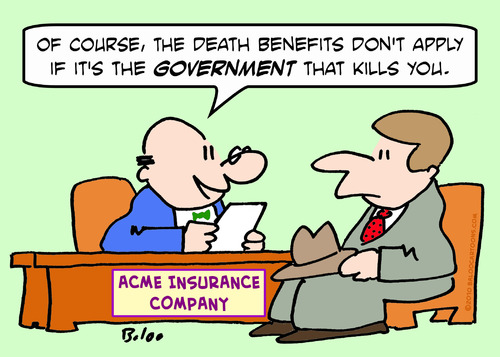
People will die if we don’t repeal and replace Obamacare! That right, and I’ll tell you why: First, the “Affordable” Care Act (ACA) creates terrible incentives for physicians. Among other provisions, it has chopped reimbursement rates on Medicare and Medicaid. As a result, physicians are declining patients under those plans, exposing the “access” myth under Obamacare as one of several cruel deceptions. Second, “physician feedback” reports and hospital “performance scores” reward providers who avoid the sickest and neediest patients. Third, provisions of the ACA encourage the monopolization of health care delivery and consequently inflate costs. That makes it less likely that needy individuals will insure or seek care, especially given the high deductibles they face. And greater market concentration in health care delivery often means patients have nowhere to go when they are denied care. Fourth, Obamacare has increased the regulatory burden on providers, which invariably reduces the quality of care. Other ACA regulatory burdens placed on employers have forced them to reduce employees’ hours and new hiring in order to control costs. This has limited the number insured under employer plans, leaving them to grapple with the exchanges, or on government plans from which physicians feel stiffed, or to be uninsured. All of these developments lead to undesirable health care outcomes. And there is more.

The ACA Disaster

Obamacare was a complete sham and destined to fail from the start, but the law’s now certain demise is greeted with indignance by the economic illiterati of the left. There are many counts upon which the law has failed: almost 29 million remain uninsured; millions of others in the individual market lost the coverage and doctors they preferred; only a single insurance option is available on many exchanges; the individual mandate is widely-ignored; the exchanges are serving a sickly risk pool; insurance premia are skyrocketing; health care delivery has trended toward monopoly; low Medicaid reimbursement rates have reduced actual access to providers; negative employment effects have arisen as firms adjusted to the employer mandates; and the law has imposed stiff regulatory compliance costs on providers of health care. Obamacare is also a significant budget item, despite early claims to the contrary (also see here): according to the Congressional Budget Office (CBO), the law’s contribution to the federal budget deficit is expected to be almost $2 trillion over the next ten years. What a law! It’s many invasive tendrils are destroying the vitality of the health care and insurance sectors, and it must be eliminated.

There are better ways to achieve the goals originally put forward under the aegis of the ACA. Those who fear repeal either believe that the law will not be replaced, which is unlikely, or that the replacement plan will lead to the loss of health care coverage for a large number of individuals. My contention is that the ACA can be replaced with a plan that would correct its massive deficiencies without creating other death traps.

The single truthful claim that supporters of Obamacare can make is a reduction in the number of uninsured since its implementation, but the numbers reported are exaggerated. A typical quote is that 20 million have gained coverage, an estimate, but we’ll go with that. The link gives a rough but meaningful accounting. Most of the increase in the number of insured, about 13 million, came from expanded Medicaid enrollment. That could have been accomplished without the ACA, and most of those enrollees were already eligible for Medicaid before the ACA’s expansion in eligibility. Perhaps the law had some beneficial effects on the awareness of individuals who were previously eligible but unenrolled.

The quoted gains in the insured population also include several million who were forced off their previous coverage in the individual market by the ACA. These do not represent net increases in the insured population. There have also been gains among young adults who remained on their parents policies. And yes, there have been gains in coverage among those with pre-existing conditions, but this totals less than half a million even counting those already covered under state “high-risk pools”. Needless to say, outright repeal of the ACA without replacement would not lead to a 20 million increase in the uninsured population, as many have argued. With replacement, it is conceivable that losses in coverage could be zero or negative.

Replacement Bills

What are the likely features of an ACA replacement bill? There are as many as nine different proposals or bills introduced by republicans, including one from Rep. Tom Price, who has been nominated to serve as President-Elect Trump’s Secretary of Health and Human Services (HHS). Rep. Pete Sessions and Sen. Bill Cassidy have introduced a bill endorsed by economist John C. Goodman. Rep. Phil Roe introduced a bill just last week. Sen. Orin Hatch and Sen. Richard Burr have proposed health care legislation. House Speaker Paul Ryan has also proposed a plan that received muted praise from noted health-care expert Avik Roy. These plans have some commonalities. In broad strokes, the proposed legislative actions call for less regulation, greater choice in the design of health insurance policies, more patient-centered care, a shift to market orientation, efforts to equalize the tax treatment of insurance premia for employer and individually-sponsored plans, retention of the ACA’s continuance of family coverage for young adults, and tax credits to support universal availability of insurance coverage.

There are several ways in which an ACA replacement plan can reduce the cost of health care delivery and the cost of health care insurance. The low-hanging fruit, as it were, involves steps to reduce the regulatory burden on health care providers, eliminating the ACA’s Minimum Essential Coverage and Essential Heath Benefits requirements (and allowing wider choice of coverage types and levels), and allowing competition among insurers across state lines.

The reduction in costs and subsidies that can achieved by allowing simple catastrophic-only policies in both the individual and employer markets is obvious. These policies would have low premia and correspondingly high deductibles. Regular checkups and routine health maintenance would not be covered under such basic policies. Those benefits would be optional, along with others like mental health coverage, maternity and reproductive health. The basic policies would represent real insurance, not paid-in-advance services. It’s more difficult, however, to anticipate the magnitude of cost savings and efficiency gains from eliminating regulatory requirements, encouraging competition among providers, and legalizing interstate insurance competition. That means the total gain from “low-hanging fruit” is hard to quantify, but it is real. Here are comments by David Brooks in The New York Times on the promise of market-oriented reforms.

Several of the GOP plans seek to provide universal availability of health insurance coverage by allowing refundable tax credits on insurance costs combined with expanded availability of Health Savings Accounts (HSAs). These steps would help to equalize the tax benefits of health insurance across the employer and individual markets. This is a crucial step due to the historically damaging effects of employer-provided coverage, as noted by A. Barton Hinkle here. Several of the GOP plans would allow non-employers like church groups, fraternal and professional associations to offer coverage.

Here is Avik Roy on the handling of high-risk individuals under the Ryan plan:

“Obamacare-style guaranteed issue and community rating would be gone and replaced by high risk pools, guaranteed issue for continuously held coverage, and a default requirement that insurers had to price their plans for older enrollees no higher than 5 times how they price them for younger enrollees (a significant improvement from Obamacare’s stricter 3:1 ratio).“

Other proposals in some of the GOP plans involve reform of the FDA, more support for private Medicare plans, and a change in the federal portion of Medicaid funding to block grants to states (who actually manage the program). The latter will be the subject of a future post.

Opportunities and Minefields

The kinds of steps described above can lead to greater reductions in the number of uninsured, and at a lower cost, than Obamacare. However, many partisans are agitating to convince republicans that this is impossible. Here is Roy’s opinion (he refers to his 2014 book, Transcending Obamacare):

“… many would-be reformers have convinced themselves that no Republican replacement for Obamacare can cover as many Americans as Obamacare will. Put simply, this is flat-out wrong. As Transcending Obamacare showed, you absolutely can achieve universal coverage with less spending and less government intervention, because we spend way too much subsidizing health coverage for the wealthy, and because our government-driven employer-based health care system inflates wasteful spending across the board.“

John C. Goodman discusses four “minefields” that republicans should avoid, the first of which seems obvious:

  1. Don’t repeal and delay: All indications are that congressional republicans have avoided this minefield, and Trump has stated that he won’t accept anything short of “simultaneous” repeal and replace.
  2. ACA revenue should not be “given away”: Goodman lists negotiated fee reductions from the AMA under the ACA, AARP’s agreement to Medicare cuts, and taxes on pharmaceutical companies, insurers, big labor and big business. Eliminating these sources of savings and tax revenue can be afforded only by reducing other costs. I’m dubious that the fee reductions and taxes haven’t had counterproductive effects, but point taken.
  3. Don’t impose a Cadillac tax: The Cadillac tax applies to expensive plans offered by employers. This point is an exception to #2 above, but Goodman says several GOP plans impose forms of Cadillac taxes despite widespread opposition.
  4. Don’t ignore employers: Here is Goodman on employers:

“Virtually all of the new government spending for private health insurance under Obamacare is going to what has become the most dysfunctional part of the healthcare system – the individual market. This is where premiums are spiraling and there is a race to the bottom on quality and access to care. Almost every Republican plan to replace Obamacare makes the same mistake. But why throw good money after bad?

Almost 30 million Americans are still uninsured (largely because the products in the Obamacare exchanges are so expensive and unattractive) and 85% of these live in a household with someone in the labor market. A tax credit that could be used by employers to help employees enroll in a group plan would give them access to lower premiums and better coverage.“

Goodman strongly endorses the replacement plan put forward by Rep. Pete Sessions and Sen. Bill Cassidy. It is the only GOP plan advanced thus far that avoids the four pitfalls identified by Goodman.

Markets Can Save Lives

My statement at the top of this piece might strike some as outrageous, but it is less outrageous than statements by Sen. Harry Reid and others that “people will die” if Obamacare is repealed. Of course, my assertion would be hard to defend unless conditioned on a replacement plan to improve access to quality care. But it is wrong to say that repeal will lead to incremental deaths without reference to a replacement plan. The claim that there is unlikely to be a replacement is disingenuous.

The usual defense of the ACA is grounded in the increased number of insureds it has achieved, combined with appeals to the expense of catastrophic health events. A weaker defense is the presumption that Obamacare codifies a “right” to health care. Even if we stipulate that such a right exists, there are better ways to accomplish the ends desired by the ACA’s proponents. The alternatives now under consideration are encouraging, as they are largely geared toward leveraging the efficiency of the market with less reliance on information-deficient government planners and rule-makers.


Gains From Medicare Trade

08 Thursday Dec 2016

Posted by Nuetzel in Medicare, Privatization, Profit Motive

≈ 2 Comments

Tags

ACA, American Enterprise Institute, CMS, Donald Trump, Health Savings Accounts, HHS, IPAB, John C. Goodman, MACRA, Medicare, Medicare Advantage, Medicare Part C, Medigap, Obamacare, Original Medicare, Premium Support Plan, Privatization, Tom Price

Boomers and Medicare

Here’s a bit of zero-sum ignorance: private profits are robbed from consumers; only non-profits or government can deliver full value, or so this logic goes. Those who subscribe to this notion dismiss the function of private incentives in creating value, yet those incentives are responsible for nearly all of the material blessings of modern life. What the government seems to do best, on the other hand, is writing checks. It’s not really clear it does that very well, of course, but it does have the coercive power of taxation required to do so. Capital employed by government is not a “free” input. It bears opportunity costs and incentive costs that are seldom considered by critics of the private sector.

The role of private profit and the zero-sum fallacy come up in the context of proposals to privatize government services. In what follows, I discuss a case in point: privatization of Medicare. Rep. Tom Price, the Chairman of the House Budget Committee, is Donald Trump’s nominee to head HHS. In November, Price said Congress would attempt to pass legislation overhauling Medicare in the first year of the Trump Administration. James Capretta of the American Enterprise Institute (AEI) explains some of the features of the possible reforms. Price has supported the concept of a premium support plan whereby seniors would purchase their own coverage from private insurers, paid at least in part by the government (also see here).

Medicare and Its Ills

The Medicare program is beset with problems: it has huge unfunded liabilities; it’s cash flows are being undermined by demographic trends; fraud and bureaucratic waste run rampant; it’s unpopular with doctors; and the regulations imposed on healthcare providers are often misguided.

Writing checks to health care providers is really the primary “good” created by the federal government in the administration of Medicare. The Centers for Medicare & Medicaid Services (CMS), a branch of the Department of Health and Human Services (HHS), also performs regulatory functions mandated by legislation, such as the Affordable Care Act (ACA).

More recently, CMS has been implementing the Medicare Access and Chip Reauthorization Act of 2015 (MACRA), which will introduce changes to the payment formulas for physician compensation under the plan. Economist John C. Goodman offers a cogent explanation of the ill-conceived economic planning at the heart of Medicare regulation and its implementation of MACRA in particular:

“…the government’s current payment formulas create perverse economic incentives — to maximize income against the formulas instead of putting patient welfare first. The goal is to change those incentives, so that providers will get paid more if they lower costs and raise quality.

But after the new formulas replace the old ones, provider incentives in a very real sense will be unchanged. They will still have an economic incentive to maximize income by exploiting the formulas, even if that is at the expense of their patients.“

After describing several ways in which Medicare regulation, now and prospectively, leads to perverse results, Goodman advances the powerful argument that the market can regulate health care delivery to seniors more effectively than CMS.

“If the government’s metrics are sound, why not allow health plans to advertise their metrics to potential enrollees and compete on these quality measures. Right now, they cannot. Every communication from health plans to Medicare enrollees must be approved by CMS. … Under MACRA, health plans profit by satisfying the government, not their customers. … Better yet, why not let the market (rather than government) decide on the quality metrics?“

Private Medicare Exists

Wait a minute: profit? But isn’t Medicare a government program, free from the presumed evils of profit-seekers? Well, here’s the thing: almost all of the tasks of managing the provision of Medicare coverage are handled by the private sector under contract with CMS, subject to CMS regulation, of course. That is true even for Part A and Part B benefits, or “original Medicare”, as it’s sometimes called.

Under “original” Medicare, private insurers process “fee-for-service” claims and payments, provide call center services, manage clinician enrollment, and perform fraud investigations. Yes, these companies can earn a profit on these services. Unfortunately, CMS regulation probably serves to insulate them from real competition, subverting efficiency goals. Goodman’s suggestion would refocus incentives on providing value to the consumers these insurers must ultimately serve.

Then there are “Medigap” or Medicare Supplement policies that cover out-of-pocket costs not covered under Parts A and B. These policies are designed by CMS, but they are sold and managed by private insurers.

And I haven’t even mentioned Medicare Parts C and D, which are much more significantly privatized than original Medicare or Medigap. The Part C program, also known as Medicare Advantage, allows retirees to choose from a variety of privately-offered plans as an alternative to traditional Medicare. At a minimum, these plans must cover benefits that are the equivalent to Parts A and B, as judged by CMS, though apparently “equivalency” still allows some of those benefits to be declined in exchange for a rebate on the premium. More optional benefits are available for an additional premium under these plans, including a reduced out-of-pocket maximum, a lower deductible, and reduced copays. Part C has grown dramatically since its introduction in 1996 and now covers 32% of Medicare enrollees. Apparently these choices are quite popular with seniors. So why, then, is privatization such a bogeyman with the left, and with seniors who are cowed by the anti-choice narrative?

What’s To Privatize?

Not privatized are the following Medicare functions: the collection of payroll-tax contributions of current workers; accounting and reporting functions pertaining to the Trust Fund; decisions surrounding eligibility criteria; the benefit designs and pricing of Part A (hospitalization) and Part B (optional out-patient medical coverage, including drugs administered by a physician); approval of provider plan designs and pricing under Parts C; regulation and oversight of all other aspects of Medicare, including processes managed by private administrative contractors and providers of optional coverage; and regulation of health care providers. 

The Independent Payment Advisory Board (IPAB) was created under the Affordable Care Act (ACA), aka Obamacare, to achieve Medicare costs savings under certain conditions, beginning in 2015. Its mandate is rather confusing, however, as IPAB is ostensibly restricted by the ACA from meddling with health care coverage and quality. Proposals from IPAB are expected to cover such areas as government negotiation of drug prices under Part D, a Part B formulary, restrictions on the “protected status” of certain drugs, and increasing incentives for diagnostic coding for Part C plans. Note that these steps are confined to optional or already-private parts of Medicare. They are extensions of the administrative and regulatory functions described above. Despite the restrictions on IPAB’s activities under the ACA, these steps would have an impact on coverage and quality, and they mostly involve functions for which market solutions are better-suited than one-size-fits-all regulatory actions.

The opportunities for privatization are in 1) creating more choice and flexibility in Parts A and B, or simply migrating them to Parts C and D, along with premium support; 2) eliminating regulatory burdens, including the elimination of IPAB.

Impacts On Seniors Now and Later

Privatization is unlikely to have any mandatory impact on current or near-future Medicare beneficiaries. That it might is a scare story circulating on social media (i.e., fake news), but I’m not aware of any privatization proposal that would make mandatory changes affecting anyone older than their mid-50s. Voluntary benefit choices, such as Part C and D plans, would be given more emphasis.

There should be an intensive review of the regulatory costs imposed on providers and, in turn, patients. Many providers simply refuse to accept patients with Medicare coverage, and regulation encourages health care delivery to become increasingly concentrated into large organizations, reducing choices and often increasing costs. Lightening the regulatory burden is likely to bring immediate benefits to seniors by improving access to care and allowing providers to be more patient-focused, rather than compliance-focused.

Again, the most heavily privatized parts of Medicare are obviously quite popular with seniors. The benefits are also provided at lower cost, although the government pays the providers of those plans extra subsidies, which may increase their cost to taxpayers. Enrollees should be granted more flexibility through the private market, including choices to limit coverage, even down to catastrophic health events. Consumers should be given at least limited control over the funds used to pay their premia. That would include choice over whether to choose lower premia and put the excess premium support into consumer-controlled Health Saving Account (HSA) contributions.

Other Reforms

Pricing is a controversial area, but that’s where the terms of mutually beneficial trades are made, and it’s what markets do best. Pricing flexibility for private plans would be beneficial from the standpoint of matching consumer needs with the appropriate level of coverage, especially with fewer regulatory restrictions. Such flexibility need not address risk rating in order to have beneficial effects.

Regulations imposed on physicians and other providers should be limited to those demanded by private plans and the networks to which they belong, as well as clear-cut legislative rules and standards of practice imposed by professional licensing boards. The better part of future contributions to the Trust Fund by younger workers (i.e., those not grandfathered into the existing program) should be redirected toward the purchase today of future benefits in retirement, based on actuarial principles.

Perhaps the best cost-control reform would be repeal of the tax deductibility of insurance premia on employer-paid insurance plans. This provision of the tax code has already inflated health care costs for all consumers, including seniors, via demand-side pressure, and it has inflated their insurance premia as well. If extended to all consumers, tax deductibility would be less discriminatory toward consumers in the individual market and most seniors, but it would inflate costs all the more, with unevenly distributed effects. Unfortunately, rather than eliminating it entirely, qualification for the tax deduction is very likely to be broadened.

Conclusions

The Medicare program is truly in need of an overhaul, but reform proposals, and especially proposals that would put decision-making power into the hands of consumers, are always greeted with reflexive shrieks from sanctimonious worshippers of the state. The most prominent reform under consideration now would offer more of what’s working best in the Medicare program: private choices in coverage and costs. Solving the long-term funding issues will be much easier without a centralized regime that encourages escalating costs.

Earning a profit is usually the mark of a job well done. It is compensation for the use of capital and the assumption of risk (i.e., no bailouts). Physicians, nurses, chiropractors, insurance agents and customer service reps all earn compensation for their contributions. Providers of capital should too, including the owners of health insurance companies who do well by their customers. And if you think the absence of profit in the public sector creates value, remember the damage inflicted by taxes. Capital isn’t “free” to society just because it can be confiscated by the government.

Follow Sacred Cow Chips on WordPress.com

Recent Posts

  • Immigration and Merit As Fiscal Propositions
  • Tariff “Dividend” From An Indigent State
  • Almost Looks Like the Fed Has a 3% Inflation Target
  • Government Malpractice Breeds Health Care Havoc
  • A Tax On Imports Takes a Toll on Exports

Archives

  • December 2025
  • November 2025
  • October 2025
  • September 2025
  • August 2025
  • July 2025
  • June 2025
  • May 2025
  • April 2025
  • March 2025
  • February 2025
  • January 2025
  • December 2024
  • November 2024
  • October 2024
  • September 2024
  • August 2024
  • July 2024
  • June 2024
  • May 2024
  • April 2024
  • March 2024
  • February 2024
  • January 2024
  • December 2023
  • November 2023
  • August 2023
  • July 2023
  • June 2023
  • May 2023
  • April 2023
  • March 2023
  • February 2023
  • January 2023
  • December 2022
  • November 2022
  • October 2022
  • September 2022
  • August 2022
  • July 2022
  • June 2022
  • May 2022
  • April 2022
  • March 2022
  • February 2022
  • January 2022
  • December 2021
  • November 2021
  • October 2021
  • September 2021
  • August 2021
  • July 2021
  • June 2021
  • May 2021
  • April 2021
  • March 2021
  • February 2021
  • January 2021
  • December 2020
  • November 2020
  • October 2020
  • September 2020
  • August 2020
  • July 2020
  • June 2020
  • May 2020
  • April 2020
  • March 2020
  • February 2020
  • January 2020
  • December 2019
  • November 2019
  • October 2019
  • September 2019
  • August 2019
  • July 2019
  • June 2019
  • May 2019
  • April 2019
  • March 2019
  • February 2019
  • January 2019
  • December 2018
  • November 2018
  • October 2018
  • September 2018
  • August 2018
  • July 2018
  • June 2018
  • May 2018
  • April 2018
  • March 2018
  • February 2018
  • January 2018
  • December 2017
  • November 2017
  • October 2017
  • September 2017
  • August 2017
  • July 2017
  • June 2017
  • May 2017
  • April 2017
  • March 2017
  • February 2017
  • January 2017
  • December 2016
  • November 2016
  • October 2016
  • September 2016
  • August 2016
  • July 2016
  • June 2016
  • May 2016
  • April 2016
  • March 2016
  • February 2016
  • January 2016
  • December 2015
  • November 2015
  • October 2015
  • September 2015
  • August 2015
  • July 2015
  • June 2015
  • May 2015
  • April 2015
  • March 2015
  • February 2015
  • January 2015
  • December 2014
  • November 2014
  • October 2014
  • September 2014
  • August 2014
  • July 2014
  • June 2014
  • May 2014
  • April 2014
  • March 2014

Blogs I Follow

  • Passive Income Kickstart
  • OnlyFinance.net
  • TLC Cholesterol
  • Nintil
  • kendunning.net
  • DCWhispers.com
  • Hoong-Wai in the UK
  • Marginal REVOLUTION
  • Stlouis
  • Watts Up With That?
  • Aussie Nationalist Blog
  • American Elephants
  • The View from Alexandria
  • The Gymnasium
  • A Force for Good
  • Notes On Liberty
  • troymo
  • SUNDAY BLOG Stephanie Sievers
  • Miss Lou Acquiring Lore
  • Your Well Wisher Program
  • Objectivism In Depth
  • RobotEnomics
  • Orderstatistic
  • Paradigm Library
  • Scattered Showers and Quicksand

Blog at WordPress.com.

Passive Income Kickstart

OnlyFinance.net

TLC Cholesterol

Nintil

To estimate, compare, distinguish, discuss, and trace to its principal sources everything

kendunning.net

The Future is Ours to Create

DCWhispers.com

Hoong-Wai in the UK

A Commonwealth immigrant's perspective on the UK's public arena.

Marginal REVOLUTION

Small Steps Toward A Much Better World

Stlouis

Watts Up With That?

The world's most viewed site on global warming and climate change

Aussie Nationalist Blog

Commentary from a Paleoconservative and Nationalist perspective

American Elephants

Defending Life, Liberty and the Pursuit of Happiness

The View from Alexandria

In advanced civilizations the period loosely called Alexandrian is usually associated with flexible morals, perfunctory religion, populist standards and cosmopolitan tastes, feminism, exotic cults, and the rapid turnover of high and low fads---in short, a falling away (which is all that decadence means) from the strictness of traditional rules, embodied in character and inforced from within. -- Jacques Barzun

The Gymnasium

A place for reason, politics, economics, and faith steeped in the classical liberal tradition

A Force for Good

How economics, morality, and markets combine

Notes On Liberty

Spontaneous thoughts on a humble creed

troymo

SUNDAY BLOG Stephanie Sievers

Escaping the everyday life with photographs from my travels

Miss Lou Acquiring Lore

Gallery of Life...

Your Well Wisher Program

Attempt to solve commonly known problems…

Objectivism In Depth

Exploring Ayn Rand's revolutionary philosophy.

RobotEnomics

(A)n (I)ntelligent Future

Orderstatistic

Economics, chess and anything else on my mind.

Paradigm Library

OODA Looping

Scattered Showers and Quicksand

Musings on science, investing, finance, economics, politics, and probably fly fishing.

  • Subscribe Subscribed
    • Sacred Cow Chips
    • Join 128 other subscribers
    • Already have a WordPress.com account? Log in now.
    • Sacred Cow Chips
    • Subscribe Subscribed
    • Sign up
    • Log in
    • Report this content
    • View site in Reader
    • Manage subscriptions
    • Collapse this bar
 

Loading Comments...