• About

Sacred Cow Chips

Sacred Cow Chips

Tag Archives: Liberation Day

The Mystery of the “Missing” Tariff Inflation

03 Thursday Jul 2025

Posted by Nuetzel in Inflation, Tariffs

≈ Leave a comment

Tags

Bonded Warehouses, Dollar Exchange Rate, Donald Trump, Federal Reserve, Imported Inflation, Inflation, Liberation Day, Neil Kashkari, PCE Price Index, Stagflation, Tariffs

Seemingly everyone wants to know: where is this tariff inflation you economists speak of? Even my pool guy asked me! We haven’t seen it yet, despite the substantial tariffs imposed by the Trump Administration. The press has been wondering about this for almost two months, and some of the MAGA faithful are celebrating the resounding success of the tariffs in this and other respects. Not so fast, grasshoppers!

There are a couple of aspects to the question of tariff inflation. One has to do with the meaning of inflation itself. Strictly speaking, inflation is a continuing positive rate of increase in the price level. Certain purists say it is a continuous positive rate of increase in the money supply, which I grant is least a step beyond what most people understand as inflation. Rising prices over any duration is a good enough definition for now, but I’ll return to this question below in the context of tariffs.

There is near-unanimity among economists that higher tariffs will increase the prices of imports, import-competing goods, and goods requiring imported materials as inputs. Domestic importers pay the tariffs, so they face pressure on their profit margins unless they can pass the cost onto their customers. But so far, since Donald Trump made his “Liberation Day” tariff announcement, we’ve seen very little price pressure. What explains this stability, and will it last?

Several factors have limited the price response to tariffs thus far:

— Some importers are “eating” the tariffs themselves, at least for now, and they might continue to pay a share of the tariffs with smaller margins.

— Cargo moves slowly: According to Neil Kashkari of the Minneapolis Fed:

“… cargo loaded onto ships in Asia on April 4 was not subject to the reciprocal tariffs, while cargo loaded April 5 was. Cargo coming from Asia can take up to 45 days to make it to U.S. ports and then must be transported to distribution centers and then on to customers. It is possible that goods from Asia subjected to high tariffs are only now making their way to customers. These two factors suggest the economic effects of increased tariffs could merely be delayed.“

— Data on prices is reported with a lag. We won’t know the June CPI and PPI until July 15, and the PCE price index (and its core measure, of most importance to the Fed) won’t be reported until July 31, and will be subject to revisions in subsequent months.

— Importers stocked up on inventories before tariffs took effect, and even before Trump took office. Once these are depleted, new supplies will carry a higher cost. That’s likely over the next few months.

— Uncertainty about the magnitude of the new tariffs. Trump has zig-zagged a number of times on the tariff rates he’ll impose on various countries, and real trade agreements have been slow in coming. This makes planning difficult. Nevertheless, inventories are likely to carry a higher replacement cost, but adjusting price creates a danger of putting oneself at a competitive disadvantage and alienating customers. Many businesses would prefer to wait for a clearer read on the situation before committing to a substantial price hike.

— Tariff exemptions have reduced the average tariffs assessed thus far to about 10%, well below the 15% official average. This will reduce the impact on prices and margins, but it is still a huge increase in tariffs and another source of uncertainty that should give importers pause in any effort to recoup tariffs by repricing.

— Importers are storing goods in “bonded warehouse“ to delay the payment of tariffs. This helps importers buy time before committing to pricing decisions.

— Kashkari notes that businesses can find ways to alter trade routes so as to lower the tariffs they pay. For example, he says some goods are being routed to take advantage of the relatively favorable terms of the free trade agreement between the U.S., Mexico, and Canada.

So it’s still too early to have seen much evidence of price pressure from Trump’s tariffs. However, that pressure is likely to become more obvious over the summer months. The expectation that tariffs should have already shown up in prices is just one of several errors of those critical of the Federal Reserve’s patience in easing policy.

Is there a sound reason to expect higher tariffs to produce a continuing inflation? Or instead, should we expect a “one-time” increase in the price level without further complications? Tariffs could generate an ongoing inflation if accompanied by an increase in the rate of money growth, or at least enough money growth to create expectations of higher inflation. Thus, if the Federal Reserve seeks to “accommodate” tariffs by easing monetary policy, that might lead to more widespread inflation. That could be difficult to rein-in, to the extent that higher inflation gets embedded into expectations.

Tariffs are excise taxes, and while they put upward pressure on the prices of imports and import-competing goods, they may have a contractionary effect on economic activity. Tighter budgets might lead to softer prices in other sectors of the economy and moderate the impact of tariffs on the overall price level.

The Fed’s reluctance to ease policy has been reinforced by another development. It’s usually argued that tariffs will strengthen the domestic currency due to the induced reduction in demand for foreign goods (and thus the need for foreign currency). Instead, the dollar has declined more than 9% against the Euro since “Liberation Day”, and the overall U.S. dollar index experienced its steepest first-half decline in 50 years. A lower dollar stimulates exports and depresses imports, but it also can lead to “imported” inflation (in this case, apart from the direct impact of tariffs). Uncertainty regarding tariffs deserves some of the blame for the dollar sell-off, but the fiscal outlook and rising debt levels have also done their part.

The upshot is that Trump’s tariffs are likely to cause a one-time increase in the price level with possibly a mild contractionary effect on the real economy. So it’s a somewhat stagflationary effect. It won’t be disastrous, but the tariffs can be made more inflationary than they “need be”. That’s why Trump is foolish to persist in haranguing the Fed for not rushing to ease policy.

My Foolish Hopes For Free Trade Bargaining

24 Saturday May 2025

Posted by Nuetzel in Central Planning, Free Trade

≈ 2 Comments

Tags

Balance of Payments, Big Beautiful Bill, central planning, Coercion, Cronyism, Donald Trump, Eric Boehm, Fiscal Restraint, Foreign Investment, Free trade, Liberation Day, National Security, Non-Tariff Barriers, Price Pressures, Punitive Tariffs, Reciprocal Tariffs, Retaliatory Tariffs, Selective Tariffs, Tariff Exceptions, Tariff Incidence, Trade Deals, Trade Deficit

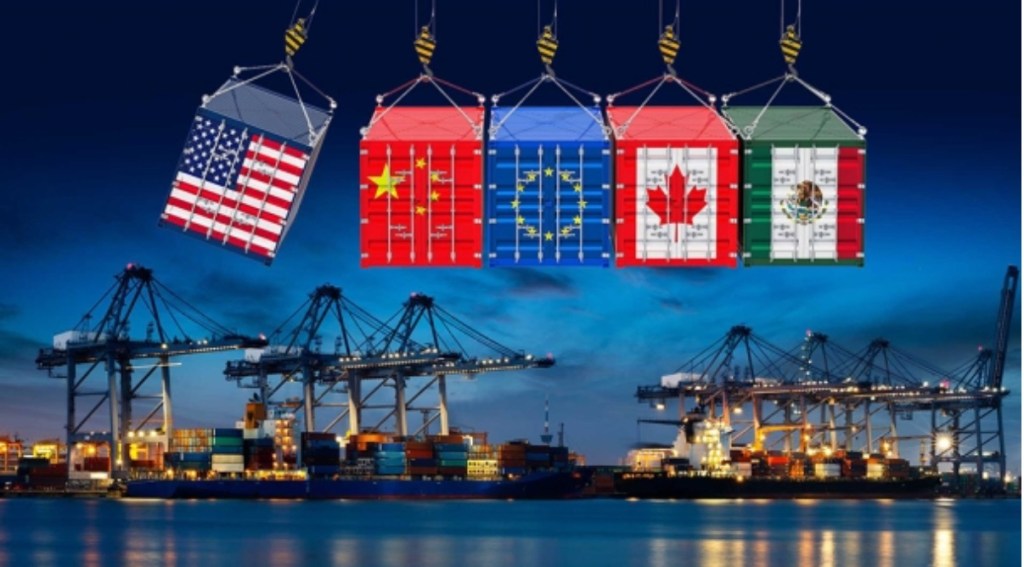
Just a few weeks back I engaged in wishful speculation that Trump’s drastic imposition of “reciprocal” and punitive tariffs could actually prove to be a free-trade play, but only if the U.S. used its universally dominant position in trade wisely at the bargaining table. I worried, however, that any notion Trump might have along those lines was eclipsed by his antipathy for otherwise harmless trade deficits. Another bad indicator was his conviction that manipulating tariffs could restore “fairness” in trade relations while raising revenue to pay for the selective tax cuts he promised for tips, overtime wages, and social security benefits.

Aside from that, I won’t repeat all of Trump’s fallacies about trade (and see here and here) except where they’ve impinged on recent developments.

One Raw Deal

My hopes for reduced trade barriers were dashed when the first “deal” (or really a “Memorandum of Understanding”) was announced with the United Kingdom. The U.S. runs a trade surplus with the UK, so one might think Trump would find it unnecessary to levy tariffs on U.S. imports from the UK. No dice! Clearly this was not motivated by the trade deficit bogeyman of Trump’s fever dreams. The White House stated that buyers of goods from the UK will pay the minimum 10% tariff (up from 3.3% before Trump took office).

Trump simply likes tariffs. Apparently he’s never given much thought to their incidence, which falls largely on domestic consumers and businesses. The MAGA faithful are in blissful denial that such a burden exists, despite ample evidence of its reality.

As Eric Boehm notes, the U.S. received a few concessions on British tariffs under the deal, but the reductions only amount to about a 2% equivalent. There are sharp reductions in special tariffs on U.S. agricultural products, especially meat. There are also exceptions to tariffs on certain British goods, like autos (up to 100,000 units). The selective nature of the concessions on both sides underscores the cronyist underpinnings of this style of economic governance, which amounts to ad hoc central planning.

Also troubling is the misleading spin the Administration attempted to put on news coverage of the deal. They claimed to have reduced tariffs of goods imported from the UK, which is true only in comparison to post-“Liberation Day” tariff levels established in early April. In fact, the baseline tariff now applied to most UK goods sold in the U.S. has more than tripled since last year! As Boehm states, American consumers and businesses are paying a lot more for this “deal” than their British counterparts.

Raw Deals To Be?

The “deal” with China is worse, partly because it’s only a 90-day pause in implementation (pending negotiation), and partly because the “reciprocal” tariff rate of 30% applied to Chinese goods is much higher than before Trump imposed the punitive rates. Still worse, the 10% tariff on U.S. exports to China applied during the pause is also much higher. What a deal! And it could get worse. These tariff hikes have little to do with “national security” and they are regressive, having disproportionately large burdens on lower-income consumers and small businesses.

The only other agreement announced thus far is with India. It is not a “trade deal” at all, but a so-called “Terms of Reference On Bilateral Trade Agreement”. It is a “roadmap” for future negotiations. Perhaps it will come together quickly, but it’s hard to expect much after the UK agreement.

Uniting Western Civilization

Just this week we had another hardball move by Trump: a 50% tariff on goods from the European Union starting in June, up from an average of about 3.8% on a trade-weighted basis. The new tariff rate is also higher than the 10% baseline tariff in place since the 90-day pause was announced in April. Trump claims the EU has been levying tariffs of 39% on U.S. goods, which might include what the Administration would call effective tariffs from non-tariff barriers to trade. Or it might refer to retaliatory tariffs announced by the EU in response to Trump’s Liberation Day announcement, but all of those have been paused. In any case, the World Trade Organization says EU tariffs on US goods average 4.8%. Quite a difference!

The move against the EU is much like Trump’s earlier ploy with China, but he says he’s “not looking for a deal”. He also says talks with the EU are “going nowhere”, though the Polish Trade Minister reassures that talks are “ongoing”. The outcome is likely to be a disappointment for anyone (like me) hoping for freer trade. The EU will probably make commitments to buy something from the U.S., maybe beef or liquified natural gas. But U.S. tariffs on EU goods will be higher than in the past.

So, thus far we have only one “deal” (such as it is), one roadmap for negotiations to follow, and a bunch of pauses pending negotiation (China included). The Trump team says about 100 countries hope to negotiate trade deals, but that is a practical impossibility. Even Trump says “… it’s not possible to meet the number of people that want to see us.” But it could be easy: just drop all U.S. trade barriers and allow protectionist countries to tax their own citizens, denying them access to free choice.

Bullying Enemies, Allies and Producers

Higher U.S. tariffs will put some upward pressure on the prices of imports and import-competing goods. We haven’t seen this play out just yet, but it’s early. In a defensive move, Trump is attempting to bully and shame domestic companies such as WalMart for attempting to protect their bottom lines in the face of tariffs. He also warned automakers about their pricing before carving out an exception for them. And now Apple has been singled-out by Trump for a special 25% tariff after it had announced plans to move assembly of iPhones to India, rather than in the U.S.

You better stay on Trump’s good side. This is a loathsome kind of interference. It encourages firms to seek favors in the form of tariff exemptions or to accept what amounts to state expropriation of profits. Cronyism and coercion reign.

Swamped By Spendthrifts?

The market seems to believe the negative impact of tariffs on economic growth will be more than offset by other stimulative forces. This includes the extension of Trump’s 2017 tax cuts. The so-called “big beautiful bill” passed by the House of Representatives also includes new tax breaks on tip and overtime pay, and an increase in the deduction for state and local taxes. While the bill reduces the growth of federal spending, there is disappointment that spending wasn’t reduced. The Senate might pass a version with more cuts, but the market sees nothing but deficits going forward. This is not the sort of “fiscal restraint” the market hoped for, particularly with escalating interest costs on the burgeoning federal debt.

Conflicting Goals

Trump has bargained successfully for some major investments in the U.S. by wealthy nations like Saudi Arabia and Dubai, as well as a few major manufacturing and technology firms. That’s wonderful. He doesn’t understand, however, that strong foreign investment in the U.S. will encourage larger trade deficits. That’s because foreign capital inflows raise incomes, which increase demand for imports. In addition, the capital inflows cause the value of the dollar to appreciate, making imports cheaper but exports more expensive for foreigners. It would be a shame if Trump reacted to these eventualities by doubling down on tariffs.

Conclusion

Alas, my hopes that Trump’s bellicose trade rhetoric was mere posturing were in vain. He could have used our dominant trading position to twist arms for lower trade barriers all around. While I worried that he massively misunderstood the meaning of trade deficits, and that he viewed higher tariffs as a magic cure, I should have worried much more!

The Tariff Games

08 Tuesday Apr 2025

Posted by Nuetzel in Protectionism, Tariffs

≈ 3 Comments

Tags

Bilateral Trade, Bill Ackman, Dominant Trade Partner, Donald Trump, Elon Musk, Foreign Policy, Game Theory, Iowahawk, Liberation Day, Repeated Rounds, Tariffs, Trade Barriers, Xi Jinping

Donald Trump’s imposition of higher tariffs — much higher tariffs — on our trading partners carries tremendous risk. See this article for a good summary of the tariffs Trump levied (and now paused for 90 days) on imported goods from different countries. The President believes he can win major concessions from other nations in terms of trade barriers as well as foreign policy objectives. But he would also have us believe that we’ll be better off even if those concessions fall short of his hopes.

Perhaps he’s posturing, but Trump seems to thinks tariffs are some kind of elixir. That is nonsense for a variety of reasons. I’ve discussed several of those previously and I’ll add more in a subsequent post. Here, I’ll attempt to give Trump his due. I’m highly skeptical, but I’ll be happy to eat crow if he is successful in achieving a trade regime with lower tariffs and other barriers across many of our trading partners.

Markets

The tariff announcements last week on “Liberation Day” spooked markets, prompting a continuation of the classic flight to safety we’ve witnessed since Trump began to rattle his trade saber. This has driven bond prices up and long-term interest rates down, though now we’re seeing a partial reversal (if it holds). Will lower interest rates help save the day for Trump? It will bring lower borrowing costs to many borrowers, including the federal government, and it should help to buttress stock values, softening the blow to some extent.

The tariffs, should they remain in place, are likely to boost inflation temporarily (a one-time increase in the price level) and could very well tip the U.S. economy into recession. Depending on the severity, those developments would undercut the GOP’s hopes of maintaining a congressional majority in the 2026 mid-term elections. Then, he’d truly have managed to cut off his nose to spite his face. Still, Trump thinks he knows something about tariffs that markets don’t.

Dominoes

Bill Ackman has expressed a view of how markets are reacting and how they might evolve under Trump’s trade policy. He thinks markets would be fine had the President set tariffs at levels matching our trading partners (doubtful at best), but Trump went bigger in order to jolt other nations into negotiating. Ackman thinks there might be a “tipping point” when countries line up at the negotiating table. And indeed, as of April 7, the administration said “up to” 70 countries had reached out to enter new trade negotiations with the U.S. That probably helped bring investors out of their doldrums, pending actual deals.

Elon Musk states a desire to see tariffs eliminated between the U.S. and the EU, and the EU has made a limited offer along those lines. This might be indicative of similar thinking by others in the administration. But Trump insists he’ll always revisit tariffs wherever he sees a bilateral trade deficit. Contrary to all economic logic, he is convinced that trade deficits are harmful, when in fact they mainly reflect our relative prosperity.

Hard-Nosed, High Stakes

Economists have been almost uniform in their condemnation of Trump’s approach trade. To some extent, that’s a visceral reaction to Trump’s pro-tariff rhetoric and revulsion to his opening moves. But is there an economic rationale for this type of aggressive attempt to bargain for lower trade barriers? Yes, and it’s not a terribly deep insight, and it carries great risks in the real world.

From a game-theoretic perspective, it’s possible that a dominant trading partner, in repeated rounds, can ultimately achieve lower bilateral trade barriers through the threat or imposition of higher barriers to imports from a trading partner. The key is the difference in costs that barriers impose on the two nations. One is in a position to leverage its dominant position, inflicting greater costs on the other nation as an inducement to gain concessions and achieve improved conditions for mutual trade.

The U.S. is almost uniformly the dominant partner in bilateral trade relationships. That’s because U.S. GDP is so large and U.S. trade with any given country is a comparatively small fraction of GDP. But dominance can mean different things: there are countries that supply critical goods to the U.S., like oil, semiconductors, or rare earths, which may give certain countries disproportionate leverage in trade negotiation. Those products along with many others are exempted from Trump’s tariffs.

Other Cards

Nevertheless, the U.S. has economic leverage over individual trading partners in the vast majority of cases, which Trump certainly is willing to exploit. And Trump has another powerful tool with which to negotiate with some trading partners: U.S. military protection. Using it might expose the U.S. to strategic disadvantages, but don’t put it past Trump to bring this up in negotiations!

Trump is doing his best to prove a readiness to escalate. That might build his credibility except for a couple of critical facts: first, his actions have already violated at least 15 existing treaties. Why should they trust him? Second, some groups of nations are likely to present a united front, putting them on a more equal footing with the U.S. This makes a trade war between the U.S. and the rest of the world more likely. One nation in particular stands ready to capitalize on severed relations between other nations and “Donald Trump’s” America: Xi Jinping’s China. Bilateral trade with China might just be the Super Bowl of these tariff games. Unfortunately, it could be a Super Bowl where everyone loses!

An additional complication: while the U.S. has dominance in most of its trade relationships, the barriers to U.S. goods erected by other nations are often supported by powerful special interests. Trump’s ability to strike deals will be complicated where governments are captive to these interests, which might be concentrated among powerful elites or of a more diffuse, nationalist/populist nature.

Deep In the Woods

There is optimism in some quarters that a few successful trade deals will lead to a “tipping point” in the willingness of other nations to negotiate with Trump. Despite the sudden clamor among our trade partners to negotiate, we’re a long way from getting solid agreements. Investors still assess a greater risk of a world trade war than vanishing barriers to trade.

I’ll close with a take on the situation by the reliably funny Iowahawk:

Look I've been as critical of tariffs as anyone but if the long term vision is domestic Nike sweatshops filled with fired DC bureaucrats, I'm willing to listen https://t.co/CmsJ7bx5vk

— David Burge (@iowahawkblog) April 7, 2025
Follow Sacred Cow Chips on WordPress.com

Recent Posts

  • Immigration and Merit As Fiscal Propositions
  • Tariff “Dividend” From An Indigent State
  • Almost Looks Like the Fed Has a 3% Inflation Target
  • Government Malpractice Breeds Health Care Havoc
  • A Tax On Imports Takes a Toll on Exports

Archives

  • December 2025
  • November 2025
  • October 2025
  • September 2025
  • August 2025
  • July 2025
  • June 2025
  • May 2025
  • April 2025
  • March 2025
  • February 2025
  • January 2025
  • December 2024
  • November 2024
  • October 2024
  • September 2024
  • August 2024
  • July 2024
  • June 2024
  • May 2024
  • April 2024
  • March 2024
  • February 2024
  • January 2024
  • December 2023
  • November 2023
  • August 2023
  • July 2023
  • June 2023
  • May 2023
  • April 2023
  • March 2023
  • February 2023
  • January 2023
  • December 2022
  • November 2022
  • October 2022
  • September 2022
  • August 2022
  • July 2022
  • June 2022
  • May 2022
  • April 2022
  • March 2022
  • February 2022
  • January 2022
  • December 2021
  • November 2021
  • October 2021
  • September 2021
  • August 2021
  • July 2021
  • June 2021
  • May 2021
  • April 2021
  • March 2021
  • February 2021
  • January 2021
  • December 2020
  • November 2020
  • October 2020
  • September 2020
  • August 2020
  • July 2020
  • June 2020
  • May 2020
  • April 2020
  • March 2020
  • February 2020
  • January 2020
  • December 2019
  • November 2019
  • October 2019
  • September 2019
  • August 2019
  • July 2019
  • June 2019
  • May 2019
  • April 2019
  • March 2019
  • February 2019
  • January 2019
  • December 2018
  • November 2018
  • October 2018
  • September 2018
  • August 2018
  • July 2018
  • June 2018
  • May 2018
  • April 2018
  • March 2018
  • February 2018
  • January 2018
  • December 2017
  • November 2017
  • October 2017
  • September 2017
  • August 2017
  • July 2017
  • June 2017
  • May 2017
  • April 2017
  • March 2017
  • February 2017
  • January 2017
  • December 2016
  • November 2016
  • October 2016
  • September 2016
  • August 2016
  • July 2016
  • June 2016
  • May 2016
  • April 2016
  • March 2016
  • February 2016
  • January 2016
  • December 2015
  • November 2015
  • October 2015
  • September 2015
  • August 2015
  • July 2015
  • June 2015
  • May 2015
  • April 2015
  • March 2015
  • February 2015
  • January 2015
  • December 2014
  • November 2014
  • October 2014
  • September 2014
  • August 2014
  • July 2014
  • June 2014
  • May 2014
  • April 2014
  • March 2014

Blogs I Follow

  • Passive Income Kickstart
  • OnlyFinance.net
  • TLC Cholesterol
  • Nintil
  • kendunning.net
  • DCWhispers.com
  • Hoong-Wai in the UK
  • Marginal REVOLUTION
  • Stlouis
  • Watts Up With That?
  • Aussie Nationalist Blog
  • American Elephants
  • The View from Alexandria
  • The Gymnasium
  • A Force for Good
  • Notes On Liberty
  • troymo
  • SUNDAY BLOG Stephanie Sievers
  • Miss Lou Acquiring Lore
  • Your Well Wisher Program
  • Objectivism In Depth
  • RobotEnomics
  • Orderstatistic
  • Paradigm Library
  • Scattered Showers and Quicksand

Blog at WordPress.com.

Passive Income Kickstart

OnlyFinance.net

TLC Cholesterol

Nintil

To estimate, compare, distinguish, discuss, and trace to its principal sources everything

kendunning.net

The Future is Ours to Create

DCWhispers.com

Hoong-Wai in the UK

A Commonwealth immigrant's perspective on the UK's public arena.

Marginal REVOLUTION

Small Steps Toward A Much Better World

Stlouis

Watts Up With That?

The world's most viewed site on global warming and climate change

Aussie Nationalist Blog

Commentary from a Paleoconservative and Nationalist perspective

American Elephants

Defending Life, Liberty and the Pursuit of Happiness

The View from Alexandria

In advanced civilizations the period loosely called Alexandrian is usually associated with flexible morals, perfunctory religion, populist standards and cosmopolitan tastes, feminism, exotic cults, and the rapid turnover of high and low fads---in short, a falling away (which is all that decadence means) from the strictness of traditional rules, embodied in character and inforced from within. -- Jacques Barzun

The Gymnasium

A place for reason, politics, economics, and faith steeped in the classical liberal tradition

A Force for Good

How economics, morality, and markets combine

Notes On Liberty

Spontaneous thoughts on a humble creed

troymo

SUNDAY BLOG Stephanie Sievers

Escaping the everyday life with photographs from my travels

Miss Lou Acquiring Lore

Gallery of Life...

Your Well Wisher Program

Attempt to solve commonly known problems…

Objectivism In Depth

Exploring Ayn Rand's revolutionary philosophy.

RobotEnomics

(A)n (I)ntelligent Future

Orderstatistic

Economics, chess and anything else on my mind.

Paradigm Library

OODA Looping

Scattered Showers and Quicksand

Musings on science, investing, finance, economics, politics, and probably fly fishing.

  • Subscribe Subscribed
    • Sacred Cow Chips
    • Join 128 other subscribers
    • Already have a WordPress.com account? Log in now.
    • Sacred Cow Chips
    • Subscribe Subscribed
    • Sign up
    • Log in
    • Report this content
    • View site in Reader
    • Manage subscriptions
    • Collapse this bar
 

Loading Comments...