
Tags
Absolute Advantage, CCP, Chinese Labor Laws, Chinese Labor Protests, Comparative advantage, Cronyism, David Ricardo, Labor Productivity, Li Qiang, Lily Zhao, The Diplomat, Wage Arrears, Wage Suppression, World Socialist Web Site, Yasheng Huang
In a free economy there are strong tendencies for wages to correspond closely to worker productivity. Shortfalls in wages below marginal productivities are exploited by firms competing for workers, pushing wages upward. Likewise, workers compete for jobs, so an excess of wages over productivity levels will likewise be competed away. The close connection between wages and productivity ensures that labor resources are allocated to their most productive and remunerative uses.
That seemingly miraculous tendency is a natural outcome of free markets and capitalism. Its force is strong in most sectors, but not when an employer has monopsony power, where powerful frictions prevent worker mobility, or where unions prevent competition between workers. A more ubiquitous threat to the correspondence between wages and productivity is from interventionists seeking to use the coercive power of government to capture rents at the expense of others. For example, minimum wages benefit many workers, but they distort the allocation of labor and punish the least productive members of the workforce. Likewise, DEI mandates via law or arbitrated settlement involve discrimination and disrupt natural, merit-based allocations of labor. Laws requiring union shops (or mandated arbitration) give unions monopoly power and raise union wages. They also restrict the freedom of non-union workers to choose their own representation and to compete for work with the employer of their choice. These distortions drive a wedge between wages and productivity, thus restraining trade and hampering economic growth.
But there are far more coercive forms of intervention in the labor market. China’s labor laws ostensibly protect worker rights. Like anywhere else, if enforced, it’s minimum wage laws (which vary across regions and are expressed monthly for full-time workers) would not protect workers from the normal unintended consequences. But it’s worse than that in China, almost as if those labor laws don’t exist. As Li Qiang states in The Diplomat, Chinese employers extract a labor cost discount via:
“… a labor system that systematically lowers costs through lax enforcement, extended working hours, and wage suppression. The result is a structural cost gap that reflects not superior productivity, but a different set of rules governing how labor is treated and how much it is allowed to bear.“
In fact, Qiang says workers are often required to be on the job for 12-hour shifts (or more) six days a week, and they often must live in company dormitories.
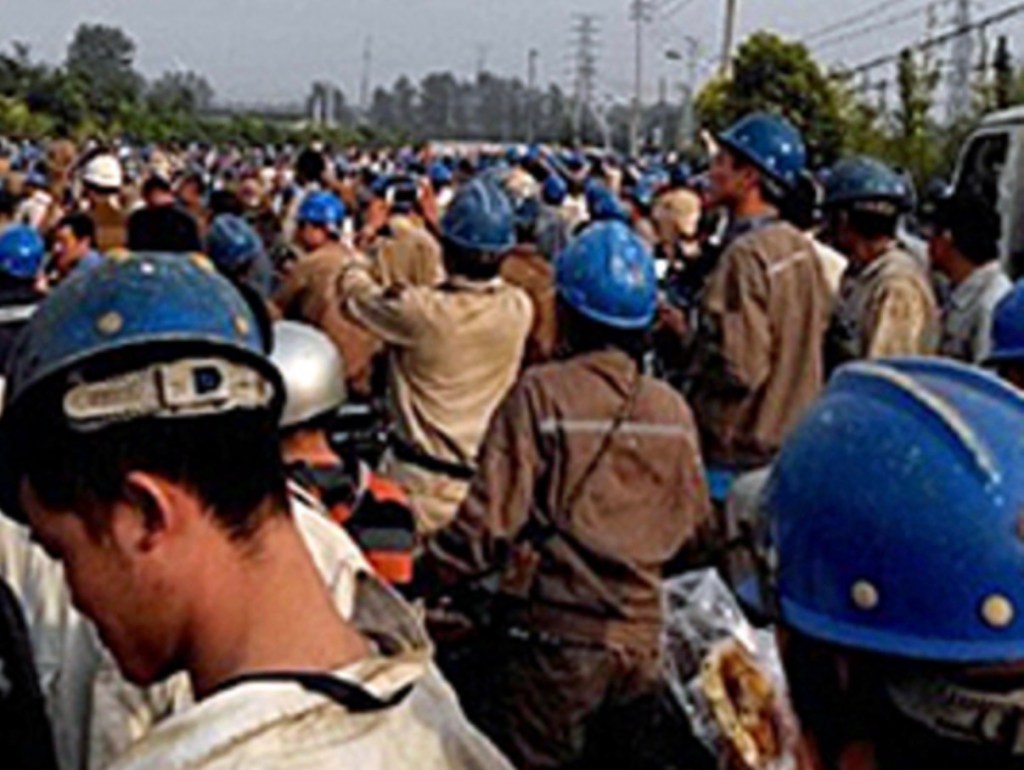
Another practice that is far too common in China is the delay and often nonpayment of wages. This has been an issue since 1978, according to Lily Zhao, writing on the World Socialist Web Site. Protests over wage arrears have become quite common across all of China, especially among manufacturing and construction workers. Furthermore, this has been exacerbated with decisions rendered by Chinese courts that workers do not have recourse to payment by general contractors, but only from the “intermediaries” or subcontractors who actually hire them for a job. In practice, this often means workers have no recourse at all.
These abuses are particularly common in the treatment of workers who have migrated from the hinterlands to industrial cities. Protests over arrears have been condemned by the Chinese media. Police have sometimes brutally intervened, and some local governments maintain blacklists of workers whose behavior is deemed “abnormal”.
Zhao summarizes the situation early in her article:
“In reality, the CCP regime has, in recent years, been deepening its attacks on the democratic rights of workers and using all means to prevent them from demanding their unpaid wages—through legislation, vilification and arrests.“
And where does the money go? Certainly company owners and construction project contractors benefit, but only by virtue of cronyism, not capitalism. Others like the police, media, and even the judicial system may get a cut, but Zhou implicates the “CCP state apparatus”, and she is surely correct.
Years ago I scoffed at allegations that China was “dumping” goods on international markets below their true cost, but I’m afraid it’s true to a greater or lesser extent across many goods. However, it’s tough to find supporting data when you can hardly believe a thing a country reports. Nevertheless, there is credible evidence of wage suppression in China arising from facts that are probably looked upon with pride by the Chinese regime. Yasheng Huang, writing on his Substack, calls China an “absolute advantage economy”, by which he means that it has both lower capital costs and lower labor costs than most of its trading partners. The country does what it must to be more than competitive across all tradeable goods.
To do this, China must find ways to ignore its comparative disadvantages in certain products. By that, I mean there are goods produced which entail a larger, true sacrifice of lost output in other goods. Huang notes that “Comparative advantage is a theory about dividing up the work, not about competing for it“, but he does a disservice to David Ricardo by failing to acknowledge, up front, that a country ignores its comparative disadvantages only at a high cost. Someone must pay for the sacrifice that entails. And guess who pays in China!
Huang does a simple comparison of Chinese exports and imports across a diverse set of 98 categories of goods. He looks at the individual categories and finds that the ratio of exports to imports is well above one for advanced as well as simple goods. Huang asserts that Chinese output per worker is low by international standards, so competitive pricing must be the driver, not productive efficiency. His conclusion is reinforced by China’s labor share of income in manufacturing, which is lower than many developed, developing, and emerging countries, which tend to specialize in different categories of goods in which they possess comparative advantages.
On the services side of the Chinese economy, there is little to be gleaned regarding wage suppression from trade data, as exports and inputs of services are a small proportion of Chinese trade. However, for many years productivity in Chinese services (including consumer services and the gig economy) grew at a torrid pace. Meanwhile, wages have been stagnant in the labor-intensive service sector, which includes many consumer services.
In a free economy, wages typically follow trends in labor productivity. However, in China that is not the case due to its abusive labor practices. These include suppression of wages, tolerance of non-payment of wages, crackdowns on protests, and coercive tactics like arrests of workers and blacklists for “abnormal behavior”. This has been especially acute among migrant factory workers, but wage suppression, including nonpayment, is a fact of life in the provision of many services as well. Ostensibly, the Chinese bureaucracy, courts, and police do not take the country’s labor laws seriously. Instead, they wink at deals that surely benefit party cronies or the CCP itself. Wage suppression has allowed the Chinese to compete across a broad range of tradeable goods, making large and persistent trade surpluses possible. In this case, the cost falls squarely on workers.

