• About

Sacred Cow Chips

Sacred Cow Chips

Tag Archives: Argentina

Hey, Careful With Those Economic Aggregates!

16 Friday May 2025

Posted by Nuetzel in Economic Aggregates, Macroeconomics

≈ 1 Comment

Tags

Activist Policy, Argentina, Benchmark Revisions, Charles Manski, Creative Destruction, Double Counting, Fischer Black, Hong Kong, Identification Problem, Interventionism, John von Neumann, Market Monetarism, Measurement Errors, Oskar Morgenstern, Paul Romer, Phlogiston, Policy Uncertainly, Price Aggregates, Real Business Cycle Model, Real GDP, Reuben Brenner, Scott Sumner, Simon Kuznets, Tyler Cowen
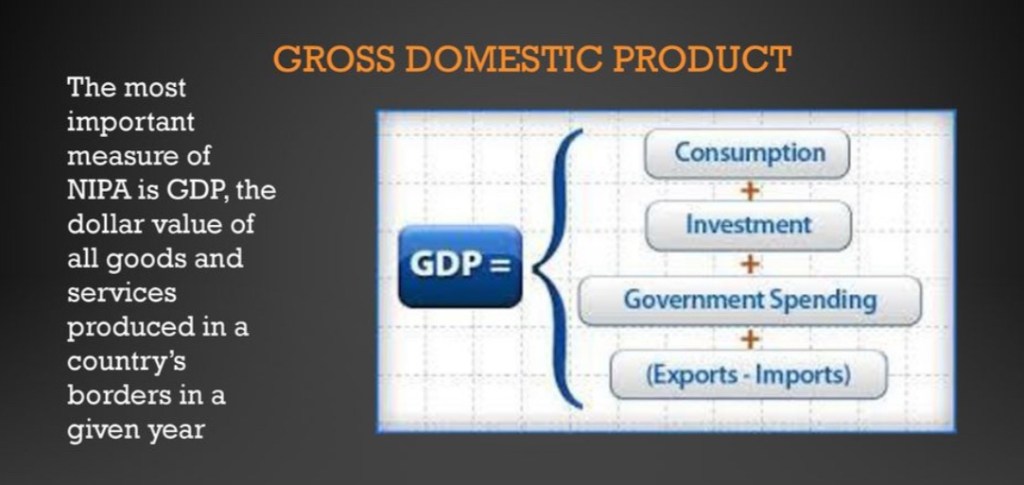
As a long-time user of macroeconomic statistics, I admit to longstanding doubts about their accuracy and usefulness for policymaking. Almost any economist would admit to the former, not to mention the many well known conceptual shortcomings in government economic statistics. However, few dare question the use of most macro aggregates in the modeling and discussion of policy actions. One might think conceptual soundness and a reasonable degree of accuracy would be requirements for serious policy deliberation, but uncertainties are almost exclusively couched in terms of future macro developments; they seldom address variances around measures of the present state of affairs. In many respects, we don’t even know where we are, let alone where we’re going!

Early and Latter Day Admonitions

In the first of a pair of articles, Reuven Brenner discusses the hazards of basing policy decisions on economic aggregates, including critiques of these statistics by a few esteemed economists of the past. The most celebrated developer of national income accounting, Simon Kuznets, was clear in expressing his reservations about the continuity of the U.S. National Income and Product Accounts during the transition to a peacetime economy after World War II. The government controlled a large share of economic activity and prices during the war, largely suspending the market mechanism. After the war, market pricing and private decision-making quickly replaced government and military planners. Thus, the national accounts began to reflect values of production inherent in market prices. That didn’t necessarily imply accuracy, however, as the accounts relied (and still do) on survey information and a raft of assumptions.

The point is that the post-war economic results were not remotely comparable to the data from a wartime economy. Comparisons and growth rates over this span are essentially meaningless. As Brenner notes, the same can be said of the period during and after the pandemic in 2020-21. Activity in many sectors completely shut down. In many cases prices were simply not calculable, and yet the government published aggregates throughout as if everything was business as usual.

More than a decade after Kuznets, the game theorists Oskar Morgenstern and John von Neumann both argued that the calculations of economic aggregates are subject to huge degrees of error. They insisted that the government should never publish such data without also providing broad error bands.

Morgenstern delineated several reasons for the inaccuracies inherent in aggregate economic data. These include sampling errors, both private and political incentives to misreport, systematic biases introduced by interview processes, and inherent difficulties in classifying components of production. Also, myriad assumptions must be fed into the calculation of most economic aggregates. A classic example is the thorny imputation of services provided by owner-occupied homes (akin to the value of services generated by rental units to their occupants). More recently. Charles Manski reemphasized Morganstern’s concerns about the aggregates, reaching similar conclusions as to the wisdom of publishing wide ranges of uncertainty.

Real or Unreal?

Estimates of real spending and production are subject to even larger errors than estimates of nominal values. The latter are far simpler to measure, to the extent that they represent a simple adding up of current amounts spent (or income earned) over the course of a given time period. In other words, nominal aggregates represent the sum of prices times quantities. To estimate real quantities, nominal values must be adjusted (deflated) by price aggregates, the measurement of which are fraught with difficulties. Spending patterns change dramatically over time as preferences shift; technology advances, new goods and services replace others, and the qualities of goods and services evolve. A “unit of output” today is usually far different than what it was in the past, and adjusting prices for those changes is a notorious challenge.

This difficulty offers a strong rationale for relying on nominal quantities, rather than real quantities, in crafting certain kinds of policy. Perhaps the best example of the former is so-called market monetarism and monetary policy guided by nominal GDP-level targeting, as championed by Scott Sumner.

Government’s Contribution

Another fundamental qualm is the inconsistency between data on government’s contribution to aggregate production versus private sector contributions. This is similar in spirit to Kuznets’ original critique. Private spending is valued at market prices of final output, whereas government spending is often valued at administered prices or at input cost.

An even deeper objection is that much of the value of government output is already subsumed in the value of private production. Kuznets himself thought so! For example, to choose two examples, public infrastructure and law enforcement contribute services which enhance the private sector’s ability to reliably produce and deliver goods to market. To add the government’s “output” of these services separately to the aggregate value of private production is to double count in a very real sense. Even Tyler Cowen is willing to entertain the notion that including defense spending in GDP is double counting. The article to which he links goes further than that.

Nevertheless, our aggregate measures allow for government spending to drive fluctuations in our estimates of GDP growth from one period to another. It’s reasonable to argue that government spending should be reported as a separate measure from private GDP.

But what about the well known Keynesian assertion that an increase in government spending will lift output by some multiple of the change? That proposition is considered valid (by Keynesians) only when resources are idle. Of course, today we see steady growth of government even at full employment, so the government’s effort to commandeer resources creates scarcity that crowds out private activity.

Measurement and Policy Uncertainty

Acting on published estimates of economic aggregates is hazardous for a number of other reasons. Perhaps the most basic is that these aggregates are backward-looking. A policy activist would surely agree that interventions should be crafted in recognition of concurrent data (were it available) or, even better, on the basis of reliable predictions of the future. Financial market prices are probably the best source of such forward-looking information.

In addition, revising the estimates of aggregates and their underlying data is an ongoing process. Initial published estimates are almost always based on incomplete data. Then the estimates can change substantially over subsequent months, underscoring uncertainty about the state of the economy. It is not uncommon to witness consistent biases over time in initial estimates, further undermining the credibility of the effort.

Even worse, substantial annual revisions and so-called “benchmark revisions” are made to aggregates like GDP, inflation, and employment data. Sometimes these revisions alter economic history substantially, such as the occurrence and timing of recessions. All this implies that decisions made on the basis of initial or interim estimates are potentially counterproductive (and on a long enough timeline, every aggregate is an “interim” estimate). At a minimum, the variable nature of revisions, which is an unavoidable aspect of publishing aggregate statistics, magnifies policy uncertainty.

Case Studies?

Brenner cites two historical episodes as support for his argument that aggregates are best ignored by policymakers. They are interesting anecdotes, but he gives few details and they hardly constitute proof of his thesis. In 1961, Hong Kong’s financial secretary stopped publishing all but “the most rudimentary statistics”. Combined with essentially non-interventionist policy including low tax rates, Hong Kong ran off three decades of impressive growth. On the other hand, Argentina’s long economic slide is intended by Brenner to show the downside of relying on economic aggregates and interventionism.

Bad Models, Bad Policy

It’s easy to see that economic aggregates have numerous flaws, rendering them unreliable guides for monetary and fiscal policy. Nevertheless, their publication has tended to encourage the adoption of policy interventions. This points to another issue lurking in the background: the role of economic aggregates in shaping the theory and practice of macroeconomics and the models on which policy recommendations are based. The conceptual difficulties surrounding aggregates, and the errors embedded within measured aggregates, have helped to foster questionable model treatments from a scientific perspective. For example, Paul Romer has said:

“Macroeconomists got comfortable with the idea that fluctuations in macroeconomic aggregates are caused by imaginary shocks, instead of actions that people take, after Kydland and Prescott (1982) launched the real business cycle (RBC) model. … [which] explains recessions as exogenous decreases in phlogiston.”

This is highly reminiscent of a quip by Brenner that macroeconomics has become a bit like astrology. A succession of macro models after the RBC model inherited the dependence on phlogiston. Romer goes on to note that model dependence on “imaginary” forces has aggravated the longstanding problem of statistically identifying individual effects. He also debunks the notion that adding expectations to models helps solve the identification problem. In fact, Romer insists that it makes it worse. He goes on to paint a depressing picture of the state of macroeconomics, one to which its reliance on faulty aggregates has surely contributed.

Aggregates also mask the detailed, real-world impacts of policies that invariably accompany changes in spending and taxes. While a given fiscal policy initiative might appear to be neutral in aggregate terms, it is almost always distortionary. For example, spending and tax programs always entail a redirection of resources, whether a consequence of redistribution, large-scale construction, procurement, or efforts to shape the industrial economy. These are usually accompanied by changes in the structure of incentives, regulatory requirements, and considerable rent seeking activity. Too often, outlays are dedicated to shoring up weak sectors of the economy, short-circuiting the process of creative destruction that serves to foster economic growth. Yet the macro models gloss over all the messy details that can negate the efficacy of activist fiscal policies.

Conclusion

The reliance of macroeconomic policy on aggregates like GDP, employment, and inflation statistics certainly has its dangers. These measures all suffer from theoretical problems, and they simply cannot be calculated without errors. They are backward-looking, and the necessity of making ongoing revisions leads to greater uncertainty. But compared to what? There are ways of shifting the focus to measures subject to less uncertainty, such as nominal income rather than real income. A number of theorists have proposed market-based methods of guiding policy, including Fischer Black. This deserves broader discussion.

The problems of aggregates are not solely confined to measurement. For example, national income accounting, along with the Keynesian focus on “underconsumption” during recessions, led to the fallacious view that spending decisions drive the economy. This became macroeconomic orthodoxy, driving macro mismanagement for decades and leading to inexorable growth in the dominance of government. Furthermore, macroeconomic models themselves have been corrupted by the effort to explain away impossibly error-prone measurements of aggregate activity.

Brenner has a point: it might be more productive to ignore the economic aggregates and institute stable policies which reinforce the efficacy of private markets in allocating resources. If nothing else, it makes sense to feature the government and private components separately.

Francis, Papal Perónista, Courts Redistributional Mirage

15 Thursday Mar 2018

Posted by Nuetzel in Markets, Marxism, Redistribution, statism, Welfare State

≈ Leave a comment

Tags

Argentina, Che Guevara, Daniel J. Mitchell, Economic Freedom, Eva Peron, Juan Peron, Judialismo, Maureen Mullarkey, Pope Francis, Property Rights, Robert P. Murphy, Vatican, World Bank, World Poverty

Is world poverty really increasing? Actually, no, quite the opposite, and you can blame economic liberalism, capitalism, and free markets for that. Yet we hear exactly the contrary from Pope Francis who, despite his evident compassion, has an amazingly poor understanding of economics. He misstates basic facts, offers dimly reasoned analyses of human rights, and promotes ill-considered policies. Now that the Vatican is set to release the Pope’s first feature film, no doubt a stirring piece of social justice propaganda, it seems as good a time as any to review the confounded state of Francis’ economic reasoning. This is not the first time I’ve discussed the Pope’s policy views: this link contains three previous posts from SacredCowChips on which Francis was tagged.

The False Narrative

My inspiration for this post comes from Robert P. Murphy, whose recent commentary on Francis’ pronouncements is trenchant. Murphy covers this speech written by Francis for the World Economic Forum, but delivered by a Vatican proxy, in which the Pope asserts the following:

“… governments must confront … the growth of unemployment, the increase in various forms of poverty, the widening of the socio-economic gap and new forms of slavery, often rooted in situations of conflict, migration and various social problems.“

Francis refers to increasing unemployment and poverty, and I could let that phrase pass if he was referring to certain nations or locales that have experienced chronically depressed economic growth. But Francis’ description is rather general, as evidenced by his diagnosis of causes. More on that below. Regarding his statement about trends in poverty, he is flatly incorrect. Here is Murphy:

“As the World Bank reports, the global “extreme poverty” rate in 1990 was cut in half by 2010. Back in 1990, 1.85 billion people lived on less than $1.90 per day, but by 2013, the figure had dropped to 767 million such people—meaning that more than a billion people had been lifted out of crushing poverty.“

After the Great Recession, world unemployment decreased from 2009-2015, according to the World Bank, though it is estimated to have crept up slightly in 2016-17. Again, the Pope’s woeful tale of growing unemployment and increasing poverty is nonsense.

But the world is a difficult place. In the underdeveloped world, the range and quality of goods available is extremely limited, and $1.90 represents bare subsistence, yet it’s a condition that exceeds the historical norm in many places. Movement above that threshold can represent a meaningful improvement in economic well-being.

Francis may lack an appreciation for the general enrichment in material conditions that has been taking place over the last two centuries, which is ongoing, or perhaps he believes that even greater achievements are easily within reach but for certain injustices, though he offers no qualifications. Perhaps he is mistakenly generalizing specific instances of exploitation in the underdeveloped world, which often occur with the explicit blessing of the state apparatus in exchange for kickbacks.

Rights and Markets

Even more egregious is the Pope’s presumption that private markets are at fault for any stagnation that he has identified. A notable difference between countries with successful, growing economies and those mired in stagnation is the degree to which their citizens enjoy freedoms, especially economic freedom. That is a well-established empirical fact, as Murphy explains. But the Pontiff goes further with preposterous dogma on the meaning of human rights. Again, from Murphy:

“Although inspired by concern for the poor and the marginalized, the Vatican’s message is seriously flawed…. On a conceptual level, Pope Francis posits a false dichotomy between economic freedom and human rights. … ‘Economic freedom must not prevail over the practical freedom of man and over his rights, and the market must not be absolute, but honour the exigencies of justice.’ 

What does the concept of “economic freedom” entail? It means freedom to work in any occupation of one’s choice, without permission from the government, and certainly without being conscripted into service against one’s will. It means the freedom to start a business. It means the freedom to keep what you have produced, without having your assets seized by a rapacious regime. It means the freedom to trade with people who live in another country. It means the rule of law, where contracts are interpreted fairly and government officials can’t exercise arbitrary power.“

Economic freedom, more than anything else, means that individuals are endowed with property rights. To deny such rights is to banish any reward for work and differential rewards for work well done. If free individuals are rewarded, it is a matter of their own discretion as to whether they immediately consume the reward or save it in order to accumulate wealth. Yet Francis takes the misanthropic and childish view that economic freedom, private property and markets imply exploitation. He lacks a basic understanding of the revolutionary power of markets as a form of social organization.

Within just a few hundred years, a small fraction of the many millennia during which mankind was mired in poverty and pestilence, markets have dramatically transformed the existence of most human populations. Peaceful, arms length transactions made in mutual self-interest exploit only one thing: gains from trade that would otherwise be wasted. And only a form of social organization that enables those gains can dovetail with the human rights and justice that Francis so strongly desires. The denial of economic freedom, property rights, and self-interest prohibits those gains, however, denying humanity of the wealth necessary to achieve anything like justice.

Pope Francis is a redistributionist, and that goes well beyond the charitable giving, good works and service performed voluntarily by individuals. In fact, he is a statist, advocating an economic system in which property rights are abrogated, wholly or in part, and wages above a politically determined threshold are confiscated.

The Pope and Perón

Francis is often described as a “Perónist”, after Juan Perón of Argentina, the so-called “right-wing socialist” (and sometime associate of the murderous Che Guevara). Anyone familiar with the economic history of Argentina should know that’s not praise. Here is Maureen Mullarkey from the last link:

“Both Juan and Eva understood the enchantments of populism. A charismatic pair, they ruled more by dint of personality—personalismo—than democratic procedure. Ushers of an ‘option for the poor,’ they glorified the lower classes and denigrated the wealthy. (This, while they amassed a huge personal fortune from the Eva Perón Welfare Foundation.) …

When Francis speaks of ‘the people’ as a revolutionary vanguard that ‘overflows the logical procedures of formal democracy,’ he is lapsing toward that ecstatic Peronist vision of a Third Way—justicialismo. That the disposition and design of it ended in economic collapse and misery is nothing against the splendor of the mystique.

In his youth, Francis absorbed the myth but not its lessons. Chief among them is how much Argentina’s fiscal catastrophe owed to an extravagant welfare system that favored enforced wealth redistribution over development. Among the many factors of Argentina’s historic economic crisis, one cries for attention: Perón’s increasing reliance on redistributing income, not only between industries and occupations but between skilled and unskilled workers.“

For further perspective on Francis, Perónism, and the disastrous Argentine “experiment”, see this piece by Daniel J. Mitchell.

For many years, naive Marxists have accepted the myth that central economic planners could and would direct productive and distributional activities with foresight, efficiency, and integrity. None of those is possible. The only form of social organization capable of registering and processing the myriad and dynamic signals on preferences and scarcity is free market capitalism. It is the only system capable of spontaneously harnessing appropriate responses based on the complex incentives faced by consumers and producers, and all at a minimal administrative cost for society, free of the government intervention that typifies the Peronist welfare state and corporatism.

Conclusion

Pope Francis should know better than to make claims having no empirical support. He should also have the wisdom to understand and advocate for the empowering nature of private property rights and markets. Elevating the human condition is possible only by allowing people to be free — economically free — and endowed with opportunities to earn private rewards and build wealth. Francis should realize that the massive private gains afforded by the market mechanism enable rewards which spill over, inuring to the benefit of parties external to a given exchange. On the other hand, state domination and control of economic activity gives over decision-making to selfish and ill-informed public commandants, who are all too pleased to grant special advantages to those in a position to return private favors. Such graft and mismanagement of resources comes at the expense of others. That way lies decay and a return to the much more brutal conditions of the past, unlike the mutually beneficial promise of market exchange.

Follow Sacred Cow Chips on WordPress.com

Recent Posts

  • Immigration and Merit As Fiscal Propositions
  • Tariff “Dividend” From An Indigent State
  • Almost Looks Like the Fed Has a 3% Inflation Target
  • Government Malpractice Breeds Health Care Havoc
  • A Tax On Imports Takes a Toll on Exports

Archives

  • December 2025
  • November 2025
  • October 2025
  • September 2025
  • August 2025
  • July 2025
  • June 2025
  • May 2025
  • April 2025
  • March 2025
  • February 2025
  • January 2025
  • December 2024
  • November 2024
  • October 2024
  • September 2024
  • August 2024
  • July 2024
  • June 2024
  • May 2024
  • April 2024
  • March 2024
  • February 2024
  • January 2024
  • December 2023
  • November 2023
  • August 2023
  • July 2023
  • June 2023
  • May 2023
  • April 2023
  • March 2023
  • February 2023
  • January 2023
  • December 2022
  • November 2022
  • October 2022
  • September 2022
  • August 2022
  • July 2022
  • June 2022
  • May 2022
  • April 2022
  • March 2022
  • February 2022
  • January 2022
  • December 2021
  • November 2021
  • October 2021
  • September 2021
  • August 2021
  • July 2021
  • June 2021
  • May 2021
  • April 2021
  • March 2021
  • February 2021
  • January 2021
  • December 2020
  • November 2020
  • October 2020
  • September 2020
  • August 2020
  • July 2020
  • June 2020
  • May 2020
  • April 2020
  • March 2020
  • February 2020
  • January 2020
  • December 2019
  • November 2019
  • October 2019
  • September 2019
  • August 2019
  • July 2019
  • June 2019
  • May 2019
  • April 2019
  • March 2019
  • February 2019
  • January 2019
  • December 2018
  • November 2018
  • October 2018
  • September 2018
  • August 2018
  • July 2018
  • June 2018
  • May 2018
  • April 2018
  • March 2018
  • February 2018
  • January 2018
  • December 2017
  • November 2017
  • October 2017
  • September 2017
  • August 2017
  • July 2017
  • June 2017
  • May 2017
  • April 2017
  • March 2017
  • February 2017
  • January 2017
  • December 2016
  • November 2016
  • October 2016
  • September 2016
  • August 2016
  • July 2016
  • June 2016
  • May 2016
  • April 2016
  • March 2016
  • February 2016
  • January 2016
  • December 2015
  • November 2015
  • October 2015
  • September 2015
  • August 2015
  • July 2015
  • June 2015
  • May 2015
  • April 2015
  • March 2015
  • February 2015
  • January 2015
  • December 2014
  • November 2014
  • October 2014
  • September 2014
  • August 2014
  • July 2014
  • June 2014
  • May 2014
  • April 2014
  • March 2014

Blogs I Follow

  • Passive Income Kickstart
  • OnlyFinance.net
  • TLC Cholesterol
  • Nintil
  • kendunning.net
  • DCWhispers.com
  • Hoong-Wai in the UK
  • Marginal REVOLUTION
  • Stlouis
  • Watts Up With That?
  • Aussie Nationalist Blog
  • American Elephants
  • The View from Alexandria
  • The Gymnasium
  • A Force for Good
  • Notes On Liberty
  • troymo
  • SUNDAY BLOG Stephanie Sievers
  • Miss Lou Acquiring Lore
  • Your Well Wisher Program
  • Objectivism In Depth
  • RobotEnomics
  • Orderstatistic
  • Paradigm Library
  • Scattered Showers and Quicksand

Blog at WordPress.com.

Passive Income Kickstart

OnlyFinance.net

TLC Cholesterol

Nintil

To estimate, compare, distinguish, discuss, and trace to its principal sources everything

kendunning.net

The Future is Ours to Create

DCWhispers.com

Hoong-Wai in the UK

A Commonwealth immigrant's perspective on the UK's public arena.

Marginal REVOLUTION

Small Steps Toward A Much Better World

Stlouis

Watts Up With That?

The world's most viewed site on global warming and climate change

Aussie Nationalist Blog

Commentary from a Paleoconservative and Nationalist perspective

American Elephants

Defending Life, Liberty and the Pursuit of Happiness

The View from Alexandria

In advanced civilizations the period loosely called Alexandrian is usually associated with flexible morals, perfunctory religion, populist standards and cosmopolitan tastes, feminism, exotic cults, and the rapid turnover of high and low fads---in short, a falling away (which is all that decadence means) from the strictness of traditional rules, embodied in character and inforced from within. -- Jacques Barzun

The Gymnasium

A place for reason, politics, economics, and faith steeped in the classical liberal tradition

A Force for Good

How economics, morality, and markets combine

Notes On Liberty

Spontaneous thoughts on a humble creed

troymo

SUNDAY BLOG Stephanie Sievers

Escaping the everyday life with photographs from my travels

Miss Lou Acquiring Lore

Gallery of Life...

Your Well Wisher Program

Attempt to solve commonly known problems…

Objectivism In Depth

Exploring Ayn Rand's revolutionary philosophy.

RobotEnomics

(A)n (I)ntelligent Future

Orderstatistic

Economics, chess and anything else on my mind.

Paradigm Library

OODA Looping

Scattered Showers and Quicksand

Musings on science, investing, finance, economics, politics, and probably fly fishing.

  • Subscribe Subscribed
    • Sacred Cow Chips
    • Join 128 other subscribers
    • Already have a WordPress.com account? Log in now.
    • Sacred Cow Chips
    • Subscribe Subscribed
    • Sign up
    • Log in
    • Report this content
    • View site in Reader
    • Manage subscriptions
    • Collapse this bar
 

Loading Comments...