• About

Sacred Cow Chips

Sacred Cow Chips

Tag Archives: Feminism

Critical Gender Theory and Trends in Gender Identity

21 Thursday Apr 2022

Posted by Nuetzel in Gender, Wokeness

≈ Leave a comment

Tags

Babylon aber, Bisexuality, Bryan Caplan, C. Bradley Thompson, Celibacy, Cisgender, Closeting, Critical Gender Theory, Critical Race Theory, Critical Theory, Disney, Emilie Kao, Feminism, Gallup, GayBCs, Gender Dysphoria, Gender Identity, Gender Support Plans, Gender Unicorn, Gender-Affirming Therapy, Generation Z, Grooming, Heritability, Larpers, Laurence S. Mayer, LGBTQ, Libs of TikTok, Marxism, Millenials, Misgender, My Princess Boy, Paul R. McHugh, Paul W. Hruz, Precocious Puberty, Puberty Blockers, Recruitment, Religiosity, Sexual Liberation, Sexual Preference, Social Justice, Socialization, Transgenderism, Transition, Transition Closet, Victimhood

The growing influence of critical gender theory (CGT) in schools is unacceptable to many parents, especially at early grade levels. In fact, it’s been coming from certain areas of pediatric medicine for some time. Like critical race theory, CGT is another branch of critical theory, which was developed by a set of European social thinkers in the 1930s. CT is fundamentally a Marxist construct, and it lies at the heart of nearly all appeals to “social justice”. C. Bradley Thompson offers this concise perspective on critical theory:

“The principal aim of Critical Theory was and is, first, to deconstruct the forms of domination and hierarchy (i.e., the power relations) found in traditional or bourgeois societies, and, second, to reconstruct society toward what it calls ‘real’ or ‘true’ democracy, which is a neologism for socialism. Critical theory seeks to liberate any and all ‘victim’ groups based on their inferior and subjugated social status in capitalist societies (e.g., non-whites, women, and LGBTQ+ persons, etc.).”

LGBTQ+ Numbers

It’s fair to ask whether exposure to CGT in schools has any influence on the sexual orientation and preferences of students as they mature. That can be true only to the extent that these preferences reflect socialization, rather than other environmental factors or heredity. Apparently, most LGBTQ+ individuals are disposed to claim that their sexual preference is genetic. However, the claim that sexual preference is heritable to the exclusion of social influences is dubious. And there are other non-genetic, environmental influences that play a strong role as well.

Bryan Caplan discusses some fascinating generational differences in sexual orientation / identification revealed by a recent Gallup survey. Here, I reproduce the table shown in Caplan’s post. The sum of these categories (not shown) is taken as the LGBTQ+ share of each generation.

Taken at face value, those are extremely large increases over five generations… or even over two generations from millennials to GenZs, the gay proportion being the only category in which millennials and GenZs are reasonably close in 2022.

Another important wrinkle is that the share of older generations identifying as LGBTQ+ has been stable since the last survey conducted by Gallup in 2017, as shown by the Gallup chart below:

Millennials have increased by more than a third, and the LGBTQ+ share among Gen Zs has roughly doubled to 20.8%. Gen Zs surveyed in 2017 ranged from roughly 18 – 20 years of age, but that range was roughly 18 – 24 years of age in the latest survey. Therefore, the 2022 survey might capture a greater share of GenZs having “matured” into acceptance of specific sexual identities. Nevertheless, the levels and changes in these two generations are striking.

Causal Quandary

Caplan wonders how these increases would be possible if sexual orientation was predominantly heritable, especially given that these groups are unlikely to produce offspring at the same rate as the general population. The shrinking genotype / expanding phenotype paradox leads him to conclude that heightened LGBTQ+ socialization is generally responsible for the dramatic increases.

A number of Caplan’s commenters questioned his conclusions for one or several of these categories. At the risk of missing some of the nuance in the comments, I’ll attempt to summarize a few common threads: First, as Caplan himself notes, closeting is much less common than in the past. Therefore, increases in the reported shares of these categories might be illusory. Less closeting has brought little change in the responses of the older generations, however, and perhaps that’s because they tend to associate primarily within their own age cohorts.

Second, there could be environmental influences that have led to a smaller share of cis-gender males and females, as well as more “mis-genders” at birth. For example, anything that changes the flow of testosterone to a fetus in the womb might change a child’s sexual orientation, but whether some force has induced systematic changes in those flows over time, and across the population, is another matter.

Finally, the bulk of those claiming status as LGBTQ+ among millennials and Gen Zs are bisexual. For those who are otherwise heterosexual, identification as bisexual might be fairly “costless”. That suggests a possibility that the bisexual share may be influenced by status-seeking among GenZs, especially females. One joke goes “How can you tell if a girl is bi-sexual? … Don’t worry, she’ll tell you!” Thus, some commenters viewed the large increase in reported bisexuality as inflated by status seeking among what amounts to a kind of “larper” set. There might be so much emphasis on being open-minded about sexual experimentation among younger cohorts that minor incidents from childhood or adolescence are subsequently exaggerated into claims of bisexuality.

Socialization

Obviously the reduction in closeting leads to greater social exposure of non-traditional sexual preferences, including exposure to the nation’s youth. That’s a powerful social change, and it creates an atmosphere increasingly conducive to further socialization of these preferences, if not recruitment. Like many trends, this one feeds on itself: this 2021 study found a positive association between men “coming out” as gay and state legalization of same-sex marriage, the presence of gay communities, and positive attitudes toward gays. Moreover, there are definite signs of social contagion, as demonstrated by this clique of teenagers who, one and all, suddenly decided they were trans!

What forces led to the cascade in LGBTQ+ identification among more recent age cohorts? As a group, the full LGBTQ+ coalition has greater visibility, political power in asserting “victimhood”, and potential for socializing the general population to alternative lifestyles. However, there might not be any single trigger spanning LGBTQ+ identities that can explain the trend’s genesis. Perhaps the trends were set in motion by the sexual liberation of the 1960s and 70s which, as a libertarian, is not otherwise something I find objectionable.

The rise of radical feminism might have provided a basis for some females to reject males as a source of sexual gratification (and companionship), or as an exclusive source thereof, at any rate. There’s a likelihood that this contributed to the rise in lesbianism as well as female bisexuality. Feminism also served as a pretext for identity politics, which relies on claims of victimhood and is therefore fertile ground for critical theorists.

Critical theory first gained significant ground in the U.S. at universities along dimensions of race, but gender and sexual preference weren’t far behind. This “social justice” perspective filtered its way into departments of education, where academic standards are exceptionally forgiving. This, in turn, led to more fertile ground for critical theory in elementary and high school education.

CGT promotes the idea that gender is a social construct. If an individual feels that he or she is not well-suited to their biological sex, then CGT holds that they should identify as members of the opposite sex and pursue any medical paths to transition as might be available. This view has increasingly been applied to younger individuals.

Medical Experts

Paul W. Hruz, Laurence S. Mayer, and Paul R. McHugh (HMM) discuss the 1980s development of certain pharmaceuticals prescribed today to many children suffering from gender dysphoria. One might suspect that these drugs helped to set some of these trends in motion, together with so-called “gender-affirming” therapies that are now widely practiced. The latter involve therapists who accept and support the gender identity with which a patient feels most comfortable. Needless to say, this approach is likely to encourage a gender dysphoric youth to continue their exploration of a change in gender.

Synthetic hormonal “puberty blockers” became available in the early 1990s as a treatment for early puberty (so-called “precocious puberty”). At about the same time, the treatment was tested to stop production of sex hormones in adult males identifying as females. In the 1990s, the treatment was first used to suppress puberty in children with gender dysphoria, but the effects are supposedly reversible. Advancing to a full “transition” protocol involves the subsequent use of cross-sex ­hormones ­and ultimately surgical­ reassignment. Today, puberty suppression techniques are widely used on children with gender dysphoria because it is viewed as a safe choice that might “buy time” while other forms of maturation proceed. Here are HMM on this point:

“The­ use­ of­ puberty­ suppression­ and ­cross-sex hormones ­for­ minors­ is­ a­ radical­ step­ that­ presumes ­a­ great­ deal ­of­ knowledge­ and­ competence­ on­ the­ part ­of­ the­ children­ assenting to­ these­ procedures,­ on­ the­ part ­of­ the­ parents­ or­ guardians­ being­ asked­ to­ give­ legal­ consent­ to­ them,­ and­ on­ the­ part­ of­ the­ scientists­ and­ physicians­ who­ are­ developing­ and­ administering­ them.­ We­ frequently­ hear­ from­ neuroscientists­ that­ the ­adolescent­ brain­ is­ too­ immature­ to­ make­ reliably­ rational­ decisions,­ but­ we­ are­ supposed­ to­ expect­ emotionally­ troubled­ adolescents­ to­ make­ decisions­ about­ their­ gender­ identities ­and­ about­ serious­ medical ­treatments ­at­ the­ age ­of­ 12­ or­ younger.­ And­ we­ are­ supposed ­to­ expect­ parents­ and­ physicIans ­to­ evaluate ­the risks­ and­ benefits ­of­ puberty ­suppression,­ despite­ the­ state­ of­ ignorance ­in­ the­ scientific ­community­ about­ the­ nature­ of­ gender­ identity.”

HMM also discuss the strong influence that activists have had on the medical establishment. This is summarized nicely by Emilie Kao:

“… the largest LGBT lobbying organization, the Human Rights Campaign and World Professional Association for Transgender Health (WPATH) influenced medical organizations like the Endocrine Society and the American Academy of Pediatrics to embrace gender affirmation over the last two decades. Jason Pierceson, author of Sexual Minorities and Politics, explains that ‘political activism and consciousness raising has also changed the way in which the medical community views transgender persons.’ He describes how this activism led the American Psychiatric Association to “abandon the mental illness paradigm of transgenderism” by changing the description in the Diagnostic and Statistical Manual of Mental Disorders (DSM-5) to treat only the stress associated with gender dysphoria as a mental disorder. No breakthroughs in science or medicine led to the change, which was accomplished just by political activism.”

HMM do not claim that puberty blockers and gender-affirming therapy are at the root of increasing transgenderism. However, they express strong reservations about widespread use of puberty blockers among gender dysphoric adolescents.

We know that gender dysphoric youths have high rates of anxiety, depression, and even suicide. Unfortunately, transition doesn’t seem to alleviate those problems as a general rule. Furthermore, it’s important to remember that unhappy adolescents are nothing new. It can be an unhappy time for many kids who are full of self-doubt. Most of them get over it, however, and many with dysphoria get over it as well. One has to ask: does helping dysphoric children along the path to transition so early have any real gains in the aggregate?

Educational Experts

What role have the schools played in the gender confusion? The answer is just as horrifying as the role of the therapists and medical doctors encouraging and overseeing the early encouragement of transitions discussed above.

“As early as 2007, for instance, California’s education code stated that gender pertains not to anything biological but to ‘a person’s gender-related appearance and behavior.’[3] Gender is, in other words, a choice and has no relation to biology. This means that children have a smorgasbord of gender identities to choose from.”

So this is not new and could well have played a role in the Gallup survey results, especially for GenZs. Read at the last link about such things as “Gender Support Plans” in the schools, teacher training in dealing with gender issues, a “children’s garden” where five-year olds can learn the difference between biological sex and “gender”, a kindergarten book called My Princess Boy, the GayBCs for ages 4 – 8, the provision of a “transition closet” in which kids change their clothing once they arrive at school, school nurses who provide puberty blockers to kids they evaluate as dysphoric, pronoun lessons, of course, and many other examples. Also see this article for further information about CGT in schools, including the “Gender Unicorn” first introduced in 2016 and now used nationwide, starting as early as pre-K and kindergarten. And for a running catalog of the outrageous lessons taking place in our schools, check out Libs of Tik Tok.

Other Causal Forces

There are other vaguely plausible explanations for the trend toward more common identification as LGBTQ+ among millennials and GenZs. The internet and especially social media come to mind. Small and large social contagions are frequent on these platforms. Pre-social media, members of certain sub-cultures, and dare I say outcasts, had more difficulty finding, communicating and sharing information with one another. Today there is much less friction in that regard. Social media is also a hotbed of misery for many individuals, afflicted all too often with feelings of inadequacy or a feeling that they are outcasts. Among unhappy youths, the suggestion to try something different, to join a new “tribe”, may be very tempting. The internet serves as a guide.

A phenomenon that might be related to trends in gender identity is an increase in celibacy and decline of “partner sex”, especially among younger individuals and men. While so-called partner sex includes gay sex, the trend in sexual identity is not about any decline in sexual activity per se, but about representations of sexual identity. The uptrend in celibacy is consistent with the hypothesis that some cisgenders, frustrated by a lack of sexual partners (as distinct from the small, mostly male and angry “incel” community), might seek out a broader array of prospects. However, I know of no actual evidence to suggest such a connection.

The entertainment world is certainly no newcomer to controversies surrounding sexual identity. Gayness has long been celebrated in the theatre community, to a fault. I love theatre, but the near ubiquity of the theme in recent years has grown tiresome. There have always been gay stars of the screen, television, and musical entertainment, though it was often closeted in the past. Gay and gender identity themes have become much more common in film, but it was only recently that Disney began to emphasize gender issues explicitly with the children’s audience in mind. Some adults and even adolescents must grapple with gender dysphoria as they always have, with varying degrees of success and failure. However, to subject an audience of young children to themes that are beyond their ability to comprehend, and for whom the early exposure is completely unnecessary, is not acceptable.

Finally, the decline of religiosity might play a role in the trend toward LGBT+ identities. For one thing, church-goers have one more place to meet potential mates. More importantly, traditional religion has nearly always frowned on homosexuality, at least officially, and the LGBT+ coalition is largely areligious. Therefore, it seems likely that the negative trend in religiosity might be related to the positive trend in the LGBTQ+ population.

Conclusion

There is no question that identification as any of various forms of LGBTQ+ has increased dramatically among millennials and GenZs, with the largest increase in the bisexual category. Bryan Caplan hypothesizes that the trend is one of socialization, if not recruitment. It seems likely that this is the case, though much of the LGBTQ+ community’s internal, personal recruitment is probably of the passive variety. In addition, it seems likely that some of the gap relative to older generations is due to a reduction in closeting as well as “costless” status-seeking among individuals who wish to be perceived as enlightened or woke.

It’s also evident that the portion of the medical establishment concerned with issues of gender identity, as well as schools and certain entertainment institutions, have adopted the extreme views espoused by critical gender theory. They are actively encouraging children to learn about and explore various gender identities. This may encourage gender dysphoria, and when children show signs of dysphoria they are encouraged to move to the next stage, which involves affirmative therapy and puberty blockers, A bit later, teenagers might move on to other hormonal treatments and later-still, sex-change surgery. Our major medical, educational, and entertainment institutions appear to be real sources of non-passive recruitment, and indeed, the grooming of children for lives as LGBTQ+ adults.

Credit for the image at the top of this post goes to the Babylon Bee.

Data and Amplifications On Incels

15 Tuesday May 2018

Posted by Nuetzel in Free markets, Prohibition, Redistribution

≈ Leave a comment

Tags

Black Markets, Feminism, General Social Survey, Incels, Institute for Family Studies, Involuntary Celibacy, Kevin Williamson, Lyman Stone, Organized Crime, Patriarchy, Prohibition, Promiscuity, Prostitution, Redistribution, Sex Concentration Ratio, Sex Robots, Sex Trafficking, Sexual Revolution, Shiekha Dalmia, South Caucasus, Virginity

Last week I wrote about some promising avenues through which “incels”, so-called “involuntary celibates” unable to find willing sexual partners, might enjoy some semblance of sex lives without infringing on the rights of others. Several postscripts appear below, but first I describe the findings of Lyman Stone’s examination of survey data on sexual frequency for the Institute for Family Studies blog in which he investigates reasons for the increase in male sexlessness.

The Data On Sex and Celibacy

Involuntary sexlessness is not a new phenomenon, but estimates of its frequency have grown over the past ten years. That’s been an operative assumption made by many writers since the van attack by an “incel” in Toronto in April. Stone examines data from several surveys, such as the General Social Survey (GSS), and focuses mainly on the unmarried 22 – 35 age group. He investigates both the dimensions of involuntary celibacy and aspects of the narrative offered by incels themselves.

  • Incels believe that women have become increasingly promiscuous: No, the GSS data reveal no real trend in female sexual frequency since the year 2000. The share of females reporting no sexual activity within the previous 12 months has not changed much either (~15% on average), about the same as males until more recent years.
  • Stone finds that the share of never-married males who have been sexless for at least a year has increased over the past 10 years.
  • Incels believe that a small share of males dominate sexual activity: No, while the distribution of sex is not equal, it is not nearly as skewed as incels claim: the most sexually active 20% of both men and women have 50-60% of the sex. Those shares have been fairly stable over time. Some of the most promiscuous actually pay for sex, which inflates the measured sex-concentration ratio. However, incels believe the top 20% have 80% of the sex, according to Stone‘s own reporting of on-line commentary. If so, incels exaggerate the success of those would-be sexual competitors.
  • The increase in sexlessness among unmarried men is mostly involuntary. This follows from a decline in the share of never-married, male virgins who abstain from sex for religious reasons and increases in the shares reporting “no suitable partner” and “other” reasons for celibacy.
  • Stone derives a “hard-core” incel population: “the share of never-married men ages 22-35 who have never had sex, and whose reason for never having had sex isn’t abstention for religious, timing, or health reasons.” This share has risen from 2.7% in 2002 to about 4.4% in 2015.
  • Most of the increase in the “hard core” incel share can be attributed to declining marriage rates and to an increase in involuntary virginity among the unmarried.
  • Two factors that covary positively with virginity are the level of education and living with one’s parents, but some of the covariation is due to voluntary celibacy.

Stone concludes that young male sexlessness is:

“… mostly about people spending more years in school and spending more years living at home. But that’s not actually a story about some change in sexual politics; instead, it’s a story about the modern knowledge economy, and to some extent exorbitant housing costs. As such, it’s no surprise that rising sexlessness is being observed in many countries. This, in turn, suggests that finding a solution to help young people pair up may not be as easy.”

Survey data are always suspect, of course, but measuring actual sexual frequency in large populations is difficult if not impossible without surveys. Also, the level of Stone’s analysis does not necessarily align well with particular environments and sub-cultures in which people interact. For example, some argue that the increasing ratio of females to males on college campuses has changed the sexual “terms of trade” between men and women, but Stone didn’t attempt to drill down that far. Finally, Stone doesn’t offer any solutions of his own. My own opinion is that policy should be guided by voluntary choice and adaptation, along with encouraging those who feel overwhelmingly lonely or rejected to get off social media and seek counseling.

Postscripts Re: Last Week’s Article

Sexlessness is not confined to the young-adult population, of course, and there are severely disabled people of all ages who lack a sex life along with others unable to form intimate relationships. In a post last week, I advocated legalized prostitution as a mechanism for effecting a “voluntary redistribution of sex”, allowing those who are unable to find willing partners to enjoy some semblance of a sex life.

Legalized prostitution would remove the business from the grips of organized crime and reduce sex trafficking (which is not the same as voluntary prostitution). It would also improve health and safety, reduce violence, and lead to more humane conditions in an industry that will never be quashed by ham-handed, counterproductive efforts at prohibition. This is a rather mainstream view among economists, most of whom understand the folly of intrusions on private, mutually-beneficial decisions. Here are some thought from an economist in the South Caucasus on the matter. To oppose legal prostitution on moralistic or religious grounds, as comforting and virtuous as it might feel, is to wear blinders to the tragic consequences of a black market in sex.

On a related note, legalization does not in any way imply government-sponsored or taxpayer-subsidized prostitution. That’s something I’d be most unlikely to contemplate. And in that connection, I don’t really care for the term “redistribution” to describe legalization, but following a few others, I used it. A redistribution usually implies a change in the allocation of a fixed quantity across various subgroups or individuals. Perhaps some incels believe in “redistributing” sex, which might suggest a coercive element and certainly not what I have in mind. My use of the qualifier “voluntary” was intended to make that distinction. Unlike forced redistribution, legal access to sexual services does not imply a zero- or negative-sum outcome. I also mentioned sex robots as a possible outlet and a voluntary choice for incels, understood to be unsubsidized by government.

I am sympathetic to the view put forward by Shiekha Dalmia’s in “Incels Are the Product of an Incomplete Sexual Revolution“. She says, “Neither feminists nor social conservatives have the right understanding”, asserting that the problem has to do with the difficulty incels have in navigating the jagged channels between today’s sexual expectations and more traditional gender relations. To that, one might add the negative baggage created by the “anti-patriarchal” sentiment promoted by feminists. That’s worth considering, and it suggests that everyone (including incels) might just be too uptight.

Finally, Kevin Williamson offers some “Advice for Incels: Join a Church“. That’s probably a fine idea for some incels, young and old, who might find a higher purpose from the decision, even if they can’t find a girlfriend there. However, it’s not as if there are no church-going incels to begin with. Furthermore, single women at church are no more likely than anyone to be drawn to men who lack an ability to interact with the opposite sex. And let’s face it: the girls at church are not exactly waiting for the next dashing paraplegic to roll through the doors. Sorry if that sounds cynical or demeaning. The reality is that many disabled individuals lack the relationship opportunities available to most men. The least society can do for them, regarding access to sex services, is to get out of the way.

Achievement In Space Upstaged By Rage Over Shirt

17 Monday Nov 2014

Posted by Nuetzel in Uncategorized

≈ Leave a comment

Tags

Cedar Writes, Elly Prizeman, European Space Agency, Feminism, Glen Reynolds, Mark Zuckerberg, Matt Taylor, Philae Lander, Richochet, Rose Eveleth, Rosetta project, The Atlantic, USA Today

BIGOT, RACIST, HATERS

That poor scientist working on the comet probe, castigated by feminists for wearing a shirt featuring comic book images of scantily-clad women brandishing weapons! Matt Taylor, of the European Space Agency’s Resetta project team, was reduced to a tearful apology on camera after a media uproar initiated by some condemnatory tweets from women on Twitter, especially Atlantic writer Rose Eveleth: “No no women are toooootally welcome in our community, just ask the dude in this shirt.” Richochet has some comments with which I’m in complete agreement:

“Several miserable harpies joined Ms. Eveleth on the public shaming, turning a staggering scientific achievement into a colloquy on restoring Victorian dress codes. For the record, the shirt was made by a woman named Elly Prizeman as a fun gift for her physicist friend. No doubt, she shall be placed in the village stockade for her grievous sin of consorting with a male and having her cartoon ladies show too much ankle. Her repentance will only be accepted when she covers them up in burkas.”

Now, on a big day for the ESA and the project team, and on a day when the unconventional Taylor just might have expected to be interviewed by the media, he could be accused of making a poor judgement in his shirt selection. I sometimes wear Hawaiian shirts to my office, but the imagery is more “traditional” and understated. Some might even think Taylor has been guilty of poor judgement in saturating his body surface with tatoos, but to each his own. Tolerance and a well-developed sense of humor are assets in a free society, and they are better at keeping it free than humoring those afflicted by hyper-sensitivity.

And there is this reaction:

“I’m furious. This is simply unacceptable. It is not ok to let the bullies win. I’ve spent years telling my daughters that it’s ok to be different, to not dress like every other girl in school. It’s ok for them to be geeks, to love science, to be in band, to not do what all the cool kids think they ought to do. And now, this comes along and suddenly all the work I have done is set back by the prissy mean girls who can’t stand that geeks are Odds.”

Brava!

One can define “feminist” in a number of different ways. Does it refer to an individual who believes that women are entitled to compete for the same opportunities as men? That women are inherently capable of performing intellectual and physical tasks within the limits of their training, capacity and qualifications? Then I’m in! That implies nothing about gender quotas, reparations for perceived injustices, taxpayer subsidies to offset perceived gender-driven differences, or equality of gender outcome. If those things are required in order to be considered a feminist, then I’m out. And count me out if a humorless condemnation of a little sexually-inspired kitsch is a requirement. On the other hand, I truly believe that men and women should have equal opportunities to be objectified by the opposite sex. Again, no quotas!

Glen Reynolds has some thoughts about this unfortunate episode in his USA Today column. On a related note, here’s a piece from The New Republic defending the always grey t-shirted Mark Zuckerberg after certain feminists accused him of sexism for an otherwise innocuous “anti-fashion” comment.

Privileged White Males May Not Comment

10 Monday Nov 2014

Posted by Nuetzel in Uncategorized

≈ 1 Comment

Tags

Affirmative Consent, Cathy Young, Check Your Privilege, discrimination, Feminism, Gender pay gap, Helen Smith, privileged white male, Victimhood, Virginia Postrel

Patriarchal Society

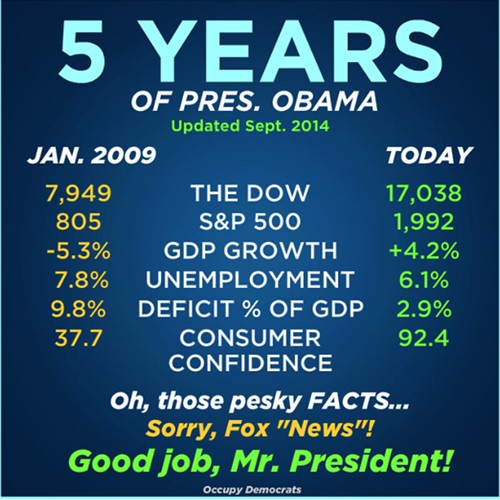
On Friday, I was called a privileged white male who couldn’t possibly understand issues of race and gender discrimination. This from a “friend,” who was getting a bit off-topic after I rebutted a meme praising President Obama’s economic record. The meme is another topic (heh…), but I have written about the blanket “check your privilege” dismissal before. In this case, I responded to my critic, a woman, that Libertarians like me give women full credit for their strength and ability to compete. And they do compete: the gender pay gap in the U.S. is largely a fiction, though propaganda to the contrary still circulates.

On the issue of gender politics, what bothers me about today’s radical feminists is that they all but encourage a mentality of victimhood: women have been put-upon by privileged white males, made to submit socially, economically, and yes … sexually; forced to accept employment at below-market wages, locked out of many occupations like IT, firefighting or demolition work.

No doubt there has been discrimination against women in the past, before and during their integration into the labor force. Today, there may be vestiges of discrimination, but in a liberal, market economy, men and women are both empowered to seek the kind of education and career they wish to pursue. There is no guarantee that they’ll find employment in a particular field, however. Free individuals, men and women who want to work, participate voluntarily in a labor market with the objective of entering into mutually beneficial employment contracts at market-clearing wages. Yet liberal feminists often advocate for aggressive government intervention on behalf of women — see here and here, for example. From the latter:

“[Anne] Alstott and others argue that the state must ensure that the socially essential work of providing care to dependents does not unreasonably interfere with the personal autonomy of caregivers. Policies proposed to ensure sufficient personal autonomy for caregivers include parental leave, state subsidized, high quality day care, and flexible work schedules. Some recommend financial support for caregivers, others suggest guaranteeing a non-wage-earning spouse one half of her wage-earning spouse’s paycheck.”

Those proposals qualify as a set of highly aggressive state interventions. They would require redistribution of resources on a massive scale and would lead to dislocations and market failures. At a minimum, to accept such a costly platform, one must buy into the narrative of ongoing victimhood promoted by radical feminists, as well state control of economic life rather than individual initiative. Not all women agree, for example, the brilliant Virginia Postrel and Cathy Young.

The victimhood narrative, and the strong preference for relying on state action rather than individual decisions, extends to the recent push for an “affirmative consent” law in California. I leave it to Dr. Helen Smith to destroy this idiotic legal doctrine.

But back to my new designation as a “privileged white male.” As I tried to explain to this mudslinging individual, I find the accusation insulting on (at least) two counts: first, it implies that any success I’ve earned in life is less than fully deserved, but more importantly, it is a transparent attempt to disqualify me from debate. This “friend” hurled more insults, both petty and elitist, in an attempt to denigrate my career (as if she had any clue about what I do for a living, or what I earn). She also called my opinions “scary,” another weak effort to disqualify me. This is what weasels are made of. I told her she needed a good night’s sleep, and I really think she did! She repeated a refrain several times: “Sad,” without elaboration. She also “unfriended” me, which is fairly typical of leftists who engage in on-line debate. And I am sad for her, but I must move on!

Follow Sacred Cow Chips on WordPress.com

Recent Posts

  • Immigration and Merit As Fiscal Propositions
  • Tariff “Dividend” From An Indigent State
  • Almost Looks Like the Fed Has a 3% Inflation Target
  • Government Malpractice Breeds Health Care Havoc
  • A Tax On Imports Takes a Toll on Exports

Archives

  • December 2025
  • November 2025
  • October 2025
  • September 2025
  • August 2025
  • July 2025
  • June 2025
  • May 2025
  • April 2025
  • March 2025
  • February 2025
  • January 2025
  • December 2024
  • November 2024
  • October 2024
  • September 2024
  • August 2024
  • July 2024
  • June 2024
  • May 2024
  • April 2024
  • March 2024
  • February 2024
  • January 2024
  • December 2023
  • November 2023
  • August 2023
  • July 2023
  • June 2023
  • May 2023
  • April 2023
  • March 2023
  • February 2023
  • January 2023
  • December 2022
  • November 2022
  • October 2022
  • September 2022
  • August 2022
  • July 2022
  • June 2022
  • May 2022
  • April 2022
  • March 2022
  • February 2022
  • January 2022
  • December 2021
  • November 2021
  • October 2021
  • September 2021
  • August 2021
  • July 2021
  • June 2021
  • May 2021
  • April 2021
  • March 2021
  • February 2021
  • January 2021
  • December 2020
  • November 2020
  • October 2020
  • September 2020
  • August 2020
  • July 2020
  • June 2020
  • May 2020
  • April 2020
  • March 2020
  • February 2020
  • January 2020
  • December 2019
  • November 2019
  • October 2019
  • September 2019
  • August 2019
  • July 2019
  • June 2019
  • May 2019
  • April 2019
  • March 2019
  • February 2019
  • January 2019
  • December 2018
  • November 2018
  • October 2018
  • September 2018
  • August 2018
  • July 2018
  • June 2018
  • May 2018
  • April 2018
  • March 2018
  • February 2018
  • January 2018
  • December 2017
  • November 2017
  • October 2017
  • September 2017
  • August 2017
  • July 2017
  • June 2017
  • May 2017
  • April 2017
  • March 2017
  • February 2017
  • January 2017
  • December 2016
  • November 2016
  • October 2016
  • September 2016
  • August 2016
  • July 2016
  • June 2016
  • May 2016
  • April 2016
  • March 2016
  • February 2016
  • January 2016
  • December 2015
  • November 2015
  • October 2015
  • September 2015
  • August 2015
  • July 2015
  • June 2015
  • May 2015
  • April 2015
  • March 2015
  • February 2015
  • January 2015
  • December 2014
  • November 2014
  • October 2014
  • September 2014
  • August 2014
  • July 2014
  • June 2014
  • May 2014
  • April 2014
  • March 2014

Blogs I Follow

  • Passive Income Kickstart
  • OnlyFinance.net
  • TLC Cholesterol
  • Nintil
  • kendunning.net
  • DCWhispers.com
  • Hoong-Wai in the UK
  • Marginal REVOLUTION
  • Stlouis
  • Watts Up With That?
  • Aussie Nationalist Blog
  • American Elephants
  • The View from Alexandria
  • The Gymnasium
  • A Force for Good
  • Notes On Liberty
  • troymo
  • SUNDAY BLOG Stephanie Sievers
  • Miss Lou Acquiring Lore
  • Your Well Wisher Program
  • Objectivism In Depth
  • RobotEnomics
  • Orderstatistic
  • Paradigm Library
  • Scattered Showers and Quicksand

Blog at WordPress.com.

Passive Income Kickstart

OnlyFinance.net

TLC Cholesterol

Nintil

To estimate, compare, distinguish, discuss, and trace to its principal sources everything

kendunning.net

The Future is Ours to Create

DCWhispers.com

Hoong-Wai in the UK

A Commonwealth immigrant's perspective on the UK's public arena.

Marginal REVOLUTION

Small Steps Toward A Much Better World

Stlouis

Watts Up With That?

The world's most viewed site on global warming and climate change

Aussie Nationalist Blog

Commentary from a Paleoconservative and Nationalist perspective

American Elephants

Defending Life, Liberty and the Pursuit of Happiness

The View from Alexandria

In advanced civilizations the period loosely called Alexandrian is usually associated with flexible morals, perfunctory religion, populist standards and cosmopolitan tastes, feminism, exotic cults, and the rapid turnover of high and low fads---in short, a falling away (which is all that decadence means) from the strictness of traditional rules, embodied in character and inforced from within. -- Jacques Barzun

The Gymnasium

A place for reason, politics, economics, and faith steeped in the classical liberal tradition

A Force for Good

How economics, morality, and markets combine

Notes On Liberty

Spontaneous thoughts on a humble creed

troymo

SUNDAY BLOG Stephanie Sievers

Escaping the everyday life with photographs from my travels

Miss Lou Acquiring Lore

Gallery of Life...

Your Well Wisher Program

Attempt to solve commonly known problems…

Objectivism In Depth

Exploring Ayn Rand's revolutionary philosophy.

RobotEnomics

(A)n (I)ntelligent Future

Orderstatistic

Economics, chess and anything else on my mind.

Paradigm Library

OODA Looping

Scattered Showers and Quicksand

Musings on science, investing, finance, economics, politics, and probably fly fishing.

  • Subscribe Subscribed
    • Sacred Cow Chips
    • Join 128 other subscribers
    • Already have a WordPress.com account? Log in now.
    • Sacred Cow Chips
    • Subscribe Subscribed
    • Sign up
    • Log in
    • Report this content
    • View site in Reader
    • Manage subscriptions
    • Collapse this bar
 

Loading Comments...