• About

Sacred Cow Chips

Sacred Cow Chips

Tag Archives: P.J. O’Rourke

AntiSemitic Left Tests Limits of Free Speech

30 Tuesday Apr 2024

Posted by Nuetzel in anti-Semitism, Free Speech

≈ Leave a comment

Tags

Agitators, Alex Tabarrok, Codes of Conduct, Eugene Volokh, Fighting Wirds, First Amendment, Foundation for Individual Rights and Expression, Free Speech, Freedom of Assembly, Hamas, Instapundit, Intifada, Israel, Michael Munger, P.J. O'Rourke, Terrorism

The current protests on college campuses across the nation bring into focus differing opinions on the limits of free speech and assembly. Particular questions seem to defy resolution. Nevertheless, there is some misunderstanding regarding the settled breadth of the First Amendment.

The protestors have acted as if they have constitutional carte blanche to gather anywhere to say anything in opposition to Israel and its war against Hamas terrorists; a subset thinks this encompasses “occupation” of any space for any duration; a still smaller subset believes this includes a right to condemn Jews, all Jews.

I strongly doubt, however, that many of the protestors truly believe their constitutional protections extend to intimidation and bullying of Jewish students attempting to go about their business on campus (scroll to a few of the articles here), destruction of property, or the use of “fighting words”, or physical attacks on Jews or other “oppressors”.

It’s well known that the Constitution does not protect “fighting words”, including threats. Furthermore, Eugene Volokh explains that there is no constitutional right to “occupy” a college campus, either public or private.

Of course, private schools are not legally bound to respect free speech or assembly rights. They can regulate activity on their private campuses in any way they see fit. Some explicitly abide the same rights as public universities, which seems reasonable for any institution dedicated to the free spirit of inquiry.

Volokh, however, cites Supreme Court precedents in which a majority held that government can prohibit camping in certain parks, for example, and that public colleges and universities can impose restrictions on campus activities:

“There is no First Amendment right to camp out in any university, public or private. Indeed, there is no First Amendment right to camp out even in public parks (see Clark v. CCNV (1984)), and the government’s power to limit the use of property used for a public university is even greater than its power as to parks (Widmar v. Vincent (1981)):

“‘A university differs in significant respects for public forums such as streets or parks or even municipal theaters. A university’s mission is education, and decisions of this Court have never denied a university’s authority to impose reasonable regulations compatible with that mission upon the use of its campus and facilities. We have not held, for example, that a campus must make all of its facilities equally available to students and nonstudents alike, or that a university must grant free access to all of its grounds or buildings.’

“Likewise, if UC Berkeley had held a law student party in the law school building rather than at Dean Chemerinsky’s house, it could have stopped students from using the party as an occasion to orate to the audience (especially with their own sound amplification devices, which the student brought to Chemerinsky’s house). See Spears v. Arizona Bd. of Regents (D. Ariz. 2019)(upholding public university’s right to stop people from speaking with sound amplification at an on-campus book fair).“

Volokh also notes, however, that public universities cannot restrict mere “offensive” expression, which would include certain antisemitic statements or even swastikas (for example), as long as the expression falls short of “fighting words” or explicit threats. Do calls for the “extermination of Jews” qualify as fighting words? That deserves a resounding yes. It’s clearly hate speech, and it’s exactly the sort of expression that might be deemed so offensive to counterprotestors (for example) as to constitute an immediate threat to public order.

Does the meaning of “fighting words” include such chants as “From the river to the sea…”? Some say that depends on the speaker, but that can’t provide a sound basis of distinction. It is clearly associated with calls to eliminate the state of Israel. Some believe it also implies the genocide of Jews in Israel, and Jews can’t be blamed for finding it threatening. Okay, how about “Intifada”? I doubt all of the students involved in the current protests understand the genocidal implications of these words. The agitators understand them well enough.

This is a grey area in our understanding of the First Amendment. The “River to the Sea” chant, and Intifada, seem like fighting words to me, but they might not qualify as direct threats to anyone on campus. By comparison, the swastika is “just” a party emblem, whatever policies it stands for, and apparently the Court did not deem it a direct threat to anyone in Skokie, Illinois. The legal distinctions here feel inadequate. Still, we say the “mere” expression of offensive ideas or symbols is protected speech, provided that it does not directly threaten harm to any party.

Many libertarians, with whom I usually agree, urge tolerance of the protests and encampments, including at least cautious tolerance of the protests. The Foundation for Individual Rights and Expression (FIRE) has strenuously objected to the actions of police in Austin, Texas in dispersing demonstrators at the University of Texas. Alex Tabarrak has reposted a tweet or two apparently critical of the government’s response to protestors in Texas and at Emory University in Atlanta, though it should be noted that the economics professor who was taken down and handcuffed on video had actually hit a police officer. Michael Munger, in a variation of his “worst enemy test” of government power, says that giving campus authorities “the power to crush us, at their discretion” is probably a bad idea. But they have that power if they choose to exercise it, for better or worse. (By “us”, I don’t think Munger intended to take sides).

I’m highly skeptical of the motives and incentives of some of the “occupiers” of campus spaces, not to mention their status as students. More importantly, there is ample evidence that “fighting words” and threats against Jews have been used by many of the protesters. This violates the codes of conduct at many schools, and should not only be censured, but any student identified as guilty of this sort of hate speech should be expelled, not merely suspended. There should be severe consequences for professors choosing to participate in these protests as well.

This behavior should have long-term consequences, and that is happening at some schools. I saw the following quote from P.J. O’Rourke on Instapundit, which seems appropriate here:

“There’s only one basic human right, the right to do as you damn well please. And with it comes the only basic human duty, the duty to take the consequences.”

The kids are wearing masks for a reason, and it ain’t Covid! Now, the protestors’ demands include “amnesty” for their participation in the protests. That shouldn’t play well if you’re provably guilty of calling for the extermination of a race of people. But here’s the thing: certain institutions like Columbia University have allowed the aberrant behavior to go on with little challenge, showing that the real limits to free speech and assembly are whatever acquiescent campus administrators are willing to put up with.

Removing these encampments is more than justified on constitutional grounds at any school, public or private. The arrest of some of the more intransigent elements among the protesters may be well justified. Insulting hate speech is one thing, but eliminationist hate speech constitutes fighting words and should not be tolerated. Of course, forcibly removing the encampments is risky in terms of public safety because some of the protestors will physically challenge the police. Comparatively innocent (though naive) students might get caught up in a conflict with law enforcement, but ignorance is no defense. They should not be there. Those risks must be taken to end the “hate encampments”, which are a direct threat to the rights of others wishing only to go about their business.
Medicare For All … and Tax Hikes, Long Waits, Inferior Care

23 Thursday Jun 2022

Posted by Nuetzel in Health Care, Health Insurance

≈ Leave a comment

Tags

Avik Roy, Bernie Sanders, Elizabeth Warren, Health Care Monopolies, Hospital Insurance Trust Fund, Insolvency, J.D. Tuccille, Jacqueline Pohida, John C. Goodman, Medicaid, Medicare Advantage, Medicare Buy-Ins, Medicare For All, Medicare Supplements, Michael F. Cannon, Obamacare, P.J. O'Rourke, Phillip L. Swagel, Public Option, Quality of Care, Reimbursement Rates, Spending Caps. Affordable Care Act, Stephen Green

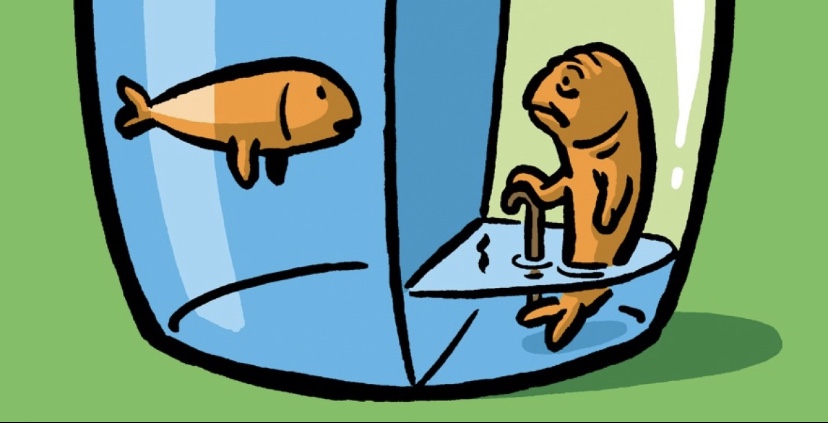
Political humorist P.J. O’Rourke once quipped that if you think health care is expensive now, wait till it’s free! A Stephen Green post reminded me of the source of that wisdom. But there are many who say they don’t understand why we simply don’t offer the Medicare program to everyone … free! Well, the reasons are quite simple: we can’t afford it, and it would be bad policy. In fact, it’s too costly and bad policy even if it isn’t free! Medicare is technically insolvent as it is — broke, in plain language. According to the Medicare Trustees 2022 Report linked above, the Hospital Insurance Trust Fund will be depleted by 2028. That only means the Medicare system has authority to take funds the Treasury borrows to pay ongoing benefits through 2028, so the remaining trust fund balance is little consolation. The long-term actuarial deficit is $700 billion, but it’s possibly as high as $1.5 trillion under an alternative, high-cost scenario shown in the Trustee’s report.

Single Payer Medicare?

Extending free Medicare to the entire population would cost over $30 trillion in the first 10 years, and that’s a conservative estimate. And be forewarned: single-payer health care is government health care, which invariably leads to rationed access and protracted waiting times, poor quality, and escalating costs. For a detailed look at many of the quality problems suffered by Medicare patients, see this paper by Michael Cannon and Jacqueline Pohida. Don’t be deceived by claims that Medicare’s administrative costs are lower than private insurance: The real cost of Medicare is largely hidden through the imposition of low reimbursement rates to providers, while taxpayers get stuck with a significant bill.

Avik Roy has discussed variations on “Medicare For All” (M4A), most of which share very little with today’s Medicare. Not only would they fail to address its shortcomings; they would be much worse. Some do not include the range of private plans currently offered through Medicare Advantage. In fact, under the plans offered by Bernie Sanders and Elizabeth Warren, Medicare Advantage would be terminated, as would all other private insurance for the working-age population. Medicaid would also be eliminated. “Medicare”, in its surviving form, would be the single-payer system, “free” at the point of care and without premiums. Again, a free health care buffet would unleash gluttonous demand, so certain restrictions must be in place to limit pricing and access to care. Think rationing, which should sound ominous to those whose health is failing.

Physician reimbursement rates under traditional Medicare are now only about 60% of private reimbursements, and that filters down to the wages earned by other workers in the health care sector. Naturally, broadening Medicare’s reach will cause providers and their employees to drop-out or cut back. And again, services will be subject to various other forms of rationing. These are unavoidable failings of free or heavily-subsidized health care systems, not to mention the massive burden on taxpayers. And by the way, the “rich” are nowhere near rich enough to pay for all of it.

As to the overall effects, here’s what CBO Director Phillip L. Swagel told the Senate Budget Committee recently, as quoted in Reason by JD Tuccille:

“The increase in demand for personal health care would exceed the increase in supply, resulting in greater unmet demand than the amount under current law. The increase in unmet demand would correspond to increased congestion in the health care system, including delays and forgone care.”

The “increase in supply” mentioned by Swagel is something of a pipe dream.

Buy-Ins and Public Option

There are less drastic proposals than full-blown M4A, such as so-called Medicare buy-ins. For example, those age 50 – 64 might be given the option to “buy-in” to Medicare coverage. It’s not clear whether that would include a choice of Medicare Advantage plans. Many would find the coverage available through traditional Medicare and Medicare Advantage to be inadequate. It is often inferior to private plans, including the lack of dependent coverage and no out-of-pocket maximum for traditional Medicare. Supplemental coverage would be necessary for many individuals choosing the latter.

Another question is how employers would adjust to a segment of their work force in the 50-64 age group opting-out of sponsored coverage. Would the company be required to pick-up the Medicare tab? Would there be compensatory adjustments in wages? Fully compensatory changes are unlikely. Even with partial adjustments, how would an employer adjust company-wide wage scales for younger workers who perform the same or similar duties as those opting into Medicare. And what of the tax-free benefit for workers on employer-paid premiums? Medicare premiums are not tax deductible… at least not yet!

All of the other concerns about low provider reimbursement rates would apply to a Medicare buy-in. The supply of medical care, particularly to the segment buying in, might prove thin. The buy-in option would have very little impact on the number of uninsured individuals. However, several studies have found that the buy-in option would increase premiums for private plans on the individual market (see the last link). That’s largely because providers will try to stick private insurers and patients with the burden of cross-subsidizing Medicare buy-ins.

Another proposal is for a Medicare plan or similar public option to be made available to all in the exchange marketplace. This would take a more massive toll on taxpayers and health care access and quality than the buy-in approach. Moreover, because of pressure for cross-subsidies, private plans will struggle to stay in business. The destruction would be gradual, but the public option would slowly eliminate choice from the marketplace. Cannon and Pohida believe that offering a public option could lead to improvements if the private and public plans are allowed to compete on a level playing field, largely in terms of subsidies and regulatory hurdles, but that is highly unlikely.

Cuts Ahead?

A lesser known issue is the impact of spending caps put in place under the Affordable Care Act. These apply to Medicare and Medicaid as well as federal subsidies on policies purchased on the Obamacare exchanges. When those caps are exceeded, access becomes temporarily restricted, with some practices actually closing their doors for a period of days or weeks. Health economist John Goodman notes that seniors tend to eat into the allowable spending amounts much faster than younger cohorts. That means seniors might be denied costlier forms of care. To the extent that any variation on M4A covers a broader age range, there might be more pressure to curtail certain forms of care for seniors, which would be a most unfortunate case of policy-induced age discrimination.

As for Medicare as it stands now, Goodman describes the potential cuts that are coming. These include the possibility of reduced amenities (e.g., hospital wards with more patients per room and lower-cost meals), and as already mentioned, longer waits and restricted availability of costlier treatments. Goodman states that the necessary cuts to make Medicare whole would be equivalent to the loss of three years of coverage for a 65-year old, and the cuts will affect both traditional Medicare and privately-issued (but publicly subsidized) Advantage plans.

Conclusion

There’s no chance any form of M4A would reduce the cost of care or improve access to care. An expanded Medicare would bear the hallmarks of central planning that have accelerated the monopolization of health care under Obamacare. And like Obamacare, the final form of any M4A plan will be the product of negotiations between self-interested politicians, corporatists and regulators. Big pharmaceutical companies, insurers, large hospital systems, and other interest groups will wrangle for the rents that “reform” legislation might bring. Costs will rise and access to care will be restricted. Taxpayers will be saddled with a large chunk of the cost.

In the end it’s likely to be a mess. Far better to adopt reforms that would bring more innovation, choice, and competition to the markets for health insurance and health care. That includes expanding the range of options available under private Medicare (Advantage). At the same time, Obamacare should be scrapped in favor of a range of a greater range of private options with income-dependent subsidies, including catastrophic coverage only, as well as reduced regulation of insurers and providers.

Statism and Self-Harm

18 Tuesday Feb 2020

Posted by Nuetzel in Free markets, Government Failure, Uncategorized

≈ Leave a comment

Tags

Andre Schleifer, Autocracy, Chinese Interment Camps, Friedrich Hayek, Kazakh Muslims, New York Times, P.J. O'Rourke, Reason.com Nick Gillespie, Reeducation, rent seeking, statism, The Road To Serfdom, Tom Friedman, Uighur Muslims


Some have a tendency to think their problems can be solved only through the intervention of some powerful, external force. That higher power might be God, but at a more temporal level, government is often presumed to be a force to fix all things that need fixing. “There oughta be a law” is a gut reaction to things we find injurious or that offend; government has the resources, or the coercive power to get the resources, to undertake big, appealing projects; and of course government has the coercive power to “rearrange the deck chairs” in ways that might satisfy anyone’s sense of justice and fairness, so long as they get their way. Whenever people perceive some need they believe to be beyond their private capacity, or mere convenience, government action is the default option, and that’s partly because many think it’s the only option.

That’s the appeal of “democratic socialism”, to use a name that unintentionally emphasizes a very real danger of democracy: the tyranny of the majority. It’s a dismal way station along the road to serfdom, to borrow a phrase from Hayek.

Government, however, repeatedly demonstrates it’s sheer incompetence and its expedience as a vehicle for graft. And it’s not as if these failures go unrecognized. Everyone knows it! This is nowhere more true than when the state interferes with private markets or attempts to steer the economy’s direction at either an aggregate or industry level. But here we have a dark irony, as told by Nick Gillespie at Reason:

“Again and again—and in countries all over the world—declines in trust of government correlate strongly with calls for more government regulation in more parts of our lives. ‘Individuals in low-trust countries want more government intervention even though they know the government is corrupt,’ explain the authors of a 2010 Quarterly Journal of Economics paper. That’s certainly the case in the United States, where the size, scope, and spending of government has vastly increased over exactly the same period in which trust and confidence in the government has cratered. In 2018, I talked with one of the paper’s authors, Andrei Shleifer, a Harvard economist who grew up in the Soviet Union before coming to America. Why do citizens ask a government they don’t believe in to bring order? ‘They want regulation,’ he said. ‘They want a dictator who will bring back order.'”

Against all historical evidence and forebodings, the wish for a benevolent dictator! As if it’ll be different this time! Are we all statists? Certainly not me, but the Left is full of them. One prominent example is columnist Tom Friedman of the New York Times, who has expressed the sometimes fashionable view that “things get done” under dictatorships:

“One-party autocracy certainly has its drawbacks. But when it is led by a reasonably enlightened group of people, as China is today, it can also have great advantages. … That one party can just impose the politically difficult but critically important policies needed to move a society forward in the 21st century.”

Tell it to the interred Kazakh and Uighur Muslims undergoing “reeducation” in China. The Right has its share of statists as well, and it is typically expressed in desires for enforced social conservatism.

People seem to have a vague idea that everyone else must either be misbehaving or in misery. And despite the well-tested fallibility and lack of trust in government, people persist in believing that the public sector can conjure magic to solve their problems. But the state gets bigger and bigger while solving few problems and exacerbating others. In fact, as government grows, it makes rent seeking a more viable alternative to productive effort. Like the giant zero-sum game that it is, the expansion of government provides the very means to pick away at the wealth of others. When faced with these incentives, people most certainly will misbehave on small and large scales!

The truth is that individuals hold the most potent regulatory force in their own hands: the voluntary nature of trade. It protects against over-pricing, under-pricing, and inferior quality along many dimensions, but it demands discipline and a willingness to walk away. It also demands a willingness to put forth productive effort, rather than coveting the property of others, and taking from others via political action. To paraphrase P.J. O’Rourke, if you think things are expensive now, wait till they’re free!

Follow Sacred Cow Chips on WordPress.com

Recent Posts

  • The Case Against Interest On Reserves
  • Immigration and Merit As Fiscal Propositions
  • Tariff “Dividend” From An Indigent State
  • Almost Looks Like the Fed Has a 3% Inflation Target
  • Government Malpractice Breeds Health Care Havoc

Archives

  • January 2026
  • December 2025
  • November 2025
  • October 2025
  • September 2025
  • August 2025
  • July 2025
  • June 2025
  • May 2025
  • April 2025
  • March 2025
  • February 2025
  • January 2025
  • December 2024
  • November 2024
  • October 2024
  • September 2024
  • August 2024
  • July 2024
  • June 2024
  • May 2024
  • April 2024
  • March 2024
  • February 2024
  • January 2024
  • December 2023
  • November 2023
  • August 2023
  • July 2023
  • June 2023
  • May 2023
  • April 2023
  • March 2023
  • February 2023
  • January 2023
  • December 2022
  • November 2022
  • October 2022
  • September 2022
  • August 2022
  • July 2022
  • June 2022
  • May 2022
  • April 2022
  • March 2022
  • February 2022
  • January 2022
  • December 2021
  • November 2021
  • October 2021
  • September 2021
  • August 2021
  • July 2021
  • June 2021
  • May 2021
  • April 2021
  • March 2021
  • February 2021
  • January 2021
  • December 2020
  • November 2020
  • October 2020
  • September 2020
  • August 2020
  • July 2020
  • June 2020
  • May 2020
  • April 2020
  • March 2020
  • February 2020
  • January 2020
  • December 2019
  • November 2019
  • October 2019
  • September 2019
  • August 2019
  • July 2019
  • June 2019
  • May 2019
  • April 2019
  • March 2019
  • February 2019
  • January 2019
  • December 2018
  • November 2018
  • October 2018
  • September 2018
  • August 2018
  • July 2018
  • June 2018
  • May 2018
  • April 2018
  • March 2018
  • February 2018
  • January 2018
  • December 2017
  • November 2017
  • October 2017
  • September 2017
  • August 2017
  • July 2017
  • June 2017
  • May 2017
  • April 2017
  • March 2017
  • February 2017
  • January 2017
  • December 2016
  • November 2016
  • October 2016
  • September 2016
  • August 2016
  • July 2016
  • June 2016
  • May 2016
  • April 2016
  • March 2016
  • February 2016
  • January 2016
  • December 2015
  • November 2015
  • October 2015
  • September 2015
  • August 2015
  • July 2015
  • June 2015
  • May 2015
  • April 2015
  • March 2015
  • February 2015
  • January 2015
  • December 2014
  • November 2014
  • October 2014
  • September 2014
  • August 2014
  • July 2014
  • June 2014
  • May 2014
  • April 2014
  • March 2014

Blogs I Follow

  • Passive Income Kickstart
  • OnlyFinance.net
  • TLC Cholesterol
  • Nintil
  • kendunning.net
  • DCWhispers.com
  • Hoong-Wai in the UK
  • Marginal REVOLUTION
  • Stlouis
  • Watts Up With That?
  • Aussie Nationalist Blog
  • American Elephants
  • The View from Alexandria
  • The Gymnasium
  • A Force for Good
  • Notes On Liberty
  • troymo
  • SUNDAY BLOG Stephanie Sievers
  • Miss Lou Acquiring Lore
  • Your Well Wisher Program
  • Objectivism In Depth
  • RobotEnomics
  • Orderstatistic
  • Paradigm Library
  • Scattered Showers and Quicksand

Blog at WordPress.com.

Passive Income Kickstart

OnlyFinance.net

TLC Cholesterol

Nintil

To estimate, compare, distinguish, discuss, and trace to its principal sources everything

kendunning.net

The Future is Ours to Create

DCWhispers.com

Hoong-Wai in the UK

A Commonwealth immigrant's perspective on the UK's public arena.

Marginal REVOLUTION

Small Steps Toward A Much Better World

Stlouis

Watts Up With That?

The world's most viewed site on global warming and climate change

Aussie Nationalist Blog

Commentary from a Paleoconservative and Nationalist perspective

American Elephants

Defending Life, Liberty and the Pursuit of Happiness

The View from Alexandria

In advanced civilizations the period loosely called Alexandrian is usually associated with flexible morals, perfunctory religion, populist standards and cosmopolitan tastes, feminism, exotic cults, and the rapid turnover of high and low fads---in short, a falling away (which is all that decadence means) from the strictness of traditional rules, embodied in character and inforced from within. -- Jacques Barzun

The Gymnasium

A place for reason, politics, economics, and faith steeped in the classical liberal tradition

A Force for Good

How economics, morality, and markets combine

Notes On Liberty

Spontaneous thoughts on a humble creed

troymo

SUNDAY BLOG Stephanie Sievers

Escaping the everyday life with photographs from my travels

Miss Lou Acquiring Lore

Gallery of Life...

Your Well Wisher Program

Attempt to solve commonly known problems…

Objectivism In Depth

Exploring Ayn Rand's revolutionary philosophy.

RobotEnomics

(A)n (I)ntelligent Future

Orderstatistic

Economics, chess and anything else on my mind.

Paradigm Library

OODA Looping

Scattered Showers and Quicksand

Musings on science, investing, finance, economics, politics, and probably fly fishing.

  • Subscribe Subscribed
    • Sacred Cow Chips
    • Join 128 other subscribers
    • Already have a WordPress.com account? Log in now.
    • Sacred Cow Chips
    • Subscribe Subscribed
    • Sign up
    • Log in
    • Report this content
    • View site in Reader
    • Manage subscriptions
    • Collapse this bar
 

Loading Comments...