• About

Sacred Cow Chips

Sacred Cow Chips

Tag Archives: Power Grid

Markets Deal With Scarcity, Left Screams “Price Gouging”

11 Monday Apr 2022

Posted by Nuetzel in Antitrust, Environmental Fascism, Oil Prices

≈ Leave a comment

Tags

Antitrust, Barack Obama, central planning, ESG Scores, FDR, Fossil fuels, Gas Prices, Green New Deal, Intermittancy, Joe Biden, Keystone Pipeline, Lawrence Summers, Oil Prices, Oil Profits, OPEC, Power Grid, Price Gouging, Profit Margins, Profiteering, Renewable energy, Strategic Petroleum Reserve, Ukraine Invasion, Vladimir Putin, West Texas Intermediate

Democrats claim profiteering by oil companies is responsible for the sustained rise in oil prices since Joe Biden’s inauguration (really, his election). That’s among the more laughable attempts at gaslighting in recent memory, right up there with blaming market concentration for the sustained increase in inflation since Biden’s inauguration. At a hearing this week, congressional Democrats, frightened by the prospect of a beat-down just ahead in the mid-term elections, couldn’t resist making “price-gouging” accusations against oil producers. These pols stumble over their own contradictory talking points, insisting on more oil production only when they aren’t hastily sabotaging oil and gas output. Their dishonestly is galling, but so is the foolishness of voters who blindly accept the economic illiteracy issuing from that side of the aisle.

Break It Then Blame It

Those who level “price gouging” charges at oil companies are often the same people seeking to eliminate fossil fuel consumption by making those energy choices unaffordable. The latter is a bad look this close to mid-term elections, so they follow the playbook I described recently in “Break the Market, Blame It, Then Break It Some More“. And this post is instructive: “House Dem: Big Oil is profiteering by, er … doing what we demanded”.

Not only have the Democrats’ policies caused oil prices to soar; for many years they’ve been undermining the stability of the power grid via forced conversion into intermittent renewable energy sources like wind and solar, all while preventing the expansion of safe and carbon-free nuclear power generation. It’s ironic that these would-be industrial planners seem so eager to botch the job, though failure is all too typical of central planning. Just ask the Germans about their own hapless efforts at energy planning.

As economist Lawrence Summers, former Treasury Secretary under Barack Obama, said recently:

“Look, the net effect of the things the administration talks about in terms of micro policies to reduce inflation, this gouging talk is frivolous, nonserious, and utterly ineffectual. A gas price holiday would, ultimately, push up prices by raising demand. … The student loan relief … is injecting resources into the economy at a hundred billion dollar a year annual rate when the economy needs to be cooled off, not heated up. … The administration could be much more constructive than it has been with respect to energy supply.”

The market functions to allocate scarce resources. When conditions of scarcity become more acute, the market mechanism responds by pricing available supplies to both curtail use and incentivize delivery of additional quantities. That involves the processing of vast amounts of information, and it is a balancing at which the market performs extremely well relative to bumbling politicians and central planners, whose actions are too often at the root of acute scarcities.

Antitrust Nonsense

Of course, the Democrats have seized upon the inescapable fact that soaring oil prices cause profits to soar for anyone producing oil or holding stocks of oil. But oil company profits are notoriously volatile. Margins were negative for most of 2020, when demand weakened in the initial stages of the pandemic. And now, some companies are bracing for massive write-downs on abandoned drilling projects in Russia. The oil and gas business is certainly not known for high profit margins. Short-term profits, while they last, must be used to meet the physical or financial needs of the business.

The threats of antitrust action by the Biden Administration are an extension of the price-gouging narrative, even if the threat reflects an injudicious grasp of what it takes to prove collusion. It takes a fertile imagination to think western oil companies could successfully collude on pricing in a market dominated by the following players:

Fat chance. In any case, it’s a global market, and it’s impossible for western oil producers to dictate pricing. Even the OPEC cartel has been unable to dictate prices, not to mention keeping it’s members from violating production quotas. But if a successful conspiracy among oil companies to raise prices was possible, one would guess they’d have done it a lot sooner!

Nor is it possible for the oil majors to dictate prices at the pump, because retail prices are set independently. While the cost of crude oil is only about 54% of the cost of refined gas at retail, fluctuations in prices at the pump correlate strongly with crude oil prices. Here is a ten-year chart of daily price data, where the blue line is the price of West Texas Intermediate crude oil and the orange line is the average price of regular gas in the U.S.:

Here are the same two series for 2022 year-to-date:

Coerced Scarcity

Again, oil prices have been under upward pressure for over a year until a break in early March, following the steep run-up in the immediate wake of the Ukraine invasion. First there was Biden’s stultifying rhetoric, before and after the 2020 election, assisted by radical members of Congress. Then there were executive orders halting drilling on federal lands, killing the Keystone pipeline, efforts to shut down several other existing pipelines, and the imposition of regulatory penalties on drillers. In addition, unrest in certain parts of the Middle East curtailed production, compounded this year by the boycott on Russian oil (which, as a foreign policy matter, was far too late in coming).

However, existing facilities have been capable of squeezing out more oil and gas. Lo and behold, supply curves slope upward, even in the short-run! Despite all of Biden’s efforts to cripple domestic oil production, higher crude prices have brought forth some additional supplies. Biden’s raid on the Strategic Petroleum Reserve has also boosted supply for now, but its magnitude won’t help much, and it must be replaced for use during real U.S. national emergencies, which the war in Ukraine is not, as awful as it is.

That said, investing in new drilling capacity is not wise given the political climate created by Biden and the Democrats: they have been quite clear that they mean to crush the fossil fuel industry. For some time, the oil companies have been busy investing cash flows in “green” initiatives in an effort to bolster their ESG scores, a dubious exercise to say the least. Arguably, in this policy environment, the most responsible thing to do is to return some of the capital over which these firms are stewards to its rightful owners, many of whom are middle-class savers who hold oil stocks in their 401(k) funds. That approach is manifest in the recent stock buybacks and dividend payments oil companies have announced and defended before Congress.

Conclusion

A forced shutdown of fossil fuel energy was much ballyhooed by the Left as a part of Joe Biden’s agenda. Biden himself bought into the “Green New Deal”, imagining it might win him a vaunted place alongside FDR’s legacy in American history. The effort was unwise, but Biden is trying to hang onto the narrative and maintain his punitive measures against American oil companies. All the while, he begs OPEC producers to step up production, bending a knee to despots in countries such as Iran and Venezuela. Why, it’s as if their fossil fuels are somehow cleaner than those extracted in the U.S! The feeble Biden and congressional Democrats are proving just how mendacious they are. They can rightfully blame Vladimir Putin for the recent escalation in oil prices, but they bear much responsibility themselves for the burden of high gas prices, energy bills, and the unnecessary, ongoing scarcity victimizing the American public.
Electric Vehicle Fueling Costs in the Real World

31 Sunday Oct 2021

Posted by Nuetzel in Electric Vehicles, Renewable Energy

≈ 1 Comment

Tags

Anderson Economic Group, Biomass, Charging Time, Commercial Power Rates, Deadhead Miles, Dispatchable Capacity, Disposal Costs, Electric Vehicles, EVangelists, Fast Chargers, Fueling Cost, Intermittency, Internal Combustion Engines, Joe Biden, Nuclear Energy, Opportunity cost, Phantom Drain, Power Failures, Power Grid, Recharging Costs, Renewable Power, Thermal Energy

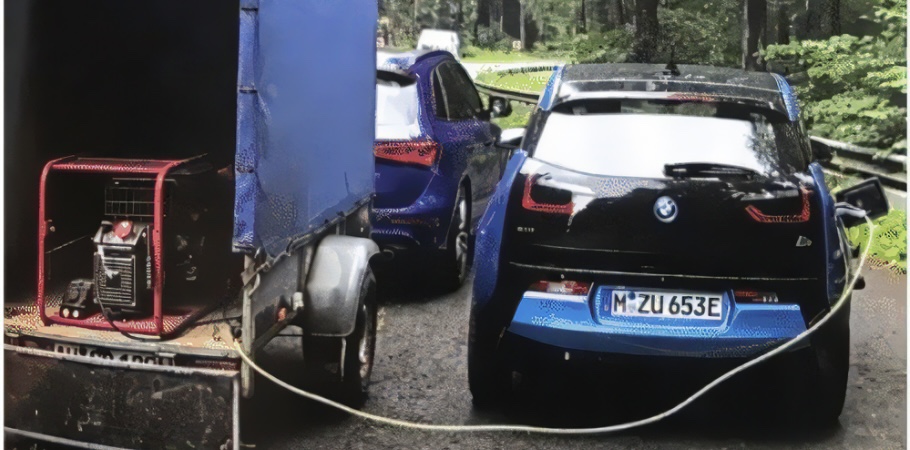
While the photo above exaggerates, honest electric vehicle (EV) owners will tell you that “refueling” is often not cheap or convenient. However, less jaded EV drivers and enthusiasts seem to view recharging costs through an oversimplified economic lens. A realistic accounting involves a variety of cost factors, including the implicit cost of the time needed to recharge when away from home. An analysis recently published by Anderson Economic Group (AEG) provides a thorough comparison of the costs of fueling EVs relative to vehicles powered by internal combustion engines (ICEs).

Promoting the Narrow Focus

AEG notes the shortcomings of most cost studies quoted by “EVangelists” (not AEG’s term):

“Many commonly-cited studies of the cost of driving EVs include only the cost of electric power for EVs, but compare this with the total cost of fueling an ICE vehicle. Moreover, many presume drivers can routinely charge at favorable residential rates, ignoring the much higher costs of the commercial chargers EV drivers must use when they are away from a residential charger (if they have one).”

The kind of incomplete assays to which AEG refers can lead to statements like the following, from none other than Joe Biden:

“When you buy an electric vehicle, you can go across America on a single tank of gas, figuratively speaking. It’s not gas. You plug it in.”

Well no, it’s not a single tank of “gas”. You still have to stop, plug into a source of power mostly generated by fossil fuels, and it might take a while to get back on the road.

Cost Categories

The AEG report concludes that vehicles powered by ICEs are far cheaper to fuel on average than EVs. The analysis considers several categories of fueling costs including:

  • Gasoline Prices vs. Commercial & Residential Power Rates: EV drivers recharging away from home often pay more costly commercial rates.
  • Registration Taxes: applied at EV charging stations, but bundled in fuel price for ICEs;
  • EV Charging Equipment: upgraded “Level 2” chargers are generally “encouraged” at purchase of an EV;
  • Deadhead Miles: usage costs on fueling/charging runs; there are far fewer EV charging stations than gas stations in the U.S., which can lead to costly “excursions”;
  • Charging/Refueling Time: much higher for EV drivers away from home;

Direct Costs

AEG performed their analysis using electric rates, gas prices, and other cost factors as of mid-2021. They did so for six “representative” vehicle classes: entry level, mid-priced and luxury EVs and ICEs. Direct monetary costs account for the first four factors listed above; they do not include the time costs of refueling.

AEG calculates that the direct monetary costs of driving 100 miles in a mid-priced ICE vehicle is $8.95, while the cost in a mid-priced EV using a high proportion of commercial charging is $12.95, about 50% more. The direct cost in a luxury ICE is $12.60, but for a luxury EV it is $14.15 (12% more) for mostly home charging and $15.52 (23% more) for mostly commercial charging.

In addition, AEG finds that the direct cost of EV fueling is far more variable than ICE fueling. This is due to widely varying rates for commercial and residential power, including time-of-day variation, differences in charger efficiency, and the varied structure of pricing at different commercial charging stations.

Implicit Time Cost

It should be obvious that the time costs of refueling EVs are more significant than for ICE vehicles. However, I believe AEG’s report might over-estimate the difference. They say:

“… it takes substantially longer to fuel EVs than for comparable ICE cars. Real world conditions often impose additional burdens, including these two:

  1. Driving and charging time: … it often takes about 20 minutes to drive to a reliable DC fast charger. It often takes another 20 to 30 minutes for the charging process to complete. Of course, this is for fast DC chargers. Slower L2 chargers are much more common …
  2. Recurrent reliability problems: EV drivers face recurring problems at chargers such as breakdowns, software bugs, delays in syncing the mobile application with the charger, charger output being significantly lower than advertised, and outright failures. This is in addition to the problem of vehicles blocking (or “icing”) EV charging spots.

Online forums are full of comments from drivers expressing frustration about these problems.”

All true, as far as it goes. The implicit value of this time depends on the driver’s opportunity cost. Whether valued at the minimum wage or at a much higher opportunity cost, AEG’s straightforward valuation of the time cost is five to six times as high for EV drivers than for ICE drivers, depending on the vehicle class. For EVs, the time cost AEG calculates can be more than $200 a month, or about $20 per 100 miles for a someone who drives 1,000 miles a month, versus about $4 for a similar ICE driver. Adding those values to the direct monetary costs (which AEG does not do) yields a total cost per 100 miles of $33 for a mid-priced EV versus about $13 for an ICE vehicle in that class. That’s 2.5 times more to fuel an EV than a comparable ICE vehicle!

However, I would discount the cost of EV fueling time, because many drivers can use this waiting time productively, whether performing certain work tasks remotely or simply enjoying it as an extension of their leisure time, reading or viewing/listening to content on their mobile devices, for example.

Other Qualifications

AEG acknowledges that their cost comparisons use commercial power rates to account for “free” chargers offered by some stores to shoppers and by some employers to workers as benefits. That’s because stores and employers compensate for that kind of service along pricing and other margins.

AEG does not account for “phantom drain” (the loss of EV battery power while not in use) and the costs of battery degradation over time. Nor do they attempt to quantify the use of battery power while charging takes place (which inflates charging time but also increases direct costs per mile).

I would also note that many of the EV cost disadvantages described by AEG are likely to diminish going forward. More charging stations are being added as the fleet of EVs grows. Battery technology is improving as well, and chargers will become faster on average. In addition, EV “engines” have far less complexity and fewer parts than ICEs, which undoubtedly confers maintenance cost advantages over a period of time.

The Green Itch

Finally, while some consumers might find that EVs scratch a certain green itch, these vehicles are not carbon neutral, as noted above. The vast bulk of the power they use comes from fossil fuels. Higher energy prices in general might or might not work to their advantage, but electric power availability is becoming less reliable as the push toward renewable power generation continues. As we have seen repeatedly, reliance on intermittent power sources has drastic consequences for users in the absence of adequate, dispatchable baseload capacity.

To put a somewhat finer point on the difficulties posed by the intermittency of renewable power, a great deal of EV charging is done at night, when solar panels are not harvesting energy. Wind turbines can harvest a greater proportion of their power at night, but they must be fairly tall to do so (the minimum height ranges from 30 to 100 meters, depending on local conditions). That requirement means that the manufacture and construction of these turbines and their towers is all the more carbon intensive. Furthermore, disposal of both solar panels and wind turbines at the end of their useful lives creates serious environmental issues that green energy advocates have been all too willing to ignore.

Ultimately, until our ability to store power at scale advances dramatically, the issue of renewable intermittency can only be dealt with via adequate baseload power. Growth in the number of EVs will require growth in the dispatchable capacity of the power grid, which means either more plants burning fossil fuels, nuclear power, hydroelectric, biomass, or thermal energy. The alternative is an increasing frequency of blackouts, which would drastically reduce the utility of EVs.

Follow Sacred Cow Chips on WordPress.com

Recent Posts

  • The Case Against Interest On Reserves
  • Immigration and Merit As Fiscal Propositions
  • Tariff “Dividend” From An Indigent State
  • Almost Looks Like the Fed Has a 3% Inflation Target
  • Government Malpractice Breeds Health Care Havoc

Archives

  • January 2026
  • December 2025
  • November 2025
  • October 2025
  • September 2025
  • August 2025
  • July 2025
  • June 2025
  • May 2025
  • April 2025
  • March 2025
  • February 2025
  • January 2025
  • December 2024
  • November 2024
  • October 2024
  • September 2024
  • August 2024
  • July 2024
  • June 2024
  • May 2024
  • April 2024
  • March 2024
  • February 2024
  • January 2024
  • December 2023
  • November 2023
  • August 2023
  • July 2023
  • June 2023
  • May 2023
  • April 2023
  • March 2023
  • February 2023
  • January 2023
  • December 2022
  • November 2022
  • October 2022
  • September 2022
  • August 2022
  • July 2022
  • June 2022
  • May 2022
  • April 2022
  • March 2022
  • February 2022
  • January 2022
  • December 2021
  • November 2021
  • October 2021
  • September 2021
  • August 2021
  • July 2021
  • June 2021
  • May 2021
  • April 2021
  • March 2021
  • February 2021
  • January 2021
  • December 2020
  • November 2020
  • October 2020
  • September 2020
  • August 2020
  • July 2020
  • June 2020
  • May 2020
  • April 2020
  • March 2020
  • February 2020
  • January 2020
  • December 2019
  • November 2019
  • October 2019
  • September 2019
  • August 2019
  • July 2019
  • June 2019
  • May 2019
  • April 2019
  • March 2019
  • February 2019
  • January 2019
  • December 2018
  • November 2018
  • October 2018
  • September 2018
  • August 2018
  • July 2018
  • June 2018
  • May 2018
  • April 2018
  • March 2018
  • February 2018
  • January 2018
  • December 2017
  • November 2017
  • October 2017
  • September 2017
  • August 2017
  • July 2017
  • June 2017
  • May 2017
  • April 2017
  • March 2017
  • February 2017
  • January 2017
  • December 2016
  • November 2016
  • October 2016
  • September 2016
  • August 2016
  • July 2016
  • June 2016
  • May 2016
  • April 2016
  • March 2016
  • February 2016
  • January 2016
  • December 2015
  • November 2015
  • October 2015
  • September 2015
  • August 2015
  • July 2015
  • June 2015
  • May 2015
  • April 2015
  • March 2015
  • February 2015
  • January 2015
  • December 2014
  • November 2014
  • October 2014
  • September 2014
  • August 2014
  • July 2014
  • June 2014
  • May 2014
  • April 2014
  • March 2014

Blogs I Follow

  • Passive Income Kickstart
  • OnlyFinance.net
  • TLC Cholesterol
  • Nintil
  • kendunning.net
  • DCWhispers.com
  • Hoong-Wai in the UK
  • Marginal REVOLUTION
  • Stlouis
  • Watts Up With That?
  • Aussie Nationalist Blog
  • American Elephants
  • The View from Alexandria
  • The Gymnasium
  • A Force for Good
  • Notes On Liberty
  • troymo
  • SUNDAY BLOG Stephanie Sievers
  • Miss Lou Acquiring Lore
  • Your Well Wisher Program
  • Objectivism In Depth
  • RobotEnomics
  • Orderstatistic
  • Paradigm Library
  • Scattered Showers and Quicksand

Blog at WordPress.com.

Passive Income Kickstart

OnlyFinance.net

TLC Cholesterol

Nintil

To estimate, compare, distinguish, discuss, and trace to its principal sources everything

kendunning.net

The Future is Ours to Create

DCWhispers.com

Hoong-Wai in the UK

A Commonwealth immigrant's perspective on the UK's public arena.

Marginal REVOLUTION

Small Steps Toward A Much Better World

Stlouis

Watts Up With That?

The world's most viewed site on global warming and climate change

Aussie Nationalist Blog

Commentary from a Paleoconservative and Nationalist perspective

American Elephants

Defending Life, Liberty and the Pursuit of Happiness

The View from Alexandria

In advanced civilizations the period loosely called Alexandrian is usually associated with flexible morals, perfunctory religion, populist standards and cosmopolitan tastes, feminism, exotic cults, and the rapid turnover of high and low fads---in short, a falling away (which is all that decadence means) from the strictness of traditional rules, embodied in character and inforced from within. -- Jacques Barzun

The Gymnasium

A place for reason, politics, economics, and faith steeped in the classical liberal tradition

A Force for Good

How economics, morality, and markets combine

Notes On Liberty

Spontaneous thoughts on a humble creed

troymo

SUNDAY BLOG Stephanie Sievers

Escaping the everyday life with photographs from my travels

Miss Lou Acquiring Lore

Gallery of Life...

Your Well Wisher Program

Attempt to solve commonly known problems…

Objectivism In Depth

Exploring Ayn Rand's revolutionary philosophy.

RobotEnomics

(A)n (I)ntelligent Future

Orderstatistic

Economics, chess and anything else on my mind.

Paradigm Library

OODA Looping

Scattered Showers and Quicksand

Musings on science, investing, finance, economics, politics, and probably fly fishing.

  • Subscribe Subscribed
    • Sacred Cow Chips
    • Join 128 other subscribers
    • Already have a WordPress.com account? Log in now.
    • Sacred Cow Chips
    • Subscribe Subscribed
    • Sign up
    • Log in
    • Report this content
    • View site in Reader
    • Manage subscriptions
    • Collapse this bar
 

Loading Comments...