• About

Sacred Cow Chips

Sacred Cow Chips

Category Archives: Medicare

If You’re Already Eligible, Your Benefits Are Safe

06 Tuesday Nov 2018

Posted by Nuetzel in Medicare, Social Security

≈ Leave a comment

Tags

Asset Sales, COLA, Defined Benefits, Defined Contributions, Entitlement Reform, Federal Borrowing, Medicare, Medicare Advantage, Pay-As-You-Go, Paygo, payroll taxes, Social Security, Social Security Trust Fund, Swedish Public Pensions
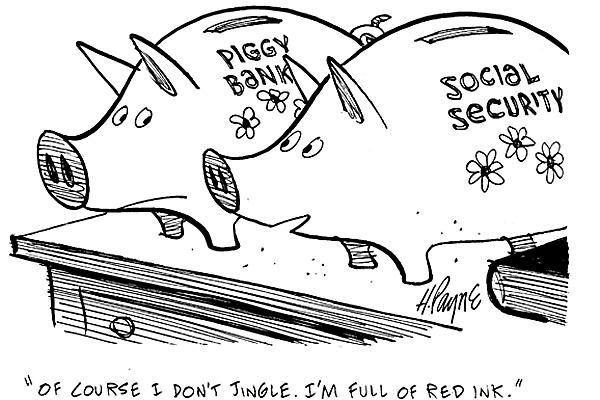
I’m always hearing fearful whines from several left-of-center retirees in my circle of my acquaintances: they say the GOP wants to cut their Social Security and Medicare benefits. That expression of angst was reprised as a talking point just before the midterm election, and some of these people actually believe it. Now, I’m as big a critic of these entitlement programs as anyone. They are in very poor financial shape and in dire need of reform. However, I know of no proposal for broad reductions in Social Security and Medicare benefits for now-eligible retirees. In fact, thus far President Trump has refused to consider substantive changes to these programs. And let’s not forget: it was President Obama who signed into law the budget agreement that ended spousal benefits for “file and suspend” Social Security claimants.

Both Social Security (SS) and Medicare are technically insolvent and reform of some kind should happen sooner rather than later. It does not matter that their respective trust funds still have positive balances — balances that the federal government owes to these programs. The trust fund balances are declining, and every dollar of decline is a dollar the government pays back to the programs with new borrowing! So the trust funds should give no comfort to anyone concerned with the health of either of these programs or federal finances.

Members of both houses of Congress have proposed steps to shore up SS and Medicare. A number of the bills are summarized and linked here. The range of policy changes put forward can be divided into several categories: tax hikes, deferred benefit cuts, and other, creative reforms. Future retirees will face lower benefits under many of these plans, but benefit cuts for current retirees are not on the table, except perhaps for expedient victims at high income levels.

There is some overlap in the kinds of proposals put forward by the two parties. One bipartisan proposal in 2016 called for reduced benefits for newly-eligible retired workers starting in 2022, among a number of other steps. Republicans have proposed other types of deferred benefit cuts. These include increasing the age of full eligibility for individuals reaching initial (and partial) eligibility in some future year. Generally, if these kinds of changes were to become law now, they would have their first effects on workers now in their mid-to-late fifties.

Another provision would switch the basis of the cost-of-living adjustment (COLA) to an index that more accurately reflects how consumers shift their purchases in response to price changes (see the last link). The COLA change would cause a small reduction in the annual adjustment for a typical retiree, but that is not a future benefit reduction: it is a reduction in the size of an annual benefit increase. However, one Republican proposal would eliminate the COLA entirely for high-income beneficiaries (see the last link) beginning in several years. A few other proposals, including the bipartisan one linked above, would switch to an index that would yield slightly more generous COLAs.

Democrats have favored increased payroll taxes on current high earners and higher taxes on the benefits of wealthy retirees. Republicans, on the other hand, seem more willing to entertain creative reforms. For example, one recent bill would have allowed eligible new parents to take benefits during a period of leave after childbirth, with a corresponding reduction in their retirement benefits (in present value terms) via increases in their retirement eligibility ages. That would have almost no impact on long-term solvency, however. Another proposal would have allowed retirees a choice to take a portion of any deferred retirement credits (for declining immediate benefits) as a lump sum. According to government actuaries, the structure of that plan had little impact on the system’s insolvency, but there are ways to present workers with attractive tradeoffs between immediate cash balances and future benefits that would reduce insolvency.

The important point is that enhanced choice can be in the best interests of both future retirees and long-term solvency. That might include private account balances with self-directed investment of contributions or a voluntary conversion to a defined contribution system, rather than the defined benefits we have now. The change to defined contributions appears to have worked well in Sweden, for example. And thus far, Republicans seem more amenable to these creative alternatives than Democrats.

As for Medicare, the only truth to the contention that the GOP, or anyone else, has designs on reducing the benefits of current retirees is confined the to the possibility of trimming benefits for the wealthy. The thrust of every proposal of which I am aware is for programmatic changes for future beneficiaries. This snippet from the Administration’s 2018 budget proposal is indicative:

“Traditional fee-for-service Medicare would always be an option available to current seniors, those near retirement, and future generations of beneficiaries. Fee-for-service Medicare, along with private plans providing the same level of health coverage, would compete for seniors’ business, just as Medicare Advantage does today. The new program, however, would also adopt the competitive structure of Medicare Part D, the prescription drug benefit program, to deliver savings for seniors in the form of lower monthly premium costs.”

There was a bogus claim last year that pay-as-you-go (Paygo) rules would force large reductions in Medicare spending, but Medicare is subject to cuts affecting only 4% of the budgeted amounts under the Paygo rules, and Congress waived the rules in any case. Privatization of Medicare has provoked shrieks from certain quarters, but that is merely the expansion of Medicare Advantage, which has been wildly popular among retirees.

Both Social Security and Medicare are in desperate need of reform, and while rethinking the fundamental structures of these programs is advisable, the immediate solutions offered tend toward reduced benefits for future retirees, later eligibility ages,  and higher payroll taxes from current workers. The benefits of currently eligible retirees are generally “grandfathered” under these proposals, the exception being certain changes related to COLAs and Medicare benefits for high-income retirees. The tendency of politicians to rely on redistributive elements to enhance solvency is unfortunate, but with that qualification, my retiree friends need not worry so much about their benefits. I suspect at least some of them know that already.

Don’t Worry: Your IOUs To Yourself Are In a Trust Fund!

10 Sunday Jun 2018

Posted by Nuetzel in Medicare, Social Security, Socialism

≈ Leave a comment

Tags

Congressional Budget Office, Coyote Blog, FICA, Medicare, Social Security, Unfunded Obligations, Unified Budget, Warren Meyer

The Social Security and Medicare trust funds should offer no comfort as the obligations of those programs outrace revenues. Between them, the funds hold about $3.1 trillion of federal government bonds purchased with past surplus “contributions” from FICA and Medicare payroll taxes. In other words, those surplus contributions were used to pay for past government deficits. Here’s what Warren Meyer has to say on the topic:

“Imagine to cover benefits in a particular year the Social Security Administration needs $1 billion above and beyond Social Security taxes. If the trust fund exists, the government takes a billion dollars of government bonds out and sells them to private buyers on the open market. If the trust fund didn’t exist, the government would …. issue a billion dollars in bonds and sell them to private buyers on the open market. In either case, the government’s indebtedness to the outside world goes up by a billion dollars.”

Therefore, the trust funds do not provide any real cushion against future obligations. As Meyer says, you can write IOUs to yourself, put them in a piggy bank and call it a trust fund of your very own, but that won’t increase your wealth.

As it happens, last week the Trustees of the Medicare (MC) Trust Fund released the latest projections showing that it will be exhausted by 2026. Likewise, the Trustees of the Social Security (SS) Trust Fund reported that it will be depleted by 2036. But again, those trusts do not enhance the federal government’s fiscal position, so they really don’t matter. Even with the interest earned on the bonds held in trust, which is itself owed by the federal government, the trusts are merely placeholders for an equivalent dollar value of unfunded federal obligations. And in a very real sense, these funds hold no more than our own future tax liabilities: that debt is our debt.

Federal spending on discretionary and other on-budget entitlements is deeply in deficit on an ongoing basis, expected to be greater than $1 trillion annually by 2020, according to the Congressional Budget Office. Then add the bonds that will be sold to the public from the SS and MC trust funds, and total government borrowing from “the public” will become that much larger. After the trust funds are exhausted, accounting for the impact of the annual SS and MC system deficits will be more transparent.

The previous use of SS and MC contributions to pay for other government outlays strikes many as a violation of trust. Remember, however, that contributions to these systems are taxes, after all. And despite apparent impressions to the contrary, and perhaps for worse, individual vesting was never part of the SS system. But if the government must borrow a dollar (on a unified basis), is it always better to do it later? That was essentially the decision made (repeatedly) when FICA and Medicare taxes were used to purchase government bonds. The answer depends on whether the government has an immediate uses for the surplus that can be expected to earn returns superior to investment opportunities of suitable risk otherwise available to the trust funds. I would argue, however, that most of the “spent” funds from surplus FICA and Medicare taxes were put toward government consumption, and much less to investment in physical or social infrastructure. In fact, the availability of the SS and MC surpluses probably encouraged that consumption. To that extent, it was a certainly a mistake.

If the question is at what point must the government address the shortfall in its ability to pay future obligations to seniors, the answer is not “2026 and 2034”. It is now. The programs are racking-up obligations to future retirees that will be impossible to meet. The long-run (75-year) SS deficit projected by the trustees has a present value of $13.2 trillion, with an annual deficit growing to about 1.5% of GDP. By then, the Medicare deficit is expected to bring the combined shortfall of the two programs up to 2.3% of GDP. The trustees estimate that SS benefits would have to be cut by 25% in order to eliminate that deficit, with additional cuts to Medicare.

Oh, but those estimates treat the trust funds as if they are meaningful assets, and they are not! Of course, there are other solutions to the funding shortfall, but I truly hope that current workers have realistic expectations. They should adjust their saving rates to avoid excessive reliance on government social and medical insurance programs.

Gains From Medicare Trade

08 Thursday Dec 2016

Posted by Nuetzel in Medicare, Privatization, Profit Motive

≈ 2 Comments

Tags

ACA, American Enterprise Institute, CMS, Donald Trump, Health Savings Accounts, HHS, IPAB, John C. Goodman, MACRA, Medicare, Medicare Advantage, Medicare Part C, Medigap, Obamacare, Original Medicare, Premium Support Plan, Privatization, Tom Price

Boomers and Medicare

Here’s a bit of zero-sum ignorance: private profits are robbed from consumers; only non-profits or government can deliver full value, or so this logic goes. Those who subscribe to this notion dismiss the function of private incentives in creating value, yet those incentives are responsible for nearly all of the material blessings of modern life. What the government seems to do best, on the other hand, is writing checks. It’s not really clear it does that very well, of course, but it does have the coercive power of taxation required to do so. Capital employed by government is not a “free” input. It bears opportunity costs and incentive costs that are seldom considered by critics of the private sector.

The role of private profit and the zero-sum fallacy come up in the context of proposals to privatize government services. In what follows, I discuss a case in point: privatization of Medicare. Rep. Tom Price, the Chairman of the House Budget Committee, is Donald Trump’s nominee to head HHS. In November, Price said Congress would attempt to pass legislation overhauling Medicare in the first year of the Trump Administration. James Capretta of the American Enterprise Institute (AEI) explains some of the features of the possible reforms. Price has supported the concept of a premium support plan whereby seniors would purchase their own coverage from private insurers, paid at least in part by the government (also see here).

Medicare and Its Ills

The Medicare program is beset with problems: it has huge unfunded liabilities; it’s cash flows are being undermined by demographic trends; fraud and bureaucratic waste run rampant; it’s unpopular with doctors; and the regulations imposed on healthcare providers are often misguided.

Writing checks to health care providers is really the primary “good” created by the federal government in the administration of Medicare. The Centers for Medicare & Medicaid Services (CMS), a branch of the Department of Health and Human Services (HHS), also performs regulatory functions mandated by legislation, such as the Affordable Care Act (ACA).

More recently, CMS has been implementing the Medicare Access and Chip Reauthorization Act of 2015 (MACRA), which will introduce changes to the payment formulas for physician compensation under the plan. Economist John C. Goodman offers a cogent explanation of the ill-conceived economic planning at the heart of Medicare regulation and its implementation of MACRA in particular:

“…the government’s current payment formulas create perverse economic incentives — to maximize income against the formulas instead of putting patient welfare first. The goal is to change those incentives, so that providers will get paid more if they lower costs and raise quality.

But after the new formulas replace the old ones, provider incentives in a very real sense will be unchanged. They will still have an economic incentive to maximize income by exploiting the formulas, even if that is at the expense of their patients.“

After describing several ways in which Medicare regulation, now and prospectively, leads to perverse results, Goodman advances the powerful argument that the market can regulate health care delivery to seniors more effectively than CMS.

“If the government’s metrics are sound, why not allow health plans to advertise their metrics to potential enrollees and compete on these quality measures. Right now, they cannot. Every communication from health plans to Medicare enrollees must be approved by CMS. … Under MACRA, health plans profit by satisfying the government, not their customers. … Better yet, why not let the market (rather than government) decide on the quality metrics?“

Private Medicare Exists

Wait a minute: profit? But isn’t Medicare a government program, free from the presumed evils of profit-seekers? Well, here’s the thing: almost all of the tasks of managing the provision of Medicare coverage are handled by the private sector under contract with CMS, subject to CMS regulation, of course. That is true even for Part A and Part B benefits, or “original Medicare”, as it’s sometimes called.

Under “original” Medicare, private insurers process “fee-for-service” claims and payments, provide call center services, manage clinician enrollment, and perform fraud investigations. Yes, these companies can earn a profit on these services. Unfortunately, CMS regulation probably serves to insulate them from real competition, subverting efficiency goals. Goodman’s suggestion would refocus incentives on providing value to the consumers these insurers must ultimately serve.

Then there are “Medigap” or Medicare Supplement policies that cover out-of-pocket costs not covered under Parts A and B. These policies are designed by CMS, but they are sold and managed by private insurers.

And I haven’t even mentioned Medicare Parts C and D, which are much more significantly privatized than original Medicare or Medigap. The Part C program, also known as Medicare Advantage, allows retirees to choose from a variety of privately-offered plans as an alternative to traditional Medicare. At a minimum, these plans must cover benefits that are the equivalent to Parts A and B, as judged by CMS, though apparently “equivalency” still allows some of those benefits to be declined in exchange for a rebate on the premium. More optional benefits are available for an additional premium under these plans, including a reduced out-of-pocket maximum, a lower deductible, and reduced copays. Part C has grown dramatically since its introduction in 1996 and now covers 32% of Medicare enrollees. Apparently these choices are quite popular with seniors. So why, then, is privatization such a bogeyman with the left, and with seniors who are cowed by the anti-choice narrative?

What’s To Privatize?

Not privatized are the following Medicare functions: the collection of payroll-tax contributions of current workers; accounting and reporting functions pertaining to the Trust Fund; decisions surrounding eligibility criteria; the benefit designs and pricing of Part A (hospitalization) and Part B (optional out-patient medical coverage, including drugs administered by a physician); approval of provider plan designs and pricing under Parts C; regulation and oversight of all other aspects of Medicare, including processes managed by private administrative contractors and providers of optional coverage; and regulation of health care providers. 

The Independent Payment Advisory Board (IPAB) was created under the Affordable Care Act (ACA), aka Obamacare, to achieve Medicare costs savings under certain conditions, beginning in 2015. Its mandate is rather confusing, however, as IPAB is ostensibly restricted by the ACA from meddling with health care coverage and quality. Proposals from IPAB are expected to cover such areas as government negotiation of drug prices under Part D, a Part B formulary, restrictions on the “protected status” of certain drugs, and increasing incentives for diagnostic coding for Part C plans. Note that these steps are confined to optional or already-private parts of Medicare. They are extensions of the administrative and regulatory functions described above. Despite the restrictions on IPAB’s activities under the ACA, these steps would have an impact on coverage and quality, and they mostly involve functions for which market solutions are better-suited than one-size-fits-all regulatory actions.

The opportunities for privatization are in 1) creating more choice and flexibility in Parts A and B, or simply migrating them to Parts C and D, along with premium support; 2) eliminating regulatory burdens, including the elimination of IPAB.

Impacts On Seniors Now and Later

Privatization is unlikely to have any mandatory impact on current or near-future Medicare beneficiaries. That it might is a scare story circulating on social media (i.e., fake news), but I’m not aware of any privatization proposal that would make mandatory changes affecting anyone older than their mid-50s. Voluntary benefit choices, such as Part C and D plans, would be given more emphasis.

There should be an intensive review of the regulatory costs imposed on providers and, in turn, patients. Many providers simply refuse to accept patients with Medicare coverage, and regulation encourages health care delivery to become increasingly concentrated into large organizations, reducing choices and often increasing costs. Lightening the regulatory burden is likely to bring immediate benefits to seniors by improving access to care and allowing providers to be more patient-focused, rather than compliance-focused.

Again, the most heavily privatized parts of Medicare are obviously quite popular with seniors. The benefits are also provided at lower cost, although the government pays the providers of those plans extra subsidies, which may increase their cost to taxpayers. Enrollees should be granted more flexibility through the private market, including choices to limit coverage, even down to catastrophic health events. Consumers should be given at least limited control over the funds used to pay their premia. That would include choice over whether to choose lower premia and put the excess premium support into consumer-controlled Health Saving Account (HSA) contributions.

Other Reforms

Pricing is a controversial area, but that’s where the terms of mutually beneficial trades are made, and it’s what markets do best. Pricing flexibility for private plans would be beneficial from the standpoint of matching consumer needs with the appropriate level of coverage, especially with fewer regulatory restrictions. Such flexibility need not address risk rating in order to have beneficial effects.

Regulations imposed on physicians and other providers should be limited to those demanded by private plans and the networks to which they belong, as well as clear-cut legislative rules and standards of practice imposed by professional licensing boards. The better part of future contributions to the Trust Fund by younger workers (i.e., those not grandfathered into the existing program) should be redirected toward the purchase today of future benefits in retirement, based on actuarial principles.

Perhaps the best cost-control reform would be repeal of the tax deductibility of insurance premia on employer-paid insurance plans. This provision of the tax code has already inflated health care costs for all consumers, including seniors, via demand-side pressure, and it has inflated their insurance premia as well. If extended to all consumers, tax deductibility would be less discriminatory toward consumers in the individual market and most seniors, but it would inflate costs all the more, with unevenly distributed effects. Unfortunately, rather than eliminating it entirely, qualification for the tax deduction is very likely to be broadened.

Conclusions

The Medicare program is truly in need of an overhaul, but reform proposals, and especially proposals that would put decision-making power into the hands of consumers, are always greeted with reflexive shrieks from sanctimonious worshippers of the state. The most prominent reform under consideration now would offer more of what’s working best in the Medicare program: private choices in coverage and costs. Solving the long-term funding issues will be much easier without a centralized regime that encourages escalating costs.

Earning a profit is usually the mark of a job well done. It is compensation for the use of capital and the assumption of risk (i.e., no bailouts). Physicians, nurses, chiropractors, insurance agents and customer service reps all earn compensation for their contributions. Providers of capital should too, including the owners of health insurance companies who do well by their customers. And if you think the absence of profit in the public sector creates value, remember the damage inflicted by taxes. Capital isn’t “free” to society just because it can be confiscated by the government.

Follow Sacred Cow Chips on WordPress.com

Recent Posts

  • Immigration and Merit As Fiscal Propositions
  • Tariff “Dividend” From An Indigent State
  • Almost Looks Like the Fed Has a 3% Inflation Target
  • Government Malpractice Breeds Health Care Havoc
  • A Tax On Imports Takes a Toll on Exports

Archives

  • December 2025
  • November 2025
  • October 2025
  • September 2025
  • August 2025
  • July 2025
  • June 2025
  • May 2025
  • April 2025
  • March 2025
  • February 2025
  • January 2025
  • December 2024
  • November 2024
  • October 2024
  • September 2024
  • August 2024
  • July 2024
  • June 2024
  • May 2024
  • April 2024
  • March 2024
  • February 2024
  • January 2024
  • December 2023
  • November 2023
  • August 2023
  • July 2023
  • June 2023
  • May 2023
  • April 2023
  • March 2023
  • February 2023
  • January 2023
  • December 2022
  • November 2022
  • October 2022
  • September 2022
  • August 2022
  • July 2022
  • June 2022
  • May 2022
  • April 2022
  • March 2022
  • February 2022
  • January 2022
  • December 2021
  • November 2021
  • October 2021
  • September 2021
  • August 2021
  • July 2021
  • June 2021
  • May 2021
  • April 2021
  • March 2021
  • February 2021
  • January 2021
  • December 2020
  • November 2020
  • October 2020
  • September 2020
  • August 2020
  • July 2020
  • June 2020
  • May 2020
  • April 2020
  • March 2020
  • February 2020
  • January 2020
  • December 2019
  • November 2019
  • October 2019
  • September 2019
  • August 2019
  • July 2019
  • June 2019
  • May 2019
  • April 2019
  • March 2019
  • February 2019
  • January 2019
  • December 2018
  • November 2018
  • October 2018
  • September 2018
  • August 2018
  • July 2018
  • June 2018
  • May 2018
  • April 2018
  • March 2018
  • February 2018
  • January 2018
  • December 2017
  • November 2017
  • October 2017
  • September 2017
  • August 2017
  • July 2017
  • June 2017
  • May 2017
  • April 2017
  • March 2017
  • February 2017
  • January 2017
  • December 2016
  • November 2016
  • October 2016
  • September 2016
  • August 2016
  • July 2016
  • June 2016
  • May 2016
  • April 2016
  • March 2016
  • February 2016
  • January 2016
  • December 2015
  • November 2015
  • October 2015
  • September 2015
  • August 2015
  • July 2015
  • June 2015
  • May 2015
  • April 2015
  • March 2015
  • February 2015
  • January 2015
  • December 2014
  • November 2014
  • October 2014
  • September 2014
  • August 2014
  • July 2014
  • June 2014
  • May 2014
  • April 2014
  • March 2014

Blogs I Follow

  • Passive Income Kickstart
  • OnlyFinance.net
  • TLC Cholesterol
  • Nintil
  • kendunning.net
  • DCWhispers.com
  • Hoong-Wai in the UK
  • Marginal REVOLUTION
  • Stlouis
  • Watts Up With That?
  • Aussie Nationalist Blog
  • American Elephants
  • The View from Alexandria
  • The Gymnasium
  • A Force for Good
  • Notes On Liberty
  • troymo
  • SUNDAY BLOG Stephanie Sievers
  • Miss Lou Acquiring Lore
  • Your Well Wisher Program
  • Objectivism In Depth
  • RobotEnomics
  • Orderstatistic
  • Paradigm Library
  • Scattered Showers and Quicksand

Blog at WordPress.com.

Passive Income Kickstart

OnlyFinance.net

TLC Cholesterol

Nintil

To estimate, compare, distinguish, discuss, and trace to its principal sources everything

kendunning.net

The Future is Ours to Create

DCWhispers.com

Hoong-Wai in the UK

A Commonwealth immigrant's perspective on the UK's public arena.

Marginal REVOLUTION

Small Steps Toward A Much Better World

Stlouis

Watts Up With That?

The world's most viewed site on global warming and climate change

Aussie Nationalist Blog

Commentary from a Paleoconservative and Nationalist perspective

American Elephants

Defending Life, Liberty and the Pursuit of Happiness

The View from Alexandria

In advanced civilizations the period loosely called Alexandrian is usually associated with flexible morals, perfunctory religion, populist standards and cosmopolitan tastes, feminism, exotic cults, and the rapid turnover of high and low fads---in short, a falling away (which is all that decadence means) from the strictness of traditional rules, embodied in character and inforced from within. -- Jacques Barzun

The Gymnasium

A place for reason, politics, economics, and faith steeped in the classical liberal tradition

A Force for Good

How economics, morality, and markets combine

Notes On Liberty

Spontaneous thoughts on a humble creed

troymo

SUNDAY BLOG Stephanie Sievers

Escaping the everyday life with photographs from my travels

Miss Lou Acquiring Lore

Gallery of Life...

Your Well Wisher Program

Attempt to solve commonly known problems…

Objectivism In Depth

Exploring Ayn Rand's revolutionary philosophy.

RobotEnomics

(A)n (I)ntelligent Future

Orderstatistic

Economics, chess and anything else on my mind.

Paradigm Library

OODA Looping

Scattered Showers and Quicksand

Musings on science, investing, finance, economics, politics, and probably fly fishing.

  • Subscribe Subscribed
    • Sacred Cow Chips
    • Join 128 other subscribers
    • Already have a WordPress.com account? Log in now.
    • Sacred Cow Chips
    • Subscribe Subscribed
    • Sign up
    • Log in
    • Report this content
    • View site in Reader
    • Manage subscriptions
    • Collapse this bar
 

Loading Comments...