• About

Sacred Cow Chips

Sacred Cow Chips

Category Archives: Voting Rights

Voting Rights Doublespeak

18 Tuesday Jan 2022

Posted by Nuetzel in Voter Fraud, Voting Rights

≈ Leave a comment

Tags

Absentee Voting, Antifa, Armed Resistance, Ballot Harvesting, Ballot Security, BLM, Capitol Riot, Domestic Terror, Donald Trump, Early Voting, FBI, filibuster, Freedom To Vote Act, George Wallace, Glenn Reynolds, Insurrection, Joe Biden, Joseph M. Hanneman, LARP, Legal Insurrection, Mail-In Voting, Marco Rubio, NASA, Oathkeepers, Patrick Eddington, PATRIOT Act, Proud Boys, Ray Epps, Robert Byrd, Russian Collusion, Sedition, Transfer of Power, Voter ID, Voter Suppression, Voting Rights Act

The so-called insurrection that took place on January 6, 2021 (J6) has obsessed Democrats seeking to ram through a “voting rights” bill that they hope will advantage them in future elections. Oh, and to legitimize proposed new powers for agencies in the fight against “domestic terror”, and to somehow disqualify Donald Trump from holding the presidency again. We can thank a couple of moderate Democrats for shutting down the election bill, at least for the time being, by refusing to eliminate the filibuster.

The Real Threat to Voting Rights

If your real aim is to undermine ballot security and make it easier to cheat, you’d have to work hard to beat the election bill pushed by the Biden Administration: the Freedom To Vote Act (FVA). In their fashion, however, the Left prefers to stake-out phony rhetorical high-ground, replete with spurious charges against the opposition alleging racism and subversive, anti-democratic intent. Joe Biden demonstrated this vividly during his ill-advised speech in Georgia last week.

Here is a fairly thorough summary of the FVA, including an earlier version passed by the House last March. The overarching thrust of the bill is to substitute federal for state authority over the election process. States would not be permitted to demand that voters produce photo IDs. The bill would also require automatic voter registration at the department of motor vehicles and other government agencies, on-line registration, same-day registration, more days of early voting, excuse-free, notary-free, and witness-free absentee ballots, and extended counting of late-arriving ballots.

Democrats in the House of Representatives have now used a NASA funding bill as a shell for all these federally-prescribed protocols. Reportedly, this bill would legalize ballot harvesting nationwide, but that does not appear to be the case. Nevertheless, it includes all of the other provisions cited above, and many others.

While Congress certainly has the power to regulate elections, states were given the primary authority for conducting elections under the Constitution:

“The Times, Places and Manner of holding Elections for Senators and Representatives, shall be prescribed in each State by the Legislature thereof; but the Congress may at any time by Law make or alter such Regulations, except as to the Places of chusing Senators.”

The Voting Rights Act of 1965 helped secure minority voting rights that plainly exist under the Constitution, and it prescribed federal review of certain changes in state voting procedures (some aspects of which were struck down by the Supreme Court). However, never before has such sweeping federal authority been proposed as to the range of mechanics involved in casting and counting ballots. Ballot security would be compromised by several provisions of the legislation.

While voter registration should be relatively painless, it should not be so painless that non-citizens find it easy to register. That is likely to be the case under automatic voter registration. Surely many non-citizens have much to recommend them, but they have not yet demonstrated their commitment to the nation through earned citizenship. The right to vote is a benefit of citizenship; it serves as an inducement to learn about our system of government through the naturalization process. These individuals might not be interested in going to the trouble, however, or they might be loyal to a foreign power. Do we really want such individuals to have a vote? And to the extent that their interest is focused on public benefits, they surely do not have an equal claim to natural-born but similarly-situated Americans.

Voter ID is a safeguard against voter fraud, and a huge majority of Americans support it, including majorities of minorities. The very idea that a photo ID requirement would “suppress” the legitimate votes of minorities is based on the presumption that those voters might have difficulty obtaining identification such as a drivers license or other government ID. Oh really? We can safely file that contention under “the bigotry of low expectations”.

Extensive use of absentee ballots was intended to facilitate voting during pandemic restrictions that were expected to reduce the safety and efficiency of polling places. However, most developed countries ban “mail-in voting”, regarding it as a prescription for voter fraud. That threat seems all too real given the lax standards proposed in the FVA.

The Threat to Political Opposition

The House investigative committee looking into the January 6th melee may recommend new intelligence powers for the federal government. Those powers aren’t needed to investigate the Capitol riot: the FBI has been in possession of teams of video evidence, and it has broad powers under the PATRIOT Act and other measures. Here’s Patrick Eddington from the link above:

“… the FBI already has unbelievably sweeping authority to surveil individual Americans or domestic groups without ever having to go before a judge to get a warrant.

Under an investigative category known as an assessment, FBI agents can search commercial and government databases (including databases containing classified information), run confidential informants, and conduct physical surveillance, all without a court order.”

The simple truth is that certain congressional Democrats and the Biden Administration are attempting to use the Capitol riot as an excuse to turn federal law enforcement against their political enemies. The claim by Biden, the guy who bragged of being mentored by Klansman Robert Byrd, and the same man who praised George Wallace on several occasions, is that his opponents are “domestic terrorists” and/or “white supremacists”. We’ve seen quite enough of this chicanery already. Having suffered through a lengthy “Russian collision” charade, a willingness to completely ignore massive riots and property destruction by BLM and Antifa activists in 2020, and an orchestrated attempt to treat concerned parents of schoolchildren as “domestic terrorists”, we’re expected to believe that these stooges need more power?

The J6 Fiasco

And that brings us back to the Capitol riot. It was, as Glenn Reynolds has said, a clownshow and a mess. But speaking of insurrection, let’s hope the FBI is keeping its eye on violent leftists as well, who perpetrated some unquestionably treasonous escapades in the not very distant past. From Legal Insurrection:

“…leftist rioters … attempted to stop the peaceful transition of power during President Trump’s inauguration. … did anti-Trump leftists riot, attack and injure police, set cars and buildings on fire… …

… the multi-day May, 2020 assault on the White House that left at least 60 Secret Service agents wounded and forced President Trump to be whisked away to a bunker for his personal safety.”

Even more dangerous leftist attacks on the Capitol building have been perpetrated, such as bombings by the Weather Underground in 1971 and the Armed Resistance in 1983.

Many people were hurt in the J6 riot through no real fault of their own, including Ashli Babbitt, who was shot and killed by a Capitol police officer shortly after she attempted to stop attackers from smashing windows. Nevertheless, those who breached the Capitol building were mostly a bunch of hapless goofballs encouraged to run amuck by certain instigators. Among those were the Oathkeepers, a gang who marched around in stack formation wearing gear that looked vaguely militaristic. They brought no weapons to the Capitol (though they had some stashed in the VA suburbs). Apparently, one of them did assist a crowd in barging through a door to the Capitol. Their activities on J6 have been described by one pundit as LARP — live action role playing. Nevertheless, there was much talk among them of interfering with the transfer of power to “the usurper”, as they called Joe Biden. And now, eleven of them have been charged with insurrection and sedition. Members of the Proud Boys were also at the Capitol, some of whom fought with police.

But what really happened to make things go off the rails on January 6th? This article by Joseph M. Hanneman offers an excellent discussion of the events of that afternoon, and the subsequent investigation. He notes the mysterious absence of a number of individuals involved in the breach of the Capitol and grounds from the FBI’s “Seeking Information” list of over 1,500 photos. That includes one Ray Epps, whose incitement was otherwise fairly well-documented. Some suspect certain parties with no interest in seeing Donald Trump remain in office actually encouraged the rioters, up to and including the FBI. Would that surprise anyone after the Whitmer kidnapping operation or the Russian collusion hoax?

The vast majority of the crowd on J6 came to the Capitol grounds to conduct a peaceful protest in the vain hope for congressional action to put a hold on the counting of electors pending state election audits, investigations, and court challenges. Many of those arrested were denied due process, and were held for months with no charges filed.

As for the “threat to the nation” posed by the crowd on J6, I found this Marco Rubio quote to be apropos:

“I don’t care how many candlelight vigils and musical performances you have from the cast of Hamilton, you’re not going to convince most normal and sane people that our government last year was almost overthrown by a guy wearing a Viking hat and speedos.”

Conclusion

Democrats still hope to vote to eliminate the Senate filibuster and then pass the FVA. That is a pipe dream at this point, but they would come to regret eliminating the filibuster in due course. They have used it themselves to defeat legislation hundreds of times in the recent past. The filibuster has its shortcomings, particularly its inability to restrain executive power. Nevertheless, it has never been more critical as protection against a tyrannical (and slim) majority in Congress.

The Freedom To Vote Act is doomed to failure. Still, no one should forget the mendacious rhetoric employed by Joe Biden and the leftist Democrat leadership in Congress on the issue of election integrity. Nor should anyone forget their dishonorable, anti-democratic intent to devalue legitimate voting rights.
Ballot “Access” Or Fraud, Vote “Suppression” Or Security

15 Monday Mar 2021

Posted by Nuetzel in Election Fraud, Voting Rights

≈ Leave a comment

Tags

Absentee Ballots, Article I, Ballot Harvesting, Brennan Center for Justice, Chain of Custody, Conrad Black, Covid-19, Election Security, Elections Clause, For the People Act, H.R. 1, Hans von Spakovsky, Jim Crow Laws, Mail-In Voting, Nullification, Omnibus Election Transformation bill, Signature Verification, Steve Baldwin, Supreme Court, Tenth Amendment, Vaccine Passports, Vote Fraud, Vote Suppression, Voter ID, Voting Rights

Do a search of “suppression” on Twitter and you’ll be treated to an uninterrupted stream of lefty hallucinations and shrieks about GOP efforts to bring back Jim Crow, subvert democracy, and deny people their right to vote. Every state-level initiative to shore up election integrity is labeled suppression. Well, what we should suppress is the country’s headlong plunge into ballot debasement and jobbery. Election fraud is not new, as the Supreme Court noted in 2008. Ballot harvesting is not new. And we knew well ahead of the 2020 presidential election that the usual safeguards against election fraud were being severely compromised. These changes leveraged vulnerabilities that were of concern to the Left in the not too distant past. Now, any mention provokes indignance!

You Gotta Get Up To Participate

Voting is usually a hassle, but the right to vote does not mean voting must be made effortless; it does not relieve the right-holder of obligations to exert what effort might be necessary, including minor inconveniences to verify that their vote is legitimate. COVID-19 gave momentum to those seeking to eliminate certain obligations associated with voting. After all, exposure to a deadly virus at a polling place would have represented more than a minor inconvenience. In response, 28 state governments instituted changes to expand mail-in voting in 2020 in addition to compromises such as allowing late ballots to count, and the changes were often made without legislative authority.

Predictably, these changes enabled widespread fraud, Even now, after many lawsuits over 2020 election fraud were dismissed on procedural grounds, there remain a large number of election fraud cases in the courts. A substantial share of the voting public believes that fraud occurred on a massive scale. The perceived illegitimacy of the 2020 election represents a real threat to the stability of our Republic.

For the People?

It’s unfortunate that relieving the minor inconveniences imposed on voters creates major opportunities for fraud, but it appears to be in the interest of some factions to loosen those screws. Thus, we have a piece of federal legislation called the “For the People Act”, or H.R. 1 (the omnibus election transformation bill), which has passed the House on a strictly partisan vote and is now in the Senate. The bill would completely usurp the primary (though not exclusive) power of states to regulate elections under the Elections Clause of Article I of the Constitution. The breadth and reach of H.R. 1 would be deemed unconstitutional under any sane interpretation. Here is Hans von Spakovsky:

“H.R. 1 would mandate same-day and automatic voter registration, and encourage vote trafficking of absentee ballots. It would eviscerate state voter ID laws and limit the ability of states to verify the accuracy of their voter registration lists.”

And there is much more in the bill that would undermine the integrity of elections, including registration of the many disenfranchised 16- and 17-year-olds who have long been denied votes. A somewhat more detailed summary of H.R. 1 is provided by Conrad Black. It would:

“…compel states to accept mailed-in votes for 15 days prior to and 10 days after Election Day; set up automatic and online voter registration; prohibit review of the eligibility of voters; compel acceptance of ballots cast in the wrong precincts; bar the removal of the ineligible voters from the rolls; permit ballot harvesting; ban any voter identification laws; consign to unelected officials the redrawing of congressional districts; infringe upon free speech by the imposition of ‘onerous legal and administrative burdens on candidates, civic groups, unions, and non-profit organizations’; and establish a disturbingly named ‘Commission to Protect Democratic Institutions’ in order to end-run the courts.”

IDs Required When It Suits Them

We are told that the disenfranchised can’t be expected to produce identification. Is that so? But identification is required in most jurisdictions in order to receive a COVID vaccination, and there are discussions of how we’ll need to produce cards or “vaccine passports” to participate in a wide variety of activities. But an ID for voting is “suppression”?

Lacking identification, how are individuals expected to become “enfranchised” as a functioning members of society? Yes, if they are citizens then they have a right to vote. But one person, one vote requires some means of verified identity. If they know so much as to vote their pocketbooks, yet will not fulfill a simple obligation to produce identification in order to exercise that right, should they be accommodated?

Of course, there are individuals who need a “helping hand” in order to obtain proper identification, but short of inserting subcutaneous microchips, those individuals must be entrusted to keep it in their possession. That certainly doesn’t provide an excuse to cast aside rules intended to safeguard election integrity.

Is it unfair to expect everyone to vote on Election Day? There must be exceptions for those away from home or unable to appear at a polling place for health reasons. Absentee ballots have long been a feature of our voting system, but they must be mailed on time to prevent the gaming we witnessed in 2020. Having the resources to process all voters in one day might be challenging, so perhaps it’s not unreasonable to allow in-person voting over several days. I would also support a holiday for national elections.

Federalism Vs. Centralized Power

Again, it’s no secret that loosely controlled mail-in ballots are ripe for fraud. A drastic expansion of vote-by-mail facilitates efforts to harvest ballots and even manufacture votes. In 2020, deadlines for ballot delivery were extended indiscriminately. Signature verification was sidestepped. Ballots were shredded. Documented chains of custody were often lacking. Despite all that, even now there are many bills in state legislatures that would expand “voter access” in various ways. These are usually steps that would expose the public to more fraudulent elections and devaluation of legitimate votes.

But there is pushback: as of late February, there were 165 bills in 33 states designed to tighten election security, according to the Brennan Center for Justice:

“These proposals primarily seek to: (1) limit mail voting access; (2) impose stricter voter ID requirements; (3) slash voter registration opportunities; and (4) enable more aggressive voter roll purges. These bills are an unmistakable response to the unfounded and dangerous lies about fraud that followed the 2020 election.”

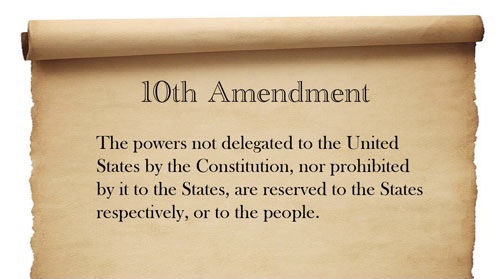
Conservative states can also resist federal efforts to control elections via nullification: arguably unconstitutional attempts by the federal government to regulate elections should not be recognized and enforced by states. Steve Baldwin asserts that the Tenth Amendment gives states the power to do so:

“The powers not delegated to the United States by the Constitution, nor prohibited by it to the States, are reserved to the States respectively, or to the people.”

There is, however, some ambiguity in Article I regarding the federal government‘s power to regulate elections. Despite the “secondary” nature of that federal power, it has certainly been invoked over the last 150 years, primarily in establishing voting rights previously denied on the basis of race and gender. H.R. 1 does not represent an unambiguous defense of voting rights of that kind, however. Instead, by facilitating fraud, it represents wholesale debasement of voting rights.

Let’s hope traditionally conservative states are aggressive in pressing their primary power to regulate elections on multiple fronts: legislative, nullification of federal overreach, as well as court challenges. And let’s hope H.R. 1 goes down to defeat in the Senate, but it will be tight.

State Compact Aims To Subvert Electoral College

09 Tuesday Apr 2019

Posted by Nuetzel in Constitution, Voting Rights

≈ Leave a comment

Tags

Alexander Hamilton, Carroll Andrew Morse, Congressional Term Limits, Constitution, Elections Clause, Electoral College, Fourteenth Amendment, George W. Bush, Justin Yang, National Popular Vote Interstate Compact, Norman R. Williams, State Powers, Supreme Court, U.S. Term Limits Inc v Thornton, Virginia v Tennessee, Voting Rights

The map shows the number of electoral votes by state, one vote per square. The states colored green are participants in a gambit that would, if successful, vitiate the Electoral College (EC). They hope to execute an end-run around Article V of the Constitution, which otherwise would require an amendment to replace the EC with the national popular vote. Such an amendment is highly unlikely to win approval, as I noted last week. The green states are members of the so-called National Popular Vote Interstate Compact (NPVC). This group of 13 states plus the District of Columbia would pledge their electors to the winner of the national popular vote, but only if and when enough states join the Compact to enable it to carry an election.

The big question is whether an electoral action by the NPVC would be constitutional. Article I, Section 10 of the Constitution prohibits states from entering treaties or compacts with other states without the approval of Congress. However, supporters of the NPV such as Justin Yang focus on an 1893 Supreme Court decision (Virginia v. Tennessee) that found congressional approval is unnecessary as long as a compact does not infringe on federal powers. NPVC advocates go on to assert that elsewhere, in Article II, Section 1, state legislatures are empowered to allocate electoral votes “in any way they want“, as Yang puts it.

There are strong reasons to doubt the NPVC’s interpretation, however. Carroll Andrew Morse raises a basic constitutional issue: the NPVC amounts to a denial of voting rights to the citizens of a Compact member-state. It is obviously true that a member-state’s voters would contribute to the national vote totals. Nevertheless, awarding state electors to the winner of the national vote, regardless of the in-state outcome, certainly could deprive state residents of their preference. The Fourteenth Amendment provides that a state’s denial of voting rights to any citizen or group of citizens would require the state to relinquish its representation in the legislature by a proportionate amount. That is a harsh remedy that the voters of any state should consider when weighing the benefits of membership in the NPVC.

This BYU Law Review article by Norman R. Williams covers some other areas of contention. It provides a review of some constitutional provisions bearing on the legality of interstate compacts as well as excellent background on the EC and its history. Some brief thoughts on the issue from Williams also appear in the Harvard Law Review here. According to Williams:

“… the states’ power to regulate the manner of presidential elections is far more limited than the proponents of the NPVC contend. In fact, just as the U.S. Supreme Court has narrowly interpreted the states’ power to regulate congressional elections to prevent states from destabilizing the constitutional structure, so too should it deny states the power to undermine the stability of the presidential election process.”

Williams cites a 1995 Supreme Court decision (U.S. Term Limits, Inc. v. Thornton) limiting state power over questions such as congressional term limits. The ruling stated that state-regulated limits create additional qualifications for holding office that are not authorized under the Elections Clause in Article I, Section 4. Williams contends that the process of choosing electors is analogous to other provisions regarding state powers, so it should be subject to the same limitations. He also says that if the Court followed the same method of reasoning as in Thornton, which focused on the founders intent as well as subsequent developments, it would reject the actions of the NPVC as unconstitutional.

Williams also argues that the NPVC may interfere with the rights of voters in other, non-Compact states. He says the history of Article II is inconsistent with an interpretation that the founders would have intended to allow states to exercise such broad, extra-state powers in electing a president:

“If a group of states can agree to pledge their presidential electors on the basis of the national vote, then they must likewise be able to agree to pledge their electors to a candidate only from those states, only from one political party, or only in accordance with the wishes of a designated committee of ‘presidential experts.’ In short, any interstate compact regarding the manner in which presidential electors are selected threatens to exclude the wishes of voters in nonsignatory states, and, therefore, it seems inconceivable that a Constitution that specifies how the President is to be elected and that lays out a process for amending its requirements would permit a group of states to alter so fundamental a part of our constitutional structure.”

Williams concludes with a quote from the Court’s decision in the Thornton case:

“As the Court admonished in Thornton, change, if it is to be undertaken, ‘must come not by legislation adopted either by Congress or by an individual State, but rather—as have other important changes in the electoral process—through the amendment procedures set forth in Article V.'”

Any legal challenge to the NPVC will have to wait until it is effective, that is, when and if it ever exercises 270 electoral votes. It now has a total of 189 electoral votes. The most recent addition was New Mexico, and a proposed ballot measure in Ohio could bring total Compact electors to 207. Fans of the NPVC hope that Michigan, Minnesota, and Wisconsin might join as well, though none of those is imminent. But if they did it would bring another 46 electoral votes to the Compact. Apparently Pennsylvania has rejected membership for now.

Almost all of the states already in the NPVC are solidly “blue”, having voted for the Democrat in presidential elections, at least over recent cycles. Of course, that means the Compact might quickly disintegrate if a Republican is expected to win the popular vote. Right now, however, Colorado and New Mexico are the only states that might qualify as swing states, and even those are a stretch. Some of the other states in which the NPVC is under debate are legitimate swing states, and legislation enabling the change will be risky for many lawmakers in those states. Ballot measures might be more preferable to the NPVC due to the possibility of limited turnout. We’ll see how it goes.

If states with 270 or more electors vote as a block, it diminishes the importance of each state’s voters, who might well disagree with the national popular vote in the future if not already. For example, members of the NPVC, including California, would have had to cast their electoral votes for George W. Bush in 2004, despite the desires expressed by their citizens at the polls. Voters at-large in any non-Compact state have more leverage over the outcome of a presidential election than if they follow the national popular vote. Alexander Hamilton would not have approved of the NPVC; he wrote that a state’s electors should not be influenced by parties outside the state. That was the intent of the founders.

Court challenges would undoubtedly follow any exercise of votes through the NPVC. Presumably that would occur only in the event of another conflict between the national popular vote and the EC, as constituted prior to the adoption of the NPVC. That would occur only if at least one Compact state had an in-state popular vote conflicting with the national vote. There is almost no doubt that such a dispute would make its way to the Supreme Court. Thus, a presidential election might someday be undecided until a final ruling is passed down by the high court. I strongly suspect that the NPVC would be found unconstitutional.


The Push for Extreme Suffrage

29 Friday Mar 2019

Posted by Nuetzel in Voting Rights

≈ Leave a comment

Tags

Conscription, Disparate impact, Felony Disenfranshisement, Illegal immigrants, Jim Crow Laws, Privacy Rights, Suffrage, Universal Suffrage, Vietnam War, Voter ID Laws, Voting Age, Well-Informed Electorate

People aren’t required to know anything about issues or candidates to vote. While that might create challenges to the rationality of electoral outcomes, in the U.S. we’ve at least agreed that competent adults holding citizenship should have the opportunity to vote (with state-by-state exceptions for felons). Thus, over time, the nation has gravitated toward fairly broad suffrage rights, despite setbacks along the way created by Jim Crow laws in the South. Today, the voting rights debate centers around screening issues like voter identification laws, whether to allow undocumented immigrants to vote, and the voting age. The Left tends to oppose voter screening of almost any kind, prompting allegations that their motives are less than pure, and similar allegations are leveled at the Right for its resistance to expanded suffrage. What, then, are the merits of some of these screening mechanisms?

Require Identification?

There are at least two sources of opposition to voter ID laws. One is a Libertarian argument: the very idea of government-issued IDs is anathema to some privacy rights activists. I sympathize with this view, but I’ve always been troubled by the resistance it represents to the establishment and maintenance of trust in a modern society. It might or might not be any consolation that these laws would almost certainly be administered at the state or local level. It’s also not clear that voter ID laws would lead to an increment in the various forms of government-issued identification. On its face, these laws would simply require the voter to produce a valid ID at their polling place confirming that they do, in fact, appear on the roll of registered voters, and that they are not attempting to vote under a fraudulent identity or acting as someone’s stooge.

The second and more common objection to voter ID laws comes from the Left: almost any limit on voting rights can and will be construed as unfairly exclusionary. The argument usually relies on the existence of a disparate impact of the kind described in civil rights legislation. Voter ID laws do not overtly discriminate against minorities, but they are said to place a burden on the disadvantaged and therefore on racial minorities. Presumably, it is considered too burdensome to obtain, carry, or be asked to present some form of identification, even one issued free-of-charge by the government. There is evidence, however, that voter ID laws do not suppress minority voting. And let’s be blunt: individuals excluded by this so-called burden are self-excluded, they are unlikely to be well-informed voters, and they might be vulnerable to opportunists who would pay for their vote. But instead, the public is asked to accept the proposition that obtaining an ID is just too difficult for some people, and to accept the risk that those arriving to vote on election day might not be registered, might have voted already, and might not be the persons they purport to be. These things happen. (Also see here and here.)

Reduce the Voting Age?

It’s impossible to define a measurable threshold above which people can be trusted to cast well-considered votes. Recently, there have been calls from the Left to reduce the voting age to 16 from 18 years. Then why not 14? Or even 12? Well, they’d say, because 12 or even 14 year-olds are not sufficiently mature.

So we all agree that a line must be drawn somewhere. Voting rights were extended to those aged 18-20 in 1971 in response to charges that it was unfair to deny the right to vote to young adults who were eligible for conscription to fight in Vietnam. The age-18 threshold aligns with the legal age of majority in most states. We know that the vast bulk of teenagers of 16 or 17 years are not well-prepared to fight in foreign wars, or to fend for themselves in the world for that matter. Right or wrong, at 18 you can volunteer for military service, get married, you are legally eligible as a sex partner, you can buy alcohol in many states, and you no longer qualify for child support.

Most adults would agree that there are substantial differences in the maturity of 16 and 18 year-olds. The latter are better-educated and will tend to have many times the job experience of 16 year-olds (which is often zero). Will 16 year-old children have a sufficient grasp of the issues they will confront in the voting booth? Most of these kids are still essentially hungry mouths, and it is unlikely that they can make well-informed judgements about the costs of pleasant-sounding public benefits versus the attendant costs. Some will vote exactly the way their parents and teachers tell them, but that sort of vote replication is hardly the desired outcome.

One can also view the voting-age debate through the lens of disparate impact: minority populations tend to have younger demographic profiles with more children per household. Therefore, keeping children out of the voting booth could have a larger impact on votes cast by minorities. But this effect is incidental to the choice of any line one might draw. It does not provide an adequate rationale for giving weight to the preferences held by a class of children.

Suffrage for Illegals?

Another proposal offered by the Left is to allow illegal immigrants to vote. It goes without saying that along with illegals, other resident aliens would get to vote. They are all subject to public policy, so the argument goes, and many of them actually pay taxes. Yes, well, many of them draw on public benefits as well. The statist bet is that suffrage for illegals will undergird support for expansion of the welfare state. That’s bad enough, but the risks are not limited to a fiscal imbalance between taxes paid and public aid. More important is to avoid policies that create rewards and incentives for additional illegal entry. Suffrage for illegals would heighten those incentives. It would also devalue U.S. citizenship and reward those who have already entered illegally, many of whom have little knowledge of our system of government

Conclusions

Eligibility to vote should not be a matter of political gamesmanship. Voter ID laws serve to thwart efforts intended to subvert democratic outcomes, which are common enough to be of concern. And voting is a privilege that should be reserved for citizens, not offered to mere visitors or anyone who has disregarded U.S. sovereignty by entering the country illegally, possibly seeking economic rents from our generous public aid programs.

Voter eligibility should also relate to the individual’s ability to evaluate public policy choices based on some degree of experience and knowledge of the world. As a rule of thumb, high school sophomores and juniors fail that test. If you think “the children are leading the conversation”, then you’re probably having the wrong conversation. But no matter what voting age we choose, there will always be voters having a tenuous grasp of issues. Fortunately, most of those lacking relevant knowledge of ballot issues tend not to care and choose not to vote. They are free to vote should they develop an interest, and so much the better. 


Follow Sacred Cow Chips on WordPress.com

Recent Posts

  • The Case Against Interest On Reserves
  • Immigration and Merit As Fiscal Propositions
  • Tariff “Dividend” From An Indigent State
  • Almost Looks Like the Fed Has a 3% Inflation Target
  • Government Malpractice Breeds Health Care Havoc

Archives

  • January 2026
  • December 2025
  • November 2025
  • October 2025
  • September 2025
  • August 2025
  • July 2025
  • June 2025
  • May 2025
  • April 2025
  • March 2025
  • February 2025
  • January 2025
  • December 2024
  • November 2024
  • October 2024
  • September 2024
  • August 2024
  • July 2024
  • June 2024
  • May 2024
  • April 2024
  • March 2024
  • February 2024
  • January 2024
  • December 2023
  • November 2023
  • August 2023
  • July 2023
  • June 2023
  • May 2023
  • April 2023
  • March 2023
  • February 2023
  • January 2023
  • December 2022
  • November 2022
  • October 2022
  • September 2022
  • August 2022
  • July 2022
  • June 2022
  • May 2022
  • April 2022
  • March 2022
  • February 2022
  • January 2022
  • December 2021
  • November 2021
  • October 2021
  • September 2021
  • August 2021
  • July 2021
  • June 2021
  • May 2021
  • April 2021
  • March 2021
  • February 2021
  • January 2021
  • December 2020
  • November 2020
  • October 2020
  • September 2020
  • August 2020
  • July 2020
  • June 2020
  • May 2020
  • April 2020
  • March 2020
  • February 2020
  • January 2020
  • December 2019
  • November 2019
  • October 2019
  • September 2019
  • August 2019
  • July 2019
  • June 2019
  • May 2019
  • April 2019
  • March 2019
  • February 2019
  • January 2019
  • December 2018
  • November 2018
  • October 2018
  • September 2018
  • August 2018
  • July 2018
  • June 2018
  • May 2018
  • April 2018
  • March 2018
  • February 2018
  • January 2018
  • December 2017
  • November 2017
  • October 2017
  • September 2017
  • August 2017
  • July 2017
  • June 2017
  • May 2017
  • April 2017
  • March 2017
  • February 2017
  • January 2017
  • December 2016
  • November 2016
  • October 2016
  • September 2016
  • August 2016
  • July 2016
  • June 2016
  • May 2016
  • April 2016
  • March 2016
  • February 2016
  • January 2016
  • December 2015
  • November 2015
  • October 2015
  • September 2015
  • August 2015
  • July 2015
  • June 2015
  • May 2015
  • April 2015
  • March 2015
  • February 2015
  • January 2015
  • December 2014
  • November 2014
  • October 2014
  • September 2014
  • August 2014
  • July 2014
  • June 2014
  • May 2014
  • April 2014
  • March 2014

Blogs I Follow

  • Passive Income Kickstart
  • OnlyFinance.net
  • TLC Cholesterol
  • Nintil
  • kendunning.net
  • DCWhispers.com
  • Hoong-Wai in the UK
  • Marginal REVOLUTION
  • Stlouis
  • Watts Up With That?
  • Aussie Nationalist Blog
  • American Elephants
  • The View from Alexandria
  • The Gymnasium
  • A Force for Good
  • Notes On Liberty
  • troymo
  • SUNDAY BLOG Stephanie Sievers
  • Miss Lou Acquiring Lore
  • Your Well Wisher Program
  • Objectivism In Depth
  • RobotEnomics
  • Orderstatistic
  • Paradigm Library
  • Scattered Showers and Quicksand

Blog at WordPress.com.

Passive Income Kickstart

OnlyFinance.net

TLC Cholesterol

Nintil

To estimate, compare, distinguish, discuss, and trace to its principal sources everything

kendunning.net

The Future is Ours to Create

DCWhispers.com

Hoong-Wai in the UK

A Commonwealth immigrant's perspective on the UK's public arena.

Marginal REVOLUTION

Small Steps Toward A Much Better World

Stlouis

Watts Up With That?

The world's most viewed site on global warming and climate change

Aussie Nationalist Blog

Commentary from a Paleoconservative and Nationalist perspective

American Elephants

Defending Life, Liberty and the Pursuit of Happiness

The View from Alexandria

In advanced civilizations the period loosely called Alexandrian is usually associated with flexible morals, perfunctory religion, populist standards and cosmopolitan tastes, feminism, exotic cults, and the rapid turnover of high and low fads---in short, a falling away (which is all that decadence means) from the strictness of traditional rules, embodied in character and inforced from within. -- Jacques Barzun

The Gymnasium

A place for reason, politics, economics, and faith steeped in the classical liberal tradition

A Force for Good

How economics, morality, and markets combine

Notes On Liberty

Spontaneous thoughts on a humble creed

troymo

SUNDAY BLOG Stephanie Sievers

Escaping the everyday life with photographs from my travels

Miss Lou Acquiring Lore

Gallery of Life...

Your Well Wisher Program

Attempt to solve commonly known problems…

Objectivism In Depth

Exploring Ayn Rand's revolutionary philosophy.

RobotEnomics

(A)n (I)ntelligent Future

Orderstatistic

Economics, chess and anything else on my mind.

Paradigm Library

OODA Looping

Scattered Showers and Quicksand

Musings on science, investing, finance, economics, politics, and probably fly fishing.

  • Subscribe Subscribed
    • Sacred Cow Chips
    • Join 128 other subscribers
    • Already have a WordPress.com account? Log in now.
    • Sacred Cow Chips
    • Subscribe Subscribed
    • Sign up
    • Log in
    • Report this content
    • View site in Reader
    • Manage subscriptions
    • Collapse this bar
 

Loading Comments...