• About

Sacred Cow Chips

Sacred Cow Chips

Tag Archives: Allocation of Resources

Horizons Lost To Coercive Intervention

27 Wednesday Jan 2016

Posted by Nuetzel in Human Welfare, Price Controls, Regulation

≈ Leave a comment

Tags

Allocation of Resources, Don Boudreaux, Foregone Alternatives, Frederic Bastiat, Luddites, Minimum Wage, Opportunity Costs, Price Ceilings, Price Controls, Price floors, Rent Control, Scientism, Unintended Consequences, What is Not Seen

ceiling prices

Every action has a cost. When you’re on the hook, major decisions are obviously worth pondering. But major societal decisions are often made by agents who are not on the hook, with little if any accountability for long-term consequences. They have every incentive to discount potential downside effects, especially in the distant future. Following Frederic Bastiat, Don Boudreaux writes of three levels of “What Is Not Seen” as a consequence of human decisions, which I summarize here:

  1. Immediate foregone alternatives: Possession, use and enjoyment of X is not seen if you buy Y.
  2. Resources not directed to foregone alternatives: The reduction in X inventory is not seen, compensating production of X is not seen, and extra worker hours, capital use and flow of raw materials needed for X production are not seen.
  3. The future implied by foregone alternatives: Future impacts can take many forms. X might have been a safer or healthier alternative, but those benefits are unseen. X might have been lower quality, so the potential frustration and repairs are unseen. X might have been less expensive, but the future benefits of the money saved are unseen. All of these “unseens” have implications for the future world experienced by the decision-maker and others.

These effects take on much more significance in multiples, but (2) and (3) constitute extended unseen implications for society at large. In multiples, the lost (unseen) X production and X labor-hours, capital and raw materials are more obvious to the losers in the X industry than the winners in the Y industry, but they matter. In the future, no vibrant X industry will not be seen; the resources diverted to meet Y demand won’t be seen at new or even old X factories. X might well vanish, leaving only nontransformable detritus as a token of its existence.

Changes in private preferences or in production technologies create waves in the course of the “seen” reality and the “unseen” world foregone. Those differences are caused by voluntary, private choice, so gains are expected to outweigh losses relative to the “road not traveled”. That’s not a given, however, when decisions are imposed by external authorities with incentives unaligned with those in their thrall. For that reason, awareness of the unseen is of great importance in policy analysis, which is really Boudreaux’s point. Here is an extreme example he offers in addressing the far-reaching implications of government intrusions:

“Suppose that Uncle Sam in the early 20th century had, with a hypothetical Ludd Act, effectively prohibited the electrification of American farms, businesses, and homes. That such a policy would have had a large not-seen element is evident even to fans of Bernie Sanders. But the details of this not-seen element would have been impossible today even to guess at with any reliability. Attempting to quantify it econometrically would be an exercise in utter futility. No one in a 2015 America that had never been electrified could guess with any sense what the Ludd Act had cost Americans (and non-Americans as well). The not-seen would, in such a case, loom so large and be so disconnected to any known reality that it would be completely mysterious.“

Price regulation provides more familiar examples. Rent controls intended to “protect” the public from landlords have enormous “unintended” consequences. Like any price regulation, rent controls stifle exchange, reducing the supply and quality of housing. Renters are given an incentive to remain in their units, and property owners have little incentive to maintain or upgrade their properties. Deterioration is inevitable, and ultimately displacement of renters. The unseen, lost world would have included more housing, better housing, more stable neighborhoods and probably less crime.

A price floor covered by Boudreaux is the minimum wage. The fully predictable but unintended consequences include immediate losses in some combination of jobs, hours, benefits, and working conditions by the least-skilled class of workers. Higher paid workers feel the impact too, as they are asked to perform more (and less complex) tasks or are victimized by more widespread substitution of capital for labor. Consumers also feel some of the pain in higher prices. The net effect is a reduction in mutually beneficial trade that continues and may compound with time:

“As the time span over which obstructions to certain economic exchanges lengthens, the exchanges that would have, but didn’t, take place accumulate. The businesses that would have been created absent a minimum wage – but which, because of the minimum wage, are never created – grow in number and variety. The instances of on-the-job worker training that would have occurred – but, because of the minimum wage, didn’t occur – stack up increasingly over time.“

Regulation and taxation of all forms have such destructive consequences, but policy makers seldom place a heavy weight on the unobserved counterfactual. Boudreaux emphasizes the futility of quantifying the “unseen” effects these policies:

“… those who insist that only that which can be measured and quantified with numerical data is real must deny, as a matter of their crabbed and blinding scientism, that such long-term effects … are not only not-seen but also, because they are not-seen, not real.“

The trade and welfare losses of coercive interventions of all types are not hypothetical. They are as real as the losses caused by destruction of property by vandals. Never again can the owners enjoy the property as they once had. Future pleasures are lost and cannot be observed or measured objectively. Even worse, when government disrupts economic activity, the cumulative losses condemn the public to a backward world that they will find difficult to recognize as such.

 

In Praise of Ticket Scalpers

04 Wednesday Mar 2015

Posted by Nuetzel in Secondary Markets

≈ Leave a comment

Tags

Allocation of Resources, Fare Thee Well, Jerry Garcia, Mark Perry, Risk managment, Secondary markets, Soldier Field, The Grateful Dead, Ticket Scalping

fare-thee-well-2015

I have been a fan of The Grateful Dead since I was a teenager and have seen the band perform somewhere around 35 times prior to Jerry Garcia’s death in 1995 … I actually lost count. This summer, the four surviving original band members, along with some prominent guest musicians, will perform three reunion shows over the July 4th weekend at Chicago’s Soldier Field. They have said that this will be their last performance together.

Demand for tickets was so high that it surprised the band and the promoter. In January, an initial mail order tallied about 65,000 orders for more than 350,000 tickets, far more than the mail-order allotment and the stadium capacity for three days. On-line requests went mostly unfilled as the system was swamped when tickets went on-sale. Chicago Bears season ticket holders had the right of first refusal on a large number of tickets, which is unfortunate given the probable extent of the intersection between Bears fans and the set of Deadheads. And so there is a problem of scarcity and excess demand, a common occurrence for big concerts and sporting events.

Naturally, a secondary market has arisen to allocate the limited supply of tickets available from brokers and other willing sellers. However, as noted at the links above, asking prices on outlets like StubHub, often well above $1,000 per ticket, have shocked observers. Few transactions will actually take place at those prices. Repricing will occur until enough willing buyers are found. Nevertheless, many “Deadheads” are outraged. There are complaints on Facebook from self-righteous Deadheads, boasting of their honor as music fans and condemning the “greed” of resellers. Needless to say, some of the resellers are, in fact, lucky Deadheads who, having landed tickets, now find the prospect of a pecuniary gain from a resale just too good to pass up!

I am very much in favor of a free secondary market and so-called “ticket scalping.” First and foremost, these transactions are voluntary. There is no coercion involved, just a willing buyer and seller who reach a mutually beneficial deal. A buyer will agree to pay a certain price only if that price is less than the subjective value they assign to the ticket. Of course, a potential secondary buyer would rather have been lucky in what amounted to a lottery for tickets. But if not, they are not shut out altogether. A little patience on the secondary market might bring prices well within reach.

Second, the allocative mechanism in play on the secondary market is little appreciated, but it contributes to social gains. Tickets will be allocated to those who value them most highly. In fact, individuals who value their own time most highly might avoid the time and aggravation of participating in the mail order or joining the on-line sales queue. Instead, these individuals know they can fall back on the secondary market to obtain seats, thereby conserving a valuable resource: their time. Some will contend that all tickets should be made available and allocated via some other, non-price mechanism, such as a lottery or a queue, whereby willingness to pay cash is rendered moot. Unfortunately, such mechanisms have severe drawbacks in the presence of excess demand: they tend to waste time for both the lucky and unlucky participants, they may allocate tickets to buyers who value them less highly, they infringe on personal liberty by preventing individuals from taking part in mutually beneficial exchanges, and they waste scarce law enforcement resources.

Another advantage of the allocative mechanism embodied in the secondary market is its ability to create value in the presence of risk. Performers and promoters are loath to price tickets optimally, partly because there is risk in doing so: damage to goodwill with their fan base and the risk that they will over-price tickets and possibly fail to fill the house. Secondary sellers will gladly accept pricing risk, and the frenzy surrounding an active secondary market can serve as a promotional device for performers. Moreover, by allowing tickets to be allocated to buyers who value them most highly, the venue and the community benefit by bringing in the most appreciative crowd, adding to the success and vibrancy of the local entertainment market. A prohibition on scalping closes off a convenient channel through which some of the most valuable customers can obtain seats to events. Here’s what one ticket market scholar states:

“… a curtailment of scalping markets would not only prevent allocation according to maximization of utility, it would also have the dynamic effect of reducing in the long term the supply of cultural events! This is very rarely mentioned, but following the adoption of an anti-scalping law in Quebec, industry experts have indicated that cultural centers like the Bell Centre in Montreal have reduced events and potential audiences by some 6% to 11%.”

Finally, the fact that prices are high on the secondary market implies great scarcity. The Grateful Dead may have aggravated the situation by stating unequivocally that these would be their last shows. They could have remained silent or vague on that point. But scarcity can be addressed in other ways by performers and promoters: they can agree to price the tickets more highly; they can arrange to perform more shows and appear at more venues; and they can create imperfect substitutes for the actual concert experience, such as providing live-feeds of the show to other venues, including live streaming.

In this case, the band has taken steps to alleviate the shortage. First, they have reconfigured the plan for the floor of the stadium to allow a larger crowd in a “GA Pit” (presumably standing room), and they are opening up the set and directing sound to accommodate seating behind the band. Second, they are discussing the possibility of providing high-quality, live feeds to other venues. This should help to take some of the pressure off prices in the secondary market.

My wish is that the band would also announce additional performances, either in Chicago or a few other cities. My mail order went out on the first day with an early postmark and it is still unanswered. My hopes remain high, but if I don’t get into the show, I’m sure to attend a viewing party!

Worthy Profits Are The Rule

25 Friday Jul 2014

Posted by Nuetzel in Uncategorized

≈ Leave a comment

Tags

Allocation of Resources, Capitalism, Distorted Meaning, Hobby Lobby, Profit, Real Liberals LIke Liberty, Stephen Carter

philosophers-on-strike

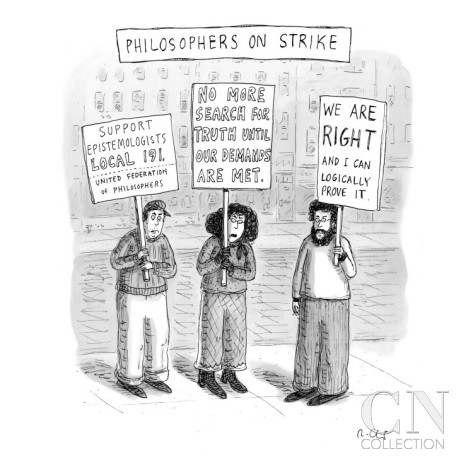
Subverting language seems to be a preoccupation on the Left, as amply illustrated by the misappropriation of the word “liberal” itself (see here).  Another distortion is in the Left’s use of the word “profit,” but with no direct change in its meaning as the excess of business revenue over costs. Rather, there is a peculiar innuendo often attached to “profit” by Leftists. This point is developed more fully in “Liberals Make Profit a Dirty Word.” Too often, profit is characterized as undeserved, motivated by ill-will, evil. The author, Stephen Carter, notes that so many of those opposed to the Supreme Court’s recent Hobby Lobby decision, which struck down certain forms of mandated contraception benefits, were aggrieved by the fact that Hobby Lobby is a “for-profit” enterprise. Could anything be less relevant to the decision? And yet…

So far, the number of e-mails accurately describing the decision is, as my physics professors used to say, arbitrarily close to zero. But there’s one underlying fact they all get right: the justices ruled in favor of a “for-profit” employer. This little hyphenated term appears in e-mail after e-mail, suggesting that it’s the for-profitness that creates the perniciousness.

Profit is simply what a business earns as a return to its capital and entrepreneurship. It is a reward for risks taken, and it actually measures gains from voluntary exchange corresponding to benefits derived by customers. As Carter points out, profits provide a signal directing resources to flow toward their highest-valued uses, a social function that central planners can never replicate. Casting aspersions at “profits” or an enterprise’s for-profit status is no more righteous than a generalization that wages are wicked. Some qualification is needed for either sort of condemnation to have pertinence.

Follow Sacred Cow Chips on WordPress.com

Recent Posts

  • The Case Against Interest On Reserves
  • Immigration and Merit As Fiscal Propositions
  • Tariff “Dividend” From An Indigent State
  • Almost Looks Like the Fed Has a 3% Inflation Target
  • Government Malpractice Breeds Health Care Havoc

Archives

  • January 2026
  • December 2025
  • November 2025
  • October 2025
  • September 2025
  • August 2025
  • July 2025
  • June 2025
  • May 2025
  • April 2025
  • March 2025
  • February 2025
  • January 2025
  • December 2024
  • November 2024
  • October 2024
  • September 2024
  • August 2024
  • July 2024
  • June 2024
  • May 2024
  • April 2024
  • March 2024
  • February 2024
  • January 2024
  • December 2023
  • November 2023
  • August 2023
  • July 2023
  • June 2023
  • May 2023
  • April 2023
  • March 2023
  • February 2023
  • January 2023
  • December 2022
  • November 2022
  • October 2022
  • September 2022
  • August 2022
  • July 2022
  • June 2022
  • May 2022
  • April 2022
  • March 2022
  • February 2022
  • January 2022
  • December 2021
  • November 2021
  • October 2021
  • September 2021
  • August 2021
  • July 2021
  • June 2021
  • May 2021
  • April 2021
  • March 2021
  • February 2021
  • January 2021
  • December 2020
  • November 2020
  • October 2020
  • September 2020
  • August 2020
  • July 2020
  • June 2020
  • May 2020
  • April 2020
  • March 2020
  • February 2020
  • January 2020
  • December 2019
  • November 2019
  • October 2019
  • September 2019
  • August 2019
  • July 2019
  • June 2019
  • May 2019
  • April 2019
  • March 2019
  • February 2019
  • January 2019
  • December 2018
  • November 2018
  • October 2018
  • September 2018
  • August 2018
  • July 2018
  • June 2018
  • May 2018
  • April 2018
  • March 2018
  • February 2018
  • January 2018
  • December 2017
  • November 2017
  • October 2017
  • September 2017
  • August 2017
  • July 2017
  • June 2017
  • May 2017
  • April 2017
  • March 2017
  • February 2017
  • January 2017
  • December 2016
  • November 2016
  • October 2016
  • September 2016
  • August 2016
  • July 2016
  • June 2016
  • May 2016
  • April 2016
  • March 2016
  • February 2016
  • January 2016
  • December 2015
  • November 2015
  • October 2015
  • September 2015
  • August 2015
  • July 2015
  • June 2015
  • May 2015
  • April 2015
  • March 2015
  • February 2015
  • January 2015
  • December 2014
  • November 2014
  • October 2014
  • September 2014
  • August 2014
  • July 2014
  • June 2014
  • May 2014
  • April 2014
  • March 2014

Blogs I Follow

  • Passive Income Kickstart
  • OnlyFinance.net
  • TLC Cholesterol
  • Nintil
  • kendunning.net
  • DCWhispers.com
  • Hoong-Wai in the UK
  • Marginal REVOLUTION
  • Stlouis
  • Watts Up With That?
  • Aussie Nationalist Blog
  • American Elephants
  • The View from Alexandria
  • The Gymnasium
  • A Force for Good
  • Notes On Liberty
  • troymo
  • SUNDAY BLOG Stephanie Sievers
  • Miss Lou Acquiring Lore
  • Your Well Wisher Program
  • Objectivism In Depth
  • RobotEnomics
  • Orderstatistic
  • Paradigm Library
  • Scattered Showers and Quicksand

Blog at WordPress.com.

Passive Income Kickstart

OnlyFinance.net

TLC Cholesterol

Nintil

To estimate, compare, distinguish, discuss, and trace to its principal sources everything

kendunning.net

The Future is Ours to Create

DCWhispers.com

Hoong-Wai in the UK

A Commonwealth immigrant's perspective on the UK's public arena.

Marginal REVOLUTION

Small Steps Toward A Much Better World

Stlouis

Watts Up With That?

The world's most viewed site on global warming and climate change

Aussie Nationalist Blog

Commentary from a Paleoconservative and Nationalist perspective

American Elephants

Defending Life, Liberty and the Pursuit of Happiness

The View from Alexandria

In advanced civilizations the period loosely called Alexandrian is usually associated with flexible morals, perfunctory religion, populist standards and cosmopolitan tastes, feminism, exotic cults, and the rapid turnover of high and low fads---in short, a falling away (which is all that decadence means) from the strictness of traditional rules, embodied in character and inforced from within. -- Jacques Barzun

The Gymnasium

A place for reason, politics, economics, and faith steeped in the classical liberal tradition

A Force for Good

How economics, morality, and markets combine

Notes On Liberty

Spontaneous thoughts on a humble creed

troymo

SUNDAY BLOG Stephanie Sievers

Escaping the everyday life with photographs from my travels

Miss Lou Acquiring Lore

Gallery of Life...

Your Well Wisher Program

Attempt to solve commonly known problems…

Objectivism In Depth

Exploring Ayn Rand's revolutionary philosophy.

RobotEnomics

(A)n (I)ntelligent Future

Orderstatistic

Economics, chess and anything else on my mind.

Paradigm Library

OODA Looping

Scattered Showers and Quicksand

Musings on science, investing, finance, economics, politics, and probably fly fishing.

  • Subscribe Subscribed
    • Sacred Cow Chips
    • Join 128 other subscribers
    • Already have a WordPress.com account? Log in now.
    • Sacred Cow Chips
    • Subscribe Subscribed
    • Sign up
    • Log in
    • Report this content
    • View site in Reader
    • Manage subscriptions
    • Collapse this bar
 

Loading Comments...