• About

Sacred Cow Chips

Sacred Cow Chips

Tag Archives: Bill Clinton

Choosing DOGE Over a Prodigal State Apparatus

03 Thursday Apr 2025

Posted by Nuetzel in Big Government, DOGE

≈ Leave a comment

Tags

Al Gore, Barack Obama, Bernie Sanders, Bill Clinton, Border Security, Chuck Schumer, DEI, Department of Education, Department of Government Efficiency, Department of Interior, Discretionary Budget, DOGE, Donald Trump, Elon Musk, entitlements, FDA, Force Reductions, Fourth Branch, Fraud, Graft, HHS, Indirect Costs, Jimmy Carter, Joe Biden, Mandatory Budget, Medicaid, Medicare, Nancy Pelosi, NIH Grants, Obamacare, Provisional Employees, Public debt, Severance Packages, Social Security, U.S. Digital Service, U.S. Postal Service, USAID, Voluntary Separations, Waste
I prefer a government that is limited in size and scope, sticking closely to the provision of public goods without interfering in private markets. Therefore, I’m delighted with the mission of the Department of Government Efficiency (DOGE), a rebranded version of the U.S. Digital Service created by Barack Obama in 2014 to clean up technical issues then plaguing the Obamacare web site. The “new” DOGE is fanning out across federal agencies to upgrade systems and eliminate waste and fraud.

A Strawman

For years, democrats such as Barack Obama and Joe Biden have advocated for eliminating waste in government. So did Bill Clinton, Al Gore, Bernie Sanders, Chuck Schumer, and Nancy Pelosi. Here’s Mark Cuban on the same point. Were these exhortations made in earnest? Or were they just lip service? Now that a real effort is underway to get it done, we’re told that only fascists would do such a thing.

I’m seeing scary posts about DOGE even on LinkedIn, such as the plight of Americans unable to get federal public health communications due to layoffs at HHS, while failing to mention the thousands of new HHS employees hired by Biden in recent years. As if HHS was particularly effective in dispensing good public health advice during the pandemic!

Those kinds of assertions are hard to take seriously. For reasons like these and still others, I tend to dismiss nearly all of the horror stories I hear about DOGE’s activities as nitwitted virtue signals or propaganda.

Many on the left claim that DOGE’s work is careless, and especially the force reductions they’ve spearheaded. For example, they claim that DOGE has failed to identify key employees critical to the functioning of the bureaucracy. The tone of this argument is that “this would not pass muster at a well-managed business”. A “sober” effort to achieve efficiencies within the federal bureaucracy, the argument goes, would involve much more consideration. In other words, given political realities, it would not get done, and they really don’t want it to get done.

The best rationale for the ostensible position of these critics might be situations like the dismissal of several thousand provisional employees at the FDA, a few of whom were later rehired to help manage the work load of reviewing and approving drugs. However, thus far, only a tiny percentage of the federal force reductions under consideration have involved immediate layoffs.

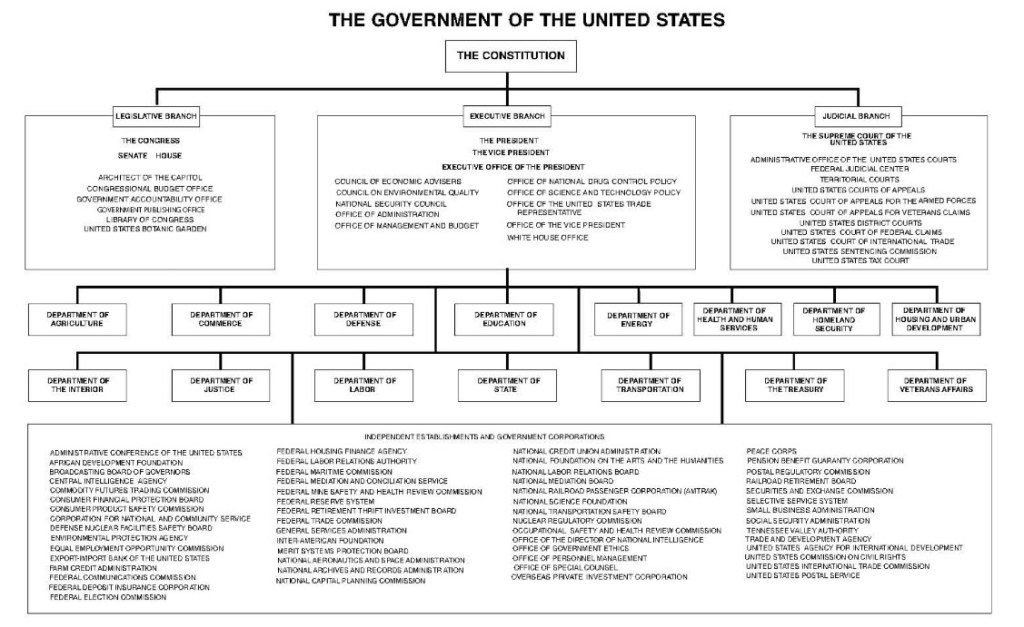
Of course, DOGE is not being tasked to review the practices of a well-managed business or a well-managed governmental organization. What we have here is a dysfunctional government. It is a bloated, low productivity Leviathan run by management and staff who, all too frequently, seem oblivious to the predicament. Large force reductions at all levels are probably necessary to make headway against entrenched interests that have operated as a fourth branch of government.

Thus, I see the leftist critique of Trump’s force reductions as something of a strawman, and it falls flat for several other reasons. First, the vast bulk of the prospective reduction in headcount will be voluntary, as the separating employees have been offered attractive severance packages. Second, force reductions in the private sector always feel chaotic, and they often are. And they are sometimes executed without regard to the qualifications of specific employees. Tough luck!

Duplicative functions, poor data systems, and a lack of control have led to massive misappropriations of funds. The dysfunction has been enabled by a metastasization of nests of administrative authority inside agencies with “incomprehensible” org charts, often having multiple departments with identical functions that do not communicate. These departments frequently use redundant but unconnected systems. A related problem is the inadequacy of documentation for outgoing payments. Needless to say, this is a hostile environment for effective spending controls.

It’s worth emphasizing, by the way, DOGE’s “open book” transparency. It’s not as if Elon Musk and DOGE are attempting to sabotage the deep state in the dark of night. Indeed, they are shouting from the rooftops!

Doing It Fast

Every day we have a new revelation from DOGE of incredible waste in the federal bureaucracy. Check out this story about a VA contact for web site maintenance. All too ironically, what we call government waste tends to have powerful, self-interested, and deeply corrupt constituencies. This makes speed an imperative for DOGE. In a highly politicized and litigious environment, the extent to which the Leviathan can be brought to heel is partly a function of how quickly the deconstruction takes place. One must pardon a few temporary dislocations that otherwise might be avoided in a world free of rent seeking behavior. Otherwise, the graft (no, NOT “grift”) will continue unabated.

The foregoing offers sufficient rationale not only for speedy force reductions, but also for system upgrades, dissolution of certain offices, and consolidation of core functions under single-agency umbrellas.

The Bloody Budget

It’s difficult to know when budget legislation will begin to reflect DOGE’s successes. The actual budget deficit might be affected in fiscal year 2025, but so far the savings touted by DOGE are chump change compared to the expected $2 trillion deficit, and only a fraction of those savings contribute to ongoing deficit reduction.

Uncontrolled spending is the root cause of the deficit, as opposed to insufficient tax revenue, as evidenced by a relatively stable ratio of taxes to GDP. The spending problem was exacerbated by the pandemic, but Congress and the Biden Administration never managed to scale outlays back to their previous trend once the economy recovered. Balancing the budget is made impossible when the prevailing psychology among legislators and the media is that reductions in the growth of spending represent spending cuts.

Federal spending is excessive on both the discretionary and mandatory sides of the budget. Ultimately, eliminating the budget deficit without allowing the 2017 Trump tax cuts to expire will require reform to mandatory entitlements like Social Security, Medicare, and Medicaid, as well as reductions across an array of discretionary programs.

DOGE’s focus on fraud and waste extends to entitlements. At a minimum, the data and tracking systems in place at HHS and SSA are antiquated, sometimes inaccurate, and are highly susceptible to manipulation and fraud. Systems upgrades are likely to pay for themselves many times over.

But all indications are that it’s much worse than that. Social security numbers were issued to millions of illegal immigrants during the Biden Administration, and those enrollees were cleared for maximum benefits. There were a significant number of illegals enrolled in Medicaid and registered to vote. While some of these immigrants might be employed and contributing to the entitlement system, they should not be employed without legal status. Of course, one can defend these entitlement benefits on purely compassionate grounds, but the availability of benefits has served to attract a massive flow of illegal border crossings. This illustrates both the extent to which the entitlement system has been compromised as well as the breakdown of border security.

On the discretionary side of the budget, DOGE has identified an impressive array programs that were not just wasteful, but by turns ridiculous or politically motivated (for example, the bulk of USAID’s budget). Many of these funding initiatives belong on the chopping block, and components that might be worthwhile have been moved to agencies with related missions. In addition, authorized but unspent allocations have been identified that seem to have been held in reserve, and which now can be used to reduce the public debt.

Research Grants?

Of course, like the initial scale of the FDA layoffs, a few mistakes have and will be made by DOGE and agencies under DOGE’s guidance. Many believe another powerful argument against DOGE is the Trump Administration’s 15% limit on indirect costs as an add-on to NIH grants. Critics assert that this limit will hamstring U.S. scientific advancement. However, it won’t “kill” publicly funded research. As this article in Reason points out, historically public funding has not been critical to scientific advancement in the U.S. In fact, private funding accounts for the vast bulk of U.S. R&D, according to the Congressional Research Service. Moreover, it’s broadly acknowledged that indirect costs are subject to distortion, and that generous funding of those costs creates bad incentives and raises thorny questions about cross-subsidies across funders (15% is the rate at which charities typically fund indirect costs).

No doubt some elite research universities will suffer declines in grants, but their case is weakened politically by a combination of lax control over anti-Semitic protests on campus, the growing unpopularity of DEI initiatives in education, and public awareness of the huge endowments over which these universities preside. Nevertheless, I won’t be surprised to see the 15% limit on indirect research costs revised upward somewhat.

More DOGE Please

I’ve criticized the numbers posted on DOGE’s website elsewhere. They could do a much better job of categorizing and reporting the savings they’ve achieved, and they have far to go before meeting the goals stated by Elon Musk. Be that as it may, DOGE is making progress. Here is a report on a few of the latest cuts.

As I’ve emphasized on numerous occasions, the federal government is a strangling mass of tentacles, squeezing excessive resources out of the private sector and suffocating producers with an endless catalogue of burdensome rules. There are many examples of systemic waste taking place within the federal bureaucracy. For example, since its creation by Jimmy Carter, the Department of Education has managed to piss away trillions of dollars while student performance has declined. The Small Business Administration has doled out millions of dollars in subsidized loans to super-centenarians as well as children. The U.S. Postal Service keeps losing money and mail while deliveries slow to a crawl. Big projects become mired in endless iterations of reviews and revisions, such as Obama’s infrastructure plan and Joe Biden’s infrastructure and rural broadband initiative.

And again, regulatory agencies are often our worst enemies, imposing burdensome requirements with which only the largest industry players can afford to comply. Indeed, the savings achieved through the DOGE process might pale in comparison to the resources that could be liberated by rationalizing the tangle of regulations now choking private business.

A significant narrowing of the budget deficit would be a major accomplishment for DOGE. Even one-time savings to help pay down the public debt are worthwhile. In this latter regard, I hope DOGE’s work with the Department of Interior helps facilitate the sale of dormant federal assets. This includes land (not parks) and buildings worth literally trillions of dollars, and sometimes costing billions annually to maintain.

Mass Shootings and Mass Manipulation

21 Wednesday Aug 2019

Posted by Nuetzel in Gun Control, Second Amendment

≈ Leave a comment

Tags

Assault Weapons, Bill Clinton, Chris Buskirk, Christopher J Ferguson, Defensive Gun Uses, FiveThirtyEight, Gun-Free Zones, James T Hodgkinson, John Lott, Leah Libresco, Mark Overstreet, Mass Shootings, Nate Silver, Second Amendment, Steve Scalese, War on Drugs

The drumbeat for gun control from Leftist authoritarians never stops, and the recent mass shootings in Dayton OH, El Paso TX, and Gilroy CA, have been greeted with so much political agitation that the victims have become mere footnotes. Attempting to marshal facts in this debate can be quite confusing due to the variety of definitions of “mass shootings”. This variety contributes to certain myths about guns and gun violence that are often repeated by the media to a brow-beaten public. The confusion also motivates anti-gun policy prescriptions that are likely to be ineffective at best, and in all likelihood, counter-productive.

What constitutes a “mass shooting”? The traditional FBI definition counted an incident as a mass killling if four or more people were killed, not including the perpetrator. Broader definitions include cases in which 4 or more people are killed or injured, including the perpetrator. Gun rights opponents seem to prefer expansive definitions, including those that count gang-related killings, domestic shootings, or those occurring in the commission of another criminal act. Criminologist John Lott contends that these kinds of killings are driven by fundamentally different social forces than the mass public shootings that are at the center of this debate. For example, with respect to gang killings, Lott says:

“... the causes and solutions to drug gang violence are dramatically different than for the vast majority of mass public shootings, where attacks are designed to kill or wound as many people as possible. Padding the numbers by lumping the two together doesn’t make much sense.”

The more expansive definitions give rise to the notion that mass shootings have been trending-up dramatically in America. In fact, as Christopher J. Ferguson reports, data from The USA TODAY/AP/Northeastern University mass killings database show that the rate of mass shooting incidents per year has been flat since the early 1990s and are not much higher than the averages of the 1970s.

Another prominent distortion often accepted uncritically is that the U.S. leads the world in mass shootings. The U.S. totals are often inflated, but part of the reason for this misperception is that it’s easy to undercount foreign mass shootings. They do not always receive the same intensity of news coverage as mass shootings in the U.S., and tracking reports published in other languages is inherently more difficult for researchers. Lott says the following:

“Of the 86 countries where we have identified mass public shootings, the US ranks 56th per capita in its rate of attacks and 61st in mass public shooting murder rate. Norway, Finland, Switzerland and Russia all have at least 45 percent higher rates of murder from mass public shootings than the United States.”

The tragic nature of mass shootings should not prevent us from keeping the magnitude of these events in perspective, as Chris Buskirk explains in “Everything They’re Telling You About Mass Shootings Is Wrong“. For example, almost three-quarters of U.S. mass shootings in 2018 (four or more killed or injured) were associated with criminal activity, bar fights, and the like. And of course other social problems dwarf public mass shootings, such as the 70,000 opioid deaths that occurred in 2018, a phenomenon not coincidentally associated with the War on Drugs. And as Buskirk reminds us, the number of fatalities in public mass shootings is infinitesimal relative to the total number of defensive gun uses.

The Left’s reaction to these events is wrongheaded and their policy prescriptions are dangerous. A simple example is the widespread designation of buildings and public spaces as “gun-free zones”. However, it is highly likely that ending these designations would be an effective preventative against mass public shootings. John Lott writes in “How gun-free zones invite mass shootings” that 98% of the mass public shootings since 1950 occurred in areas where guns were prohibited. And we know that mass shootings are indeed prevented by armed citizens. Yet the Left staunchly opposes such a change and promotes the futile and foolish elimination of gun rights in general (also see this).

Leah Libresco, a statistician and former news writer at Nate Silver’s FiveThirtyEight, was highly disillusioned after devoting considerable effort to researching gun deaths. She expected to find that broad gun control measures were the answer. Instead, she says:

“… the case for the policies I’d lobbied for crumbled when I examined the evidence. The best ideas left standing were narrowly tailored interventions to protect subtypes of potential victims, not broad attempts to limit the lethality of guns. 

I researched the strictly tightened gun laws in Britain and Australia and concluded that they didn’t prove much about what America’s policy should be. Neither nation experienced drops in mass shootings or other gun related-crime that could be attributed to their buybacks and bans.”

Then there are the continuing, uninformed calls to ban “assault weapons”. As Libresco explains:

 “… no gunowner walks into the store to buy an ‘assault weapon.’ It’s an invented classification that includes any semi-automatic that has two or more features, such as a bayonet mount, arocket-propelled grenade-launcher mount, a folding stock or a pistol grip. But guns are modular, and any hobbyist can easily add these features at home, just as if they were snapping together Legos.”

Bill Clinton weighed into the debate last week by claiming that his assault weapons “ban”, which began in 1994, was so effective that we should be eager to accede to plans recently put forward by Democrats. Mark Overstreet quickly called him out as a liar, and on no less than six counts. Not only were existing “assault weapons” exempted under Clinton’s “ban”, but Americans actually added to their private stocks of weapons that met the law’s criteria during its enforcement. Existing large ammunition magazines were exempted, as well as imports of such magazines. Thus, Clinton’s so-called ban did not even approach the draconian measures now being proposed, which range from manufacturing and import prohibitions all the way up to confiscation.

Also preposterous are the Left’s routine characterizations of mass shooters as “right-wing extremists”. The truth is hardly clear cut. For example, despite expressing strong anti-immigrant sentiment, the shooters in El Paso and Christchurch, New Zealand were both environmental radicals or “eco-fascists”, in the Christchurch shooter’s words. The Dayton shooter was a self-described socialist and a supporter of Bernie Sanders, as was James T. Hodgkinson, the gunman who attacked a group of Republican legislators at a baseball practice, seriously injuring Congressman Steve Scalese. These madmen clearly weren’t crazed right-wing zealots. If anything, their profiles usually reflect severe psychological as well as ideological confusion.

Even one public mass shooting is too many, but their prevalence in the U.S. has been exaggerated in several ways. The hyperbole is often politically-motivated, intended to create negative public sentiment toward Second Amendment rights. But you can’t stop public mass shootings by foolishly disarming or criminalizing the very law-abiding citizens who are often the only force capable of providing an immediate defensive response.

Hillaryeconomics: Swelling the State

30 Sunday Oct 2016

Posted by Nuetzel in statism

≈ Leave a comment

Tags

Affordable Care Act, Anthony Weiner, Bill Clinton, Buffet Rule, Carried Interest Rule, Clinton Foundation, Daniel J. Mitchell, Exit Tax, Hillary Clinton, Hugo Chavez, Infrastructure bank, Joseph Stiglitz, Minimum Wage, Paid Family Leave, Peter Suderman, Public Option, Redistribution, Solyndra, Venezuela

14523095_10207590802749873_5458832984536437934_n

Who cares about Hillary Clinton’s economic plan while her campaign quivers in the shadow of Weiner’s hard drive? Despite all the hubbub over Mrs. Clinton’s sloppy security practices, and her lies and destruction of evidence regarding those practices, it’s a good idea to remind ourselves of some of the frontrunner’s policy proposals and the general philosophy that informs them. Daniel J. Mitchell must have been feeling jovial when he took a crack at deciphering Hillary Clinton’s economic plan. He offered translations of each of 42 Hillary catch-phrases, but the translations were identical:

“Notwithstanding all the previous failures of government, both in America and elsewhere in the world, I’m going to make American more like Greece and Venezuela by using coercion to impose more spending, taxes, and regulation.“

Mitchell highlights two general themes at the start: one is the left’s constant misuse of the term “investment’ to describe spending on almost any government initiative; the other is the still fashionable Keynesian theory that a low-productivity government can make the economy grow by a multiple of any claim on resources it deigns to make.

I’ll try to do Mitchell one better. Here’s a run-down of the catch-phrases he cites along with my own interpretations:

  • “…support advanced manufacturing” — because the government is adept at picking winners with taxpayer money, like Solyndra. Does “advanced manufacturing” involve politically-favored outputs, as opposed to market-favored outputs? Does it involve robots, or workers? Is it somehow preferable to “advanced services”?
  • “a lot of urgent and important work to do” — there oughtta’ be more laws;
  • “go out and make that happen” — we must impose the heavy hand of the state;
  • “enormous capacity for clean energy production” — …if only we can provide our cronies with enough subsidies on your dime;
  • “if we do it together” — …kumbaya; we’ll wreck the private economy together;
  • “things that your government could do” — like, wreck everything;
  • “I will have your back every single day” — …with a sharp knife, in case it’s in my interest to betray you;
  • “make our economy work for everyone” — we’ll redistribute your wealth;
  • “restore fairness to our economy” — be prepared to share your success;
  • “go to bat for working families” — …by punishing your employer; but look, we have freebies!
  • “pass the biggest investment” — mandatory campaign promise;
  • “modernizing our roads, our bridges” — shovel-ready” projects;
  • “help cities like Detroit and Flint” — redistribute resources to poorly-governed communities and impose federal oversight;
  • “repair schools and failing water systems” — because local needs and the federal government are a perfect match;
  • “we should be ambitious” — about government domination;
  • “connect every household in America to broadband” — even if they don’t want it, and even if they’ve chosen to live in the badlands; at your cost, of course;
  • “build a cleaner, more resilient power grid” — reduce carbon emissions by inflating your utility bill; dismantle markets and direct energy resources centrally;
  • “creating an infrastructure bank” — we need another big federal agency, extending control and conjuring opportunities for cronyism and graft;
  • “we’re going to invest $10 billion” — Whew! I thought you were going to say $100 billion. But… can you define “investment”?
  • “bring business, government, and communities together” — …we’ll be as one at the federal level;
  • “fight to make college tuition-free” — so that even the least qualified have a strong incentive to enroll, on your dime;
  • “liberate millions of people who already have student debt” — because meeting the terms of a contract is a form of enslavement;
  • “support high-quality union training programs” — with federal subsidies on your dime; non-union training programs would be so …exploitative;
  • “We will do more” — …cause we’re from the government, and we’re here to help!
  • “Investments at home” — Invest? Can you define that? Do you mean “spend”?
  • “we need to make it fairer” — … by redistributing your income to others;
  • “we will fight for a more progressive…tax code” — reduce those ugly private work incentives and quash the bourgeois tendency to save and invest in physical capital;
  • “pay a new exit tax” — don’t get the idea it’s YOUR company; you didn’t build that;
  • “Wall Street, corporations, and the super-rich, should finally pay their fair share” –because the highest corporate tax rate in the industrialized world is not high enough, and besides, we can pass the booty back to elites in myriad ways, as long as they give to the Clinton Foundation;
  • “I support the so-called ‘Buffett Rule'” — …to quench the thirst of class warriors;
  • “add a new tax on multi-millionaires” — we must tax wealth because a high income tax rate just isn’t enough to encourage capital flight;
  • “close the carried interest loophole” — cause we think that loophole actually exists, and hey, it sounds good to class warriors;
  • “I want to invest” — Invest? Can you define that? Do you mean “spend”?
  • “affordable childcare available to all Americans” — …so that no parent need pay any attention to price; but your tax credit will diminish if you earn extra income, so don’t earn too much, for God’s sake!
  • “Paid family leave” — …because it isn’t expensive enough to hire you already;
  • “Raising the federal minimum wage” — … so the least skilled will be jobless and dependent on the state;
  • “expanding Social Security” — …so what if it’s already insolvent? Oh, you must mean “expanding” payroll taxes!!
  • “strengthening unions” — …because we mean to kill the sharing economy, and it isn’t expensive enough to hire you already;
  • “improve the Affordable Care Act” — if it’s broke, break it more thoroughly;
  • “a public option health insurance plan” — …shhh… don’t say single payer!
  • “build a new future with clean energy” — in our judgement, your inflated utility bills will help all mankind; besides, we want to take control, and wreck something.
  • Bonus: “wage equality once and for all” — because it should be illegal for employers to pay based on occupational risk, demands for paid leave and flexible hours, skill differentials and available supplies.

Lest you think my interpretation of that bonus quotation is unfair, remember: the so-called gender wage gap is almost entirely explained by the factors I’ve listed.

Hillary Clinton’s economic view is straight out of the statist theater of the absurd. Joseph Stiglitz, one of Hillary’s economic advisors, in 2007 endorsed Venezuelan socialism under Hugo Chavez, which proved to be disastrous. Was she forced to the left by Bernie Sanders? To some extent, perhaps. But Peter Suderman notes that Clinton’s current policy agenda constitutes a thorough rejection of Bill Clinton’s economic policies. The irony!

Hillary’s “Fix”: Obamacare Squared

26 Wednesday Oct 2016

Posted by Nuetzel in Obamacare

≈ Leave a comment

Tags

Avik Roy, Bill Clinton, Block Grants, Christopher Jacobs, competition, Health Insurer Bailouts, Hillary Clinton, John C. Goodman, Marketplace Regulation, Medicaid, monopoly, Obamacare Exchanges, Obamacare Fixes, Pharmaceutical Patents, Public Option, Reimbursement Rates, Risk corridors, Sally Pipes, Single-Payer System, Wikileaks

hillarys-health-problem

One of Hillary Clinton’s “public positions” is that Obamacare needs a few “fixes”, a considerable understatement. Meanwhile, Wikileaks has revealed that she has “privately” rooted for the failure of Obamacare. For that reason, Bill Clinton’s recent slip-up, in which he portrayed Obamacare as a “crazy” system, had a certain Freudian quality. Indeed, Obamacare looks crazier every year, especially in the middle of premium-hike season.

One of Hillary’s so-called “fixes” is the creation of a “public option”, or health insurance offered by the government to compete on exchanges with private insurance. Private health insurers, with the expiration of the so-called “risk corridors”, do not have continuing access to the public purse to cover their losses; going forward, they must price coverage at rates covering the cost of their respective risk pools. The government, on the other hand, is likely to have pricing flexibility. If exercised, there will be little hope for private insurers to “compete” without bailout money. Health insurance coverage, then, is likely to devolve into a single-payer monopoly, and control over health care delivery will be increasingly monopolized as well.

Sally Pipes says the “public option” is a politically attractive way to make a single-payer system inevitable:

“But progressives face the same problem pushing single-payer they always have — the public won’t stand for it. So they’re dusting off an old idea that will get them to single-payer without using those words.“

So the path from Obamacare to a single-payer system is likely to involve a public option in one form or another. John C. Goodman points out that expanding Medicaid is one way to create a broad public option. Medicaid reimbursement rates are low, however, which is why many doctors refuse to accept patients with Medicaid coverage. Such might be the quality of future coverage under an “affordable” public option. And if Medicaid is enhanced so as to appeal to middle class families, it will be correspondingly more expensive. But for whom? More than likely, the tab will be paid by a combination of insureds and taxpayers. And more than likely, the number of competing Medicaid plans (most of which are now privately offered and managed (e.g., Centene Corporation)) will dwindle.

Christopher Jacobs says that when Obamacare became law, health insurers had every expectation that they’d be bailed out by the government indefinitely. Continuing reimbursement for losses was never guaranteed, however. The pressure to backstop the insurers’ profitability will be stronger as the debate over “fixing” Obamacare advances. But as Jacobs warns, ongoing bailouts mean that these insurers are essentially controlled by the government. The private insurers would essentially become heavily-regulated entities managing the operational details of a de facto single-payer system.

So, there are three distinct possibilities under a Hillary Clinton presidency, assuming she can get any of them though Congress: 1) a public option with no private bailouts; 2) a public option with ongoing bailouts; and 3) no public option with ongoing bailouts. Ultimately, all of these scenarios are likely to devolve toward a de facto single-payer system. So we will have monopoly, central control of health care, and/or bailouts. Who was it that said government is the way we wreck things together?

Hillary has some other “fixes” in mind. Some of these involve more regulation of coverage and pricing, such as mandatory provision of three free “sick” visits with a provider each year and in-network pricing for emergency procedures. These steps will add to the cost burden on private insurers.

Regulating drug companies more heavily is another favorite Hillary Clinton theme, but regulation is perhaps the primary reason why the drug development process is so lengthy and costly. The theory that government will be more effective at negotiating drug prices than insurers is suspect. Outright price regulation is likely to mean reduced availability of various medicines. Patent reform and an expedited drug approval process would be a more effective approach to reducing drug prices.

Clinton has also proposed a tax credit for out-of-pocket health care costs exceeding 5% of income. We’ll need higher tax rates, lower deductions and credits elsewhere, or higher deficits to pay for this one.

Finally, Hillary wants to expand eligibility for Medicare to anyone 55 and older, but as Goodman explains, the kind of Medicare Advantage plans that would be made available to “near seniors” under this proposal are similar to those already offered by private insurers, and at lower cost, and premia for these plans are often payable with pre-tax dollars, or the buyers may be eligible for tax subsidies. This proposal might sound appealing, but it is unlikely to accomplish anything except to create more administrative overhead, regulation and diminish existing offerings.

Obamacare has injected a high degree of central planning into the health care system with disastrous results. It has fallen far short of its own objectives for reducing the number of uninsured, “bending the cost curve” downward, and avoiding disruptions to existing coverage and patient-doctor relationships. Choices have narrowed in terms of coverage options and within networks. Obamacare has imposed unnecessary costs on providers and encouraged a monopolization of health care delivery, hardly a prescription for affordability. And Obamacare has proven to be a budget buster, contrary to the advance hype from its proponents.

I remember standing in a pharmacy shortly after Obamacare was enacted, and I heard a sharp-voiced leftist telling a clerk that Obamacare was just a bridge to single-payer health care. I tried to mind my own business, thinking it unproductive to engage such an individual in public. This fellow was quite pleased with the clever deception that was Obamacare. It was never a secret that the progressive left hoped single-payer would be the ultimate outcome, but it’s interesting to witness their discomfort with the way things are unfolding. Surely they must have known that if “fixes” were necessary, something would have to be broken. Perhaps they thought the politics would get simpler, but the shortcomings of the health care law have inflicted too much pain and shame.

I’m tempted to say that the health care system can be improved only by doing precisely the opposite of everything Clinton has proposed. There’s some truth in that, but it’s not quite that simple. The path to better and more affordable health care is to end the dominant role of third-party payers, placing responsibility on price-sensitive consumers, allowing a variety of choices in coverage, ending tax preferences, reducing regulation and encouraging real competition in the markets for coverage and medical care. Reform of the patent system could introduce more competition to markets for pharmaceuticals. The Medicaid system will have to be relied upon to cover those who otherwise can’t be insured at affordable rates. Proposals for federal funding of Medicaid through block grants to the states is an avenue for achieving greater efficiency and better health care outcomes.

Hillary Clinton’s “fixes” are all likely to exacerbate the worst failings of Obamacare for consumer-patients and taxpayers. More federal spending commitments will not solve the structural problems embedded in the health care law. It will magnify them. The hope among the progressive left remains that single-payer health care will evolve out of the Obamacare system once it is “fixed”. And what will we get? More complete monopolies in coverage and care, higher prices, central regulation, narrowed choice, waiting lists, denial of care, and some combination of higher taxes and deficits. In other words, a more radical version of Obamacare.

Follow Sacred Cow Chips on WordPress.com

Recent Posts

  • Immigration and Merit As Fiscal Propositions
  • Tariff “Dividend” From An Indigent State
  • Almost Looks Like the Fed Has a 3% Inflation Target
  • Government Malpractice Breeds Health Care Havoc
  • A Tax On Imports Takes a Toll on Exports

Archives

  • December 2025
  • November 2025
  • October 2025
  • September 2025
  • August 2025
  • July 2025
  • June 2025
  • May 2025
  • April 2025
  • March 2025
  • February 2025
  • January 2025
  • December 2024
  • November 2024
  • October 2024
  • September 2024
  • August 2024
  • July 2024
  • June 2024
  • May 2024
  • April 2024
  • March 2024
  • February 2024
  • January 2024
  • December 2023
  • November 2023
  • August 2023
  • July 2023
  • June 2023
  • May 2023
  • April 2023
  • March 2023
  • February 2023
  • January 2023
  • December 2022
  • November 2022
  • October 2022
  • September 2022
  • August 2022
  • July 2022
  • June 2022
  • May 2022
  • April 2022
  • March 2022
  • February 2022
  • January 2022
  • December 2021
  • November 2021
  • October 2021
  • September 2021
  • August 2021
  • July 2021
  • June 2021
  • May 2021
  • April 2021
  • March 2021
  • February 2021
  • January 2021
  • December 2020
  • November 2020
  • October 2020
  • September 2020
  • August 2020
  • July 2020
  • June 2020
  • May 2020
  • April 2020
  • March 2020
  • February 2020
  • January 2020
  • December 2019
  • November 2019
  • October 2019
  • September 2019
  • August 2019
  • July 2019
  • June 2019
  • May 2019
  • April 2019
  • March 2019
  • February 2019
  • January 2019
  • December 2018
  • November 2018
  • October 2018
  • September 2018
  • August 2018
  • July 2018
  • June 2018
  • May 2018
  • April 2018
  • March 2018
  • February 2018
  • January 2018
  • December 2017
  • November 2017
  • October 2017
  • September 2017
  • August 2017
  • July 2017
  • June 2017
  • May 2017
  • April 2017
  • March 2017
  • February 2017
  • January 2017
  • December 2016
  • November 2016
  • October 2016
  • September 2016
  • August 2016
  • July 2016
  • June 2016
  • May 2016
  • April 2016
  • March 2016
  • February 2016
  • January 2016
  • December 2015
  • November 2015
  • October 2015
  • September 2015
  • August 2015
  • July 2015
  • June 2015
  • May 2015
  • April 2015
  • March 2015
  • February 2015
  • January 2015
  • December 2014
  • November 2014
  • October 2014
  • September 2014
  • August 2014
  • July 2014
  • June 2014
  • May 2014
  • April 2014
  • March 2014

Blogs I Follow

  • Passive Income Kickstart
  • OnlyFinance.net
  • TLC Cholesterol
  • Nintil
  • kendunning.net
  • DCWhispers.com
  • Hoong-Wai in the UK
  • Marginal REVOLUTION
  • Stlouis
  • Watts Up With That?
  • Aussie Nationalist Blog
  • American Elephants
  • The View from Alexandria
  • The Gymnasium
  • A Force for Good
  • Notes On Liberty
  • troymo
  • SUNDAY BLOG Stephanie Sievers
  • Miss Lou Acquiring Lore
  • Your Well Wisher Program
  • Objectivism In Depth
  • RobotEnomics
  • Orderstatistic
  • Paradigm Library
  • Scattered Showers and Quicksand

Blog at WordPress.com.

Passive Income Kickstart

OnlyFinance.net

TLC Cholesterol

Nintil

To estimate, compare, distinguish, discuss, and trace to its principal sources everything

kendunning.net

The Future is Ours to Create

DCWhispers.com

Hoong-Wai in the UK

A Commonwealth immigrant's perspective on the UK's public arena.

Marginal REVOLUTION

Small Steps Toward A Much Better World

Stlouis

Watts Up With That?

The world's most viewed site on global warming and climate change

Aussie Nationalist Blog

Commentary from a Paleoconservative and Nationalist perspective

American Elephants

Defending Life, Liberty and the Pursuit of Happiness

The View from Alexandria

In advanced civilizations the period loosely called Alexandrian is usually associated with flexible morals, perfunctory religion, populist standards and cosmopolitan tastes, feminism, exotic cults, and the rapid turnover of high and low fads---in short, a falling away (which is all that decadence means) from the strictness of traditional rules, embodied in character and inforced from within. -- Jacques Barzun

The Gymnasium

A place for reason, politics, economics, and faith steeped in the classical liberal tradition

A Force for Good

How economics, morality, and markets combine

Notes On Liberty

Spontaneous thoughts on a humble creed

troymo

SUNDAY BLOG Stephanie Sievers

Escaping the everyday life with photographs from my travels

Miss Lou Acquiring Lore

Gallery of Life...

Your Well Wisher Program

Attempt to solve commonly known problems…

Objectivism In Depth

Exploring Ayn Rand's revolutionary philosophy.

RobotEnomics

(A)n (I)ntelligent Future

Orderstatistic

Economics, chess and anything else on my mind.

Paradigm Library

OODA Looping

Scattered Showers and Quicksand

Musings on science, investing, finance, economics, politics, and probably fly fishing.

  • Subscribe Subscribed
    • Sacred Cow Chips
    • Join 128 other subscribers
    • Already have a WordPress.com account? Log in now.
    • Sacred Cow Chips
    • Subscribe Subscribed
    • Sign up
    • Log in
    • Report this content
    • View site in Reader
    • Manage subscriptions
    • Collapse this bar
 

Loading Comments...