• About

Sacred Cow Chips

Sacred Cow Chips

Tag Archives: Charity

You’re Welcome: Charitable Gifts Prompt Statist Ire

14 Friday Dec 2018

Posted by Nuetzel in Central Planning, Charity, Uncategorized

≈ 1 Comment

Tags

Amazon, American Institute for Economic Research, central planning, Charity, Cloe Anagnos, Day 1 Fund, Doug Bandow, Forced Charity, Gaby Del Valle, Homelessness, Jeff Bezos, Redistribution, Russ Roberts, Scientism, Seattle Employment Tax, War on Charity
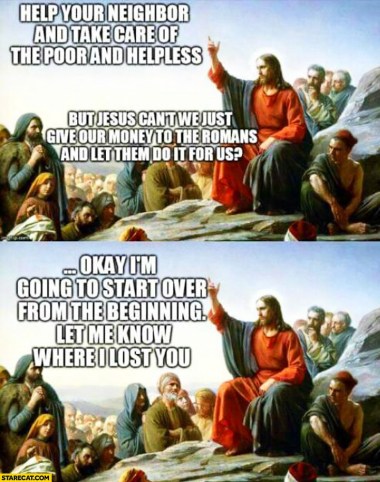
Charitable acts are sometimes motivated by a desire to cultivate a favorable reputation, or even to project intelligence. Perhaps certain charitable acts are motivated by guilt of one kind or another. Tax deduction are nice, too. But sometimes a charitable gift is prompted by no more than a desire to help others less fortunate. It’s likely a combination of motives in many cases, but to gainsay the purity of anyone’s charitable motives is rather unseemly. Yet Gaby Del Valle does just that in Vox, casting a skeptical eye at Jeff Bezos’ efforts to help the homeless through his Day 1 Fund.

“Last week, Amazon founder and CEO Jeff Bezos announced that he and his wife, MacKenzie Bezos, were donating $97.5 million to 24 organizations that provide homeless services across the country. The donation is part of Bezos’s $2 billion ‘Day 1 Fund, a philanthropic endeavor … that, according to Bezos, focuses on establishing ‘a network of new, non-profit, tier-one preschools in low-income communities’ and funding existing nonprofits that provide homeless services.”

Del Valle says Bezos deserves little credit for his big gift for several reasons. First, Amazon very publicly opposed a recent initiative for a $275 per employee tax on large employers in Seattle. The proceeds would have been used to fund public programs for the homeless. This allegation suggests that Bezos feels guilty, or that the gift is a cynical attempt to buy-off critics. That might have an element of truth, but the tax was well worthy of opposition on economic grounds — almost as if it was designed to stunt employment and economic growth in the city.

Second, because Amazon has been an engine of growth for Seattle, Del Valle intimates that the company and other large employers are responsible for the city’s high cost of housing and therefore homelessness. Of course, growth in a region’s economy is likely to lead to higher housing prices if the supply of housing does not keep pace, but forsaking economic growth is not a solution. Furthermore, every large city in the country suffers from some degree of homelessness. And not all of those homeless individuals have been “displaced”, as Del Valle would have it. Some have relocated voluntarily without any guarantee or even desire for employment. As for the housing stock, government environmental regulations, zoning policies and rent control (in some markets) restrains expansion, leading to higher costs.

Finally, Del Valle implies that private efforts to help the homeless are somehow inferior to “leadership by elected officials”. Further, she seems to regard these charitable acts as threatening to “public” objectives and government control. At least she doesn’t disguise her authoritarian impulses. Del Valle also quotes a vague allegation that one of the charities beholden to Amazon is less than a paragon of charitable virtue. Well, I have heard similar allegations that government isn’t celebrated for rectitude in fulfilling its duties. Like all statists, Del Valle imagines that government technocrats possess the best vision of how to design aid programs. That attitude is an extension of the scientism and delusions of efficacy typical of central planners. Anyone with the slightest awareness of the government’s poor track record in low-income housing would approach such a question with trepidation. In contrast, private efforts often serve as laboratories in which to test innovative programs that can later be adopted on a broader scale.

While selfishness might motivate private acts of charity in some cases, only voluntary, private charity can ever qualify as real charity. Government benefits for the homeless are funded by taxes, which are compulsory. Such public programs might be justifiable as an extension of social insurance, but it is not charity in any pure sense; neither are it advocates engaged in promoting real charity, despite their conveniently moralistic positioning. And unlike private charity, government redistribution programs can be restrained only through a political process in which substantial payers are a distinct minority of the voting population.

Public aid and private charity have worked alongside each other for many years in the U.S. According to Russ Roberts, private giving to the poor began to be “crowded-out” during the Great Depression by a dramatic increase in public assistance programs. (Also see Doug Bandow’s “War On Charity“.) It’s certainly more difficult to make a case for gifts to the poor when donors are taxed by the government in order to redistribute income.

The statist war on private charity can take other forms. The regulatory apparatus can crowd-out private efforts to extend a helping hand. Chloe Anagnos of the American Institute for Economic Research (AIER) writes of a charity in Kansas City that wanted to provide home-cooked soup to the homeless, but health officials intervened, pouring bleach into the soup. I am aware of similar but less drastic actions in St. Louis, where organizations attempting to hand-out sandwiches to the poor were recently prohibited by health authorities.

Private charity has drawn criticism because its source has driven economic growth, its source has opposed policies that stunt comic growth, and because it might interfere with the remote possibility that government would do it better. But private charity plays a critical role in meeting the needs of the disadvantaged, whether as a substitute for public aid where it falls short, or as a supplement. It can also play a productive role in identifying the most effective designs for aid programs. Of course, there are corrupt organizations and individuals purporting to do charitable work, which argues for a degree of public supervision over private charities. But unfortunately, common sense is too often lost to overzealous enforcement. In general, the public sector should not stand in the way of private charities and charitable acts, but real generosity has little value to those who press for domination by the state.
You’re So Virtuous… I’ll Bet You Think This Post Is About You

21 Monday May 2018

Posted by Nuetzel in Moral License

≈ Leave a comment

Tags

Bruno Kocher, Charity, Conspicuous Consumption, Conspicuous Virtue, Corporate Social Responsibility, Daniel Effron, Fair Trade, Freakonomics, Henrik Hagtveft, Humblebrags, John List, Joseph Rago, Keith Wilcox, License Effects, Moral License, Niceness, Prius Effect, Thales, The Declination, Theory of the Leisure Class, Thorstein Veblen

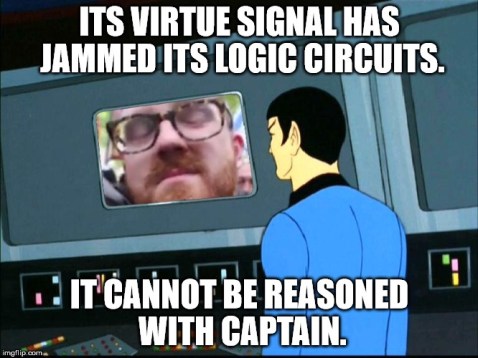
Altruism is an admirable quality, but advertising one’s altruism too much is rather unseemly. Social media has a way of coaxing humblebrags out of people, as well as not-so-humble brags: Everyone wants everyone to know that they care. That they give. That they support defenseless animals… and value diversity… and tread lightly upon the earth… and live “sustainably”… and despise polluters… and condemn racists… and want to shut down puppy mills…. and sneer upon bourgeois, consumerist values. They pay it forward!! And they want you to know!

These expressions of goodness come in many forms, and they are so common on social media that a bit of training permits a fairly rapid scroll rate through the news feed. People just can’t help but lay it on. Companies do too. So do politicians. Everyone wants everyone else to know how nice they are. It’s known as conspicuous virtue, or virtue signaling.

For now, let’s confine the discussion to relatively uncontroversial ideas or causes. If you are truly generous and perform good works on behalf of those less fortunate, that is all to the good. Racism is abhorrent. Sympathy for victims of crime, disease and natural disaster is a fine thing, including the puppies. Then what’s the harm in a little conspicuous virtue? Is it simply that it’s gauche?

Experimental economic research has discovered some nasty “license effects” associated not only with brags, but even good works with which one may be associated, such as an employer’s corporate social responsibility (CSR) efforts. That means, for example, that by announcing your goodness, you give yourself license to do bad. This interesting transcript of a Freakonomics Radio podcast includes an interview with University of Chicago economist John List and comments from social psychologist Daniel Effron of the London Business School. Both discuss research findings that should temper our enthusiasm for purposeful shows of virtue, as innocuous as those displays might seem.

First, however, List found a “supply side” benefit for employers when informing potential job seekers about the firm’s good works. He actually obtained a contract to perform a task, set up a company to do it, and then he recruited applicants. One group was told about the firm’s good works and a control group was not. The former group was significantly more productive on the job. So far, so good! However, in a separate experiment involving a more tedious task, some of the “CSR workers” had a tendency to cheat, perhaps subconsciously, in ways that made the job easier and faster, offsetting their own productivity advantage. These workers apparently felt that they had moral license to cheat, one conferred by the knowledge that the company was performing good works. Daniel Effron says:

“… people have surprisingly low standards for what counts as a moral license. It’s not just actively doing things that feel like good deeds. People feel like they have license when they reflect on the bad things they could have done, but didn’t.“

Effron describes an experiment demonstrating that consumers who declare a preference for green products have a greater likelihood of lying, cheating and stealing in a later task. Separately, those subjects who expressed support for Barrack Obama in 2008 felt more at liberty to express a seemingly prejudiced view on the hiring of a white or a black police officer. In another case, List notes that charitable deductions are associated with cheating on taxes in other ways.

It’s possible that all efforts to signal positive qualities to the world are associated with some offsetting, negative behavior. This possibility is illustrated by the research findings of Keith Wilcox, Henrik Hagtvedt, and Bruno Kocher in “The Less Conspicuous Road to Virtue: The Influence of Luxury Consumption on Socially Valued Behavior“. They find that while luxury consumption of goods is associated with greater work effort and acts of charity, conspicuous luxury consumption is associated with less effort and charity. This is a slightly different mechanism, as the signaling seems to be a show of one’s economic worth as opposed to a show of altruism or goodness. Nevertheless, the intent to signal reflects an other-directedness, not always a positive quality, and it also seems bound up with some negative social propensities.

Conspicuous consumption is a phenomenon described in 1899 by Thorstein Veblen in The Theory of the Leisure Class. Today, conspicuous virtue seems to inform a certain kind of conspicuous consumption. Joseph Rago notes the following:

“Conspicuous consumption stays with us today. But increasingly, it seems to me, many consumers are not seeking an outright demonstration of wealth. Instead, they consume to demonstrate their innate goodness. They spend not to suggest the deepness of their pockets but the deepness of their hearts. We inhabit, to update Veblen, an age of conspicuous virtue.

… Conspicuous virtue offers to those with guilty consciences a way to feel OK about consumerism. A fine scotch is vulgar. A “fair trade” scotch is righteous.”

A post on the Freakonomics blog in 2011 acknowledged a so-called “Prius” effect: people pay thousands of dollars above the economic value to the owner and the conservation value of the vehicle in order to signal to others their environmental commitment. Clearly, some consumers were willing to pay dearly for this conspicuous virtue.

Efforts to signal one’s virtue involve a desire to come off as “nice”. A recent post on the Declination blog discusses a so-called “niceness effect” under which observers seem to prefer facially “nice” points of view over the application of logic and dispassionate analysis. This brings us back into the more controversial forms of virtue signaling. A simple example: an expressed, “nice” preference for more generous public aid over proposals that improve work incentives. Unfortunately, the “niceness effect” leads to preferences for any number of irrational policies, as the author “Thales” at Declination so ably discusses. People are cowed by the appearance of “niceness” and want to look “nice” to their peers, damn the unintended consequences.

Negative license effects have been shown to exist as a dark underbelly associated with: the knowledge that one’s employer performs acts of social responsibility; not doing a bad thing that one could have done; stating a preference for goods presumed to be environmentally-sound; declaring support for electing the first African American candidate as president; claiming charitable tax deductions; and conspicuous luxury consumption. Still, granting oneself “moral license” almost surely does not offset the social benefits of real charitable acts. That’s pure conjecture on my part, of course, and it might not always be true. And I’m not so sure that acts of professing good works, intentions, and “niceness” do anything more than reassure self-nominated apostles of their goodness, while granting them license to please themselves in ways that might be regarded as sociopathic.

We live in an age of rampant narcissism, and social media can serve to magnify those tendencies. So please, promote your causes, but speak softly about your own contributions and good intentions, and try to resist the temptation to take moral license. Now where did I put the scotch?

Ex Ante Agreements, Ex Post Gripes

23 Tuesday May 2017

Posted by Nuetzel in Health Insurance, Profit Motive

≈ Leave a comment

Tags

Charity, Contracts, Health Insurance, Nonperformance, Policy Limit, Profit, Public Aid, Solvency, Uncompensated care

Anyone signing a contract better know the terms to which it binds them. They sign voluntarily and do so because they believe it has value. They are presumed to understand what they are obligated to pay and when; what they are entitled to receive, when, and under what circumstances; what actions (and non-actions) are required of them to “perform” under the contract; and what recourse they have should the counter-party fail to perform. The value they perceive upon signing is always based on an expectation. Sometimes, that expectation summarizes risks they are paying to avoid, even as a counter-party is more than willing to carry the risk. The contract is signed and everyone is happy… enough.

Health insurance is an example to which I’ve dedicated ample space over the past couple of weeks (see the links in the left margin). Obviously, one buys health insurance before knowing an entire series of outcomes. The contract specifies what kinds of expenses the insurer is obligated to pay. Insurance is a highly complex product, and so an insurance policy or contract must be relatively complex, as the cartoon above suggests. In a well-functioning market, however, the insured pays a premium no higher than they consider worthwhile. Everyone would like to pay less, but absent a government mandate (heh!), no one is obligated to buy.

The ink is dry and life goes on. The premium is paid, health needs arise, costs are incurred, and sometimes those costs exceed a limit (the deductible) above which the insurer is obligated to pay at least a portion.

A calamitous health event typically brings heavy costs, and this possibility is exactly why people buy coverage, and it is exactly why insurers demand sufficiently stiff premia. These things happen to a fairly predictable percentage of an insurer’s  customers, but with enough variance to make the cash flows risky. As a backstop, insurance contracts sometimes include limitations on total lifetime benefits or on payments for certain kinds of treatments. Pre-existing conditions are a prominent example of limiting the risks that enter the risk pool, but there are other possible limitations on treatments and other aspects of care. While these are known upfront, disastrous health outcomes and their financial consequences are not.

An increasingly common refrain is that no one should profit from an individual’s acute health care needs, and that health insurers do just that. For logical consistency, this same complaint should be leveled against doctors, nurses, paramedics, hospitals, medical equipment manufacturers, and pharmaceutical companies. They all earn income by providing for health care needs, whether medical or financial, and income is income, after all. Whether that income is a wage or a profit is irrelevant. They are both forms of compensation for the use of resources. The major difference between insurers and the other income-earners is that insurers handle the financial risk of potential health care needs and pay when those needs arise, within and up to policy limits.

The crux of the complaint, however, is that insurers can deny claims, thus protecting their profits. Certainly there are claims denied for which the rationale can be disputed. Just as certainly, a financially prudent insurance company must impose some limits on the benefits offered by their policies. These limitations might preserve profitability, but they also protect the contingent benefits of other insureds as well as the solvency of the carrier. Those objectives are not independent.

The insurance buyer reveals the value of the contract ex ante, but sour grapes are easily conjured ex post if a claim is denied, no matter the agreed-to provisions of the insurance contract. The insurer is under no greater obligation to pay costs in excess of policy limits than the doctor, the nurse, or the man in the street. Yet insurers take special blame when inadequate coverage is an issue, whatever the reason.

Hospitals and physician practices sometimes provide uncompensated care. There are also a number of support organizations for severely-ill but inadequately insured patients. So, private charity is one answer to the dilemma of extreme health-cost outcomes. Public aid is another, and the appropriate breadth of the state’s role in cases of pre-existing conditions and extreme individual health care costs is a legitimate question.

In the end, private health insurers provide a valuable service by pooling and carrying the financial risk of health care events faced by individuals. Health insurance profits as a share of owner’s equity have fallen well short of market-wide averages in recent years (see my last post), though I regularly hear outrageous claims about excessive profits in the industry.

It’s not unusual for a buyer to feel remorse after signing a deal, but in cases of health coverage shortfalls, one could say that the insured bet too little or qualified for too little, or one could say that society doesn’t set aside enough resources to adequately care for the sick. However, one cannot say that the resources dedicated to arranging private coverage deserve no reward, or that the business should be pillaged on account of certain policy limitations, or that the future claims of other policyholders should be hijacked. Those who proclaim such nonsense are guilty of severe ethical misjudgment.

Insurance Subsidies: Taxes vs. High Premiums

16 Tuesday May 2017

Posted by Nuetzel in Health Care, Subsidies, Taxes

≈ Leave a comment

Tags

Charity, Guaranteed Issue, Individual Mandate, Kevin Williamson, Managed Health Care, Megan McArdle, monopoly, Pre-Existing Conditions, Right To Health Care, Single-Payer, Voluntary Exchange, Woodrow Wilson

Here’s a question a friend posed: Why do we care whether health care coverage for high-risk individuals is subsidized by taxpayers versus premium payers via common (community) rating in a combined risk pool? For convenience, let’s call those two scenarios T and C. Under C there is no segmentation whatsoever, while T involves a division of individuals into two groups: standard and high risk. Both scenarios involve guaranteed issue, though T assumes that high-risk individuals must purchase their coverage in the appropriate market. I’ll tackle T first because separate treatment of the distinct risk archetypes yields results that are useful as a baseline.

Taxpayers Subsidize Pre-Existing Conditions

Under scenario T, suppose that all standard risks face the same expected outcome in each period. Everyone in that group pays based on their expected health care costs. In the end, some will have greater health care needs than others, but only a few will be truly unlucky, incurring extremely high health care expenses. On balance, the pooling of risk makes the arrangement sustainable. People enter into these contracts voluntarily because they are risk averse. No one forces them; they are capturing value from protection against financial ruin. The paid-in cash can be invested by the plan in the interim between premium and claims payments. The combination of premium payments and investment income must be enough to cover claims and allow the managers of the plan to defray their administrative costs and make a tidy profit. The profit matters because it attracts voluntary resources to bear on the problem of health-expense risk. Therefore, these insurance transactions are mutually beneficial to the insured and the owners of the insurer.

Conceivably, the smaller high-risk group could be handled the same way, as long as their aggregate health care expenses are predictable. Those expenses will be high, however, so the cost of coverage for individuals in such a pool might be prohibitive. One solution is to force taxpayers to subsidize coverage for this group. The transactions in this market are also mutually beneficial to the insureds and the insurers, just as in the market for standard risks. In both cases, the value to purchasers of coverage is no less than the cost of providing it, including compensation for any capital employed in the process.

In the simplified world of scenario T, we have an optimal insurance outcome for both standard and high-risk individuals. The downside is the cost of the subsidies to taxpayers, which distort a variety of incentives, including labor supply, saving and investment. These lead to misallocations, but they are spread across the economy rather than concentrated on the outcomes in a single market. Is this better than simply pooling all risks, as in Scenario C (common rating)?

Common (Community) Rating

Common rating means that all risks are combined into one pool and everyone is charged the same premium. High-risk individuals get to participate just as if they are standard risks. However, because the combined risk pool has greater expected health care costs on average than the standard risk population, the premium must be greater than the one charged to standard risks in Scenario T. Otherwise, the plan could not cover all expenses nor earn a profit. Worse yet, the standard risks now have an incentive to exit the market while high-risk individuals have every reason to leap in. This is called adverse selection, and it leads to the sort of insurance death spiral we’ve witnessed under Obamacare. And not only does the risk pool deteriorate: the incentive to offer coverage is diminished as well. Thus, an entire industry is rendered dysfunctional. Those who wish to pool together voluntarily in order to efficiently hedge their risks are, by law, prohibited from doing so. The next step might well be for government to mandate participation in an attempt to keep the plan afloat.

Those who favor forced redistribution (not my set) might have other reasons to prefer Scenario T, as it creates greater latitude for progressive tax funding of the subsidies. However, the subsidies themselves could be sensitive to income such that the risky but well-heeled pay more.

From a libertarian perspective, Scenario C has obvious drawbacks, starting with the coercion of insurers to provide coverage to the high-risk population at rates that do not compensate for risk. Then, too, the mis-pricing of risk places a burden on individuals of standard risk. With the pooling of all risks, community rating and coverage mandates result in individual and aggregate over-insurance against most types of risk, tying up scarce resources in insurance assets that could be invested more productively in other uses. In addition, resources are absorbed by compliance costs as authorities find it necessary to enforce the many rules made in hopes of proping-up an otherwise unsustainable arrangement.

Then There’s Single-Payer

It’s often argued that going beyond this point in Scenario C to a single-payer system will yield better outcomes at lower costs. Megan McArdle shreds this idea in a recent column: well over 40% of health care spending in the U.S. is paid by government already; the average growth of that share is even higher than private health care spending; the quality of care is often lower in the government health sector, and in any case, single payer systems around the world do not enjoy slower growth in costs. Rather, they started from lower levels of health care costs. Our relatively high level of costs in the U.S. evolved many years ago, before single-payer systems were adopted abroad. We have many more private and semi-private hospital rooms in the U.S., we often have greater availability of advanced technology, and waiting times for care tend to be significantly shorter.

The high standard of living in the U.S., i.e., our level of consumption, explains a lot of the gap in health care spending. Overall, our health care outcomes are good relative to other developed countries. Unfortunately, we’ve also pushed-up costs from the demand side by offering tax subsidies on employer-provided care, and government in the U.S. has had a role in “managing” health care since the time of the Woodrow Wilson Administration, largely to the detriment of cost control. Government control stultifies competition, creating monopoly-like conditions in both insurance and the provision of care. That manifests in higher profits, safer profits, or slovenly performance by organizations and agents that lack accountability to customers and market forces. Costs rise.

Liberty or Coercion

Libertarians will object to the tax in Scenario T, which like all taxation is coerced, but the taxes necessary to pay for adequate coverage for pre-existing conditions is minor relative to the potential costs of distorting the entire health insurance industry, repleat with the costs of government regulation and compliance that entails, and the potential for still more encroachment of government in health care.

Finally, the question posed by my friend about tax subsidies versus common insurance rating was prompted by a presumed “right to health care”. One must ask whether that right is legitimate. Kevin Williamson argues that scarcity interferes with any such claim. More to the point, in a free society, one cannot simply demand health care from another free individual. Our choices for distributing scarce health care fall into one of only two categories: voluntary and coerced. We should always prefer the former, which may take the form of charity or a mechanism under which care is provided via free exchange. The latter works very well when incentives are clear and pricing is efficient. For those who cannot participate in exchange for any reason, including pre-existing conditions that make coverage prohibitive, private charity is an alternative to government subsidies. At a minimum, charity should serve as an important relief valve for the burden on taxpayers. The Left, however, is always quick to condemn private charity as if it is somehow an illegitimate mechanism for solving social problems, but it is often superior to government action.

Follow Sacred Cow Chips on WordPress.com

Recent Posts

  • Immigration and Merit As Fiscal Propositions
  • Tariff “Dividend” From An Indigent State
  • Almost Looks Like the Fed Has a 3% Inflation Target
  • Government Malpractice Breeds Health Care Havoc
  • A Tax On Imports Takes a Toll on Exports

Archives

  • December 2025
  • November 2025
  • October 2025
  • September 2025
  • August 2025
  • July 2025
  • June 2025
  • May 2025
  • April 2025
  • March 2025
  • February 2025
  • January 2025
  • December 2024
  • November 2024
  • October 2024
  • September 2024
  • August 2024
  • July 2024
  • June 2024
  • May 2024
  • April 2024
  • March 2024
  • February 2024
  • January 2024
  • December 2023
  • November 2023
  • August 2023
  • July 2023
  • June 2023
  • May 2023
  • April 2023
  • March 2023
  • February 2023
  • January 2023
  • December 2022
  • November 2022
  • October 2022
  • September 2022
  • August 2022
  • July 2022
  • June 2022
  • May 2022
  • April 2022
  • March 2022
  • February 2022
  • January 2022
  • December 2021
  • November 2021
  • October 2021
  • September 2021
  • August 2021
  • July 2021
  • June 2021
  • May 2021
  • April 2021
  • March 2021
  • February 2021
  • January 2021
  • December 2020
  • November 2020
  • October 2020
  • September 2020
  • August 2020
  • July 2020
  • June 2020
  • May 2020
  • April 2020
  • March 2020
  • February 2020
  • January 2020
  • December 2019
  • November 2019
  • October 2019
  • September 2019
  • August 2019
  • July 2019
  • June 2019
  • May 2019
  • April 2019
  • March 2019
  • February 2019
  • January 2019
  • December 2018
  • November 2018
  • October 2018
  • September 2018
  • August 2018
  • July 2018
  • June 2018
  • May 2018
  • April 2018
  • March 2018
  • February 2018
  • January 2018
  • December 2017
  • November 2017
  • October 2017
  • September 2017
  • August 2017
  • July 2017
  • June 2017
  • May 2017
  • April 2017
  • March 2017
  • February 2017
  • January 2017
  • December 2016
  • November 2016
  • October 2016
  • September 2016
  • August 2016
  • July 2016
  • June 2016
  • May 2016
  • April 2016
  • March 2016
  • February 2016
  • January 2016
  • December 2015
  • November 2015
  • October 2015
  • September 2015
  • August 2015
  • July 2015
  • June 2015
  • May 2015
  • April 2015
  • March 2015
  • February 2015
  • January 2015
  • December 2014
  • November 2014
  • October 2014
  • September 2014
  • August 2014
  • July 2014
  • June 2014
  • May 2014
  • April 2014
  • March 2014

Blogs I Follow

  • Passive Income Kickstart
  • OnlyFinance.net
  • TLC Cholesterol
  • Nintil
  • kendunning.net
  • DCWhispers.com
  • Hoong-Wai in the UK
  • Marginal REVOLUTION
  • Stlouis
  • Watts Up With That?
  • Aussie Nationalist Blog
  • American Elephants
  • The View from Alexandria
  • The Gymnasium
  • A Force for Good
  • Notes On Liberty
  • troymo
  • SUNDAY BLOG Stephanie Sievers
  • Miss Lou Acquiring Lore
  • Your Well Wisher Program
  • Objectivism In Depth
  • RobotEnomics
  • Orderstatistic
  • Paradigm Library
  • Scattered Showers and Quicksand

Blog at WordPress.com.

Passive Income Kickstart

OnlyFinance.net

TLC Cholesterol

Nintil

To estimate, compare, distinguish, discuss, and trace to its principal sources everything

kendunning.net

The Future is Ours to Create

DCWhispers.com

Hoong-Wai in the UK

A Commonwealth immigrant's perspective on the UK's public arena.

Marginal REVOLUTION

Small Steps Toward A Much Better World

Stlouis

Watts Up With That?

The world's most viewed site on global warming and climate change

Aussie Nationalist Blog

Commentary from a Paleoconservative and Nationalist perspective

American Elephants

Defending Life, Liberty and the Pursuit of Happiness

The View from Alexandria

In advanced civilizations the period loosely called Alexandrian is usually associated with flexible morals, perfunctory religion, populist standards and cosmopolitan tastes, feminism, exotic cults, and the rapid turnover of high and low fads---in short, a falling away (which is all that decadence means) from the strictness of traditional rules, embodied in character and inforced from within. -- Jacques Barzun

The Gymnasium

A place for reason, politics, economics, and faith steeped in the classical liberal tradition

A Force for Good

How economics, morality, and markets combine

Notes On Liberty

Spontaneous thoughts on a humble creed

troymo

SUNDAY BLOG Stephanie Sievers

Escaping the everyday life with photographs from my travels

Miss Lou Acquiring Lore

Gallery of Life...

Your Well Wisher Program

Attempt to solve commonly known problems…

Objectivism In Depth

Exploring Ayn Rand's revolutionary philosophy.

RobotEnomics

(A)n (I)ntelligent Future

Orderstatistic

Economics, chess and anything else on my mind.

Paradigm Library

OODA Looping

Scattered Showers and Quicksand

Musings on science, investing, finance, economics, politics, and probably fly fishing.

  • Subscribe Subscribed
    • Sacred Cow Chips
    • Join 128 other subscribers
    • Already have a WordPress.com account? Log in now.
    • Sacred Cow Chips
    • Subscribe Subscribed
    • Sign up
    • Log in
    • Report this content
    • View site in Reader
    • Manage subscriptions
    • Collapse this bar
 

Loading Comments...