
Tags
AI Doomers, AI Force, AI Pause, AI Regulation, Alex Tabarrok, Anthropic, Bootleggers and Baptists, Claus Wilke, Cognitive Apathy, Existential Risks, Francis Turner, Fraud, Hallucination, Luddites, National Security, Noah Smith, Open AI, Per Byland, Pete Hegseth, Product Liability, Property Rights, Public Choice, Regulatory Capture, rent seeking, Self-Regulation, Supervirus, Trump Administration
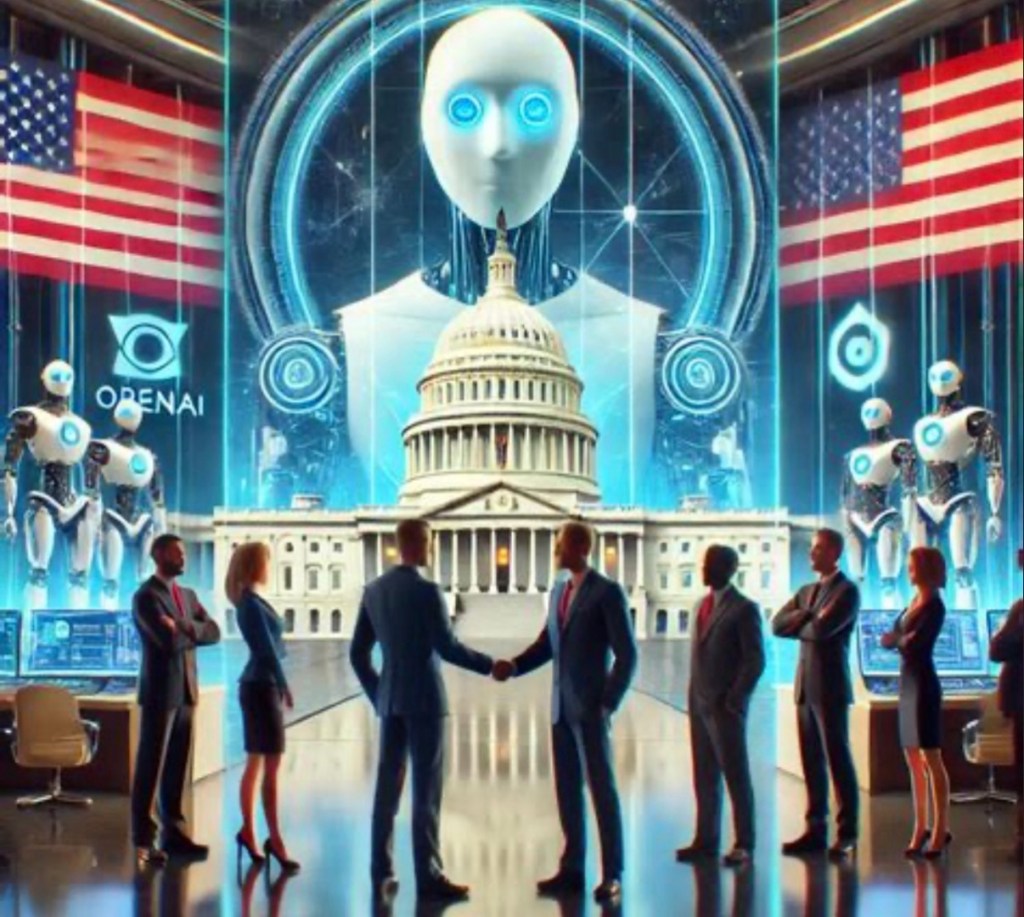
Please, no. Let’s not get too aggressive about regulating AI development and use.
Sure, certain kinds of AI regulation are worthwhile and probably unavoidable, but those theoretically fall within the bounds of existing law: the framework in which liability issues, property rights, and claims of fraud are settled. Otherwise, there may be a role for industry self-regulation, perhaps within the kind of framework outlined here. Beyond that, broader and more intrusive government regulation and oversight of AI companies would serve to slow or retard development, and thereby hamper progress on addressing safety and security (because ongoing development will help reveal weaknesses). It would also stifle industry competition in the U.S., and cede advantages to adversaries, particularly China.
Promise and Limits
My position on AI regulation flows from optimism about what AI can accomplish as well as recognition of AI’s inherent limits. It is a powerful technology, but it does not “reason”. It is capable of real innovation, but only to the extent that it mechanically and iteratively constructs solutions based on a catalogue of past knowledge. Of course, it does the latter exceptionally well, and its solutions can be quite novel, drawing upon complex links between phenomena across many dimensions, but that is not the same as creative genius.
Those who anthropomorphize AI tend to fall for superstitions about new technology that have plagued humanity for centuries and have, at times, hindered the advancement of human well being. Yet we have prospered from new technologies in spite of this noise.
Begging For Discipline
Unfortunately, recent warnings from some AI executives and developers have been taken to heart across the political spectrum, though not particularly within the Trump Administration. While I have been critical of many of Trump’s policy positions and initiatives, deregulation has been a bright spot (if very uneven), and the promise of a light touch on AI regulation is another plus. Yet Trump has allowed the Pentagon to prohibit defense contracts with Anthropic as a security concern. In addition, the proposed “AI Force” raises questions, especially in light of Defense (War!) Secretary Pete Hegseth’s Anthropic decision. Presumably, the AI Force would be a branch of Homeland Security. AI obviously has significant military and defense applications. But could such an AI Force remain above the regulatory fray even as it designates certain applications or models to be a threat to national security? And could such a designation be contested?
The “doomers” within the AI industry are an obvious irony. They warn that their work might have “existential” consequences but continue that work under what we might call a self-compelled burden of competence. If anyone and everyone is going to do AI, then they too must do it too, if only for the good of humanity. But they insist that joining forces with the federal government to regulate or even pause development will somehow save the day, despite the global nature of the competition.
Perhaps Deeper Motives
To me, their rationale for government regulation seems implausible. The big AI companies are massive enterprises, and whether or not one believes they could “capture” a new regulatory body, they are nonetheless highly interested in shaping the future of any rules and regulation to which they and their competitors would be subject.
Alex Tabarrok insists that regulatory capture is typically confined to mature, regulated industries in his post “What Regulatory Capture Actually Looks Like”. He not only doubts that AI doomers have designs on capturing regulators; he also believes that the doomers expressed fears are completely sincere.
As one of Tabarrok’s commenters suggests, however, the AI executives’ behavior comports with the “bootleggers and baptists” theory of public choice, whereby politicians or influential parties claim the highest motives in serving the public interest and yet stand to reap economic gains from “protective” restrictions. In the case of AI, the executives may well be playing both roles. And they might happily accept both roles even if they believe their own warnings of doom. In fact, any rents the big AI concerns gain as a result of new regulations might be viewed as deserved, or unavoidable in any case.
Another plausible explanation for the pro-regulatory (and pro-pause) position taken by some players, notably Anthropic and OpenAI, is discussed by Francis Turner. It has to do with a desperate need for cash flow. One avenue would involve an effort to:
“… wriggle out of the optimistic compute commitments they have made. … both Open AI and Anthropic have made enormous commitments to purchase compute which has been what has driven the explosive growth in data centers. Unfortunately for Big AI the demand simply doesn’t seem to be there. Or at least the demand to pay the prices Big AI wants to charge.“
Turner also notes that a regulatory push to ban Chinese models would be seen as a competitive boost for these companies. Finally, Turner believes the big AI companies employ individuals with a personal drive to control the evolution and use of AI. That’s not hard to believe! A regulatory regime would offer ample opportunities for industry insiders to step into roles in which they could do just that. Possible motives are ample, whether borne of altruism, power-seeking, or the pursuit of economic gain. We could call this mere rent seeking or political bargaining, rather than regulatory capture, but some sort of capture might well be a goal.
Fears and Risks
Again, cries for regulation are accompanied by a stoking of fears that AI presents existential risks for humanity. One prominent example is closely associated with Noah Smith, though I’m sure he’s not the first to discuss it. That’s the idea that AI will be used to design a deadly supervirus that will wipe out most of the human race. This fear is overblown and unrealistic. A number of extremely deadly pathogens already exist, ebola being the perhaps the most contagious and deadly. Local deployments could surely be used to infect a large number of people, but that would be difficult to pull off and we are capable of containment. It is hardly an existential threat to humanity. As to the creation and spread of deadly new bugs, practical obstacles drastically reduce the likelihood of such an outcome, particularly on an existential scale, as outlined by Claus Wilke in “I’m sorry, you’re not going to die from an AI-engineered supervirus”.
Perhaps the most significant risks presented by AI fall within the realm of cybersecurity. Certain security breaches could conceivably threaten large numbers of people, but they are unlikely to approach existential levels for humanity.
The potential for plain old fraud via AI is real, including the creation and propagation of misinformation at scale. This is probably as much a human or user problem as an AI problem. AI hallucinations are an aspect of it as well, but that’s really an obstacle to adoption, so AI companies are working hard to minimize the problem. Damages under all of these categories should fall within the traditional legal bounds of liability, whether the result of intent or negligence. The latter distinction should carry less weight given that AI decisions are often shrouded within a so-called “black box”. Of course, assigning liability assumes that a responsible party can be identified, but legally defining LLMs as products helps to solve that problem.
Turner also raises the possibility of severe financial damage from an AI agent given authority over large amounts of capital, especially if assigned malicious financial objectives. This category of damage falls within the scope of existing securities laws and regulation.
Finally, some have warned of a risk that humans will suffer “cognitive atrophy” from relying on AI. In fact, it’s said to be a reality even now, and that it will become more severe as humans rely on AI to solve more problems and perform tasks. Will AI cause humans to devolve and face a more brutish existence? While I accept that AI presents a risk of cognitive atrophy, there are also ways in which AI stimulates intellectual curiosity about all manner of things. Much depends on the spirit in which AI is approached. It must be used as a tool and a complement to human intellectual pursuit, not a substitute for it, but that depends in large part on the user. I’m confident that the human spirit of inquiry will remain as strong as ever.
Summary
To sum up my general view regarding the pleadings for regulation of AI, I offer this quote from Per Byland:
“The State’s core function, in both theory and practice, is to give the ruling class a reliable way to extract wealth from society while posing as selfless public servants. It’s an ideal setup for the greedy, self‑absorbed, and unproductive.“
Except in this case we see the ownership and employees within a highly productive sector of the economy ostensibly rooting for the state to make them less productive. Or are they really? If it’s safety they want, then it’s incumbent on them to make their products safe, whatever that might entail, or face legal consequences. Continued development is likely to reveal risks as well as better ways to mitigate those risks.
If it’s economic advantage that Big AI craves, that answer too is in their very hands: they must compete in the AI marketplace to produce capable, reliable, and safe products that buyers value. Adopting a rigid government regulatory solution or a pause in development would likely bring the sacrifice of U.S. competitive advantages in AI and ultimately a centrally-planned and ineffective approach to AI.
As for designs on gaining a political advantage, we can hope that AI doomers will ultimately go the way of all Luddites before them.

