• About

Sacred Cow Chips

Sacred Cow Chips

Tag Archives: Fossil fuels

The Taxing Logic of Carbon Cost Guesswork

11 Saturday Mar 2017

Posted by Nuetzel in Environment, Taxes, Uncategorized

≈ 1 Comment

Tags

Anthopomorphic, Carbon Dividend, Carbon Tax, Climate Leadership Council, Corrective Taxation, External costs and benefits, Fossil fuels, Greg Mankiw, Martin Feldstein, Paul Driessen, Roger Besdek, Ronald Bailey, Ted Halstead, Universal Basic Inome, Watt's Up With That?

An article by three prominent economists* in the New York Times this week summarized the Climate Leadership Council’s Conservative Case for Climate Action“. The “four pillars” of this climate plan include (1) a revenue-neutral tax on carbon emissions, which are used to fund… (2) quarterly “carbon dividend” payments to all Americans; (3) border tax adjustments to account for carbon emissions and carbon taxes abroad; (4) eliminating all other regulations on emissions of carbon. The “Case” is thus a shift from traditional environmental regulation to a policy based on tax incentives, then wrapped around a redistributive universal income mechanism.

I’ll dispense with the latter “feature” by referencing my recent post on the universal basic income: bad idea! The economists advocate for the carbon dividend sincerely, but also perhaps as a political inducement to the left and confused centrists.

The Limits of Our Knowledge

The most interesting aspect of the “Case” is how it demonstrates uncertainty around the wisdom of carbon restrictions of any kind: traditional regulations, market-oriented trading, or tax incentives. Those all involve assumptions about the extent to which carbon emissions should be restricted, and it’s not clear that any one form of restriction is more ham-handed than another. Traditional regulation may restrict output in various ways. For example, standards on fuel efficiency are an indirect way of restricting output. A carbon market, with private trading in assigned “rights” to emit carbon, is more economically efficient in the sense that a tradeoff is involved for any decision having carbon implications at the margin. However, the establishment of a carbon market ultimately means that a limit must be imposed on the total quantity of rights available for trading.

A carbon tax imputes a cost of carbon emissions to society. It also imposes tradeoffs, so it is similar to carbon trading in being more economically efficient than traditional regulation. A producer can attempt to adjust a production process such that it emits less carbon, and the incidence of the tax falls partly on final consumers, who adjust the carbon intensity of their behavior accordingly. For our purposes here, a tax is more illuminating in the sense that we can assess inputs to the cost imputation. Even a cursory examination shows that the cost estimate can vary widely given reasonable differences in the inputs. So, in a sense, a tax helps to reveal the weakness of the case against carbon and the carbon-based rationale for allowing a coercive environmental authority to sclerose the arteries of the market system.

The three economists propose an initial tax of $40 per metric ton of emitted carbon. The basis for that figure is the so-called “social cost of carbon” (SCC), a theoretical construct that is not readily measured. Economists have long subscribed to the theory of social costs, or negative externalities, and to the legitimacy of government action to force cost causers to internalize social costs via corrective taxation. However, the wisdom of allowing the state to intrude upon markets in this way depends on our ability to actually measure specific external costs.

Fatuous Forecasts

The SCC is based on the presumed long-run costs of an incremental ton of carbon in the environment. I do not use the word “presumed” lightly. The $40 estimate subsumes a variety of speculative assumptions about the climate’s response to carbon emissions, the future economic impact of that response, and the rate at which society should be willing to trade those future costs against present costs. The figure only counts costs, without considering the huge potential benefits of warming, should it actually occur.

Ronald Bailey at Reason illustrates the many controversies surrounding the calculation of the SCC. He notes the tremendous uncertainty surrounding an Obama Administration estimate of $36 a ton in 2007 dollars. It used an outdated climate sensitivity figure much higher than more recent estimates, which would bring the calculated SCC down to just $16.

A discount rate of 3% was applied to projected future carbon costs to produce an SCC in present value terms. The idea is that today’s “collective” would be indifferent between paying this cost today and suffering the burden of future costs inflicted by carbon emissions. This presumes that 3% is the expected return society can earn for the future by investing resources today. Unfortunately, the SCC is tremendously sensitive to the discount rate. Together with the more realistic estimate of climate sensitivity, a discount rate of 7% (the Office of Management and Budget’s regulatory guidance) would actually make the SCC negative!

Another U.S. regulatory standard, according to Bailey, is that calculations of social cost are confined to costs borne domestically. However, the SCC attempts to encompass global costs, inflating the estimate by a factor of 4 to 14 times. The justification for the global calculation is apparent righteousness in owning up to the costs we cause as a nation, and also for the example it sets for other countries in crafting their own carbon policies. Unfortunately, it also magnifies the great uncertainties inherent in this messy calculation.

Lack of Evidence

This guest essay on the Watts Up With That? web site by Paul Driessen and Roger Bezdek takes a less gracious view of the SCC than Bailey, if that is possible. As they note, in addition to climate sensitivity, the SCC must come to grips with the challenge of measuring the economic damage caused by each degree of warming. This includes factors far into the future that simply cannot be projected with any confidence. We are expected to place faith in distant cost estimates of heat-related deaths, widespread crop failures, severe storm damage, coastal flooding, and many other calamities that are little more than scare stories. For example, the widely reported connection between atmospheric carbon concentration and severe weather is demonstrably false, as are reports that Pacific islands have been swallowed by the sea due to global warming.

Ignoring the Benefits

The SCC makes no allowance for the real benefits of burning fossil fuels, which have been a powerful engine of economic growth and still hold the potential to lift the underdeveloped world out of poverty and environmental  distress. The benefits of carbon also include fewer cold-related deaths, higher agricultural output, and a greener environment. It isn’t surprising that these benefits are ignored in the SCC calculation, as any recognition of that promise would undermine the narrative that fossil fuels are unambiguously evil. Indeed, an effort to calculate only the net costs of carbon emissions would likely expose the entire exercise as a sham.

The “four pillars” of the Climate Leadership Council‘s case for climate action rest upon an incredibly flimsy foundation. Like anthropomorphic climate change itself, appropriate measurement of a social cost of carbon is an unsettled issue. Its magnitude is far too uncertain to use as a tool of public policy: as either a tax or a rationale for carbon regulation of any kind. And let’s face it, taxation and regulation are coercive acts that better be undertaken with respect for the distortions they create. In this case, it’s not even clear that carbon emissions should be treated as an external cost in many applications, as opposed to an external benefit. So much for the corrective wisdom of authorities. The government is not well-equipped to centrally plan the economy, let alone the environment.

  • The three economists are Martin Feldstein, Ted Halstead and Greg Mankiw.

Carbon Farce Meets Negative Forcings

22 Saturday Aug 2015

Posted by Nuetzel in Global Warming, Technology

≈ 2 Comments

Tags

Carbon Capture, Carbon Forcing Models, Carbon Nanotubes, Climate Change, crony capitalism, Fossil fuels, Green Cronies, MIT Technology Review, Nanotechnology, Negative Forcing, Peter Yeadon, Shape Shifting, Variable Transparency

NanoMan copy

A new technology is being refined that could reverse years of carbon forcings, given sufficiently wide application, and do so at a profit. That profit should not require the kind of costly subsidies that are now routinely paid to green crony capitalists. Instead, the profit should derive from real market demand for a valuable material. The MIT Technology Review covers the technology under “… How To Suck Carbon From The Air, Make Stuff From It“. It makes possible a form of carbon capture that produces carbon nanotubes, a promising material already in use but having much wider potential. From the second link above:

“Carbon nanotubes are a great example of how useful materials are being developed. This material is said to be one hundred times stronger than steel because of its ‘molecular perfection’ as explained in the paper ‘Year 2050: Cities in the Age of Nanotechnology’ by Peter Yeadon. In addition, because carbon atoms can bond with other matter; such material can be an ‘insulator, semi-conductor or conductor of electricity’”.

Carbon nanotubes have remarkable properties that will revolutionize fabrics and allow buildings to have incredible strength, “transient features” such as variable transparency, and shape shifting. The new technology is said to be more efficient than existing methods of producing carbon nanotubes, and probably much cheaper.

The first link above quotes the developers on the technology’s massive potential for carbon capture:

“They calculate that given an area less than 10 percent of the size of the Sahara Desert, the method could remove enough carbon dioxide to make global atmospheric levels return to preindustrial levels within 10 years, even if we keep emitting the greenhouse gas at a high rate during that period.“

That area is twice the size of California, but a much more modest deployment would certainly reduce the political pressure to decrease carbon emissions. The extent would depend upon the demand for nanotubes, which is expected to grow dramatically in the presence of declining costs. Perhaps we’ll want more carbon emissions if nanotube materials come into widespread use. That would be a welcome development in the developing world, where fossil fuels hold the potential to lift millions out of poverty, as they have for advanced countries in the past. However, such a change would require elites to acknowledge and yield to the supremacy of markets over politics.

A technology capable of such significant carbon capture obviously constitutes a negative carbon “forcer”. Therefore, another implication is that climate models with a heavy emphasis on carbon forcings may be rendered moot. Those models have persistently generated over-predictions of global temperatures, so a deemphasis is already long overdue.

Another hat tip to my buddy John Crawford, who recently has fed me some great information. John should accept my invitation to guest-blog on SCC sometime soon, or start his own blog!

Human Achievement, Comfort and Joy

28 Saturday Mar 2015

Posted by Nuetzel in Human Welfare

≈ 1 Comment

Tags

Alex Epstein, Competitive Enterprise Institute, Earth Hour, Fossil fuels, Free Markets, Human Achievement Hour, International Dateline, Matt Ridley, Ronald Bailey, The Rational Optimist, Tonga

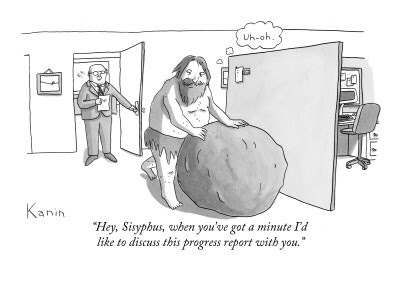
sisyphus-when-you-ve-got-a-minute

2015’s Human Achievement Hour (HAH) starts at 8:30 p.m. on Saturday, March 28. That’s tomorrow night! It starts at 8:30  p.m. in every time zone, so it’s a rolling celebration. But you can celebrate human achievement for a full 24 hours, starting Saturday at about 2:30 a.m. Central Daylight Time, when it will be 8:30 p.m. Saturday in Tonga, just over the international date line. It’s coming up soon! This will be my third year of celebrating HAH. To mark the occasion I just might start celebrating with the Tongans. Here is the Facebook event page for HAH. The Competitive Enterprise Institute is the sponsor of HAH. Here is the first part of their description, followed by their suggestion for how to celebrate.

“Observing Human Achievement Hour is about paying tribute to the human innovations that have allowed people around the globe to live better, fuller lives, while also defending the basic human right to use energy to improve the quality of life of all people.” “In order to celebrate with CEI and friends worldwide, we invite you to enjoy the benefits of energy, capitalism, and human innovation by utilizing your favorite innovation or human advancement…“

Once again this year, I will illuminate every lightbulb in my home to pay homage to the wonder of widely distributed electricity and the tremendous benefits derived from our ability to harness the power of fossil fuels. In a review of Alex Epstein’s The Moral Case for Fossil Fuels, Ronald Bailey of Reason says:

“As humanity burned more fossil fuels and increased carbon dioxide in the atmosphere, human lives dramatically improved. ‘Weather, climate, and climate change matter—but not nearly as much as they used to, thanks to technology,’ Epstein writes. For example, the death rate from extreme weather events has dropped 98 percent since 1920. Indeed, the chief benefit of burning fossil fuels has been longer and healthier human lives. The central idea of Epstein’s book is that ‘more energy means more ability to improve our lives; less energy mean less ability—more helplessness, more suffering, and more death.’“

Matt Ridley adds his thoughts on the benefits of fossil fuels at The Rational Optimist blog. Both Ridley and Bailey are confident that humans will one day achieve such efficiencies in the production of energy from renewable sources as to be competitive with fossil fuels. That will be worth celebrating. We are not there yet, however, and we do ourselves no favor in attempting to restrict fossil fuel consumption in the meantime. In fact, the risks of anthropomorphic global warming are far less severe than climate activists insist. Moreover, a warmer climate would not be unambiguously bad for people.

It is no accident that HAH is scheduled to coincide with Earth Hour, a “celebration” that stands in stark contrast to HAH in its antipathy for free market institutions and its condemnation of humankind’s relatively recent success in adapting to our planet’s environment. But there is no doubt that our progress in reducing poverty has hinged on the complementary nature of human ingenuity and the free market, the latter being a fairly recent (on historical scales) and most powerful innovation for promoting voluntary human cooperation and enrichment. Here is a recent Ridley post in which he elaborates on reasons for continued optimism. A quote:

“For 200 years, pessimists have had all the headlines-even though optimists have far more often been right. There is immense vested interest in pessimism. No charity ever raised money by saying things are getting better. No journalist ever got the front page writing a story about how disaster was now less likely. Pressure groups and their customers in the media search even the most cheerful statistics for glimmers of doom. Don’t be browbeaten-dare to be an optimist!“

Let’s celebrate for the right reasons. The flourishing of human welfare in the face of a harsh natural environment is real achievement.

Live Long and Prosper With Fossil Fuels

12 Friday Dec 2014

Posted by Nuetzel in Uncategorized

≈ 2 Comments

Tags

Alex Epstein, Alternative energy, Bryan Caplan, Energy subsidies, Fossil fuels, Nuclear power, regressivity, The Moral Case For Fossil Fuels

AltFuelReindeer

Do your friends have even a clue as to the massive cost of eliminating fossil fuels? What it would mean for their way of life? Perhaps they do, but it’s not polite to admit to such obvious truths in many circles. Alex Epstein cares enough to tell the world about the spectacular benefits and currently dismal alternatives to fossil fuels in his new book, The Moral Case For Fossil Fuels. His thesis and and a few of his arguments are reviewed in a pair of posts by Bryan Caplan, who really likes the book. According to Caplan:

“Epstein’s book has two key claims. His first claim is descriptive: Laymen and experts alike greatly underestimate the benefits of fossil fuels and greatly overestimate their costs… .

Epstein’s second key claim is normative: Human well-being is the one fundamentally morally valuable thing. Unspoiled nature is only great insofar as mankind enjoys it… .”

Both claims strike me as reasonable, though the first is true only as a generalization about modern energy mythology, punditry and statist philosophy. In fact, one might say that society acts as if it understands the benefits of fossil fuels very well, as evidenced by our emphasis on maintaining a high and/or growing standard of living supported by these energy sources. Yet the popular misconceptions are a reality, and we persist in choosing leaders who favor policies that handicap fossil fuels and human well-being.

Caplan offers some choice quotes from Epstein’s book. I repeat only three. The first is on the benefits of plentiful energy:

“Energy is what we need to build sturdy homes, to purify water, to produce huge amounts of fresh food, to generate heat and air-conditioning, to irrigate deserts, to dry malaria-infested swamps, to build hospitals, and to manufacture pharmaceuticals, among many other things. And those of us who enjoy exploring the rest of nature should never forget that energy is what enables us to explore to our heart’s content, which preindustrial people didn’t have the time, wealth, energy, or technology to do.”

The second quote might seem controversial to some, but it is unequivocally true:

“[W]hen we look at the data, a fascinating fact emerges: As we have used more fossil fuels, our resource situation, our environment situation, and our climate situation have been improving, too.”

The third quote is about the drawbacks of some prominent alternative energy sources:

“Traditionally in discussions of solar and wind there are two problems cited: the diluteness problem and the intermittency problem. The diluteness problem is that the sun and the wind don’t deliver concentrated energy, which means you need a lot of materials per unit of energy produced…

Such resource requirements are a big cost problem, to be sure, and would be one even if the sun shone all the time and the wind blew all the time. But it’s an even bigger problem that the sun and wind don’t work that way. That’s the real problem– the intermittency problem, or more colloquially, the unreliability problem. As we saw in the Gambian hospital, it is of life and death importance that energy be reliable.”

There is no doubt that technology will someday bring better and cleaner energy sources, but we are nowhere close. The flow of subsidies to weak alternatives destroys resources, and the subsidies themselves skew heavily toward the upper end of the wealth distribution. And of course, popular fears about nuclear energy have limited our ability to diversify. For the indefinite future, we would do well to embrace plentiful and cheap fossil fuels, especially to help reduce poverty and poor living conditions in the developing world.

Divesting of Human Well Being

04 Tuesday Nov 2014

Posted by Nuetzel in Uncategorized

≈ 2 Comments

Tags

American University, Benjamin Zycher, College Endowments, Divestment, Energy, Fossil fuels, Harvard, Julia Morriss, Political Correctness

guilt-ridden

The movement to be “politically correct” among college endowments and other funds has included a push to divest of assets in industries that extract, refine or distribute fossil fuels. A bright student at American University named Julia Morriss penned this opinion piece on divestment in the university’s student newspaper. She says:

“As you read this on your iPhone, eat an organic avocado grown in California and buy a plane ticket home for winter break, I urge you to think about what a world without fossil fuel use would mean. Energy is embedded in virtually everything we do and consume, from life-saving drugs to our clothing. …This would be a different story if a viable option to fossil fuels existed that could handle all the world’s needs. But sadly we are not there yet.

And this isn’t just about getting to keep your iPhone. Lower-income households spend almost a quarter of their income on energy. Cutting out fossil fuels would cause energy prices to soar, punishing the poor the most.”

Harvard’s President sensibly voiced his opposition to fossil fuel divestment in a recent statement. Here is a well-articulated condemnation of the divestment movement from Benjamin Zycher entitled “The Breathless Hypocrisy Driving Energy ‘Divestment’“. He says this:

“So if investment in fossil-fuel sectors engenders some sort of moral quandary, does the same principle apply to investment in industries that use energy? After all, they are responsible for the very existence of the energy producers; will the divestment campaign expand to agriculture, manufacturing, transportation, retailing, the household sector, and all the rest?”

Read the whole thing, as they say.

Low-Carbon Poverty & Death

06 Tuesday May 2014

Posted by Nuetzel in Uncategorized

≈ 1 Comment

Tags

Africa, Climate Change, Economic Development, Fossil fuels

Image

Sacrificing Africa to the cause of preventing climate change represents an act of well-intentioned brutality by the environmental left. To begin with, the science of climate change is suspect on theoretical and empirical grounds. To use that questionable science as a pretext for denying the third world cheap fossil fuels for economic development is nothing short of cruel. In fact, the climate alarmists would foreclose the possibility of leveraging additional CO2 to enable actions that could improve the environment in other, more highly-valued ways (by eliminating disease, for example). 

Newer posts →
Follow Sacred Cow Chips on WordPress.com

Recent Posts

  • The Case Against Interest On Reserves
  • Immigration and Merit As Fiscal Propositions
  • Tariff “Dividend” From An Indigent State
  • Almost Looks Like the Fed Has a 3% Inflation Target
  • Government Malpractice Breeds Health Care Havoc

Archives

  • January 2026
  • December 2025
  • November 2025
  • October 2025
  • September 2025
  • August 2025
  • July 2025
  • June 2025
  • May 2025
  • April 2025
  • March 2025
  • February 2025
  • January 2025
  • December 2024
  • November 2024
  • October 2024
  • September 2024
  • August 2024
  • July 2024
  • June 2024
  • May 2024
  • April 2024
  • March 2024
  • February 2024
  • January 2024
  • December 2023
  • November 2023
  • August 2023
  • July 2023
  • June 2023
  • May 2023
  • April 2023
  • March 2023
  • February 2023
  • January 2023
  • December 2022
  • November 2022
  • October 2022
  • September 2022
  • August 2022
  • July 2022
  • June 2022
  • May 2022
  • April 2022
  • March 2022
  • February 2022
  • January 2022
  • December 2021
  • November 2021
  • October 2021
  • September 2021
  • August 2021
  • July 2021
  • June 2021
  • May 2021
  • April 2021
  • March 2021
  • February 2021
  • January 2021
  • December 2020
  • November 2020
  • October 2020
  • September 2020
  • August 2020
  • July 2020
  • June 2020
  • May 2020
  • April 2020
  • March 2020
  • February 2020
  • January 2020
  • December 2019
  • November 2019
  • October 2019
  • September 2019
  • August 2019
  • July 2019
  • June 2019
  • May 2019
  • April 2019
  • March 2019
  • February 2019
  • January 2019
  • December 2018
  • November 2018
  • October 2018
  • September 2018
  • August 2018
  • July 2018
  • June 2018
  • May 2018
  • April 2018
  • March 2018
  • February 2018
  • January 2018
  • December 2017
  • November 2017
  • October 2017
  • September 2017
  • August 2017
  • July 2017
  • June 2017
  • May 2017
  • April 2017
  • March 2017
  • February 2017
  • January 2017
  • December 2016
  • November 2016
  • October 2016
  • September 2016
  • August 2016
  • July 2016
  • June 2016
  • May 2016
  • April 2016
  • March 2016
  • February 2016
  • January 2016
  • December 2015
  • November 2015
  • October 2015
  • September 2015
  • August 2015
  • July 2015
  • June 2015
  • May 2015
  • April 2015
  • March 2015
  • February 2015
  • January 2015
  • December 2014
  • November 2014
  • October 2014
  • September 2014
  • August 2014
  • July 2014
  • June 2014
  • May 2014
  • April 2014
  • March 2014

Blogs I Follow

  • Passive Income Kickstart
  • OnlyFinance.net
  • TLC Cholesterol
  • Nintil
  • kendunning.net
  • DCWhispers.com
  • Hoong-Wai in the UK
  • Marginal REVOLUTION
  • Stlouis
  • Watts Up With That?
  • Aussie Nationalist Blog
  • American Elephants
  • The View from Alexandria
  • The Gymnasium
  • A Force for Good
  • Notes On Liberty
  • troymo
  • SUNDAY BLOG Stephanie Sievers
  • Miss Lou Acquiring Lore
  • Your Well Wisher Program
  • Objectivism In Depth
  • RobotEnomics
  • Orderstatistic
  • Paradigm Library
  • Scattered Showers and Quicksand

Blog at WordPress.com.

Passive Income Kickstart

OnlyFinance.net

TLC Cholesterol

Nintil

To estimate, compare, distinguish, discuss, and trace to its principal sources everything

kendunning.net

The Future is Ours to Create

DCWhispers.com

Hoong-Wai in the UK

A Commonwealth immigrant's perspective on the UK's public arena.

Marginal REVOLUTION

Small Steps Toward A Much Better World

Stlouis

Watts Up With That?

The world's most viewed site on global warming and climate change

Aussie Nationalist Blog

Commentary from a Paleoconservative and Nationalist perspective

American Elephants

Defending Life, Liberty and the Pursuit of Happiness

The View from Alexandria

In advanced civilizations the period loosely called Alexandrian is usually associated with flexible morals, perfunctory religion, populist standards and cosmopolitan tastes, feminism, exotic cults, and the rapid turnover of high and low fads---in short, a falling away (which is all that decadence means) from the strictness of traditional rules, embodied in character and inforced from within. -- Jacques Barzun

The Gymnasium

A place for reason, politics, economics, and faith steeped in the classical liberal tradition

A Force for Good

How economics, morality, and markets combine

Notes On Liberty

Spontaneous thoughts on a humble creed

troymo

SUNDAY BLOG Stephanie Sievers

Escaping the everyday life with photographs from my travels

Miss Lou Acquiring Lore

Gallery of Life...

Your Well Wisher Program

Attempt to solve commonly known problems…

Objectivism In Depth

Exploring Ayn Rand's revolutionary philosophy.

RobotEnomics

(A)n (I)ntelligent Future

Orderstatistic

Economics, chess and anything else on my mind.

Paradigm Library

OODA Looping

Scattered Showers and Quicksand

Musings on science, investing, finance, economics, politics, and probably fly fishing.

  • Subscribe Subscribed
    • Sacred Cow Chips
    • Join 128 other subscribers
    • Already have a WordPress.com account? Log in now.
    • Sacred Cow Chips
    • Subscribe Subscribed
    • Sign up
    • Log in
    • Report this content
    • View site in Reader
    • Manage subscriptions
    • Collapse this bar
 

Loading Comments...