• About

Sacred Cow Chips

Sacred Cow Chips

Tag Archives: Graft

Choosing DOGE Over a Prodigal State Apparatus

03 Thursday Apr 2025

Posted by Nuetzel in Big Government, DOGE

≈ Leave a comment

Tags

Al Gore, Barack Obama, Bernie Sanders, Bill Clinton, Border Security, Chuck Schumer, DEI, Department of Education, Department of Government Efficiency, Department of Interior, Discretionary Budget, DOGE, Donald Trump, Elon Musk, entitlements, FDA, Force Reductions, Fourth Branch, Fraud, Graft, HHS, Indirect Costs, Jimmy Carter, Joe Biden, Mandatory Budget, Medicaid, Medicare, Nancy Pelosi, NIH Grants, Obamacare, Provisional Employees, Public debt, Severance Packages, Social Security, U.S. Digital Service, U.S. Postal Service, USAID, Voluntary Separations, Waste
I prefer a government that is limited in size and scope, sticking closely to the provision of public goods without interfering in private markets. Therefore, I’m delighted with the mission of the Department of Government Efficiency (DOGE), a rebranded version of the U.S. Digital Service created by Barack Obama in 2014 to clean up technical issues then plaguing the Obamacare web site. The “new” DOGE is fanning out across federal agencies to upgrade systems and eliminate waste and fraud.

A Strawman

For years, democrats such as Barack Obama and Joe Biden have advocated for eliminating waste in government. So did Bill Clinton, Al Gore, Bernie Sanders, Chuck Schumer, and Nancy Pelosi. Here’s Mark Cuban on the same point. Were these exhortations made in earnest? Or were they just lip service? Now that a real effort is underway to get it done, we’re told that only fascists would do such a thing.

I’m seeing scary posts about DOGE even on LinkedIn, such as the plight of Americans unable to get federal public health communications due to layoffs at HHS, while failing to mention the thousands of new HHS employees hired by Biden in recent years. As if HHS was particularly effective in dispensing good public health advice during the pandemic!

Those kinds of assertions are hard to take seriously. For reasons like these and still others, I tend to dismiss nearly all of the horror stories I hear about DOGE’s activities as nitwitted virtue signals or propaganda.

Many on the left claim that DOGE’s work is careless, and especially the force reductions they’ve spearheaded. For example, they claim that DOGE has failed to identify key employees critical to the functioning of the bureaucracy. The tone of this argument is that “this would not pass muster at a well-managed business”. A “sober” effort to achieve efficiencies within the federal bureaucracy, the argument goes, would involve much more consideration. In other words, given political realities, it would not get done, and they really don’t want it to get done.

The best rationale for the ostensible position of these critics might be situations like the dismissal of several thousand provisional employees at the FDA, a few of whom were later rehired to help manage the work load of reviewing and approving drugs. However, thus far, only a tiny percentage of the federal force reductions under consideration have involved immediate layoffs.

Of course, DOGE is not being tasked to review the practices of a well-managed business or a well-managed governmental organization. What we have here is a dysfunctional government. It is a bloated, low productivity Leviathan run by management and staff who, all too frequently, seem oblivious to the predicament. Large force reductions at all levels are probably necessary to make headway against entrenched interests that have operated as a fourth branch of government.

Thus, I see the leftist critique of Trump’s force reductions as something of a strawman, and it falls flat for several other reasons. First, the vast bulk of the prospective reduction in headcount will be voluntary, as the separating employees have been offered attractive severance packages. Second, force reductions in the private sector always feel chaotic, and they often are. And they are sometimes executed without regard to the qualifications of specific employees. Tough luck!

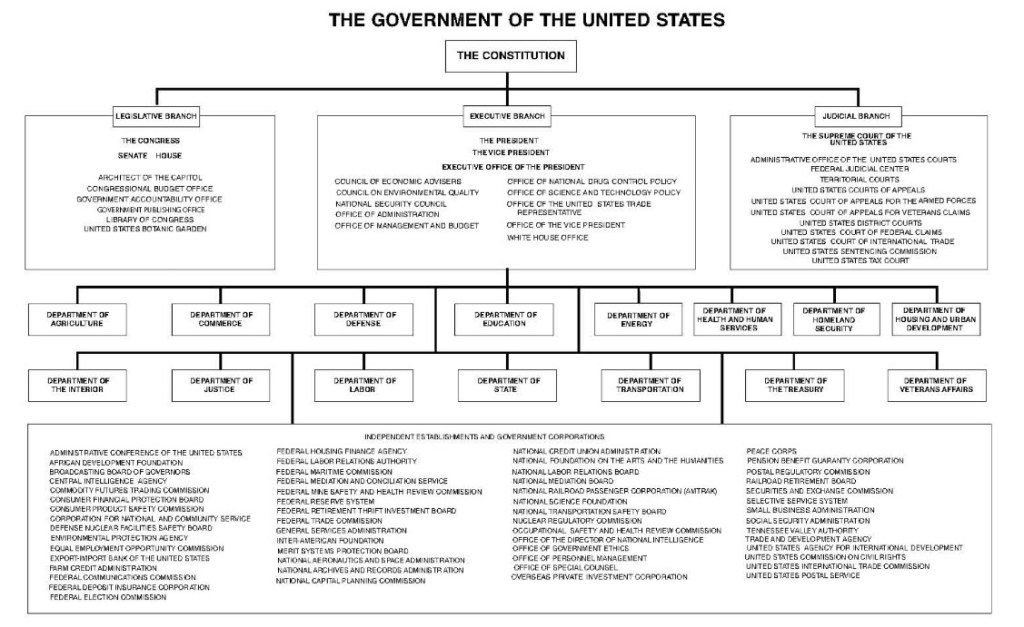
Duplicative functions, poor data systems, and a lack of control have led to massive misappropriations of funds. The dysfunction has been enabled by a metastasization of nests of administrative authority inside agencies with “incomprehensible” org charts, often having multiple departments with identical functions that do not communicate. These departments frequently use redundant but unconnected systems. A related problem is the inadequacy of documentation for outgoing payments. Needless to say, this is a hostile environment for effective spending controls.

It’s worth emphasizing, by the way, DOGE’s “open book” transparency. It’s not as if Elon Musk and DOGE are attempting to sabotage the deep state in the dark of night. Indeed, they are shouting from the rooftops!

Doing It Fast

Every day we have a new revelation from DOGE of incredible waste in the federal bureaucracy. Check out this story about a VA contact for web site maintenance. All too ironically, what we call government waste tends to have powerful, self-interested, and deeply corrupt constituencies. This makes speed an imperative for DOGE. In a highly politicized and litigious environment, the extent to which the Leviathan can be brought to heel is partly a function of how quickly the deconstruction takes place. One must pardon a few temporary dislocations that otherwise might be avoided in a world free of rent seeking behavior. Otherwise, the graft (no, NOT “grift”) will continue unabated.

The foregoing offers sufficient rationale not only for speedy force reductions, but also for system upgrades, dissolution of certain offices, and consolidation of core functions under single-agency umbrellas.

The Bloody Budget

It’s difficult to know when budget legislation will begin to reflect DOGE’s successes. The actual budget deficit might be affected in fiscal year 2025, but so far the savings touted by DOGE are chump change compared to the expected $2 trillion deficit, and only a fraction of those savings contribute to ongoing deficit reduction.

Uncontrolled spending is the root cause of the deficit, as opposed to insufficient tax revenue, as evidenced by a relatively stable ratio of taxes to GDP. The spending problem was exacerbated by the pandemic, but Congress and the Biden Administration never managed to scale outlays back to their previous trend once the economy recovered. Balancing the budget is made impossible when the prevailing psychology among legislators and the media is that reductions in the growth of spending represent spending cuts.

Federal spending is excessive on both the discretionary and mandatory sides of the budget. Ultimately, eliminating the budget deficit without allowing the 2017 Trump tax cuts to expire will require reform to mandatory entitlements like Social Security, Medicare, and Medicaid, as well as reductions across an array of discretionary programs.

DOGE’s focus on fraud and waste extends to entitlements. At a minimum, the data and tracking systems in place at HHS and SSA are antiquated, sometimes inaccurate, and are highly susceptible to manipulation and fraud. Systems upgrades are likely to pay for themselves many times over.

But all indications are that it’s much worse than that. Social security numbers were issued to millions of illegal immigrants during the Biden Administration, and those enrollees were cleared for maximum benefits. There were a significant number of illegals enrolled in Medicaid and registered to vote. While some of these immigrants might be employed and contributing to the entitlement system, they should not be employed without legal status. Of course, one can defend these entitlement benefits on purely compassionate grounds, but the availability of benefits has served to attract a massive flow of illegal border crossings. This illustrates both the extent to which the entitlement system has been compromised as well as the breakdown of border security.

On the discretionary side of the budget, DOGE has identified an impressive array programs that were not just wasteful, but by turns ridiculous or politically motivated (for example, the bulk of USAID’s budget). Many of these funding initiatives belong on the chopping block, and components that might be worthwhile have been moved to agencies with related missions. In addition, authorized but unspent allocations have been identified that seem to have been held in reserve, and which now can be used to reduce the public debt.

Research Grants?

Of course, like the initial scale of the FDA layoffs, a few mistakes have and will be made by DOGE and agencies under DOGE’s guidance. Many believe another powerful argument against DOGE is the Trump Administration’s 15% limit on indirect costs as an add-on to NIH grants. Critics assert that this limit will hamstring U.S. scientific advancement. However, it won’t “kill” publicly funded research. As this article in Reason points out, historically public funding has not been critical to scientific advancement in the U.S. In fact, private funding accounts for the vast bulk of U.S. R&D, according to the Congressional Research Service. Moreover, it’s broadly acknowledged that indirect costs are subject to distortion, and that generous funding of those costs creates bad incentives and raises thorny questions about cross-subsidies across funders (15% is the rate at which charities typically fund indirect costs).

No doubt some elite research universities will suffer declines in grants, but their case is weakened politically by a combination of lax control over anti-Semitic protests on campus, the growing unpopularity of DEI initiatives in education, and public awareness of the huge endowments over which these universities preside. Nevertheless, I won’t be surprised to see the 15% limit on indirect research costs revised upward somewhat.

More DOGE Please

I’ve criticized the numbers posted on DOGE’s website elsewhere. They could do a much better job of categorizing and reporting the savings they’ve achieved, and they have far to go before meeting the goals stated by Elon Musk. Be that as it may, DOGE is making progress. Here is a report on a few of the latest cuts.

As I’ve emphasized on numerous occasions, the federal government is a strangling mass of tentacles, squeezing excessive resources out of the private sector and suffocating producers with an endless catalogue of burdensome rules. There are many examples of systemic waste taking place within the federal bureaucracy. For example, since its creation by Jimmy Carter, the Department of Education has managed to piss away trillions of dollars while student performance has declined. The Small Business Administration has doled out millions of dollars in subsidized loans to super-centenarians as well as children. The U.S. Postal Service keeps losing money and mail while deliveries slow to a crawl. Big projects become mired in endless iterations of reviews and revisions, such as Obama’s infrastructure plan and Joe Biden’s infrastructure and rural broadband initiative.

And again, regulatory agencies are often our worst enemies, imposing burdensome requirements with which only the largest industry players can afford to comply. Indeed, the savings achieved through the DOGE process might pale in comparison to the resources that could be liberated by rationalizing the tangle of regulations now choking private business.

A significant narrowing of the budget deficit would be a major accomplishment for DOGE. Even one-time savings to help pay down the public debt are worthwhile. In this latter regard, I hope DOGE’s work with the Department of Interior helps facilitate the sale of dormant federal assets. This includes land (not parks) and buildings worth literally trillions of dollars, and sometimes costing billions annually to maintain.

Federal Unaccountability Beyond My Wildest Dreams

06 Friday Apr 2018

Posted by Nuetzel in Big Government, Federal Budget

≈ Leave a comment

Tags

Accounting Adjustments, Black Projects, Catherine Austin Fitts, Congressional Budget Office, Department of Defense, Department of Housing and Urban Development, Forbes, General Accounting Office, Government Waste, Graft, Journal Vouchers, Laurence Kotlikoff, Mark Skidmore, Office of the Inspector General, Special Access Programs, The Solari Report

In December, Laurence Kotlikoff wrote in Forbes about large chunks of federal spending over many years that have not been reconciled with known accounting transactions. (The link is to a cached version of Kotlikoff’s article because Forbes blocks its site to those using adblockers). I first learned of these massive discrepancies at The Solari Report, which covered the issue in February. At first, I was so dumbfounded by the numbers that I thought it might have been a joke, or worse: fake news on Solari? But the story is real and it is shocking: $21 TRILLION of spending that cannot be explained, spanning the years 1998-2015! That’s more than five times the level of federal spending in 2017. It’s also shocking that the gap has gone almost unnoticed by the news media, though a few specifics have garnered attention at different stages of the disgorgement, as demonstrated by the various links provided in the Solari article.

The discrepancies are concentrated mainly in two departments of the federal government: Defense (DOD) and Housing and Urban Development (HUD). Kotlikoff quotes a description of the “accounting adjustments” from the Comptroller General of the General Accounting Office (GAO). These adjustments are akin to the entries people make in their checkbook registers when the balance can’t be reconciled to their bank statement:

“‘Journal vouchers are summary-level accounting adjustments made when balances between systems cannot be reconciled. Often these journal vouchers are unsupported, meaning they lack supporting documentation to justify the adjustment or are not tied to specific accounting transactions…. For an auditor, journal vouchers are a red flag for transactions not being captured, reported, or summarized correctly.'”

The article at Solari makes the following observations:

“There appear to be at least five possibilities: 1-The missing money was spent appropriately, but existing accounting infrastructure is incapable of tracking it. 2-The money was “wasted,” i.e. spent unwisely. 3-The money was directed into black projects and Special Access Programs in massive amounts outside the Constitutional appropriations process, and therefore without the knowledge of Congress and the citizenry, for purposes unknown. 4-The money was used to manipulate markets to maintain the reserve status of the dollar. 5-The money is being stolen by fraud and collusion between government and private interests. Or perhaps a combination of all of these.“

All five explanations represent a form of failure of governance or government administration. Some are more nefarious than others. While #1 might seem fairly innocuous, it nevertheless would demonstrate a slovenly approach to record-keeping and accountability as well as a ripe temptation to anyone seeking opportunities for graft. Furthermore, one cannot trust that #1 is the full explanation. The amounts are so massive that they far exceed the waste in government that even I thought possible. And no one in the federal agencies seems to have an explanation. Mark Skidmore, a Michigan State University economist who has studied the issue and made inquiries with these agencies, describes what sounds like a runaround. In December, however, the DOD announced a positive step: it’s first-ever department-wide independent audit. The Office of the Inspector General (OIG), the Congressional Budget Office, and the General Accounting Office are certainly aware of the discrepancies. Links to supporting documentation at the OIG and DOD web sites appear in both the Solari and Kotlikoff articles.

If these funds have been wasted or misused, taxpayers are the victims, of course. There are a few well-known examples of private and even public companies that have victimized investors to perhaps a similar (proportionate) extent over the years. Bernie Madoff and Exxon come to mind. But in general, public companies cannot escape demands that their books be in order and that they produce value over time. The federal government, however, has received a pass for this fecklessness over many years. Perhaps it’s because the public has such low expectations for the government’s effective use of tax dollars. Federal agencies such as HUD and DOD seem almost as budgetary “black holes” into which tax dollars are sucked, with an apparent lack of scrutiny.

Kotlikoff closes by urging a thorough investigation into the government’s cockeyed accounts:

“Taken together these reports point to a failure to comply with basic Constitutional and legislative requirements for spending and disclosure. We urge the House and Senate Budget Committee to initiate immediate investigations of unaccounted federal expenditures as well as the source of their payment.”

The Solari piece is no less emphatic in demanding a full probe of the causes of the budgetary discrepancies:

“We must recognize the possibility that massive fraud is being perpetrated against the American people. If that is not the case, it would take relatively little effort and expense to put that concern to rest. On the other hand, what malfeasance might investigation reveal, and who might be responsible?

At the very least, we should be asking the secretaries of DOD, HUD, and the Treasury, the chairman of the Federal Reserve, and the President of the NY Fed what they know, and we need independent audits of all those entities plus the Exchange Stabilization Fund. Anything less will be to acquiesce in an ongoing financial coup d’état.“

Clinton Foundation Domain of Darkness

23 Saturday Jul 2016

Posted by Nuetzel in Privilege, rent seeking

≈ 2 Comments

Tags

Benghazi, Charitable Best Practices, Classified Information, Clinton Cash, Clinton Foundation, Douglas Becker, Dr. Ben Carson, Foreign Contributions, Graft, Haitian Aid, Hillary and Lucifer, Hillary Clinton, Influence Buying, James Comey, Jonathan Turley, Laureate International Universities, Marsha Blackburn, Prince of Darkness, Russian Uranium Deal, Trump University, Tyler Cowan, Uranium One, Walden University Online

Clinton-Foundation-600-LA

Hillary and Bill Clinton provide a fascinating case study in the art of graft, and the Clinton Foundation provides them with brilliant cover. The foundation masquerades as a legitimate charity, avoids taxes, and provides a vehicle for what’s known as “pay-to-play” influence-buying. It appears that Bill Clinton made a lucrative career of this while his wife was serving in public office. It was a sensitive issue when Hillary was Secretary of State, given the potential for compromising national objectives. It is still sensitive in view of the many gifts to the Clinton Foundation provided by foreign entities, not to mention the handsome speaking fees paid by foreign entities directly to the Clintons.

Here, I discuss some of the suspicious activities of the Clinton Foundation. This post is the last in a three-part series on Hillary’s most recent scandals. The first in the series covered Hillary’s Benghazi disaster; the second post dealt with her negligent email practices and handling of classified information, as well as her prevarication in responding to investigative efforts.

Last year, the New York Times published a report on the Clinton Foundation’s (CF) connections to a series of deals that ultimately gave a Russian company control of a large share of worldwide uranium supplies:

“At the heart of the tale are several men, leaders of the Canadian mining industry, who have been major donors to the charitable endeavors of former President Bill Clinton and his family. Members of that group built, financed and eventually sold off to the Russians a company that would become known as Uranium One. … the sale gave the Russians control of one-fifth of all uranium production capacity in the United States. … Among the agencies that eventually signed off was the State Department, then headed by Mr. Clinton’s wife, Hillary Rodham Clinton.

As the Russians gradually assumed control of Uranium One in three separate transactions from 2009 to 2013, Canadian records show, a flow of cash made its way to the Clinton Foundation. Uranium One’s chairman used his family foundation to make four donations totaling $2.35 million. Those contributions were not publicly disclosed by the Clintons, despite an agreement Mrs. Clinton had struck with the Obama White House to publicly identify all donors. Other people with ties to the company made donations as well.“

The amounts involved are far greater than the figures in the quote suggest. One individual with intimate connections to the deals gave in excess of $31 million to the CF. The Times report gives details on the shifty ways in which some donor money found its way into CF coffers, often not attributed to the donors themselves in official records. These practices look an awful lot like a sophisticated way of laundering money for influence buying:

“A person with knowledge of the Clinton Foundation’s fund-raising operation, who requested anonymity to speak candidly about it, said that for many people, the hope is that money will in fact buy influence: ‘Why do you think they are doing it — because they love them?’“

There are many other suspicious links between the CF and rent-seeking individuals and institutions. Jonathan Turley has detailed the unsavory nature of the Clinton’s connection to Laureate International Universities, an online college that encompasses Walden University Online, known in some circles as an operator of scams far-exceeding the allegations against Trump University. The chairman of Laureate, Douglas Becker, has been a major donor to the Clintons and their foundation. As it happens, Laureate received $55 million in funds from State Department Grants. Bill Clinton was paid $16 million to serve as Laureate’s “Honorary Chancellor”. Here is one interesting comment from Turley:

“Laureate has come up in the Clinton email scandal. In her first year as Secretary of State, Clinton is quoted as directly asking that Laureate be included in a high-profile policy dinner — just months before the lucrative contract was given to Bill Clinton. Hillary Clinton later references ‘Laureate Universities, started by Doug Becker who Bill likes a lot.’“

There might not be anything to top the cronyism inherent in the activities of the CF in pretending to rebuild Haiti after a massive earthquake struck the island in 2010. The article at the last link offers descriptions of a number of projects, ostensibly funded for the benefit of Haiti, that involve double-dealing by the Clintons and CF:

“The Haitian protesters noticed an interesting pattern involving the Clintons and the designation of how aid funds were used. They observed that a number of companies that received contracts in Haiti happened to be entities that made large donations to the Clinton Foundation. The Haitian contracts appeared less tailored to the needs of Haiti than to the needs of the companies that were performing the services. In sum, Haitian deals appeared to be a quid pro quo for filling the coffers of the Clintons.“

Foreign governments gave to the CF while Hillary Clinton was serving as Secretary of State and have continued to do so even after her presidential candidacy was made clear. This was reported more recently, and includes gifts from “friends” of foreign governments and other foreign interests including Mexico, Turkey, Japan, Saudi Arabia, the UAE, and of course Russia. Many contributions are “bundled” by third-party entities, an apparent but ineffective effort to obscure the true sources of gifts:

“A number of Hillary Clinton’s top lobbyist bundlers, who have raised millions for her presidential campaign, either directly represent foreign entities or work at firms that represent foreign entities, according to documents from the Justice Department’s Foreign Agents Registration Unit.“

Here is a New York Times review of “Clinton Cash: The Untold Story of How and Why Foreign Governments and Businesses Helped Make Bill and Hillary Rich”, by Peter Schweitzer. Rep. Marsha Blackburn (R – TN) is urging the FBI, the IRS and the FTC to investigate the activities of the Clinton Foundation.

The CF is guilty of ignoring widely accepted charitable best practices, according to this report. Its small board of directors is insular and lacking a sufficient degree of independence. Its record-keeping is suspicious, such as a $12.6 million expense for Bill Clinton’s 60th birthday expensed as “fund raising costs”. Inappropriate gifts to the Clintons from directors have raised eyebrows, and apparent “payoffs” for retiring directors, in the form of appointments to powerful positions, have made the CF into a veritable revolving door for Clinton insiders.

I include this last bit because it amuses me: according to Dr. Ben Carson, Hillary Clinton is Lucifer in the flesh. The explanation is that Hillary liked Saul Alinsky in college (and maybe still does), and Alinsky acknowledged Lucifer as the “first radical”. That probably leaves a few degrees of separation between the two. Economist Tyler Cowan does not agree with Carson, but he toys with the notion in a short analysis on Marginal Revolution. Here are a few of his bullets on the topic:

“This topic seems to have entered the news cycle. I am not sure how, so I thought I would add a few observations in the interests of clarity: 

1. Under the most plausible ‘yes’ scenario, Lucifer inhabits the corpus of us all, not just the Clinton family, grandchildren included. 

2. The correct answer is still ‘probably not.’ 

3. Is there a greater chance that Hillary Clinton is in fact Lucifer himself, rather than merely being possessed by him? (Would that not also be a new kind of transgender relation?) No, more likely she would have a Satanic familiar. In most equilibria, the number of familiars is greater than the number of Satans. Far greater.“

A better argument for Hillary’s connection to the Prince of Darkness would rely on the self-serving nature of the “charitable” Clinton Foundation while disguised as a charity. It is both a repository for future policy influence and a pool for enrichment of the Clintons themselves and their cronies. The CF represents a grotesque distortion of the charitable motive. Let’s hope James Comey, Director of the FBI, can direct a competent investigation into the CF’s activities. More importantly, let’s hope that come November, the better judgement of American voters will deny Hillary the presidency.

Postscript: The FBI’s original investigation of Hillary’s emails, presided over by former Director James Comey, was an apparent effort to exonerate her. An investigation of the CF is underway, and the investigation of Hillary’s email shenanigans has been renewed.

Seeding the Grapes of Graft

23 Saturday Apr 2016

Posted by Nuetzel in Big Government, rent seeking

≈ Leave a comment

Tags

Alex Tabarrok, Barriers to Entry, Corporatism, Free Market Capitalism, Government Protection, Graft, Guy Rolnik, Industrial Concentration, Koch Industries, Marginal Revolution, Natural Monopoly, Pro-Market, rent seeking, Stigler Center

Government-Bounty-Hunter

Are you investing in graft and rent-seeking activity without knowing it? Is a significant share of your saving channeled into sectors that profit from political influence over politicians, regulators and government planners? Maybe it’s no surprise, and you knew all along that your capital backs firms who manipulate the political system to extract resources beyond what they can earn through honest production. You have an interest in the success of the rent seekers, and you might well get a tax benefit to go along with it!

All this is almost certainly true if your savings are in a 401k, an IRA, a public or private pension fund, or in publicly-traded stocks. These sources of investor funding are dominated by firms that rent seek…. an indication of just how far the cancer of corporatism has gone toward completely subverting free market capitalism. It can be turned back only by ending the symbiosis between industry and government and encouraging real competition in markets.

This question of investing in rent seekers is raised by Guy Rolnik at Pro-Market (the blog of the Stigler Center at the University of Chicago Booth School of Business):

“Put another way, are we facing an economic model in which tens of millions of Americans’ pensions are relying on the ability of companies to extract rents from consumers and taxpayers?“

Rolnik’s emphasis is primarily on mergers and acquisitions, industrial concentration, diminished competition, and monopoly profits extracted by the surviving entities. As Alex Tabarrok at Marginal Revolution notes, “The Number of Publicy Traded Firms Has Halved” in the past 20 years. At the same time, the trend in business startups has been decidedly negative. While I strongly believe in the benefits of a healthy market for corporate control, these trends are a sign that the rent seekers and their enablers in government are gaining an upper hand.

Monopoly must be condoned if there are natural barriers to entry in a market, but such monopolists are generally subject to regulation of price and service levels (complex issues in their own right). If there are other legitimate economic barriers to entry such as differentiated products and strong brand reputations, there is no reason for concern, as those are signs of value creation. And given the private freedom to innovate and compete, there is little reason to suspect that above-normal profits can persist in the long run, as new risk-takers are ultimately drawn into the mix. That is how a healthy economy works and how prices direct resources to the highest-valued uses.

Rent seekers, on the other hand, always have one of the following objectives:

Government Protection: Increased concentration in an industry is a concern if there are artificial barriers to entry. One sure way to protect a market is to enlist the government’s help in locking it down. This happens in a variety of ways: tariffs and other restrictions on foreign goods, patent protection, restrictions on entry into geographic markets, implicit government guarantees against risk (too big to fail), union labor laws, and complex regulatory rules and compliance costs that small competitors can’t afford. The upshot is that if we want more competition in markets, we must reduce the size of the administrative state.

Subsidies: Another aspect of rent seeking is the quest for taxpayer subsidies. These are often channeled into politically-favored activities that can’t be sustained otherwise, and the recipients are always politically-favored firms with friends in high places. This is privilege! Look no further than the renewable energy industry to see that politically-favored, subsidized, and uneconomic activities tend to be dominated by firms with political connections. Naturally, good rent-seekers have an affinity for central planning and its plentiful opportunities for graft. With big-government control of resources you get big-time rent seeking.

Contracts: Government largess also means that big contracts are there to be won across a range of industries: construction, defense, transportation equipment, office supplies, computing, accounting and legal services and almost anything else. Because these purchases are made by an entity that uses other people’s money, incentives for efficiency are weak. And while private firms may compete for these contracts, there is no question that political connections play an important role. As government assumes control of more resources, more favorable rent-seeking opportunities always appear.

Influencing public policy is a game that is much easier for large firms to play. Moreover, the revolving door between government and industry is most active among strong players. This is not to say that large corporations don’t engage in many productive activities. They often excel in their areas of specialization and therefore earn profits that are economically legitimate. However, when government is involved as a buyer, subsidizer or regulator, the rewards are not as strongly related to productive effort. These rewards include above-normal profits, a more dominant market position, a long-term pipeline of taxpayer funding, the prestige of running a large operation with armies of highly-skilled employees engaged in compliance activities, and prestigious appointments for officers. Some of these gains from graft are shared by investors… and that’s probably you.

For society, the implications of channeling saving into rent-seeking activities are unambiguously negative. To say it differently, the private return to rent seeking exceeds the social return, and the latter is negative. Successful rent seekers artificially boost their equity returns and may simultaneously undermine returns to smaller competitors. The outcomes entail restraint of trade and misallocation of resources on a massive scale. The public-sector largess that makes it all possible gives us high rates of taxation, which retard incentives to work, save and invest. If taxes aren’t enough to cover the bloat, our central bank (the Fed) is not shy about monetizing government debt, which distorts interest rates, inflates asset prices and  inflates the prices of goods. In the aggregate, these things warp the usual tradeoff between risk and return and worsen society’s provision for the future.

How should you feel about all this? And your portfolio? As an investor, you might not have much choice. It’s not your fault, so take your private returns where you can find them. Some firms swear off rent seeking of any kind, like Koch Industries, but it is not publicly traded. You could invest in a business of your own, but know that you might compete at a disadvantage to rent seekers in the same industry. Most of all, you should vote for lower subsidies, less regulation and less government!

Follow Sacred Cow Chips on WordPress.com

Recent Posts

  • The Case Against Interest On Reserves
  • Immigration and Merit As Fiscal Propositions
  • Tariff “Dividend” From An Indigent State
  • Almost Looks Like the Fed Has a 3% Inflation Target
  • Government Malpractice Breeds Health Care Havoc

Archives

  • January 2026
  • December 2025
  • November 2025
  • October 2025
  • September 2025
  • August 2025
  • July 2025
  • June 2025
  • May 2025
  • April 2025
  • March 2025
  • February 2025
  • January 2025
  • December 2024
  • November 2024
  • October 2024
  • September 2024
  • August 2024
  • July 2024
  • June 2024
  • May 2024
  • April 2024
  • March 2024
  • February 2024
  • January 2024
  • December 2023
  • November 2023
  • August 2023
  • July 2023
  • June 2023
  • May 2023
  • April 2023
  • March 2023
  • February 2023
  • January 2023
  • December 2022
  • November 2022
  • October 2022
  • September 2022
  • August 2022
  • July 2022
  • June 2022
  • May 2022
  • April 2022
  • March 2022
  • February 2022
  • January 2022
  • December 2021
  • November 2021
  • October 2021
  • September 2021
  • August 2021
  • July 2021
  • June 2021
  • May 2021
  • April 2021
  • March 2021
  • February 2021
  • January 2021
  • December 2020
  • November 2020
  • October 2020
  • September 2020
  • August 2020
  • July 2020
  • June 2020
  • May 2020
  • April 2020
  • March 2020
  • February 2020
  • January 2020
  • December 2019
  • November 2019
  • October 2019
  • September 2019
  • August 2019
  • July 2019
  • June 2019
  • May 2019
  • April 2019
  • March 2019
  • February 2019
  • January 2019
  • December 2018
  • November 2018
  • October 2018
  • September 2018
  • August 2018
  • July 2018
  • June 2018
  • May 2018
  • April 2018
  • March 2018
  • February 2018
  • January 2018
  • December 2017
  • November 2017
  • October 2017
  • September 2017
  • August 2017
  • July 2017
  • June 2017
  • May 2017
  • April 2017
  • March 2017
  • February 2017
  • January 2017
  • December 2016
  • November 2016
  • October 2016
  • September 2016
  • August 2016
  • July 2016
  • June 2016
  • May 2016
  • April 2016
  • March 2016
  • February 2016
  • January 2016
  • December 2015
  • November 2015
  • October 2015
  • September 2015
  • August 2015
  • July 2015
  • June 2015
  • May 2015
  • April 2015
  • March 2015
  • February 2015
  • January 2015
  • December 2014
  • November 2014
  • October 2014
  • September 2014
  • August 2014
  • July 2014
  • June 2014
  • May 2014
  • April 2014
  • March 2014

Blogs I Follow

  • Passive Income Kickstart
  • OnlyFinance.net
  • TLC Cholesterol
  • Nintil
  • kendunning.net
  • DCWhispers.com
  • Hoong-Wai in the UK
  • Marginal REVOLUTION
  • Stlouis
  • Watts Up With That?
  • Aussie Nationalist Blog
  • American Elephants
  • The View from Alexandria
  • The Gymnasium
  • A Force for Good
  • Notes On Liberty
  • troymo
  • SUNDAY BLOG Stephanie Sievers
  • Miss Lou Acquiring Lore
  • Your Well Wisher Program
  • Objectivism In Depth
  • RobotEnomics
  • Orderstatistic
  • Paradigm Library
  • Scattered Showers and Quicksand

Blog at WordPress.com.

Passive Income Kickstart

OnlyFinance.net

TLC Cholesterol

Nintil

To estimate, compare, distinguish, discuss, and trace to its principal sources everything

kendunning.net

The Future is Ours to Create

DCWhispers.com

Hoong-Wai in the UK

A Commonwealth immigrant's perspective on the UK's public arena.

Marginal REVOLUTION

Small Steps Toward A Much Better World

Stlouis

Watts Up With That?

The world's most viewed site on global warming and climate change

Aussie Nationalist Blog

Commentary from a Paleoconservative and Nationalist perspective

American Elephants

Defending Life, Liberty and the Pursuit of Happiness

The View from Alexandria

In advanced civilizations the period loosely called Alexandrian is usually associated with flexible morals, perfunctory religion, populist standards and cosmopolitan tastes, feminism, exotic cults, and the rapid turnover of high and low fads---in short, a falling away (which is all that decadence means) from the strictness of traditional rules, embodied in character and inforced from within. -- Jacques Barzun

The Gymnasium

A place for reason, politics, economics, and faith steeped in the classical liberal tradition

A Force for Good

How economics, morality, and markets combine

Notes On Liberty

Spontaneous thoughts on a humble creed

troymo

SUNDAY BLOG Stephanie Sievers

Escaping the everyday life with photographs from my travels

Miss Lou Acquiring Lore

Gallery of Life...

Your Well Wisher Program

Attempt to solve commonly known problems…

Objectivism In Depth

Exploring Ayn Rand's revolutionary philosophy.

RobotEnomics

(A)n (I)ntelligent Future

Orderstatistic

Economics, chess and anything else on my mind.

Paradigm Library

OODA Looping

Scattered Showers and Quicksand

Musings on science, investing, finance, economics, politics, and probably fly fishing.

  • Subscribe Subscribed
    • Sacred Cow Chips
    • Join 128 other subscribers
    • Already have a WordPress.com account? Log in now.
    • Sacred Cow Chips
    • Subscribe Subscribed
    • Sign up
    • Log in
    • Report this content
    • View site in Reader
    • Manage subscriptions
    • Collapse this bar
 

Loading Comments...