• About

Sacred Cow Chips

Sacred Cow Chips

Tag Archives: Hyperloop

HyperBoondoggle

06 Wednesday Nov 2019

Posted by Nuetzel in infrastructure

≈ Leave a comment

Tags

Delmar Loop, Dubai, Elon Musk, G-Force, Hyperloop, I-70 Rights-of-Way, Innovation Origins, Last-Mile Problem, Loop Trolley, Magnetic Levitation, Missouri Hyperloop, Passenger Throughput, Richard Branson, Vacuum Tube, Virgin One, Virginia Postrel, Willis Eschenbach
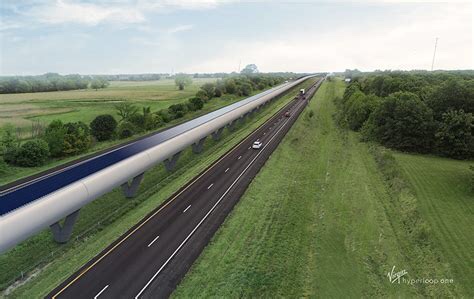
The hyperloop: if you think the Delmar Loop Trolley in St. Louis, MO was a boondoggle, just wait till the state starts hemorrhaging cash for the proposed hyperloop test track, and later a possible route connecting St. Louis, Columbia, and Kansas City. The hyperloop would rely on magnetic levitation (maglev) technology that has been used for trains in some parts of the world, though always on relatively short routes. For a hyperloop, however, the maglev system keeps carrier “pods” suspended in a near-vacuum tube extending the length of the route, eliminating friction and air resistance. Proponents say the pods will move at top speeds of 700 miles an hour, traversing the state in about 30 minutes. And they say it will be a very green machine.

Richard Branson’s Virgin Hyperloop One wants to build the 15-mile test track, which is projected to cost $300 – $500 million. That range is centered just a bit higher than the cost of the Loop Trolley on a per-mile basis, and for a project with major technological uncertainties, that leaves me just a bit wary. The 250-mile cross-state route is now pegged at between $7.3 and $10.4 billion, according to the recent report issued by the state’s “Blue-Ribbon Panel on Hyperloop”. It’s likely to cost much more by the time they get around to building it, if they do at all, and if it actually works.

Hyperbole?

My skepticism about hyperloops is based in part on the hucksterism that often characterizes appeals for public funding of large projects, and hyperloop hucksterism has already taken place. For example, in 2013 Elon Musk estimated that a Hyperloop system would cost about $11.5 million per mile. By 2016, the mid-point estimate for a route in the San Francisco Bay Area was over $100 million per mile. A friendlier route in Dubai is expected to cost $52 million per mile. So to be conservative, we saw 5x to 10x higher costs in a matter of three years. But now, Virgin One says it can construct a route in Missouri for less than the per-mile cost of the Dubai line. Well, the state Department of Transportation already owns the rights of way over significant stretches of the route (but not everywhere because the tube must be straighter than the highway).

The hyperbolic claims for hyperloop technology include speed, projected passenger fares, and ridership. According to Innovation Origins, the so-called feasibility study for the Missouri hyperloop did not assess the technology or even address the fact that no working hyperloop has ever been built or proven at full scale over any distance longer than a kilometer or so. The consultants who prepared the “study” merely assumed it would work. No test pod within a vacuum tube has achieved more than a fraction of the promised speed. The tubes were not long enough to achieve top speeds, they say, but that raises another issue: creating near-vacuum conditions in a sizable tube over very long distances. At the Innovation Origin link above, they estimate that the Missouri tube would occupy over 1 million cubic meters of space, which is at least 30 times larger than the most expansive man-made vacuum space now in existence.

The Ride

As for the passenger experience, 30 minutes to traverse the state of Missouri would be impressive, but what about comfort? First, expanding the tube’s circumference and the girth of the pods would have a disproportionate impact on cost, so conditions might either be more cramped than the promotional photos would have you believe, or the number of passenger seats per pod might be reduced. Second, rapid acceleration from zero to 700 mph would subject humans to fairly large G-forces over several minutes. Deceleration at the end of the trip might be even worse. Negotiating even mild curves would also require reduced speed and subsequent re-acceleration to avoid uncomfortably high radial G-forces. All that means the ride could be a bit uncomfortable. That also means the average speed between Kansas City and St. Louis would be significantly less than 700 mph, especially with a stop in Columbia. G-forces might not be much of a concern for freight traffic, unless it’s fresh produce.

Safety

Then there’s the vulnerability of the system. Willis Eschenbach goes into detail on some technical problems that make the hyperloop risky, such as the pressure on the tubes themselves. It would be about 20,000 pounds per square meter of tube surface, all subject to significant thermal expansion and contraction over the course of a day, with large pods racing through joints and rounding curves. Any fault or crack at any point in the tube surface would cause catastrophic deceleration of pods along the entire length of the tube. The integrity of the pressurized pods themselves is also a safety issue. And what about an earthquake? Or a loss of control and fiery pile-up of vehicles traveling on I-70 near the tubes. Or any number of other foolish or intentional sources of damage to the tube along its route?

Throughput

One of Eschenbach’s most interesting critiques has to do with passenger throughput. Musk’s original plan called for 28-passenger pods departing every 30 seconds: 3,300 passengers per hour. That would represent a substantial addition to total cross-state transportation capacity. At full utilization (which of course is unlikely), that would exceed current estimated totals for daily travel between St. Louis, Columbia, and Kansas City. And while that capacity might reduce pressure to expand other modes, such as adding an extra lane to I-70, it would not offer an excuse to eliminate highway, rail, or airport infrastructure, nor would it eliminate the need to maintain it.

Musks’s assumption might be too optimistic, however: for safety, the time between pod departures might have to be longer. than 30 seconds. Eschenbach asserts 80 that seconds would be more reasonable, which would slash capacity by about 60% relative to Musk’s estimate. And that doesn’t account for potential bottlenecks at stops where pods must be depressurized and repressurized. And if substantially heavier freight pods are intermingled with passenger pods, as anticipated, the required intervals between departures might have to be longer.

Economics

Few large transportation projects are self-funding. Typically, user fees fail to cover operating costs, let alone capital costs. The projected fares quoted by proponents of the Missouri hyperloop are low: “cheaper than the price of gas to drive” cross-state. Perhaps we could say about $25, based on that statement. That won’t make much of a dent in the cost of construction.

The hyperloop’s economic viability for freight traffic is questionable as well, though freight traffic seems to be a fallback position among boosters when confronted with the uncertainties of passenger travel via hyperloop. The Blue-Ribbon report says the expected cost of freight via hyperloop might range from $1.40 per mile to $2.80 on the high end, putting the mid-point well above the $1.69 per mile average cost of shipping by truck. Will speed make the hyperloop a competitive alternative for shippers? In fact, freight via hyperloop might be much worse than rail or truck in solving the “last mile” problem. That’s because the speeds that are its presumed advantage also mean fewer terminals are possible. The system would have to rely as heavily on integration with other modes of transportation as any other form of long-distance carriage, and perhaps more.

The last-mile problem eats into hyperloop’s presumed environmental advantages, which are not as clear cut as its enthusiasts would have you believe. Maintaining a vacuum in a gargantuan tube will not be a low-energy proposition, nor will powering the magnetic levitation/propulsion system, with or without a vacuum. Pressurized, climate-controlled pods will require still more power, and that’s to say nothing of the energy required to fabricate one-inch thick steel cylinders, huge magnets, and the rest of the support infrastructure. Reassurances that hyperloop will be powered exclusively by “green” technologies should be taken with a grain of salt. 

Virginia Postrel believes that regulation might be the biggest threat to the success of hyperloop, though she seems a bit optimistic about the actual economics of the technology. Safety will be a major concern for regulators. The technology will be subject to common carrier rules, and there will be other hurdles at the federal, state and local levels. And what of the health effects of prolonged exposure to those powerful magnetic forces? They may be insignificant, but the question will come up and possibly litigated.

Conclusion

A hyperloop cannot be built and operated without a significant and ongoing investment of public funds. The hoped-for public-private partnership needed to build the system would require major investors, and brave investors. Promoters say the project is not unlike efforts to build the railroads in the 19th century, which must have seemed like a daunting task at the time, and one involving huge financial risk. Fair enough, but the railroads stood to benefit in that age from a huge pent-up desire to exploit distant resources. The Missouri hyperloop is not quite comparable in that respect. It might be attractive mainly as a novelty, much like the Loop Trolley. Moreover, it didn’t take long for the railroads to become desperate rent-seekers, unable to profit from their heavily-subsidized investments without further public intervention on their behalf.

The hyperloop is a truly seductive idea. It’s the sort of thing that even small government types find irresistible, but there is little doubt that taxpayers will pay dearly. It’s not clear to me that the project will create meaningful social benefits or address compelling social risks. Therefore, let’s be cautious about making huge public commitments until this technology is farther along in development and the benefits can be estimated with greater certainty.

The Fast Trains That Can’t

17 Sunday Feb 2019

Posted by Nuetzel in Air Travel, infrastructure

≈ Leave a comment

Tags

capital costs, Cost Per Passenger Mile, Elon Musk, eminent domain, Environmental Costs, Freight Traffic, High speed rail, Hyperloop, infrastructure, Megan McArdle, Rolling Resistance, Warren Meyer

High-speed rail will remain a pipe-dream in the U.S. except for the development of a few limited routes. However, statists continue to push for large-scale adoption. That would represent a triumph of big government, if realized, and it is very appealing to the public imagination. But high-speed rail (HSR) is something of a fraud. Projected fares do not include the massive capital costs required to build it, which must be funded by taxpayers. Like most big public projects, HSR presents ample opportunities for graft by privileged insiders. And apparently it’s easy to rationalize HSR by repeating the questionable mantra that it is environmentally superior to autos or even air travel.

California recently confronted the harsh reality of HSR costs by scaling back its ambitious plans to a single line traversing a portion of the central valley. Now, the federal government has acknowledged that the state has violated the terms of past federal grants, essentially for non-performance. Those grants totaled $2.5 billion, and another grant of almost $1 billion might be withheld. Better not to throw good money after bad.

Megan McArdle wisely debunks the viability of HSR in the U.S. based on four potent factors: distance, wealth, legal obstacles, and cost. Unlike Europe, Japan and even the eastern Chinese seaboard, the distances involved in the U.S. make widespread development of HSR infrastructure quite challenging. Even on shorter routes, the U.S. has too much valuable property in and between population centers that would have to be repurposed for placement of relatively straight-line routes to facilitate high speeds. An authoritarian government can commandeer property, but wresting property from private owners in the U.S. is not straightforward, even when obtrusive bureaucrats attempt to invoke eminent domain. McArdle says:

“… the U.S. legal system offers citizens an unparalleled number of veto points at which they can attempt to block government projects. Any infrastructure project bigger than painting a schoolhouse thus has to either fight out the reviews and court cases for years, or buy off the opponents, or more likely, both.”

Another downside for HSR: the cost of installing and operating U.S. infrastructure is inflated by a number of factors, including high U.S. wage levels, unions, overlapping regulatory agencies, and the distances and other cost factors discussed earlier. Even worse, the extensive planning and lengthy time lines of such a project virtually assure cost overruns, as California has learned the hard way. So high-speed rail has a lot going against it.

Warren Meyer raises another issue: rail in the U.S. is dominated by freight, and it is very difficult for freight and passenger traffic to share the same system. That means freight traffic cannot be used to help defray the cost of installing HSR. Meyer makes an interesting comparison between the efficiency of passenger trains relative to freight: much more energy is needed to pull a heavy passenger train car than to pull the actual passengers inside. In contrast, the cargo inside a typical freight car weighs far more than the car itself. But the efficiency of freight transportation in the U.S. seems to have no allure for many critics of U.S. transportation policy.

“Freight is boring and un-sexy. Its not a government function in the US. So intellectuals tend to ignore it, even though it is the far more important, from and energy and environmental standpoint, portion of transport to put on the rails. … We have had huge revolutions in transportation over the last decades during the same period that European nations were sinking billions of dollars into pretty high-speed passenger rails systems for wealthy business travelers.”   

Comparisons of efficiency across modes of passenger transportation are typically limited to operating costs, including energy costs, per passenger mile. That narrow focus yields a distorted view of the relative advantages of different passenger modes. In particular, the massive incremental capital costs of HSR are often ignored. Moreover, weight must be assigned to the very real economic costs of passenger time, not to mention the external costs imposed on the viability of farmland, nearby property owners, and wildlife.

In the long-term, all modes of transportation have infrastructure costs, but HSR lines don’t yet exist in this country. It is therefore relevant to ask whether the cost comparison is intended to address an ongoing transportation need or an incremental need. HSR is often promoted as a replacement for other modes of transportation, so the lack of an installed base of infrastructure is a huge incremental cost relative to modes already in place.

Air travel has some obvious advantages over high-speed trains. First, it requires much less support infrastructure, and a significant base of that capital is already installed. Again, the massive, up-front infrastructure costs of HSR are incremental. Also, airports tend to be well-integrated with local transportation options. New passenger train terminals would require additional investment in local ground transportation such as light rail or subway extensions, highway access, and the like. In addition, planes require less passenger time than trains over lengthy routes.

How about autos vs. HSR? Autos have the pre-installed base of road infrastructure. They provide hard-to-value flexibility for the traveler as well, but parking costs must be dealt with, and cars have extremely high accident rates. Travel time is a disadvantage for autos relative to HSR, even at moderate distances. In terms of operating costs, however, autos are not necessarily at a disadvantage: they weigh much less per passenger than trains, but that advantage is offset by trains’ low “rolling resistance” and other factors. The best choice for travelers would vary with the value they place on their time, specific plans at the destination, preference for flexibility, and the operating costs of their vehicle relative to the high-speed train fare.

Supporters of HSR contend that it is less costly to the environment than other modes of transportation. That case is easier to make if you focus solely on operating costs and exclude the impact of generating the electricity needed to power trains, which will require emissions of greenhouse gases for many years to come. A second fundamental omission is the environmental cost of the rail infrastructure itself. It’s very existence is disruptive to local environments, but perhaps most importantly, producing and installing the steel, concrete, and other materials needed for HSR will carry a steep environmental cost.

HSR is unlikely to achieve widespread adoption in the U.S. The distances of many routes and high infrastructure costs are obstacles that will be nearly impossible to overcome. Projected fares would be outrageously high were they to cover the full cost of the infrastructure. A typical argument is that taxpayers should fund the infrastructure due to the social benefits that rail is presumed to confer, but that presumption is far-fetched given the impact of producing the infrastructure itself, as well as the power needed to run the trains. I don’t expect adherents of rail to put aside their dreams quickly, however: there is something so romantic about the notion of having the state provide a massive rail network that the idea will never die the death it deserves. And don’t be fooled by Elon Musk’s hyperloop. It remains a distant technological hope and it too will have enormous resource costs along with an attendant call for public subsidies (a call which has already begun). After all, public subsidies are a hallmark of most of Musk’s business ventures.


Politicians and Infra-Hucksters

05 Thursday Jan 2017

Posted by Nuetzel in Government, infrastructure, Technology

≈ 2 Comments

Tags

Border Wall, Congestion, Donald Trump, Dynamic Message Boards, economic stimulus, Efficient Pricing, Elon Musk, eminent domain, Heritage Foundation, High speed rail, Hyperloop, infrastructure, Jerry L. Jordan, Job Creation, Keystone Pipeline, Michael Sargent, Private Infrastructure, Reason Foundation, Solar Roads, St. Louis MO, Steven Horowitz, T. Norman Van Cott, Trolleys, Tunnel Boring, User Fees

img_3863

We’ll soon have a new president and already we’ve heard new promises of infrastructure investment. Once again, a chorus of politicians and pundits decries the woeful state of America’s road, bridges, sewers and airport terminals. Then, there are hosannas in adoration of the economic stimulus and job creation promised by large public works projects. And of course there are proposals to integrate politically-favored technologies with new infrastructure. All three rationales for a publicly-financed infrastructure program are flawed. Our infrastructure is not as inadequate as many believe; it is bad public policy to justify infrastructure decisions on the basis of the construction jobs required; and new infrastructure should not be treated as a vehicle for large-scale deployment of unproven technologies.

Ownership

Much of our nation’s infrastructure is privately owned. This includes, but is not limited to, power generation and the power grid, communication networks, many water systems and sewer systems, most rail lines, some toll roads and bridges, and some river, sea and space ports. Maintenance and upgrades to private facilities, and to some public facilities, depend on the adequacy of the rates or fees charged to users. On the other hand, the quantity and quality of publicly-owned and operated infrastructure is often left up to taxpayers rather than users. Proposals for federal infrastructure investment are largely about these public facilities, but they might also involve subsidies for the development of private infrastructure.

Crisis or Crock?

In a Heritage Foundation research report, Michael Sargent notes that the poor state of the country’s public infrastructure is wildly exaggerated:

“The notion that America’s infrastructure is ‘crumbling’ and in uniquely poor condition is not supported by data. The percentage of the nation’s bridges deemed ‘structurally deficient (not necessarily unsafe, but requiring extensive maintenance) has declined annually since 1990 and now sits at under 10 percent, well under half of what it was 25 years ago. Similarly, analyses of highway pavement quality conclude that the nation’s major roads have been steadily improving in quality and are likely in their best shape ever. Our airports and airways safely move more people and goods than those of any other nation. Overall, the U.S. ranks near the top of G-7 nations for infrastructure quality.“

The usual poster child of the infrastructure “crisis” is the nation’s transportation system, but this report from the Reason Foundation shows that those troubles are something of a myth.

Nevertheless, there are always repairs, maintenance and replacement projects to be considered, as well as possible expansion and new facilities. Infrastructural shortfalls and expansion must be prioritized, but as Sargent emphasizes, an even larger number of projects should and probably would be handled privately if not for burdensome federal regulations. In addition, an irrational mistrust of privately-operated facilities among some segments of the public creates pressure to burden taxpayers with costs, rather than users. Complaints about congestion on roads offer a case in point: the best solutions involve efficient (and positive) pricing of existing capacity, rather than continued expansion of a “free” good. The avoidance of rational solutions like efficient pricing underscores the extent to which demands for increased public investment in infrastructure are driven by hyperbole, rather than sound analysis.

It’s About the Infrastructure, Not the Jobs 

Public infrastructure projects are also pitched as effective engines of economic stimulus and job creation. Both of those claims are questionable. Most importantly, the real rationale for infrastructure investment is the value of the infrastructure itself and the needs it serves going forward. The public expense and the jobs required to produce it are cost items! This point was made recently by economist T. Norman Van Cott, who rightfully asserts that a given output is of greater benefit when its costs are low and when it requires less labor input. (Van Cott’s piece uses the Keystone pipeline as an example, a controversial private project that I find objectionable for its dependence on eminent domain actions.) The sharp distinction between creating value and creating jobs is also made here by Jerry L. Jordon and here by Steven Horowitz. Here is Horowitz:

“Creating jobs is easy; it’s creating value that’s hard. We could create millions of jobs quite easily by destroying every piece of machinery on U.S. farms. The question is whether we are actually better off by creating those jobs—and the answer is a definite no.“

Yet this is how so many infrastructure projects are pitched at the national, state and local levels. It’s also puzzling that economic stimulus is used as a rationale even when the economy is operating near its potential output. Even by the standards of traditional Keynesian economic analysis, that is the wrong time for stimulus. Infrastructure projects should be evaluated on their own merits, not on how many construction workers must be hired, or on how much of their paychecks those workers will spend. Many of them must be bid away from competing projects anyway.

The Public Investment Trough

Here’s a brief anecdote from my own experience with an “advanced” public infrastructure project. Some years ago in the region around my city, St. Louis, Missouri, transportation agencies began to install a network of electronic highway message boards to convey real-time information to drivers on road conditions, congestion, and various public service announcements. The 100+ signs in the area today are connected to operators in a central office via fiber optic cable. This type of system is used elsewhere, and it is partly funded by the federal government.

I seriously question the benefits of this system relative to cost. The signs themselves cost well in excess of $100,000 each. The fiber network is undoubtedly costly, and there are other fixed and variable system costs. The signs have an anachronistic look, vaguely the quality of old high school scoreboards. The information they provide generally adds little to what I already know (“12 minutes to I-270”). The signs are in fixed positions, so the occasional report of an accident or congestion usually comes too late to give motorists decent alternatives. The information the signs provide on road conditions is obvious. Missives such as “buckle up” are of questionable value. Before I depart on a commute, or if I have a passenger, we can consult maps and other apps on cell phones to avail ourselves of far better information. Other, more flexible technologies were outpacing the message boards even before they could be fully deployed, and the boards are still being deployed. This is a project that might have sounded brilliant to highway engineers 20 years ago, but it represented something of a luxury relative to other needs, and it still got funded. Today, it looks like waste.

The politics of infrastructure often means that the enabling legislation gets loaded with poorly-planned projects and shiny jewels to dangle before home constituencies. Legislators are so eager to demonstrate their sophistication that they fall over themselves to approve taxpayer funds for unproven but politically-favored technologies. For example, a recent post by Warren Meyer notes the technical folly of solar roads. These are unlikely to attract much private money because they represent such a monumentally stupid idea. Proponents will go after tax money instead. The same is true of ideas like Elon Musk’s tunnel boring project, for which he hopes to collect massive taxpayer subsidies. Musk claims that tunnels will eliminate road congestion, but efficient pricing would do much to eliminate this problem without tunnels, and other technologies like automated vehicles are likely to reduce congestion by the time Musk over-invests tax money in tunnel-boring equipment, roads and hyper-loops inside tunnels.

In general, taxpayers should be wary of “green infrastructure” proposals. A large number of bike lanes, pedestrian bridges and greenways sound wonderful, but they are serious cost inflators. Federal dollars are regularly squandered on charming but wasteful projects such as trolleys. Even worse are ongoing efforts to subsidize the construction of high-speed rail systems. All of these bright ideas should be resisted.

Let’s Be Rational

The country certainly has infrastructural needs, but claims that we face a crisis are greatly exaggerated. With a new administration and what are likely to be supporting majorities in both houses of Congress, the danger of rushing into big funding commitments is heightened. The sponsors of this kind of legislation will herald massive job creation, but that is incidental to the cost side of the ledger. The benefits of individual projects should be evaluated carefully in comparison to costs. Then they can be prioritized if deemed of sufficient value. Finally, large scale deployment of unproven technologies should be avoided on the public dime.

I haven’t even mentioned one very large infrastructure project that has been proposed by President-Elect Donald Trump: the border wall. I suspect that it would be easier and less expensive to solve the problem of border security using more advanced and flexible technologies, but the permanence and symbolism of a wall appeals to many of Mr. Trump’s supporters. The benefits of a wall in terms of border security and control of immigration flows are difficult if not impossible to evaluate, as are the costs to taxpayers, with Trump promising to extract some form of payment from Mexico. The wall, however, is being “sold” to the American public in emotional terms. Come to think of it, that’s how too many other infrastructure proposals are sold by politicians!

There are promising opportunities to improve the nation’s infrastructure through the private sector, where the value of projects is subject to evaluation by parties who must put “skin in the game”. This will be addressed in my next post.

Capitalism Is The Bounce In Nature’s Rebound

04 Friday Sep 2015

Posted by Nuetzel in Free markets, Human Welfare, Technology

≈ 1 Comment

Tags

Agricultural productivity, CropMobster, Dematerialization, Elon Musk, External costs and benefits, Fish Farms, Food Cowboy, Forest plantations, Global Greening, Hydrogen production, Hyperloop, Jesse H. Ausubel, Luxury public goods, Peak use, Property Rights, Reforestation, Rewilding

image

What forces account for the great shift toward “rewilding” now taking place in our world? Is it green activism and government action? Not from the looks of the photo above, which shows a giant field of solar panels powering an airport in India. Hailed as a great accomplishment by greens, the view from above provides a clue to the absurdity of absorbing vast resources to replace cheap, traditional power sources with politically-favored solar for just a few buildings. Fry the birds, burn the taxpayers! That’s certainly not rewilding, nor will it get us there. Neither will a cluttered landscape of giant, noisy windmills that slice up avian life, provide only intermittent power, and are left to decay once taxpayer subsidies go away.

Rather, the world is returning to nature via many forms of technology, resource productivity and capitalism. How is that possible? Here is a monograph by Jesse H. Ausubel on “rewilding”, the rebound of nature taking place around the globe. It might make you feel more optimistic about prospects for human prosperity and the joint survival of mankind and planet Earth. There is no question that the changes he describes are primarily driven by powerful private incentives. However, Ausubel’s positions are largely technical, not oriented toward a particular social or economic philosophy. He presents compelling graphical evidence and references to support his technical claims. In what follows, I’ll try to summarize some of the most salient points he makes in the report. Some [bracketed comments] in the bullet points are my own thoughts:

  • Land once used in agriculture is being returned to nature as “acreage and yield [have] decoupled. Since about 1940 American farmers have quintupled corn while using the same or even less land.” The same is true in other parts of the world. “The great reversal of land use that I am describing is not only a forecast, it is a present reality in Russia and Poland as well as Pennsylvania and Michigan.” Moreover, there is no cap in sight for farm yields. He credits “precision agriculture, in which we use more bits, not more kilowatts or gallons.“
  • Even more impressive is the fact that “rising yields have not required more tons of fertilizer or other inputs. The inputs to agriculture have plateaued and then fallen, not just cropland but nitrogen, phosphates, potash, and even water.“
  • A tremendous quantity of food is wasted, but Ausubel cites new web-enabled initiatives such as Food Cowboy and CropMobster that hold great promise in rerouting wasted surplus to areas of need. “The 800 million or so hungry humans worldwide are not hungry because of inadequate production.” [Well, production might be inadequate in their vicinity. And “waste” is relative, so to speak. It is typically uneconomic to avoid all wastage, and social pockets of hunger exist for many reasons unrelated to the operation of markets in food. But improvements in technology can make it feasible to reduce wastage at little cost.]
  • “If we keep lifting average yields toward the demonstrated levels …, stop feeding corn to cars [corn ethanol – another activity subsidized by government], restrain our diets lightly, and reduce waste, then an area the size of India or the USA east of the Mississippi could be released globally from agriculture over the next 50 years or so.“
  • Land released from agriculture contributes to reforestation, a process that is underway in a number of countries. “In the USA, the forest transition began around 1900, when states such as Connecticut had almost no forest, and now encompasses dozens of states. The thick green cover of New England, Pennsylvania, and New York today would be unrecognizable to Teddy Roosevelt, who knew them as wheat fields, pastures mown by sheep, and hillsides denuded by logging.“
  • Our demand for forest products is in decline, which also contributes to reforestation. Forest plantations (accounting for about 1/3 of wood production) are much more productive than harvesting wood from natural forests. Land devoted to wood plantations can displace the harvesting of a much larger area of natural forest. 
  • Carbon dioxide (as well as nitrogen) is adding to “global greening“, which according to Ausubel is “the most important ecological trend on Earth today. The biosphere on land is getting bigger, year by year, by 2 billion tons or even more.” [Importantly, this greening provides an important offset to any tendency for human greenhouse gas emissions to warm the environment.]
  • “Dematerialization”: After the 1970s “…a surprising thing happened, even as our population kept growing. The intensity of use of the resources began to fall. For each new dollar in the economy, we used less copper and steel than we had used before.” Ausubel and some colleagues studied the use of 100 commodities in the U.S. over time. “… we found that 36 have peaked in absolute use; … Good riddance to asbestos and cadmium. … 53 commodities we consider poised to fall. These include not only cropland and nitrogen, … but even electricity and water…. Only 11 of the 100 commodities are still growing in both relative and absolute use in America.“
  • Ausubel shows that certain emissions in the U.S. have decreased in relative terms, and sometimes in absolute terms. [The latter were mostly induced by public demands for pollution control regulation, but relative declines also reflect the ability of the private economy to generate growth. However, the value of certain regulations is questionable from both a public finance and a public health perspective.]
  • He is very high on maglev technology and especially the “hyperloop”, Elon Musk’s proposed tube for high-speed maglev travel between LA and San Francisco. [I do not share his enthusiasm for some of the reasons discussed in “High-Speed Third Rail For Taxpayers“. Large-scale, publicly-subsidized infrastructure projects often fail in terms of costs vs. benefits. However, the economics of the hyperloop might prove more compelling.]
  • Fertility has been in decline throughout the world for decades. Slower population growth obviously complements technological advance in providing for material human welfare.
  • Oceans and aquatic life are an area of real concern, in Ausubel’s view. “Fish biomass in intensively exploited fisheries appears to be about one-tenth the level of the fish in those seas a few decades or hundred [of] years ago.” [This is a classic tragedy of the commons in which no property rights are defined until the catch is in.] Fish farming is a promising alternative that can reduce the strain on wild fish populations. 
  • A final section on potential changes in the human diet is provocative. Ausubel discusses the promise of hydrogen supplies in creating proteins for our diet. “A single spherical fermenter of 100 yards diameter could produce the primary food for the 30 million inhabitants of Mexico City. The foods would, of course, be formatted before arriving at the consumer. Grimacing gourmets should observe that our most sophisticated foods, such as cheese and wine, are the product of sophisticated elaboration by microorganisms of simple feedstocks such as milk and grape juice. … Globally, such a food system would allow humanity to release 90 percent of the land and sea now exploited for food.“

In concluding his monograph, Ausubel addresses whether his optimism is misplaced, having focused so much on positive trends in the developed world and relatively little on less developed countries. Here is his response:

“My view is that the patterns described are not exceptional to the US and that within a few decades, the same patterns, already evident in Europe and Japan, will be evident in many more places.“

None of this is to deny the existence of external costs and benefits to the natural environment, which private parties might ignore in cases of ill-defined property rights or difficulties in litigating damages. Regulation may be a reasonable alternative for internalizing obvious external costs and benefits, but even then, markets can play a valuable role in fashioning the most efficient regulatory approach. In fact, with advances in environmental consciousness, private parties often find it in their best interest to internalize obvious external costs.

Having achieved a sufficient level of prosperity, a society may decide to convert some of the gains into public benefits through various forms of regulation or other public initiatives. In essence, these may be characterized as “luxury public goods”. The danger lies in the mistakes government often makes in the imposition of costly measures, and in allowing excessive taxes and regulation to subvert the very market processes giving rise to prosperity. This is particularly dangerous to welfare and growth in the underdeveloped world, as illustrated by opposition from environmentalists to efficient fossil fuels. That leaves the poor no alternative but to continue to burn wood indoors for heating and cooking.

It’s worth emphasizing that the nature rebound already taking place in the developed world is largely a product of free market capitalism and the growth in wealth and technology they have made possible. A great benefit of secure property rights for society, and for the environment, is that owners have powerful incentives to husband their resources. Likewise, the profit motive gives producers strong incentives to reduce waste and improve productivity. As economic development becomes more widespread, these incentives are promoting a healthier balance between man and nature. Greenies: capitalism can be your friend!

Follow Sacred Cow Chips on WordPress.com

Recent Posts

  • Immigration and Merit As Fiscal Propositions
  • Tariff “Dividend” From An Indigent State
  • Almost Looks Like the Fed Has a 3% Inflation Target
  • Government Malpractice Breeds Health Care Havoc
  • A Tax On Imports Takes a Toll on Exports

Archives

  • December 2025
  • November 2025
  • October 2025
  • September 2025
  • August 2025
  • July 2025
  • June 2025
  • May 2025
  • April 2025
  • March 2025
  • February 2025
  • January 2025
  • December 2024
  • November 2024
  • October 2024
  • September 2024
  • August 2024
  • July 2024
  • June 2024
  • May 2024
  • April 2024
  • March 2024
  • February 2024
  • January 2024
  • December 2023
  • November 2023
  • August 2023
  • July 2023
  • June 2023
  • May 2023
  • April 2023
  • March 2023
  • February 2023
  • January 2023
  • December 2022
  • November 2022
  • October 2022
  • September 2022
  • August 2022
  • July 2022
  • June 2022
  • May 2022
  • April 2022
  • March 2022
  • February 2022
  • January 2022
  • December 2021
  • November 2021
  • October 2021
  • September 2021
  • August 2021
  • July 2021
  • June 2021
  • May 2021
  • April 2021
  • March 2021
  • February 2021
  • January 2021
  • December 2020
  • November 2020
  • October 2020
  • September 2020
  • August 2020
  • July 2020
  • June 2020
  • May 2020
  • April 2020
  • March 2020
  • February 2020
  • January 2020
  • December 2019
  • November 2019
  • October 2019
  • September 2019
  • August 2019
  • July 2019
  • June 2019
  • May 2019
  • April 2019
  • March 2019
  • February 2019
  • January 2019
  • December 2018
  • November 2018
  • October 2018
  • September 2018
  • August 2018
  • July 2018
  • June 2018
  • May 2018
  • April 2018
  • March 2018
  • February 2018
  • January 2018
  • December 2017
  • November 2017
  • October 2017
  • September 2017
  • August 2017
  • July 2017
  • June 2017
  • May 2017
  • April 2017
  • March 2017
  • February 2017
  • January 2017
  • December 2016
  • November 2016
  • October 2016
  • September 2016
  • August 2016
  • July 2016
  • June 2016
  • May 2016
  • April 2016
  • March 2016
  • February 2016
  • January 2016
  • December 2015
  • November 2015
  • October 2015
  • September 2015
  • August 2015
  • July 2015
  • June 2015
  • May 2015
  • April 2015
  • March 2015
  • February 2015
  • January 2015
  • December 2014
  • November 2014
  • October 2014
  • September 2014
  • August 2014
  • July 2014
  • June 2014
  • May 2014
  • April 2014
  • March 2014

Blogs I Follow

  • Passive Income Kickstart
  • OnlyFinance.net
  • TLC Cholesterol
  • Nintil
  • kendunning.net
  • DCWhispers.com
  • Hoong-Wai in the UK
  • Marginal REVOLUTION
  • Stlouis
  • Watts Up With That?
  • Aussie Nationalist Blog
  • American Elephants
  • The View from Alexandria
  • The Gymnasium
  • A Force for Good
  • Notes On Liberty
  • troymo
  • SUNDAY BLOG Stephanie Sievers
  • Miss Lou Acquiring Lore
  • Your Well Wisher Program
  • Objectivism In Depth
  • RobotEnomics
  • Orderstatistic
  • Paradigm Library
  • Scattered Showers and Quicksand

Blog at WordPress.com.

Passive Income Kickstart

OnlyFinance.net

TLC Cholesterol

Nintil

To estimate, compare, distinguish, discuss, and trace to its principal sources everything

kendunning.net

The Future is Ours to Create

DCWhispers.com

Hoong-Wai in the UK

A Commonwealth immigrant's perspective on the UK's public arena.

Marginal REVOLUTION

Small Steps Toward A Much Better World

Stlouis

Watts Up With That?

The world's most viewed site on global warming and climate change

Aussie Nationalist Blog

Commentary from a Paleoconservative and Nationalist perspective

American Elephants

Defending Life, Liberty and the Pursuit of Happiness

The View from Alexandria

In advanced civilizations the period loosely called Alexandrian is usually associated with flexible morals, perfunctory religion, populist standards and cosmopolitan tastes, feminism, exotic cults, and the rapid turnover of high and low fads---in short, a falling away (which is all that decadence means) from the strictness of traditional rules, embodied in character and inforced from within. -- Jacques Barzun

The Gymnasium

A place for reason, politics, economics, and faith steeped in the classical liberal tradition

A Force for Good

How economics, morality, and markets combine

Notes On Liberty

Spontaneous thoughts on a humble creed

troymo

SUNDAY BLOG Stephanie Sievers

Escaping the everyday life with photographs from my travels

Miss Lou Acquiring Lore

Gallery of Life...

Your Well Wisher Program

Attempt to solve commonly known problems…

Objectivism In Depth

Exploring Ayn Rand's revolutionary philosophy.

RobotEnomics

(A)n (I)ntelligent Future

Orderstatistic

Economics, chess and anything else on my mind.

Paradigm Library

OODA Looping

Scattered Showers and Quicksand

Musings on science, investing, finance, economics, politics, and probably fly fishing.

  • Subscribe Subscribed
    • Sacred Cow Chips
    • Join 128 other subscribers
    • Already have a WordPress.com account? Log in now.
    • Sacred Cow Chips
    • Subscribe Subscribed
    • Sign up
    • Log in
    • Report this content
    • View site in Reader
    • Manage subscriptions
    • Collapse this bar
 

Loading Comments...