• About

Sacred Cow Chips

Sacred Cow Chips

Tag Archives: Jimmy Carter

Choosing DOGE Over a Prodigal State Apparatus

03 Thursday Apr 2025

Posted by Nuetzel in Big Government, DOGE

≈ Leave a comment

Tags

Al Gore, Barack Obama, Bernie Sanders, Bill Clinton, Border Security, Chuck Schumer, DEI, Department of Education, Department of Government Efficiency, Department of Interior, Discretionary Budget, DOGE, Donald Trump, Elon Musk, entitlements, FDA, Force Reductions, Fourth Branch, Fraud, Graft, HHS, Indirect Costs, Jimmy Carter, Joe Biden, Mandatory Budget, Medicaid, Medicare, Nancy Pelosi, NIH Grants, Obamacare, Provisional Employees, Public debt, Severance Packages, Social Security, U.S. Digital Service, U.S. Postal Service, USAID, Voluntary Separations, Waste
I prefer a government that is limited in size and scope, sticking closely to the provision of public goods without interfering in private markets. Therefore, I’m delighted with the mission of the Department of Government Efficiency (DOGE), a rebranded version of the U.S. Digital Service created by Barack Obama in 2014 to clean up technical issues then plaguing the Obamacare web site. The “new” DOGE is fanning out across federal agencies to upgrade systems and eliminate waste and fraud.

A Strawman

For years, democrats such as Barack Obama and Joe Biden have advocated for eliminating waste in government. So did Bill Clinton, Al Gore, Bernie Sanders, Chuck Schumer, and Nancy Pelosi. Here’s Mark Cuban on the same point. Were these exhortations made in earnest? Or were they just lip service? Now that a real effort is underway to get it done, we’re told that only fascists would do such a thing.

I’m seeing scary posts about DOGE even on LinkedIn, such as the plight of Americans unable to get federal public health communications due to layoffs at HHS, while failing to mention the thousands of new HHS employees hired by Biden in recent years. As if HHS was particularly effective in dispensing good public health advice during the pandemic!

Those kinds of assertions are hard to take seriously. For reasons like these and still others, I tend to dismiss nearly all of the horror stories I hear about DOGE’s activities as nitwitted virtue signals or propaganda.

Many on the left claim that DOGE’s work is careless, and especially the force reductions they’ve spearheaded. For example, they claim that DOGE has failed to identify key employees critical to the functioning of the bureaucracy. The tone of this argument is that “this would not pass muster at a well-managed business”. A “sober” effort to achieve efficiencies within the federal bureaucracy, the argument goes, would involve much more consideration. In other words, given political realities, it would not get done, and they really don’t want it to get done.

The best rationale for the ostensible position of these critics might be situations like the dismissal of several thousand provisional employees at the FDA, a few of whom were later rehired to help manage the work load of reviewing and approving drugs. However, thus far, only a tiny percentage of the federal force reductions under consideration have involved immediate layoffs.

Of course, DOGE is not being tasked to review the practices of a well-managed business or a well-managed governmental organization. What we have here is a dysfunctional government. It is a bloated, low productivity Leviathan run by management and staff who, all too frequently, seem oblivious to the predicament. Large force reductions at all levels are probably necessary to make headway against entrenched interests that have operated as a fourth branch of government.

Thus, I see the leftist critique of Trump’s force reductions as something of a strawman, and it falls flat for several other reasons. First, the vast bulk of the prospective reduction in headcount will be voluntary, as the separating employees have been offered attractive severance packages. Second, force reductions in the private sector always feel chaotic, and they often are. And they are sometimes executed without regard to the qualifications of specific employees. Tough luck!

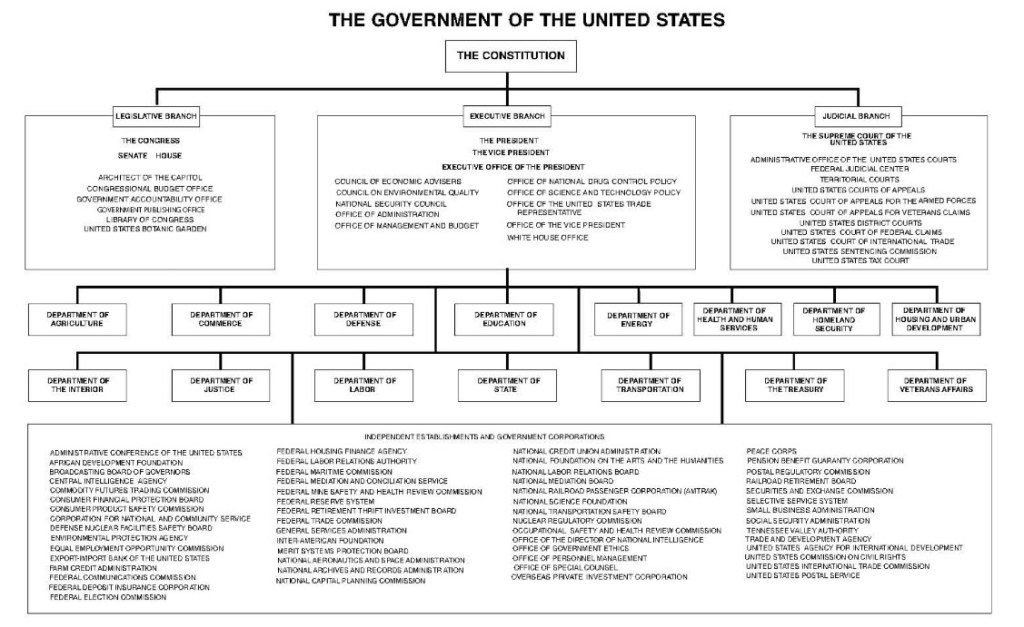
Duplicative functions, poor data systems, and a lack of control have led to massive misappropriations of funds. The dysfunction has been enabled by a metastasization of nests of administrative authority inside agencies with “incomprehensible” org charts, often having multiple departments with identical functions that do not communicate. These departments frequently use redundant but unconnected systems. A related problem is the inadequacy of documentation for outgoing payments. Needless to say, this is a hostile environment for effective spending controls.

It’s worth emphasizing, by the way, DOGE’s “open book” transparency. It’s not as if Elon Musk and DOGE are attempting to sabotage the deep state in the dark of night. Indeed, they are shouting from the rooftops!

Doing It Fast

Every day we have a new revelation from DOGE of incredible waste in the federal bureaucracy. Check out this story about a VA contact for web site maintenance. All too ironically, what we call government waste tends to have powerful, self-interested, and deeply corrupt constituencies. This makes speed an imperative for DOGE. In a highly politicized and litigious environment, the extent to which the Leviathan can be brought to heel is partly a function of how quickly the deconstruction takes place. One must pardon a few temporary dislocations that otherwise might be avoided in a world free of rent seeking behavior. Otherwise, the graft (no, NOT “grift”) will continue unabated.

The foregoing offers sufficient rationale not only for speedy force reductions, but also for system upgrades, dissolution of certain offices, and consolidation of core functions under single-agency umbrellas.

The Bloody Budget

It’s difficult to know when budget legislation will begin to reflect DOGE’s successes. The actual budget deficit might be affected in fiscal year 2025, but so far the savings touted by DOGE are chump change compared to the expected $2 trillion deficit, and only a fraction of those savings contribute to ongoing deficit reduction.

Uncontrolled spending is the root cause of the deficit, as opposed to insufficient tax revenue, as evidenced by a relatively stable ratio of taxes to GDP. The spending problem was exacerbated by the pandemic, but Congress and the Biden Administration never managed to scale outlays back to their previous trend once the economy recovered. Balancing the budget is made impossible when the prevailing psychology among legislators and the media is that reductions in the growth of spending represent spending cuts.

Federal spending is excessive on both the discretionary and mandatory sides of the budget. Ultimately, eliminating the budget deficit without allowing the 2017 Trump tax cuts to expire will require reform to mandatory entitlements like Social Security, Medicare, and Medicaid, as well as reductions across an array of discretionary programs.

DOGE’s focus on fraud and waste extends to entitlements. At a minimum, the data and tracking systems in place at HHS and SSA are antiquated, sometimes inaccurate, and are highly susceptible to manipulation and fraud. Systems upgrades are likely to pay for themselves many times over.

But all indications are that it’s much worse than that. Social security numbers were issued to millions of illegal immigrants during the Biden Administration, and those enrollees were cleared for maximum benefits. There were a significant number of illegals enrolled in Medicaid and registered to vote. While some of these immigrants might be employed and contributing to the entitlement system, they should not be employed without legal status. Of course, one can defend these entitlement benefits on purely compassionate grounds, but the availability of benefits has served to attract a massive flow of illegal border crossings. This illustrates both the extent to which the entitlement system has been compromised as well as the breakdown of border security.

On the discretionary side of the budget, DOGE has identified an impressive array programs that were not just wasteful, but by turns ridiculous or politically motivated (for example, the bulk of USAID’s budget). Many of these funding initiatives belong on the chopping block, and components that might be worthwhile have been moved to agencies with related missions. In addition, authorized but unspent allocations have been identified that seem to have been held in reserve, and which now can be used to reduce the public debt.

Research Grants?

Of course, like the initial scale of the FDA layoffs, a few mistakes have and will be made by DOGE and agencies under DOGE’s guidance. Many believe another powerful argument against DOGE is the Trump Administration’s 15% limit on indirect costs as an add-on to NIH grants. Critics assert that this limit will hamstring U.S. scientific advancement. However, it won’t “kill” publicly funded research. As this article in Reason points out, historically public funding has not been critical to scientific advancement in the U.S. In fact, private funding accounts for the vast bulk of U.S. R&D, according to the Congressional Research Service. Moreover, it’s broadly acknowledged that indirect costs are subject to distortion, and that generous funding of those costs creates bad incentives and raises thorny questions about cross-subsidies across funders (15% is the rate at which charities typically fund indirect costs).

No doubt some elite research universities will suffer declines in grants, but their case is weakened politically by a combination of lax control over anti-Semitic protests on campus, the growing unpopularity of DEI initiatives in education, and public awareness of the huge endowments over which these universities preside. Nevertheless, I won’t be surprised to see the 15% limit on indirect research costs revised upward somewhat.

More DOGE Please

I’ve criticized the numbers posted on DOGE’s website elsewhere. They could do a much better job of categorizing and reporting the savings they’ve achieved, and they have far to go before meeting the goals stated by Elon Musk. Be that as it may, DOGE is making progress. Here is a report on a few of the latest cuts.

As I’ve emphasized on numerous occasions, the federal government is a strangling mass of tentacles, squeezing excessive resources out of the private sector and suffocating producers with an endless catalogue of burdensome rules. There are many examples of systemic waste taking place within the federal bureaucracy. For example, since its creation by Jimmy Carter, the Department of Education has managed to piss away trillions of dollars while student performance has declined. The Small Business Administration has doled out millions of dollars in subsidized loans to super-centenarians as well as children. The U.S. Postal Service keeps losing money and mail while deliveries slow to a crawl. Big projects become mired in endless iterations of reviews and revisions, such as Obama’s infrastructure plan and Joe Biden’s infrastructure and rural broadband initiative.

And again, regulatory agencies are often our worst enemies, imposing burdensome requirements with which only the largest industry players can afford to comply. Indeed, the savings achieved through the DOGE process might pale in comparison to the resources that could be liberated by rationalizing the tangle of regulations now choking private business.

A significant narrowing of the budget deficit would be a major accomplishment for DOGE. Even one-time savings to help pay down the public debt are worthwhile. In this latter regard, I hope DOGE’s work with the Department of Interior helps facilitate the sale of dormant federal assets. This includes land (not parks) and buildings worth literally trillions of dollars, and sometimes costing billions annually to maintain.

The UN’s Mass Extinction Fiction

20 Monday May 2019

Posted by Nuetzel in Biodiversity, Central Planning, Environment

≈ Leave a comment

Tags

African Elephants, Beepocalypse, Biodiversity, Bird Eater Tarantulas, CO2 Emissions, Dan Hannon, Extinction, Gary Wrightstone, Global Greening, Habitat Loss, IPCC, IUCN Red List, Jimmy Carter, Matt Ridley, Non-Native Species, Paris Accord, Polar Bears

A big story early this month warned of mass extinctions and a collapse of the planet’s biodiversity. This was based on a report by the UN’s Intergovernmental Science-Policy Platform on Biodiversity and Ecosystem Services (IPBES). A high-level presentation of the data by IPBES was constructed in a way that is easily revealed as misleading (see below). But the first thing to ask about bombastic reports like this is whether the authors are self-interested. There is big money in promoting apocalyptic scenarios and public programs to avert them. Large government grants are at stake for like-minded scientists, and political power is at stake for biodiversity activists worldwide. Like many other scare stories reported as “news”, this one feeds into the statist political agenda of the environmental Left.

Exaggerated claims of species endangerment are not a new phenomenon. We’ve heard grossly erroneous forecasts of polar bear extinctions, frightening but false warnings of a “beepocalyse”, and faulty claims about declines in the population of African elephants. These are headline-grabbing and more thrilling to report than mourning the prospective loss of an obscure species of cave lichen. But a mass extinction is something else! Dan Hannon reminds us of the following:

“In 1980, for example, the Jimmy Carter administration distributed to foreign governments a report claiming that, by the year 2000, 2 million species would be wiped out. In fact, by 2010, there had been 872 documented extinctions.” 

Of course, that figure does not account for the multitude of new species discovered. There are many. Recent examples just gruesome enough to garner attention are the three new species of bird eater tarantulas discovered in 2017.

In the more general mass-extinction context of the IPBES report, the blame for the extremely pessimistic outlook is placed squarely on human activity. The authors allege CO2 emissions as the primary culprit, which is at best a theory and one at odds with the chief driver of extinctions during the industrial era. That is the introduction of non-native species into environments having flora or fauna unable to withstand new competitors. Matt Ridley elaborates:

“The introduction by people of predators, parasites and pests, especially to islands, has been and continues to be far and away the greatest cause of local and global extinction of native fauna.”

There is no question that the IPBES report on extinctions was intended to create alarm. As Gary Wrightstone demonstrates, the lack of rigor and misleading expositional techniques used in the report are a tell:

“… the data were lumped together by century rather than shorter time frames, which, as we shall see accentuates the supposed increase in extinctions. … The base data were derived from the International Union for Conservation of Nature and Natural Resources (IUCN) Red List, which catalogues every known species that has gone the way of the dodo and the carrier pigeon. Review of the full data set reveals a much different view of extinction and what has been happening recently.”

The more granular charts Wrightstone presents are indeed contrary to the narrative in the IPBES report. And Wrightstone also highlights the following in a postscript:

“In an incredibly ironic twist that poses a difficult conundrum for those who are intent on saving the planet from our carbon dioxide excesses, the new study reports that the number one cause of predicted extinctions is habitat loss. Yet their solution is to pave over vast stretches of land for industrial scale solar factories and to construct immense wind factories that will cover forests and   grasslands, killing the endangered birds and other species they claim to want to save.”

The enduring extinction racket is one among other fronts in the war on capitalism. The IPBES report must use the term “transformative” a thousand times, as it recommends “steering away from the current limited paradigm of economic growth“. Matt Ridley highlights the faulty attribution of alleged declines in biodiversity to “western values and capitalism”:

“On the whole what really diminishes biodiversity is a large but poor population trying to live off the land. As countries get richer and join the market economy they generally reverse deforestation, slow species loss and reverse some species declines.”

And Ridley also says this:

“A favourite nostrum of many environmentalists is that you cannot have infinite growth with finite resources. But this is plain wrong, because economic growth comes from doing more with less. So if I invent a new car engine that gets twice as many miles per gallon, I’ve caused economic growth but we’ll use less fuel. Likewise if I increase the yield of a crop, I need less land and probably less fuel too.”

It’s no coincidence that future extinctions foretold by IPBES are predicted to have drastic impacts on less-developed countries. It thus appears that IPBES exists in a happy synergy with the UN’s climate Intergovernmental Panel on Climate Change (IPCC), as well as proponents of the Paris Accord and the entire climate lobby. An objective that helps them garner support around the globe is to redistribute existing wealth to less-developed countries in the name of environmental salvation. That would prove a poor substitute for the kinds of free-market policies that would truly enhance prospects for economic growth in those nations.

The threat of mass extinctions is greatly exaggerated by the UN, IPBES, climate change activists, and members of the media who can’t resist promoting a crisis. Any diminished biodiversity we might experience going forward won’t be solved by limiting economic growth, as the IPBES report claims. Instead, advances in productivity, particularly in agriculture, can allow expansion of native habitat, as recent experience with reforestation and global greening demonstrates. This principle is as applicable to under-developed countries as anywhere else.

The kinds of centrally planned limits on human activity contemplated by the IPBES report are likely to backfire by making us poorer. Those limits would impose costs by misallocating resources away from things that people value most highly. They would also force people to forego the adoption of innovative production techniques, leading to the substitution of other resources, such as inefficient land use. And those limits would deny basic freedoms, including the unfettered use of private property.

The Insane Substitution Of Regulation For Value

21 Monday Sep 2015

Posted by Nuetzel in Big Government, Regulation

≈ Leave a comment

Tags

Broadband Investment, Code of Federal Regulation, Compliance Costs, Coyote Blog, Dodd Frank Act, e-Verify, Great Stagnation, Jimmy Carter, L. Gordon Crovitz, Mercatus Center, Net Neutrality, Obamacare penalties, Regulatory Burdens, Regulatory State, Vestigial Regulations, Warren Meyer

Regulatory Burdens

My day-job at a financial institution has become increasingly dominated by governance and compliance issues, due largely to the Dodd-Frank Act. Much less of my time these days is dedicated to activities that are of direct value to the business or its customers. It’s not just me, but a large number of talented professionals with whom I work, many having advanced degrees. And a platoon of government regulators with advanced degrees often resides in a conference room on our floor. As I overheard one colleague say the other day, even a sneeze now requires permission from regulators. It feels very much like working for a regulated public utility, or worse yet, a government agency. This is obviously costly for shareholders, customers and taxpayers. If asked, I would be hard-pressed to explain how such massive compliance activity adds value for anyone, except perhaps the regulators themselves, or those who like the job guarantee provided by the situation. Does it offer some extra guarantee of stability for our institution, which remained stable and viable throughout the last financial crisis? Not likely, especially if actually managing the business has anything to do with it. Does it guarantee the stability of the larger financial system to impose massive compliance costs and ossify an otherwise dynamic enterprise?

The financial industry is not the only sector plagued by this phenomenon. At Coyote Blog, Warren Meyer provides a great perspective based on his own experience (and he deserves the inspirational hat-tip for this post). Meyer owns and operates a company that manages public parks. Here is his summary:

“Ten years ago, most of my company’s free capacity was used to pursue growth opportunities and refine operations. Over the last four years or so, all of our free capacity has been spent solely on compliance.“

Meyer offers details of compliance issues that have robbed his business of productive time and energy:

  • Managing hours of seasonal employees to avoid Obamacare penalties;
  • Seeking government approval of price increases to recover minimum wage hikes;
  • Implementing and running e-Verify on new hires;
  • Additional employee hiring documentation requirements;
  • Compliance with California regulation of chairs, hot-day practices, meal breaks, overtime assignments, employee sick days, and other processes;

He goes on to note some economy-wide implications of these entanglements:

“… for folks who are scratching their head over recent plateauing of productivity gains and reduced small business origination numbers, you might look in this direction.

By the way, it strikes me that regulatory compliance issues set a minimum size for business viability. You have to be large enough to cover those compliance issues and still make money. What I see happening is that as new compliance issues are layered on, that minimum size rises, like a rising tide slowly drowning companies not large enough to keep their head above water.“

There is no doubt that heavy regulation favors large firms over small firms, and it makes competing with entrenched businesses more difficult for new entrants. Here is the first of a trio of relevant posts from the Mercatus Center, a summary of research finding that regulation reduces new business start-ups and hiring activity.

A heavily regulated economy is likely to suffer from an accumulation of old, irrelevant, or often conflicting rules. A second Mercatus Center post, “‘Regulatory Appendicitis’ and the Dangers of Vestigial Regulations” focuses on an additional problem: the application of old rules to regulate new technologies:

“From a regulatory agency’s perspective, recycling old rules makes sense: Old rules have withstood legal challenges and offer a relatively safe legal route. However, the rules are unlikely to optimally fit the new context for which they are employed. The use of rules that aren’t optimized for the task at hand can significantly hamper innovation and the development of technology. Even worse, due to poor design, they may not actually accomplish the new objective.“

A case in point is the recent imposition of “net neutrality” rules, which prevent ISPs and internet backbone providers from charging incremental rates to network hogs. This involves the application of regulatory rules designed for railroads 130 years ago and applied to the phone system 80 years ago. L. Gordon Crovitz writes of the early, negative impact of this regulation on investment in broadband in a piece entitled “Obamanet Is Hurting Broadband” (if the link fails, Google “wsj Crovitz Obamanet Broadband” and choose the first link returned):

“Today bureaucrats lobbied by special interests determine what is ‘fair’ and ‘reasonable’ on the Internet, including rates, tariffs and business arrangements. The FCC got thousands of requests for new regulations within weeks of the new rules. … Before Obamanet went into effect, economist Hal Singer of the Progressive Policy Institute predicted in The Wall Street Journal that if price and other regulations were introduced, capital investments by ISPs could quickly fall … 5% and 12% a year …. Now Mr. Singer has analyzed the latest data, and his prediction has come true.“

Crovitz correctly states that consumers want more broadband, and broadband growth requires investment. Systematically punishing those who make such investments will not bring improvements in service. And this is not an isolated result. Apart from the absorption of staff time (which is often required to manage new investment), regulation discourages productive capital investment in new facilities, equipment and technology. The potential growth of the economy suffers as a result, including the potential growth of wages.

Several past posts on Sacred Cow Chips have dealt with the heavy costs imposed by regulation, including “Life’s Bleak When Your Goal Is Compliance“, “You Probably Broke The Law Today“, and “There Oughtta NOT Be a Law“.

Is there really a trend toward greater regulation? Yes, and it is not new. Has it accelerated? A third Mercatus Center post demonstrates that the Obama Administration, in terms of new regulatory restrictions, is on a pace to exceed all preceding presidents over the past 40 years. This is based on the Code of Federal Regulation (though Jimmy Carter edged Obama slightly over Obama’s first four years). Obama’s penchant for executive orders shows no sign of abating, and Congress is apparently incapable of over-riding any veto. Much of this can be reversed, in principle, but new regulations have a way of creating political constituencies, so reversals might be easier to say than do.

Follow Sacred Cow Chips on WordPress.com

Recent Posts

  • Immigration and Merit As Fiscal Propositions
  • Tariff “Dividend” From An Indigent State
  • Almost Looks Like the Fed Has a 3% Inflation Target
  • Government Malpractice Breeds Health Care Havoc
  • A Tax On Imports Takes a Toll on Exports

Archives

  • December 2025
  • November 2025
  • October 2025
  • September 2025
  • August 2025
  • July 2025
  • June 2025
  • May 2025
  • April 2025
  • March 2025
  • February 2025
  • January 2025
  • December 2024
  • November 2024
  • October 2024
  • September 2024
  • August 2024
  • July 2024
  • June 2024
  • May 2024
  • April 2024
  • March 2024
  • February 2024
  • January 2024
  • December 2023
  • November 2023
  • August 2023
  • July 2023
  • June 2023
  • May 2023
  • April 2023
  • March 2023
  • February 2023
  • January 2023
  • December 2022
  • November 2022
  • October 2022
  • September 2022
  • August 2022
  • July 2022
  • June 2022
  • May 2022
  • April 2022
  • March 2022
  • February 2022
  • January 2022
  • December 2021
  • November 2021
  • October 2021
  • September 2021
  • August 2021
  • July 2021
  • June 2021
  • May 2021
  • April 2021
  • March 2021
  • February 2021
  • January 2021
  • December 2020
  • November 2020
  • October 2020
  • September 2020
  • August 2020
  • July 2020
  • June 2020
  • May 2020
  • April 2020
  • March 2020
  • February 2020
  • January 2020
  • December 2019
  • November 2019
  • October 2019
  • September 2019
  • August 2019
  • July 2019
  • June 2019
  • May 2019
  • April 2019
  • March 2019
  • February 2019
  • January 2019
  • December 2018
  • November 2018
  • October 2018
  • September 2018
  • August 2018
  • July 2018
  • June 2018
  • May 2018
  • April 2018
  • March 2018
  • February 2018
  • January 2018
  • December 2017
  • November 2017
  • October 2017
  • September 2017
  • August 2017
  • July 2017
  • June 2017
  • May 2017
  • April 2017
  • March 2017
  • February 2017
  • January 2017
  • December 2016
  • November 2016
  • October 2016
  • September 2016
  • August 2016
  • July 2016
  • June 2016
  • May 2016
  • April 2016
  • March 2016
  • February 2016
  • January 2016
  • December 2015
  • November 2015
  • October 2015
  • September 2015
  • August 2015
  • July 2015
  • June 2015
  • May 2015
  • April 2015
  • March 2015
  • February 2015
  • January 2015
  • December 2014
  • November 2014
  • October 2014
  • September 2014
  • August 2014
  • July 2014
  • June 2014
  • May 2014
  • April 2014
  • March 2014

Blogs I Follow

  • Passive Income Kickstart
  • OnlyFinance.net
  • TLC Cholesterol
  • Nintil
  • kendunning.net
  • DCWhispers.com
  • Hoong-Wai in the UK
  • Marginal REVOLUTION
  • Stlouis
  • Watts Up With That?
  • Aussie Nationalist Blog
  • American Elephants
  • The View from Alexandria
  • The Gymnasium
  • A Force for Good
  • Notes On Liberty
  • troymo
  • SUNDAY BLOG Stephanie Sievers
  • Miss Lou Acquiring Lore
  • Your Well Wisher Program
  • Objectivism In Depth
  • RobotEnomics
  • Orderstatistic
  • Paradigm Library
  • Scattered Showers and Quicksand

Blog at WordPress.com.

Passive Income Kickstart

OnlyFinance.net

TLC Cholesterol

Nintil

To estimate, compare, distinguish, discuss, and trace to its principal sources everything

kendunning.net

The Future is Ours to Create

DCWhispers.com

Hoong-Wai in the UK

A Commonwealth immigrant's perspective on the UK's public arena.

Marginal REVOLUTION

Small Steps Toward A Much Better World

Stlouis

Watts Up With That?

The world's most viewed site on global warming and climate change

Aussie Nationalist Blog

Commentary from a Paleoconservative and Nationalist perspective

American Elephants

Defending Life, Liberty and the Pursuit of Happiness

The View from Alexandria

In advanced civilizations the period loosely called Alexandrian is usually associated with flexible morals, perfunctory religion, populist standards and cosmopolitan tastes, feminism, exotic cults, and the rapid turnover of high and low fads---in short, a falling away (which is all that decadence means) from the strictness of traditional rules, embodied in character and inforced from within. -- Jacques Barzun

The Gymnasium

A place for reason, politics, economics, and faith steeped in the classical liberal tradition

A Force for Good

How economics, morality, and markets combine

Notes On Liberty

Spontaneous thoughts on a humble creed

troymo

SUNDAY BLOG Stephanie Sievers

Escaping the everyday life with photographs from my travels

Miss Lou Acquiring Lore

Gallery of Life...

Your Well Wisher Program

Attempt to solve commonly known problems…

Objectivism In Depth

Exploring Ayn Rand's revolutionary philosophy.

RobotEnomics

(A)n (I)ntelligent Future

Orderstatistic

Economics, chess and anything else on my mind.

Paradigm Library

OODA Looping

Scattered Showers and Quicksand

Musings on science, investing, finance, economics, politics, and probably fly fishing.

  • Subscribe Subscribed
    • Sacred Cow Chips
    • Join 128 other subscribers
    • Already have a WordPress.com account? Log in now.
    • Sacred Cow Chips
    • Subscribe Subscribed
    • Sign up
    • Log in
    • Report this content
    • View site in Reader
    • Manage subscriptions
    • Collapse this bar
 

Loading Comments...