• About

Sacred Cow Chips

Sacred Cow Chips

Author Archives: Nuetzel

Anti-Glyphosate Goons and Gullibility

15 Sunday May 2016

Posted by Nuetzel in Agriculture, Regulation, Technology

≈ Leave a comment

Tags

Biology Fortified, Carcinogens, Christopher Portier, David Zaruk, Environmental Defense Fund, EPA, Farmer's Daughter, Glyphosate, IARC, International Agency for Research on Cancer, Julie Kelly, Kathryn Guyton, Matt Ridley, psuedoscience, Rational Optimist, Risk Monger, Roundup, Toxicity, WHO, World Health Organization
pseudociencia-a-saco

See the Postscript below.

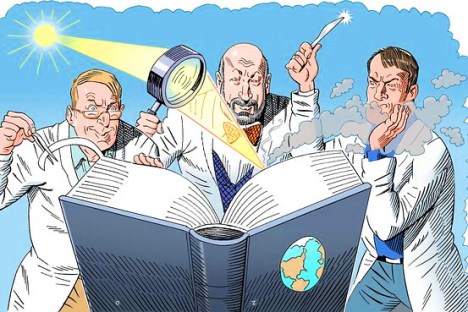
A “roundup” of findings on the safety of glyphosate shows that the herbicide is very benign, highly unlikely to pose any real threat to humans, and far less toxic than many common household chemicals and even natural hazards in the environment. However, the debate over glyphosate is heavily politicized, as illustrated by the unsavory details surrounding a report issued last year by the International Agency for Research on Cancer (IARC), an arm of the World Health Organization (WHO). The IARC reclassified glyphosate as “probably carcinogenic to humans” based on a few cherry-picked, poorly-designed studies with weak statistical power. That finding is inconsistent with the vast preponderance research, which shows that glyphosate is not a significant threat to human health.

The Farmer’s Daughter provided a good summary of the issues shortly after the IARC’s ruling was announced last year. She offers the following quote from the U.S. Environmental Protection Agency (EPA):

“The U.S. EPA classified glyphosate as Group E, evidence of non-carcinogenicity in humans. The U.S. EPA does not consider glyphosate to be a human carcinogen based on studies of laboratory animals that did not produce compelling evidence of carcinogenicity.“

European regulators reached similar conclusions and are rather damning in their assessment of the IARC’s findings, though Brussels recently disregarded their findings and decided to ban the sale of glyphosate for gardening. In this post at Biology Fortified, Anastasia Bodnar discusses the low toxicity of glyphosate with links to several recent studies on its safety. And here is the Risk Monger blogs’s list of “ten reasons why glyphosate is the herbicide of the century“:

  1. Controlling invasive weeds leads to better agricultural yields
  2. Better yields = less land in production = more meadows and biodiversity
  3. Extremely low toxicity levels compared to (organic) alternatives
  4. Allows for no or low till farming – better for soil management
  5. Reduces CO2 emissions (compared to organic)
  6. Glyphosate saves lives
  7. It is much more affordable and effective than other options
  8. Glyphosate is off patent so no single company is profiting heavily from it
  9. Glyphosate-resistant crops allow for more ecological weed management practices
  10. There is overwhelming scientific evidence that glyphosate is safe for humans

How, then, did the IARC reach such a negative conclusion? Again from the Risk Monger, David Zaruk, the IARC hired just one external technical advisor, Christopher Portier, an activist previously employed by an NGO, the anti-pesticide Environmental Defense Fund (EDF). Portier has no technical background in toxicology, and the IARC apparently went to pains to avoid references to his affiliation with the EDF. Moreover, the IARC’s conclusion seems to have been preordained:

“The IARC study rejected thousands of documents on glyphosate that had industry involvement and based their decision on carcinogenicity on the basis of eight studies (rejecting a further six because they did not like their conclusions).“

The lead author of the report, Kathryn Guyton, gave a speech in 2014 in which she stated that herbicide studies slated for 2015 showed indications of a link to cancer. Just how did she know, so far ahead of time? And then there’s this revelation:

“According to the observer document, the glyphosate meeting started with the participants being told to rule out the possibility of classifying the substance as non-carcinogenic.“

Zaruk believes there is internal pressure for the IARC study to be retracted. The organization has suffered a great loss of credibility in the scientific community over the report. In addition, WHO has remained neutral thus far, but they are expected to address the issue this month.

Zaruk and Julie Kelly provide a more succinct summary of the issues in “The Facebook Age of Science at The World Health Organization” at National Review. The suggestion made in the title seems to be that WHO’s decision might be swayed by public pressure, measured by Facebook “likes” by the superstitious, such as unknowing David Wolfe devotees, rather than science:

“Environmentalists and organic companies tout phony studies claiming that glyphosate is found in everything from breast milk to bagels. … Meanwhile, farmers who use glyphosate to protect their crops and boost yields are caught in the crossfire. Even if glyphosate is banned, they will need to use another herbicide, probably more toxic, because the romantic notion of hand-weeding millions of acres of crops is promoted only by those who have never done it.“

I’ll keep using Monsanto’s Roundup, thanks! Or a competitive brand of glyphosate. To close, here’s a quote from Matt Ridley’s Rational Optimist blog on the embrace of pseudoscience at the IARC and elsewhere (including social media):

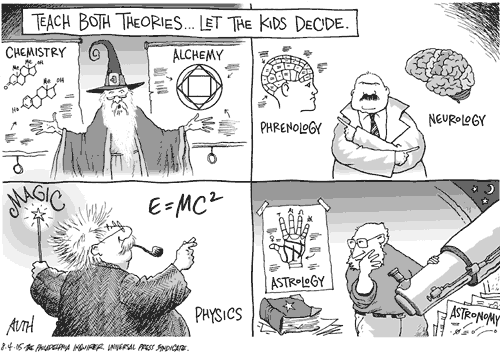
“Science, humanity’s greatest intellectual achievement, has always been vulnerable to infection by pseudoscience, which pretends to use the methods of science, but actually subverts them in pursuit of an obsession. Instead of evidence-based policymaking, pseudoscience specialises in policy-based evidence making. Today, this infection is spreading.“

Postscript: On May 16, WHO announced that glyphosate is “unlikely to cause cancer in people via dietary exposure.” Here is a Q&A from WHO regarding its assessment, explaining that it is based on risk as opposed to mere hazard, upon which the earlier IARC report was based. This is good news!

 

Who Brought the Melting Pot To the Pow Wow?

11 Wednesday May 2016

Posted by Nuetzel in Censorship, Free Speech

≈ 1 Comment

Tags

Bollywood, Censorship, Chinese New Year, Cinco de Mayo, Cultural Appropriation, Cultural Exchange, Delta Blues, Eugene Volokh, Exclusivity, Fighting Words, Flower Drum Song, Hate Speech, Huckleberry Finn, Intellectual Property, Jewish Community Center, Mardi Gras Indians, Moon Festival, Native Americans, Neverland, Peter Pan, Pow Wow, Rivalrous goods, Separate But Equal, The Grateful Dead, The King and I, Ugg-a-Wugg, Washington Redskins

Chris Rock

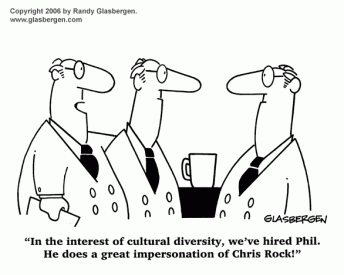
I ran into a Chinese colleague in a break room at work and mentioned that I’d seen her engaged in a “pow wow” with a senior staffer, and she asked, “Pow wow?” I tried to explain the Native American origins of the term for a gathering or meeting, and I think she liked that, but I joked that my use of the term might represent “cultural appropriation” (CA). A second colleague who’d entered the kitchen glanced at me with a raised eyebrow. Knowing them well, I’m not sure either of them knew what I meant. As it happens, describing the pow wow as a celebration is more accurate, so my use of the term to describe a meeting was too narrow. In fact, in modern usage by Native Americans, it is a celebration of culture, but meetings take place at these events as well.

CA occurs when aspects of one culture are used in some way by others. It is criticized for trivializing the traditions or symbols of the source culture or because it robs it’s members of intellectual property (IP) rights. I can think of examples of cultural trivialization, such as the “Ugg-a-Wugg” song from the musical Peter Pan. Such complaints strike me as hyper-sensitive, but perhaps the umbrage taken by Native Americans to this song is understandable. Nevertheless, I stand more strongly behind the right of free expression. This song, which is rarely performed today out of respect for Native Americans, was part of a larger Neverland fantasy that has great appeal. And after all, the Indians were good guys in the story!

Works such as Peter Pan and Huckleberry Finn are historical and reflect the times in which they were created. As such, some argue that they should be left in their original form. And I agree, in general. However, in the case of a musical that is performed publicly again and again by various professional and amateur groups, I am sympathetic to the notion that potentially offensive elements can be excised if the changes do not do great damage to the story. If it is not in the public domain, the owners of the story’s rights have the final say.

The IP argument is flawed to the extent that IP arguments are always flawed: ideas are non-rivalrous and non-exclusive. Moreover, even IP rights recognized under U.S. law are limited to individual “property”; they do not extend to the traditions and symbols of various cultures that coexist in society.

Another area emphasized by critics of CA has to do with historical grievances against a dominant culture, often without regard to current circumstances. Apparently, such grievances place the minority culture off-limits. Under this view, cultural exchange is fundamentally bad, which is fundamentally absurd. It has the faint ring of “separate but equal” — paradoxical given the avowed desire among critics of CA for an end to racial and social division.

While European colonialists certainly exploited the native inhabitants in many lands, today’s liberal order in the West is attractive to members of different cultures around the globe.They adopt similar institutions and practices at home, and some of them bring their cultures to us. We all gain in the exchange.

Strong condemnation of CA has been all the rage on college campuses over the past few years (see several of the links here). It reflects a hyper-sensitivity about the normal mixing of cultures. Cultural exchange tends to elevate appealing aspects of all cultures into the larger society. Should we really condemn any of the following harmless activities?

  • Yoga classes at the Jewish Community Center?
  • Cinco de Mayo celebrations by non-Mexicans?
  • Caucasians celebrating the Chinese New Year or Moon Festival?
  • St. Patrick’s Day celebrations by non-Irish, non-Catholics?
  • Flower Drum Song or The King and I?
  • Caucasians playing Delta Blues?
  • African American Mardi Gras Indians?
  • Caucasians watching Bollywood movies?
  • The Grateful Dead at the Pyramids?
  • Caucasians cooking “ethnic” foods?

I grant that respect dictates avoiding use of another group’s sacred symbols. Beyond that, it is difficult to conceive of any objections to activities like those above. They are all forms of cultural cross-pollination, even if they seem to trivialize in some cases. This sometimes  involves cultural interpretation by “others” that might not be accurate, but that is always the case when cultures mix. People incorporate or adapt features of other cultures that they enjoy, which is hardly a sin.

Curious about pow wow, I found the following qualification in the Wikipedia entry for pow-wow:

“…the term has also been used by non-Natives to describe any gathering of Native Americans, or to refer to any type of meeting among non-Natives (such as military personnel). However, such use may be viewed as cultural appropriation, and disrespectful to Native peoples.“

Well, well, well! Pow wow is used in conversational english to lend an air of informality or lightness to certain proceedings. It may simultaneously convey a serious diplomatic purpose and an opportunity to resove differences. Sometimes, non-Natives might even use the term to sound clever, like using the French term soirée rather than “party”. Or perhaps they are amused by the image of corporate managers seated akimbo around a camp fire, passing a peace pipe. Or any pipe. Trivial? Maybe, but if that possibility outrages Native Americans, it strikes me as an over-reaction. After all, the joke is partly on “the suits”, and there isn’t much the Indians can do about it under the law.

I have always been fascinated by American Indian history and culture. I do not use the term pow-wow in disrespect. I use it because it’s colorful and I like it. The cross-pollination of language and culture is borne out of the utility of a particular word or practice. It can hardly be bad that a few shards of Native American language and culture are incorporated into broader American society.

My sister has a beautiful scarf bearing the profile of an American Indian in full head dress. She has always had an interest in the art and culture of the American southwest, which has benefitted from the heavy influence of Indians who are native to that region. So it was unsurprising to me that she would be drawn to the beauty of the scarf. It is a work of art and she does not wear it out of disrespect for American Indians.

Certain acts of CA are thought to intersect with racism, however. How about the Washington Redskins football team name? The team logo and merchandise use Native American symbols. The same goes for the Atlanta Braves and other teams. However, the term Redskin almost certainly has overtly racist origins as a description of an enemy thought to be savage, much as “Nips” was a derogative used by Allied soldiers in World War II as a term for the Japanese.  Defenders of the team claim that “Redskin” is not meant to trivialize or denigrate Native Americans, but instead to recognize their honor and ferocity in battle. The team owner and many fans insist that the tradition of the team name should continue in tribute to American Indians. Nevertheless, the name is understandably objectionable to Native Americans today as a crude description of their genealogy. My friend John Crawford tells me of a proposal to change the team logo to a red-skinned potato, but apparently the idea was rejected by the U.S. Patent Office.

In all of these matters, free speech outweighs all other considerations. While cultural appropriation is sometimes regarded with hostility, that does not give the aggrieved special rights to prevent it. The same is true of racism, however regrettable it is. Even so-called hate speech is protected under the U.S. Constitution, short of “fighting words”. Critics of cultural appropriation can seek to educate, influence, boycott and to shame those believed to have run afoul of their standards. In most cases, however, I think the best advice is to chill out.


Math Made Him Seem So Calculating

08 Sunday May 2016

Posted by Nuetzel in Education, Security

≈ Leave a comment

Tags

Catherine Rampell, David Huber, EAG News, Economics and Math, Guido Menzio, Mathematics, Radical Math, Say Something, See Something, Teach For America, The College Fix, University of Pennsylvania, Washington Post

rational and real numbers

So good I just have to post it: “Economist Removed from American Airlines Flight for Doing Math“. University of Pennsylvania econ professor Guido Menzio fell victim to a non-mathmetician’s vigilance. From Catherine Rampell at WaPo:

“Maybe it was code, or some foreign lettering, possibly the details of a plot to destroy the dozens of innocent lives aboard American Airlines Flight 3950. She may have felt it her duty to alert the authorities just to be safe. The curly-haired man was, the agent informed him politely, suspected of terrorism.“

The first post linked above also has this little anecdote from 2003:

“At Heathrow Airport today, an individual, later discovered to be a school teacher, was arrested trying to board a flight while in possession of a compass, a protractor, and a graphical calculator. …  Authorities believe she is a member of the notorious al-Gebra movement. She is being charged with carrying weapons of math instruction.“

Mathematics has always seemed a little threatening to many people, but apparently social justice “educators” at Teach For America are telling minorities that “Math is the ‘Domain of Old, White Men’“. That is from David Huber at The College Fix. Huber quotes a story from EAG News.org:

 “Radical Math was created by educator Jonathan Osler several years ago while teaching at El Puenta Academy in New Jersey. Osler taught Radical Math along-side Cathy Wilkerson, a former member of the Weather Underground Organization (with Bill Ayers) who once participated in a plot to detonate a nail bomb at a dance for military personnel at Fort Dix.

Radical Math provides hundreds of social justice math lessons obviously meant to indoctrinate. For example, lesson titles include ‘Sweatshop Accounting,’ ‘Racism and Stop and Frisk,’ ‘When Equal Isn’t Fair,’ ‘The Square Root of a Fair Share’ and ‘Home Buying While Brown or Black.’“

Huber sums things up thusly:

“I cannot think of a better way to keep minorities ignorant of mathematics than by turning the subject into yet another showcase for historical grievances.“


Social Media Content Control

06 Friday May 2016

Posted by Nuetzel in Censorship, Marketplace of Ideas

≈ Leave a comment

Tags

Blacklisting, Block & Report Spam, Censorship, Community Standards, Content Neutrality, Content Standards, Gizmodo, Marketplace of ideas, Mobbing, News Curators, Social Media

censorship

Do social media and networking platforms unfairly restrict speech and content by users expressing certain political views? Is the “marketplace of ideas” subject to entry barriers imposed by the platforms themselves? Twitter has been in the news recently for a “Block & Report Spam” feature whereby complaints can trigger a suspension. Some claim that leftists are gaming the system to take down certain posters. Twitter claims to never filter or moderate content proactively, but the system seems to invite abuse by activists at either end of the political spectrum.

Facebook admits that it attempts to enforce a set of “community standards” that cover the general areas of safety, respect (covering hate speech and nudity), security, and intellectual property. There is ample evidence, however, that enforcement of these standards is “arbitrary and capricious“. Examples range from inconsistent treatment of “Death to Israel” posts, images of buttocks, sculptures or drawings of body parts vs. actual body parts, and a variety of gay-themed images. These cases and many others are likely a consequence of different moderators responding to complaints differently in attempts to interpret and enforce rules that are vague by necessity. In addition, decisions to censor or suspend users are sometimes reversed by committee at higher levels, only to be made again later. And there have been allegations that content from advertisers is treated with a “lighter touch” than from non-advertisers. Perhaps the organization is simply trying to find a fair way to moderate the complicated social thicket, but the effort seems largely misplaced. A broader policy of content neutrality and allowing users to censor their feeds for themselves, as they are empowered to do, would avoid many of the inconsistencies.

Facebook also admits to employing contractors as “news curators”. This, and the mysterious disappearance of certain “trending topics” having a conservative bent, have led to strong complaints of blacklisting and censorship. The curators’ instructions from Facebook are described by Gizmodo:

“They were also told to select articles from a list of preferred media outlets that included sites like the New York Times, Time, Variety, and other traditional outlets. They would regularly avoid sites like World Star Hip Hop, The Blaze, and Breitbart, but were never explicitly told to suppress those outlets….  News curators also have the power to “deactivate” (or blacklist) a trending topic—a power that those we spoke to exercised on a daily basis. A topic was often blacklisted if it didn’t have at least three traditional news sources covering it, but otherwise the protocol was murky—meaning a curator could ostensibly blacklist a topic without a particularly good reason for doing so.“

This has the potential to create a bias in favor of certain viewpoints. If a trending topic comes from a source or involves a viewpoint that is not in favor, “news curation” amounts to a distasteful cover for outright political censorship. The Facebook system is also vulnerable to the sort of “mobbing” by activists that has been problematic for Twitter. Some of the complaints against unfair treatment by Facebook undoubtedly have merit. Such bias could have an influence sufficiently great to alter election outcomes.

Some forms of censorship on these platforms may be justified, such as preventing threats, abuse or harassment. As well, the platforms are required to comply with laws that are more restrictive in certain countries. Nevertheless, whatever the content standards, and whatever political bias might be created, the platforms are operated by private entities. They can do whatever they want, as much as anyone might hate it. The accusers are entitled to complain, of course, but they should bear in mind that these platforms are not exactly an open marketplace or a public square, however tempting it is to think of them that way. They could be open and free, given a more enlightened approach by the organizations that run them, but as things stand they are not. Positive action remains an option for those who object: agitate, package your content more carefully, or get off the platform and find an on-line community to your liking.

Climate Alarmists Warm To Speech Control

02 Monday May 2016

Posted by Nuetzel in Global Warming

≈ Leave a comment

Tags

ABC/Walt Disney, AGW, Al Gore, Climate Alarmism, Climate Doomsday, Coyote Blog, David French, ExxonMobile, False Consensus, Galileo, Heliocentrism, Inquisition, IPPC, Josh Gelernter, Judith Curry, Loretta Lynch, Natural Attribution, Rick Moran, Temperature Measurement, Warren Meyer

AGW-cartoon

The reactionaries in the global warming plunderbund are revealing their philosophical bankruptcy, dishonesty, and inner fascism. Science is a continuous process of learning through empirical observation, theory and testing. Refutation is as important to the process as original research and replication. Experimental results can be confirmed, but theory can never be established as absolute fact. The term “settled science” is very nearly an oxymoron, yet we constantly hear that climate science is “settled”. Nothing could be further from the truth.

We are asked by the warmists to accept sweeping conclusions on the basis of an extremely short historical record, one that is clouded by sharp disputes over measurement issues. The long-term record based on temperature proxies shows that recent trends are well within the range of natural variability. We are asked to accept conclusions based largely on models that have proven to be extremely inaccurate and that fail to account for important climate influences such as solar variation and oceanic cycles. And with essentially no historical justification, we are asked to accept assumptions about what global temperatures “should be”, and that we should make drastic sacrifices in a quixotic effort to make temperatures stay put. To do so, we are asked to divert resources on a massive scale to mitigate a risk that is speculative at best. An alternative view is that mankind should make sacrifices in order to adapt to change when it occurs, rather than taking the arrogant view that we can, with sufficient coercion and manipulation of private decisions, dominate natural forces to assure climate stability.

Warren Meyer at Coyote Blog has an excellent series of posts on climate change. The most recent of those posts is on natural attribution of climate change. It includes links to earlier parts of his series. Meyer compares today’s alarmists to a hypothetical observer predicting future temperatures in the year 1600, roughly the minimum of the “mini ice-age”. Of course, that observer would have said it would get colder based on his experience, but that would have been wrong. Today’s alarmists rest their case on a 20-year uptrend between 1978 and 1998, tying it to man-made carbon dioxide emissions. In fact, a longer-term view shows that surface temperatures had increased in similar spurts before carbon emissions were a factor of any kind.

Scoundrels tend to twist facts when the facts don’t support their view. Rick Moran reports on an academic paper concluding that it’s acceptable to lie about the threat posed by climate change. It’s not enough to present research and the full range of uncertainty surrounding forecasts, which is very wide. No, the reporting must be wrapped in a sort of Grimm’s fairy tale in order to teach the public a lesson, unschooled children that they are. Such is the manipulative nature of the warmist community.

And the dishonesty is extensive. Remember the claim that 97% of climate scientists accept the proposition of man-made global warming? It was debunked in short order, but the media seemingly can’t get enough of a disaster scenario, so the claim lives on. Famed climatologist Judith Curry has a number of posts on her blog explaining the misleading details of this bit of disinformation. Among the problems of methodology and reporting of this “survey” result is that it was not based on an actual survey of scientists. Instead, it rated abstracts of publications as to their consistency with particular views of the anthropomorphic global warming (AGW) proposition. Not only does this method double-count the views of individual scientists; the authors were highly selective about which scientists and how many of their publications were counted. Even more interestingly, the criteria were so loose that abstracts written by certain scientists known to be skeptical of AGW were counted within the 97%! In one of Curry’s posts, entitled “The Conceits of Consensus“, she discusses the weaknesses and refutations of the claim of a strong consensus, including the participation of non-scientist evaluators of research abstracts in the sample:

“Bottom line: inflating the numbers of ‘climate scientists’ in such surveys attempts to hide that there is a serious scientific debate about the detection and attribution of recent warming, and that scientists who are skeptical of the IPCC consensus conclusion are disproportionately expert in the area of climate change detection and attribution.“

Other studies have found that a majority of surveyed meteorologists (see here and here), geoscientists and engineers are skeptical of AGW. But again, this information is essentially ignored by the media and self-interested politicos because it does not support the crisis narrative that dictates coercive action by government.

Apparently, propaganda in support of the increasingly dubious warmist position must be reinforced by more drastic measures. Prominent leftists in government are asking whether disputing climate change is punishable under the law. You read that right! Two state attorneys general have threatened to prosecute ExxonMobil for allegedly misleading investors and the public about climate change. Senator Sheldon Whitehouse (D-RI) has proposed using RICO organized crime law to go after certain energy companies for climate change “denial”. Loretta Lynch, the U.S. Attorney General, has asked the FBI to look into it. To hell with freedom of speech. To hell with the spirit of free scientific inquiry. Your authoritarian masters insist that you must fall into line with their climate change agenda or else!

Josh Gelernter opens his recent discussion of this tyrannical gambit this way:

“Four hundred years ago this week, the Inquisition met in Rome to discuss Galileo’s support for the Copernican model of the cosmos, which placed the Sun at the center of the solar system. After five days of deliberation, a commission of inquisitors ruled that heliocentrism was ‘foolish and absurd in philosophy, and formally heretical since it explicitly contradicts in many places the sense of the Holy Scripture.’ Not a good moment for the Church. Two days later, Galileo was summoned to the Vatican and ordered ‘to abstain completely from teaching or defending this doctrine and opinion or from discussing it . . . to abandon it completely . . . and henceforth not to hold, teach, or defend it in any way whatever, either orally or in writing.’“

To underscore the hypocrisy of these threats of prosecution, David French observes that there are many other instances in which the public has been misled while the presumed climate mavens profited from the hysteria. Could these opportunistic ploys also be subject to prosecution?:

  • Al Gore insisted ten years ago that by now we’d suffer a “climate doomsday” if we failed to take the measures he advocated;
  • Perhaps ABC/Walt Disney has profited from its breathless warnings that “in 2015 milk would cost almost $13 a gallon, gas would be more than $9 a gallon, ‘flames [would] cover hundreds of square miles,’ one billion people would be malnourished, and Manhattan would be flooding — all because of climate change.“
  • The Chairman of the United Nations Intergovernmental Panel on Climate Change (IPCC) said, “If there’s no action before 2012, that’s too late….” And as French says: “The IPCC has received tens of millions of dollars while hyping the threat of global warming.“

French’s suggestions are not entirely tongue-in-cheek. These suggestions are no more outlandish than threats to prosecute anyone else over a legitimate dispute in scientific debate.

The AGW community suffers from a weak understanding of the philosophy of science, a dishonest presentation of the facts, and a tyrannical streak that should can only be tamed by stripping them of power. First, however, the voting public must wise up to the danger to our economic well being and our freedom posed by these fascist activists.

Back To The Restroom

29 Friday Apr 2016

Posted by Nuetzel in Discrimination, Federalism, Privacy, Property Rights

≈ Leave a comment

Tags

Anti-Discrimination, Arbitrary Discrimination, Charlotte, Gender Registration, Gender-Specific Restrooms, Hormone Replacement Therapy, LGBT Discrimination, Market Self-Regulation, Mises Institute, NC, North Carolina, Property Rights, Restroom Federalism, Roy Cardato, Separation of Bathroom and State, Transgender, Tyler Cowan

image

I’m following-up on “I’m a Restroom Federalist” by sharing “We Need Separation of Bathroom and State” by Roy Cordato at the Mises Institute. He makes a clean defense of the libertarian view that restrooms choices on private property must not be controlled by government. Any attempt to do so is a violation of private property rights, according to this view. I did not adequately treat the question of property rights in my first “restroom” post. Strong property rights in this context mean that you, a private businessperson, can set the rules for restroom use on your premises, or no rules at all. If you or your customers prefer gender-neutral restrooms in your place of business, so be it. If you believe your customers prefer separate restrooms based on a definition of gender, you can post appropriate signs and face any complaints privately without interference from government.

Many sincere observers hope for a way to fairly accommodate transgender individuals without unduly compromising the rights of others. In my mind, discrimination (or differences in accommodations) should not be tolerated in society if based on arbitrary distinctions. By that I mean the victim differs from the discriminator only in nonessential ways for the purposes at hand. For example, discriminating on the basis of race is wholly arbitrary in almost context. (A director casting the part of an individual of a specific race is a possible exception.) No real harm comes from tolerance and equal treatment in these contexts. I have argued that the market is self-regulating in punishing discrimination. And one can argue that certain freedoms may be violated (association, religion, expression and even property) when even arbitrary forms of discrimination are outlawed, as they are. In these situations, however, laws can work because there is little ambiguity in defining victims of discrimination and the legitimacy of their victimhood.

Is discrimination against transgenders in their restroom options just as arbitrary as it would be against other minorities? That depends upon whether “transgender” can be defined objectively. If it cannot, then denying the bearded lady’s transgender claim in the restroom is not so arbitrary, given the privacy rights of others.

Tyler Cowen discusses some of the complexities of determining whether there should be a legal definition of transgender, or a more “nuanced” definition of gender with three or more categories. That would eliminate any legitimate objections to gender-specific  restrooms. However, a legal standard cannot be based solely on “inner feelings”. Aside from genitalia, are there objective facts that can be brought to bear in defining gender? A personal physician’s assessment of “gender intent” is one possibility. An active regimen of hormone replacement therapy is another. However, transgenders themselves might object to any specific definition of gender imposed by government. Many transgenders would prefer to have it remain a matter of self-identity, but it is impossible to clearly define rights on that basis. As Cowen notes, the “most libertarian view is to refuse to offer a legal definition of transgender.” He also adds:

“If we stick with no legal definition of transgender, let’s tackle the remaining problems directly. For instance we could significantly increase the penalties for men who abuse women or young girls in or near women’s rooms, if indeed that is an ongoing problem.“

As I intimated in my earlier post, I am unconvinced that gender-neutral restrooms won’t encourage voyeurism by posers. That implies a conflict between the rights of transgenders and the fundamental right to privacy. Given that fact, Cowen’s suggestion is sensible under any restroom regime. He also cites the existence of voluntary gender registration systems in other countries. Given a clear definition, transgenders choosing to register could use the restroom consistent with their gender identity and would have documented proof if any question arose as to their right to use a particular facility.

Cordato provides a good explanation of the Charlotte anti-discrimination ordinance and North Carolina’s new law striking it down. The Charlotte ordinance stripped owners of business property of their right to set rules for their own restrooms. The state law does several things: It restores the rights of business owners to provide separate restrooms for males and females, which is fine as far as it goes. It also mandates gender separation of multi-occupancy restrooms and locker rooms in government facilities. Truly, it is hard to imagine any good coming of mixing middle-school girls and boys in the same restrooms and locker rooms. However, the state law also prohibits the promulgation of any anti-discrimination law by lower jurisdictions. That seems a bit too sweeping.

Cowan says the North Carolina law is a solution in search of a problem, or worse:

“North Carolina made a mistake in signing the new law. Not just a practical mistake, because of the backlash, but a mistake outright. I’m not aware there was a problem needing to be solved, and yet new problems have been created.“

Maybe so, but the city of Charlotte clearly took a step in violation of private property rights, and one that threatened privacy rights. I stated in my first restroom post that alternative arrangements will be tested socially, at the ballot box, and by the courts. Some object to the strong privacy ethic that exists in the U.S. as prudish, but it is a cultural given, and privacy rights are protected by the Constitution. Given a conflict over rights between two parties, the courts must decide how to balance those interests.That’s as it should be. And so we’re back to the beauty of federalism!


Words of Weasels

26 Tuesday Apr 2016

Posted by Nuetzel in Liberalism, Marketplace of Ideas, statism

≈ 1 Comment

Tags

Access, Daniel Klein, David Harsanyi, Disenfranchisment, Emmitt Rensin, Full Rights, Kevin Williamson, Kyle Smith, Language of the Left, Liberalism, Loophole, Reason, Safe Spaces, Vox

1984 instruction-manual

Take a moment to consider some examples of the horrible misuse of words in political debates. David Harsanyi at Reason provides a few choice examples of the corrupted and misleading language used by Democrats:

  • the absence of a tax that “should” exist but doesn’t is a “loophole”;
  • failure to pay that tax is a “fraud”;
  • denial of “access” occurs when the state doesn’t give something to you for free;
  • “disenfranchisement” means you have to show an ID or wait in line;
  • “full rights” means the entire world must be a “safe space” for your actions or views, even if the rights of others are denied in the process.

These are all recent examples of mangled language from the two candidates for the Democrat Party nomination. But here’s a big one that Harsanyi overlooked: the misuse of the term “liberalism” to describe statism. In fact, he misuses the word “liberals” himself! In “Don’t Call Leftists Liberal; They’re Not!” on Sacred Cow Chips, I offered some thoughts on this bit of Newspeak practiced by so-called progressives. I can’t resist reposting the following quote of Daniel Klein quoting Kevin Williamson, which says it all (links are in the original post):

“Williamson [quotes] two leftist authors writing in The Nation, one decrying ‘unbridled individualism,’ the other ‘unfettered capitalism.’ Williamson concludes: ‘A ‘liberalism’ that is chiefly concerned with the many clever uses of bridles and fetters does not deserve the name. It never has.’”

The following quote from Harsanyi gives emphasis to the wrongful appropriation of “liberalism” by the left, though it relates more specifically to the misuse of the term “loophole”:

“Basically, all of life is a giant loophole until Democrats come up with a way to regulate or tax it. In its economic usage, “loophole” … creates the false impression that people are getting away with breaking the law. It’s a way to skip the entire debate portion of the conversation and get right to the accusation.“

Another behavioral characteristic of leftists is a certain self-righteous satisfaction that they hold the moral high ground on any number of issues. “The Smug Style in American Liberalism“by Emmitt Rensin in Vox takes a poke at this presumption. Of course, Rensin misuses “liberalism”. I find this review of the article by Kyle Smith an effective summary, and it’s even better because it skips what comes off as a long catalog of excuses by Rensin as to why leftists might be forgiven for patting themselves on the back. I give Rensin credit, however, for a good analysis of the origins of leftist “smug”, which he attributes to a backlash against defections from the Democrat coalition by working-class voters in the second half of the twentieth century. And I credit Rensin for his ultimate condemnation of undeserved leftist attitudes of superiority. Here are some difficult realities for the left cited by Rensin:

“Nothing is more confounding to the smug style than the fact that the average Republican is better educated and has a higher IQ than the average Democrat. That for every overpowered study finding superior liberal open-mindedness and intellect and knowledge, there is one to suggest that Republicans have the better of these qualities.“

Perhaps inventing new definitions for words in the service of rhetoric comes easy with pomposity. In the end, assertions that the left is more “caring”, “tolerant” or “peaceful” are balderdash. There are honest policy debates to be had about the best way to solve social problems and respect for the rights of others, but having experienced angry reactions in debate with befuddled leftists for myself, I wholly concur with this Kyle Smith observation:

“Ridiculing opponents is easier than arguing with them. Liberals don’t want debate, they want affirmation.“


Seeding the Grapes of Graft

23 Saturday Apr 2016

Posted by Nuetzel in Big Government, rent seeking

≈ Leave a comment

Tags

Alex Tabarrok, Barriers to Entry, Corporatism, Free Market Capitalism, Government Protection, Graft, Guy Rolnik, Industrial Concentration, Koch Industries, Marginal Revolution, Natural Monopoly, Pro-Market, rent seeking, Stigler Center

Government-Bounty-Hunter

Are you investing in graft and rent-seeking activity without knowing it? Is a significant share of your saving channeled into sectors that profit from political influence over politicians, regulators and government planners? Maybe it’s no surprise, and you knew all along that your capital backs firms who manipulate the political system to extract resources beyond what they can earn through honest production. You have an interest in the success of the rent seekers, and you might well get a tax benefit to go along with it!

All this is almost certainly true if your savings are in a 401k, an IRA, a public or private pension fund, or in publicly-traded stocks. These sources of investor funding are dominated by firms that rent seek…. an indication of just how far the cancer of corporatism has gone toward completely subverting free market capitalism. It can be turned back only by ending the symbiosis between industry and government and encouraging real competition in markets.

This question of investing in rent seekers is raised by Guy Rolnik at Pro-Market (the blog of the Stigler Center at the University of Chicago Booth School of Business):

“Put another way, are we facing an economic model in which tens of millions of Americans’ pensions are relying on the ability of companies to extract rents from consumers and taxpayers?“

Rolnik’s emphasis is primarily on mergers and acquisitions, industrial concentration, diminished competition, and monopoly profits extracted by the surviving entities. As Alex Tabarrok at Marginal Revolution notes, “The Number of Publicy Traded Firms Has Halved” in the past 20 years. At the same time, the trend in business startups has been decidedly negative. While I strongly believe in the benefits of a healthy market for corporate control, these trends are a sign that the rent seekers and their enablers in government are gaining an upper hand.

Monopoly must be condoned if there are natural barriers to entry in a market, but such monopolists are generally subject to regulation of price and service levels (complex issues in their own right). If there are other legitimate economic barriers to entry such as differentiated products and strong brand reputations, there is no reason for concern, as those are signs of value creation. And given the private freedom to innovate and compete, there is little reason to suspect that above-normal profits can persist in the long run, as new risk-takers are ultimately drawn into the mix. That is how a healthy economy works and how prices direct resources to the highest-valued uses.

Rent seekers, on the other hand, always have one of the following objectives:

Government Protection: Increased concentration in an industry is a concern if there are artificial barriers to entry. One sure way to protect a market is to enlist the government’s help in locking it down. This happens in a variety of ways: tariffs and other restrictions on foreign goods, patent protection, restrictions on entry into geographic markets, implicit government guarantees against risk (too big to fail), union labor laws, and complex regulatory rules and compliance costs that small competitors can’t afford. The upshot is that if we want more competition in markets, we must reduce the size of the administrative state.

Subsidies: Another aspect of rent seeking is the quest for taxpayer subsidies. These are often channeled into politically-favored activities that can’t be sustained otherwise, and the recipients are always politically-favored firms with friends in high places. This is privilege! Look no further than the renewable energy industry to see that politically-favored, subsidized, and uneconomic activities tend to be dominated by firms with political connections. Naturally, good rent-seekers have an affinity for central planning and its plentiful opportunities for graft. With big-government control of resources you get big-time rent seeking.

Contracts: Government largess also means that big contracts are there to be won across a range of industries: construction, defense, transportation equipment, office supplies, computing, accounting and legal services and almost anything else. Because these purchases are made by an entity that uses other people’s money, incentives for efficiency are weak. And while private firms may compete for these contracts, there is no question that political connections play an important role. As government assumes control of more resources, more favorable rent-seeking opportunities always appear.

Influencing public policy is a game that is much easier for large firms to play. Moreover, the revolving door between government and industry is most active among strong players. This is not to say that large corporations don’t engage in many productive activities. They often excel in their areas of specialization and therefore earn profits that are economically legitimate. However, when government is involved as a buyer, subsidizer or regulator, the rewards are not as strongly related to productive effort. These rewards include above-normal profits, a more dominant market position, a long-term pipeline of taxpayer funding, the prestige of running a large operation with armies of highly-skilled employees engaged in compliance activities, and prestigious appointments for officers. Some of these gains from graft are shared by investors… and that’s probably you.

For society, the implications of channeling saving into rent-seeking activities are unambiguously negative. To say it differently, the private return to rent seeking exceeds the social return, and the latter is negative. Successful rent seekers artificially boost their equity returns and may simultaneously undermine returns to smaller competitors. The outcomes entail restraint of trade and misallocation of resources on a massive scale. The public-sector largess that makes it all possible gives us high rates of taxation, which retard incentives to work, save and invest. If taxes aren’t enough to cover the bloat, our central bank (the Fed) is not shy about monetizing government debt, which distorts interest rates, inflates asset prices and  inflates the prices of goods. In the aggregate, these things warp the usual tradeoff between risk and return and worsen society’s provision for the future.

How should you feel about all this? And your portfolio? As an investor, you might not have much choice. It’s not your fault, so take your private returns where you can find them. Some firms swear off rent seeking of any kind, like Koch Industries, but it is not publicly traded. You could invest in a business of your own, but know that you might compete at a disadvantage to rent seekers in the same industry. Most of all, you should vote for lower subsidies, less regulation and less government!

Dynamism and Punishment

20 Wednesday Apr 2016

Posted by Nuetzel in Income Distribution, Taxes

≈ Leave a comment

Tags

Congressional Budget Office, Financial Crisis, Income Migration, Mark Perry, Middle Class, Peter G. Peterson Foundation, Regime Uncertainty, Scott Sumner, Tax Policy Center, Tax Progressivity, Weak Obama Recovery


econ

The “squeeze” on the U.S. middle class is a fiction. If you don’t believe it, take a look at the “gif” above. It first appeared in The Financial Times (FT) with a misleading description about how “…technological change and globalization drive a wedge between the winners and losers in a splintering US society.” It’s obvious that the middle class, as statically defined by the FT, is shrinking only because it is moving up to higher real income levels (i.e., adjusted for inflation). Mark Perry uses this and other supporting charts in noting that “…so many middle-income households have become better off“. Some of these gains are related to an aging population, but the gains are not remotely consistent with FT’s dramatization. One point of emphasis that the chart should make obvious, but doesn’t quite, is that groups appearing to remain within a particular income range over time are never comprised of the same individuals. There is always movement up and down across all of these groups from year-to-year.

There is a stagnation story here, but it’s more limited than suggested by FT’s narrative. It is twofold: first, the financial crisis in 2007-2009 put a temporary stop to the upward income migration, and its resumption during the Obama presidency has been less robust; second, the very lowest-income segment, $0 – $10,000 of annual income, has expanded in each time interval shown since 1991, from just above 1% of adults to roughly 2.5%. A primary reason for the tepid growth of the U.S. economy since the recession’s trough in 2009, and the weaker migration, has been weak physical investment in the productive economy from its recession lows. That form of spending usually takes a lead role in economic recoveries. A number of observers have attributed the poor performance this time around to “regime uncertainty“, or the risk that regulatory and tax regimes could take an even more destructive toll in the future, essentially devouring returns to capital. As for the increases in the lowest-income sliver of the chart, Scott Sumner says:

“It could be due to expansion of the welfare state, the break-up of the traditional family, or perhaps growth in the underground economy. Nonetheless, it is cause for concern. But it has nothing to do with the mythical decline in the ‘middle class.’“

A related fiction is that the U.S. tax system is unfair to the middle class, and that higher income groups do not pay their “fair share”. This is put to rest in an “Issue Brief” from the Peter G. Peterson Foundation (PPF), using data from the Tax Policy Center and the Congressional Budget Office. The analysis shows that while high-income taxpayers benefit from tax breaks, those breaks offset high marginal tax rates and do not diminish the fact that the tax system is highly progressive:

“The Tax Policy Center estimates that 69 percent of taxes collected in 2015 will come from those in the top quintile, or those earning an income above $138,265 annually. Within this group, the top one percent of income earners — those earning more than $709,166 in income per year — will contribute over a quarter of all federal revenues collected.“

Apparently, the PPF analysis does not account for the impact of transfer payments on progressivity, which make average effective tax rates negative at low income levels. However, PPF does acknowledge that the tax system is unnecessarily complex and creates a web of distortions and poor incentives that limit economic growth. It’s a wonder that the dynamic of upward migration in real income was possible at all.


A Healthy Fetish For Federalism

18 Monday Apr 2016

Posted by Nuetzel in Federalism

≈ Leave a comment

Tags

Civil Rights Act, Conflicts of Law, enumerated powers, Federal Powers, Federalism, Jim Crow Laws, State's Rights, Supremacy Clause

outrage

When I say I’m a federalist, I mean that I support a system in which powers are divided between different levels of government. Federalism establishes co-sovereignty between a central government and regional governments. It does not mean that the federal government is always dominant as is sometimes suggested: the Supremacy Clause under Article VI of the U.S. Constitution covers conflicts of law between the federal government and lower levels of government. Elsewhere, however, the Constitution places strict limits on the powers of the central government by defining an enumerated set of federal powers. All other powers reside with the people or their state governments, ideally constitutional republics in their own right.

Federalism is thought to minimize conflict within a nation by allowing law to be formulated differently within sub-jurisdictions. In this way, it has a limited ability to accommodate different political and social preferences, and it creates a de facto laboratory within which experiments in governance can be assessed. Whether one approves of a particular experiment always depends upon the nature of the question, and experiments imposing limits on individual rights are unconstitutional. Individual rights established by the Constitution are thought to be inviolable and to supersede any federal or state legislation. We should all be absolutists about that. A federalist approach can also be a practical starting point in bringing about broader social recognition of new claims under the Constitution. There are many interesting cases, however, in which legitimate constitutional rights of different parties stand in conflict.

The federalist idea of a social laboratory across jurisdictions is very appealing. When a conflict over legal and social issues seems intractable, federalism makes it possible to see how well different approaches solve the problem. There may be a variety of interesting solutions or political compromises that can be brought to bear, and it can be easier to reach an accord at the state level. Diversity of circumstances and preferences may mean that a good solution in one state will be bad in another. So different states can try different arrangements under federalism. The results of these experiments can guide other states or even federal legislation, if it comes to that. Voters in each state have the power to reward or punish elected representatives, based on these experiments or their outcomes, or to “vote with their feet” by moving to a state that better matches their political preferences.

Today, the country is experiencing an epidemic of grievances on which there is little consensus. These cover issues related to gender identity, gay rights, polyandry, sexual consent, voting rights, due process claims, race and law enforcement, food labeling, drug legalization, censorship, assisted suicide, “micro-aggressions”, and any number of other causes célèbres. These issues may involve novel private or social arrangements, or they may necessitate a weighing of the asserted rights of an aggrieved individual or group against established rights of others protected by the Constitution. It may well be that the asserted rights of the aggrieved have a proper place in the Constitution, and if so, there might be a compelling case for protection relative to other claims. Federalism is one way this can be hashed out: a state legislates, pro or con; the legislation may be challenged in court; the courts rule whether the law is constitutional at the state level or even at the federal level. And the process may start in any number of states.

I have appealed to federalism on several issues in the past. When the rights of different parties stand in conflict, attempting to weigh different sides of an issue based on libertarian and constitutional principles does not always lead to clear-cut answers. However, laws work best when there is consensus among the governed. Political consensus may be more readily achieved at sub-national levels. That doesn’t necessarily protect the people of any state against big government solutions, high taxes or cronyism. However, at least dissenters within a state can register their dissatisfaction at the ballot box, agitate, attempt to persuade others, challenge in court, or move away.

Both left and right take absolutist views on many issues. They often find it difficult to tolerate variances à la federalism. For example, should a legitimate transgender individual be allowed to use the restroom compatible with their gender identity? The left regards that as an inviolable right, regardless of genitalia and potential threats to privacy. If you disagree, they may call you a bigot! Some on the right, however, regard transgenderism as perverse and not worthy of constitutional protection. Both are absolutist positions. There are, in fact, legitimate reasons for taking either side in the restroom debate, as I attempted to outline here last week. Under such circumstances, federalism respects the political balance within any jurisdiction and allows a way forward, short of resorting to federal legislation, which might well be impossible to achieve.

Federalism is usually associated with strong “states rights”, which are sometimes criticized on historical grounds because slavery was often characterized as a “states rights” issue. The horrific treatment of blacks under slavery was obviously based on an arbitrary distinction that should never have been tolerated under our Constitution; ownership of human chattel should never have been defended as a “right”, but it took a civil war and the Thirteenth Amendment to end it officially. The discrimination mandated under Jim Crow laws was based on the same arbitrary distinction, but it took another 100 years after the Civil War to end those laws through enactment of the Civil Rights Act. I grant that federal action was necessary in both cases. However, few of the challenges we face today are based on such arbitrary distinctions. Rather, they often involve constitutional ambiguity and legitimate concerns over protected rights. So let the experiments, the evolution of opinion and the court challenges play out. That is the essence of federalism. It helps us to muddle on through.

← Older posts
Newer posts →
Follow Sacred Cow Chips on WordPress.com

Recent Posts

  • Grading Trump II, So Far
  • A Warsh Policy Scenario At the Federal Reserve
  • The Coexistence of Labor and AI-Augmented Capital
  • The Case Against Interest On Reserves
  • Immigration and Merit As Fiscal Propositions

Archives

  • March 2026
  • February 2026
  • January 2026
  • December 2025
  • November 2025
  • October 2025
  • September 2025
  • August 2025
  • July 2025
  • June 2025
  • May 2025
  • April 2025
  • March 2025
  • February 2025
  • January 2025
  • December 2024
  • November 2024
  • October 2024
  • September 2024
  • August 2024
  • July 2024
  • June 2024
  • May 2024
  • April 2024
  • March 2024
  • February 2024
  • January 2024
  • December 2023
  • November 2023
  • August 2023
  • July 2023
  • June 2023
  • May 2023
  • April 2023
  • March 2023
  • February 2023
  • January 2023
  • December 2022
  • November 2022
  • October 2022
  • September 2022
  • August 2022
  • July 2022
  • June 2022
  • May 2022
  • April 2022
  • March 2022
  • February 2022
  • January 2022
  • December 2021
  • November 2021
  • October 2021
  • September 2021
  • August 2021
  • July 2021
  • June 2021
  • May 2021
  • April 2021
  • March 2021
  • February 2021
  • January 2021
  • December 2020
  • November 2020
  • October 2020
  • September 2020
  • August 2020
  • July 2020
  • June 2020
  • May 2020
  • April 2020
  • March 2020
  • February 2020
  • January 2020
  • December 2019
  • November 2019
  • October 2019
  • September 2019
  • August 2019
  • July 2019
  • June 2019
  • May 2019
  • April 2019
  • March 2019
  • February 2019
  • January 2019
  • December 2018
  • November 2018
  • October 2018
  • September 2018
  • August 2018
  • July 2018
  • June 2018
  • May 2018
  • April 2018
  • March 2018
  • February 2018
  • January 2018
  • December 2017
  • November 2017
  • October 2017
  • September 2017
  • August 2017
  • July 2017
  • June 2017
  • May 2017
  • April 2017
  • March 2017
  • February 2017
  • January 2017
  • December 2016
  • November 2016
  • October 2016
  • September 2016
  • August 2016
  • July 2016
  • June 2016
  • May 2016
  • April 2016
  • March 2016
  • February 2016
  • January 2016
  • December 2015
  • November 2015
  • October 2015
  • September 2015
  • August 2015
  • July 2015
  • June 2015
  • May 2015
  • April 2015
  • March 2015
  • February 2015
  • January 2015
  • December 2014
  • November 2014
  • October 2014
  • September 2014
  • August 2014
  • July 2014
  • June 2014
  • May 2014
  • April 2014
  • March 2014

Blogs I Follow

  • Passive Income Kickstart
  • OnlyFinance.net
  • TLC Cholesterol
  • Nintil
  • kendunning.net
  • DCWhispers.com
  • Hoong-Wai in the UK
  • Marginal REVOLUTION
  • Stlouis
  • Watts Up With That?
  • American Elephants
  • The View from Alexandria
  • The Gymnasium
  • A Force for Good
  • Notes On Liberty
  • troymo
  • SUNDAY BLOG Stephanie Sievers
  • Miss Lou Acquiring Lore
  • Your Well Wisher Program
  • Objectivism In Depth
  • RobotEnomics
  • Orderstatistic
  • Paradigm Library
  • Scattered Showers and Quicksand
  • Jam Review

Blog at WordPress.com.

Passive Income Kickstart

OnlyFinance.net

TLC Cholesterol

Nintil

To estimate, compare, distinguish, discuss, and trace to its principal sources everything

kendunning.net

The Future is Ours to Create

DCWhispers.com

Hoong-Wai in the UK

A Commonwealth immigrant's perspective on the UK's public arena.

Marginal REVOLUTION

Small Steps Toward A Much Better World

Stlouis

Watts Up With That?

The world's most viewed site on global warming and climate change

American Elephants

Defending Life, Liberty and the Pursuit of Happiness

The View from Alexandria

In advanced civilizations the period loosely called Alexandrian is usually associated with flexible morals, perfunctory religion, populist standards and cosmopolitan tastes, feminism, exotic cults, and the rapid turnover of high and low fads---in short, a falling away (which is all that decadence means) from the strictness of traditional rules, embodied in character and inforced from within. -- Jacques Barzun

The Gymnasium

A place for reason, politics, economics, and faith steeped in the classical liberal tradition

A Force for Good

How economics, morality, and markets combine

Notes On Liberty

Spontaneous thoughts on a humble creed

troymo

SUNDAY BLOG Stephanie Sievers

Escaping the everyday life with photographs from my travels

Miss Lou Acquiring Lore

Gallery of Life...

Your Well Wisher Program

Attempt to solve commonly known problems…

Objectivism In Depth

Exploring Ayn Rand's revolutionary philosophy.

RobotEnomics

(A)n (I)ntelligent Future

Orderstatistic

Economics, chess and anything else on my mind.

Paradigm Library

OODA Looping

Scattered Showers and Quicksand

Musings on science, investing, finance, economics, politics, and probably fly fishing.

Jam Review

"If you get confused, listen to the music play."

  • Subscribe Subscribed
    • Sacred Cow Chips
    • Join 128 other subscribers
    • Already have a WordPress.com account? Log in now.
    • Sacred Cow Chips
    • Subscribe Subscribed
    • Sign up
    • Log in
    • Report this content
    • View site in Reader
    • Manage subscriptions
    • Collapse this bar
 

Loading Comments...