• About

Sacred Cow Chips

Sacred Cow Chips

Author Archives: Nuetzel

Coerced Fairness: Wronging Every Right

14 Thursday Apr 2016

Posted by Nuetzel in Discrimination, Liberty, Tyranny

≈ 1 Comment

Tags

Andrew Bernstein, Constitutional rights, Dan Sanchez, discrimination, Economics of Discrimination, Freedom of Association, Freedom of Expression, Jeffrey Tucker, Jim Crow Laws, Ludwig von Mises, Property Rights, Public Accomodations, Right to Privacy, Unintended Consequences

 

image

A nurse says, “If I can bring myself to treat a patient tattooed with a swastika, then a baker can bake a cake for a gay wedding.” Of course, the statement ignores any differences in the values held by these individuals, their right to hold different values, or at least their right to act peacefully on those values. It makes an arbitrary presumption about what is “fair” and what is “unfair”, which is seldom well-defined when two parties hold sincere but conflicting beliefs. Yes, the baker can bake the cake, but should he be forced to do so under state compulsion? Coerced behavior is the product of aggression, but declining business for personal reasons is not an act of aggression, though the “safe-space” crowd would do its best to convince us otherwise. Sorry, hurt feelings don’t count!

Imposing the machinery of the state on private decisions about how and for whom one’s art must be practiced invites even more coercive action by the state going forward. Jeffrey Tucker addresses this in “Must a Jewish Baker Make a Nazi Cake?“, using the teachings of Ludwig von Mises on the implications of voluntary and coerced behavior.

Discrimination occurs in markets in many forms. Consumers discriminate between sellers and products based on quality, price, convenience and trust. In turn,  producers or sellers discriminate between workers based on skill, effort, wages and trust. They discriminate between local markets or areas of specialization based on profitability. They discriminate between buyers based upon ability and willingness to pay. All of these forms of discrimination are rational because they result in better value for the discriminating consumer or better profitability for the discriminating producer. In other words, these forms of discrimination align with economic self-interest.

Other forms of discrimination do not align strictly with economic self-interest, but they may be preferred by the individual based on other criteria. It’s probably not possible to justify these forms of discrimination from all perspectives. Some may be abhorrent to most observers, including me. Certainly more consensus exists on some than on others. Nevertheless, these non-economically motivated forms of discrimination are always costly to the discriminator. For example, a consumer who refuses to frequent certain establishments owned by members of an out-group will forego opportunities for more varied experiences. Also, she will tend to pay higher prices due to her lack of interest in the competitive effort made by the out-group. An employer who refuses to hire certain minorities faces a more limited labor pool. He is likely to face a higher wage bill and will get a less efficient mix of skills in his workers. A seller who discriminates against certain groups by turning them away foregoes revenue, and the action may have negative reputational consequences. Obviously, other competitors can profit from another seller’s discriminatory behavior. Almost by definition, markets impose penalties on discrimination not borne out of economic self-interest.

Anyone with doubts about the effectiveness of markets and capitalism to overcome this latter type of discrimination should look no further than the broadly integrated activity that occurs within markets every day, and at the extent to which markets have become more diverse over time. Here is a choice quote of Tucker:

“Commerce has a tendency to break down barriers, not create them. In fact, this is why Jim Crow laws came into existence, to interrupt the integrationist tendencies of the marketplace. Here is the hidden history of a range of government interventions, from zoning to labor laws to even the welfare state itself. The ruling class has always resented and resisted the market’s tendency to break down entrenched status and gradually erode tribal bias.

Indeed, commerce is the greatest fighter against bigotry and hate that humankind has ever seen. And it is precisely for this reason that a movement rooted in hate must necessarily turn to politics to get its way.“

The hypertext within the quote links to an excellent piece by Andrew Berstein on “Black Innovators and Entrepreneurs Under Capitalism”, which covers the sad history of efforts to use government to undermine black commercial success.

Social justice activists argue that the state has a compelling interest in ending all discrimination, but the courts have followed a circuitous path in thrashing out whether (and what parts of) the U.S. Constitution might protect individuals or groups against private discrimination. But my interest is in what happens when the state endeavors to end discrimination in markets that are otherwise self-regulating: the state infringes on other rights that are clearly and definitively enshrined in the Constitution, and it arrigates power to itself that far exceeds the limits defined there. It may compromise the freedom of association, the freedom of religion, the right to private property, and the right to privacy. I believe the government has a compelling interest in protecting those rights, which apply to all individuals. It is also worth noting the absence of a limiting principle in defining what counts as fairness or discrimination. The Left finds it easy to denigrate and dismiss these as selfish concerns, proving how little regard they have for individual liberty. Establishing government control over the extent of those rights represents the end of our Constitutional Republic and is a prescription for tyranny.

Consider the ways in which government often attempts or is asked to create accommodations for marginalized groups, through laws on hate speech, compulsory service, hiring quotas, admission quotas, lending fairness, pricing equity, wage laws, work rules, mandatory facilities and the forced transfer of income. Tucker argues that this complex web of resource manipulation and mandatory and proscribed behaviors has several “unintended” consequences. I already mentioned the obvious abridgment of freedoms. Another negative consequence is that this approach does not promote unity; it breeds resentment and is likely to end in greater disunity. Furthermore, self-sufficiency is undermined by policies that hamper economic growth, and all of the general measures just mentioned redound to the detriment of that objective. Finally, many of these “fairness” policies run directly counter to the interests of the marginalized, such as wage floors that eliminate employment opportunities for the least-skilled, and means testing that discourages labor market effort through income “cliff” incentives.

The most menacing aspect of the effort to stamp out all forms of discrimination is a state with power to impose its own rules of legal “fair” treatment. Tucker appeals to Mises’ views on this point:

“[Mises] said that a policy that forces people against their will creates the very conditions that lead to legal discrimination. In his view, even speaking as someone victimized by invidious discrimination, it is better to retain freedom than build a bureaucracy that overrides human choice. …

Sacrificing principle for the sake of marginalized groups is short-sighted. If you accept the infringement of human rights as an acceptable political weapon, that weapon will eventually be turned on the very people you want to help. As Dan Sanchez has written, ‘Authoritarian restriction is a game much better suited for the mighty than for the marginalized.’“

Proponents of legal, compensatory  handicapping by the state in favor of those pressing any and all grievances ask us to compromise basic constitutional rights, including the rights of association, free expression, privacy and private property. A corresponding effect is to grant the state more complete coercive power in almost every aspect of life. The unavoidable focus of such policies is not unity, but group identity, a divisive result that should give us pause. The power granted to the state in this context is as arbitrary as the currently fashionable definition of “fairness”, and it cannot be rolled back easily. Furthermore, economic vitality is not easy to restore once basic institutions and freedoms have been destroyed. This is evident from the sad history of socialism throughout the world. Ultimately, the coercive power granted to the state can be used in ways that should horrify today’s proponents of social and economic redress for every real or imagined inequity.

~~~~~~~~~~~~~~~~~~~~~~~~~~~~~~

Addendum: Just over a year ago, I made a qualified defense of the right of a business to refuse service based on religious principles in my post “Suit Me, Or Face a Lawsuit: Adventures In Litigationland“. There, I made a distinction between “public accommodations” versus work for which a business-person must use her art, which is a form of expression, to provide customized service to a potential customer. I had the baker in mind, or the photographer asked to work a gay wedding. As I have in this post, I maintained that if a business-person finds some aspect of a request objectionable for any reason, she has the right to discriminate by refusing the business as a matter of freedom of expression.

I left a huge loose end in the argument I made in the earlier post. It had to do with the presumed requirement to serve all potential customers through the “public accommodations” of a private business. However, if the baker creates a beautiful “love cake” for sale to the general public, why can’t he refuse to sell it to a gay couple for their wedding as a matter of freedom of expression? After all, it involves the baker’s art. If a stationer has created an artful collection of cards for sale to the public, why can’t she refuse to sell them to a gay couple for their wedding invitations on account of her religious convictions? And what about the nurse? If he is in private practice, can’t he refuse to practice his art of healing on the “swastikaner” as a matter of free expression? I believe that’s a constitutional absolute, though professional oaths may dictate that care be delivered. An emergency room nurse would not have any choice but to deliver care under federal law, but it is not clear whether the law would withstand a constitutional challenge by a private hospital on these grounds. As things stand, the nurse can only refuse employment or resign if the rules are not to his liking.



I’m a Restroom Federalist

10 Sunday Apr 2016

Posted by Nuetzel in Discrimination, Privacy

≈ 2 Comments

Tags

Expectation of Privacy, Federalism, Privacy Rights, Restroom Rights, Sexual Reassignment Surgery, Transgender, Transsexual, Transsexual Prevalence, Voyeurism, Voyeurism Prevalence, Wikipedia

image

A joke I once heard: “What two words does a guy least want to hear at the urinal? … Nice d*ck!”  The truth is that privacy matters. While most men don’t wish to be “admired” by other men, mens’ public restrooms would seem to provide adequate privacy for those having a particular sensitivity. I presume that womens’ restrooms do too.

Still, voyeurism is more common than we’d like, and strong privacy advocates believe that’s an adequate rationale for prohibiting transgender women (M to F) from using womens’ restrooms. It’s not legitimate trans-women who are of concern, whether they’ve undergone full sexual reassignment or not. Rather, it’s men who would falsely claim to be trans-women. Put another way, does the state have any compelling interest in protecting privacy by discriminating against transgender women, barring their use of womens’ restrooms?

Laws against voyeurism are grounded in the presumed right to privacy under the U.S. Constitution. The expectation of privacy is well-established as a condition under which voyeurism can be prosecuted, and bathrooms meet that test. In fact, the prevalence of voyeurism is estimated to be quite high, especially among males. The Wikipedia entry on this subject states that:

“…research found voyeurism to be the most common sexual law-breaking behavior in both clinical and general populations. … In a national study of Sweden it was found that 7.7% of the population (both men and women) had engaged in voyeurism at some point. It is also believed that voyeurism occurs up to 150 times more frequently than police reports indicate.“

The estimate from Sweden is conservative for male voyeurs. However, only a portion of that voyeurism occurs in or around public restrooms. For the sake of argument, let’s suppose that 5% of the estimate above relates to males likely to commit some form of voyeurism in or around womens’ restrooms, or 0.38% of the adult male population. Each of those males may commit voyeurism against multiple females on any given bathroom escapade, so this value may underestimate the risk to the privacy of women.

On the other hand, the prevalence of transgender, or gender identification different from that assigned at birth, is very low. Again according to Wikipedia, the most commonly cited figure is that 1 in 10,000 assigned males is transgender (and far fewer birth-assigned females). Some argue that this is too low to account for even the cases of sexual reassignment surgery (SRS) that have occurred in the U.S.  I would argue, however, that trans-women (M to F) having undergone SRS would be welcome in womens’ restrooms. After all, they’d even pass a genital check at the door! That leaves transgender men who have not yet, or will not, undergo SRS. So, for the sake of argument, I will go with the incidence rate of 0.01% implied by the figure above. That is, 0.01% of the adult male population is an assigned-male trans woman having male genitals.

Assuming that all womens’ restrooms are thrown open to any male claiming to be a trans-woman, the conservative estimate of the incidence of voyeurism would be 38 times the incidence of legitimate trans-women disallowed from entering womens’ restrooms under traditional gender restrictions. Note that neither of these estimates has a time dimension. Repeat voyeurism is a likelihood, just as legitimate trans-women, pre-SRS, would be denied their rights on every trip to a public restroom.

Now we ask again which case is more compelling: protecting the right to privacy against the potential for voyeurism, or protecting the restroom rights of trans-women who are pre- or non-SRS? One possible solution is to acknowledge restrictions on restroom use as an incentive for transsexuals to undergo SRS. However, that is not practical in important respects: full gender transition can take a number of years; SRS is not and cannot be an immediate procedure for walk-ins at the doctor’s office for various reasons; and some transsexuals are never able to make a full transition.

Another consideration is the extent to which bathroom regulation makes any difference at all. While “throwing the doors open” might create some additional incentive to male voyeurs, they are already active, and most of them would be just as easy to prosecute if the rules on restroom use for trans-women were relaxed. However, to the extent that creates additional risk, it is borne by all women availing themselves of public restrooms. At the same time, it is certain that trans-women already make use of womens’ restrooms. If non-SRS, they must do so surreptitiously and at some legal risk, Again, their total number is limited.

The balance between the threat to privacy rights and the desire for equitable treatment of transsexuals is not as clear-cut as some on either side would have us believe. However, given the need to determine that balance, the classic federalist approach seems ideal. That is, states or more limited political jurisdictions should decide how best to handle the issue. That is more or less our current approach, as the issue is otherwise beyond our ability to find a consensus. Full conversion to unisex restrooms might even be acceptable in some parts of the U.S. Fortunately, individuals can “vote with their feet”, rewarding those jurisdictions having laws they find best-protect their rights as individuals. It’s another great experiment in the determination of social preferences. That’s what federalism is all about.


Junk Science Malignancy

07 Thursday Apr 2016

Posted by Nuetzel in genetic engineering, Technology

≈ Leave a comment

Tags

Andrew Porterfield, Animal Feeding Studies, Donald Danforth Plant Science Center, genetic engineering, Genetic Literacy Project, genetic modification, Gilles-Eric Séralini, Glyphosate Resistance, GMOs, Junk Science, Kevin Folta, Peer Review, Plant Science, Roundup Pesticide, Séralini Affair

A retracted 2012 study purporting to show that genetically modified (GMO) corn causes cancer was not recently vindicated by French courts. A few publications lacking minimal journalistic standards have made that false claim. There was a favorable ruling in a libel suit brought by Gilles-Eric Séralini, author of the study, but it did not vindicate his sloppy research in any way. The court simply agreed that the defendant could not prove that Séralini had committed fraud. In the U.S., proof of malice by the defendant would have been required for a libel verdict, but not in France. In any case, the ruling did not address the scientific validity of  Séralini’s research, only that it was not willfully fraudulent. Courts do not serve as arbiters of scientific validity.

The study itself was awful. Details can be found here. Séralini used rats that were bred to develop cancer with an extremely high incidence (70% – 80% lifetime); he tested different groups of these rats with varying amounts of GMO corn and Roundup pesticide. The small samples he used meant that the tests had very low statistical power. There were suspicious aspects of the study that might or might not have been cleared up with sufficient disclosure, and there was even contradictory evidence within the study itself, as would be expected with so much statistical noise. Séralini’s efforts to publicize the paper didn’t help his reputation in the scientific community. He made some exaggerated claims, and though he might have believed them, he was clearly interested in making a big splash.

The paper received overwhelming criticism in the scientific community. It was retracted by the journal that originally published it, but later it was republished in a low-quality journal without peer review. This study was not the first piece of Séralini research to be harshly criticized by his peers. Here are comments from the blog of respected horticulturist Kevin Folta, who does not mince words:

“It boils down to this– if these data were significant, if the experiments were good, and the interpretations sound, this would not be buried in the depths of a crappy journal. If there was hard evidence that our food supply truly caused tumors, it would be on the New England Journal of Medicine, Science, Nature, or maybe Cell if he wanted to go slumming. But it’s not there. It is in a tiny, obscure journal that has quite a visible agenda, and that’s the only thing visible about it.

And that’s where it belongs. Let him have his day in the sun. History will not remember him for his science. It will remember him as a disgraceful hack that let personal agenda affect adoption of safe scientific technology. He’ll be the guy that fooled millions with low-quality data.

It is very sad, because I’d rather be writing blogs about exciting science and new findings. Instead we’re back to this nonsense. Luckily, it will slowly disappear into time, like Puzstai’s lectins, Huber’s mystery organism, and the rest of the alarmist junk never published or never reproduced.“

An issue that has been thorny for GMO advocates is the erroneous conflation of GMOs with glyphosate (Roundup is one brand). Séralini’s work focused on glyphosate-resistant GMOs, and his treatments involved the administration of glyphosate to rats in varying quantities, but publicity surrounding the study gave the impression that his “findings” applied more generally to GMOs. Glyphosate resistant plants were an early product of the GMO technology, but most GMO plants have nothing to do with glyphosate. Instead, they confer benefits such as nutritional superiority, drought resistance, pest resistance, disease resistance, and improved environmental consequences of agriculture. The variety of problems that can be addressed with GMOs is staggering.

The safety of GMOs is well established in the plant science literature. Use the box above to search Sacred Cow Chips for “GMO” or “genetic” to find earlier posts in which I have addressed GMO safety at greater length. A recent article from Andrew Porterfield of the Genetic Literacy Project addresses some aspects of this literature and on long-term animal feeding studies, which have demonstrated the safety of GMOs.

A petition in support of GMO technology signed by over 1,400 plant science experts is linked in this article in Science Daily. Three of the authors of the petition are affiliated with The Donald Danforth Plant Science Center in Creve Coeur, Missouri, not far from my home.  The petition vouches for the safety of GMOs and their promise in meeting the world’s demand for food.

Note: the infographic at the top of this post is from the Biology Fortified blog.


Bernie, Breadlines and Bumpkins

05 Tuesday Apr 2016

Posted by Nuetzel in Capitalism, Socialism

≈ Leave a comment

Tags

Bernie Sanders, Breadlines, Chronic Shortages, First Amendment, Food Rationing, Free College Tuition, Free Markets, Gains From Trade, Living Wage, Matt Welch, Medicare, Press Crackdown, Reason.com, Sandanistas, Scandinavia, Totalitarian Regimes, Universal Pre-K

12923208_223278574701995_2096558007828525663_n

For sheer stupidity, you can’t top the remarks made in this video by Bernie Sanders, uttered as an adult, praising the fact that consumers in socialist countries must stand in line to receive food rations! Here is his distorted logic:

“It’s funny, sometimes American journalists talk about how bad a country is, that people are lining up for food. That is a good thing! In other countries people don’t line up for food: the rich get the food and the poor starve to death.“

I try to avoid derogation of individuals in favor of demonstrating the weakness of their words or ideas. I must admit that it’s hard to maintain both ends of that policy in Mr. Sanders’ case. He’s never availed himself of the well-known laws of economics that invalidate his primitive views. For example, he doesn’t grasp that the price system in a market economy provides incentives for conservation and for extra production when supplies are short. In Sanders’ mind, that mechanism is unacceptable because it means someone will profit. Of course, the cooperative nature of markets and voluntary exchange is lost on Sanders. Part of that cooperation is the willingness of buyers to reward able sellers, giving them the incentive to meet future demands. And they do!

Sanders doesn’t understand the universal tendency of government to waste resources. The state’s command over resources derives from coercive power, and it lacks the discipline and incentives for efficiency that are always present in markets. Sanders has not reflected on the shackles the regulatory state places on the productive, private sector. He imagines that government can be trusted because good-hearted people, like him, will always be in charge under a socialist state, and they will design the way forward. Yes, with the aid of their coercive power.

As for breadlines, Sanders has never assimilated the fact that the widespread, plentiful food supplies available in capitalist societies are unprecedented historically. Or that socialist systems have always been typified by chronic shortages of food and other consumer goods. Those are simply empirical facts, on one hand, but they are not accidents. Sanders hasn’t noticed these “details”, remaining immersed in a wild fantasy that prosperity is possible under socialism. Don’t point to Scandinavia as a counterargument, as Sanders supporters are wont to do. There, democratic socialism has wrongly been credited for prosperity that owes more to wealth created under capitalism, before those countries began to feed on themselves.

Bread lines are awful, but they aren’t the worst of it. Mr. Sanders has also praised certain tyrannical regimes, as well as the crackdown on the press under the communist Sandinista regime in Nicaragua. Here is a quote in Reason from Michael Moynihan, a former Reason editor who has uncovered a treasure trove of material on Sanders’ past pronouncements:

“When challenged on the Sandinistas’ incessant censorship, Sanders had a disturbing stock answer: Nicaragua was at war with counterrevolutionary forces, funded by the United States, and wartime occasionally necessitated undemocratic measures.“

Well, the First Amendment may be passe, and the revolution is at hand, eh?

Another Reason article by Matt Welch covers ten of “Bernie’s Bad Ideas“, most of which are grounded in an understanding of economics that can only be described as child-like: the “living” wage, free college tuition, universal pre-K education, opposition to international trade, and Medicare for all are just a few of Sanders’ nitwitted plans. I’ve written about many of these topics on Sacred Cow Chips in the past (a few of those posts are linked in the last sentence). Sanders’ supporters are seduced by the falsehood that government can reward the “deserving” justly for something, in some way, by some miracle, without destroying the incredible font of (under-appreciated) prosperity that is the market economy.

To end on a high note, as it were, here’s a fun Facebook page called “Bernie Sanders Bread Line” with some interesting takes on the lunatic ravings of the socialist candidate. All of those memes ring true, including the one at the top of this post.


Pornography, Respect, and Censorship

03 Sunday Apr 2016

Posted by Nuetzel in Censorship, Equality, Liberty

≈ Leave a comment

Tags

Brendan Watts, Censorship, Eugene Volokh, First Amendment, Gail Dines, Gender Egalitariansim, Jodie L. Baera, Journal of Sex Research, Non-egalitarianism, Pornography, Prurient Interests, Radical Feminism, Sexual Aggression, Taylor Kohuta, Women-Hating Ideology

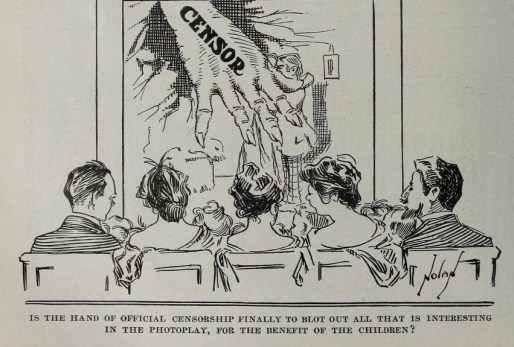
CensorCartoonMPMag14

A study in The Journal of Sex Research reinforces the libertarian view that pornography “artists”, purveyors and users should be left alone, free to engage in their private activities without censorship or harassment by the state. The study is entitled “Is Pornography Really about ‘Making Hate to Women’? Pornography Users Hold More Gender Egalitarian Attitudes Than Nonusers in a Representative American Sample“. It can be downloaded free-of-charge at the link. Here’s the abstract:

“According to radical feminist theory, pornography serves to further the subordination of women by training its users, males and females alike, to view women as little more than sex objects over whom men should have complete control. Composite variables from the General Social Survey were used to test the hypothesis that pornography users would hold attitudes that were more supportive of gender nonegalitarianism than nonusers of pornography. Results did not support hypotheses derived from radical feminist theory. Pornography users held more egalitarian attitudes—toward women in positions of power, toward women working outside the home, and toward abortion—than nonusers of pornography. Further, pornography users and pornography nonusers did not differ significantly in their attitudes toward the traditional family and in their self-identification as feminist. The results of this study suggest that pornography use may not be associated with gender nonegalitarian attitudes in a manner that is consistent with radical feminist theory.“

The study did not deal with child pornography in any way. The study focused strictly on attitudes toward women among porn users in general, attitudes that are clearly relevant to divergent opinions regarding the need for activist social policy with respect to adult pornography:

“Some clinicians, researchers, and social commentators have adopted the view that pornography can improve sexual functioning by providing frank sexual information, reducing shame and anxiety associated with sex, and invigorating libido (… citations). In contrast, others have cautioned that the use of such materials can be associated with risky sexual behavior, poor mental health and well-being, degraded relationship functioning, and, of course, sexual aggression (… citations).“

The authors, Taylor Kohuta, Jodie L. Baera and Brendan Watts, quote feminist Gail Dines as an example of the rhetoric used by porn prohibitionists:

“Porn is the most succinct and crisp deliverer of a woman-hating ideology. While we have other places that encode such an ideology, nowhere does it quite as well as porn, as this delivers messages to men’s brain via the penis—a very powerful method.“

The paper includes a lengthy review of previous research on pornography, sexual attitudes, and “non-egalitarian” attitudes toward women. Earlier research was generally based on small samples or those confined to limited demographic segments, but support for the radical feminist view was inconsistent at best.

Kohuta, et al, attempt to extend earlier work with a large sample of males and females (porn is viewed by both genders) from the General Social Survey (GSS), described in detail at the link, and a more thorough set of attitudinal measures. The five measures are listed in the abstract quoted above. In none of the five cases did the use of pornography correspond to “less egalitarian views” toward women, and in three cases it corresponded to more egalitarian views, though I’d quibble with the abortion measure, which might not be meaningful in that context.

The findings are robust to gender and run contrary to the assertions of radical feminists and other moralistic busybodies: pornography does not encourage “woman hatred” or attitudes that might lead to aggressive behavior toward women, nor is viewership of porn consistent with a predisposition toward those attitudes:

“Of the five high-powered statistical tests conducted in this study, a total of three tests indicated that individuals who had viewed a pornographic film in the past year held more egalitarian attitudes than those who had not—a pattern of results that directly contradicts the predictions generated from radical feminist theory. Of the remaining two tests, neither was statistically significant. Taken together, the results of this study fail to support the view that pornography is an efficient deliverer of ‘women-hating ideology’.

Instead of demonstrating strong associations between pornography use and support of nonegalitarianism, if anything the current findings actually suggest weak associations in the opposite direction. Compared to nonusers, participants who reported viewing a pornographic film in the previous year also reported more positive attitudes toward women in positions of power, less negative attitudes toward women in the workforce, and less negative attitudes toward abortion…. “

The authors make a strong value judgment by assuming that a favorable attitude toward abortion represents a more egalitarian attitude toward women. They rationalize this treatment by noting that radical feminists consider “reproductive autonomy” to be a critical test of gender equality. However, abortion is not always a decision made solely by the woman. Furthermore, porn viewers of either gender, and participants in recreational sex, are likely to find the idea of a pregnancy something of a buzz kill, so the attitude maybe one of convenience. More fundamentally, abortion involves the rights of a human fetus versus the right of the parent(s) to terminate the pregnancy. If one’s ethical convictions are such that the fetus’ rights are paramount, it may not reflect a non-egalitarian attitude toward women.

I find the other four attitudinal measures used in the study unobjectionable. Identification as a “feminist” might mean different things to different people, but it nearly always means a generally strong support for women’s rights. In any case, those four tests indicate no association between porn use and an attitude favoring an inferior role for women in society.

Pornography use was defined by Kohuta, et al by whether the subject admitted to viewing any X-rated film over the past year. There was no distinction between different types of porn, such as depictions of sadomasochism, violent sex, or nonconsensual sex. Therefore, the study does not address whether a taste for these forms is associated with less egalitarian attitudes toward women. Whether viewership of porn or violent forms of porn is associated with acts of aggression against women is much harder to establish. However, as a general question, the attitudes found to be associated with porn in this study suggest that users are unlikely to be inclined toward nonconsensual sex or aggression toward women.

Porn viewers obviously find the subject matter entertaining; it may appeal to their fantasies and might serve as a prelude to sex. Whether those are “prurient” interests is a subjective matter. Porn viewing is a private activity that shouldn’t matter to anyone else. Whether they admit it or not, most adults have had at least a peak at porn, perhaps unintentionally. It might have offended them, but they know how to avoid it; if they have children they should know how to utilize parental controls. I’m skeptical that it hurts anyone. Those who like it even a little bit should be able to enjoy it privately.

In 2012, Eugene Volokh wrote a practical criticism of an idea in the Republican Party platform that “current laws on all forms of pornography and obscenity need to be vigorously enforced”, as well as an earlier Bush Administration effort to crack down on porn. He concluded that such policies could have three possible outcomes:

“1) The crackdown on porn is doomed to be utterly ineffective at preventing the supposedly harmful effects of porn on its viewers, and on the viewers’ neighbors [because porn is available from many foreign and domestic sources].
2) The crackdown on porn will be made effective — by implementing a comprehensive government-mandated filtering system run by some administrative agency that constantly monitors the Net and requires private service providers to block any sites that the agency says are obscene.
3) The crackdown on porn will turn into a full-fledged War on Smut that will be made effective by prosecuting, imprisoning, and seizing the assets of porn buyers.“

Volokh’s conclusions apply to all forms of porn, not just non-violent porn. He underlines the draconian implications of attempts to censor porn:

“I’m asking: How can the government’s policy possibly achieve its stated goals, without creating an unprecedentedly intrusive censorship machinery, one that’s far, far beyond what any mainstream political figures are talking about right now?“

While Volokh does not address the question of whether porn users have a constitutional right to do so, the First Amendment should protect it as free expression. The paper discussed here implies that porn is no threat to women based on the attitudes expressed by users in the GSS. This is consistent with the libertarian principle that free people must be unencumbered by any authority in their choice of entertainment.

Good Leaders Aren’t Trade Warriors

30 Wednesday Mar 2016

Posted by Nuetzel in Free Trade, Protectionism

≈ 1 Comment

Tags

Bernie Sanders, CATO Institute, Currency Manipulation, Daniel J. Ikenson, Direct Foreign Investment, Don Boudreaux, Donald Trump, Dumping, Federal Reserve, Free trade, Hillary Clinton, NAFTA, Open Trade, Paul Krugman, People's Bank of China, Predatory Pricing, Protectionism, Reserve Currency, Ted Cruz, TPP, Trade Deficit, Trade War, Unfair Competition

Protectionism

The protectionist foreign trade rhetoric issued by the major-party presidential candidates is intended to appeal to ignorant economic instincts. Donald Trump and Bernie Sanders come to mind most readily, but Ted Cruz and Hillary Clinton are jumping in with similar campaign positioning. The thrust of these populist, anti-trade appeals is that America is losing jobs to “unfair” foreign competition, an argument that distorts the very objective of trade: consumers take part in exchange in order to consume; they capture value from high quality, unique merchandise and competitive terms. Ultimately, producers engage in trade to gain the wherewithal to consume. Consumption is the real end-game.

It can be misleading to talk about “nations” engaging in trade with each other, despite the emphasis placed on trade agreements like NAFTA and TPP. In the first place, it is better to stress consumers and producers, rather than “nations”, because most foreign trade is private, cooperative activity, not national decision-making. But the candidates persist in characterizing trade as a “contest”. That misleading notion is what prompts governments to muck up the trade environment by imposing restrictions on the free flow of goods and services. Trade agreements have been heralded as great achievements, but they never approximate a regime of truly liberalized trade because the latter requires no formal agreement whatsoever, merely a hands-off approach by government. And trade agreements tend to entangle trade issues with other policy objectives, holding consumers hostage in the process.

We hear from opportunistic candidates that jobs are lost to trade with foreigners. But again, consumption, not “jobs” per se, is the real objective of economic activity. If domestic jobs are lost, it is generally because consumers judge the value produced inferior to what’s offered from abroad. American consumers should not be obliged to support inferior value, domestic market power unchecked by competition, monopoly prices and limited choices. Patriotic jingoism attempts to blind us from these economic imperatives.

The standard protectionist narrative is that foreign “nations” cheat on trade with the U.S. via currency manipulation, predatory pricing or “dumping”, “unfair” wages or other unfair labor practices. Do any of these objections to free trade hold water?

The “fairness” of foreign wages and labor practices is a matter of perspective. Wages cannot be considered unfair merely because they are low relative to U.S. wages. Wages paid to workers by foreign exporters tend to be consistent with the standard of living in those societies, and they are often some of the best income opportunities available there. This is economic dynamism that lifts masses from the grips of poverty. It’s absurd to caste it as “exploitation”.

Is it “unfair” to competitors in the U.S.? Not if they know how to compete and are allowed to do so. Unfortunately, government regulatory policies in the U.S. often present obstacles to the competitiveness of domestic producers. This is well-illustrated by Daniel J. Ikenson of The CATO Institute in “Crucifying Trade For The Sins Of Domestic Policy“. He emphasizes that trade promotes economic growth, but when it causes job losses for some workers, U.S. economic policies make it difficult for those workers to find new jobs.

“Incentivize businesses to hire people to train them in exchange for their commitment to work for the company for a period of time. Reform a corporate tax system that currently discourages repatriation of an estimated $2 trillion of profits parked in U.S. corporate coffers abroad, deterring domestic investment, which is needed for job creation. Curb excessive and superfluous regulations that raise the costs of establishing and operating businesses without any marginal improvements in social, safety, environmental, or health outcomes. Permanently eliminate imports duties on intermediate goods to reduce production costs and make U.S.-based businesses more globally competitive. Advocate the retirement of protectionist occupational licensing practices.“

So-called “dumping” by foreign producers, or selling below cost, is an unsustainable practice, by definition. Pricing below cost is difficult to prove, especially if local wages are low and raw inputs are plentiful. If dumping can be proven, retaliation might feel good but would punish American consumers. A foreign producer might be subsidized by its government as a matter of industrial policy and economic planning, an unhealthy policy to begin with, and possibly to facilitate a long-run market advantage in foreign trade. The U.S. itself is thick with subsidized industry, however, so arguing for retaliation on those grounds is more than a little hypocritical.

I rarely quote Paul Krugman, but when I do, it’s from work he’s done as an actual economist, not as an agenda-driven pundit. So we have the following Krugman quote courtesy of Don Boudreaux:

“I believe that if the rhetoric that portrays international trade as a struggle continues to dominate the discourse, then policy debate will in the end be dominated by men like [James] Goldsmith, who are willing to take that rhetoric to its logical conclusion. That is, trade will be treated as war, and the current system of relatively open world markets will disintegrate because nobody but a few professors believes in the ideology of free trade.

And that will be a shame, because for all their faults the professors are right. The conflict among nations that so many policy intellectuals imagines prevails is an illusion; but it is an illusion that can destroy the reality of mutual gains from trade.“

David Harsanyi asks how American consumers will like more restrictive trade policy when forced to pay more for smart phones, laptops, HDTVs, cars, food, and any number of other goods. The usual anti-trade narrative is that foreign producers have harmed the manufacturing sector disproportionately, but in another article, Ikenson lays bare the fallacy that U.S. manufacturing has been victimized by trade.

The consequences of trade restrictions are higher prices, reduced production and reduced consumption, an undesirable combination of outcomes. This means higher prices of imported goods as well as domestic goods, whose producers will face less competition by virtue of the trade barriers. With reduced availability of imported goods, economic theory predicts that domestic producers will not fully meet the frustrated demands. This is a classic response of producers with monopoly power: restraint of trade. The negative consequences are compounded when foreign governments impose retaliatory measures against the U.S., harming American exporters.

A further misgiving expressed by politicians regarding free trade is that America’s trade deficit implies greater indebtedness to the rest of the world. This argument has been made by a few leftist economists who misunderstand the nature of direct investment, and who tend to think erroneously of economic outcomes as zero-sum. It’s true that foreign producers who receive dollars in exchange for goods often invest those proceeds in U.S. assets. A fairly small share of that investment is in debt issued by U.S. governments and private companies. But a much larger share is invested in U.S. equities and real assets, which are not U.S. debts. As Don Boudreaux points out, the domestic sellers of those assets generally reinvest in other U.S. assets, so private U.S. ownership of global capital is not diminished by increased foreign investment in the U.S.

An interesting aspect of the trade debate is that the dollar’s role as a global reserve currency implies that the U.S. must run a chronic trade deficit. The rest of the world uses dollars to trade goods and assets, but to acquire dollars, foreigners must sell things to holders of dollars in the U.S. This keeps the foreign exchange value of the dollar elevated, which makes imports cheaper to Americans and U.S. exports more costly to foreigners. Those dollars are a form of U.S. debt, but it is debt for which we should feel flattered, as long as confidence in the dollar remains. A diminished role for the dollar in world trade would lead to a surplus of dollars, undermining its value and promoting inflation in the U.S. Let’s hope for a gradual transition to that world.

Finally, the presidential candidates allege that foreign currency manipulation is another reason for American job losses. One prominent example occurred last year when China allowed the renminbi to decline to more realistic levels on foreign exchange markets. Donald Trump called this an unfair trade tactic, but apparently the People’s Bank felt that it couldn’t support the renminbi without undermining economic growth. The earlier dollar peg also helped to keep Chinese inflation in check. Contrary to Trump’s assertions, if China stopped manipulating its currency altogether, the renminbi would go even lower!

Beyond the opportunistic political arguments, the point is that central banks (including the U.S. Federal Reserve) manage their currencies to achieve a variety of objectives, not merely to promote exports. That is not an endorsement of such policies. It is an objective fact. Anyone can argue that a foreign currency is “too low” if their objective is to demonize a country and it’s exports to the U.S., but the assertion may not be grounded in facts as markets assess them.

The arguments against open trade policies are generally specious, hypocritical or grounded in a mentality of victimhood. Vibrant producers who are free of government restrictions should welcome the expanded markets available to them abroad and should not seek redress against competition via government protection. Liberalized trade has engendered tremendous economic benefits over the years, while protectionist policies have only brought severe contractions. Let’s be free and trade freely!


Tonight! Let It Shine For Human Achievement Hour

19 Saturday Mar 2016

Posted by Nuetzel in Capitalism, Environment, Human Welfare

≈ Leave a comment

Tags

Earth Hour, Human Achievement Hour, Malthus

image

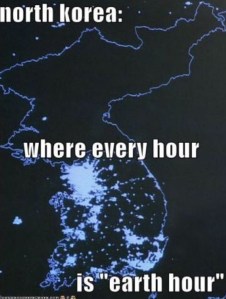
Tonight, Saturday March 19th, celebrate Human Achievement Hour (HAH). From 8:30 to 9:30 p.m., let all of your lights burn brightly to commemorate the great victory of human ingenuity, liberty and capitalism over darkness, discomfort, poverty, pestilence, disease and early mortality.

Yes, HAH coincides with Earth Hour, when hard-core Malthusians collectively demonstrate their guilt and inner goodness by sitting in darkness in crude emulation of the conditions suffered by their primitive forebears. Needless to say, I haven’t the slightest guilt about thumbing my nose at the bogus spirituality and economic ignorance embodied in Earth Hour. Better to maintain an accurate perspective on the amazing extent of human progress. We should celebrate! And so I say: hooray for HAH!


All The President’s Chutzpah

18 Friday Mar 2016

Posted by Nuetzel in Judicial Branch, Separation of Powers

≈ Leave a comment

Tags

Advise and Consent, Barack Obama, Constitutional Norms, David Berstein, Glenn Reynolds, Jonathan Adler, Judicial Appointments, Merrick Garland, Separation of Powers, The Volokh Conspiracy

159394_600

So, President Obama can repeatedly arrogate the authority to write and rewrite legislation, then insist that the legislature must convene hearings on his Supreme Court nominee in an election year. David Bernstein at The Volokh Conspiracy asserts that Obama is in no position to argue the virtue of Senate hearings on his nominee. That Obama condemns the Senate GOP leadership for refusing to act, which is consistent with the so-called “Biden rule“, after his own misadventures in executive ordering is particularly hypocritical. As Glenn Reynolds says in his link to the Bernstein piece:

“When they hold the whip hand, norms and traditions are stuffy and outdated. When they don’t, it’s all ‘have you no decency, sir?’“

Bernstein’s post has the lengthy but descriptive title “Re: Merrick Garland, it’s a bit late for the Obama administration and its supporters to appeal to constitutional norms requiring Senate consideration“. He first discusses an earlier post by Jonathan Adler noting that the text of the Constitution includes no requirement on the Senate to act on a judicial nominee with whom they disapprove. Instead, the customary hearings and votes on all nominees are a constitutional norm, a procedure that evolved over time in acting on the text of the Constitution:

“… as Adler has repeatedly documented, norms surrounding presidential appointments, especially judicial appointments, have increasingly been stressed and undermined in recent years by both parties. It’s not clear, if I were a Republican senator, why I’d use this particular opportunity to call for a cease-fire, especially one that the other side may not honor in the future.“

Obama’s disrespect for the constitution and constitutional norms is well known, if not always acknowledged. Bernstein cites a number of cases in which the President has acted without legislative authority (though Bernstein and I might approve of certain policy positions underlying those actions, not the actions themselves):

“More generally, President Obama has repeatedly promised to try to circumvent Congress using any arguably legal means available, on the rather extra-constitutional grounds, contrary to the norms attendant to the separation of powers, that ‘we can’t wait’ for Congress to pass legislation that the president favors.”

As I’ve long maintained, President Obama’s constitutional “scholarship” is dubious. In any case, he has no particular respect for the document. Perhaps I should not sell short his understanding of constitutional principles, since he knows all to well how to subvert them. But his real talents are political. It’s been suggested that Obama’s selection of a relatively “moderate” nominee is highly Machiavelian, intended to torture the GOP, as it were. Judge Garland might well be the best choice the GOP will have, depending on the outcome of the November elections. That might not be of much consolation. To quote Reynolds again:

“I think [Garland’s] a ‘moderate’ in the sense that he approves of government invasions that come from the left and the right.“

The Wind, The Sun, and a Load of Subsidies

17 Thursday Mar 2016

Posted by Nuetzel in Environment, Renewable Energy, Subsidies

≈ Leave a comment

Tags

Abandoned Wind Turbines, Baseline Capacity, Cronyism, Decarbonization, Energiewende, Federal Energy Regulatory Commission, Intermittency, Investor Intel, John Peterson, Peaking Capacity, Power Storage, Renewable energy, Rooftop Solar, Seeker Blog, Solar Reimbursement Rates

image


Renewable energy sources are not economically viable without subsidies, and they can impose some ugly external costs. Taxpayer subsidies for renewables like solar and wind projects are rationalized on the grounds that adoption will reduce carbon emissions and bring declining costs, ultimately saving resources by virtue of “free inputs”: the sun and the wind. But the cost of carbon emissions is highly uncertain, even speculative, and subsidies usually manage to get wasteful projects off the ground that are all too often run by political cronies. Despite the free variable inputs, these projects entail substantial resource costs that are conveniently overlooked by supporters. No wonder so many renewable outputs cannot be sustained without a continuing flow of aid.

What happens when the subsidies reach their sunset? There are thousands of abandoned wind turbines littering the U.S. (and a number of abandoned solar farms, too). There are several thousand turbines at one abandoned wind farm north of Los Angeles and another east of the Bay Area. There are many more in Hawaii, Iowa, Maine, Texas and other states. Attorneys often warn landowners that lease agreements with wind developers are risky. There are a number of ways that crony wind developers impose “external costs” on landowners. Eventual disposal is a risk, as the developers might just be inclined to take the subsidies and run.

Again, wind’s big advantages, aside from the subsidies, are that wind itself is free and produces no carbon, but other resources needed to make use of wind energy are not renewable, and producing those inputs produces CO2. To build and install the windmills requires materials (including steel and scarce rare-earth materials used in the electronic components), machinery, and of course labor and land costs. There is also a substantial investment in connecting windmills to the power grid. Ultimate disposal is a certainty, and it is not cheap. Then there is a controversial cost in terms of slaughtered avian life. Increasingly, wind turbines are thought to create health issues for people living nearby.

Solar power has the same advantages as wind in terms of a free input and no direct carbon output. In addition, the cost of solar panels has declined precipitously. Rooftop solar installations have allowed consumers to sell power back to electric utilities at certain times. In fact, without those “reimbursements” on top of the subsidies, installed on-site solar power would not be economically viable for many households and businesses. Reimbursement rates are therefore a huge controversy. Solar advocates have insisted that consumers should be reimbursed at the retail price of electricity. That is difficult to square with the fact that utilities could produce that power themselves for much less. It is especially difficult to square with the fact that the excess solar generation is often mismatched with the timing of power demand.

This brings us to the achilles heel of wind and solar power: wind and sunshine are intermittent, and not just on a daily basis, but over weeks, whole seasons and even years. This risk can be diversified geographically, but only to an extent, and effective power storage options do not presently exist and will not exist for some time, even with massive subsidies. Intermittent energy production requires the availability of other reliable power sources that are costly to turn on and off as needs dictate. It requires other “peaking” capacity to fill the “valleys” in wind and solar output, and baseline capacity is needed to provide for the less variable components of demand. Baseline capacity relies on nuclear power (which many solar advocates abhor) and carbon-emitting fossil fuels. Peaking capacity is typically provided by oil and natural gas generators. Hydro-electric power can be used as baseline or dialed back as needed, but hydro capacity is generally limited.

Renewable energy activists speak of replacing traditional power sources with wind and solar power. It is difficult enough, however, for wind and solar to replace peaking capacity, let alone baseline capacity. Peak wind and solar power production is not well-aligned with peak power demand in many areas (see the second chart at this link). The extra resources required to provide redundant facilities are significant, with ratepayers picking up the tab.

Given the current state of technology, pushing renewable energy goals even further, to the replacement of baseline capacity, is misguided at best. Yet it has been tried, with unintended but easily foreseeable consequences. Germany’s Energiewende program seeks to “decarbonize” power production without nuclear power. The costs have been very high:

“The report gives enough detail that you can see why Germany’s nuclear ban leads to a shocking cost of avoidance of $300 [/mt CO2]. … J.P. Morgan modeled a balanced deep decarbonization strategy, which using 35% nuclear, costs only $84/mt CO2. Note that the $300 is a bare-bones estimate – none of the cost of the additional transmission infrastructure required by high-renewables is included in the analysis. Even so the baseline Energiewende plan will double already second-highest in Europe current costs from $108 to $203/MWhr.“

California officials apparently want to go in the same direction. John Peterson reinforces the difficulties of integrating renewable energy capacity into the power grid in a recent post at InvestorIntel:

“The disadvantages [of intermittent power sources] include:

  • Intermittent power sources must have conventional backup for frequent periods when the wind and sun aren’t feeling particularly cooperative;
  • Cannibalization of peaking plant revenue streams results in higher electric costs for all because interest, depreciation, overhead and other fixed operating expenses must be recovered from fewer units of production;
  • When utilities pay premium prices for renewables, that indirectly increases electricity prices for all; and
  • When Federal, State and local treasuries subsidize the construction and operation of intermittent power sources, they indirectly increase everyone’s tax burden.“

The U.S. Federal Energy Regulatory Commission (FERC) is currently investigating the risk of intermittent energy sources to the reliability of the power grid.

“Power demand is relatively predictable and conventional power plants, like nuclear plants and natural gas, can adjust output accordingly. Solar and wind power, however, cannot easily adjust output. Peak power demand also occurs in the evenings, when solar power is going offline. Adding green power which only provide power at intermittent and unpredictable times [and stopping or even retiring other capacity], makes the power grid more fragile.“

Given decreasing costs, solar energy is likely to play an increasing role in power production in the future; wind production to a lesser extent. Both will depend on advances in the technology of power storage. However, there are still tremendous diseconomies that make current, widespread adoption of both wind and solar power a “Renewable Irony“. Like other attempts to centrally plan economic activity, the intentions are well and good, but execution requires mandated behavior and artificial inducements that impose heavy costs on society. Renewables should not be forced on us prematurely. They will happen voluntarily and naturally if we let them, guided by market signals as technology matures and resource scarcities evolve.


Evil Force Multiplication

15 Tuesday Mar 2016

Posted by Nuetzel in Liberty, Socialism, Tyranny

≈ Leave a comment

Tags

Banality of Evil, Bookworm Room, Force Multiplier, Gary Johnson, Genocide, Johan Norberg, Nordic Nirvana, Social Democracy, Ted Cruz, Welfare State

big-govt compassion

Following up on “Socialism Is Concentrated Power“, check out “Because government is a force multiplier for evil, a vote for the small government candidate is a vote for good” from the Bookworm Room. I’m four days late making my 2nd anniversary post on Sacred Cow Chips, so this is it. I’ll try to keep it brief so I can get it out before bedtime on a school night.

I don’t agree with everything in Bookworm’s analysis, but I certainly agree with the general thrust:

“The problem with government is that, as it grows, no matter the original good intentions behind it, it invariably becomes a force multiplier for evil. Thus, once government power passes a certain point, government becomes the equivalent of a bull in a china shop, with its every motion causing massive damage. Incidentally, the china in that shop is always you — the individual.“

Bookworm discusses two major forms of force multiplication of evil by the state: money and death. Governments are incredible graft machines and resource wastrels. More tragically, the many genocidal acts over the course of history would not have been possible without government as the machine of authority and “legitimization”. Fear of the government’s police power may ultimately spur normal people to participate in “banal” acts of unspeakable evil. And here, Bookworm points out a few ironies about the “nice” people who root for state control:

“A compassionate government will talk itself into euthanizing people who, because they are very old or sick, use up more than their fair share of medical care. This has already happened under England’s National Health Service, which kills off old, sick people, and whose ‘ethicists’ advocate even more killings (out of ‘compassion’ of course).

A compassionate government dedicated to efficiency will convince itself that individuals or organizations that stand in the way of efficiency must be controlled and, if they won’t be controlled, must be destroyed. After all, without mandated efficiency, people will suffer.

A compassionate government dedicated to “fairness” (usually thought of in economic terms), will quickly conclude that it’s entirely unfair that one distinct group or another is wealthier or healthier than the rest. That group must be brought to heel and, failing that, destroyed.

A compassionate government dedicated to national purity will naturally have to kill the impure within its borders and, once that’s done, it would be even more compassionate to extend that purity throughout the world.

Even the most murderous theocracies will argue that compassion guides them. Their tortures, executions, and Holy Wars are meant to bring people closer to God, which is the highest form of human existence. Isn’t that a nice, compassionate thing to do?“

Bookworm offers praise to the genius of the U.S. founding fathers in crafting governing principles designed to limit government power. And Bookworm recognizes Senator Ted Cruz as the only major party candidate to consistently stand for small government and constitutional principles. I’m not all in on this endorsement, as Cruz has taken stands and aligned himself with individuals not supportive of civil liberties such as gay marriage. However, in many important ways, Cruz recognizes the danger of government power. Bookworm might have mentioned Gary Johnson, the likely Libertarian Party nominee, as the most consistent critic of big government among the names likely to appear on presidential ballots in the fall.

Some might object to Bookworm’s discussion of the many failed experiments with government domination of society by noting that he never mentions the alleged success of European social democracies, particularly the Nordic states. Sweden and Denmark are the most cited examples. However, Europe is not an economic success story, with median incomes comparable to states with the lowest incomes in the U.S. Moreover, the “Nordic Nirvana” is something of a myth. In “How Laissez-Faire Made Sweden Rich“, Johan Norberg gives a detailed history of Sweden’s political and economic evolution:

“It was not socialist policies that turned Sweden into one of the world’s richest countries. When Sweden got rich, it had one of the most open and deregulated economies in the world, and taxes were lower than in the United States and most other western countries. The Social Democrats kept most of those policies intact until the 1970s, when they thought that those excellent foundations—unprecedented wealth, a strong work ethic, an educated work force, world-class exports industries, and a relatively honest bureaucracy—were so stable that the government could tax and spend and build a generous cradle-to-grave welfare state on them.

They couldn’t. At least not without costs. Because that welfare state began to erode the conditions that had made the model viable in the first place. And the fourth richest country became the 14th richest within three decades.“

Fortunately, for more than 70 years, Western Europe has avoided the kind of dire, genocidal consequences that often flow from a dominant state, but Europe has stagnated economically. Hazards await them as a growing and increasingly diverse population competes for diminished economic gains; government control is a dead-weight on their prospects. I hope we can avoid that fate in the U.S., though we’re already far down the road. Like the Bookworm says, vote for small government!


← Older posts
Newer posts →
Follow Sacred Cow Chips on WordPress.com

Recent Posts

  • Grading Trump II, So Far
  • A Warsh Policy Scenario At the Federal Reserve
  • The Coexistence of Labor and AI-Augmented Capital
  • The Case Against Interest On Reserves
  • Immigration and Merit As Fiscal Propositions

Archives

  • March 2026
  • February 2026
  • January 2026
  • December 2025
  • November 2025
  • October 2025
  • September 2025
  • August 2025
  • July 2025
  • June 2025
  • May 2025
  • April 2025
  • March 2025
  • February 2025
  • January 2025
  • December 2024
  • November 2024
  • October 2024
  • September 2024
  • August 2024
  • July 2024
  • June 2024
  • May 2024
  • April 2024
  • March 2024
  • February 2024
  • January 2024
  • December 2023
  • November 2023
  • August 2023
  • July 2023
  • June 2023
  • May 2023
  • April 2023
  • March 2023
  • February 2023
  • January 2023
  • December 2022
  • November 2022
  • October 2022
  • September 2022
  • August 2022
  • July 2022
  • June 2022
  • May 2022
  • April 2022
  • March 2022
  • February 2022
  • January 2022
  • December 2021
  • November 2021
  • October 2021
  • September 2021
  • August 2021
  • July 2021
  • June 2021
  • May 2021
  • April 2021
  • March 2021
  • February 2021
  • January 2021
  • December 2020
  • November 2020
  • October 2020
  • September 2020
  • August 2020
  • July 2020
  • June 2020
  • May 2020
  • April 2020
  • March 2020
  • February 2020
  • January 2020
  • December 2019
  • November 2019
  • October 2019
  • September 2019
  • August 2019
  • July 2019
  • June 2019
  • May 2019
  • April 2019
  • March 2019
  • February 2019
  • January 2019
  • December 2018
  • November 2018
  • October 2018
  • September 2018
  • August 2018
  • July 2018
  • June 2018
  • May 2018
  • April 2018
  • March 2018
  • February 2018
  • January 2018
  • December 2017
  • November 2017
  • October 2017
  • September 2017
  • August 2017
  • July 2017
  • June 2017
  • May 2017
  • April 2017
  • March 2017
  • February 2017
  • January 2017
  • December 2016
  • November 2016
  • October 2016
  • September 2016
  • August 2016
  • July 2016
  • June 2016
  • May 2016
  • April 2016
  • March 2016
  • February 2016
  • January 2016
  • December 2015
  • November 2015
  • October 2015
  • September 2015
  • August 2015
  • July 2015
  • June 2015
  • May 2015
  • April 2015
  • March 2015
  • February 2015
  • January 2015
  • December 2014
  • November 2014
  • October 2014
  • September 2014
  • August 2014
  • July 2014
  • June 2014
  • May 2014
  • April 2014
  • March 2014

Blogs I Follow

  • Passive Income Kickstart
  • OnlyFinance.net
  • TLC Cholesterol
  • Nintil
  • kendunning.net
  • DCWhispers.com
  • Hoong-Wai in the UK
  • Marginal REVOLUTION
  • Stlouis
  • Watts Up With That?
  • American Elephants
  • The View from Alexandria
  • The Gymnasium
  • A Force for Good
  • Notes On Liberty
  • troymo
  • SUNDAY BLOG Stephanie Sievers
  • Miss Lou Acquiring Lore
  • Your Well Wisher Program
  • Objectivism In Depth
  • RobotEnomics
  • Orderstatistic
  • Paradigm Library
  • Scattered Showers and Quicksand
  • Jam Review

Blog at WordPress.com.

Passive Income Kickstart

OnlyFinance.net

TLC Cholesterol

Nintil

To estimate, compare, distinguish, discuss, and trace to its principal sources everything

kendunning.net

The Future is Ours to Create

DCWhispers.com

Hoong-Wai in the UK

A Commonwealth immigrant's perspective on the UK's public arena.

Marginal REVOLUTION

Small Steps Toward A Much Better World

Stlouis

Watts Up With That?

The world's most viewed site on global warming and climate change

American Elephants

Defending Life, Liberty and the Pursuit of Happiness

The View from Alexandria

In advanced civilizations the period loosely called Alexandrian is usually associated with flexible morals, perfunctory religion, populist standards and cosmopolitan tastes, feminism, exotic cults, and the rapid turnover of high and low fads---in short, a falling away (which is all that decadence means) from the strictness of traditional rules, embodied in character and inforced from within. -- Jacques Barzun

The Gymnasium

A place for reason, politics, economics, and faith steeped in the classical liberal tradition

A Force for Good

How economics, morality, and markets combine

Notes On Liberty

Spontaneous thoughts on a humble creed

troymo

SUNDAY BLOG Stephanie Sievers

Escaping the everyday life with photographs from my travels

Miss Lou Acquiring Lore

Gallery of Life...

Your Well Wisher Program

Attempt to solve commonly known problems…

Objectivism In Depth

Exploring Ayn Rand's revolutionary philosophy.

RobotEnomics

(A)n (I)ntelligent Future

Orderstatistic

Economics, chess and anything else on my mind.

Paradigm Library

OODA Looping

Scattered Showers and Quicksand

Musings on science, investing, finance, economics, politics, and probably fly fishing.

Jam Review

"If you get confused, listen to the music play."

  • Subscribe Subscribed
    • Sacred Cow Chips
    • Join 128 other subscribers
    • Already have a WordPress.com account? Log in now.
    • Sacred Cow Chips
    • Subscribe Subscribed
    • Sign up
    • Log in
    • Report this content
    • View site in Reader
    • Manage subscriptions
    • Collapse this bar
 

Loading Comments...