• About

Sacred Cow Chips

Sacred Cow Chips

Category Archives: Health Care

Sins of American Health Insurance

22 Wednesday Feb 2017

Posted by Nuetzel in Health Care

≈ 1 Comment

Tags

COBRA, competition, Cross Subsidies, Employer Coverage, Future Insurability Coverage, health care costs, High-Risk Pools, Individual Coverage, Insurability, John Cochrane, Medicaid, Obamacare, Portability, Tax Deductibility, Wage controls

The advances in Health-Care seems to be putting some distance between the doctor and patient.

Health insurance in the U.S. suffers from many dysfunctions, but a couple of basic steps in its institutional evolution lie at the root of its worst shortcomings. I say this after coming across another great post by John Cochrane the other day, this time with some of his thoughts on fashioning an Obamacare replacement. He lays out a few basic principles, one of which is that “health insurance is not a payment plan for small expenses“, or shouldn’t be.

The best parts of Cochrane’s post, I think, relate to two longstanding features of the health insurance market in the U.S.:

“The original sin of American health insurance is the tax deduction for employer-provided group plans — but not, to this day, for employer contributions to portable individual insurance. ‘Insurance’ then became a payment plan, to maximize the tax deduction, and then horrendously inefficient as people were no longer spending their own money.

Worse, nobody who hopes to get a job with benefits then buys long-term individual insurance. This provision alone pretty much created the preexisting conditions problem.”

The last two sentences are insightful commentary on the inadequacy of coverage for pre-existing conditions, though “creating the pre-existing conditions problem” should probably read “foreclosed any easy solution to the pre-existing conditions problem“. During World War II, the government authorized the tax deduction for employer-provided health plans as a concession to labor interests frustrated by war-time wage controls. Cochrane should be forgiven for making this sound like a deal with the devil. Today, employer-provided coverage is almost always limited to one’s job tenure (plus 18 months under COBRA, since 1985). In the 1940s, the benefits might have been generous, but portability was probably the last thing on their minds, especially in light of the long job tenures of the day and the fact that many employers, at that time,  offered coverage to vested retirees. The dominance of employer-provided coverage after WW-II pretty much ruled out lifetime insurability in a world with relatively high job mobility.

The tax deduction also helped to institutionalize the faulty notion that “good” health insurance should cover a panoply of services involving small, recurring expenses that are properly considered normal health upkeep. Instead, insurance should cover large, unexpected expenses for services necessary to treat injuries or severe illness. In addition, the coverage and the premium should, at the buyer’s option, include a guarantee of future insurability at standard rates. This option should not be mandated, but a refusal to opt-in must come at the risk of potentially large future health care obligations.

Cochrane also says:

“Cross-subsidies are a second original sin. Our government doesn’t like taxing and spending on budget where we can see it. So it forces others to pay: It forces employers to provide health insurance. It forces hospitals to provide free care. It low-balls Medicare and Medicaid reimbursement.

The big problem: These patches and cross-subsidies cannot stand competition. Yet without supply competition, costs increase, the number of people needing subsidized care rises, and around we go.”

Competition and choice must exist in health care delivery and in the health insurance market to keep costs under control. But if person A is an identifiable health risk and person B is not, and if healthy B is forced to pay the same premium for health coverage as sickly A, then A is cross-subsidized by B. Competition will encourage B to bail out of the risk pool. If B is prohibited from doing so, costs will soar because the cross-subsidies create incentives for A to over-utilize services, even making allowance for A’s greater need. Thus, forcing A and B into the same risk pool ultimately exacerbates the plight of both A and B by raising costs. That’s where we find ourselves today.

Enabling competition and dismantling cross-subsidies can only occur if all consumers are able to purchase not just health insurance, but long-term health insurability. To avoid a painful transition, publicly-funded high-risk pools might be necessary for the existing type As of the world, who are already burdened by poor health and might not be able to afford the premium necessary for insurance. Going forward, those who refuse a future-insurability option must understand that if they fail to opt-in prior to developing a serious health condition, they will have to rely on Medicaid, private charity, or a risk-rated policy, if they can afford it.

Will Republicans abolish the ill-founded tax deduction? Almost certainly not. They are likely to extend it to the individual side of the market, despite the fact that this will have an additional inflating impact on health care costs. At least it will reduce the current advantage of employer-paid coverage, potentially broadening the market faced by individuals. Also, Republicans might take steps to restore choice, promote competition, and eliminate cross-subsidies. As Cochrane notes, there are also ideas in play to improve portability. Questions remain about many of the details, however, including Medicaid reforms. On the whole, I’m hopeful that we’ll see most of Obamacare’s short-sighted provisions and rules rolled back and replaced by legislation to encourage the development of the market for insurance coverage and for future insurability.

The Vagina Subsidies

08 Wednesday Feb 2017

Posted by Nuetzel in Health Care, Subsidies

≈ Leave a comment

Tags

Abortion, Carl Anderson, Elective Abortions, Essential Benefits, Family Planning, Gender Rating, Generaal Accounting Office, Hadley Heath, Hyde Amendment, Identity Politics, Insurance Mandates, Maternity Care, Medicaid, Obamacare, Planned Parenthood, Public Health Service Act, Reproductive rights, Title X Grants, Women's March on Washington

img_3898

Many believe that women are entitled to taxpayer subsidies by virtue of “reproductive rights”, or simply gender disparities in health care costs. Is this reasonable from an economic perspective? Is it fair? Some components of this claim on public resources are highly controversial. I discussed these issues last week in the following post, originally titled “Spite and the ‘Right’ To Subsidies”:

The Women’s March on Washington on January 21st was not precise in communicating its real objectives. But the costumes were cute, and some critics felt that more of the men in attendance should have worn them. Anyway, the leaders and organizers fell short in terms of articulating a coherent agenda. Unless, of course, you just “got it”. These women were angry, but it’s not as contagious as they think: a great many circumspect women recognize the unmatched freedoms, privileges, and prosperity enjoyed by women (and men) in the U.S. The inherent divisiveness of identity politics is simply not appealing to everyone.

There are a number of reasons why those marching unfortunates might feel put upon, and it must have felt cathartic to wail and gnash teeth. The dissatisfaction is mostly related to the fact that Donald Trump is the president, but if I had to guess, I’d say a quarter of the marchers weren’t registered to vote. Probably a third of the remainder did not vote, despite their registration.

All that aside, what sort of policy purpose did the marchers hope to achieve? For one thing, they do not want to lose federal funding and cross-subsidies for support of women’s health issues, including reproductive rights or family planning (terms of art for preventing pregnancies). That’s a passable translation of “stay away from my vagina!” There are several avenues through which the federal government arranges payments or subsidies for women’s health services such as childbirth, maternity care, and birth-prevention products and services:

  1. Medicaid reimbursements account for the bulk of direct federal funding for family planning services; states are responsible for a major share of reimbursements as well.
  2. Federal funding also occurs under Title X, the Public Health Service Act of 1970, which authorizes federal grants for family planning services.
  3. Indirect funding occurs through cross-subsidies inherent in the structure of the Affordable Care Act (ACA), or Obamacare:
    • The ACA requires health insurance to include a set of “essential benefits”. Premium payments from those for whom such benefits are superfluous subsidize those who require those benefits.
    • The ACA prohibits “gender rating”, so that men effectively subsidize the higher cost of care and coverage for women (up to roughly middle age).
  4. Those purchasing coverage on the Obamacare exchanges may be eligible for federal subsidies on their premium payments.

Both Medicaid and Title X grants are intended to serve the family-planning needs of low-income women. Likewise, the federal subsidies (#4) for insurance covering family planning services, including contraceptives, are designed to assist low-income women. The cross-subsidies inherent in the structure of Obamacare premia confer family planning benefits (and penalties) across a broad range of incomes.

Reproductive Rights and Family Planning

Many taxpayers object to the use of tax dollars to pay for contraceptive services on religious or moral grounds. This is unrelated to a woman’s right to use contraceptives; it has to do with coerced payment for anyone’s contraceptives. The Supreme Court’s Hobby Lobby decision relieved private employers of the obligation to pay for abortifacients on religious grounds, however.

Even more controversial is the idea that federal tax dollars might be used to fund abortions. In fact, that is outlawed by the Hyde Amendment, a temporary provision routinely attached to budget appropriation bills each year. This amendment restricts the use of federal and state funds for abortion to cases of rape, incest, and when the mother’s life is in danger. Elective abortions, however, are not eligible for taxpayer funding. Unfortunately, Hyde and a related executive order issued by President Obama have not been wholly effective at preventing premium cross-subsidies and taxpayer subsidies from paying for elective abortions. That’s because of the limited choices of insurance plans available in many states and the failure of insurers and public authorities to monitor compliance. Carl Anderson in National Review explained these issues in “Obamacare’s Taxpayer-Funded Abortions“. Anderson points to the findings of a 2014 report from the federal General Accounting Office (GAO):

“Twenty-eight states have a legal environment that allows insurance plans within these exchanges to cover abortion. Among these 28 states, they found that 1,036 plans include abortion coverage, including every plan in New Jersey, Connecticut, Vermont, Rhode Island, and Hawaii. More than 95 percent of the plans in Massachusetts, New York, and California also cover abortion.

… The GAO report makes clear that those who want to find a plan that does not cover abortion will have a very difficult time. In some cases, the information is available in the Summary of Benefits. In other cases, it is only available on the insurer’s website. In other cases, the information is available only by calling the insurer.”

The ACA also required insurers to account and bill separately for abortion coverage, but compliance is spotty:

“… the GAO found that, of the 18 insurers it investigated, none of them charged separately for abortion coverage, and none of them even itemized the coverage on their bills.”

Planned Parenthood

It’s also quite likely that Title X grants and even Medicaid are funding abortions, despite prohibition by the Hyde Amendment. Medicaid is rife with mismanagement, with tens of billions of dollars of improper payments each year. Title X grants, if not tied to specific procedures, are used to cover overhead costs, some of which undoubtedly support the abortion practices of certain health service providers. Planned Parenthood (PP) is the largest abortion practice in the country, in furtherance of Margaret Sanger’s eugenic vision. Abortions have been declining nationwide in recent years, but PP’s abortion count has been fairly stable. Between 2009 and 2014, several other prominent PP services declined by half to two-thirds, such as cancer screenings, breast exams/breast care, and pap smears, while PP’s total income grew.

PP has aborted more than 300,000 pregnancies every year since 2007, yet the organization claims that those procedures account for only 3% of its activity. The 3% figure is derived by treating an abortion as the equivalent of a pregnancy test, or an STD test, or a breast exam, a PAP smear, or any other “discrete clinical interaction”. This renders the 3% claim meaningless, or much worse, a deception. Abortion is a costly procedure relative to most of the other services counted by PP as equivalent. “Prenatal care” services can be complex, but the small count of such services delivered (about 19,000 annually) indicates that it does not account for a major part of PP’s budget.

It is difficult to find information on PP’s fee revenue by service; one analysis concluded that abortions accounted for about 52% of PP’s fee income in 2010. But it is impossible to know exactly how the organization allocates public funds. Of course, fees from some services might cross-subsidize others. But almost half of PP’s annual budget is funded by taxpayers. Therefore, at a minimum, PP should be required to provide more auditable information on the question of how it allocates taxpayer funds.

Gender Rating

Another major source of cross subsidies is the absence of gender rating in insurance coverage under Obamacare and other law. Health care costs are higher for women than men for a variety of reasons: First, of course, there is childbirth and maternity care. Women also tend to utilize clinical services at higher rates than men. Perhaps women are more careful about attending to their health needs, as they are more likely than men to have regular checkups. They tend to have more stress fractures and other musculo-skeletal injuries. And they live longer than men, creating higher costs in their senior years. In the past, gender rating by insurers in the individual market led to premium disparities between women and men of 25%-85%. Some states have prohibited or restricted gender rating for years, however, and employer plans nationally have been prohibited from gender rating since 1978.

Prohibitions against gender rating, like other forms of community rating, are ill-founded from an economic perspective. Hadley Heath put it well in 2013 in “Women Should Pay More for Health Insurance“:

“Pregnancy and childbearing aside, women seek preventive care and visit doctors more often. But these additional screenings cost money, and the person receiving the care should pay for it, not other members of her insurance pool (community-rated or not). After all, women may reap the benefits of this behavior by living longer lives; they should also take on the costs. …

A better, more equitable solution would be for both men and women to pay for more noncatastrophic health expenditures outside an insurance plan. This is the only way to ensure that individuals — not pools of people — pay for what they consume. … If our premiums don’t reflect our risk, our claims or our costs, then some people will be overcharged and others undercharged. The overcharged parties will underinsure, and the undercharged parties will overinsure, perpetuating the problems in our current system.”

Those who over-insure, or who have access to services at prices below cost by virtue of mandates and cross subsidies, will over-utilize scarce health care resources. Eliminating the prohibition on gender rating would not foreclose the opportunity to obtain reasonably-priced health care coverage, however. In fact, eliminating over-charges to men would give them an incentive to remain in the risk pool, which would restrain pricing in age ranges through which women experience higher costs. The elimination of cross subsidies to women would ease cost pressure in the delivery of services as well. And interstate competition among insurers would give women a better set of choices and prices. Heterosexual married couples would split the difference in gender-rated premium levels, of course, but lesbian couples would probably bear higher costs. In general, allowing choice in selecting coverage levels would focus costs on cost-causers, a requirement for economic efficiency. For example, to the extent that many pregnancies are intended, maternity care actually fails to meet the definition of an insurable risk. Requiring others to pay those costs creates an incredibly arbitrary and unfair burden, though insuring against complications is a different matter.

Assisting Low-Income Women

Again, much of the federal funding at issue is directed at low-income women. This includes Medicaid, Title X grants, and Obamacare subsidies on policies purchased through the state exchanges. Current discussions regarding an ACA replacement plan would subsidize low-income individuals via refundable tax credits, which are free of the nasty incentive effects of coverage mandates combined with cross subsidies. While some contend that Medicaid is under threat, the most “extreme” plans discussed thus far are limited to replacing current federal funding practices with block grants to the states, who manage the program. The grants might be frozen at current funding levels. In view of the Medicaid waste identified by the GAO, there is a need to create incentives for states to manage the program more effectively.

The rules prohibiting taxpayer-funded abortion payments are unlikely to change, though they might be given a more permanent form than by Hyde, and compliance efforts might be tightened. It is mistaken to argue in this context that denying funds to a poor woman for an abortion is the equivalent of burdening society with more dependency. One error is in thinking that somehow life is for sale by taxpayers. It is not. The second is in assigning a negative value to a person with untold potential. Those individuals should be thought of as sentient human assets to be nurtured under policies that promote family stability, effective educational institutions and incentives for self-reliance. The third mistake is in selling short the charitable motives of pro-lifers, most of whom know that true charity has nothing to do with the state.

Your Vagina, My Money

The marchers on the 21st of January were motivated in part by possible changes in the availability of federal tax money for women’s health care under the Trump Administration. There are several avenues through which that support is provided as aid to low-income women. The funding mechanisms and management of these programs must be improved, and they must be made more accountable to taxpayers. Moreover, subsidies to women are provided through the structure of premiums under Obamacare, which distort economic incentives, misallocate resources, and undermine the stability of health care costs and insurance premia. An end to “one-side-fits-all” insurance mandates and gender rating would go far in improving the efficiency and equity of health insurance.

The marchers’ concern also revolves around subsidized access to contraceptives and federal support for organizations that provide abortion services. Even complete removal of that support would have no bearing on fundamental “rights” in any true sense. It has nothing to do with the existence of a right to abort children, only the question of who pays. Ultimately, your reproductive decisions, and your non-reproductive decisions, should be your own financial responsibility, your insurer’s, or that of others who might wish to assist you. Private donors give many millions of dollars to Planned Parenthood every year, and presumably could give more. Don’t ask for taxpayers to be involved with your vagina in any way.

Spite and the “Right” to Subsidies

02 Thursday Feb 2017

Posted by Nuetzel in Health Care, Subsidies

≈ Leave a comment

Tags

Abortion, Carl Anderson, Elective Abortions, Essential Benefits, Family Planning, Gender Rating, Generaal Accounting Office, Hadley Heath, Hyde Amendment, Identity Politics, Insurance Mandates, Maternity Care, Medicaid, Obamacare, Planned Parenthood, Public Health Service Act, Reproductive rights, Title X Grants, Women's March on Washington

img_3898

The Women’s March on Washington on January 21st was not precise in communicating its real objectives. But the costumes were cute, and some critics felt that more of the men in attendance should have worn them. Anyway, the leaders and organizers fell short in terms of articulating a coherent agenda. Unless, of course, you just “got it”. These women were angry, but it’s not as contagious as they think: a great many circumspect women recognize the unmatched freedoms, privileges, and prosperity enjoyed by women (and men) in the U.S. And the inherent divisiveness of identity politics is simply not appealing to everyone.

There are a number of reasons why those marching unfortunates might feel put upon, and it must have felt cathartic to wail and gnash teeth. The dissatisfaction is mostly related to the fact that Donald Trump is the president. But if I had to guess, I’d say a quarter of the marchers weren’t registered to vote. Probably a third of the remainder did not vote, despite their registration.

All that aside, what sort of policy purpose did the marchers hope to achieve? For one thing, they do not want to lose federal funding and cross-subsidies for support of women’s health issues, including reproductive rights or family planning (terms of art for preventing pregnancies). That’s a passable translation of “stay away from my vagina!” There are several avenues through which the federal government arranges payments or subsidies for women’s health services such as childbirth, maternity care, and birth-prevention products and services:

  1. Medicaid reimbursements account for the bulk of direct federal funding for family planning services; states are responsible for a major share of reimbursements as well.
  2. Federal funding also occurs under Title X, the Public Health Service Act of 1970, which authorizes federal grants for family planning services.
  3. Indirect funding occurs through cross-subsidies inherent in the structure of the Affordable Care Act (ACA), or Obamacare:
    • The ACA requires health insurance to include a set of “essential benefits”. Premium payments from those for whom such benefits are superfluous subsidize those who require those benefits.
    • The ACA prohibits “gender rating”, so that men effectively subsidize the higher cost of care and coverage for women (up to roughly middle age).
  4. Those purchasing coverage on the Obamacare exchanges may be eligible for federal subsidies on their premium payments.

Both Medicaid and Title X grants are intended to serve the family-planning needs of low-income women. Likewise, the federal subsidies (#4) for insurance covering family planning services, including contraceptives, are designed to assist low-income women. The cross-subsidies inherent in the structure of Obamacare premia confer family planning benefits (and penalties) across a broad range of incomes.

Reproductive Rights and Family Planning

Many taxpayers object to the use of tax dollars to pay for contraceptive services on religious or moral grounds. This is unrelated to a woman’s right to use contraceptives; it has to do with coerced payment for anyone’s contraceptives. The Supreme Court’s Hobby Lobby decision relieved private employers of the obligation to pay for abortifacients on religious grounds, however.

Even more controversial is the idea that federal tax dollars might be used to fund abortions. In fact, that is outlawed by the Hyde Amendment, a temporary provision routinely attached to budget appropriation bills each year. This amendment restricts the use of federal and state funds for abortion to cases of rape, incest, and when the mother’s life is in danger. Elective abortions, however, are not eligible for taxpayer funding. Unfortunately, Hyde and a related executive order issued by President Obama have not been wholly effective at preventing premium cross-subsidies and taxpayer subsidies from paying for elective abortions. That’s because of the limited choices of insurance plans available in many states and the failure of insurers and public authorities to monitor compliance. Carl Anderson in National Review explained these issues in “Obamacare’s Taxpayer-Funded Abortions“. Anderson points to the findings of a 2014 report from the federal General Accounting Office (GAO):

“Twenty-eight states have a legal environment that allows insurance plans within these exchanges to cover abortion. Among these 28 states, they found that 1,036 plans include abortion coverage, including every plan in New Jersey, Connecticut, Vermont, Rhode Island, and Hawaii. More than 95 percent of the plans in Massachusetts, New York, and California also cover abortion.

… The GAO report makes clear that those who want to find a plan that does not cover abortion will have a very difficult time. In some cases, the information is available in the Summary of Benefits. In other cases, it is only available on the insurer’s website. In other cases, the information is available only by calling the insurer.”

The ACA also required insurers to account and bill separately for abortion coverage, but compliance is spotty:

“… the GAO found that, of the 18 insurers it investigated, none of them charged separately for abortion coverage, and none of them even itemized the coverage on their bills.”

Planned Parenthood

It’s also quite likely that Title X grants and even Medicaid are funding abortions, despite prohibition by the Hyde Amendment. Medicaid is rife with mismanagement, with tens of billions of dollars of improper payments each year. Title X grants, if not tied to specific procedures, are used to cover overhead costs, some of which undoubtedly support the abortion practices of certain health service providers. Planned Parenthood (PP) is the largest abortion practice in the country, in furtherance of Margaret Sanger’s eugenic vision. Abortions have been declining nationwide in recent years, but PP’s abortion count has been fairly stable. Between 2009 and 2014, several other prominent PP services declined by half to two-thirds, such as cancer screenings, breast exams/breast care, and pap smears, while PP’s total income grew.

PP has aborted more than 300,000 pregnancies every year since 2007, yet the organization claims that those procedures account for only 3% of its activity. The 3% figure is derived by treating an abortion as the equivalent of a pregnancy test, or an STD test, or a breast exam, a PAP smear, or any other “discrete clinical interaction”. This renders the 3% claim meaningless, or much worse, a deception. Abortion is a costly procedure relative to most of the other services counted by PP as equivalent. “Prenatal care” services can be complex, but the small count of such services delivered (about 19,000 annually) indicates that it does not account for a major part of PP’s budget.

It is difficult to find information on PP’s fee revenue by service; one analysis concluded that abortions accounted for about 52% of PP’s fee income in 2010. But it is impossible to know exactly how the organization allocates public funds. Of course, fees from some services might cross-subsidize others. But almost half of PP’s annual budget is funded by taxpayers. Therefore, at a minimum, PP should be required to provide more auditable information on the question of how it allocates taxpayer funds.

Gender Rating

Another major source of cross subsidies is the absence of gender rating in insurance coverage under Obamacare and other law. Health care costs are higher for women than men for a variety of reasons: First, of course, there is childbirth and maternity care. Women also tend to utilize clinical services at higher rates than men. Perhaps women are more careful about attending to their health needs, as they are more likely than men to have regular checkups. They tend to have more stress fractures and other musculo-skeletal injuries. And they live longer than men, creating higher costs in their senior years. In the past, gender rating by insurers in the individual market led to premium disparities between women and men of 25%-85%. Some states have prohibited or restricted gender rating for years, however, and employer plans nationally have been prohibited from gender rating since 1978.

Prohibitions against gender rating, like other forms of community rating, are ill-founded from an economic perspective. Hadley Heath put it well in 2013 in “Women Should Pay More for Health Insurance“:

“Pregnancy and childbearing aside, women seek preventive care and visit doctors more often. But these additional screenings cost money, and the person receiving the care should pay for it, not other members of her insurance pool (community-rated or not). After all, women may reap the benefits of this behavior by living longer lives; they should also take on the costs. …

A better, more equitable solution would be for both men and women to pay for more noncatastrophic health expenditures outside an insurance plan. This is the only way to ensure that individuals — not pools of people — pay for what they consume. … If our premiums don’t reflect our risk, our claims or our costs, then some people will be overcharged and others undercharged. The overcharged parties will underinsure, and the undercharged parties will overinsure, perpetuating the problems in our current system.”

Those who over-insure, or who have access to services at prices below cost by virtue of mandates and cross subsidies, will over-utilize scarce health care resources. Eliminating the prohibition on gender rating would not foreclose the opportunity to obtain reasonably-priced health care coverage, however. In fact, eliminating over-charges to men would give them an incentive to remain in the risk pool, which would restrain pricing in age ranges through which women experience higher costs. The elimination of cross subsidies to women would ease cost pressure in the delivery of services as well. And interstate competition among insurers would give women a better set of choices and prices. Heterosexual married couples would split the difference in gender-rated premium levels, of course, but lesbian couples would probably bear higher costs. In general, allowing choice in selecting coverage levels would focus costs on cost-causers, a requirement for economic efficiency. For example, to the extent that many pregnancies are intended, maternity care actually fails to meet the definition of an insurable risk. Requiring others to pay those costs creates an incredibly arbitrary and unfair burden, though insuring against complications is a different matter.

Assisting Low-Income Women

Again, much of the federal funding at issue is directed at low-income women. This includes Medicaid, Title X grants, and Obamacare subsidies on policies purchased through the state exchanges. Current discussions regarding an ACA replacement plan would subsidize low-income individuals via refundable tax credits, which are free of the nasty incentive effects of coverage mandates combined with cross subsidies. While some contend that Medicaid is under threat, the most “extreme” plans discussed thus far are limited to replacing current federal funding practices with block grants to the states, who manage the program. The grants might be frozen at current funding levels. In view of the Medicaid waste identified by the GAO, there is a need to create incentives for states to manage the program more effectively.

The rules prohibiting taxpayer-funded abortion payments are unlikely to change, though they might be given a more permanent form than by Hyde, and compliance efforts might be tightened. It is mistaken to argue in this context that denying funds to a poor woman for an abortion is the equivalent of burdening society with more dependency. One error is in thinking that somehow life is for sale by taxpayers. It is not. The second is in assigning a negative value to a person with untold potential. Those individuals should be thought of as sentient human assets to be nurtured under policies that promote family stability, effective educational institutions and incentives for self-reliance. The third mistake is in selling short the charitable motives of pro-lifers, most of whom know that true charity has nothing to do with the state.

Your Vagina, My Money

The marchers on the 21st of January were motivated in part by possible changes in the availability of federal tax money for women’s health care under the Trump Administration. There are several avenues through which that support is provided as aid to low-income women. The funding mechanisms and management of these programs must be improved, and they must be made more accountable to taxpayers. Moreover, subsidies to women are provided through the structure of premiums under Obamacare, which distort economic incentives, misallocate resources, and undermine the stability of health care costs and insurance premia. An end to “one-side-fits-all” insurance mandates and gender rating would go far in improving the efficiency and equity of health insurance.

The marchers’ concern also revolves around subsidized access to contraceptives and federal support for organizations that provide abortion services. Even complete removal of that support would have no bearing on fundamental “rights” in any true sense. It has nothing to do with the existence of a right to abort children, only the question of who pays. Ultimately, your reproductive decisions, and your non-reproductive decisions, should be your own financial responsibility, your insurer’s, or that of others who might wish to assist you. Private donors give many millions of dollars to Planned Parenthood every year, and presumably could give more. Don’t ask for taxpayers to be involved with your vagina in any way.

Death By Obamacare

18 Wednesday Jan 2017

Posted by Nuetzel in Health Care

≈ 3 Comments

Tags

A. Barton Hinkle, ACA, Affordable Care Act, Avik Roy, Ben Shapiro, Cadillac Tax, Catastrophic Coverage, David Brooks, Harry Reid, Health Savings Accounts, HSAs, John C. Goodman, Medicaid Block Grants, Minimum Essential Coverage, Obamacare, Obamacare Repeal, Paul Ryan, Private Medicare, Refundable Tax Credit, Rep. Pete Sessions, Rep. Phil Roe, Rep. Tom Price, Repeal and Replace, Sen. Orin Hatch, Sen. Richard Burr, Universal Access

goverment_kills

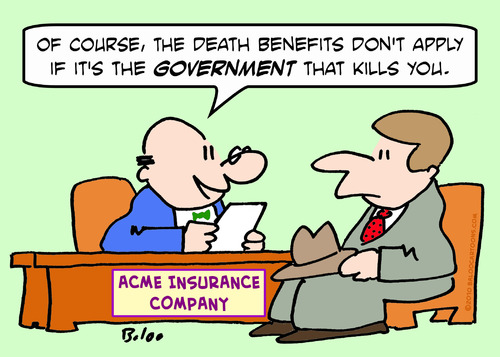
People will die if we don’t repeal and replace Obamacare! That right, and I’ll tell you why: First, the “Affordable” Care Act (ACA) creates terrible incentives for physicians. Among other provisions, it has chopped reimbursement rates on Medicare and Medicaid. As a result, physicians are declining patients under those plans, exposing the “access” myth under Obamacare as one of several cruel deceptions. Second, “physician feedback” reports and hospital “performance scores” reward providers who avoid the sickest and neediest patients. Third, provisions of the ACA encourage the monopolization of health care delivery and consequently inflate costs. That makes it less likely that needy individuals will insure or seek care, especially given the high deductibles they face. And greater market concentration in health care delivery often means patients have nowhere to go when they are denied care. Fourth, Obamacare has increased the regulatory burden on providers, which invariably reduces the quality of care. Other ACA regulatory burdens placed on employers have forced them to reduce employees’ hours and new hiring in order to control costs. This has limited the number insured under employer plans, leaving them to grapple with the exchanges, or on government plans from which physicians feel stiffed, or to be uninsured. All of these developments lead to undesirable health care outcomes. And there is more.

The ACA Disaster

Obamacare was a complete sham and destined to fail from the start, but the law’s now certain demise is greeted with indignance by the economic illiterati of the left. There are many counts upon which the law has failed: almost 29 million remain uninsured; millions of others in the individual market lost the coverage and doctors they preferred; only a single insurance option is available on many exchanges; the individual mandate is widely-ignored; the exchanges are serving a sickly risk pool; insurance premia are skyrocketing; health care delivery has trended toward monopoly; low Medicaid reimbursement rates have reduced actual access to providers; negative employment effects have arisen as firms adjusted to the employer mandates; and the law has imposed stiff regulatory compliance costs on providers of health care. Obamacare is also a significant budget item, despite early claims to the contrary (also see here): according to the Congressional Budget Office (CBO), the law’s contribution to the federal budget deficit is expected to be almost $2 trillion over the next ten years. What a law! It’s many invasive tendrils are destroying the vitality of the health care and insurance sectors, and it must be eliminated.

There are better ways to achieve the goals originally put forward under the aegis of the ACA. Those who fear repeal either believe that the law will not be replaced, which is unlikely, or that the replacement plan will lead to the loss of health care coverage for a large number of individuals. My contention is that the ACA can be replaced with a plan that would correct its massive deficiencies without creating other death traps.

The single truthful claim that supporters of Obamacare can make is a reduction in the number of uninsured since its implementation, but the numbers reported are exaggerated. A typical quote is that 20 million have gained coverage, an estimate, but we’ll go with that. The link gives a rough but meaningful accounting. Most of the increase in the number of insured, about 13 million, came from expanded Medicaid enrollment. That could have been accomplished without the ACA, and most of those enrollees were already eligible for Medicaid before the ACA’s expansion in eligibility. Perhaps the law had some beneficial effects on the awareness of individuals who were previously eligible but unenrolled.

The quoted gains in the insured population also include several million who were forced off their previous coverage in the individual market by the ACA. These do not represent net increases in the insured population. There have also been gains among young adults who remained on their parents policies. And yes, there have been gains in coverage among those with pre-existing conditions, but this totals less than half a million even counting those already covered under state “high-risk pools”. Needless to say, outright repeal of the ACA without replacement would not lead to a 20 million increase in the uninsured population, as many have argued. With replacement, it is conceivable that losses in coverage could be zero or negative.

Replacement Bills

What are the likely features of an ACA replacement bill? There are as many as nine different proposals or bills introduced by republicans, including one from Rep. Tom Price, who has been nominated to serve as President-Elect Trump’s Secretary of Health and Human Services (HHS). Rep. Pete Sessions and Sen. Bill Cassidy have introduced a bill endorsed by economist John C. Goodman. Rep. Phil Roe introduced a bill just last week. Sen. Orin Hatch and Sen. Richard Burr have proposed health care legislation. House Speaker Paul Ryan has also proposed a plan that received muted praise from noted health-care expert Avik Roy. These plans have some commonalities. In broad strokes, the proposed legislative actions call for less regulation, greater choice in the design of health insurance policies, more patient-centered care, a shift to market orientation, efforts to equalize the tax treatment of insurance premia for employer and individually-sponsored plans, retention of the ACA’s continuance of family coverage for young adults, and tax credits to support universal availability of insurance coverage.

There are several ways in which an ACA replacement plan can reduce the cost of health care delivery and the cost of health care insurance. The low-hanging fruit, as it were, involves steps to reduce the regulatory burden on health care providers, eliminating the ACA’s Minimum Essential Coverage and Essential Heath Benefits requirements (and allowing wider choice of coverage types and levels), and allowing competition among insurers across state lines.

The reduction in costs and subsidies that can achieved by allowing simple catastrophic-only policies in both the individual and employer markets is obvious. These policies would have low premia and correspondingly high deductibles. Regular checkups and routine health maintenance would not be covered under such basic policies. Those benefits would be optional, along with others like mental health coverage, maternity and reproductive health. The basic policies would represent real insurance, not paid-in-advance services. It’s more difficult, however, to anticipate the magnitude of cost savings and efficiency gains from eliminating regulatory requirements, encouraging competition among providers, and legalizing interstate insurance competition. That means the total gain from “low-hanging fruit” is hard to quantify, but it is real. Here are comments by David Brooks in The New York Times on the promise of market-oriented reforms.

Several of the GOP plans seek to provide universal availability of health insurance coverage by allowing refundable tax credits on insurance costs combined with expanded availability of Health Savings Accounts (HSAs). These steps would help to equalize the tax benefits of health insurance across the employer and individual markets. This is a crucial step due to the historically damaging effects of employer-provided coverage, as noted by A. Barton Hinkle here. Several of the GOP plans would allow non-employers like church groups, fraternal and professional associations to offer coverage.

Here is Avik Roy on the handling of high-risk individuals under the Ryan plan:

“Obamacare-style guaranteed issue and community rating would be gone and replaced by high risk pools, guaranteed issue for continuously held coverage, and a default requirement that insurers had to price their plans for older enrollees no higher than 5 times how they price them for younger enrollees (a significant improvement from Obamacare’s stricter 3:1 ratio).“

Other proposals in some of the GOP plans involve reform of the FDA, more support for private Medicare plans, and a change in the federal portion of Medicaid funding to block grants to states (who actually manage the program). The latter will be the subject of a future post.

Opportunities and Minefields

The kinds of steps described above can lead to greater reductions in the number of uninsured, and at a lower cost, than Obamacare. However, many partisans are agitating to convince republicans that this is impossible. Here is Roy’s opinion (he refers to his 2014 book, Transcending Obamacare):

“… many would-be reformers have convinced themselves that no Republican replacement for Obamacare can cover as many Americans as Obamacare will. Put simply, this is flat-out wrong. As Transcending Obamacare showed, you absolutely can achieve universal coverage with less spending and less government intervention, because we spend way too much subsidizing health coverage for the wealthy, and because our government-driven employer-based health care system inflates wasteful spending across the board.“

John C. Goodman discusses four “minefields” that republicans should avoid, the first of which seems obvious:

  1. Don’t repeal and delay: All indications are that congressional republicans have avoided this minefield, and Trump has stated that he won’t accept anything short of “simultaneous” repeal and replace.
  2. ACA revenue should not be “given away”: Goodman lists negotiated fee reductions from the AMA under the ACA, AARP’s agreement to Medicare cuts, and taxes on pharmaceutical companies, insurers, big labor and big business. Eliminating these sources of savings and tax revenue can be afforded only by reducing other costs. I’m dubious that the fee reductions and taxes haven’t had counterproductive effects, but point taken.
  3. Don’t impose a Cadillac tax: The Cadillac tax applies to expensive plans offered by employers. This point is an exception to #2 above, but Goodman says several GOP plans impose forms of Cadillac taxes despite widespread opposition.
  4. Don’t ignore employers: Here is Goodman on employers:

“Virtually all of the new government spending for private health insurance under Obamacare is going to what has become the most dysfunctional part of the healthcare system – the individual market. This is where premiums are spiraling and there is a race to the bottom on quality and access to care. Almost every Republican plan to replace Obamacare makes the same mistake. But why throw good money after bad?

Almost 30 million Americans are still uninsured (largely because the products in the Obamacare exchanges are so expensive and unattractive) and 85% of these live in a household with someone in the labor market. A tax credit that could be used by employers to help employees enroll in a group plan would give them access to lower premiums and better coverage.“

Goodman strongly endorses the replacement plan put forward by Rep. Pete Sessions and Sen. Bill Cassidy. It is the only GOP plan advanced thus far that avoids the four pitfalls identified by Goodman.

Markets Can Save Lives

My statement at the top of this piece might strike some as outrageous, but it is less outrageous than statements by Sen. Harry Reid and others that “people will die” if Obamacare is repealed. Of course, my assertion would be hard to defend unless conditioned on a replacement plan to improve access to quality care. But it is wrong to say that repeal will lead to incremental deaths without reference to a replacement plan. The claim that there is unlikely to be a replacement is disingenuous.

The usual defense of the ACA is grounded in the increased number of insureds it has achieved, combined with appeals to the expense of catastrophic health events. A weaker defense is the presumption that Obamacare codifies a “right” to health care. Even if we stipulate that such a right exists, there are better ways to accomplish the ends desired by the ACA’s proponents. The alternatives now under consideration are encouraging, as they are largely geared toward leveraging the efficiency of the market with less reliance on information-deficient government planners and rule-makers.


Health Care Devolution and Monopoly

02 Thursday Jun 2016

Posted by Nuetzel in Health Care, monopoly, Obamacare

≈ Leave a comment

Tags

Accountable Care Organizations, Adverse Risk Pools, Affordable Care Act, Bend the Cost Curve, Bronze Plan, Death Spiral, ER Utlization, Health Care Monopolization, Insurer Attrition, Insurer Consolidation, Non-Profit Monopoly, Obamacare, Provider Consolidation, Risk corridors, Subsidies, United Health Care

Risk Pool

Obamacare and its boosters are trying to come to grips with several new blows. Last month, United Health Care (UHC) announced that it would not participate in the Obamacare exchanges in the 2017 plan year. The announcement offers confirmation that the Affordable Care Act (ACA) is plagued by adverse selection on the exchanges it authorized, and the spiral will only get worse. This is emphasized in “Five Things ACA Supporters Don’t Want You To Know“: other carriers are struggling and will be forced to accept UHC’s adverse risk pool;  premiums must increase; more carriers will bail out; and quality of coverage will continue to decline because the ACA effectively punishes more comprehensive coverage.

Those insurers would have bailed sooner if not for subsidies they’ve been receiving from the federal government on individuals with incomes up to various multiples of the poverty line. However, the funding of a portion of those subsidies was ruled unconstitutional in federal appeals court in May. A deposition from a senior IRS official indicates that the Obama Administration was warned in early 2014 that it had no authority to make the payments, advice that it summarily dismissed. That’s on top of new lawsuits by insurers who say they were shorted by a wide margin on “risk corridor” payments owed to them by the federal government under Obamacare. The risk corridors, which supposedly cover a portion of aggregate losses on health exchange business, will expire after this year, just one the reasons to expect large premium hikes for next year.

As insurers drop out of the Obamacare exchanges, consumers will be forced to deal with a less competitive landscape. About half of the so-called coops on the exchanges had failed by the end of last year. A consequence of this attrition is that the range of coverage available to consumers will shrink:

“One BlueCross BlueShield subsidiary in Virginia has already filed plans to get out of the bronze plan, according to Inside Health Policy, and other insurers will follow suit if BCBS succeeds. That will destabilize the markets further, as one analyst told Leslie Small at Fierce Health Payer, because most of the younger and healthier participants in these risk pools have chosen bronze plans – and would likely bail out rather than pay higher premiums for insurance that they hardly ever use.“

Obamacare also fosters monopolization in the delivery of medical care. A pernicious effect is that local health-care markets are increasingly dominated by a single so-called “non-profit” hospital organization:

“Researchers at Johns Hopkins and Washington and Lee Universities report that seven of America’s 10 most profitable hospitals are officially not for profit. … That status entitles them to huge state and federal tax breaks — whose value has doubled in recent years — for ‘charity care and community benefit.’ …  A for-profit outlet will pay taxes and returns to investors. Nonprofits wind up paying huge sums to executives — and plowing cash into gaining more market share.“

Non-profit status does not preclude monopolistic behavior. These institutions possess:

“… enormous leverage when setting prices and negotiating reimbursement from private insurers — whose hands are tied because they need those hospitals to be part of their network to attract paying customers. … As Dr. Marty Makary of Johns Hopkins wrote in The Wall Street Journal back in 2014: ‘When you’re the only game in town, you call the shots.’“

It’s no coincidence that Obamacare rewards consolidation of health care providers through so-called Accountable Care Organizations (ACOs). That’s helped to drive the disappearance of independent physician practices in recent years. Those physicians are Increasingly employed by hospitals at which they can meet standardized quality measures more easily. The medical establishment maintains that ACOs will “bend the cost curve”… someday. But in the meantime, it’s not happening: the quality measures don’t provide good measures of health outcomes, and they inhibit innovation.

“For one thing, outcomes themselves are not easy to measure. An 80-year-old goes to the doctor with back pain. What is the best outcome? No pain? That’s probably impossible to achieve with even the highest quality care. Less pain? Maybe. But what does that mean and how do you measure it from patient to patient?

Then there is the matter of adjusting those scores for the severity of the disease and the social and economic status of the patient. This matters because low-income patients often struggle to manage their follow-up care or may be unable to afford medications. Such ‘risk adjustment’ is even harder to do with older adults with multiple chronic conditions.“

Even worse, while Obamacare seeks to broaden the market for health care to include those for whom good health coverage is otherwise out of reach, there is evidence that it is not truly improving access to health care. First, the kinds of policies that have been mandated provide relatively “thin” coverage, with high deductibles and copayment rates. Even when subsidized on the exchanges, many of the insured find actual health care payments to be prohibitive. Little wonder that emergency room utilization (where care must be provided regardless of ability to pay) has climbed under Obamacare, contrary to the early assertions of proponents. Second, many of the newly insured are covered by Medicaid, but low physician reimbursement rates have diminished the number of physicians willing to serve that market. Finally, while Obamacare increases the demand for provider services, it does not bring forth its own supply. A provider shortage is expected to continue to grow more severe over the next ten years.

The dual markets for health coverage and health care itself are becoming less competitive under Obamacare. The central planning inherent in the law effectively tossed the most potent forces available for reducing health care costs and expanding coverage: market competition and innovation. Higher prices represent only one avenue for the release of pressures created by mandates; shortfalls in access and the quality of care are others. While the medical establishment and regulators insist that safeguards are in place, it’s a safe bet that monopoly and central planning will have their usual dire effects.

End The FDA’s War On Drug Development

16 Wednesday Dec 2015

Posted by Nuetzel in Health Care, Regulation

≈ Leave a comment

Tags

21st Century Cures Act, Alex Tabarrok, Biologics, Drug Approval, European Medicines Agency, FDA, Federal Drug Administration, Fred Upton, Free To Choose Medicine, Genetic Targeting, Goldwater Institute, Mike Lee, Reciprocity, Right To Try, Ted Cruz

FDA Secret Happiness

For the seriously ill, the phrase “regulated to death” might hit close to home when it comes to the U.S. Food and Drug Administration. The agency is a notorious bottleneck on the availability of new, potentially life-saving drugs. Its policies seem to rely on an over-reading of the precautionary principle: that the risk of harm must be weighted heavily regardless of the opportunity cost in terms of curative, life-extending or palliative potential. The facts are as economist Alex Tabarrok describes:

“It costs well over a billion dollars to get the average new drug approved and much of that cost comes from FDA required clinical trials. Longer and larger clinical trials mean that the drugs that are eventually approved are safer. But longer trials also mean that good drugs are delayed. And the more expensive it is to produce new drugs the fewer new drugs will be produced. In short, longer and larger trials mean drug delay and drug loss.“

One billion-plus dollars of incremental cost for the average new drug! Not only are the lengthy delays unacceptable, but the added cost seriously inflates new drug prices. Furthermore, it is difficult for small, innovative competitors to engage in development in the face of costs like these. And while large pharmaceutical companies might be forced to limit investment in new drug research and might rightfully bemoan their cost structures, they are in a much better position to handle the regulatory burden than start-ups.

Tabarrok has long advocated “reciprocity”, or U.S. approval of “drugs, devices and biologics” that have been approved by authorities (such as the European Medicines Agency, or EMA) in certain other developed countries. He has also advocated “Free To Choose Medicine” principles, which would create a dual track allowing certain patients to opt into the use of drugs at a relatively early stage in the FDA’s approval process. Research studies cited by Tabarrok suggest that expedited drug approval can provide substantial benefits in terms of patient survival years without compromising safety.

A bill introduced by Senators Ted Cruz (R-TX) and Mike Lee (R-UT) would authorize reciprocity in the U.S. In October, Cruz discussed the legislation in this article:

“The FDA model is risk-averse, by its very nature obstructing promising innovations. It largely assumes that the biology of patients is the same, rather than recognizing that individuals’ genetic makeup varies widely. As a result, the only drugs the agency tends to approve are those that help a broad spectrum of patients and harm close to no one. That method may work to fight diseases that affect us all in a similar way, such as smallpox or cholera, but it does not work for diseases such as Alzheimer’s and cancer, which are highly tailored to each individual’s genetic makeup. In medicine, a one-size-fits-all approach ignores the diversity of the human person and limits the discovery of innovative cures to a small segment of those afflicted with disease.“

Tabarrok anticipates a certain objection to reciprocity:

“The argument for reciprocity, however, isn’t that the FDA is uniquely bad or always worse than the EMA or vice-versa. The argument is that it’s wasteful to duplicate the lengthy approval process and that both agencies sometimes make mistakes. As a result, it’s simple common sense to let Americans avail themselves of drugs and devices approved in other developed countries.“

There are other reform proposals in play. The Goldwater Institute has advocated “Right to Try” laws at the state level that would allow terminally-ill patients to access unapproved medicines. Representative Fred Upton (R-MI) has introduced the 21st Century Cures Act, which includes:

“... steps to streamline clinical trials; advance personalized medicine by encouraging greater use of drug development tools, such as biomarkers; and creat[es] incentives for developing drugs for uncommon but deadly diseases.”

Regulation is often an obstacle to vibrant competition and innovation, and the FDA’s antiquated drug approval process is certainly a hindrance. The process adds time and expense to drug development that carries unacceptable human costs. It is beyond comprehension that drugs can be rejected for procedural reasons when their proposed use involves circumstances that could hardly be worse, when those drugs carry little incremental downside risk. The rights of patients and the judgements of their physicians should take precedence over the sometimes picayune concerns of a regulatory bureaucracy. The reforms discussed above would be positive steps toward establishing that primacy.


Newer posts →
Follow Sacred Cow Chips on WordPress.com

Recent Posts

  • The Case Against Interest On Reserves
  • Immigration and Merit As Fiscal Propositions
  • Tariff “Dividend” From An Indigent State
  • Almost Looks Like the Fed Has a 3% Inflation Target
  • Government Malpractice Breeds Health Care Havoc

Archives

  • January 2026
  • December 2025
  • November 2025
  • October 2025
  • September 2025
  • August 2025
  • July 2025
  • June 2025
  • May 2025
  • April 2025
  • March 2025
  • February 2025
  • January 2025
  • December 2024
  • November 2024
  • October 2024
  • September 2024
  • August 2024
  • July 2024
  • June 2024
  • May 2024
  • April 2024
  • March 2024
  • February 2024
  • January 2024
  • December 2023
  • November 2023
  • August 2023
  • July 2023
  • June 2023
  • May 2023
  • April 2023
  • March 2023
  • February 2023
  • January 2023
  • December 2022
  • November 2022
  • October 2022
  • September 2022
  • August 2022
  • July 2022
  • June 2022
  • May 2022
  • April 2022
  • March 2022
  • February 2022
  • January 2022
  • December 2021
  • November 2021
  • October 2021
  • September 2021
  • August 2021
  • July 2021
  • June 2021
  • May 2021
  • April 2021
  • March 2021
  • February 2021
  • January 2021
  • December 2020
  • November 2020
  • October 2020
  • September 2020
  • August 2020
  • July 2020
  • June 2020
  • May 2020
  • April 2020
  • March 2020
  • February 2020
  • January 2020
  • December 2019
  • November 2019
  • October 2019
  • September 2019
  • August 2019
  • July 2019
  • June 2019
  • May 2019
  • April 2019
  • March 2019
  • February 2019
  • January 2019
  • December 2018
  • November 2018
  • October 2018
  • September 2018
  • August 2018
  • July 2018
  • June 2018
  • May 2018
  • April 2018
  • March 2018
  • February 2018
  • January 2018
  • December 2017
  • November 2017
  • October 2017
  • September 2017
  • August 2017
  • July 2017
  • June 2017
  • May 2017
  • April 2017
  • March 2017
  • February 2017
  • January 2017
  • December 2016
  • November 2016
  • October 2016
  • September 2016
  • August 2016
  • July 2016
  • June 2016
  • May 2016
  • April 2016
  • March 2016
  • February 2016
  • January 2016
  • December 2015
  • November 2015
  • October 2015
  • September 2015
  • August 2015
  • July 2015
  • June 2015
  • May 2015
  • April 2015
  • March 2015
  • February 2015
  • January 2015
  • December 2014
  • November 2014
  • October 2014
  • September 2014
  • August 2014
  • July 2014
  • June 2014
  • May 2014
  • April 2014
  • March 2014

Blogs I Follow

  • Passive Income Kickstart
  • OnlyFinance.net
  • TLC Cholesterol
  • Nintil
  • kendunning.net
  • DCWhispers.com
  • Hoong-Wai in the UK
  • Marginal REVOLUTION
  • Stlouis
  • Watts Up With That?
  • Aussie Nationalist Blog
  • American Elephants
  • The View from Alexandria
  • The Gymnasium
  • A Force for Good
  • Notes On Liberty
  • troymo
  • SUNDAY BLOG Stephanie Sievers
  • Miss Lou Acquiring Lore
  • Your Well Wisher Program
  • Objectivism In Depth
  • RobotEnomics
  • Orderstatistic
  • Paradigm Library
  • Scattered Showers and Quicksand

Blog at WordPress.com.

Passive Income Kickstart

OnlyFinance.net

TLC Cholesterol

Nintil

To estimate, compare, distinguish, discuss, and trace to its principal sources everything

kendunning.net

The Future is Ours to Create

DCWhispers.com

Hoong-Wai in the UK

A Commonwealth immigrant's perspective on the UK's public arena.

Marginal REVOLUTION

Small Steps Toward A Much Better World

Stlouis

Watts Up With That?

The world's most viewed site on global warming and climate change

Aussie Nationalist Blog

Commentary from a Paleoconservative and Nationalist perspective

American Elephants

Defending Life, Liberty and the Pursuit of Happiness

The View from Alexandria

In advanced civilizations the period loosely called Alexandrian is usually associated with flexible morals, perfunctory religion, populist standards and cosmopolitan tastes, feminism, exotic cults, and the rapid turnover of high and low fads---in short, a falling away (which is all that decadence means) from the strictness of traditional rules, embodied in character and inforced from within. -- Jacques Barzun

The Gymnasium

A place for reason, politics, economics, and faith steeped in the classical liberal tradition

A Force for Good

How economics, morality, and markets combine

Notes On Liberty

Spontaneous thoughts on a humble creed

troymo

SUNDAY BLOG Stephanie Sievers

Escaping the everyday life with photographs from my travels

Miss Lou Acquiring Lore

Gallery of Life...

Your Well Wisher Program

Attempt to solve commonly known problems…

Objectivism In Depth

Exploring Ayn Rand's revolutionary philosophy.

RobotEnomics

(A)n (I)ntelligent Future

Orderstatistic

Economics, chess and anything else on my mind.

Paradigm Library

OODA Looping

Scattered Showers and Quicksand

Musings on science, investing, finance, economics, politics, and probably fly fishing.

  • Subscribe Subscribed
    • Sacred Cow Chips
    • Join 128 other subscribers
    • Already have a WordPress.com account? Log in now.
    • Sacred Cow Chips
    • Subscribe Subscribed
    • Sign up
    • Log in
    • Report this content
    • View site in Reader
    • Manage subscriptions
    • Collapse this bar
 

Loading Comments...