• About

Sacred Cow Chips

Sacred Cow Chips

Tag Archives: James Sherk

Right-to-Work Promotes Employment, Wage Growth

06 Monday Aug 2018

Posted by Nuetzel in Labor Markets, Right to Work

≈ Leave a comment

Tags

Bryan Caplan, Don Boudreaux, Economic Policy Institute, Gallup, James Sherk, Jeffrey Eisenach, Mark Mix, Missouri Right to Work, Proposition A, Right to Work, Union Density, Unions, Wages
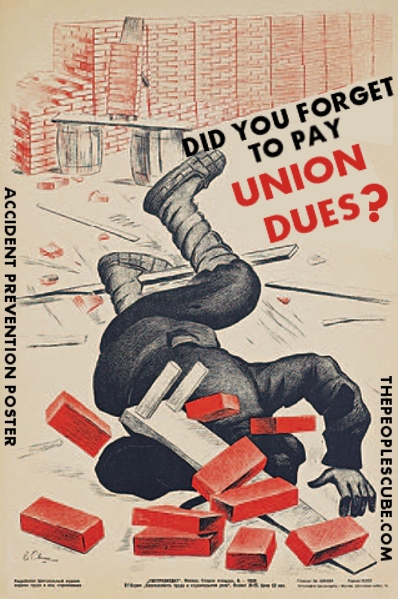
The economic evidence is quite clear that state right-to-work (RtW) laws do not reduce wages, though a few seem desperate to convince us otherwise. In fact, RtW has proven to be an unambiguous economic tonic for states that have enacted such laws (though perhaps not for union lobbyists). Note that this has nothing to do with comparisons of nominal wage levels in RtW vs. non-RtW states, as organizations like the left-wing Economic Policy Institute (EPI) are wont to make. Adjusting for the cost of living often shows a different result. Either way, the recency of RTW laws in many states means that those differences tend to be legacy effects and are not useful as a gauge of the incremental impact of RtW laws.

It’s no coincidence that RtW laws have gained favor as a mechanism for encouraging economic growth in historically low-wage states. The efforts have been largely successful. Jeffrey Eisenach reported the following findings in 2015:

  • “RTW laws directly affect economic performance through their impact on business location decisions, especially in heavily unionized industries such as manufacturing. Other things being equal, businesses are more likely to locate in states with RTW laws. There is also evidence that RTW laws have a direct, positive effect on employment, output, and personal income.
  • RTW laws do not lead to lower average wages in either unionized or non-unionized industries. There is some evidence that the long-run effect of RTW laws is to raise wage rates as a result of increased productivity.
  • RTW laws also affect economic performance indirectly through lower rates of union density. The weight of the evidence indicates that lower union density is associated with higher levels of employment, increased investment and R&D spending, and increased innovation.”

Mark Mix reports similar evidence, including more rapid employment growth and larger wage gains in RtW states. And James Sherk addresses some of the myths surrounding RtW, including the misleading narrative that RtW reduces wages and that RtW is unpopular among the American public. Indeed, Sherk quotes a Gallup poll finding that Americans support right-to-work laws by more than a 3 to 1 margin, though it’s not clear how well the average American understands the issue.

A disturbing aspect of the opposition to RtW is an effort to disparage the business community by characterizing private enterprise as exploitative. I leave you with some wisdom from Bran Caplan on that point (HT: Don Boudreaux):

“Businesses produce and deliver virtually all of the wonderful, affordable products that we enjoy. Contrary to millennia of economic illiterates, businesses rarely do so by ‘exploiting’ their workers. Instead, businesses provide gentle but much-needed leadership. Left to our own economic devices, most of us are virtually useless; we don’t know how to produce much, and we don’t know how to find customers.  Businesspeople solve these problems: They recruit workers, organize them to vastly raise their productivity, then put these products in the hands of customers all over the world. Yes, they’re largely in it for the money; but – unlike every government on Earth – business rarely puts a gun to your head. Businesses assemble teams of volunteers to meet the needs of willing consumers – and succeed wildly.” (emphasis Caplan’s)
Give Workers Choice to Rule Unions

02 Wednesday Nov 2016

Posted by Nuetzel in Labor Markets

≈ Leave a comment

Tags

Collective Bargaining, James B. Jacobs, James Sherk, Labor Racketeering, NLRB, NPR, Principle-Agent Problem, Service Employees International Union, Union Corruption

img_3725

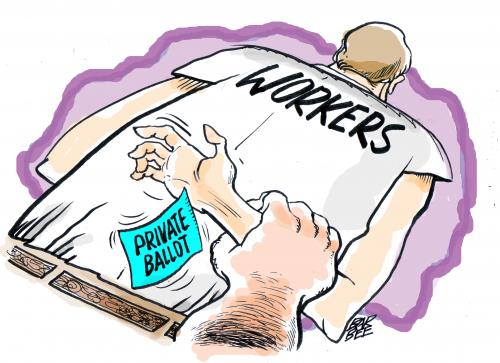
Collective bargaining via union representation is a right that deserves protection, but the value of that right is often undermined by union officials because the law empowers them to do so. In a case decided in September, however, a court confirmed that a union cannot force itself on an employer without worker support (and workers must file a request with the National Labor Relations Board (NLRB)).

Almost ten years ago, the Service Employees International Union (SEIU) insinuated itself as representing the employees of Professional Janitorial Service (PJS). The business insisted on a vote of its employees by secret ballot. Fair enough, right? That much is consistent with law and the administrative rules of the NLRB (see the link above). Had I worked for the business, its demand for a secret-ballot vote would have earned my respect. At that point, however, SEIU turned to questionable tactics:

“Unions win such elections more often than not, but the SEIU did not want to leave it to chance. So it retaliated against the company by libeling it with false accusations about illegal labor practices and overtime violations.

The SEIU claimed that Professional fired staff for trying to unionize, and had forced others to work off the books. Both allegations were dismissed as unfounded — lies, in other words — by the Labor Department.

The union’s libel was part of a broader campaign to drive Professional out of business unless it surrendered to union demands. Behind the scenes, the SEIU used its political connections to steer contracts away from the company. Emails showed SEIU officials electronically high-fiving each other every time Professional lost a contract.“

It took almost a decade, but PJS recently emerged victorious in its legal battle with SEIU. A jury in Houston ruled that SEIU defamed PJS, awarding the business a judgement of $5.3 million for damages. This article reports that SEIU kept a “campaign manual” that it relied upon in it’s effort to “kill PJS”, as they so delicately put it. PJS isn’t done yet:

“In a statement, PJS added that they ‘will now ask local prosecutors to investigate apparent perjury by union officials and an attorney who testified in the trial, and will increase its efforts with state legislators to remove the SEIU from eligibility in state-provided union dues collection programs.’“

SEIU has a long history of corruption, so it’s great to see the union’s tactics exposed before a jury. Apparently, too many employers have settled out of court, allowing SEIU to force its way into their businesses without a fair process, and those businesses have taken undeserved hits to their reputations along the way.

What incentives motivate such aggressive tactics? They undoubtedly reflect the value a union organization can capture through exclusive representation of workers and mandatory payment of dues. That is the general theme of “Unelected Unions: Why Workers Should Be Allowed to Choose Their Representatives“, by James Sherk. Once a workplace is successfully unionized, the union not only holds a monopoly on the supply of labor to the business; the government also grants to the union a monopoly over the services it provides to workers via exclusive representation. The workers are a captive market, short of a difficult and risky (for individual workers) decertification process.

That latter form of monopoly power, enforced by legal rules and court precedent, creates a severe principal-agent problem in union representation of workers. Union officials (the agents) have the incentives and power to capture excessive value from the workers they represent (the principles). This value, and historically questionable union financial reporting, has often made union activity a magnet for organized crime elements. This NPR story demonstrates the widespread nature of union corruption. An article about labor corruption by James B. Jacobs describes several common forms of labor racketeering:

“Organized crime bosses exploit unions and union members through alliances with corrupted or intimidated union officials…. In return, union officials provide mobsters access to the union treasury, pension and welfare funds, no-show jobs with the union, and support in establishing and enforcing employer cartels…. Some organized crime members have held formal union office…. In addition, of course, corrupt union officials, whether or not connected to organized crime figures, engage in ‘ordinary’ organizational corruption, such as misappropriation of funds. The most distinctive form of corruption by union officials is taking employers’ bribes to ignore violations of the collective bargaining contract, or even to allow employer to operate nonunion shops….“

Sterk and Jacobs both emphasize the potential that worker choice over their representation has for cleaning up union corruption. Here is an excerpt from Sterk’s conclusion:

“Congress and state legislatures should require unions to run for re-election, or allow workers to designate their own bargaining representative. Workers should not be forced to accept a union’s services.“

The right of workers to control their representation was at the heart of PJS’s original insistence on a worker vote, by secret ballot, over whether they desired representation by SEIU. And SEIU’s underhanded tactics illustrate the importance of giving workers strong control over their unions from the start. While mechanisms creating greater worker choice and control might not be foolproof, it is more likely to minimize union corruption and to maximize the incentives of union officials to truly promote the interests of their workers.

Pay and Productivity

05 Sunday Jun 2016

Posted by Nuetzel in Living Wage, Markets, Minimum Wage

≈ 1 Comment

Tags

Automation, Carwasheros, central planning, Ecomomic Policy Institute, James Sherk, Labor Productivity, Labor Saving Technology, Living Wage, Low-Skilled Workers, Minimum Wage, Productivity and Wages, Resource Allocation, Veronique de Rugy

allaboutproductivity

Remember, the real minimum wage is zero, and state-imposed unemployment is not justice. In the private economy, wages rise with productivity, and that’s true across workers at any point in time, for workers over time, and for workers in different industries over time. Don’t think so? Contrary to the blithe pronouncements of Barack Obama and reports by the union-backed Economic Policy Institute (EPI), there has been no divergence in productivity and pay since the early 1970s. This is shown convincingly by James Sherk in “Workers’ Compensation: Growing Along With Productivity“. Sherk’s work shows that hourly productivity increased by 81% since 1973, while average employee compensation increased 78%. In contrast, the EPI has claimed that productivity grew 91% since 1973, but  employee compensation grew just 10%.

How did the EPI (and Obama) reach such a faulty conclusion? Sherk breaks the error into three major parts: 1) comparing the pay of a subset of workers to the productivity of all workers; 2) excluding the pay growth of the self-employed; and 3) inconsistent adjustments of pay and productivity for inflation.

The link between wages and productivity is immutable in a market economy. The state can attempt to short-circuit the relationship, but such intervention comes at the cost of dislocations in resource utilization and damage to well-being. Veronique de Rugy discusses Sherk’s findings and emphasizes the folly in thinking that the government can somehow divorce the pay of workers from their underlying contribution to the value of output:

“One of the assets of the American economic model is a relatively flexible labor market, especially when compared with labor markets in many European countries. It explains some of the consistently lower U.S. unemployment rates and higher economic growth. Unfortunately, this flexibility is increasingly threatened by government policies that would increase the cost of employing workers.“

Populists and statists share some destructive tendencies, such as a fixation on increasing the cost of labor to employers. The current debate over a “living wage” of $15 per hour involves more than doubling the minimum wage in many parts of the country. This is so far out of line with the productivity of low-skilled workers as to make absurd claims that it won’t have a serious impact on their employment. There are employers who won’t be able to survive under those circumstances. There are others who will have to scale back operations. Employers having access to capital in industries such as car washes and fast food know that automation is more than viable as a substitute for low-skilled labor. And new labor-saving innovations are inevitable when creative entrepreneurs are confronted with an obstacle like high-cost labor: necessity is the mother of invention. But premature automation is not an obvious consequence to living-wage advocates. And that’s to say nothing of the futures destroyed when low-skilled workers are denied opportunities for work experience.

The connection between wages and productivity is part of a well-functioning economy and it is just as alive and well in today’s economy as ever. The “right” wage cannot be determined by central planners, bureaucrats or legislators apart from productive reality, and the adverse consequences of their attempts to do so cannot be wished away. Only markets that price the real value of productive contributions can put resources such as low-skilled labor to their best use, avoiding the waste inherent in regulation that is always ignorant of dynamic preferences and resource availability.


Follow Sacred Cow Chips on WordPress.com

Recent Posts

  • Immigration and Merit As Fiscal Propositions
  • Tariff “Dividend” From An Indigent State
  • Almost Looks Like the Fed Has a 3% Inflation Target
  • Government Malpractice Breeds Health Care Havoc
  • A Tax On Imports Takes a Toll on Exports

Archives

  • December 2025
  • November 2025
  • October 2025
  • September 2025
  • August 2025
  • July 2025
  • June 2025
  • May 2025
  • April 2025
  • March 2025
  • February 2025
  • January 2025
  • December 2024
  • November 2024
  • October 2024
  • September 2024
  • August 2024
  • July 2024
  • June 2024
  • May 2024
  • April 2024
  • March 2024
  • February 2024
  • January 2024
  • December 2023
  • November 2023
  • August 2023
  • July 2023
  • June 2023
  • May 2023
  • April 2023
  • March 2023
  • February 2023
  • January 2023
  • December 2022
  • November 2022
  • October 2022
  • September 2022
  • August 2022
  • July 2022
  • June 2022
  • May 2022
  • April 2022
  • March 2022
  • February 2022
  • January 2022
  • December 2021
  • November 2021
  • October 2021
  • September 2021
  • August 2021
  • July 2021
  • June 2021
  • May 2021
  • April 2021
  • March 2021
  • February 2021
  • January 2021
  • December 2020
  • November 2020
  • October 2020
  • September 2020
  • August 2020
  • July 2020
  • June 2020
  • May 2020
  • April 2020
  • March 2020
  • February 2020
  • January 2020
  • December 2019
  • November 2019
  • October 2019
  • September 2019
  • August 2019
  • July 2019
  • June 2019
  • May 2019
  • April 2019
  • March 2019
  • February 2019
  • January 2019
  • December 2018
  • November 2018
  • October 2018
  • September 2018
  • August 2018
  • July 2018
  • June 2018
  • May 2018
  • April 2018
  • March 2018
  • February 2018
  • January 2018
  • December 2017
  • November 2017
  • October 2017
  • September 2017
  • August 2017
  • July 2017
  • June 2017
  • May 2017
  • April 2017
  • March 2017
  • February 2017
  • January 2017
  • December 2016
  • November 2016
  • October 2016
  • September 2016
  • August 2016
  • July 2016
  • June 2016
  • May 2016
  • April 2016
  • March 2016
  • February 2016
  • January 2016
  • December 2015
  • November 2015
  • October 2015
  • September 2015
  • August 2015
  • July 2015
  • June 2015
  • May 2015
  • April 2015
  • March 2015
  • February 2015
  • January 2015
  • December 2014
  • November 2014
  • October 2014
  • September 2014
  • August 2014
  • July 2014
  • June 2014
  • May 2014
  • April 2014
  • March 2014

Blogs I Follow

  • Passive Income Kickstart
  • OnlyFinance.net
  • TLC Cholesterol
  • Nintil
  • kendunning.net
  • DCWhispers.com
  • Hoong-Wai in the UK
  • Marginal REVOLUTION
  • Stlouis
  • Watts Up With That?
  • Aussie Nationalist Blog
  • American Elephants
  • The View from Alexandria
  • The Gymnasium
  • A Force for Good
  • Notes On Liberty
  • troymo
  • SUNDAY BLOG Stephanie Sievers
  • Miss Lou Acquiring Lore
  • Your Well Wisher Program
  • Objectivism In Depth
  • RobotEnomics
  • Orderstatistic
  • Paradigm Library
  • Scattered Showers and Quicksand

Blog at WordPress.com.

Passive Income Kickstart

OnlyFinance.net

TLC Cholesterol

Nintil

To estimate, compare, distinguish, discuss, and trace to its principal sources everything

kendunning.net

The Future is Ours to Create

DCWhispers.com

Hoong-Wai in the UK

A Commonwealth immigrant's perspective on the UK's public arena.

Marginal REVOLUTION

Small Steps Toward A Much Better World

Stlouis

Watts Up With That?

The world's most viewed site on global warming and climate change

Aussie Nationalist Blog

Commentary from a Paleoconservative and Nationalist perspective

American Elephants

Defending Life, Liberty and the Pursuit of Happiness

The View from Alexandria

In advanced civilizations the period loosely called Alexandrian is usually associated with flexible morals, perfunctory religion, populist standards and cosmopolitan tastes, feminism, exotic cults, and the rapid turnover of high and low fads---in short, a falling away (which is all that decadence means) from the strictness of traditional rules, embodied in character and inforced from within. -- Jacques Barzun

The Gymnasium

A place for reason, politics, economics, and faith steeped in the classical liberal tradition

A Force for Good

How economics, morality, and markets combine

Notes On Liberty

Spontaneous thoughts on a humble creed

troymo

SUNDAY BLOG Stephanie Sievers

Escaping the everyday life with photographs from my travels

Miss Lou Acquiring Lore

Gallery of Life...

Your Well Wisher Program

Attempt to solve commonly known problems…

Objectivism In Depth

Exploring Ayn Rand's revolutionary philosophy.

RobotEnomics

(A)n (I)ntelligent Future

Orderstatistic

Economics, chess and anything else on my mind.

Paradigm Library

OODA Looping

Scattered Showers and Quicksand

Musings on science, investing, finance, economics, politics, and probably fly fishing.

  • Subscribe Subscribed
    • Sacred Cow Chips
    • Join 128 other subscribers
    • Already have a WordPress.com account? Log in now.
    • Sacred Cow Chips
    • Subscribe Subscribed
    • Sign up
    • Log in
    • Report this content
    • View site in Reader
    • Manage subscriptions
    • Collapse this bar
 

Loading Comments...