• About

Sacred Cow Chips

Sacred Cow Chips

Tag Archives: Sea Levels

Economic Growth and the Real Accretion of Resources

10 Friday Feb 2023

Posted by Nuetzel in Growth, Scarcity

≈ Leave a comment

Tags

Angus Maddison, Carbon Concentrations, Carbon Dial, Common Resources, Don Boudreaux, External Costs, Fusion Energy, Geothermal Energy, global warming, Grabby Civilization, Greening, Growth, Human capital, Human Ingenuity, Julian Simon, Known Reserves, Markets, Modular Reactors, Paleoclimate Data, Price Signals, Public Finance, Renewables, Resource Accretion, Risk Mitigation, S-Curve, Scarcity, Sea Levels, Space Mining, Urban Heat Islands

A few weeks ago I argued that raising living standards and eliminating poverty are human imperatives, and therefore growth is an imperative. Growth is a natural process for a free and creative people, and the alternative to growth is not zero growth. The coercion necessary to “achieve” a static economic environment would invariably lead to decline. It would be impossible to maintain average living standards while attempting a coerced leveling of those standards.

People have a notion, however, that it’s impossible to sustain growth due to the planet’s finite base of resources. If that is the case, we have available a mechanism to warn us as the time of hard limits approaches, which I’ll discuss below. So far, that signal hasn’t been activated. Moreover, the claim that growth is unsustainable can be challenged on several levels, which I’ll also address.

Effective Resources

First, a word about what I mean by the “accretion of resources”. The phrase refers to growth in the total effectiveness or productive potential of known resources given the rate of discovery and improvements in extraction and production technologies. Of course, if these discoveries and efficiencies are exceeded by current use, then there is no accretion, but depletion.

So let’s say we have a particular known stock of a resource we can readily draw on, so many pounds of resource X. In addition, we might know of the existence of another equally large quantity that can’t be readily drawn upon. Those are additional known (or proved) but undeveloped reserves. They might be difficult to exploit except at high cost, but we know they exist. We’d want to get on with the business of developing those reserves for extraction if they were needed any time soon, and we might want to begin prospecting for new reserves as well. As we’ve learned over the years. discoveries of previously unknown reserves of resources can be quite large. Prospectors are willing to bet that more resources exist, and they’ll undertake the risks of exploration if the potential rewards are adequate.

All of those concepts are straightforward. However, suppose we discover ways in which resource X can be used more efficiently, making things stronger or run longer or harder with less X. If we double the efficiency with which X is used, we have doubled the effective known reserves of X and, at least theoretically, unknown reserves as well. We’d have witnessed a doubling in the years that resource X can last. This is a form of resource accretion. Improvements in extraction or purification methods are also examples. Technological leaps like this, not to mention untold small increments in the efficiency of practices, have made economic growth possible in the past and will continue to do so in the future. Our effective resources seem to keep expanding. Accretion has occurred even with respect to resources like land as the world urbanized and the efficiency of farming advanced many-fold.

Growth In Real Time

Perceptions of growth are sometimes shaped by graphic depictions that some parties find alarming, so it might be helpful to take a quick look at some growth curves. First is an oldie-but-goodie chart showing GDP per capita taken from “Statistics on World Population, GDP, and Per Capital GDP, 1- 2008 AD” by Angus Maddison of the IMF:

This shows the explosion in the value of production that occurred during and after the industrial revolution, in contrast to very slow progress before that. The point I want to make here is how dramatic growth can look on a broad but visually compressed time scale. OMG! Look what we’ve done! How can we go on like this??? Often, the crux of the limits to growth argument is that such growth seems impossible assuming that we face fixed resource limits.

In fact, we experience growth in a very “local” way with respect to the passage of time. The two charts below illustrate a difference in perspectives using a hypothetically constant annual growth rate of 2.5%. The first chart shows 200 periods of growth, while the second expands only the last 20 periods of that time frame.

There is a great difference in the way the two vertical axes are scaled, which is important, but the second chart conveys that a respectable growth rate doesn’t really feel extreme when you’re in the middle of it, or, that is, in real time. It can look very extreme at the end of a long interval, depending on how severely the time axis is compressed. That’s not to discount the reality of much larger levels of activity (the vertical axes) and demands for resources as time goes on. However, those levels, and growth from those levels, is not at all alarming if our ability to achieve them has kept pace. So how can we know when we’re approaching a point at which resource limits will make it impossible to achieve those levels of activity? Market prices are the key signals, and they are the key to resource accretion.

Market Signals Light the Way

The market price is the best gauge of the scarcity of a resource. When resources become especially scarce, higher prices tell us so. That leads to conservation, which obviously extends the availability of those resources. Prices also function as an incentive for sellers to exploit new or harder-to-reach stores of a resource. That kind of resource accretion is one of the lessens the oil market has taught us again and again: oil exploration and known reserves tend to expand as the price rises, such that the prospect of oil depletion moves out to ever more distant horizons. There are certain minerals, elements, or isotopes (tritium?) that seem to be quite rare on Earth, but our ability to find them or extract them often improves with time. Space mining, which would vastly reduce the scarcity of resources like platinum, iron, nickel, cobalt, and many others, may become a reality in the near future. Interestingly, much of that activity could be in private hands. Space mining would lead to resource accretion on a whole new scale, and if we aspire to be a “grabby” civilization, it is a logical next step. So let’s go grab an asteroid!

When a price spikes due to greater scarcity, opportunities for substitution, exploration, and new efficiencies arise because the higher price justifies the cost of exploiting them. In addition to more difficult or costly extraction, a higher price encourages the use of close and even novel substitutes that may involve new technologies. In turn, that substitution reduces the relative scarcity of the original resource in question. And finally, back to conservation, users respond to price increases by finding their own innovative efficiencies in how a resource is utilized. The price response to scarcity is a channel through which much technological progress is encouraged.

While our earth-bound resources or even our star-system’s resources are finite, their effective quantity is highly flexible. Their potential at any time depends on our stage of discovery and the state of technology. Human ingenuity is a marvel at stretching the effective quantity of resources, and the greatest gains always occur when market forces are unleashed.

Thus, we see that prices, markets, and capitalism itself enable rational and sustainable responses to scarcity. Yet too often we hear claims that capitalism must be destroyed in order to save humanity. In fact, capitalism itself is the one system of social organization capable of achieving resource accretion, sustained growth, and lifting mankind from poverty. In fact, growth might well be an insurmountable problem without the dynamic energies of capitalism. Government planners are incapable of gathering and processing the vast information that markets process each and every day. Planners must substitute their own weak judgements, which prove flawed again and again.

Scarcity of the Commons

The environmental Left is quick to marshal a different kind of limits-to-growth argument. This one has to do with the scarcity of non-priced common resources and their overuse in production. For example, if a certain activity degrades the environment and those costs are not internalized by producers, they will tend to produce “too much”, leading to some degree of deterioration in human living conditions or the natural quality of the environment. In that case, we might not notice the limits to growth bearing down on us before corrective action is taken. Or so goes the theory that accumulating externalities lead to catastrophe. This is another front along which the limits to growth are asserted, particularly by climate alarmists and the environmental Left. Most prominently today, they contend that increases in atmospheric carbon concentration will lead to an unlivable warming of Earth’s climate.

Sense and Nonsense

The most glaring shortcoming of climate change advocacy is that the trends it decries are exaggerated. I’ve discussed the absurdly brief climate record cited by alarmists in several past posts (many of which appear here). We can start with the contention that carbon emissions are “poison”. In fact, carbon is life nourishing, as we’ve witnessed with the “greening” of the planet at current carbon concentrations of 4 parts per 10,000 of atmospheric gas. Furthermore, a longer historical temperature record using paleoclimate data shows that we are well within the range of past variation, even with the huge distortions to the record caused by urban heat islands and questionable downward adjustments to records of five to 15 decades ago.

The alarmist perspective is also inflamed by simplistic models of carbon forcing that ignore the impact of solar radiation, volcanic activity, and the behavior of aerosols in the atmosphere. Those models have consistently over-predicted temperature trends for decades. Equally troubling is that these models promote the fiction that mankind can control global temperatures by a little fiddling with a “carbon dial”, as if such fiddling could be accomplished without a massive centralization of political and economic power. The panicked narratives related to sea level increases and alleged increases in violent weather are equally flawed.

Growth Can Cure It

Another compelling response to climate arguments against growth is that technological advances have already enabled us to produce power without carbon emissions. Unfortunately, as a matter of public policy (regulation and bad choices by government industrial planners), we have increasingly failed to avail ourselves of these opportunities, instead choosing extremely wasteful methods of generating power. These are the windmill and solar “renewables”, which are resource-intensive, intermittent, low utilization, non-dispatchable, lacking storage for excess generation, intensive in land use (reversing prior accretions), and environmentally disastrous in fabrication, operation, and at disposal. Nuclear power is a far superior technology, especially with the advent of small, modular reactors and potential breakthroughs in fusion energy. These might help to rescue us from the spectacle of bone-headed industrial planning and greedy, renewable-energy rent seekers, but regulators have done seemingly all they can to prevent nuclear facilities from being built.

Just as human ingenuity is capable of expanding the exploitable stock of tradable, priced resources, it is also capable of inventing non-carbon power technologies that are more efficient and less environmentally destructive than ground-based solar and wind. Collection of non-intermittent solar energy in space arrays with wireless transmission to Earth is another promising alternative, as is geothermal energy. And carbon capture technologies show promise for neutralizing emissions or perhaps even reversing carbon concentrations one day, if that is deemed necessary. Much of this development work is in private hands, but barring drastic reductions in scale, the bulk of these efforts are (or will be) dependent on government funding.

It’s worth acknowledging here that resource accretion has a safety component in an expected value sense. Sometimes those risks can be internalized if risk reduction is of value to buyers. But the costs of “reasonable” risk mitigation cannot always be internalized without government action. For example, deflecting asteroid threats to the planet might be done best by private actors, but paying for that activity is a worthy application of public finance. The ability to deflect incoming asteroids is a noteworthy example of resource accretion via risk reduction.

Somehow, governments must be convinced to begin dedicating a larger share of the vast sums they spend on misguided climate interventions (including renewable technologies) to more sensible innovations. We might then benefit from accelerated breakthroughs that would settle not only our energy future, but a great deal of political strife as well. Like the market response to changes in scarcity, creative entrepreneurs will always step forward to compete for government funding. But if you pay them for crap, you’ll get a lot of crap!

Growth Once More

One day we might learn we are reaching the top of an s-curve. We aren’t there yet, if our ongoing accretion of resources is any guide, and there are new frontiers of space and technology to explore. The primary obstacles we face are not natural, but political and regulatory.

One area neglected above is the accretion of human capital. Certainly education is another way to expand our boundaries. However, population growth (and therefore labor force growth) tends to slow as living standards rise, and many argue that demographics have already become a drag on growth. A shrinking and aging population places a tremendous burden on young workers, making other sources of growth and productivity all the more critical. But new physical capital, resource development (including education), and new technologies can all continue to drive productivity and growth.

Growth depends on resource accretion, and there are many ways in which our effective stock of resources can be expanded. That includes enhancements in quantities, efficiencies, and safety. Private investment should be the primary avenue through which these are accomplished, which in turn requires flows of saving. Those flows are much more difficult to conjure without growth, so we have a chicken and egg cross-dependency. But chickens will lay eggs, just as saving and all kinds of investment will take place given the right incentives. Those would promote expansion in our effective stock of resources, improved adaptation to change, and enhanced well being. In the end, the rationale is simple: ending poverty requires growth.

Addendum: I just noticed that Don Boudreaux posted (and beautifully elaborated upon) this great Julian Simon quote:

“The quantity of a natural resource that might be available to us – and even more important the quantity of the services that can eventually be rendered to us by that natural resource – can never be known even in principle, just as the number of points in a one-inch line can never be counted even in principle.”

Cassandras Feel An Urgent Need To Crush Your Lifestyle

12 Thursday Jan 2023

Posted by Nuetzel in Climate science, Environmental Fascism

≈ 1 Comment

Tags

Atmospheric Aerosols, Capacity Factors, Carbon Emissions, Carbon-Free Buildings, Chicken Little, Climate Alarmism, Coercion, Electric Vehicles, Elon Musk, Extreme Weather Events, Fossil fuels, Gas Stoves, Judith Curry, Land Use, Model Bias, Nuclear power, Paul Ehrlich, Renewable energy, rent seeking, Sea Levels, Settled Science, Solar Irradience, Solar Panels, Subsidies, Temperature Manipulation, Toyota Motors, Urban Heat Islands, Volcanic activity, Wind Turbines

Appeals to reason and logic are worthless in dealing with fanatics, so it’s too bad that matters of public policy are so often subject to fanaticism. Nothing is more vulnerable on this scale than climate policy. Why else would anyone continue to listen to prognosticators of such distinguished failure as Paul Ehrlich? Perhaps most infamously, his 1970s forecasts of catastrophe due to population growth were spectacularly off-base. He’s a man without any real understanding of human behavior and how markets deal efficiently and sustainably with scarcity. Here’s a little more detail on his many misfires. And yet people believe him! That’s blind faith.

The foolish acceptance of chicken-little assertions leads to coercive and dangerous policy prescriptions. These are both unnecessary and very costly in direct and hidden ways. But we hear a frantic chorus that we’d better hurry or… we’re all gonna die! Ironically, the fate of the human race hardly matters to the most radical of the alarmists, who are concerned only that the Earth itself be in exactly the same natural state that prevailed circa 1800. People? They don’t belong here! One just can’t take this special group of fools too seriously, except that they seem to have some influence on an even more dangerous group of idiots called policymakers.

Judith Curry, an esteemed but contrarian climate expert, writes of the “faux urgency” of climate action, and how the rush to implement supposed climate mitigations is a threat to our future:

“Rapid deployment of wind and solar power has invariably increased electricity costs and reduced reliability, particularly with increasing penetration into the grid. Allegations of human rights abuses in China’s Xinjiang region, where global solar voltaic supplies are concentrated, are generating political conflicts that threaten the solar power industry. Global supply chains of materials needed to produce solar and wind energy plus battery storage are spawning new regional conflicts, logistical problems, supply shortages and rising costs. The large amount of land use required for wind and solar farms plus transmission lines is causing local land use conflicts in many regions.”

Curry also addresses the fact that international climate authorities have “moved the goalposts” in response to the realization that the so-called “crisis” is not nearly as severe as we were told not too long ago. And she has little patience for delusions that authorities can reliably force adjustments in human behavior so as to to reduce weather disasters:

“Looking back into the past, including paleoclimatic data, there has been more extreme weather [than today] everywhere on the planet. Thinking that we can minimize severe weather through using atmospheric carbon dioxide as a control knob is a fairy tale.”

The lengths to which interventionists are willing to go should make consumer/taxpayers break out their pitchforks. It’s absurd to entertain mandates forcing vehicles powered by internal combustion engines (ICEs) off the road, and automakers know it. Recently, the head of Toyota Motors acknowledged his doubts that electric vehicles (EVs) can meet our transportation demands any time soon:

“People involved in the auto industry are largely a silent majority. That silent majority is wondering whether EVs are really OK to have as a single option. But they think it’s the trend so they can’t speak out loudly. Because the right answer is still unclear, we shouldn’t limit ourselves to just one option.”

In the same article, another Toyota executive says that neither the market nor the infrastructure is ready for a massive transition to EVs, a conclusion only a dimwit could doubt. Someone should call the Big 3 American car companies!

No one is a bigger cheerleader for EVs than Elon Musk. In the article about Toyota, he is quoted thusly:

“At this time, we actually need more oil and gas, not less. Realistically I think we need to use oil and gas in the short term, because otherwise civilization will crumble. One of the biggest challenges the world has ever faced is the transition to sustainable energy and to a sustainable economy. That will take some decades to complete.”

Of course, for the foreseeable future, EVs will be powered primarily by electricity generated from burning fossil fuels. So why the fuss? But as one wag said, that’s only until the government decides to shut down those power plants. After that, good luck with your EV!

Gas stoves are a new target of our energy overlords, but this can’t be about fuel efficiency, and it’s certainly not about the quality of food preparation. The claim by an environmental think tank called “Carbon-Free Buildings” is that gas stoves are responsible for dangerous indoor pollutants. Of course, the Left was quick to rally around this made-up problem, despite the fact that they all seem to use gas stoves and didn’t know anything about the issue until yesterday! And, they insist, racial minorities are hardest hit! Well, they might consider using exhaust fans, but the racialist rejoinder is that minorities aren’t adequately informed about the dangers and mitigants. Okay, start a safe-use info campaign, but keep government away from an embedded home technology that is arguably superior to the electric alternative in several respects.

Renewable energy mandates are a major area of assault. If we were to fully rely on today’s green energy technologies, we’d not just threaten our future, but our immediate health and welfare. Few people, including politicians, have any awareness of the low rates at which green technologies are actually utilized under real-world conditions.

“Worldwide average solar natural capacity factor (CF) reaches about ~11-13%. Best locations in California, Australia, South Africa, Sahara may have above 25%, but are rare. (see www.globalsolaratlas.info, setting direct normal solar irradiance)

Worldwide average wind natural capacity factors (CF) reach about ~21-24%. Best off-shore locations in Northern Europe may reach above 40%. Most of Asia and Africa have hardly any usable wind and the average CF would be below 15%, except for small areas on parts of the coasts of South Africa and Vietnam. (see www.globalwindatlas.info, setting mean power density)”

Those CFs are natural capacity factors (i.e., the wind doesn’t always blow or blow at “optimal” speeds, and the sun doesn’t always shine or shine at the best angle), The CFs don’t even account for “non-natural” shortfalls in actual utilization and other efficiency losses. It would be impossible for investors to make these technologies profitable without considerable assistance from taxpayers, but they couldn’t care less about whether their profits are driven by markets or government fiat. You see, they really aren’t capitalists. They are rent seekers playing a negative-sum game at the expense of the broader society.

There are severe environmental costs associated with current wind and solar technologies. Awful aesthetics and the huge inefficiencies of land use are bad enough. Then there are deadly consequences for wildlife. Producing inputs to these technologies requires resource-intensive and environmentally degrading mining activities. Finally, the costs of disposing of spent, toxic components of wind turbines and solar panels are conveniently ignored in most public discussions of renewables.

There is still more hypocritical frosting on the cake. Climate alarmists are largely opposed to nuclear power, a zero-carbon and very safe energy source. They also fight to prevent development of fossil fuel energy plant for impoverished peoples around the world, which would greatly aid in economic development efforts and in fostering better and safer living conditions. Apparently, they don’t care. Climate activists can only be counted upon to insist on wasteful and unreliable renewable energy facilities.

Before concluding, it’s good to review just a few facts about the “global climate”:

1) the warming we’ve seen in forecasts and in historical surface temperature data has been distorted by urban heat island effects, and weather instruments are too often situated in local environments rich in concrete and pavement.

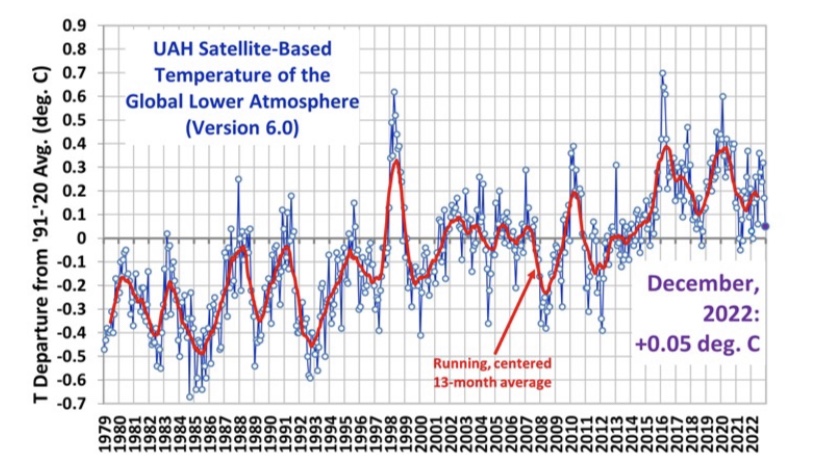
2) Satellite temperatures are only available for the past 43 years, and they have to be calibrated to surface measurements, so they are not independent measures. But the trend in satellite temperatures over the past seven years has been flat or negative at a time when global carbon emissions are at all-time highs.

3) There have been a series of dramatic adjustments to historical data that have “cooled the past” relative to more recent temperatures.

4) The climate models producing catastrophic long-term forecasts of temperatures have proven to be biased to the high side, having drastically over-predicted temperature trends over the past two- to three decades.

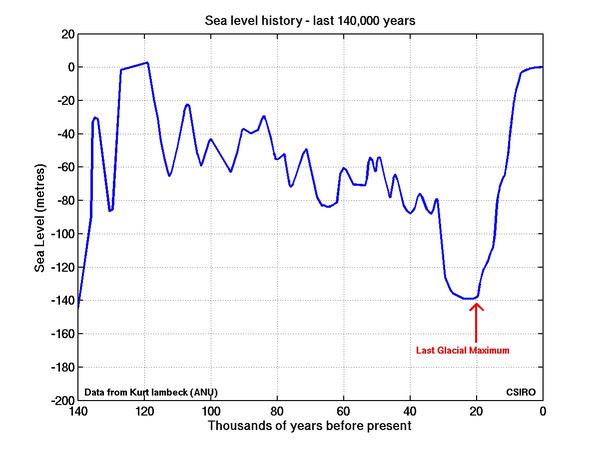
5) Sea levels have been rising for thousands of years, and we’ve seen an additional mini-rebound since the mini-ice age of a few hundred years ago. Furthermore, the rate of increase in sea levels has not accelerated in recent decades, contrary to the claims of climate alarmists.

6) Storms and violent weather have shown no increase in frequency or severity, yet models assure us that they must!

Despite these facts, climate change fanatics will only hear of climate disaster. We should be unwilling to accept the climatological nonsense now passing for “settled science”, itself a notion at odds with the philosophy of science. I’m sad to say that climate researchers are often blinded by the incentives created by publication bias and grant money from power-hungry government bureaucracies and partisan NGOs. They are so blinded, in fact, that research within the climate establishment now almost completely ignores the role of other climatological drivers such as the solar irradiance, volcanic activity, and the role and behavior of atmospheric aerosols. Yes, only the global carbon dial seems to matter!

No one is more sympathetic to “the kids” than me, and I’m sad that so much of the “fan base” for climate action is dominated by frightened members of our most youthful generations. It’s hard to blame them, however. Their fanaticism has been inculcated by a distinctly non-scientific community of educators and journalists who are willing to accept outrageous assertions based on “toy models” concocted on weak empirical grounds. That’s not settled science. It’s settled propaganda.

Sea Level Measurement and Perspective

26 Monday Mar 2018

Posted by Nuetzel in Global Warming, Sea Level

≈ 1 Comment

Tags

Absolute Sea Level, Carbon Concentation, Kip Hansen, NASA, NOAA, Relative Sea Level, Satellite Altimetry, Sea Levels, Sedimentation, Tidal Gauges, Vertical Land Motion

The measurement of sea level change is much more complicated than most people realize. In fact, the reported changes that alarm so many are minuscule relative to the uncertainties caused by these measurement difficulties. First, consider the easy part: If you drive a stake into the ground at the shore at high tide one day, your task of measuring sea level change will be complicated by the changing day-to-day tides. Those changes will force you to calculate average readings off of your stake over complete lunar cycles (and even that isn’t quite right, since the gravitational pull of the sun matters as well, and the moon’s distance from earth fluctuates). Or, you can make comparisons only between readings one lunar cycle apart.

Once the local reference point is established at the shore and the tides are controlled for, there are two kinds of changes that cause the sea to rise or fall relative to the “zero” point on your stake. The sea water can rise or fall, of course, but the land itself might do so as well! Settling or upwelling at the land surface can be caused by a variety of geological phenomena. “Vertical land motion”, up or down, occurs almost everywhere. That means sea level is a relative concept. In addition, over time the placement of on-shore sea-level gauges often change with harbor and ship channel alterations, and even accidents. These all require adjustments in order to make valid comparisons across time. That’s to say nothing of variations in air pressure and water currents, which certainly affect on-shore readings. Today, sea levels are also measured by satellite, but that doesn’t make sea level measurement simpler by any means, as you’ll see below.

Kip Hansen discusses the vagaries of sea level measurement in an excellent post. If it isn’t already obvious, changes in readings from a single tide level gauge do not show the rate at which the absolute sea level is changing over time. It shows only the local net effect of the absolute sea level change and the land movement. But Hansen emphasizes an implication about which few are aware: a comparison of relative sea level changes in two different locales shows only the difference in “vertical land motion” between the two sites (at least as a first approximation).

Hansen notes a major discrepancy between the absolute sea level changes reported by NOAA (1.7 mm per year) and NASA (3.0 mm per year). These figures are estimated by satellite readings, which have extremely poor resolution (measured in cm, not mm) compared to tidal gauges. This quote from Hansen in the comments section is revealing (emphasis added):

“Satellite Altimetry — when reporting sea level rise — is not a measurement, but a complex calculation with a dozen or so ‘corrections’ and ‘adjustments’ for confounding factors, all of which are of greater magnitude than the change in sea surface height being sought. Many of these confounders are orders of magnitude greater. Some additions, such the famed GIA adjustment, are acknowledged not to appear in the physical sea surface height at all, but are added on the basis that ‘the sea would have risen the 0.3 mm/yr if the ocean basins hadn’t expanded. There is no scientific justification for the difference. In this essay, I point out that NOAA has stuck to its scientitic guns and not gone along with the NASA figure.“

There are statements on NOAA’s web site that seem to endorse the NASA estimate, but Hansen discounts those references. He advises that there is a big difference between the NOAA science community and its marketing staff, which undoubtedly dominates the content viewed by the public on the site.

There are many other factors that play havoc with sea level estimates, some of which are intractable. One issue, which comes up in the comments to Hansen’s article, has to do with sedimentation and its displacement of sea water. While its effect spreads out across the entire ocean, Hansen stops short of calling it a contributor to absolute sea level rise, though that would be the implication in terms of measurement.

Alarm over rising sea levels is based partly on the focus of local media on relative sea level changes. That may well be an important local issue, whether the land is settling or the absolute sea level is rising (though the two may have different local policy implications). But local concerns about relative sea level are often translated into global concerns that confuse relative with absolute sea levels. This makes excellent fodder for the propaganda of the leftist climate change movement. That propaganda is so effective that it sometimes feeds back to foment local concern, even in areas experiencing reductions in relative sea level! These concerns fly in the face of local experience as well as the absolute rates of change estimated by NOAA.

I’ll close with the following comment taken from an earlier post on SacredCowChips:

“The prospect of rising sea levels is another matter that concerns alarmists, who always fail to note that sea levels have been increasing for a very long time, well before carbon concentrations could have had any impact. In fact, the sea level increases in the past few centuries are a rebound from lows during the Little Ice Age…. But even those fluctuations look minor by comparison to the increases in sea levels that occurred over 8,000 years ago.“

Playing Pretend Science Over Cocktails

13 Thursday Apr 2017

Posted by Nuetzel in Global Warming

≈ 2 Comments

Tags

97% Consensus, AGW, Carbon Forcing Models, Climate Feedbacks, CO2 and Greening, East Anglia University, Hurricane Frequency, Judith Curry, Matt Ridley, NOAA, Paleoclimate, Peer Review Corruption, Ross McKitrick, Roy Spencer, Sea Levels, Steve McIntyre, Temperature Proxies, Urbanization Bias

It’s a great irony that our educated and affluent classes have been largely zombified on the subject of climate change. Their brainwashing by the mainstream media has been so effective that these individuals are unwilling to consider more nuanced discussions of the consequences of higher atmospheric carbon concentrations, or any scientific evidence to suggest contrary views. I recently attended a party at which I witnessed several exchanges on the topic. It was apparent that these individuals are conditioned to accept a set of premises while lacking real familiarity with supporting evidence. Except in one brief instance, I avoided engaging on the topic, despite my bemusement. After all, I was there to party, and I did!

The zombie alarmists express their views within a self-reinforcing echo chamber, reacting to each others’ virtue signals with knowing sarcasm. They also seem eager to avoid any “denialist” stigma associated with a contrary view, so there is a sinister undercurrent to the whole dynamic. These individuals are incapable of citing real sources and evidence; they cite anecdotes or general “news-say” at best. They confuse local weather with climate change. Most of them haven’t the faintest idea how to find real research support for their position, even with powerful search engines at their disposal. Of course, the search engines themselves are programmed to prioritize the very media outlets that profit from climate scare-mongering. Catastrophe sells! Those media outlets, in turn, are eager to quote the views of researchers in government who profit from alarmism in the form of expanding programs and regulatory authority, as well as researchers outside of government who profit from government grant-making authority.

The Con in the “Consensus”

Climate alarmists take assurance in their position by repeating the false claim that  97% of climate scientists believe that human activity is the primary cause of warming global temperatures. The basis for this strong assertion comes from an academic paper that reviewed other papers, the selection of which was subject to bias. The 97% figure was not a share of “scientists”. It was the share of the selected papers stating agreement with the anthropomorphic global warming (AGW) hypothesis. And that figure is subject to other doubts, in addition to the selection bias noted above: the categorization into agree/disagree groups was made by “researchers” who were, in fact, environmental activists, who counted several papers written by so-called “skeptics” among the set that agreed with the strong AGW hypothesis. So the “97% of scientists” claim is a distortion of the actual findings, and the findings themselves are subject to severe methodological shortcomings. On the other hand, there are a number of widely-recognized, natural reasons for climate change, as documented in this note on 240 papers published over just the first six months of 2016.

Data Integrity

It’s rare to meet a climate alarmist with any knowledge of how temperature data is actually collected. What exactly is the “global temperature”, and how can it be measured? It is a difficult undertaking, and it wasn’t until 1979 that it could be done with any reliability. According to Roy Spencer, that’s when satellite equipment began measuring:

“… the natural microwave thermal emissions from oxygen in the atmosphere. The intensity of the signals these microwave radiometers measure at different microwave frequencies is directly proportional to the temperature of different, deep layers of the atmosphere.“

Prior to the deployment of weather satellites, and starting around 1850, temperature records came only from surface temperature readings. These are taken at weather stations on land and collected at sea, and they are subject to quality issues that are generally unappreciated. Weather stations are unevenly distributed and they come and go over time; many of them produce readings that are increasingly biased upward by urbanization. Sea surface temperatures are collected in different ways with varying implications for temperature trends. Aggregating these records over time and geography is a hazardous undertaking, and these records are, unfortunately, the most vulnerable to manipulation.

The urbanization bias in surface temperatures is significant. According to this paper by Ross McKitrick, the number of weather stations counted in the three major global temperature series declined by more than 4,500 since the 1970s (over 75%), and most of those losses were rural stations. From McKitrick’s abstract:

“The collapse of the sample size has increased the relative fraction of data coming from airports to about 50% (up from about 30% in the late 1970s). It has also reduced the average latitude of source data and removed relatively more high altitude monitoring sites. Oceanic data are based on sea surface temperature (SST) instead of marine air temperature (MAT)…. Ship-based readings changed over the 20th century from bucket-and-thermometer to engine-intake methods, leading to a warm bias as the new readings displaced the old.“

Think about that the next time you hear about temperature records, especially NOAA reports on a “new warmest month on record”.

Data Manipulation

It’s rare to find alarmists having any awareness of the scandal at East Anglia University, which involved data falsification by prominent members of the climate change “establishment”. That scandal also shed light on corruption of the peer-review process in climate research, including a bias against publishing work skeptical of the accepted AGW narrative. Few are aware now of a very recent scandal involving manipulation of temperature data at NOAA in which retroactive adjustments were applied in an effort to make the past look cooler and more recent temperatures warmer. There is currently an FOIA outstanding for communications between the Obama White House and a key scientist involved in the scandal. Here are Judith Curry’s thoughts on the NOAA temperature manipulation.

Think about all that the next time you hear about temperature records, especially NOAA reports on a “new warmest month on record”.

Other Warming Whoppers

Last week on social media, I noticed a woman emoting about the way hurricanes used to frighten her late mother. This woman was sharing an article about the presumed negative psychological effects that climate change was having on the general public. The bogus premises: we are experiencing an increase in the frequency and severity of storms, that climate change is causing the storms, and that people are scared to death about it! Just to be clear, I don’t think I’ve heard much in the way of real panic, and real estate prices and investment flows don’t seem to be under any real pressure. In fact, the frequency and severity of severe weather has been in decline even as atmospheric carbon concentrations have increased over the past 50 years.

I heard another laughable claim at the party: that maps are showing great areas of the globe becoming increasingly dry, mostly at low latitudes. I believe the phrase “frying” was used. That is patently false, but I believe it’s another case in which climate alarmists have confused model forecasts with fact.

The prospect of rising sea levels is another matter that concerns alarmists, who always fail to note that sea levels have been increasing for a very long time, well before carbon concentrations could have had any impact. In fact, the sea level increases in the past few centuries are a rebound from lows during the Little Ice Age, and levels are now back to where the seas were during the Medieval Warm Period. But even those fluctuations look minor by comparison to the increases in sea levels that occurred over 8,000 years ago. Sea levels are rising at a very slow rate today, so slowly that coastal construction is proceeding as if there is little if any threat to new investments. While some of this activity may be subsidized by governments through cheap flood insurance, real money is on the line, and that probably represents a better forecast of future coastal flooding than any academic study can provide.

Old Ideas Die Hard

Two enduring features of the climate debate are 1) the extent to which so-called “carbon forcing” models of climate change have erred in over-predicting global temperatures, and 2) the extent to which those errors have gone unnoticed by the media and the public. The models have been plagued by a number of issues: the climate is not a simple system. However, one basic shortcoming has to do with the existence of strong feedback effects: the alarmist community has asserted that feedbacks are positive, on balance, magnifying the warming impact of a given carbon forcing. In fact, the opposite seems to be true: second-order responses due to cloud cover, water vapor, and circulation effects are negative, on balance, at least partially offsetting the initial forcing.

Fifty Years Ain’t History

One other amazing thing about the alarmist position is an insistence that the past 50 years should be taken as a permanent trend. On a global scale, our surface temperature records are sketchy enough today, but recorded history is limited to the very recent past. There are recognized methods for estimating temperatures in the more distant past by using various temperature proxies. These are based on measurements of other natural phenomenon that are temperature-sensitive, such as ice cores, tree rings, and matter within successive sediment layers such as pollen and other organic compounds.

The proxy data has been used to create temperature estimates into the distant past. A basic finding is that the world has been this warm before, and even warmer, as recently as 1,000 years ago. This demonstrates the wide range of natural variation in the climate, and today’s global temperatures are well within that range. At the party I mentioned earlier, I was amused to hear a friend say, “Ya’ know, Greenland isn’t supposed to be green”, and he meant it! He is apparently unaware that Greenland was given that name by Viking settlers around 1000 AD, who inhabited the island during a warm spell lasting several hundred years… until it got too cold!

Carbon Is Not Poison

The alarmists take the position that carbon emissions are unequivocally bad for people and the planet. They treat carbon as if it is the equivalent of poisonous air pollution. The popular press often illustrates carbon emissions as black smoke pouring from industrial smokestacks, but like oxygen, carbon dioxide is a colorless gas and a gas upon which life itself depends.

Our planet’s vegetation thrives on carbon dioxide, and increasing carbon concentrations are promoting a “greening” of the earth. Crop yields are increasing as a result; reforestation is proceeding as well. The enhanced vegetation provides an element of climate feedback against carbon “forcings” by serving as a carbon sink, absorbing increasing amounts of carbon and converting it to oxygen.

Matt Ridley has noted one of the worst consequences of the alarmists’ carbon panic and its influence on public policy: the vast misallocation of resources toward carbon reduction, much of it dedicated to subsidies for technologies that cannot pass economic muster. Consider that those resources could be devoted to many other worthwhile purposes, like bringing electric power to third-world families who otherwise must burn dung inside their huts for heat; for that matter, perhaps the resources could be left under the control of taxpayers who can put it to the uses they value most highly. The regulatory burdens imposed by these policies on carbon-intensive industries represent lost output that can’t ever be recouped, and all in the service of goals that are of questionable value. And of course, the anti-carbon efforts almost certainly reflect a diversion of resources to the detriment of more immediate environmental concerns, such as mitigating truly toxic industrial pollutants.

The priorities underlying the alarm over climate change are severely misguided. The public should demand better evidence than consistently erroneous model predictions and manipulated climate data. Unfortunately, a media eager for drama and statism is complicit in the misleading narrative.

FYI: The cartoon at the top of this post refers to the climate blog climateaudit.org. The site’s blogger Steve McIntyre did much to debunk the “hockey stick” depiction of global temperature history, though it seems to live on in the minds of climate alarmists. McIntyre appears to be on an extended hiatus from the blog.

Follow Sacred Cow Chips on WordPress.com

Recent Posts

  • Immigration and Merit As Fiscal Propositions
  • Tariff “Dividend” From An Indigent State
  • Almost Looks Like the Fed Has a 3% Inflation Target
  • Government Malpractice Breeds Health Care Havoc
  • A Tax On Imports Takes a Toll on Exports

Archives

  • December 2025
  • November 2025
  • October 2025
  • September 2025
  • August 2025
  • July 2025
  • June 2025
  • May 2025
  • April 2025
  • March 2025
  • February 2025
  • January 2025
  • December 2024
  • November 2024
  • October 2024
  • September 2024
  • August 2024
  • July 2024
  • June 2024
  • May 2024
  • April 2024
  • March 2024
  • February 2024
  • January 2024
  • December 2023
  • November 2023
  • August 2023
  • July 2023
  • June 2023
  • May 2023
  • April 2023
  • March 2023
  • February 2023
  • January 2023
  • December 2022
  • November 2022
  • October 2022
  • September 2022
  • August 2022
  • July 2022
  • June 2022
  • May 2022
  • April 2022
  • March 2022
  • February 2022
  • January 2022
  • December 2021
  • November 2021
  • October 2021
  • September 2021
  • August 2021
  • July 2021
  • June 2021
  • May 2021
  • April 2021
  • March 2021
  • February 2021
  • January 2021
  • December 2020
  • November 2020
  • October 2020
  • September 2020
  • August 2020
  • July 2020
  • June 2020
  • May 2020
  • April 2020
  • March 2020
  • February 2020
  • January 2020
  • December 2019
  • November 2019
  • October 2019
  • September 2019
  • August 2019
  • July 2019
  • June 2019
  • May 2019
  • April 2019
  • March 2019
  • February 2019
  • January 2019
  • December 2018
  • November 2018
  • October 2018
  • September 2018
  • August 2018
  • July 2018
  • June 2018
  • May 2018
  • April 2018
  • March 2018
  • February 2018
  • January 2018
  • December 2017
  • November 2017
  • October 2017
  • September 2017
  • August 2017
  • July 2017
  • June 2017
  • May 2017
  • April 2017
  • March 2017
  • February 2017
  • January 2017
  • December 2016
  • November 2016
  • October 2016
  • September 2016
  • August 2016
  • July 2016
  • June 2016
  • May 2016
  • April 2016
  • March 2016
  • February 2016
  • January 2016
  • December 2015
  • November 2015
  • October 2015
  • September 2015
  • August 2015
  • July 2015
  • June 2015
  • May 2015
  • April 2015
  • March 2015
  • February 2015
  • January 2015
  • December 2014
  • November 2014
  • October 2014
  • September 2014
  • August 2014
  • July 2014
  • June 2014
  • May 2014
  • April 2014
  • March 2014

Blogs I Follow

  • Passive Income Kickstart
  • OnlyFinance.net
  • TLC Cholesterol
  • Nintil
  • kendunning.net
  • DCWhispers.com
  • Hoong-Wai in the UK
  • Marginal REVOLUTION
  • Stlouis
  • Watts Up With That?
  • Aussie Nationalist Blog
  • American Elephants
  • The View from Alexandria
  • The Gymnasium
  • A Force for Good
  • Notes On Liberty
  • troymo
  • SUNDAY BLOG Stephanie Sievers
  • Miss Lou Acquiring Lore
  • Your Well Wisher Program
  • Objectivism In Depth
  • RobotEnomics
  • Orderstatistic
  • Paradigm Library
  • Scattered Showers and Quicksand

Blog at WordPress.com.

Passive Income Kickstart

OnlyFinance.net

TLC Cholesterol

Nintil

To estimate, compare, distinguish, discuss, and trace to its principal sources everything

kendunning.net

The Future is Ours to Create

DCWhispers.com

Hoong-Wai in the UK

A Commonwealth immigrant's perspective on the UK's public arena.

Marginal REVOLUTION

Small Steps Toward A Much Better World

Stlouis

Watts Up With That?

The world's most viewed site on global warming and climate change

Aussie Nationalist Blog

Commentary from a Paleoconservative and Nationalist perspective

American Elephants

Defending Life, Liberty and the Pursuit of Happiness

The View from Alexandria

In advanced civilizations the period loosely called Alexandrian is usually associated with flexible morals, perfunctory religion, populist standards and cosmopolitan tastes, feminism, exotic cults, and the rapid turnover of high and low fads---in short, a falling away (which is all that decadence means) from the strictness of traditional rules, embodied in character and inforced from within. -- Jacques Barzun

The Gymnasium

A place for reason, politics, economics, and faith steeped in the classical liberal tradition

A Force for Good

How economics, morality, and markets combine

Notes On Liberty

Spontaneous thoughts on a humble creed

troymo

SUNDAY BLOG Stephanie Sievers

Escaping the everyday life with photographs from my travels

Miss Lou Acquiring Lore

Gallery of Life...

Your Well Wisher Program

Attempt to solve commonly known problems…

Objectivism In Depth

Exploring Ayn Rand's revolutionary philosophy.

RobotEnomics

(A)n (I)ntelligent Future

Orderstatistic

Economics, chess and anything else on my mind.

Paradigm Library

OODA Looping

Scattered Showers and Quicksand

Musings on science, investing, finance, economics, politics, and probably fly fishing.

  • Subscribe Subscribed
    • Sacred Cow Chips
    • Join 128 other subscribers
    • Already have a WordPress.com account? Log in now.
    • Sacred Cow Chips
    • Subscribe Subscribed
    • Sign up
    • Log in
    • Report this content
    • View site in Reader
    • Manage subscriptions
    • Collapse this bar
 

Loading Comments...