• About

Sacred Cow Chips

Sacred Cow Chips

Tag Archives: Terrorism

AntiSemitic Left Tests Limits of Free Speech

30 Tuesday Apr 2024

Posted by Nuetzel in anti-Semitism, Free Speech

≈ Leave a comment

Tags

Agitators, Alex Tabarrok, Codes of Conduct, Eugene Volokh, Fighting Wirds, First Amendment, Foundation for Individual Rights and Expression, Free Speech, Freedom of Assembly, Hamas, Instapundit, Intifada, Israel, Michael Munger, P.J. O'Rourke, Terrorism

The current protests on college campuses across the nation bring into focus differing opinions on the limits of free speech and assembly. Particular questions seem to defy resolution. Nevertheless, there is some misunderstanding regarding the settled breadth of the First Amendment.

The protestors have acted as if they have constitutional carte blanche to gather anywhere to say anything in opposition to Israel and its war against Hamas terrorists; a subset thinks this encompasses “occupation” of any space for any duration; a still smaller subset believes this includes a right to condemn Jews, all Jews.

I strongly doubt, however, that many of the protestors truly believe their constitutional protections extend to intimidation and bullying of Jewish students attempting to go about their business on campus (scroll to a few of the articles here), destruction of property, or the use of “fighting words”, or physical attacks on Jews or other “oppressors”.

It’s well known that the Constitution does not protect “fighting words”, including threats. Furthermore, Eugene Volokh explains that there is no constitutional right to “occupy” a college campus, either public or private.

Of course, private schools are not legally bound to respect free speech or assembly rights. They can regulate activity on their private campuses in any way they see fit. Some explicitly abide the same rights as public universities, which seems reasonable for any institution dedicated to the free spirit of inquiry.

Volokh, however, cites Supreme Court precedents in which a majority held that government can prohibit camping in certain parks, for example, and that public colleges and universities can impose restrictions on campus activities:

“There is no First Amendment right to camp out in any university, public or private. Indeed, there is no First Amendment right to camp out even in public parks (see Clark v. CCNV (1984)), and the government’s power to limit the use of property used for a public university is even greater than its power as to parks (Widmar v. Vincent (1981)):

“‘A university differs in significant respects for public forums such as streets or parks or even municipal theaters. A university’s mission is education, and decisions of this Court have never denied a university’s authority to impose reasonable regulations compatible with that mission upon the use of its campus and facilities. We have not held, for example, that a campus must make all of its facilities equally available to students and nonstudents alike, or that a university must grant free access to all of its grounds or buildings.’

“Likewise, if UC Berkeley had held a law student party in the law school building rather than at Dean Chemerinsky’s house, it could have stopped students from using the party as an occasion to orate to the audience (especially with their own sound amplification devices, which the student brought to Chemerinsky’s house). See Spears v. Arizona Bd. of Regents (D. Ariz. 2019)(upholding public university’s right to stop people from speaking with sound amplification at an on-campus book fair).“

Volokh also notes, however, that public universities cannot restrict mere “offensive” expression, which would include certain antisemitic statements or even swastikas (for example), as long as the expression falls short of “fighting words” or explicit threats. Do calls for the “extermination of Jews” qualify as fighting words? That deserves a resounding yes. It’s clearly hate speech, and it’s exactly the sort of expression that might be deemed so offensive to counterprotestors (for example) as to constitute an immediate threat to public order.

Does the meaning of “fighting words” include such chants as “From the river to the sea…”? Some say that depends on the speaker, but that can’t provide a sound basis of distinction. It is clearly associated with calls to eliminate the state of Israel. Some believe it also implies the genocide of Jews in Israel, and Jews can’t be blamed for finding it threatening. Okay, how about “Intifada”? I doubt all of the students involved in the current protests understand the genocidal implications of these words. The agitators understand them well enough.

This is a grey area in our understanding of the First Amendment. The “River to the Sea” chant, and Intifada, seem like fighting words to me, but they might not qualify as direct threats to anyone on campus. By comparison, the swastika is “just” a party emblem, whatever policies it stands for, and apparently the Court did not deem it a direct threat to anyone in Skokie, Illinois. The legal distinctions here feel inadequate. Still, we say the “mere” expression of offensive ideas or symbols is protected speech, provided that it does not directly threaten harm to any party.

Many libertarians, with whom I usually agree, urge tolerance of the protests and encampments, including at least cautious tolerance of the protests. The Foundation for Individual Rights and Expression (FIRE) has strenuously objected to the actions of police in Austin, Texas in dispersing demonstrators at the University of Texas. Alex Tabarrak has reposted a tweet or two apparently critical of the government’s response to protestors in Texas and at Emory University in Atlanta, though it should be noted that the economics professor who was taken down and handcuffed on video had actually hit a police officer. Michael Munger, in a variation of his “worst enemy test” of government power, says that giving campus authorities “the power to crush us, at their discretion” is probably a bad idea. But they have that power if they choose to exercise it, for better or worse. (By “us”, I don’t think Munger intended to take sides).

I’m highly skeptical of the motives and incentives of some of the “occupiers” of campus spaces, not to mention their status as students. More importantly, there is ample evidence that “fighting words” and threats against Jews have been used by many of the protesters. This violates the codes of conduct at many schools, and should not only be censured, but any student identified as guilty of this sort of hate speech should be expelled, not merely suspended. There should be severe consequences for professors choosing to participate in these protests as well.

This behavior should have long-term consequences, and that is happening at some schools. I saw the following quote from P.J. O’Rourke on Instapundit, which seems appropriate here:

“There’s only one basic human right, the right to do as you damn well please. And with it comes the only basic human duty, the duty to take the consequences.”

The kids are wearing masks for a reason, and it ain’t Covid! Now, the protestors’ demands include “amnesty” for their participation in the protests. That shouldn’t play well if you’re provably guilty of calling for the extermination of a race of people. But here’s the thing: certain institutions like Columbia University have allowed the aberrant behavior to go on with little challenge, showing that the real limits to free speech and assembly are whatever acquiescent campus administrators are willing to put up with.

Removing these encampments is more than justified on constitutional grounds at any school, public or private. The arrest of some of the more intransigent elements among the protesters may be well justified. Insulting hate speech is one thing, but eliminationist hate speech constitutes fighting words and should not be tolerated. Of course, forcibly removing the encampments is risky in terms of public safety because some of the protestors will physically challenge the police. Comparatively innocent (though naive) students might get caught up in a conflict with law enforcement, but ignorance is no defense. They should not be there. Those risks must be taken to end the “hate encampments”, which are a direct threat to the rights of others wishing only to go about their business.

3 Cheers, No Tears for Strike on Master of Iranian Terror

08 Wednesday Jan 2020

Posted by Nuetzel in Middle East, War

≈ Leave a comment

Tags

AL Monitor, Al-Quds, Anderson Cooper, Avi Melamed, Bloomberg, Charles De Gaulle, Decapitation, Deterrence, Donald Trump, Iran, Iranian Mullah Regime, Iraq, Kataeb Hezbollah, Politico, Qassim Soleimani, Regime Change, Retaliation, Reuters, Saudi Arabia, Self-Defense, Syria, Terrorism, Tyler Cowen, Victor Davis Hanson, World War III

Note: As I finish this post, Iran has fired missiles at U.S. bases in Iraq, so we know a bit more about their response to the killing of Qassim Soleimani. Tonight’s response by Iran looks to have been impotent. There are risks of other kinds of action, of course. We shall see.
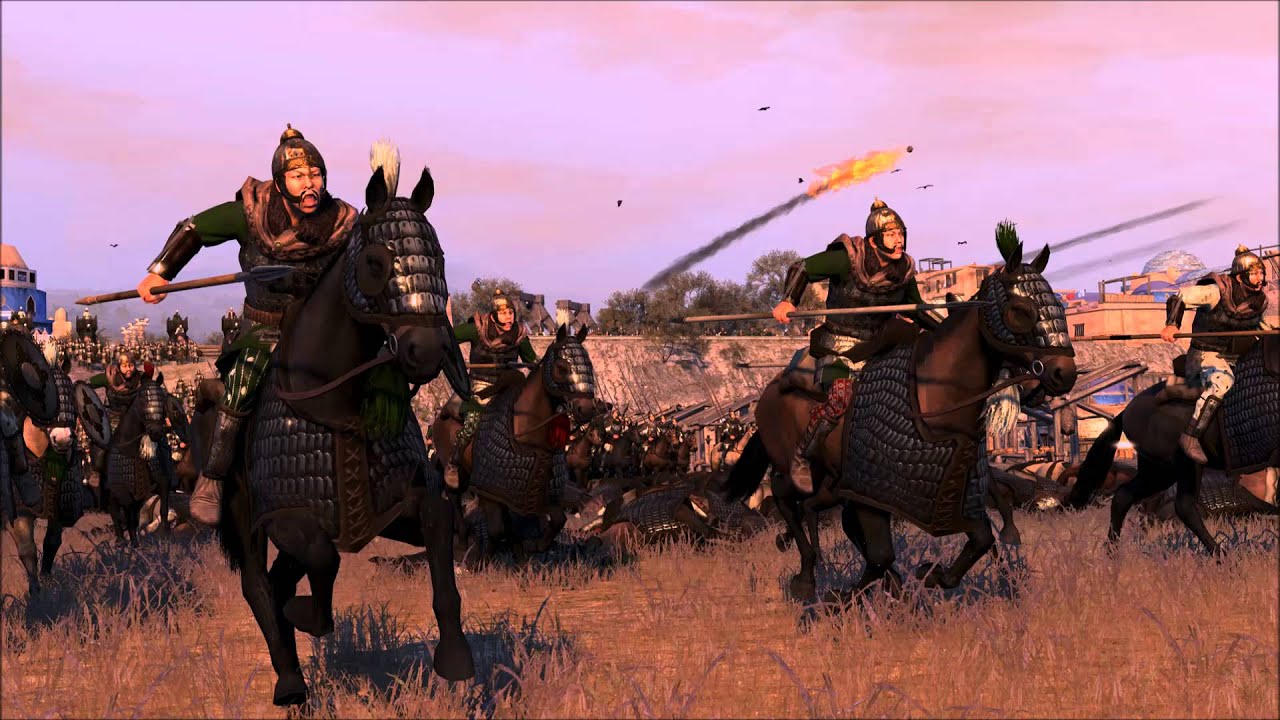
Last week’s killing of Iranian General Qassim Soleimani was not prompted solely by the attack on the U.S. embassy in Iraq by Kataeb Hezbollah, the Iranian-backed militia. Iran, perhaps the largest state-sponsor of terrorism in the world, has been guilty of provocation and aggression in Iraq, Syria, Saudi Arabia and elsewhere under Soleimani’s direction for many years. And he was reviled for his ruthless treatment of protestors within Iran’s borders. In recent weeks there had been a series of rocket attacks on U.S. bases, and there was “chatter” that much more was planned. It’s been noted that the presence of so-many high-level officials in one place at the time of the attack on Soleimani indicated that something big was in the works. This Reuters article gives some insight into Soleimani’s suspicious activities in the weeks prior to his death, of which the U.S. was surely aware. While the attack on the U.S. embassy provided additional pretext (as if it was needed), all of this indicates that Soleimani’s assassination was not an impulsive decision, but deliberated, contrary to assertions by critics of President Trump’s decision to act. It was both retaliatory and preemptive. Soleimani’s travels and whereabouts were well known, and it’s highly likely that a “decapitation” had been planned as a contingency for some time. This report in Politico provides details of the decision making leading up to the strike. The attack was executed brilliantly by all accounts.

The U.S. had retaliated to earlier rocket attacks with strikes against Kataeb Hezbollah positions. That the strike on Soleimani was more than retaliation and an act of self-defense against additional threats is, I believe, the flaw in arguments against the strike like the one Tyler Cowen seemed to make in Bloomerg (though his main point was different). The value of the strike goes far beyond retaliation. This was not intended to be another volley in an ongoing series of “tits-for-tats”.

In addition to Soleimani, several other high-level Iranian military personnel were killed. This undoubtedly disrupted plans that would have threatened U.S. soldiers and assets, yet some describe the strike as an “impulsive” act on Trump’s part, and an “act of war”, as if unprovoked. And as if Iran had not been warring on the U.S. for the past 40 years. What to make of those who take this position?  Of course, most are reflexively anti-Trump, refusing to evaluate the decision on it’s own merits. They pretend that Soleimani and the Iranian overseers of the stooge government in Iraq have legitimacy. Anderson Cooper actually compared Soleimani to Charles De Gaulle. It would be more accurate to compare him to the murderous Che Guevara, but then again, many on the Left worship Che’s memory as well! These fools will tell you that Soleimani was “worshipped” in Iran. In fact, there are a great many Iranians who are quietly celebrating his death.

Middle East analyst Avi Melamed does not mince words in describing the impact Soleimani has had on the Middle East (emphasis his):

“Some argue that the assassination of Soleimani will increase tensions in the Middle East. This outlook confuses cause and effect: Tensions in the Middle East have intensified over the past decade because of the violent Iranian aggression which Soleimani spearheaded. Aggression which has led to Syria’s destruction and the disintegration of Lebanon and Iraq. Aggression that threatens maritime routes and safe passage in the Arab (Persian) Gulf and the Red Sea, a direct attack on Saudi Arabia’s oil facilities that spiked oil prices and compromised the world’s oil supply. Aggression that has fueled and intensified tensions – including direct military confrontations – between Iran and its proxies and Israel.

General Soleimani and the Al-Quds force led the escalation in the region in the service of the hegemonic vision of the Iranian Mullah regime. Their actions have so far claimed the lives of hundreds of thousands of people, led to the destruction of states, the disintegration of cities, and caused a wave of millions of refugees. Killing Soleimani is not the cause of the escalation – but the result.”

Malamed expected Iran to take retaliatory actions in Iraq, where it already has a strong military presence and good reconnaissance. Missiles have now been fired at U.S. bases from Iran (as of tonight), but with few or no casualties. It remains to be seen how effective a response the Iranians can mount. Any short-term U.S. casualties should probably not be viewed as incremental, given the high likelihood of casualties had Soleimani lived. Perhaps Iran will fire missiles at Israel from western Iraq or Syria, or at Saudi Arabian oil assets, as it did last September. Or it might make a bold military intervention in Iraq to strengthen its control there, which Iran considers crucial to its own security.

Al Monitor believes the assassination “leaves Iran with very few options to retaliate” with any strength, at least in the short-run:

“… the economic hardship in Iran — in addition to the challenges the government is facing internally — would not allow Tehran to increase the tension. Iran’s past conduct against Israel strikes on Iranian bases in Syria also shows it will not seek revenge if its national security and interests are in danger. … This all indicates that Iran and its proxies in the region most likely would not seek revenge in the near future and — in regard to Iraq, in particular — would not lead Iraq to fall into a civil war or mass destruction, because it would lose even more in Iraq if it takes such a risk.”

So despite the brash talk, Iran is weak and spread thin across commitments outside its borders, and the regime has real fear of retaliation by its enemies that can only have been reinforced by the strike against Soleimani. Of what other retaliatory actions is Iran capable, assuming the regime can survive in the longer run? And assuming the Mullah regime itself is willing to take existential risks? It has threatened actions against civilians in the West. Can it bring down planes? Can it bomb targets in the U.S.? Can it develop or buy a small nuclear device? It can try any of those things, of course, but with uncertain odds and with risks it might not want to take. Survival is of the utmost importance to the regime, and it is already on shaky ground.

Trump’s critics claim that he authorized the “decapitation” without a plan for its aftermath. Trump has made clear his intent to “punch back twice as hard”, as it were, in response to any additional force from Iran. This is, first and foremost, a game of deterrence. Beyond that, however, and despite talk of “changing the Iranian regime’s behavior”, it appears that the larger plan pursued by Trump is to continue undermining the regime with sanctions and targeted strikes, if necessary. “Maximum pressure”. But there will be no World War III. The markets seem pretty comfortable about that as well, including the oil market.

I do take issue with Trump’s mention of the possibility of striking “cultural sites” in Iran, though he seems to have retracted it. On that point, however, I fully agree with Tyler Cowan (linked above). The only plausible rationale for such a statement is to frighten Iran’s leadership, especially if it has located military and intelligence functions within cultural sites.

Trump still maintains that our ultimate goal should be withdrawal from Iraq. That assumes stabilization in the region and fair elections, which would be well-served by a weaker Iran or a regime change there. As Victor Davis Hanson explains, the Middle East is of declining importance in world energy markets and trade generally. That’s one reason we’re unlikely to ever again send a huge ground force to the region, and it’s a good reason to scale back our presence in the Middle East generally.

The World At Less War

05 Sunday Jan 2020

Posted by Nuetzel in Corruption, fascism, Terror, War

≈ Leave a comment

Tags

Corruption, human developement, Human Development, Naziism, Nuclear Weapons, StrategyPage, Terrorism, Tribalism, War-Making

War is hell, but the good news is we’ve seen a global trend toward less of it over the past 20 years, according to the just-released annual report from StrategyPage:

“Overall things are a lot more peaceful than the headlines or Internet chatter would have you believe. Like most major trends, world peace just kind of sneaked up on everyone and a lot of people have not noticed.”

These misperceptions can be attributed to the enhanced coverage of even incidents that are minor by historical standards, and the ready access to information in the internet age. Perceptions are heavily manipulated by the media, which often feeds on “scare stories”.

The StrategyPage report covers the recent evolution of conflicts in various parts of the globe. The warring that persists tends to be concentrated in certain kinds of societies:

“While there are still a few stone-age cultures left on the planet [with conflicts] there are also several more advanced ones that are cursed with a culture of medieval mayhem. These have come to be called failed states and the most active ones, Somalia and Afghanistan are often in the news. There are still a few imperial powers in the headlines. … The troublesome empires currently in the news include China, Russia, Iran, Turkey the Islamic Caliphate. Turkey, Russia and Iran are technically democracies but for the moment the imperial ways are ascendant and the main cause of problems with their neighbors.”

The report cites statistics on both “human development” and corruption, noting the association of war-making and terrorism with low levels of the former and high levels of the latter:

“Wars tend to be found in nations that are poorly (if at all) governed. This usually means corrupt rulers and a corrupt economy that is unable to provide for the welfare of the people. The nations mired in war and general mayhem tend to be those that score lowest on international surveys of well-being and lack of corruption. For example, the ten nations suffering the most terrorism deaths rank lowest in the Human Development Index the UN has compiled annually during the last 29 years…. The least corrupt nations have been most successful in leaving tribalism behind. The major reason tribalism survives is because, when lacking the presence of effective (high [corruption index]) nation-state a tribal government is usually the best alternative.”

There is an interesting discussion in the report about the similarities between modern-day fascist China and ascendant Naziism in Germany in the 1930s. Both can be described as market economies overseen by dictatorial, socialist regimes, together with strong militaries, territorial ambitions, and a large majority invested in feelings of racial superiority:

“China has similar goals to 1930s Germany. China has territorial claims on neighbors and wants more territory and resources for its huge population. The Chinese believe in the racial superiority of the Han ethnic group (which most Chinese belong to) and of historical destiny to rule the largest possible empire. Until the 18th century China was the largest nation-state on the planet but then went into decline for two centuries. Most Chinese agree that it is time for China to once again be the most powerful state in the world. This is causing problems.”

Here are a some of the other statistics quoted in the report:

“Since the end of the Cold War in 1991 deaths from wars and large scale civil disorder (which is often recorded as some kind of war) have led to a sharp (over 20 percent so far) drop in violence worldwide. This occurred despite increasingly active and lethal Islamic terror groups.

… most war deaths are not caused by terrorists and even in 2014 (a peak year for Islamic death cults seeking to revive the Caliphate), terrorism-related deaths (mostly Islamic terrorism) accounted for 20 percent of all war-related deaths. Islamic terrorism gets the most publicity but less glamorous disputes do most of the killing.

Global Islamic terrorism-related deaths have fallen by over 50 percent since 2014 when there were 35,000. Global deaths hit 19,000 in 2017 and under 16,000 for 2018. These deaths are still declining. This activity is most visible in the GTI (Global Terrorism Index), which counts all forms of terrorism.

In 2018 worldwide terrorism deaths declined 15 percent to 15,952. This decline is, so far, a four year trend …”

The StrategyPage report is encouraging in many ways. There is no question that international conflict could escalate quickly under certain circumstances. And there are heavy risks involved in the presence of nuclear weapons. An implication is the importance of preventing warring regimes, such as the religious dictatorship in Iran, from acquiring nuclear capabilities and threatening other nations with terror. The large players who possess nuclear weapons, for their part, are extremely cautious when it comes to the prospect of a “fighting war” with one another.

Ultimately, one hopes that economic advancement and the opportunities promised by modernity will dampen conflict within and between more backward societies. But as the report points out, there will always be adherents of failed, repressive dogmas, and these factions are often the agents of provocation and war-making. They cannot always be ignored. They should not be appeased.

In Praise of Refugee Aid and Precautions

23 Monday Nov 2015

Posted by Nuetzel in Immigration, Terrorism

≈ Leave a comment

Tags

Davis Bier, Director of National Intelligence, Foundation for Economic Education, Glenn Reynolds, Homeland Security, Ian Tuttle, ISIS, James Comey, National Counterterrorism Center, National Security, National Sovereignty, Open Borders, Paris Attacks, Pew Research, Private Refugee Sponsorship, Refugee Vetting Process, Syrian refugees, Terrorism, Virtue Signalling

118792_600

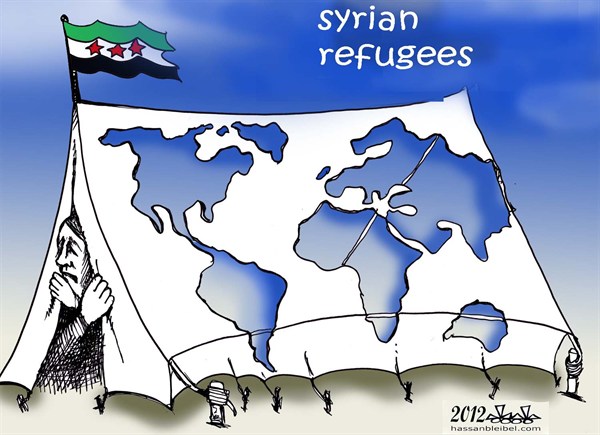
Libertarians differ from conservatives on the Syrian refugee issue and on immigration policy in general. I’m in favor of liberalized immigration because it confers powerful economic advantages. That does not imply, however, a willingness to sacrifice border security and control over the flow of immigrants. Border security is critical to the notion of U.S. sovereignty, and though I am loath to do so, I will credit Donald Trump for asking two pertinent questions: “Do we have a country? Or do we not have a country?” This is all the more important in an age when terror on the scale of a 9/11, Paris, or terrorist use of WMDs is a threat.

One of the few legitimate functions of government is national security, and the U.S. Constitution sought to assure that security would be provided without compromising the liberties of individual citizens. I’d like outsiders to feel welcome to join us and partake of those liberties, but only subject to precautions related to security. Given current threats, it is reasonable to insist on deliberation and caution in admitting new immigrants and refugees. That should include a careful vetting process and possibly post-entry safeguards such as mandatory touch-points with immigration and security officials.

Recent commentary on both sides of the Syrian refugee debate has featured conservatives waxing enthusiastic over police-state security measures and cavalier dismissal of security concerns by the Left, including a moment of apparent delusion from The Daily Kos when it weighed-in on refugees and certain principles of religious ethics, probably not that outlet’s strong suit. The Left’s usual approach to commentary on social media amounts to an exercise in “virtue signaling” (HT: Glenn Reynolds) without much critical thought, and this is no exception.

Refugees or asylum-seekers may need expedited initial handling for their own safety and protection. The tumultuous experience of fleeing a hostile regime without adequate planning, and possibly involving the loss of loved ones and possessions, suggests a need for greater assistance for refugees than for typical immigrants. The expense of a large influx of refugees is likely to be high. A solution used successfully by Canada involves private sponsorship of refugees, and there are apparently a large number of Americans willing to serve as sponsors. It is possible to vet the sponsors, of course, and might provide more reliable follow-up with the refugees themselves.

Certain classes of immigrants may be considered high-risk, though refugees have not been high-risk historically. This is one of several points made by Davis Bier at the Foundation for Economic Education in “Six Reasons To Welcome Refugees“. Bier provides a good perspective, but I don’t accept all of his assertions. He says (italicized):

  • The Paris attackers were not refugees: No, but at least one of them seems to have taken advantage of the European refugee process.
  • U.S. refugees don’t become terrorists: You can certainly vouch for this in the past tense, but it’s less certain going forward. The complete lack of documentation of many Syrian refugees complicates the vetting process.
  • Other migration channels are easier to exploit: Probably true, if the claimed thoroughness of the refugee vetting process is to be believed. Also, the resettlement from temporary camps can take two years or more, but that kind of delay is not required.
  • ISIS sees Syrian refugees as traitors: This reinforces the need to protect refugees, but it strikes me as irrelevant to the question of terrorist infiltration. A better question is whether ISIS is capable of passing-off one of their own as a refugee.
  • Turning away allies will make us less safe: It certainly won’t win us friends.
  • We should demonstrate moral courage: Helping legitimate refugees is certainly an honorable thing to do. The author points to American resistance to accepting Jewish refugees prior to World War II for fear they might be German spies. This is addressed in more detail below.

A different perspective is given in “There Are Serious, Unbigoted Reasons to Be Wary of a Flood of Syrian Refugees“, by Ian Tuttle in National Review. He asserts that the comparison of current Syrian refugees to Jewish refugees prior to WWII is inappropriate, and I largely agree. The infiltration of German spies into the Jewish refugee population was a perceived threat, but no one thought the Jews represented a risk of terror on our shores. There is nothing incompatible about feeling regret for the attitude many took toward the Jewish refugees of that era while exercising caution in the face of new risks.

Tuttle cites a recent Pew Research poll of Muslims in various countries finding that 4% to 14% of respondents approve of ISIS. Can you imagine a similar level of support for terrorism in the U.S.? This is an unfortunate social malignancy that should give us pause. Another Pew Research poll of Muslims in various countries found that the minority who believe that suicide bombing was justified ranges from 3% to 45%. It is therefore difficult to argue with Tuttle when he says:

“A non-trivial minority of refugees who support a murderous, metastatic caliphate is a reason for serious concern.“

Tuttle notes that Syrian refugees will not arrive on our shores directly from Syria.  Thus, the urgency of accepting those refugees comes into question. It is curious that such wealthy middle eastern countries as Kuwait and Saudi Arabia have not accepted refugees from Syria.

Given the immediacy of terrorist threats, the lack of even basic documents for many Syrian refugees, and the Obama Administration’s record of failure in the Middle East, it is reasonable to question their assurances as to the adequacy of the refugee vetting process. Indeed, as this article warns:

“The director of the National Counterterrorism Center admitted that terrorist groups are very interested in using refugee programs to slip operatives into Europe and the United States. … 

The director of Homeland Security had no answer when asked if the “vetting” process amounted to anything more than asking refugees to fill out an application, asking them a few questions in a verbal interview, and assuming they answer honestly….

FBI Director James Comey famously admitted last month that the U.S. government has no real way to conduct background checks on refugees.”

A substantial majority of American voters oppose the administration’s plan to accept Syrian refugees, at least under the current process. Last week, the U.S. House of Representatives passed a bill requiring that:

“… the heads of the FBI, Homeland Security Department and the Office of the Director of National Intelligence certify that each refugee being admitted would not pose a threat.“

It would be nice to have our security agencies accept some accountability for, well,  national security. The House bill would put the ball in their court with respect to high-risk refugees.

I concur with the general position of Libertarians who support a more open U.S. immigration policy and acceptance of refugees. I also believe that private sponsorship of refugees should be legalized in the U.S. to reduce their fiscal impact. And I believe we should welcome Syrian refugees provided that they can be thoroughly vetted. In the parlance of economics, transacting with refugees may involve severely asymmetric information. It is not advisable to make risky “trades” when due diligence is impossible. Short-cuts in the vetting process do not help to assure a mutually beneficial outcome. We must therefore temper our humanitarian impulse. Under the present circumstances, including an acceptance of terrorism by a “nontrivial minority” of Muslins, it is reasonable to proceed with caution, and only with caution.

Follow Sacred Cow Chips on WordPress.com

Recent Posts

  • Immigration and Merit As Fiscal Propositions
  • Tariff “Dividend” From An Indigent State
  • Almost Looks Like the Fed Has a 3% Inflation Target
  • Government Malpractice Breeds Health Care Havoc
  • A Tax On Imports Takes a Toll on Exports

Archives

  • December 2025
  • November 2025
  • October 2025
  • September 2025
  • August 2025
  • July 2025
  • June 2025
  • May 2025
  • April 2025
  • March 2025
  • February 2025
  • January 2025
  • December 2024
  • November 2024
  • October 2024
  • September 2024
  • August 2024
  • July 2024
  • June 2024
  • May 2024
  • April 2024
  • March 2024
  • February 2024
  • January 2024
  • December 2023
  • November 2023
  • August 2023
  • July 2023
  • June 2023
  • May 2023
  • April 2023
  • March 2023
  • February 2023
  • January 2023
  • December 2022
  • November 2022
  • October 2022
  • September 2022
  • August 2022
  • July 2022
  • June 2022
  • May 2022
  • April 2022
  • March 2022
  • February 2022
  • January 2022
  • December 2021
  • November 2021
  • October 2021
  • September 2021
  • August 2021
  • July 2021
  • June 2021
  • May 2021
  • April 2021
  • March 2021
  • February 2021
  • January 2021
  • December 2020
  • November 2020
  • October 2020
  • September 2020
  • August 2020
  • July 2020
  • June 2020
  • May 2020
  • April 2020
  • March 2020
  • February 2020
  • January 2020
  • December 2019
  • November 2019
  • October 2019
  • September 2019
  • August 2019
  • July 2019
  • June 2019
  • May 2019
  • April 2019
  • March 2019
  • February 2019
  • January 2019
  • December 2018
  • November 2018
  • October 2018
  • September 2018
  • August 2018
  • July 2018
  • June 2018
  • May 2018
  • April 2018
  • March 2018
  • February 2018
  • January 2018
  • December 2017
  • November 2017
  • October 2017
  • September 2017
  • August 2017
  • July 2017
  • June 2017
  • May 2017
  • April 2017
  • March 2017
  • February 2017
  • January 2017
  • December 2016
  • November 2016
  • October 2016
  • September 2016
  • August 2016
  • July 2016
  • June 2016
  • May 2016
  • April 2016
  • March 2016
  • February 2016
  • January 2016
  • December 2015
  • November 2015
  • October 2015
  • September 2015
  • August 2015
  • July 2015
  • June 2015
  • May 2015
  • April 2015
  • March 2015
  • February 2015
  • January 2015
  • December 2014
  • November 2014
  • October 2014
  • September 2014
  • August 2014
  • July 2014
  • June 2014
  • May 2014
  • April 2014
  • March 2014

Blogs I Follow

  • Passive Income Kickstart
  • OnlyFinance.net
  • TLC Cholesterol
  • Nintil
  • kendunning.net
  • DCWhispers.com
  • Hoong-Wai in the UK
  • Marginal REVOLUTION
  • Stlouis
  • Watts Up With That?
  • Aussie Nationalist Blog
  • American Elephants
  • The View from Alexandria
  • The Gymnasium
  • A Force for Good
  • Notes On Liberty
  • troymo
  • SUNDAY BLOG Stephanie Sievers
  • Miss Lou Acquiring Lore
  • Your Well Wisher Program
  • Objectivism In Depth
  • RobotEnomics
  • Orderstatistic
  • Paradigm Library
  • Scattered Showers and Quicksand

Blog at WordPress.com.

Passive Income Kickstart

OnlyFinance.net

TLC Cholesterol

Nintil

To estimate, compare, distinguish, discuss, and trace to its principal sources everything

kendunning.net

The Future is Ours to Create

DCWhispers.com

Hoong-Wai in the UK

A Commonwealth immigrant's perspective on the UK's public arena.

Marginal REVOLUTION

Small Steps Toward A Much Better World

Stlouis

Watts Up With That?

The world's most viewed site on global warming and climate change

Aussie Nationalist Blog

Commentary from a Paleoconservative and Nationalist perspective

American Elephants

Defending Life, Liberty and the Pursuit of Happiness

The View from Alexandria

In advanced civilizations the period loosely called Alexandrian is usually associated with flexible morals, perfunctory religion, populist standards and cosmopolitan tastes, feminism, exotic cults, and the rapid turnover of high and low fads---in short, a falling away (which is all that decadence means) from the strictness of traditional rules, embodied in character and inforced from within. -- Jacques Barzun

The Gymnasium

A place for reason, politics, economics, and faith steeped in the classical liberal tradition

A Force for Good

How economics, morality, and markets combine

Notes On Liberty

Spontaneous thoughts on a humble creed

troymo

SUNDAY BLOG Stephanie Sievers

Escaping the everyday life with photographs from my travels

Miss Lou Acquiring Lore

Gallery of Life...

Your Well Wisher Program

Attempt to solve commonly known problems…

Objectivism In Depth

Exploring Ayn Rand's revolutionary philosophy.

RobotEnomics

(A)n (I)ntelligent Future

Orderstatistic

Economics, chess and anything else on my mind.

Paradigm Library

OODA Looping

Scattered Showers and Quicksand

Musings on science, investing, finance, economics, politics, and probably fly fishing.

  • Subscribe Subscribed
    • Sacred Cow Chips
    • Join 128 other subscribers
    • Already have a WordPress.com account? Log in now.
    • Sacred Cow Chips
    • Subscribe Subscribed
    • Sign up
    • Log in
    • Report this content
    • View site in Reader
    • Manage subscriptions
    • Collapse this bar
 

Loading Comments...