• About

Sacred Cow Chips

Sacred Cow Chips

Tag Archives: Tribalism

White Racialism, Identity Politics, and Crippling DEI

09 Thursday Nov 2023

Posted by Nuetzel in DEI, Identity Politics

≈ 1 Comment

Tags

Anti-discrimination law, Christopher Rufo, Colorblind Society, Comparative advantage, DEI, Diversity, Equity, George Floyd, Hobbesian, Identity Politics, Inclusion, Jim Crow Laws, Protected Classes, Racial Preferences, Racialism, racism, rent seeking, Segregation, Slavery, Social Constructs, Structural Racism, Tribalism, Tyler Cowen, Victimhood, Victor Davis Hanson, White Racialism, Zero-Sum Thinking

I’ve taken an extended hiatus from blogging while moving to a different part of the country. I haven’t posted here in over 10 weeks, but a new post appears below. I’m still tying-up loose ends from the move, but I’ll be trying to get back to posting more regularly … trying!

~~~~~~~~~~~~~~~~~~~~~~~~~~~~~~~~~~~~~~~
Absurd ideas about race and identity politics come from extreme elements on both the Left and the Right. Some leftists insist that race has no natural basis — that it’s simply a “social construct”. On the Right, a “racialist” contingent is promoting the “celebration of whiteness” and embracing racial preferences for whites. Treated as alternative pathways, I’d take “social construct”. It’s nonsense, of course, but the beautiful irony is that it provides a basis for stripping away from our institutions the entire diversity, equity, and inclusion (DEI) straightjacket. It’s almost as if those promoting race as a social construct wish to build a “colorblind” society. On the other hand, I suppose some think they can have their DEI cake along with a side of free choice to identify as anything they want: black, white, or furry.

Who Are the Racists?

People of good faith don’t harbor or act on racist tendencies. The mere recognition of racial/ethnic/cultural differences is not evidence of racism and does not preclude the treatment of all with fairness and due respect. It’s possible to respect, value, or fall in love with someone outside one’s own racial, ethnic, or cultural group of origin, even while holding a general affinity for one’s own group, as nearly everyone does.

But a few real racists are sprinkled across all races, ethnicities, cultures, and the full political spectrum. The “popular” racist stereotype as white male has been kept alive by the lingering echos of slavery in America, which ended nearly 16 decades ago, and the long hangover that included Jim Crow laws and segregation. Today, however, “white society” or “whiteness” is hardly the sole domain of prejudice.

Is Racialism Different?

Now, a few whites are promoting the celebration of “white identity” as a counterbalance to identity politics among non-whites. Ostensibly, this “white racialism” might be similar to celebrations of identity often practiced by minorities, which are also forms of racialism. Should white racialism be viewed as less savory than racialism practiced by racial minorities?

For most Caucasians, “being white” does not have much salience relative to other affiliations defining identity. That’s why white racialism seems odd to me. Sure, when forced to check a box, whites will check “Caucasian”, but “white identity” seems overly broad. There are too many distinct cultures and subcultures that dominate self-identity, such as national ancestry, religion, and cultural membership.

The same could be said for many other racial categories, but minority status and historical events (e.g., American slavery) help explain why broad categories often form cohesive identity groups. And, as Christopher Rufo notes in his great discussion of the racialist viewpoint, broad categories tend to be the most closely associated with racialism:

“Yes, left-wing racialism is indeed now deeply embedded in America’s institutions, and the demographic balance of the country has shifted in recent decades. And yes, the basic racial classification system in the United States broadly delineates continental origin—Europe, Africa, Latin America, Asia—in a way that is not arbitrary or meaningless. Terms such as ‘white,’ ‘black,’ ‘Latino,’ and ‘Asian,’ while often obscuring important variations within such groupings, have become the lingua franca and are useful shorthand descriptors for many purposes.”

There are individuals from all groups or “classes”, including whites, who react critically to aggressive expressions of identity by members of other classes. Perhaps that’s excusable, depending on the degree of zealotry on either part. The line between pride in race/ancestry/culture and fractious racialism might be hard to discern in some cases, but the chief distinction is rooted in explicit, demeaning and/or envious comparisons to “out-groups”. This might be damaging enough, but from there it can be a very short step into outright racism.

A preoccupation with the historic disadvantages of one’s race can be disempowering to an individual and destructive in a social sense. I believe the white racialist phenomenon belongs in that category. The presumed “disadvantages” of whiteness are very contemporary, however, rooted in policies dating back only to the widespread adoption of racial preferences for non-white “protected classes” and DEI.

Preferences For All

Imagine the racialist policies now practiced widely in government, industry, and academia — particularly racial preferences on behalf of protected classes — but now applied on behalf of heretofore unprotected classes as well. For example, what if some proportion of jobs, admissions, or other coveted placements were set aside for whites? If whites represent 50% of the population, then 50% of hires or admissions would be reserved for whites.

Some might assume that this treatment is already implied by existing racial preferences, but that’s not the case. In the wake of George Floyd’s death, just 6% of new hires among S&P companies were white, according to Bloomberg News.

Nevertheless, such a white racialist turnabout would be a colossal mistake. Adding strict limits to the application of existing preferences might be a good thing, but white racial preferences would buttress the entire system of racial preferences as an institution and add more rigidity to the operation of labor markets. From an economic viewpoint, it would be just as pernicious as racial preferences generally.

Racial preferences of any kind freeze labor markets and impair the allocation of human resources to their most-valued uses. In fact, placing one individual into a position on any basis other than their qualifications implies that two individuals must be placed into positions in which they lack comparative advantage relative to each other. Little by little, that means lost output and upward price pressure. It is a mechanism that short circuits gains from trade, shriveling the benefits that the most and least talented confer on society at large. Extending preferences to whites would only serve to further institutionalize this damaging practice.

Adherence to numerical preferences is to pretend that people can be treated less as individuals and more like interchangeable parts… except with respect to their value as “class members”. Racial preferences are presumed to be a remedy for so-called structural racism, as opposed to racism by individuals. But they involve classification and favor the so-called “oppressed” at the expense of designated “oppressors”. The latter, almost without exception, had no role oppressive regimes of the past. Favoritism of this kind necessarily means reverse discrimination and fails to match individuals to roles in an optimal fashion.

Whether publicly or privately imposed, racial preferences often undermine those they are purported to help by placing individuals into positions for which they may not be competitive. This can sabotage an individual’s long-term success. It goes without saying that preferences build resentment among the “unprotected”, which goes to the impetus for “white racialism”. Indeed, preferences are not always popular with protected classes either. That’s because they interfere with merit-based decision-making and are perceived to stigmatize those presumed to benefit.

The Fixed Pie Is a Lie

Racialism reflects zero-sum thinking, a hallmark of DEI initiatives. Tyler Cowen quoted the abstract of a recent NBER working paper that found:

“… a more zero-sum mindset is strongly associated with more support for government redistribution, race- and gender-based affirmative action, and more restrictive immigration policies.”

Zero-sum thinking is fundamental to rent-seeking behavior, which is motivated by either malevolent greed or perceptions of victimhood. Victimhood and rent seeking is at the heart of calls for DEI, to say nothing of more radical proposals like reparation payments. White racialism attempts to get in on the action by positing that whites are oppressed under the current institutional dominance of DEI. But the misguided presumption that every identity group should have their own preferences or quotas broadens the emphasis on redressing perceived harms and redistributing rewards — zero-sum activities.

These zero-sum efforts waste energy and resources, harming our ability to produce things that enhance well being. Ultimately, they are actually negative-sum activities, and they also breed hatred.

Race is obviously determined by genetics, but I’d be happy to pretend it’s a mere social construct if that would help get us to a “colorblind” society.

Conclusion

There’s a huge irony in the racialism exercised by both traditional and “white racialist” DEI advocates: it neglects the most fundamental and just application of diversity: equality of opportunity. This principle incorporates the concept of diversity without sacrificing economic efficiency. We’ve largely abandoned it in favor of equality of outcomes via racial preferences, even at a time when society has become enlightened with respect to racial differences. In doing so, we’ve unintentionally chosen another form of explicit racial victimization.

To close, here’s a good summary of the dangers of racialism and identity politics offered by Victor Davis Hanson:

“Anytime one ethnic, racial, or religious group refuses to surrender its prime identity in exchange for a shared sense of self, other tribes for their own survival will do the same.

All then rebrand their superficial appearance as essential not incidental to whom they are.

And like nuclear proliferation that sees other nations go nuclear once a neighboring power gains the bomb, so too the tribalism of one group inevitably leads only to more tribalism of others. The result is endless Hobbesian strife.”

And that’s how white racialism fits right in with the pernicious politics of identity. When you can, vote for the elimination, or at least reform, of DEI policies and practices, not for a reinforcement of identity politics.

Equal *Mattering* Under Ethics, Law and Community

04 Saturday Jul 2020

Posted by Nuetzel in Identity Politics, racism, Uncategorized

≈ 1 Comment

Tags

Black Lives Matter, Civil Rights, Conflict Theory, Equal Protection, Family Unit, Great Society, Identity Politics, Jim Crow, Lyndon Johnson, Marxism, Moral Dilemma, Original Sin, racism, Self-Driving Cars, Slavery, Systemic Racism, Thomas Sowell, Tribalism, Walter Williams, Welfare State

How many white lives is a single black life worth? It seems so easy to pin that down, but if you think it’s okay to say “black lives matter”, but not to say “all lives matter”, the implication is that one black life is worth more than one white life. Anyone who insists on that should take the following litmus test. 

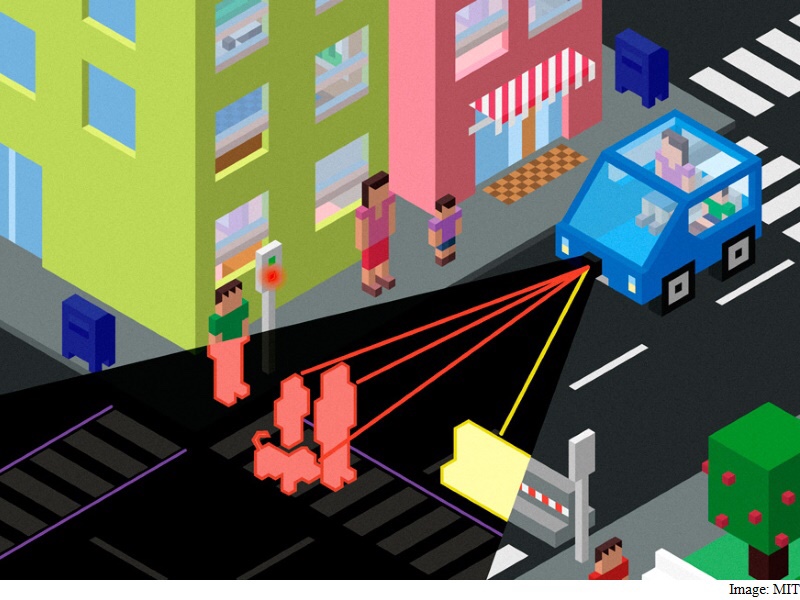
A classic dilemma discussed by ethicists involves situations of mortal danger in which a life or lives might be sacrificed in order to save other lives. Variants of it come up again and again in the effort to tune software for autonomous vehicles. It’s also a simple tool for challenging assertions about the values of different lives, or whether different lives “matter”.

Suppose that two pedestrians step into the path of your vehicle. You can save them only by swerving, killing a single pedestrian standing at the curb. Most would agree the car should swerve, but the answer might change under certain circumstances. Forget about the argument that the two in your path weren’t careful, so they “deserve” die. We just don’t know what caused them to proceed, or what might have distracted them.

What if the two in your path are elderly, using walkers and dragging oxygen tanks, while the pedestrian at the curb is a healthy child. Does that matter? Do we weigh the sacrifice of many potential life-years as well as a higher quality of life? People might feel less certain about that choice.

Now let’s suppose that all three pedestrians are healthy, young adults. Does it matter that any of the pedestrians are black? The one on the the curb, or the two in your path? Of course not! The truly “colorblind” answer is to swerve regardless of race. You are an obvious racist if you think otherwise. The sacrifice of one white life is certainly worth saving two black lives; the sacrifice of one black life is certainly worth saving two white lives. Black lives and white lives matter equally. 

Our Constitution and ethical standards dictate that lives are equal, that we are equal before the law, that we that we have equal rights to speak, worship, and enjoy the fruits of our labors, including the unchallenged right to property we might acquire. Under the law, and in all of our social interactions, we must be accorded equal consideration regardless of extraneous characteristics such as race. All of us have the same promise of life and opportunities to pursue happiness, and to make of our lives what we can or will. However, none of this entitles us to equal happiness, romance, and material well being.

Now, detractors will say all that misses the point. The value of black lives has been discounted for centuries, they say, as evidenced in disparate treatment by police, prosecutors, juries, employers, neighbors, social clubs, and places of business. Of course it’s true that racism has a long history throughout the world, and at one time or other it has been turned against virtually every race or religion in existence. If you think in this day and age that racism doesn’t exist elsewhere, think again.

Slavery was a tragic reality in the U.S. until 155 years ago, but it was certainly not unique to the U.S. Jim Crow laws that prevented blacks from participating equally in many aspects of life were finally ended more than 50 years ago through a series of legislative actions and Supreme Court decisions. Slavery and Jim Crowism were the acts of long-dead ancestors of almost anyone living today. The presumption that all whites should assume guilt for some kind original sin against blacks is sheer nonsense, and one many of us will simply never accept.

Nevertheless, the legacy of degraded personhood under those long-defunct laws created a heavy burden for blacks in terms of upward mobility, and certainly vestiges of racism survive even today. However, we have adopted many standards and programs intended to rectify this unfortunate legacy, including the civil rights legislation of the 1960s and beyond, the Great Society programs of Lyndon Johnson, and many other enlargements of the social safety net since then. These programs have represented a massive redistribution of resources to the impoverished via education, housing, and direct transfers. One estimate put cumulative federal spending on anti-poverty programs alone at $13 trillion between 1963 and 2010. In addition, a variety of programs have been a source of preferential treatment for various minorities in an effort to ensure equal opportunities across many aspects of life.

The success of these programs is subject to great doubt (more on that below), and in fact the motives of Johnson and other proponents of this expansion in the role of government were perhaps less than pure. Nevertheless, the entirety of the package of civil rights and welfare state programs over the years was supported by most of the black community. In fact, one could say that these measures were hardly the actions of a racist society, at least in ostensible intent.

And yet we are told today that we do not sufficiently appreciate that black lives matter! There is no question that racism lives in the hearts and minds of certain individuals, but those individuals aren’t all white. More importantly, the blanket condemnation of whites as racist lacks any basis in reality.

When Black Lives Matter activists talk of “systemic racism”, you can translate as follows: blacks have not met with the ex post economic and social success to which these activists believe blacks are entitled. As it pertains to law enforcement, they mean that blacks are met with more violent police actions than blacks should suffer.

As to law enforcement, it is an awful thing that crime perpetrated by blacks, and particularly crime by blacks against blacks, is disproportionally heavy. As I argued recently, it is difficult to accept the hypothesis of systemic racism in law enforcement in the presence of rampant “systemic crime” in the black community. But crime, in turn, is tied closely to economic success, or the lack thereof.

Median black income has grown relative to median white income since 1970 (also see here). Unfortunately, many blacks have not shared in that growth and remain mired in poverty and on public aid. Sadly, many aid programs have pernicious effects because they impose extremely high marginal tax rates on earned income. The solution lays the groundwork for continued dependency. That qualifies as systemic racism, or at least classism.

Two well-known black economists, Thomas Sowell and Walter Williams, have both decried the welfare state’s destructive impact on the black family unit. That’s one reason why Williams calls white liberals the “worst enemy of black people“. (Also see what Williams has to say about expectations for black students, and about black crime.)

Ultimately, the uproar over racism alleged to be so widespread and “systemic” is divisive. It is an application of Marxist “conflict theory” lying at the very heart of identity politics. Such tribal philosophies creat huge obstacles to peaceful and productive coexistence among diverse peoples. Meanwhile, there’s a simple truth: a widespread consensus exists that all lives are of equal value, that all lives deserve respect and equal treatment under the law, that the goodwill of one’s fellows is a birthright, and that racism is fundamentally evil. If society is to provide fertile ground for the equal cultivation of all lives, it must reject the strictures and resentment bred by identity politics in favor of individual liberty, personal responsibility, and compassion for those unable to care for themselves.

The World At Less War

05 Sunday Jan 2020

Posted by Nuetzel in Corruption, fascism, Terror, War

≈ Leave a comment

Tags

Corruption, human developement, Human Development, Naziism, Nuclear Weapons, StrategyPage, Terrorism, Tribalism, War-Making

War is hell, but the good news is we’ve seen a global trend toward less of it over the past 20 years, according to the just-released annual report from StrategyPage:

“Overall things are a lot more peaceful than the headlines or Internet chatter would have you believe. Like most major trends, world peace just kind of sneaked up on everyone and a lot of people have not noticed.”

These misperceptions can be attributed to the enhanced coverage of even incidents that are minor by historical standards, and the ready access to information in the internet age. Perceptions are heavily manipulated by the media, which often feeds on “scare stories”.

The StrategyPage report covers the recent evolution of conflicts in various parts of the globe. The warring that persists tends to be concentrated in certain kinds of societies:

“While there are still a few stone-age cultures left on the planet [with conflicts] there are also several more advanced ones that are cursed with a culture of medieval mayhem. These have come to be called failed states and the most active ones, Somalia and Afghanistan are often in the news. There are still a few imperial powers in the headlines. … The troublesome empires currently in the news include China, Russia, Iran, Turkey the Islamic Caliphate. Turkey, Russia and Iran are technically democracies but for the moment the imperial ways are ascendant and the main cause of problems with their neighbors.”

The report cites statistics on both “human development” and corruption, noting the association of war-making and terrorism with low levels of the former and high levels of the latter:

“Wars tend to be found in nations that are poorly (if at all) governed. This usually means corrupt rulers and a corrupt economy that is unable to provide for the welfare of the people. The nations mired in war and general mayhem tend to be those that score lowest on international surveys of well-being and lack of corruption. For example, the ten nations suffering the most terrorism deaths rank lowest in the Human Development Index the UN has compiled annually during the last 29 years…. The least corrupt nations have been most successful in leaving tribalism behind. The major reason tribalism survives is because, when lacking the presence of effective (high [corruption index]) nation-state a tribal government is usually the best alternative.”

There is an interesting discussion in the report about the similarities between modern-day fascist China and ascendant Naziism in Germany in the 1930s. Both can be described as market economies overseen by dictatorial, socialist regimes, together with strong militaries, territorial ambitions, and a large majority invested in feelings of racial superiority:

“China has similar goals to 1930s Germany. China has territorial claims on neighbors and wants more territory and resources for its huge population. The Chinese believe in the racial superiority of the Han ethnic group (which most Chinese belong to) and of historical destiny to rule the largest possible empire. Until the 18th century China was the largest nation-state on the planet but then went into decline for two centuries. Most Chinese agree that it is time for China to once again be the most powerful state in the world. This is causing problems.”

Here are a some of the other statistics quoted in the report:

“Since the end of the Cold War in 1991 deaths from wars and large scale civil disorder (which is often recorded as some kind of war) have led to a sharp (over 20 percent so far) drop in violence worldwide. This occurred despite increasingly active and lethal Islamic terror groups.

… most war deaths are not caused by terrorists and even in 2014 (a peak year for Islamic death cults seeking to revive the Caliphate), terrorism-related deaths (mostly Islamic terrorism) accounted for 20 percent of all war-related deaths. Islamic terrorism gets the most publicity but less glamorous disputes do most of the killing.

Global Islamic terrorism-related deaths have fallen by over 50 percent since 2014 when there were 35,000. Global deaths hit 19,000 in 2017 and under 16,000 for 2018. These deaths are still declining. This activity is most visible in the GTI (Global Terrorism Index), which counts all forms of terrorism.

In 2018 worldwide terrorism deaths declined 15 percent to 15,952. This decline is, so far, a four year trend …”

The StrategyPage report is encouraging in many ways. There is no question that international conflict could escalate quickly under certain circumstances. And there are heavy risks involved in the presence of nuclear weapons. An implication is the importance of preventing warring regimes, such as the religious dictatorship in Iran, from acquiring nuclear capabilities and threatening other nations with terror. The large players who possess nuclear weapons, for their part, are extremely cautious when it comes to the prospect of a “fighting war” with one another.

Ultimately, one hopes that economic advancement and the opportunities promised by modernity will dampen conflict within and between more backward societies. But as the report points out, there will always be adherents of failed, repressive dogmas, and these factions are often the agents of provocation and war-making. They cannot always be ignored. They should not be appeased.

Follow Sacred Cow Chips on WordPress.com

Recent Posts

  • Immigration and Merit As Fiscal Propositions
  • Tariff “Dividend” From An Indigent State
  • Almost Looks Like the Fed Has a 3% Inflation Target
  • Government Malpractice Breeds Health Care Havoc
  • A Tax On Imports Takes a Toll on Exports

Archives

  • December 2025
  • November 2025
  • October 2025
  • September 2025
  • August 2025
  • July 2025
  • June 2025
  • May 2025
  • April 2025
  • March 2025
  • February 2025
  • January 2025
  • December 2024
  • November 2024
  • October 2024
  • September 2024
  • August 2024
  • July 2024
  • June 2024
  • May 2024
  • April 2024
  • March 2024
  • February 2024
  • January 2024
  • December 2023
  • November 2023
  • August 2023
  • July 2023
  • June 2023
  • May 2023
  • April 2023
  • March 2023
  • February 2023
  • January 2023
  • December 2022
  • November 2022
  • October 2022
  • September 2022
  • August 2022
  • July 2022
  • June 2022
  • May 2022
  • April 2022
  • March 2022
  • February 2022
  • January 2022
  • December 2021
  • November 2021
  • October 2021
  • September 2021
  • August 2021
  • July 2021
  • June 2021
  • May 2021
  • April 2021
  • March 2021
  • February 2021
  • January 2021
  • December 2020
  • November 2020
  • October 2020
  • September 2020
  • August 2020
  • July 2020
  • June 2020
  • May 2020
  • April 2020
  • March 2020
  • February 2020
  • January 2020
  • December 2019
  • November 2019
  • October 2019
  • September 2019
  • August 2019
  • July 2019
  • June 2019
  • May 2019
  • April 2019
  • March 2019
  • February 2019
  • January 2019
  • December 2018
  • November 2018
  • October 2018
  • September 2018
  • August 2018
  • July 2018
  • June 2018
  • May 2018
  • April 2018
  • March 2018
  • February 2018
  • January 2018
  • December 2017
  • November 2017
  • October 2017
  • September 2017
  • August 2017
  • July 2017
  • June 2017
  • May 2017
  • April 2017
  • March 2017
  • February 2017
  • January 2017
  • December 2016
  • November 2016
  • October 2016
  • September 2016
  • August 2016
  • July 2016
  • June 2016
  • May 2016
  • April 2016
  • March 2016
  • February 2016
  • January 2016
  • December 2015
  • November 2015
  • October 2015
  • September 2015
  • August 2015
  • July 2015
  • June 2015
  • May 2015
  • April 2015
  • March 2015
  • February 2015
  • January 2015
  • December 2014
  • November 2014
  • October 2014
  • September 2014
  • August 2014
  • July 2014
  • June 2014
  • May 2014
  • April 2014
  • March 2014

Blogs I Follow

  • Passive Income Kickstart
  • OnlyFinance.net
  • TLC Cholesterol
  • Nintil
  • kendunning.net
  • DCWhispers.com
  • Hoong-Wai in the UK
  • Marginal REVOLUTION
  • Stlouis
  • Watts Up With That?
  • Aussie Nationalist Blog
  • American Elephants
  • The View from Alexandria
  • The Gymnasium
  • A Force for Good
  • Notes On Liberty
  • troymo
  • SUNDAY BLOG Stephanie Sievers
  • Miss Lou Acquiring Lore
  • Your Well Wisher Program
  • Objectivism In Depth
  • RobotEnomics
  • Orderstatistic
  • Paradigm Library
  • Scattered Showers and Quicksand

Blog at WordPress.com.

Passive Income Kickstart

OnlyFinance.net

TLC Cholesterol

Nintil

To estimate, compare, distinguish, discuss, and trace to its principal sources everything

kendunning.net

The Future is Ours to Create

DCWhispers.com

Hoong-Wai in the UK

A Commonwealth immigrant's perspective on the UK's public arena.

Marginal REVOLUTION

Small Steps Toward A Much Better World

Stlouis

Watts Up With That?

The world's most viewed site on global warming and climate change

Aussie Nationalist Blog

Commentary from a Paleoconservative and Nationalist perspective

American Elephants

Defending Life, Liberty and the Pursuit of Happiness

The View from Alexandria

In advanced civilizations the period loosely called Alexandrian is usually associated with flexible morals, perfunctory religion, populist standards and cosmopolitan tastes, feminism, exotic cults, and the rapid turnover of high and low fads---in short, a falling away (which is all that decadence means) from the strictness of traditional rules, embodied in character and inforced from within. -- Jacques Barzun

The Gymnasium

A place for reason, politics, economics, and faith steeped in the classical liberal tradition

A Force for Good

How economics, morality, and markets combine

Notes On Liberty

Spontaneous thoughts on a humble creed

troymo

SUNDAY BLOG Stephanie Sievers

Escaping the everyday life with photographs from my travels

Miss Lou Acquiring Lore

Gallery of Life...

Your Well Wisher Program

Attempt to solve commonly known problems…

Objectivism In Depth

Exploring Ayn Rand's revolutionary philosophy.

RobotEnomics

(A)n (I)ntelligent Future

Orderstatistic

Economics, chess and anything else on my mind.

Paradigm Library

OODA Looping

Scattered Showers and Quicksand

Musings on science, investing, finance, economics, politics, and probably fly fishing.

  • Subscribe Subscribed
    • Sacred Cow Chips
    • Join 128 other subscribers
    • Already have a WordPress.com account? Log in now.
    • Sacred Cow Chips
    • Subscribe Subscribed
    • Sign up
    • Log in
    • Report this content
    • View site in Reader
    • Manage subscriptions
    • Collapse this bar
 

Loading Comments...