• About

Sacred Cow Chips

Sacred Cow Chips

Category Archives: Abortion

Observations on the Dobbs Decision

27 Monday Jun 2022

Posted by Nuetzel in Abortion, Federalism, Uncategorized

≈ Leave a comment

Tags

Abortion, Clarence Thomas, Dobbs v. Jackson Women’s Health Organization, Equal Protection Clause, Fourteenth Amendment, Ninth Amendment, Roe v. Wade, Ruth Bader Ginsberg. Samuel Alito, Stare Decisis, Substantive Due Process, Supreme Court, Unenumerated Rights
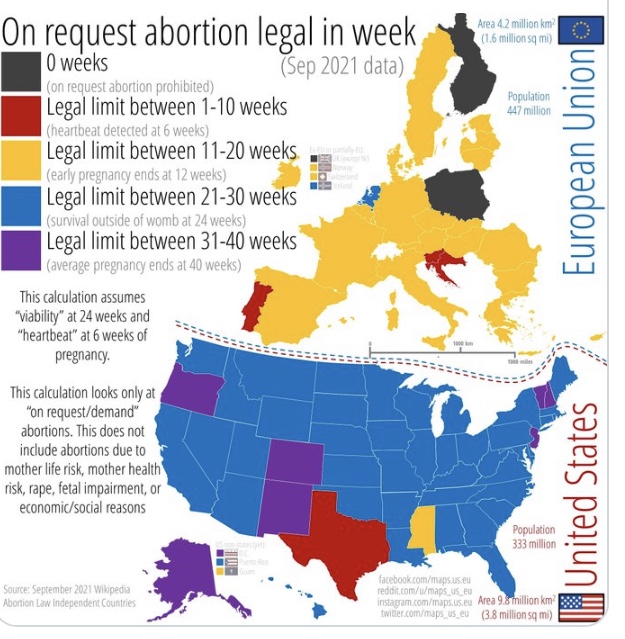
The reaction to the Supreme Court’s decision in Dobbs v. Jackson Women’s Health Organization was not short on outrageous assertions and even outright lies about the legal issues at stake. I wrote the article below a few weeks after the unfortunate leak of Justice Samuel Alito’s draft decision. But first, with the actual decision in hand, here are a few additional observations:

  • The most vocal pro-abortionists have a remarkably weak grip on the legal issues at play. Or do they take their supporters for idiots? More informed pro-choice advocates should be embarrassed.
  • There is not and never was an explicit right to abortion in the U.S. Constitution. This was a “right” conjured entirely by the judiciary.
  • Abortion has not been banned nationwide. The decision leaves the matter to state legislatures (and voters) and subsequent court challenges, which are sure to come. This is the very essence of federalism.
  • The decision has no implication for travel across state lines to obtain an abortion.
  • Stare decisis does not mean that the Court must always uphold precedent. Certainly not if, in the view of the Court, the precedent is egregiously bad. Precedents have been reversed in the past in a variety of contexts.
  • None of the justices “lied” to anyone in the Senate during pre-confirmation interviews. A prospective justice cannot and should not pronounce how they would rule on a specific issue, particularly outside the context of a specific case and its facts. Respecting precedent does not mean that precedent must be the only consideration.
  • The Supreme Court is independent and “undemocratic” by design. It cannot make law, as it did in Roe. Instead, it serves as a check on constitutional abuses by the other branches of government. In doing so, it must be insulated from the whims of popular opinion.
  • The Court agrees that the legality of abortion should never have been decided by “nine unelected men in robes”!
  • The Court rejected the claim that had been relied upon in Roe v. Wade, namely that the Fourteenth Amendment due process right to privacy covers the decision to abort a child. Ruth Bader Ginsberg also rejected that claim (see below), as have many other legal scholars on both sides of the debate. No, Ruth didn’t send you!
  • Roe relied on so-called “substantive due process”, which in the past has been used by the Court to extend the concept of due process under the law to protection of certain unenumerated (and contested) “rights”. Justice Thomas noted in his separate concurrence that a guarantee of “process” cannot itself establish a substantive right.
  • There is a possibility of federal legislation now, or after January with the new Congress, but an outright federal ban is unlikely, especially one without exceptions or one applicable at all stages of pregnancy.
  • Future court challenges to state or federal abortion laws are likely to be based on the Equal Protection Clause of the Fourteenth Amendment, which Ginsberg felt was the correct basis on which to establish a woman’s “right” to abort a child.
  • The U.S. Constitution protects unenumerated rights from infringement by the federal government, but it does not apply to actions taken by states because the Ninth Amendment has never been “incorporated” as applicable to infringements by state governments. Whether it should be incorporated is another matter.
  • Treating abortion as an unenumerated right of a woman is questionable at best because an unborn child is vested with competing rights. We may disagree on the stages at which vesting occur, but if you don’t believe it occurs, you are an extreme outlier (see below).
  • A pregnant woman cannot have complete bodily autonomy because she has another person’s life on board.
  • No women’s lives are threatened by the Dobbs decision. Even states with so-called “trigger laws” that now ban abortion have emergency exceptions for the life of the mother.
  • Expansive claims conflating a potential change in a woman’s life with “loss of life” are grotesque when it is almost always the child’s life at stake.
  • Pro-abortionists who give specific reference to family members and acquaintances born with disabilities, seemingly as a rationale for their position, are on dangerous ground. Their’s is a grotesque expression of regret for the birth of those individuals. It borders on suggesting that babies with Downs Syndrome should be murdered — post-birth! However, this is in keeping with the eugenicistic roots of abortion advocacy (see below).
  • The decision has no implication for the legality of contraceptives.
  • Democrats and Planned Parenthood have seemingly resisted efforts to legalize over-the-counter contraception. They should get on-board asap.
  • Post-Dobbs, abortion law in the U.S. is most assuredly not an outlier among developed nations. See the handy comparison with nations in the EU above.
  • Abortion proponents are having difficulty controlling their brethren’s use of the “N-word”, particularly when targeted at Justice Thomas. And apparently, advocating for the assassination of Thomas has been normalized among pro-abortionists.
  • The violence and histrionics of certain pro-arbortionists will not get them much sympathy. Jane’s Revenge terrorism is a good way to ruin their cause.
  • In a bit of great news, all sides now seem to agree that pregnancy and abortion are women’s issues. Breakthrough moment!

Here is the earlier post I mentioned above:

DOBBS, ROE, AND THE FREAKOUT OVER FEDERALISM

The leak of a Supreme Court draft opinion in Dobbs v. Jackson Women’s Health Organization has created uproars on several fronts. The opinion, written by Justice Samuel Alito, represented a 5-4 majority at the time of its writing, but it is a draft opinion, and the substance and the positions of other justices might change before a final decision is handed down by the Court by the end of June. The draft would essentially uphold a Mississippi law restricting abortions after the first 15 weeks of pregnancy. This would overturn the Roe v. Wade (1973) and Planned Parenthood v. Casey (1992) decisions. The former established that states could regulate abortion only beyond a certain stage of pregnancy (originally the first trimester), while the latter allowed states to regulate once a pregnancy reached the stage of fetal viability. While 24 weeks is often cited as the lower limit of viability, it is considered to be as early as 20 weeks by the World Health Organization, an estimate that could decline with future advances in prenatal and neonatal care (such as artificial wombs). In any case, viability would no longer be the standard if the draft opinion stands. Indeed, it would once again be up to states as to how they wish to regulate abortion.

Here is an update on where things stood on May 11th. Reportedly, the 5-4 majority still stood, and no other draft opinions existed in the case at that time. No news since.

Due Process and Privacy Rights

Was Roe v. Wade a good legal decision? Ruth Bader Ginsburg did not hold the opinion in high regard as a matter of the jurisprudence. Apparently, she felt that the Court should have simply struck down the restrictive Texas law in question without imposing a set of rules, which amounted to an aggressive infringement on the legislative function and the evolution of law, and case law, at the state level. Her words were:

“Doctrinal limbs too swiftly shaped, experience teaches, may prove unstable. The most prominent example in recent decades is Roe v. Wade.”

She also felt the Court should not have leaned on the Due Process Clause of Fourteenth Amendment, which prohibits the denial of “life, liberty or property, without due process of law”. And she believed that relying on due process and the privacy rights of a woman and her physician made Roe vulnerable to challenge. She was probably right.

Yale Law School professor Akhil Amar, who is pro-choice, also believes the Roe decision was misguided and calls its reliance on due process “textual gibberish”. The objection to substantive due process is based on the absence of any principle establishing which “rights” not found explicitly in the Bill of Rights are valid, and which are not.

Equal Protection

In fact, Amar defends Justice Alito’s draft opinion and believes, as Ginsberg did, that the Equal Protection Clause of the Fourteenth Amendment is a better defense of abortion rights. The contention is that unless a woman possesses the right to terminate a pregnancy, she is not on an equal footing with similarly situated men in terms of self-determination and life opportunities. Of course, none of this weighs the interests of the unborn child.

Establishment Clause

Josh Blackman has an interesting series of comments about whether the Establishment Clause of the First Amendment may be a valid defense of abortion rights. That seemingly preposterous claim relies on abortion as a right, in some cases, protected by the free exercise of religion. As Blackman sums up in his sixth point:

“… abortion rights groups should be careful what they wish for. If the Court recognizes a Free Exercise right to perform or receive an abortion, then conservatives can cook up even more aggressive religious liberty strategies. I’ll bring the bagels for the next meeting of the Temple of Automatic Weapons.”

Eugene Volokh makes several interesting points on attempts to use the Establishment Clause “to obtain exemptions from generally applicable laws”. A separate, misguided take at the Establishment Clause is that a law must be unconstitutional if it was based on religious beliefs. Volokh handily disposes of that contention here.

Judicially-Prescribed Rights vs. Constitutional Rights

Blackman has written that the Alito draft is a tour de force, addressing many constitutional principles and concerns expressed by other justices. In another post, Blackman explains a very basic rationale for a decision to overturn Roe. It is related to the objections expressed by Ginsberg and Amar, and to the many “lamentations” expressed in the Court’s abortion opinions over the years since Roe. Namely, that rule and establishment of new rights by court decision was not a mechanism intended by the framers of the Constitution, but self-government and federalist principles were:

“It is a mistake to argue that Dobbs extinguishes a right, without also acknowledging that the decision would restore another right. Overruling Roe would extinguish a judicially-created right to abortion, but it would restore a very different right: the right of the people to govern themselves.”

Personhood

Of course, none of these points are really germane to the crux of the pro-life argument to which I subscribe. However, both Roe and Casey acknowledge the state’s interest in protecting the fetus beyond some point in a pregnancy. The closer to term, the greater the interest. The implication is that a fetus gradually takes on degrees of “personhood” through the course of gestation, and that rights attach to that nascent individual at some point. Both Roe and Casey, by allowing states to regulate abortion beyond some point, offer recognition that the closer an abortion occurs to full term, the stronger the case that it may be prohibited.

The law in most European nations carries the same implication, and if anything leans more heavily in favor of fetal rights than Roe. Furthermore, there are 38 states with fetal homicide laws, which treat the fetus as a person in the case of a murder of a pregnant woman. In 29 of those states, the law applies at the earliest stages of pregnancy. This suggests that in most states, sentiments may weigh in favor of treating the fetus as a person imbued with constitutional rights.

In the end, this is not an exclusively religious argument, as the pro-abortion Left always suggests. For me, it’s purely an ethical one. At what point beyond conception are pro-abortion activists willing to concede that a human life is at stake? Apparently a heartbeat is not enough to convince them. Neither does the appearance of small fingers and toes. Nor the ability to feel pain. These are all things that happen before the child is “viable”. But even viability is not enough for some of the more radical abortion activists, who are proposing choice right up to the moment of birth. Incredibly, and despite the real limitations imposed on mid- or late-term abortions in many states (in line with Roe and Casey), some pro-choice advocates are now acting as if overturning these cases causes women to lose such an unfettered right!

Practical Matters

Anyone can obtain a variety of birth control alternatives without a prescription (and often for free). This includes emergency contraception, or the “morning after pill”. Granted, sometimes birth control measures fail, which places the prospective mother (and perhaps an involved or conscientious father) in a difficult position. Nevertheless, careful use of birth control would minimize the abortion problem and obviate much of the debate, but people are often too impulsive or careless about sex.

Late term abortions are a fairly small percentage of all abortions. The CDC reported that in 2018, 50,000 (~8%) abortions occurred after the first trimester (14+ weeks), and 6,200 (1%) took place at or beyond the point of theoretical viability (21+ weeks). This study found that of abortions at 20+ weeks, mothers tended to be younger (20 -24), discovered their pregnancies somewhat later, faced logistical and financial delays in arranging the abortion, or faced other challenging life circumstances. However, the researchers rebut a common rationale for late-term abortion when they say:

“… most women seeking later terminations are not doing so for reasons of fetal anomaly or life endangerment.”

Eugenics and Classism

Pregnancies among black women are terminated at a disproportionately high rate. That’s consistent with the original, eugenicistic and racist goals of Planned Parenthood founder Margaret Sanger. This is an outcome to top all disparate impacts. I have witnessed pro-abortion activists counter that these aborted lives would have been miserable, impoverished, and without opportunity — essentially not worth living — but these are value judgements of the most monstrous kind. I’ve also heard the pathetic argument that fiscal conservatives should be happy that abortions will reduce spending on aid programs. Of course, the plight of the would-be mother is also emphasized by pro-abortion advocates, but we should not be so eager to accept the tradeoff here: abortion gets the mother is off the hook, but a child’s life is at stake. No matter the odds of success, human beings are all endowed with potential and opportunity, and it’s not necessary to be economically secure to be happy or pursue dreams.

It’s easy to be pessimistic that public policy can ever mitigate the economic burden on impoverished women who bring unexpected or unwanted pregnancies to term, or to brighten the economic future of their children. After all, over the decades since the Great Society program was conceived, the welfare state has proven no better than a dependency treadmill. Family structure has been decimated by those programs and the destructive consequences of the failed (but ongoing) war on drugs. Likewise, public education is a disaster. However, there are also alternatives such as adoption, and there are many private individuals and organizations working to encourage prospective mothers and ease those burdens.

The Leak

The leak of the draft opinion in Dobbs is unfortunate as it compromises the ongoing integrity of the Court’s internal debates and proceedings. In addition to this institutional damage, the impropriety of staging protests outside the homes of justices and inside places of worship should be roundly condemned by people with respect for judicial integrity, privacy and free exercise. These protests are partly attempts to intimidate, and they have even been accompanied by threats of violence. The belligerent posture of these activists is unconscionable.

Long Live Federalism

Again, the Court’s final decision in Dobbs might not be the opinion in the leaked draft. However, if the Court does indeed overturn Roe, it would not outlaw abortion. Rather, it would allow voters in each state to have a voice in aligning the law with public sentiment. Some states will have more restrictive abortion laws than others, but even the Mississippi law at issue in Dobbs allows abortion up through week 15, almost two weeks longer than the original Roe limitation.

The country is still deeply divided on the issue of abortion. Fundamentally, a broader acceptance of the life-and-death reality of abortion would help bring more consensus on the issue. One theory I have is that many who oppose overturning Roe would simply rather not think about that reality. In their minds, Roe keeps abortion compartmentalized, safely walled off from conscience and sometimes even spiritual convictions. They rationalize Roe based on their inability to observe the person whose life is at stake, and they accept justifications that minimize the value of that life.

A single rule imposed by the Court has not and will not resolve these differences. Indeed, Roe and Casey were failed acts of judicial activism that should be reversed. While bad legislation is regrettable, it is always subject to review and challenge by the people. In a federalist system, a bad law is contained like a single experimental treatment in a large trial with multiple arms. However, in this case, unlike a trial with random selection of subjects, one treatment group may differ from others in important respects, and the objective is not to identify one single-best solution, but different solutions that work best for different groups. That is a closer approximation to real self-government than federal legislation and especially one-size-fits-all Court rule-making.

Dobbs, Roe, and the Freakout Over Federalism

25 Wednesday May 2022

Posted by Nuetzel in Abortion, Federalism, Uncategorized

≈ Leave a comment

Tags

Abortion, Adoption, Akhil Amar, Artificial Womb, Bill of Rights, Birth Control, CDC, Classism, Court Leak, dependency, Disparate impact, Dobbs v. Jackson Women’s Health Organization, Due Process Clause, Emergency Contraception, Equal Protection Clause, Establishment Clause, Eugene Volokh, Eugenics, Federalism, Fetal Homicide Laws, Fetal Rights, Fetal Viability, First Amendment, Fourteenth Amendment, Great Society, Josh Blackman, Judicial Activism, Later-Term Abortion, Margaret Sanger, Morning After Pill, Personhood, Planned Parenthood v. Casey, Privacy Rights, Pro-Life, racism, Roe v. Wade, Ruth Bader Ginsburg, Samuel Alito, Supreme Court, War Drugs, World Health Organization

The leak of a Supreme Court draft opinion in Dobbs v. Jackson Women’s Health Organization has created uproars on several fronts. The opinion, written by Justice Samuel Alito, represented a 5-4 majority at the time of its writing, but it is a draft opinion, and the substance and the positions of other justices might change before a final decision is handed down by the Court by the end of June. The draft would essentially uphold a Mississippi law restricting abortions after the first 15 weeks of pregnancy. This would overturn the Roe v. Wade (1973) and Planned Parenthood v. Casey (1992) decisions. The former established that states could regulate abortion only beyond a certain stage of pregnancy (originally the first trimester), while the latter allowed states to regulate once a pregnancy reached the stage of fetal viability. While 24 weeks is often cited as the lower limit of viability, it is considered to be as early as 20 weeks by the World Health Organization, an estimate that could decline with future advances in prenatal and neonatal care (such as artificial wombs). In any case, viability would no longer be the standard if the draft opinion stands. Indeed, it would once again be up to states as to how they wish to regulate abortion.

Here is an update on where things stood on May 11th. Reportedly, the 5-4 majority still stood, and no other draft opinions existed in the case at that time. No news since.

Due Process and Privacy Rights

Was Roe v. Wade a good legal decision? Ruth Bader Ginsburg did not hold the opinion in high regard as a matter of the jurisprudence. Apparently, she felt that the Court should have simply struck down the restrictive Texas law in question without imposing a set of rules, which amounted to an aggressive infringement on the legislative function and the evolution of law, and case law, at the state level. Her words were:

“Doctrinal limbs too swiftly shaped, experience teaches, may prove unstable. The most prominent example in recent decades is Roe v. Wade.”

She also felt the Court should not have leaned on the Due Process Clause of Fourteenth Amendment, which prohibits the denial of “life, liberty or property, without due process of law”. And she believed that relying on due process and the privacy rights of a woman and her physician made Roe vulnerable to challenge. She was probably right.

Yale Law School professor Akhil Amar, who is pro-choice, also believes the Roe decision was misguided and calls its reliance on due process “textual gibberish”. The objection to substantive due process is based on the absence of any principle establishing which “rights” not found explicitly in the Bill of Rights are valid, and which are not.

Equal Protection

In fact, Amar defends Justice Alito’s draft opinion and believes, as Ginsberg did, that the Equal Protection Clause of the Fourteenth Amendment is a better defense of abortion rights. The contention is that unless a woman possesses the right to terminate a pregnancy, she is not on an equal footing with similarly situated men in terms of self-determination and life opportunities. Of course, none of this weighs the interests of the unborn child.

Establishment Clause

Josh Blackman has an interesting series of comments about whether the Establishment Clause of the First Amendment may be a valid defense of abortion rights. That seemingly preposterous claim relies on abortion as a right, in some cases, protected by the free exercise of religion. As Blackman sums up in his sixth point:

“… abortion rights groups should be careful what they wish for. If the Court recognizes a Free Exercise right to perform or receive an abortion, then conservatives can cook up even more aggressive religious liberty strategies. I’ll bring the bagels for the next meeting of the Temple of Automatic Weapons.”

Eugene Volokh makes several interesting points on attempts to use the Establishment Clause “to obtain exemptions from generally applicable laws”. A separate, misguided take at the Establishment Clause is that a law must be unconstitutional if it was based on religious beliefs. Volokh handily disposes of that contention here.

Judicially-Prescribed Rights vs. Constitutional Rights

Blackman has written that the Alito draft is a tour de force, addressing many constitutional principles and concerns expressed by other justices. In another post, Blackman explains a very basic rationale for a decision to overturn Roe. It is related to the objections expressed by Ginsberg and Amar, and to the many “lamentations” expressed in the Court’s abortion opinions over the years since Roe. Namely, that rule and establishment of new rights by court decision was not a mechanism intended by the framers of the Constitution, but self-government and federalist principles were:

“It is a mistake to argue that Dobbs extinguishes a right, without also acknowledging that the decision would restore another right. Overruling Roe would extinguish a judicially-created right to abortion, but it would restore a very different right: the right of the people to govern themselves.”

Personhood

Of course, none of these points are really germane to the crux of the pro-life argument to which I subscribe. However, both Roe and Casey acknowledge the state’s interest in protecting the fetus beyond some point in a pregnancy. The closer to term, the greater the interest. The implication is that a fetus gradually takes on degrees of “personhood” through the course of gestation, and that rights attach to that nascent individual at some point. Both Roe and Casey, by allowing states to regulate abortion beyond some point, offer recognition that the closer an abortion occurs to full term, the stronger the case that it may be prohibited.

The law in most European nations carries the same implication, and if anything leans more heavily in favor of fetal rights than Roe. Furthermore, there are 38 states with fetal homicide laws, which treat the fetus as a person in the case of a murder of a pregnant woman. In 29 of those states, the law applies at the earliest stages of pregnancy. This suggests that in most states, sentiments may weigh in favor of treating the fetus as a person imbued with constitutional rights.

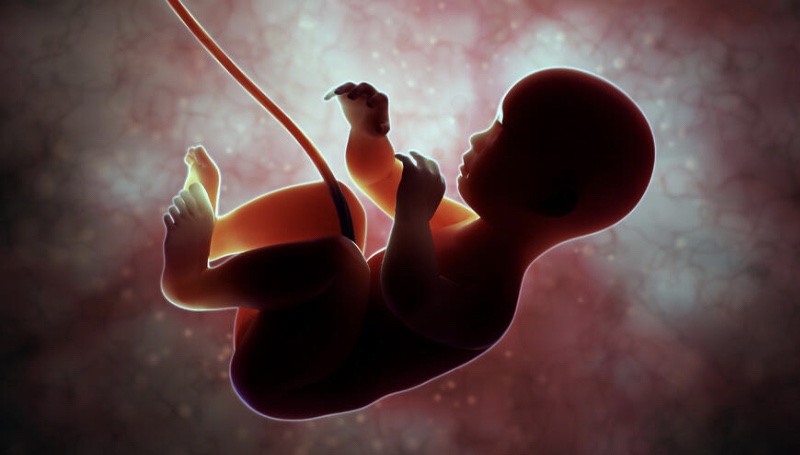
In the end, this is not an exclusively religious argument, as the pro-abortion Left always suggests. For me, it’s purely an ethical one. At what point beyond conception are pro-abortion activists willing to concede that a human life is at stake? Apparently a heartbeat is not enough to convince them. Neither does the appearance of small fingers and toes. Nor the ability to feel pain. These are all things that happen before the child is “viable”. But even viability is not enough for some of the more radical abortion activists, who are proposing choice right up to the moment of birth. Incredibly, and despite the real limitations imposed on mid- or late-term abortions in many states (in line with Roe and Casey), some pro-choice advocates are now acting as if overturning these cases causes women to lose such an unfettered right!

Practical Matters

Anyone can obtain a variety of birth control alternatives without a prescription (and often for free). This includes emergency contraception, or the “morning after pill”. Granted, sometimes birth control measures fail, which places the prospective mother (and perhaps an involved or conscientious father) in a difficult position. Nevertheless, careful use of birth control would minimize the abortion problem and obviate much of the debate, but people are often too impulsive or careless about sex.

Late term abortions are a fairly small percentage of all abortions. The CDC reported that in 2018, 50,000 (~8%) abortions occurred after the first trimester (14+ weeks), and 6,200 (1%) took place at or beyond the point of theoretical viability (21+ weeks). This study found that of abortions at 20+ weeks, mothers tended to be younger (20 -24), discovered their pregnancies somewhat later, faced logistical and financial delays in arranging the abortion, or faced other challenging life circumstances. However, the researchers rebut a common rationale for late-term abortion when they say:

“… most women seeking later terminations are not doing so for reasons of fetal anomaly or life endangerment.”

Eugenics and Classism

Pregnancies among black women are terminated at a disproportionately high rate. That’s consistent with the original, eugenicistic and racist goals of Planned Parenthood founder Margaret Sanger. This is an outcome to top all disparate impacts. I have witnessed pro-abortion activists counter that these aborted lives would have been miserable, impoverished, and without opportunity — essentially not worth living — but these are value judgements of the most monstrous kind. I’ve also heard the pathetic argument that fiscal conservatives should be happy that abortions will reduce spending on aid programs. Of course, the plight of the would-be mother is also emphasized by pro-abortion advocates, but we should not be so eager to accept the tradeoff here: abortion gets the mother is off the hook, but a child’s life is at stake. No matter the odds of success, human beings are all endowed with potential and opportunity, and it’s not necessary to be economically secure to be happy or pursue dreams.

It’s easy to be pessimistic that public policy can ever mitigate the economic burden on impoverished women who bring unexpected or unwanted pregnancies to term, or to brighten the economic future of their children. After all, over the decades since the Great Society program was conceived, the welfare state has proven no better than a dependency treadmill. Family structure has been decimated by those programs and the destructive consequences of the failed (but ongoing) war on drugs. Likewise, public education is a disaster. However, there are also alternatives such as adoption, and there are many private individuals and organizations working to encourage prospective mothers and ease those burdens.

The Leak

The leak of the draft opinion in Dobbs is unfortunate as it compromises the ongoing integrity of the Court’s internal debates and proceedings. In addition to this institutional damage, the impropriety of staging protests outside the homes of justices and inside places of worship should be roundly condemned by people with respect for judicial integrity, privacy and free exercise. These protests are partly attempts to intimidate, and they have even been accompanied by threats of violence. The belligerent posture of these activists is unconscionable.

Long Live Federalism

Again, the Court’s final decision in Dobbs might not be the opinion in the leaked draft. However, if the Court does indeed overturn Roe, it would not outlaw abortion. Rather, it would allow voters in each state to have a voice in aligning the law with public sentiment. Some states will have more restrictive abortion laws than others, but even the Mississippi law at issue in Dobbs allows abortion up through week 15, almost two weeks longer than the original Roe limitation.

The country is still deeply divided on the issue of abortion. Fundamentally, a broader acceptance of the life-and-death reality of abortion would help bring more consensus on the issue. One theory I have is that many who oppose overturning Roe would simply rather not think about that reality. In their minds, Roe keeps abortion compartmentalized, safely walled off from conscience and sometimes even spiritual convictions. They rationalize Roe based on their inability to observe the person whose life is at stake, and they accept justifications that minimize the value of that life.

A single rule imposed by the Court has not and will not resolve these differences. Indeed, Roe and Casey were failed acts of judicial activism that should be reversed. While bad legislation is regrettable, it is always subject to review and challenge by the people. In a federalist system, a bad law is contained like a single experimental treatment in a large trial with multiple arms. However, in this case, unlike a trial with random selection of subjects, one treatment group may differ from others in important respects, and the objective is not to identify one single-best solution, but different solutions that work best for different groups. That is a closer approximation to real self-government than federal legislation and especially one-size-fits-all Court rule-making.

Human Potential Exceeds the Human Burden

30 Friday Nov 2018

Posted by Nuetzel in Abortion, Mobility, Redistribution

≈ Leave a comment

Tags

Abortion, Border Control, central planning, dependency, Economic Burden, Economic Freedom, Eugenics, Human Footprint, Human Ingenuity, Immigration, Left Tail, Margaret Sanger, Open Borders, Planned Parenthood, Population Control, Private charity, Public Safety Net

Are human beings a burden, and in what way? Between two camps of opinion on this question are many shades of thought, and some inconsistencies. But whether the discussion is centered on the macro-societal level or the family level, the view of people and population growth as burdensome promotes centralized social control and authoritarian rule, with an attendant imposition of burdens on human freedom and productive effort.

Naysaying Greens

The environmental Left views people as a net burden on resources while failing to recognize their resource value, without which our world would yield little in the way of food and other comforts. It is mankind’s ability to process and transform raw materials that makes the planet so hospitable.

The world’s human population has increased by a factor of 18 times in the last 400 years, but food supplies have grown even faster. Each person has potential as a resource capable of a net positive contribution to societal and global well being. If we wrongly conclude that people are burdensome, however, it offers a rationale to statists for regulating the lives of individuals, preventing them from producing and consuming as they would otherwise choose.

Sirens of Dependency

There will always be individuals who cannot provide for themselves, sometimes due to temporary circumstances and sometimes as a permanent condition. If the latter, these individuals find themselves in the lower tail of the distribution of human productive capacity. The undeniable burden of this lower tail for humanity can be dealt with through various social support structures, including family, religious organizations, private social organizations, and the public safety net.

People of true compassion have always helped to fill this need privately and voluntarily, but “compassionate” motives can be a false and corrupting when the public sector becomes the tool of choice. Actual and potential beneficiaries of public largess can vote for their alms at the expense of others, along with those well-meaning partisans who confuse forced redistribution with compassion. And benefits and taxes often create disincentives that undermine a society’s productive dynamic. Under such circumstances, the lower tail and its burden of dependency grows larger than necessary, and society’s ability to carry that burden is diminished.

Burdensome Children

Children are unable to provide for themselves up to varying ages, so they do create an economic burden for their parents. That burden might loom large in the event of an unexpected pregnancy, but most parents find the burden well worth bearing, whether planned or unplanned, ex ante and ex post, and for reasons that often have little to do with material concerns. But many individuals and families in the lower tail simply cannot bear the economic burden on their own; others not in the lower tail might simply find the prospective burden of an unexpected pregnancy a bit too heavy or inconvenient for non-economic reasons.

Solutions are available, of course. They range from sexual abstinence and prophylactics to adoption services, as well as hard sacrifice by new parents. And then there is abortion. The pro-choice Left makes the argument that children are so burdensome as to justify the termination of pregnancies at almost any stage. The ease with which they make that argument and traffic in the imposition of that burden upon the innocent is horrific. Furthermore, regimes dominated by the Left have often instituted formal population control measures, and Western leftists such as the late Margaret Sanger, founder of Planned Parenthood, have advocated strenuously for eugenics.

Burdens at the Border

Are migrants a burden or a blessing? In general, the latter, because mobility allows individuals to exploit economic opportunities, with consequent gains to themselves and to those who demand their services. This is generally true from the perspective of nations; it is the basis of the traditional economic argument in favor of liberalized, legal immigration to which I subscribe. But some partisans on both sides of the immigration debate accept the idea that immigrants impose a burden. That may be correct under some circumstances.

Opponents of immigration reform certainly identify immigrants as a burden to productive citizens and taxpayers. Critics of border control, on the other hand, are motivated by compassion for political refugees or economically disadvantaged immigrants, whether employment opportunities exist for them or not. In fact, would-be immigrants are often attracted by generous public benefits in the receiving country, and so they are likely to add to a country’s lower-tail burden, as I’ve described it. But the no-borders crowd insists that society must shoulder any burden created by the combined effect of an open border with generous public benefits, and even immediate voting rights.

The Burdens of Overbearance

The Left imagines that people create many burdens, but the Left is happy to impose many burdens in pursuit of their “ideal” society: planned by experts, egalitarian, highly regulated, profit-free, and green. They wish to “save the planet” by imposing burdens, regulating and restricting economic growth and sparing no expense to minimize the human “footprint”. They wish to fund redistributive social programs by burdening productive resources with taxes, while crowding-out private efforts to provide charitable relief. They wish to prevent the perceived burden of children by offering, and even funding publicly, the “choice” to impose an ultimate burden on those too weak to register a protest. And they wish to burden taxpayers by availing all potential migrants, without question, of generous public benefits.

Burdens are a fact of life, but people with the freedom to exploit their own effort and ingenuity for gain have increasingly shouldered their own burdens and much more. Over the last few centuries, human ingenuity has expanded the effective quantity of all resources by many orders of magnitude. In so doing, the scale and scope of real poverty have been reduced dramatically. But those who would deign to manage our burdens for us, under the authority of the state, are more threatening to our well being than beneficent.

Monstrous Mathematics: Selling Abortion As Fiscal Austerity

27 Wednesday Jun 2018

Posted by Nuetzel in Abortion

≈ 2 Comments

Tags

Abortion, Artificial Womb, Conception, Eugenics, Fetal Viability, Fiscal Austerity, Gallup, Late-Term Abortion, Planned Parenthood v. Casey, Prohibition, Roe v. Wade

The pro-choice Left says, “Massive welfare benefits will be necessary to support the babies you’d force women to carry to term.” The remark is viewed as an argument clincher among pro-choicers, but it’s not a persuasive defense of abortion rights. In fact, it’s quite beside the point: human lives are at stake. The “welfare defense” suggests that there must be a valid tradeoff between public aid and lives that can otherwise be saved. Or indeed, between publicly-funded abortions and future public aid. By that logic, perhaps EMS service should be suspended in impoverished neighborhoods so that welfare payments might be reduced. These kinds of monstrous tradeoffs are not remotely on the table.

(The commentary that follows does not pertain to abortions that might be necessary to preserve a woman’s life or health, or in the case of pregnancies caused by rape.)

An operative assumption underlying the left’s suggestion is that additional human lives are problematic (or at least problematic for certain groups). There are two ways to think about this:

First, a single woman might have strong misgivings about the prospects of a child for economic reasons, or for fear of social ostracism; even couples can find a child economically burdensome. Fair enough. We won’t get into questions about personal responsibility. But leftists, under the spell of scientism, collectivism, and with more than a little hubris, insist there is no choice but for government to care for unaborted human beings and their families. They have devoted little thought to the reality that government programs intended to benefit the poor have in fact led to the disintegration of family units, a deteriorating housing stock, an explosion of the prison population, poorly functioning labor markets, and a cycle of mass dependency. But statists have not completely destroyed private institutions that can and do play a crucial role in helping impoverished new parents. That includes adoption agencies, churches, fraternal organizations, private charities, and free markets. These actors and institutions do not require any form of central planning by government.

Second, the Left holds that human beings are a burden on resources and a threat to “sustainability”. This is fundamentally incorrect. The world’s population has grown dramatically over the past several hundred years (from 0.9 billion in 1800 to 6.1 billion in 2000) while average income has increased much more dramatically (from less than $1.2 trillion in 1800 to $63.1 trillion in 2000). Humans are problem solvers, not problem makers, when they are free to create, produce, and take ownership in their surpluses. In fact, human ingenuity is the most critical renewable resource of all.

The abortion issue will not be settled on economic grounds. A plurality of adults in the U.S. believe that ending a pregnancy in its earliest stages is not murder, according to a recent Gallup poll. As I’ve argued in other contexts, bad or counter-productive laws are usually characterized by a lack of consensus in the general population over the question at issue. They are counterproductive because non-compliance leads to underground activity and unintended consequences. That’s true of prohibitions on alcohol, drugs and prostitution, and in the case of abortion, considerably greater danger may come to those seeking the services of an illegal abortionist. There is a fairly strong consensus, however, that late-term abortions should be illegal (see the link provided above). Unfortunately, the 20% that approve of late-term abortions is still rather significant.

The 80% share disapproving of late-term abortion corresponds roughly to the notion of fetal viability. At the time of the Roe v. Wade Supreme Court decision in 1973, viability was said to be reached between the 24th and 28th week of pregnancy. Technology shortened that time to less than 24 weeks, however, as the Court recognized in Planned Parenthood v. Casey in 1992. Some believe that the time to viability could be reduced much more with the development of artificial womb technology. That will upend the abortion debate, not only on account of challenges to the legal definition of viability, but because it will give expectant mothers an earlier alternative to terminating the life of the fetus. While artificial wombs might raise other ethical issues, I view the impact on the abortion debate as unambiguously positive.

Fetal viability does not offer much satisfaction to those whose views on abortion are heavily influenced by religion. Many Buddhists, Catholics, Eastern Orthodox Christians, Evangelical Protestants, and Orthodox Jews believe that life begins at the moment of conception; abortion is forbidden among Sikhs. (See this discussion for more detail.) Hindus often believe that personhood develops beginning at three months, while Islam teaches that life begins at about 120 days (though there is variation down to as little as seven weeks). On the other hand, Methodists, Presbyterians, Reform and Conservative Jews, Unitarians and Wiccans all support abortion rights, as do many (but not all) atheists and the strictly non-religious. It’s a safe bet that most of the world’s population affiliates with religions that either forbid abortion or believe in limits on the stage of pregnancy at which abortion is permissible. None of these distinctions is without exception, however. After all, there are many pro-choice Catholics, and abortions occur even in the Indian Sikh community.

Fetal viability at least provides something approximating an objective standard in the legal debate and prevents all but a small percentage of late-term abortions. Neither pro-choice nor pro-life activists will ever be satisfied with a given definition falling short of their respective ideals. Economic tradeoffs, however, have nothing to do with the pro-life position. Neither do cost-benefit calculations as the basis of public funding of abortions. Abortion advocates attempt to marshal its presumed economic benefits, but the effort smacks of the worst excesses of eugenics.

Risks, Costs and the Sharing Kind

23 Thursday Mar 2017

Posted by Nuetzel in Abortion, Health Care, Subsidies

≈ Leave a comment

Tags

Charlie Martin, Collectivism, Diffuse Costs, Fertility, Insurable Event, Insurable Risks, NARAL, National Association for the Repeal of Abortion Laws, Planned Pregnancy, Shared Risk, Trumpcare, Unplanned Pregnancy

Of all the health care buffoonery we’ve witnessed since the Affordable Care Act (ACA, or Obamacare) was first introduced in Congress in 2009, one of the most egregious is the strengthening of the notion that health insurance should cover a variety of wholly predictable, and strictly speaking, non-insurable events. Charlie Martin recently posted some interesting comments on insurance and why it works, and why public perceptions and public policy are often at odds with good insurance practices. He says that “Insurance Is Always Just Gambling“. True, real insurance is like any other rational hedge against risk, and that can be called a gamble. Unfortunately, public policy often interferes with our ability to hedge these risks efficiently.

Hedged Risk Or Prepaid Expenses?

To begin with, insurance is a mechanism for individuals to manage the financial impact of events that are unpredictable and potentially costly. These are insurable risks. But if an event recurs regularly, like an annual physical exam, a breast exam, or a pap smear, or if an event is largely within the individual’s control, like whether an ugly mole should be removed, then it is not an insurable risk. Paying for such “coverage” through a third-party insurer amounts to prepaying for services for which you’d otherwise pay directly when the time comes. We’ve essentially adopted this prepayment scheme on a national scale through Obamacare’s mandated benefits: we get broad coverage of non-insurable events in exchange for premiums and/or deductibles high enough to cover the prepayments! Big win, huh?

The rationale for a broad coverage mandate is that it will induce healthy behaviors like, well… getting an annual checkup. Therefore, it is said to be in the interests of insurers to include such benefits in basic coverage. That might well be, but the insurers don’t do it for free! Indeed, a combination of premiums and deductibles are correspondingly higher as a result, and the mandate introduces a “middle man”, the insurer, who adds cost to the process of executing a relatively simple transaction.

Unlike these prepaid health care expenses, real insurance is really a sort of gamble. An insurer makes a bet that you won’t have a major, unanticipated health care need, and you put up the “premium” as your bet that you will have such a need. If you are healthy, then the odds are low, so it’s a fairly cheap bet for you, but you have to put up a little extra to pay for your insurer’s administrative costs. Down the road, if you need acute care, your bet pays off. Yippee! You’ll be covered.

But who knows the odds that you’ll need expensive care? And why would an insurer take the risk of losing big if you get sick?

The insurer can estimate those odds via actuarial data and experience, and they can assume your risk by playing the law of large numbers: if they make similar bets with many individuals, their actual losses will be more than covered by premium revenue (most of the time… as Martin explains, it’s possible for an insurer to make a bet with a so-called reinsurer as a hedge against the small risk of a huge loss on its book of business, beyond some threshold).

Shared Risk Or Shared Cost?

Martin objects to the use of the term “shared risk” in this context. Many individuals make similar bets, which makes the insurer’s aggregate payout more predictable. That allows them to offer such bets on reasonable monetary terms, and they are all voluntary contracts sought out by people facing risks of the same character. If an individual seeks to insure against a demonstrably heightened risk, an insurer might or might not agree to the “bet” voluntarily, but if it does, the risk is not truly “shared” by individuals who face lower risks. The high-risk bet is reasonable for the insurer only to the extent that: (1) the premium is actuarially fair in conjunction with a larger pool of high-risk bets, or (2) it can be cross-subsidized by more profitable lines of coverage. If the answer is (2), then premiums for healthy individuals must rise to cover risks they do not share. That is one basis under which Obamacare operates and it is a subtle aspect of Martin’s argument against the notion of “shared risks”. Perhaps we can avoid the semantic difficulty by speaking of “sharing the costs of risks that are not shared”.

A more obvious aspect of Martin’s objection to “shared risk” relates to the expectation that predictable medical costs must be “covered” by health insurance, as discussed above. If so, no risk is shared because there is no risk! Yet we often speak of health insurance “needs” as if they combine a variety of such things, and as if all those “needs” embody risks that are shared. They are not.

Sharing the Cost of Prenatal Care

In another post, Martin tackles the question of whether certain people should be expected to pay a premium that includes the cost of prenatal care. Martin was prompted by a tweet from the National Association for the Repeal of Abortion Laws (NARAL), which read:

“WOW. The #GOP’s reason to object to insurance covering prenatal care? ‘Why should men pay for it?’ #Trumpcare #ProtectOurCare”

There was a link in the tweet to a video, which was captioned by NARAL as follows:

“The GOP reasoning to object to prenatal insurance
Two male Republicans object to prenatal care coverage under the ACA because—while it ensures women have healthy pregnancies—it means men pay *a tiny bit more* for insurance. WOW.”

To the extent that pregnancy can be considered a risk, it is certainly not shared by seniors, gays and lesbians, and infertile individuals, let alone unattached males. And from an insurance perspective, an obvious difficulty with NARAL’s point is that many pregnancies are planned. As such, they are not insurable events (though complications of pregnancy clearly are insurable). Yet people speak as though others must “share” the costs. That is fundamentally unfair and economically inefficient. Subsidies for couples who might wish to have children lead to greater rates of fertility than those couples can otherwise afford, saddling society with the medical bill. Incentives are no joke.

There are also unplanned pregnancies among singles and married couples, however. That sounds more like an insurable event, but it’s usually impossible for a third party to determine whether a pregnancy is planned or unplanned, so moral hazard is an issue (except in extreme circumstances like rape or incest). The risk of pregnancy is confined to a subset of the population, so sharing these costs more broadly is inefficient to the extent that it subsidizes some pregnancies (oops!) that individuals cannot otherwise afford. Individuals and couples who face pregnancy risk must manage that risk in any way they chose, and they might wish to purchase a form of coverage that will help them smooth the cost of pregnancies over their fertile years. It’s not clear that coverage of that nature is better for the prospective parent(s) than a line of credit, but it is a form of insurance only because of the “unplanned” component, and at least it allows them to spread the cost ex ante as well as ex post.

Sharing Costs of Common Risks 

The basic point here is that sharing a risk across all individuals, whether they do or do not actually face the risk, is not a natural characteristic of private insurance. In fact, the idea that this cost should be shared broadly is a collectivist notion. The major flaws are that 1) individuals and couples at risk are not financially responsible for certain cost-causing decisions they might make; and 2) it forces individuals and couples not at risk to pay for others’ risks, which is an act of coercion. NARAL feels that individuals who subscribe to these sound principles are worthy of rebuke. And NARAL asserts that “men pay a tiny bit more“, without providing quantification. Of course, it’s not just men, but this is a variation on the old statist argument that diffuse costs are not meaningful and should be disregarded, ad infinitum.

Public Aid Dressed As Insurance

There are segments of society that are often depicted as incapable of managing risks like pregnancy and unable to afford the consequences of mistakes. Subsidizing those individuals is a second collectivist front for “risk sharing”. Those subsidies can and do take the form of “family planning”, as well as prenatal care and childbirth. That’s part of the social safety net, and while it is perhaps more tolerable as aid, it entails the same kinds of bad incentives as discussed earlier.

The welfare state has seldom been praised for its impact on incentives. Most studies have found a link between public aid and higher fertility, and mixed effects on the dissolution of marriage (see here and here, and for international evidence, see here). But aid for health care expenses should not interfere with the sound operation of the insurance market. Vouchers for catastrophic coverage would be far preferable, and that aid could even cover some regularly recurring health care costs, despite their non-insurable nature, but that would be a compromise.

The misgivings voiced by Martin are partly driven by two fundamental issues: guaranteed issue and community rating. The former means that an insurer must take your bet regardless of the risks you present; the latter means that the insurer cannot charge premiums commensurate with the risk inherent in the various bets it takes. As David Henderson writes, both underpin the ACA. In other words, the ACA imposes cost sharing. Here is Henderson:

“As I wrote over 20 years ago, the combination of guaranteed issue and community rating, a key feature of Obamacare, leads to the destruction of insurance markets. No one would advocate forcing insurance companies to issue house insurance policies to people whose houses are burning, at premiums equal to those paid by others whose houses aren’t burning. And the twin requirements would cause more and more people to refrain from buying insurance until their houses are on fire. Insurance companies, knowing this, would charge astronomically high premiums.“

Follow Sacred Cow Chips on WordPress.com

Recent Posts

  • Immigration and Merit As Fiscal Propositions
  • Tariff “Dividend” From An Indigent State
  • Almost Looks Like the Fed Has a 3% Inflation Target
  • Government Malpractice Breeds Health Care Havoc
  • A Tax On Imports Takes a Toll on Exports

Archives

  • December 2025
  • November 2025
  • October 2025
  • September 2025
  • August 2025
  • July 2025
  • June 2025
  • May 2025
  • April 2025
  • March 2025
  • February 2025
  • January 2025
  • December 2024
  • November 2024
  • October 2024
  • September 2024
  • August 2024
  • July 2024
  • June 2024
  • May 2024
  • April 2024
  • March 2024
  • February 2024
  • January 2024
  • December 2023
  • November 2023
  • August 2023
  • July 2023
  • June 2023
  • May 2023
  • April 2023
  • March 2023
  • February 2023
  • January 2023
  • December 2022
  • November 2022
  • October 2022
  • September 2022
  • August 2022
  • July 2022
  • June 2022
  • May 2022
  • April 2022
  • March 2022
  • February 2022
  • January 2022
  • December 2021
  • November 2021
  • October 2021
  • September 2021
  • August 2021
  • July 2021
  • June 2021
  • May 2021
  • April 2021
  • March 2021
  • February 2021
  • January 2021
  • December 2020
  • November 2020
  • October 2020
  • September 2020
  • August 2020
  • July 2020
  • June 2020
  • May 2020
  • April 2020
  • March 2020
  • February 2020
  • January 2020
  • December 2019
  • November 2019
  • October 2019
  • September 2019
  • August 2019
  • July 2019
  • June 2019
  • May 2019
  • April 2019
  • March 2019
  • February 2019
  • January 2019
  • December 2018
  • November 2018
  • October 2018
  • September 2018
  • August 2018
  • July 2018
  • June 2018
  • May 2018
  • April 2018
  • March 2018
  • February 2018
  • January 2018
  • December 2017
  • November 2017
  • October 2017
  • September 2017
  • August 2017
  • July 2017
  • June 2017
  • May 2017
  • April 2017
  • March 2017
  • February 2017
  • January 2017
  • December 2016
  • November 2016
  • October 2016
  • September 2016
  • August 2016
  • July 2016
  • June 2016
  • May 2016
  • April 2016
  • March 2016
  • February 2016
  • January 2016
  • December 2015
  • November 2015
  • October 2015
  • September 2015
  • August 2015
  • July 2015
  • June 2015
  • May 2015
  • April 2015
  • March 2015
  • February 2015
  • January 2015
  • December 2014
  • November 2014
  • October 2014
  • September 2014
  • August 2014
  • July 2014
  • June 2014
  • May 2014
  • April 2014
  • March 2014

Blogs I Follow

  • Passive Income Kickstart
  • OnlyFinance.net
  • TLC Cholesterol
  • Nintil
  • kendunning.net
  • DCWhispers.com
  • Hoong-Wai in the UK
  • Marginal REVOLUTION
  • Stlouis
  • Watts Up With That?
  • Aussie Nationalist Blog
  • American Elephants
  • The View from Alexandria
  • The Gymnasium
  • A Force for Good
  • Notes On Liberty
  • troymo
  • SUNDAY BLOG Stephanie Sievers
  • Miss Lou Acquiring Lore
  • Your Well Wisher Program
  • Objectivism In Depth
  • RobotEnomics
  • Orderstatistic
  • Paradigm Library
  • Scattered Showers and Quicksand

Blog at WordPress.com.

Passive Income Kickstart

OnlyFinance.net

TLC Cholesterol

Nintil

To estimate, compare, distinguish, discuss, and trace to its principal sources everything

kendunning.net

The Future is Ours to Create

DCWhispers.com

Hoong-Wai in the UK

A Commonwealth immigrant's perspective on the UK's public arena.

Marginal REVOLUTION

Small Steps Toward A Much Better World

Stlouis

Watts Up With That?

The world's most viewed site on global warming and climate change

Aussie Nationalist Blog

Commentary from a Paleoconservative and Nationalist perspective

American Elephants

Defending Life, Liberty and the Pursuit of Happiness

The View from Alexandria

In advanced civilizations the period loosely called Alexandrian is usually associated with flexible morals, perfunctory religion, populist standards and cosmopolitan tastes, feminism, exotic cults, and the rapid turnover of high and low fads---in short, a falling away (which is all that decadence means) from the strictness of traditional rules, embodied in character and inforced from within. -- Jacques Barzun

The Gymnasium

A place for reason, politics, economics, and faith steeped in the classical liberal tradition

A Force for Good

How economics, morality, and markets combine

Notes On Liberty

Spontaneous thoughts on a humble creed

troymo

SUNDAY BLOG Stephanie Sievers

Escaping the everyday life with photographs from my travels

Miss Lou Acquiring Lore

Gallery of Life...

Your Well Wisher Program

Attempt to solve commonly known problems…

Objectivism In Depth

Exploring Ayn Rand's revolutionary philosophy.

RobotEnomics

(A)n (I)ntelligent Future

Orderstatistic

Economics, chess and anything else on my mind.

Paradigm Library

OODA Looping

Scattered Showers and Quicksand

Musings on science, investing, finance, economics, politics, and probably fly fishing.

  • Subscribe Subscribed
    • Sacred Cow Chips
    • Join 128 other subscribers
    • Already have a WordPress.com account? Log in now.
    • Sacred Cow Chips
    • Subscribe Subscribed
    • Sign up
    • Log in
    • Report this content
    • View site in Reader
    • Manage subscriptions
    • Collapse this bar
 

Loading Comments...