• About

Sacred Cow Chips

Sacred Cow Chips

Category Archives: Constitution

The EPA’s Trip To the Constitutional Woodshed

07 Thursday Jul 2022

Posted by Nuetzel in Administrative State, Constitution, Supreme Court, Uncategorized

≈ 1 Comment

Tags

Administrative Law, Administrative Procedures Act, Administrative State, Affordable Care Act, Charles Lipson, Chevron Deference, Clarence Carson, Clean Air Act, Climate Alarmism, Constitutional Law, Environmental Protection Agency, EPA, Francis Menton, Franklin D. Roosevelt, FTC, Gabriel Kolko, Great Society, Humphrey’s Executor, ICC, Jarkesy v. SEC, Jonathan Tobin, Kevin O. Leske, Lyndon B. Johnson, Major Questiins Doctrine, National Labor Relations Board, Neil Gorsuch, New Deal, Philip Hamburger, rent seeking, SEC, Sheldon Richman, Supreme Court, The Manhattan Contrarian, West Virginia v. EPA, Woodrow Wilson

The Supreme Court’s regular docket is done for the year, but one of last week’s rulings is of great interest to those concerned about the constitutional threat posed by the administrative state. In West Virginia v. EPA, the Court held that the Clean Air Act of 1970 does not authorize the EPA to regulate carbon emissions in power generation. Well, that’s getting to be a very old statute and no one thought much about carbon dioxide emissions when it became law, so of course it doesn’t! However, this decision is crucial as a check on the ever-growing, extra-legal power of the administrative bureaucracy. I say “extra-legal” because regulatory agencies are increasingly taking it upon themselves to write rules that reach well beyond their legislative mandates. Only the legislature can make law under our system of government, or at least law that settles “major questions”, a doctrine that the Court has applied in this case.

Consequential Side Issues

While many critics of the West Virginia decision might find this hard to believe, it has nothing to do with the Court’s views about the prospects for climate change. That is not the Court’s job and it knows it, or at least most of the justices know it. Even if climate change poses a real threat of global catastrophe, and it does not, that is not the Court’s job. Its primary function is to preserve constitutional law, and that is what this decision is about. (For more on the folly of climate alarmism, see here, here, and here.)

Apart from its constitutional implications, growth in the number of regulatory rules and their complexity also imposes massive costs on the economy, robbing the private sector of productive opportunities, often with little or no demonstrable public benefit. The unbridled promulgation of rules does, however, benefit special interests. That includes bureaucrats, litigators, and private parties who derive side benefits from regulation, such as protection of monopoly status, competitive advantages, and expanded professional opportunities. Leveraging government and political privilege for private benefit is rent seeking at its very heart, and it’s also at the very heart of fascistic corporatism.

A Little History

Regulation has been a channel for rent seeking going back to the earliest days of the Republic and even before. But a Great Leap Forward in federal regulatory intervention came in the late 1880s with several Supreme Court decisions involving railroad rates, and then the establishment of the Interstate Commerce Commission. The railroads practically begged to be regulated. At the last link, Sheldon Richmsn quotes historian Gabriel Kolko:

“The first regulatory effort, the Interstate Commerce Commission, had been cooperative and fruitful; indeed, the railroads themselves had been the leading advocates of extended federal regulation after 1887.”

The railroads wanted stability, of course, and less competition, and that’s what they got, though in the end they didn’t do themselves any favors. Here’s historian Clarence Carson on the ultimate result:

“Since the railroads could not effectively compete in so many ways, such opportunity for improving their situation as existed would usually be to combine roads cover­ing the same general area so as to maintain some control over rates and get as much of the profitable business as possible within an area. This is what rail­road financiers tended to do. The result, as far as the public was concerned, was a nonintegrated rail system, reduced competition, poorer service, and higher rates.”

Later, Woodrow Wilson and Franklin D. Roosevelt had strong roles in advancing the regulatory state. Wilson was smitten with the scientism inherent in centralized decision making and administrative expertise. He was also loath to concede his vision of administrative planning to democratic ideals. Justice Neil Gorsuch, in his concurrence on the EPA decision, offers some rather disturbing quotes from Wilson:

“Woodrow Wilson famously argued that ‘popular sovereignty’ ‘embarrasse[d]’ the Nation because it made it harder to achieve ‘executive expertness.’ The Study of Administration, 2 Pol. Sci. Q. 197, 207 (1887) (Administration). In Wilson’s eyes, the mass of the people were ‘selfish, ignorant, timid, stubborn, or foolish.’ Id., at 208. He expressed even greater disdain for particular groups, defending ‘[t]he white men of the South’ for ‘rid[ding] themselves, by fair means or foul, of the intolerable burden of governments sustained by the votes of ignorant [African-Americans].’ 9 W. Wilson, History of the American People 58 (1918). He likewise denounced immigrants ‘from the south of Italy and men of the meaner sort out of Hungary and Poland,’ who possessed ‘neither skill nor energy nor any initiative of quick intelligence.’ 5 id., at 212. To Wilson, our Republic ‘tr[ied] to do too much by vote.’ Administration 214.”

FDR’s New Deal was responsible for a huge expansion in the administrative apparatus, as this partial list of federal agencies created under his leadership indicates. Many of these agencies were subsequently ruled unconstitutional, but quite a few live on today with greatly expanded scope and presumed powers.

The Great Society policies of Lyndon B. Johnson also created new agencies and programs, with additional burdens on the ability of the private economy to function properly. Of course, the complexity of the administrative state has increased many-fold with more recent actions such as the Clean Air Act and the Affordable Care Act.

Major Questions

The agencies, despite any expertise they might have in-house, cannot create major rules and mandates without fairly specific statutory authorization. That is a constitutional imperative. It’s not quite clear, however, what test might distinguish a “major question” requiring enabling legislation from lesser matters. There is certainly some room for interpretation. According to Kevin O. Leske:

“Under the [major questions] doctrine, a court will not defer to an agency’s interpretation of a statutory provision in circumstances where the case involves an issue of deep economic or political significance or where the interpretive question could effectuate an enormous and transformative expansion of the agency’s regulatory authority.”

Unfortunately, this judicial deference to agency rule-making and interpretation led to further erosion of the separation of powers and due process rights. Vague legislation, aggressive special interests and rent seekers, and judicial deference have allowed agencies excessive latitude to interpret and stretch their mandates, to enforce expansive regulatory actions, and to adjudicate disputes with regulated entities in proceedings internal to the agencies themselves.

At issue in EPA v. West Virginia were the agency’s steps to radically transform the energy mix used in power generation, with potentially dramatic, negative impacts on the public. The Court said that won’t fly unless Congress gives the EPA more specific instructions along those lines. Agency expertise, by itself, is not enough to override the legitimate democratic interests of the public in such consequential matters.

But what about executive actions of the sort increasingly taken by presidents over the years? Why are those legal? Article Two of the Constitution grants discretion to the president for enforcement of laws and managing the executive branch. Furthermore, pieces of legislation can specifically grant discretionary power to the executive branch in particular areas. Nevertheless, it might be possible for even executive orders issued by the president to “go too far” in interpreting congressional intent. That is within the purview of courts in case of legal challenges.

Unaccountable Agency Power

So called “administrative expertise” was given some degree of deference by the Supreme Court as early as the 1930s. In 1947, the Court decided the application of such expertise should often take precedence over pre-established rules. There was also a recognition that legislators often lacked the expertise to formulate certain regulatory guidelines. The expanding scope and complexity of regulations gave rise to increasing legal disputes, however. This strained the judicial system for at least two reasons: the sheer limits of its capacity and the lack of technical expertise needed to settle many disputes. This ultimately led to the adjudication of many disputes within the agencies themselves. Agency tribunals of subject matter experts were formed to meet these growing demands. This was said to facilitate “cheap justice”, not to mention more rapid decisions. The passage of the Administrative Procedures Act in 1947 was a recognition that administrative law was necessary and required certain standards, though they differ from normal judicial standards, such as rules of evidence. This left very little to brake aggressive and extra-legal rule-making and enforcement by the agencies.

Another disturbing aspect of the growth in administrative power has been the advent of agencies said to be “independent” from the other branches of government, as if to intimate their existence as a fourth branch. As Francis Menton (the Manhattan Contrarian) says, agencies:

“… can create rules for your conduct free from the Congress, and … can prosecute you free from the President. In 1935, in a case called Humphrey’s Executor, the Supreme Court upheld the part of the FTC Act that made the Commissioners immune from discharge by the President other than in very limited circumstances. Humphrey’s Executor has not been overruled to this day.

The FTC was only the beginning of an explosion of creation of such ‘independent’ agencies and otherwise un-separated powers in the federal government. The Federal Reserve was created about the same time (actually 1913), and things really took off during Roosevelt’s New Deal, with agencies like the FCC, SEC, and NLRB.”

Later, the Supreme Court adopted a two-part test to determine whether courts may defer to administrative expertise in interpreting legislative intent, rather than substituting their own judgement or insisting on a clearer legislative mandate. This was the principle of so-called Chevron deference, named for the case Chevron v. Natural Resources Defense Council, in which the Court ruled for the EPA’s definition of a “stationary source” of pollution as “plantwide”. The test for Chevron deference was whether an agency’s rule was a “reasonable” statutory interpretation and whether Congress had not directly addressed the point in question.

Rolling It Back

Philip Hamburger, in his book “Is Administrative Law Unlawful?”, addressed the struggle between administrative power and “regular law” back to the days of “royal prerogative”. The advent of constitutional law was designed to prevent anything resembling the latter.

“… administrative law has returned American government and society to precisely the sort of consolidated or absolute power that the US Constitution―and constitutions in general―were designed to prevent.”

But now we have some very promising developments. Again, in the West Virginia case, the EPA’s authority to regulate carbon emissions in power generation has been denied by the Court, pending any future legislation that would specifically enable that authority. There was no mention of Chevron in this decision whatsoever! That’s a big win for constitutional principle. In another recent case before the Fifth Circuit Court in New Orleans, Jarkesy v. SEC, an administrative law judge (ALJ) at the SEC had assessed damages and fines against Jarkesy, but he challenged the SEC in court, as Menton describes:

“Jarkesy claimed that he was deprived of his Seventh Amendment right to have his case decided by a jury, and also that the SEC had unconstitutionally exercised legislative powers when deciding to try his case before an ALJ without having been given any guiding principles by Congress on how to make that decision. The Fifth Circuit ruled for Jarkesy on both points. This decision has the potential to force some significant changes on how the SEC does business. However, Mr. Jarkesy still does have to continue to run a gantlet that will likely include a request by the government for en banc review by the Fifth Circuit, and then a request for review by the Supreme Court.”

Conclusion

Here is a nice summary of the constitutional issues from an earlier post by Menton:

“… (1) the combining of powers into agencies that would enact, and also enforce, and also adjudicate regulations (directly contrary to the Constitution’s separation of powers into three branches of government); (2) agencies enacting regulations with the force of law on their own say so (contrary to the Constitution’s requirement that all laws be passed by both houses of Congress and presented to the President for signature); and (3) many agencies claiming to be “independent” of the President (contrary to the Constitution’s vesting all ‘ executive power’ in the President).

This is echoed by Jonathan Tobin, who says:

“Government by fiat of intellectuals or scientific experts may or may not be good policy. But it is alien to the U.S. Constitution, and it has nothing to do with democracy.”

One other critical point made by Charles Lipson is that the Court’s West Virginia decision, while sending an unmistakeable message to federal agencies, should also raise awareness in Congress that it is not enough to legislate vague statutes and rely on bureaucrats to make all the decisions about implementation. Instead, “major questions” must be dealt with legislatively and with full accountability to voters. Congress must address these issues, if not up-front, then whenever they arise as disputes in the courts or otherwise. Certainly, the West Virginia decision should make individuals or entities subject to regulatory action less likely to allow major questions to be settled by ALJ rulings within the agencies themselves. The Supreme Court has expressed a willingness for such cases to be reviewed in normal courts of law. That is a very positive development for liberty.
Banished Illusions: They Screwed the People and the Country

22 Thursday Jul 2021

Posted by Nuetzel in Constitution, Corruption, Election Fraud

≈ Leave a comment

Tags

Adam Schiff, Biden Inc. Hunter Biden, Big Tech, Brett Kavanaugh, Capitol Police, COVID, Darryl Cooper, DNC, Donald Trump, Election Fraud, Insurrection, James Comey, John Brennan, MartyrMade, Pay-For-Play, Propaganda, Tyler O’Neil, Voting Procedures

There’s no shortage of nincompoops buying into the legitimacy of the Biden presidency and the bullshit narrative about “an insurrection” at the U.S. Capitol building on January 6th. I’m sure they’re quite content in their ignorance — they refuse to even consider the evidence available regarding the lack of ballot integrity in Arizona, Georgia, Pennsylvania, Texas, and elsewhere, and they continue to pretend the January 6th debacle was a real threat to our democracy, rather than a largely peaceful group of wide-eyed goofballs who were mostly waved through the barricades by the Capitol Police.

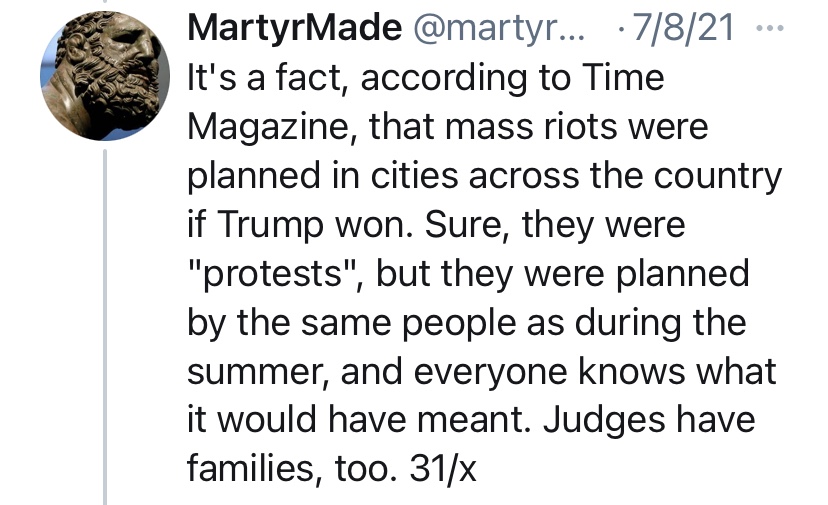
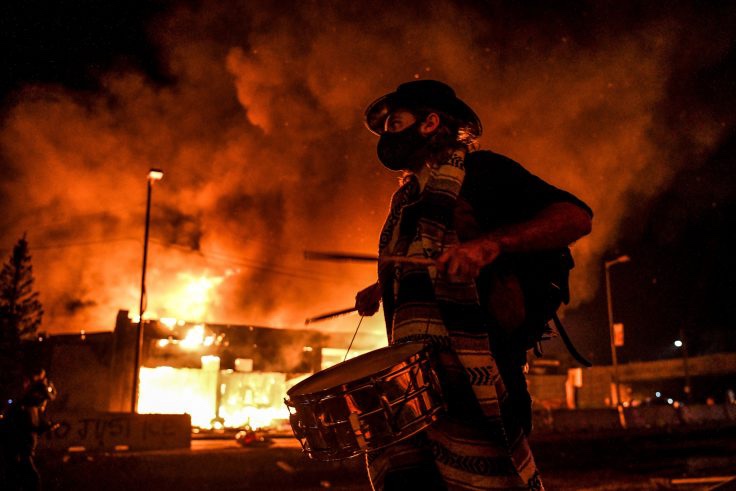
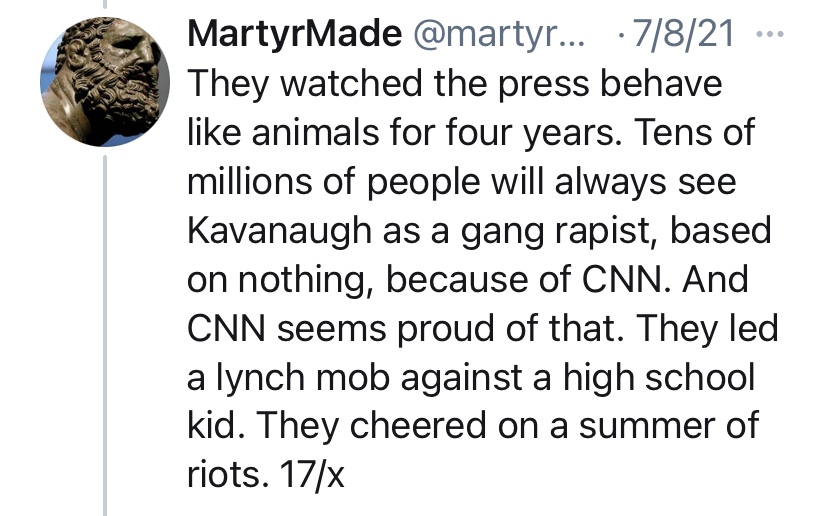
One of the best summaries I’ve read about the attitudes of those who feel disenfranchised by the 2020 election is this series of tweets by the of the MartyrMade podcast, Darryl Cooper. His tweets are also discussed here by Tyler O’Neil. It is Cooper’s “general theory” on the perspective of “Boomer tier” Trump supporters, as he calls them. Last year’s fraudulent election was only the culmination of events going back to the investigation of Donald Trump’s 2016 campaign. The whole thread is interesting, but you must get past a little “soft cover” at the start that might have been intended to distract the speech police at Twitter. I’ll try to summarize here:

  • The intelligence community spied on the Trump campaign in 2016, and that’s a major transgression! The DNC was involved too, actually paying for fabricated evidence. James Comey falsely denied any knowledge of that fact. John Brennan and Adam Schiff also lied shamelessly in this affair.
  • By the time Trump supporters realized all the noise was fake, they naively expected justice to be served. But no, and so their faith in certain institutions was shaken.
  • The gaslighting continued, and the whole thing consumed energy and had a chilling effect on participation in the Trump Administration. This was an active kind of subversion crossing “all institutional boundaries”.
  • The participation of the press was the poison icing on the cake. The press is now viewed by much of the country as a propaganda arm of “The Regime”.
  • Many aren’t sure whether the election was fixed, but if it was, they know they’d be lied to about it. 
  • Voting procedures in many jurisdictions were changed using COVID as a pretext. 
  • The press smoke-screened the Biden, Inc. scandals, including evidence of pay-for-play and incredibly lurid information on Hunter Biden’s laptop. Instead, the press played-up gossip about Trump. 
  • Trump people rightly felt betrayed by the very institutions they’ve always trusted, but they voted in record numbers, and we’re not convinced all were counted.
  • “But when the four critical swing states went dark at midnight, they knew.”
  • Conspiracy theories abounded, but media and tech shut down discussion of real anomalies. Had the election gone Trump’s way, they would have cried foul! 
  • The courts were handcuffed by fear of political violence and retribution.

I agree with substantially all of Cooper’s thread. Our experience since Donald Trump became an active politician has been disillusioning in several respects: it has shown how flimsy our constitutional rights and our republic are when the wrong actors come to dominate certain institutions. It also shows how malleable are the “facts” that we are asked to accept by these actors. We are seemingly helpless to defend the rule of law, the Constitution, and social norms when an intransigent minority decides it can simply ignore them. This is how tyranny is borne.

Election integrity is not an outlandish objective. Neither is demanding fair treatment of diverse viewpoints from social media, Big Tech, and educational institutions. And neither is it outlandish to demand safe communities and adequate police protection; that our borders be enforced; that our public health officials speak honestly about risks; and that we should never, under any circumstances, be judged, punished, or rewarded based on the color of our skin. These are just a few of the things we must demand, and never take “no” for an answer.

State Compact Aims To Subvert Electoral College

09 Tuesday Apr 2019

Posted by Nuetzel in Constitution, Voting Rights

≈ Leave a comment

Tags

Alexander Hamilton, Carroll Andrew Morse, Congressional Term Limits, Constitution, Elections Clause, Electoral College, Fourteenth Amendment, George W. Bush, Justin Yang, National Popular Vote Interstate Compact, Norman R. Williams, State Powers, Supreme Court, U.S. Term Limits Inc v Thornton, Virginia v Tennessee, Voting Rights

The map shows the number of electoral votes by state, one vote per square. The states colored green are participants in a gambit that would, if successful, vitiate the Electoral College (EC). They hope to execute an end-run around Article V of the Constitution, which otherwise would require an amendment to replace the EC with the national popular vote. Such an amendment is highly unlikely to win approval, as I noted last week. The green states are members of the so-called National Popular Vote Interstate Compact (NPVC). This group of 13 states plus the District of Columbia would pledge their electors to the winner of the national popular vote, but only if and when enough states join the Compact to enable it to carry an election.

The big question is whether an electoral action by the NPVC would be constitutional. Article I, Section 10 of the Constitution prohibits states from entering treaties or compacts with other states without the approval of Congress. However, supporters of the NPV such as Justin Yang focus on an 1893 Supreme Court decision (Virginia v. Tennessee) that found congressional approval is unnecessary as long as a compact does not infringe on federal powers. NPVC advocates go on to assert that elsewhere, in Article II, Section 1, state legislatures are empowered to allocate electoral votes “in any way they want“, as Yang puts it.

There are strong reasons to doubt the NPVC’s interpretation, however. Carroll Andrew Morse raises a basic constitutional issue: the NPVC amounts to a denial of voting rights to the citizens of a Compact member-state. It is obviously true that a member-state’s voters would contribute to the national vote totals. Nevertheless, awarding state electors to the winner of the national vote, regardless of the in-state outcome, certainly could deprive state residents of their preference. The Fourteenth Amendment provides that a state’s denial of voting rights to any citizen or group of citizens would require the state to relinquish its representation in the legislature by a proportionate amount. That is a harsh remedy that the voters of any state should consider when weighing the benefits of membership in the NPVC.

This BYU Law Review article by Norman R. Williams covers some other areas of contention. It provides a review of some constitutional provisions bearing on the legality of interstate compacts as well as excellent background on the EC and its history. Some brief thoughts on the issue from Williams also appear in the Harvard Law Review here. According to Williams:

“… the states’ power to regulate the manner of presidential elections is far more limited than the proponents of the NPVC contend. In fact, just as the U.S. Supreme Court has narrowly interpreted the states’ power to regulate congressional elections to prevent states from destabilizing the constitutional structure, so too should it deny states the power to undermine the stability of the presidential election process.”

Williams cites a 1995 Supreme Court decision (U.S. Term Limits, Inc. v. Thornton) limiting state power over questions such as congressional term limits. The ruling stated that state-regulated limits create additional qualifications for holding office that are not authorized under the Elections Clause in Article I, Section 4. Williams contends that the process of choosing electors is analogous to other provisions regarding state powers, so it should be subject to the same limitations. He also says that if the Court followed the same method of reasoning as in Thornton, which focused on the founders intent as well as subsequent developments, it would reject the actions of the NPVC as unconstitutional.

Williams also argues that the NPVC may interfere with the rights of voters in other, non-Compact states. He says the history of Article II is inconsistent with an interpretation that the founders would have intended to allow states to exercise such broad, extra-state powers in electing a president:

“If a group of states can agree to pledge their presidential electors on the basis of the national vote, then they must likewise be able to agree to pledge their electors to a candidate only from those states, only from one political party, or only in accordance with the wishes of a designated committee of ‘presidential experts.’ In short, any interstate compact regarding the manner in which presidential electors are selected threatens to exclude the wishes of voters in nonsignatory states, and, therefore, it seems inconceivable that a Constitution that specifies how the President is to be elected and that lays out a process for amending its requirements would permit a group of states to alter so fundamental a part of our constitutional structure.”

Williams concludes with a quote from the Court’s decision in the Thornton case:

“As the Court admonished in Thornton, change, if it is to be undertaken, ‘must come not by legislation adopted either by Congress or by an individual State, but rather—as have other important changes in the electoral process—through the amendment procedures set forth in Article V.'”

Any legal challenge to the NPVC will have to wait until it is effective, that is, when and if it ever exercises 270 electoral votes. It now has a total of 189 electoral votes. The most recent addition was New Mexico, and a proposed ballot measure in Ohio could bring total Compact electors to 207. Fans of the NPVC hope that Michigan, Minnesota, and Wisconsin might join as well, though none of those is imminent. But if they did it would bring another 46 electoral votes to the Compact. Apparently Pennsylvania has rejected membership for now.

Almost all of the states already in the NPVC are solidly “blue”, having voted for the Democrat in presidential elections, at least over recent cycles. Of course, that means the Compact might quickly disintegrate if a Republican is expected to win the popular vote. Right now, however, Colorado and New Mexico are the only states that might qualify as swing states, and even those are a stretch. Some of the other states in which the NPVC is under debate are legitimate swing states, and legislation enabling the change will be risky for many lawmakers in those states. Ballot measures might be more preferable to the NPVC due to the possibility of limited turnout. We’ll see how it goes.

If states with 270 or more electors vote as a block, it diminishes the importance of each state’s voters, who might well disagree with the national popular vote in the future if not already. For example, members of the NPVC, including California, would have had to cast their electoral votes for George W. Bush in 2004, despite the desires expressed by their citizens at the polls. Voters at-large in any non-Compact state have more leverage over the outcome of a presidential election than if they follow the national popular vote. Alexander Hamilton would not have approved of the NPVC; he wrote that a state’s electors should not be influenced by parties outside the state. That was the intent of the founders.

Court challenges would undoubtedly follow any exercise of votes through the NPVC. Presumably that would occur only in the event of another conflict between the national popular vote and the EC, as constituted prior to the adoption of the NPVC. That would occur only if at least one Compact state had an in-state popular vote conflicting with the national vote. There is almost no doubt that such a dispute would make its way to the Supreme Court. Thus, a presidential election might someday be undecided until a final ruling is passed down by the high court. I strongly suspect that the NPVC would be found unconstitutional.


The Excellent Electoral College

05 Friday Apr 2019

Posted by Nuetzel in Constitution, Democracy

≈ 1 Comment

Tags

Athenian Democracy, Athens, Bernie Sanders, Beto O'Rourke, Constitutional convention, Donald Trump, Edward Conway, Electoral College, Elizabeth Warren, Jon Gabriel, Quora, Tyranny of the Majority

So lacking is the average American’s knowledge of civics that they often react in shock to the suggestion that the United States was never intended to be a pure democracy. But unchecked democracy is not a system that can be counted upon to maintain stability, something the founders knew when they fashioned the country as a constitutional republic. This point bears emphasis given the recent calls to abolish the Electoral College (EC) by such Democrat luminaries as Elizabeth Warren and Beto O’Rourke. Others, like Socialist-cum-Democrat Bernie Sanders, say they want to “assess” the EC.

Jon Gabriel describes the EC as one of a series of stabilizing checks and balances embedded in our system of government. It served the purpose of balancing interests across diverse regional economies and sub-cultures:

“By distributing our presidential choice among 51 individual elections, nominees must appeal to a wide variety of voters with a wide variety of interests. Farmers in Wisconsin are important, as are retirees in Florida, factory workers in Pennsylvania, and shopkeepers in Arizona. White Evangelicals need to be courted in Charlotte, as do Latino Catholics in Mesa.

If the Electoral College were abandoned, party frontrunners would camp out exclusively in urban areas. The pancake breakfasts in Des Moines and Denver would be replaced with mammoth rallies in Los Angeles and New York City.”

So diverse were these interests in the late 1700s that it’s reasonable to assume that the Constitutional Convention would have failed without the creation of the EC. Today, no less, our country would be unlikely to survive the EC’s elimination. Why, for example, would voters in Missouri wish to allow the preferences of east and west coast voters to dominate federal policy-making?

Gabriel provides some interesting history giving emphasis to the notion of a tyranny of the majority under pure democracy:

“The world’s first democracy was ancient Athens, which allowed around 30,000 free adult male citizens to choose their leaders. They made up less than 15 percent of the population, but it was the most egalitarian political innovation to date.

Athen’s unbridled democracy, however, led to the very extremes that sowed its decline and defeat at the hands of enemies. This note from Edward Conway on Quora is instructive (his is the third commentary at the link; most of the others are helpful, but his is most succinct):

“… ancient Athenian democracy was purely a matter of votes: if you wanted to win a court case, or pass a law, or tax a group, or go to war, or massacre a large number of people, the only check was whether you could convince a majority of the citizens to vote in your favor. While there were means of checking individual people (see: Ostracon), this did nothing to check the power of the crowds, as it only removed one focus of this power.

Thus Athenian democracy never moved beyond the initial ‘UNLIMITED POWER!’ stage. Anyone who could convince the crowd to follow them had unchecked authority until they lost control of the crowd.

This led, predictably, to excesses: ‘Let’s attack Sparta!’, ‘Let’s invade Sicily!’, ‘Let’s ostracize our best general!’, etc.“

It’s interesting that the Athenian military was staffed by plebeians who found imperialistic actions to be profitable. Naturally, they voted to devote more resources to military incursions… until they were defeated. Allowing a large faction to vote on their own pay, and the taxes on others necessary to pay for it, can be a glaring defect of democracy. We see manifestations of the same phenomenon today in congressional pay raises and expansion of federal benefits for large segments of the population who pay no taxes.

Back to Gabriel:

As the saying goes, democracy is four wolves and a lamb voting on what to have for lunch. The Founders looked to Athens less as a political model than an object lesson in what not to do.

James Madison said that democracies are ‘incompatible with personal security or the rights of property; and have in general been as short in their lives as they have been violent in their deaths.’

The EC was a stroke of political genius: It allowed the delegates at the Constitutional Convention to reach a consensus, something that would probably be just as difficult to accomplish today as it was then. The EC transforms one federal election into 51 local elections, reducing the feasibility of tampering by the party in power at the federal level. It also reduces the incentive for electoral fraud in a national race because a greater margin of victory within a state cannot gain the votes of additional electors.

The noise regarding the EC is coming from just one side of the political aisle: Donald Trump’s electoral victory in 2016, and his reasonably good prospects for reelection in 2020, have inflamed the passions of Democrats, who are now grasping at any and all ways in which they might tilt the playing field their way. Relative to electoral votes, popular votes are heavily concentrated in the coastal “blue” states. Such a change in the rules of the game would certainly stand to benefit Democrats. Therefore, the debate looks suspiciously like it has nothing to do with “good governance” and electoral integrity, and everything to do with raw politics.

It’s useful to remember that the EC was an essential incentive for gaining the buy-in of smaller states to join the Union. It remains vitally important to states whose interests would likely be neglected if presidential politics was dominated by the coastal states. Fortunately, the founders invested the EC with durability: rescinding it would require a constitutional amendment. That could happen if two-thirds of the state legislatures agree to convene a constitutional convention. Or, it could be proposed by a two-thirds majority in both houses of Congress, then ratified by three-fourths of the state legislatures. Ain’t gonna happen.


Stumbling Into the Hamilton Safe Space

21 Monday Nov 2016

Posted by Nuetzel in Constitution, Progressivism

≈ Leave a comment

Tags

Alexander Hamilton, Brandon Dixon, Donald Trump, Fourth Wall, Hamilton The Musical, Mike Pence, Reese Waters, Sanctuary Cities, St. Patrick's Day, Steven Van Zant, Tendentious Art, The E-Street Band, Thomas Jefferson

img_3741

An incident at the curtain call of Friday night’s performance of Hamilton, The Musical in New York has attracted more attention than it deserves, or perhaps it’s attracted attention for the wrong reasons. Vice President-Elect Mike Pence attended the show, and the word spread to the cast. One of the actors, Brandon Dixon, read a message to Pence from the stage which had been written by the show’s producers. By that time, Pence’s Secret Service detail was ushering him out of The Richard Rogers Theater, apparently the usual protocol, but one of the producers said Pence stopped to listen. Here is the message that Dixon read, according to this Twitter link:

“You know, we have a guest in the audience this evening — Vice President-elect Pence, I see you walking out but I hope you hear just a few more moments. There’s nothing to boo, ladies and gentlemen, There’s nothing to boo. We’re all here sharing a story of love. We have a message for you, sir, we hope that you will hear us out. And I encourage everyone to pull out you phones and tweet and post because this message needs to be spread far and wide.

Vice President-elect Pence, we welcome you and we truly thank you for joining us here at ‘Hamilton: An American Musical.’ We really do. We, sir, we are the diverse America who are alarmed and anxious that your new administration will not protect us, our planet, our children, our parents or defend us and uphold our inalienable rights, sir. But we truly hope this show has inspired you to uphold our American values and work on behalf of all of us. All of us.

Thank you truly for seeing this show. this wonderful American story told by a diverse group of men, women of different colors, creeds and orientations.“

Donald Trump overreacted to the situation, tweeting that Dixon and the cast should apologize to Pence. This is typical Trump, making a bigger story of something that could have passed with less controversy. Pence, left to his own devices,  would have let it pass. He said later that he was not offended. And I’m sure the cast of Hamilton was under no illusion that Pence would accept their advice on anything.

Dixon’s message itself was respectful, more or less, though it was not “a conversation”, as he later claimed. It was a lecture. It seemed designed to show Pence up, but Pence listened politely. Less “respectful” were audience members who greeted Pence with boos as he entered the theater (there were cheers as well), and when Dixon mentioned his name at the curtain call. At least Dixon admonished them. However, there are reports, which I’ve been unable to confirm, that some of the show’s actors directed their lines at Pence. If true, such a confrontational delivery broke the “fourth wall” for purposes that do not elevate the show. On something of a light note, someone suggested that the incident might prompt Trump to build a “fourth wall”. Heh! No, Dixon’s lecture did not break the fourth wall — he read the statement after the show had ended.

Some artists thought the Hamilton cast went too far. Here is Steven Van Zant, guitarist for The E-Street Band and an avowed progressive who, for what it’s worth, happens to agree with Trump that the cast should apologize to Pence:

“When artists perform the venue becomes your home. The audience are your guests. It is nothing short of the same bullying tactic we rightly have criticized Trump for in the past. It’s taking unfair advantage of someone who thought they were a protected guest in your home. You don’t single out an audience member and embarrass him from the stage. [This was] a terrible precedent to set.“

I have a number of friends and acquaintances in my city’s theatre community. Their opinion is divided, but a clear majority are defending the cast of Hamilton. They stress that theatre has always been a vehicle for social commentary and social change. There is certainly an extent to which that’s true, and Hamilton is nothing if not a social statement. Of course, the lecture was not part of the show, but for what it’s worth, my view is that such commentary is more successful as art, and more likely to provoke sincere thought, when it is weaved into the art or story in subtle ways. I also believe that approach is truer to the history of theatrical social commentary. Personally, I don’t like tendentious art, and I’ve always felt that artists who make their political views too explicit cheapen their work. But that’s just me. One theatre friend thought that Dixon (and the producers) had crossed a line, using the curtain call to get on a soapbox to instruct a single member of the audience as to the proper interpretation of the art he had just witnessed.

Another theatre friend commented that theater should educate, entertain and edify, a view that probably gives the average playwright credit for more knowledge than they deserve. As it happens, there are several historical distortions in the book of Hamilton, which I covered in this post on Sacred Cow Chips about five months ago. While the show is a smashing success as entertainment, it contains some unadulterated propaganda about Alexander Hamilton, Thomas Jefferson, the meaning of the Constitution, and certain events that took place around the time of our nation’s founding. It is a failure at educating.

Incidentally, Brandon Dixon is not quite the virtuous SJW that many would have us believe. His Twitter history shows a rather aggressive attitude toward women, and white women in particular:

“St. Patty’s day weekend is like Christmas for black dudes who like white chicks. Happy holidays boys.
@reesewaters
#seasonsgreetings
“

Evidentally, Brandon fancies himself quite the stallion, a sure sign of his deep respect for women.

The incident at The Richard Rogers is most interesting to me because it reveals an irony: the extent to which the writer, producers and actors of Hamilton lack an understanding of our system of government and individual rights. The president (and especially the vice president) do not hold the power to strip individuals of their rights. Granted, the GOP will have a slight majority in Congress and on the Supreme Court, but that does not mean that Trump will be unrestrained. The divisions of power and the constitutional checks and balances promulgated by the likes of Jefferson and Hamilton will serve to protect the rights of diverse Americans. And in two years, control of either the Senate or the House of Representatives might swing back to Democrats.

The Hamilton cast has an insufficient grasp of another fact: one person’s constitutional rights can come into conflict with the rights of others. If they so infringe, it is not enough to assert that you must have the freedom to exercise your rights. You can try, but these are matters for the courts to decide, and those decisions usually hinge on possible accommodations and whether the government has a “compelling interest” in protecting one right at the expense of another.

One other note to the Hamilton cast: while illegal immigrants share in many of the individual rights protected under the Constitution, they do not share fully in all of those rights. In particular, Trump might not need congressional support or help from the courts to enforce existing immigration law. If it’s any reassurance, he seems to have moderated his position on illegals, focusing his rhetoric on “sanctuary cities” and illegals having criminal records.

Perhaps the “elite” Broadway theatre kids of Hamilton can be forgiven if they have the wrong impression about executive power after watching Barack Obama over the last eight years. Hamilton would not have approved. Thankfully, what can be done with “a pen and a phone” can probably be undone with “a pen and a phone”. Now get back out there and have fun, kids!

Post-Election Thoughts: The Electoral College

15 Tuesday Nov 2016

Posted by Nuetzel in Constitution, Populism

≈ 3 Comments

Tags

Duverger's Law, Electoral College, Hillary Clinton, Majoritarian, National Popular Vote Interstate Compact, New Jersey Plan, Proportional Representation, Sean Rosenthal, Shlomo Slomin, The Federalist Papers, Three-Fifths Compromise, Tyranny of the Majority, Virginia Plan

tyranny-of-the-majority-cartoon

Among the targets of disillusioned Hillary Clinton voters is the much-maligned electoral college. The EC is misunderstood by most voters, from what can be judged on social media. Few seem to have any idea why it exists. Donald Trump condemned the EC during the recent campaign, echoing a typically populist attitude, yet it actually worked in his favor. And most are happy to accept the EC’s results when it works in their favor, but otherwise the EC strikes them as nonsensical.

Here’s how it works: a state’s electoral votes are equal to the total number of seats it has in Congress: two senators plus the number of congressional districts in the state. Therefore, a state’s relative influence in the college is larger with fewer congressional districts (which are a function of population and land area). For example, suppose that each congressional district has a population of 1,000,000 (The actual average is closer to 750,000). A state with one congressional district gets three electors for its one million inhabitants. A state with two congressional districts gets four electors, or two votes per million inhabitants. A state with a ten congressional districts gets 12 electors, or 1.2 per million inhabitants. Therefore, voters in small states have more leverage on the outcome of presidential elections than voters in large states. Does that make sense as a mechanism for selecting the nation’s chief executive?

The Constitutional Convention

The purpose of the Federal Constitutional Convention of 1787 was to forge an agreement between the individual states regarding a system of governance. This 1986 article by Shlomo Slomin in The Journal of American History provides an excellent account of the lengthy discussions that took place at the convention over how to select the chief executive. It was perhaps the lengthiest debate at the convention, as documented by Slomin. In the effort to create a durable union, a major concern was that a majority of voters were concentrated in states with interests, both economic and social, that differed from the interests of small states. One fear was that the executive would always be selected from one of the large states.

The first proposals involved selection of the president by legislative bodies (a position which endured until late in the summer):

“Whereas the Virginia Plan provided for a popularly elected legislature with the representation of each state proportional to the size of its population, the New Jersey Plan proposed that the legislature remain …the representative body of the states, with each state entitled to one vote…. In effect, therefore, at the very outset of the convention, the large and small states were at loggerheads over the method of selecting an executive no less than they were over the composition of the legislature.“

Obviously, the New Jersey Plan was much more extreme in its departure from proportional representation than the final, agreed-upon EC. (Note that New Jersey was relatively small at the time.) The problem was finally referred to a committee late in the summer, which presented its plan a few days later. Each state legislature would choose electors, who would in turn elect the president. States would have the option of turning over the choice of electors to their voters. To paraphrase Slomin slightly, it removed the decision from Congress for selection of a president in favor of an independent, ad hoc body. The EC had a single purpose, would not meet at one central location, and would immediately disband, so there was little chance of corruption or “cabal” influences. In terms of votes, it was an exact replica of Congress. Originally, each elector was to vote for two individuals, but could vote for only one from their own state.

“The delegates, it appears, were pleased with the Electoral College scheme, which so successfully blended all the necessary elements to ensure a safe and equitable process for electing a president and which reserved considerable influence for the states.“

The Constitution embodies other provisions that ensured a balance of power, all of which helped to bring disparate interests together into one federalist union. This includes the fact that we have two senators in Congress from each state. Alexander Hamilton wrote favorably of the EC in the Federalist Papers. The method of electing a president was subject to the same balancing of interests.

The founders had other reasons to think the EC was advisable. One was that it was impossible for many citizens, especially those in less populous regions, to truly “know” the presidential candidates. State electors, it was hoped, would relieve the citizenry of an impossible duty to perform a final vetting process. That rationale, however,  might not be very compelling in the era of modern communication and social media.

Another concern that arose was the appeasement of the southern, slave states. The issue of slavery was a lightning rod, but the northern states offered another “sweetener” to the south: the so called “three-fifths rule”, whereby three-fifths of the slave population would be counted in the total for allocating legislative representation. Even with that rather ugly adjustment, the southern states were generally less “populous”, but not as a rule. After all, Virginia was by far the largest state at the time of the convention. Certainly, the EC was an extra inducement to those states to approve the Constitution, but slavery had less to do with it than some have asserted, as the popular vote was never a serious contender for passage at the convention.

Fragile Democracy

It’s long been known that unrestrained democracy and majority rule can have negative consequences, including severe instability, without safeguards. The EC represents one such safeguard, functioning as a protection against a tyranny of the majority. If you’ve ever dealt with so much as a neighborhood association, you know that it’s a real phenomenon. Slomin found little evidence that the tarnished history of absolute majoritarianism was of any influence at the convention, but the founders were aware of it. The fact that legislative solutions to the electoral problem were widely accepted from the start of the convention probably reflected their awareness. Here is John Adams on the subject:

“Remember, democracy never lasts long. It soon wastes, exhausts, and murders itself. There never was a democracy yet that did not commit suicide.“

In any case, the possibility of a union in which large states were dominant was obviously an issue for small states, and delegates from large states recognized the potential imbalance and the threat it presented to the success of the convention.

Today’s Imbalance

Today, only nine states account for over half of the U.S. population. (Fifteen states account for over two-thirds.) Ten states accounted for more than half of the presidential vote count in 2012, which suggests that voter turnout in 2012 was slightly lower, on average, in the most heavily-populated states. Suppose we were to do it all over: if, for example, densely-populated states have interests that do not align with rural states, and if the latter are considered economically or culturally important, then the EC can be viewed as a worthwhile concession to offer in exchange for participation.

The Interstate Compact

The National Popular Vote Interstate Compact is a group of states that will pledge their electors to the winner of the national vote, but only when enough states join to total 270 electors. The compact now has ten member states plus DC, for a total of 165 electoral votes. These states are solidly “blue”, having voted for the Democrat in elections over many cycles. There are two states, with 36 electoral votes, in which legislation to join the compact is pending: Pennsylvania, which was carried by Donald Trump in last week’s election, and Michigan, which appears to have been carried by Trump. Something tells me the compact legislation will be risky for most legislators in those two states, but we’ll see. The voters of any state, under some circumstances, can have more leverage over the outcome of a presidential election when its electors are pledged to the winner of the in-state vote, rather than following the national popular vote. This can occur any time a majority of a state’s voters happen to disagree with a thin national majority.

If states with 270 or more electors vote as a block, it diminishes the importance of each state’s voters, who might well disagree with the national popular vote in the future, if not already. The members of the compact, including California, would have had to vote for George W. Bush in 2004, despite the desires expressed by their citizens at the polls. Hamilton would not have approved of the compact; he wrote that a state’s electors should not be influenced by parties outside the state. Unfortunately, that rule was not clearly set forth in the Constitution.

Accidental Genius

Sean Rosenthal just articulated a powerful defense of the EC appearing at FEE.org. He notes that the founding founders expected a fractured political landscape, with many parties vying for public office. They were wrong in that regard, he believes, because they agreed to two-year terms in the House of Representatives. Rosenthal cites Duvergers’s Law, combined with “first-past-the-post” voting for representatives, for the devolution to a two-party system in the U.S.: voters tend to avoid candidates who might help elect their least-favorite candidate.

Given the existence of a system dominated by two-parties, the EC ensures stability by working against a concentration of power. Rosenthal reminds us that the EC transforms one federal election into 51 local elections. That reduces the chance of tampering by the party in power at the federal level. It also reduces the incentive for electoral fraud at the local level, since a greater margin of victory cannot gain the votes of additional electors. Rosenthal believes that these benefits would be powerful even if the number of each state’s electors was reduced by two, which would then cause the EC to approximate the results of the popular vote. As I noted earlier, the founders seemed to think that the EC would promote stability, and that belief was not conditional on the number of major presidential contenders.

Other Notes On the EC

Another approach to the pledging of electors is used by Maine and Nebraska. They allow congressional districts to use their single vote independently, based upon the popular vote in the district. Certainly this is the most empowering approach for an individual district’s voters. I’m sure many voters in down-state Illinois would love it!

There are plausible criticisms of the EC, such as discouraging voter turnout in non-“swing” states, and of course the disadvantaging of third-party candidates. On the other hand, some have argued that the EC can help the interests of minority voters by encouraging candidates to focus on winning their votes. And relatively small states like Mississippi have a proportionately large minority population, so the EC should help to advance their interests.

Conclusion

The Electoral Collage is enshrined in the U.S. Constitution and was a crucial device in achieving an acceptance of the document by all the states. The delegates to the convention might have been able to overcome objections to proportional representation without the EC, but other, less desirable, concessions probably would have been necessary. Our country might look very different today without it. The EC certainly inures to the benefit of voters in smaller states who differ in their views from majority opinions. If we had to hold the convention all over again, some form of the EC would probably be necessary to achieve consensus, and obviously that has nothing to do with slavery. The EC is consistent with the federalist approach to governance, which is instrumental to maintaining the stability of the Republic. And voters can change their minds: even voters in large states might one day find themselves in a national minority. The Electoral College is undoubtedly a better way to protect the interests of those voters in the long-run than the Interstate Compact. It will probably survive the latest challenge, as it has survived many others in the past.

Hamilton, Jefferson & Miranda’s Propaganda

12 Sunday Jun 2016

Posted by Nuetzel in Constitution, Slavery

≈ 2 Comments

Tags

13th Amendment, Abraham Lincoln, Alexander Hamilton, Bank of the United States, Ben Affleck, Central Bank, Charles Kessler, Commerce Clause, Corwin Amendment, Declaration of Independence, Hamilton on Broadway, James Madison, James Monroe, King George, Lin-Manuel Miranda, Manumission, Maria Reynolds, Michelle DuRoss, Necessary and Proper Clause, Raymond Burr, Ron Chernow, Spencer Kornhaber, State's Rights, The Atlantic, The Federalist Papers, Thomas Jefferson, Three-Fifths Compromise, Warren Meyer, Yeoman Farmer

image

I know too well to take any history I get from the theatre with a grain of salt! Nevertheless, I’d really like to see Hamilton on Broadway. It’s a hugely successful musical by Lin-Manuel Miranda about the life of Alexander Hamilton, one of our nation’s founding fathers, inspired by the book Alexander Hamilton by Ron Chernow. I’ve heard much of the show’s music, infused with R&B and rap/hip-hop; it’s more appealing to me than I’d ever have expected of rap. The show has been nominated for a record 16 Tony Awards (the ceremony is tonight), and of course it’s a very hot ticket. The last time I checked, the cheapest seats available were about $650 each for the last row in the house, and that was about 45 days out! With a party of four, that’s a cool $2,600 for an evening of theatre. I think we’ll wait for the touring production to roll through the midwest next year.

In Hamilton, all of the founding fathers are cast as people of color, a controversial decision that led to a recent uproar over a casting notice encouraging non-white performers to audition for leads. The casting of the founding fathers is an interesting artistic decision. One writer, Spencer Kornhaber in The Atlantic,  says that the “colorblind” casting:

“… is part of the play’s message that Alexander Hamilton’s journey from destitute immigrant to influential statesman is universal and replicable….“

That’s admirable, as far as it goes. I believe Kornhaber comes closer to Miranda’s  true motivation for the casting decision a paragraph later:

“… movements like Black Lives Matter, and renewed calls for the consideration of reparations, are built on the idea that ‘all’ remains an unfulfilled promise—and that fulfillment can only come by focusing on helping the specific populations that suffer greatest from America’s many inequalities rooted in oppression. … While Hamilton does not explicitly take a side, the simple fact of its casting suggests which way it probably leans.“

In broad strokes, the following is true about the drafting of the U.S. Constitution and arguments over its adoption: Alexander Hamilton favored provisions that tipped power in favor of the central government at the expense of the states, while Thomas Jefferson favored more stringent limits on central powers and strong states’ rights, or federalism as it is commonly known. It’s also true that over the years, Hamilton’s constitutional legacy tended to receive little emphasis in historical narratives relative to Jefferson’s. In the musical, Hamilton is portrayed as a hero to those who would benefit from a powerful and benevolent central government, particularly slaves, while Jefferson is portrayed in less flattering terms. Miranda’s casting implies that the relative emphasis on federal power versus states rights would surely have been reversed had the founding fathers been people of color.

A friend of mine saw the show before it became quite so hot. His kids are “theatre kids”, as mine were up to a certain age. I have great respect for my friend’s intellect and I am sympathetic to his political orientation, which I’d describe as libertarian with strong Randian influences. Here is his brief review of Hamilton:

“I loved Hamilton — it was a great night of theater. I even like the music — which is rap/hip-hop style that I haven’t found enjoyable, at least until now. My biggest concern about the play is its portrayal of Jefferson and Madison, who don’t come off well. Jefferson is a party boy more interested in partying in Paris than in seriously running a new nation. Both are portrayed as instigators in digging up dirt on Hamilton to use against him politically. Yes, they would have benefited from Hamilton’s womanizing scandals, but did they actively seek out that kind of trash? The play says yes…

And of course the play takes the position, I’d argue, that nothing Jefferson writes or says can be taken seriously because he is a slaveholder….the Bank of the U.S. is regarded by the play as a wonderful creation, thanks to Hamilton.“

I’ve read a number of accounts confirming Miranda’s treatment of Jefferson in the show, and the influence it apparently has on viewers without much background in political thought, American history, and the U.S. Constitution. I’ve lost the link, but one writer quoted his teenage daughter as saying “That Jefferson, he’s the WORST!”

There are a number of historical inaccuracies in Miranda’s book of Hamilton. An important fact contradicting the show’s vilification of Jefferson is that he, Madison and Aaron Burr:

“…did not approach Hamilton about his affair [as represented in the show], it was actually James Monroe and Frederick Muhlenberg in 1792. Monroe was a close friend of Jefferson’s and shared the information of Hamilton’s affair with him. In 1796, journalist James Callendar broke the story of Hamilton’s infidelity. Hamilton blamed Monroe, and the altercation nearly ended in a duel. “

In no way did Chernow implicate Jefferson as a participant in blackmail against Hamilton over the affair with an “emotionally unstable” Maria Reynolds. That is entirely Miranda’s invention. His fictionalized Jefferson is a conniving devil, a disgraceful misrepresentation.

Let’s get one other thing out of the way: it is not reasonable to condemn individuals or their actions of 220 years ago outside the context of general attitudes and practices of that period. That’s not to condone those attitudes and practices, however. Last year, I quoted Warren Meyer on this point:

“Meyer mentions the recent incident involving Ben Affleck, who asked the host of a PBS documentary to omit any mention of a slave-owning Affleck ancestor:

‘So an ancestor held opinions about slavery we all would find horrifying today. But given the times, I can bet that pretty much every relative of Affleck’s of that era, slaveholder or no, held opinions (say about women) that we would likely find offensive today.’“

By all accounts, Chernow’s book about Hamilton is an excellent biography, but not without its faults. Charles Kessler states that Chernow relies on other biographies rather than original source material, and that Chernow misrepresents the attitudes of Jefferson and James Madison on commerce; like Hamilton, they viewed it as a “civilizing influence of the highest order“. I’m the first to vouch for the importance of well-functioning capital markets, but apparently Chernow is under the mistaken impression that capitalism itself is intricately tied to powerful banks, particularly central banks like the Federal Reserve! And Chernow exaggerates the difference in the views of Jefferson and Hamilton on the Constitution itself. Here is Kessler:

“A huge gulf remains between Hamilton’s loyalty to what he called a ‘limited Constitution’ and today’s ‘living Constitution,’ which seems capable of justifying virtually any activity that the federal government sees fit to undertake.“

Both Jefferson and Hamilton recognized that abolition would have represented a huge obstacle to forming a new nation. And there was the related problem, recognized by both men, of whether and how to compensate slave owners in the event of abolition. It should go without saying that a failure to reach an agreement between the colonies at the Constitutional Convention would not have led to abolition of slavery by other means. The contrary is implicit in any argument that the constitutional compromise was wholly unjust. It might have been hoped that forming a union would establish a framework within which dialogue on the issue could continue, though ultimately, a fractured union and a war was necessary to finally  emancipate the slaves.

Yes, Jefferson held slaves and had a strong economic interest in keeping them. In his circle of wealthy landowners, slavery was considered a normal part of life. However, Jefferson also publicly advocated various plans to free slaves, one as early as 1779. Here is a clause from Jefferson’s rough draft of the Declaration of Independence, before it was revised by other members of the Committee of Five and by Congress, in reference to “his present majesty”, King George:

“he has waged cruel war against human nature itself, violating it’s most sacred rights of life & liberty in the persons of a distant people who never offended him, captivating & carrying them into slavery in another hemisphere, or to incur miserable death in their transportation thither. this piratical warfare, the opprobrium of infidel powers, is the warfare of [the] Christian king of Great Britain, determined to keep open a market where MEN should be bought & sold, he has prostituted his negative for suppressing every legislative attempt to prohibit or to restrain this execrable commerce ….“

While the clause was explicitly critical of trade in slaves, as distinct from ownership, it reveals the thinking of a man who was very progressive for his time. As for outright abolition, it is easy today to be critical of Jefferson’s proposals, which called for gradualism and, later, even deportation of freed slaves to Santo Domingo. Those proposals were based in part on fear shared by many authorities of an economic crisis and civil disorder if slaves were freed en masse. Jefferson certainly did not view slaves as equals to white men, but that was not unusual in those times; he did call for training them in certain skills as a condition of granting them freedom.

Hamilton’s record on slavery is not quite as heroic as Miranda’s musical would have you believe. He was highly ambitious and something of a social climber, so he was reluctant to air his views publicly regarding abolition. He married into a prominent New York slaveholding family, and there are records of his role in returning slaves captured by the British to their previous owners. From historian Michelle DuRoss (linked above):

“… when the issue of slavery came into conflict with his personal ambitions, his belief in property rights, or his belief of what would promote America’s interests, Hamilton chose those goals over opposing slavery. In the instances where Hamilton supported granting freedom to blacks, his primary motive was based more on practical concerns rather than an ideological view of slavery as immoral.“

Hamilton’s is known to have advocated manumission: freeing slaves who agreed to serve in the fight against the British. That position was a practical matter, as it would help in the war effort, and it might have played on the patriotic instincts of slaveowners who would otherwise insist on compensation. His mentor, George Washington, himself a reluctant slave owner, undoubtedly saw the practical value of manumission.

Hamilton’s real constitutional legacy came in two parts: first was his strong support for the Constitution during the ratification process and his (anonymous) contributions to The Federalist Papers. Later came his relatively broad interpretation of provisions granting certain powers to the federal government: the power to issue currency, the commerce clause and the “necessary and proper clause”. He also proposed a few ideas that were never adopted, such as lifetime terms in office for the president and members of the Senate. He did not propose any constitutional provision for the abolition of slavery or for granting full constitutional rights to slaves.

Hamilton was a major proponent of establishing a so-called national bank, known as the Bank of the United States when it was chartered in 1793. This allowed the new country to issue currency and was used as a way to eliminate war debts that were, by then, greatly diminished in value. Hamilton’s central bank meant great rewards to any investor who held the debt, especially those who had purchased the debt at a steep discount. Unfortunately, this was tantamount to monetizing government debt, or paying off debt by imposing an inflation tax (which reached 72% in the bank’s first five years of operation). The establishment of the bank also removed a major restraint on the growth of the federal government. Moreover, Hamilton was a protectionist, advocating tariffs on foreign goods and subsidies to domestic producers. It is little wonder that some have called him the “father of crony capitalism”.

Jefferson was quite possibly a bon vibrant in the best sense of the term, as opposed to the “party boy” depicted by Miranda. He was a man of great intellect, capable and actively conversant in philosophy, science and the practical arts. He wrote the Declaration of Independence, itself a forceful testimonial to natural rights. His constitutional legacy was powerful if indirect: he was a mentor to James Madison, who wrote the first draft of the Constitution. Jefferson was an advocate of majoritarian rule but also sought to protect individual rights against a tyranny of the majority. To that end, he advocated government limited in function to the protection of rights. In short, he was a classical liberal.

There were certainly contradictions between Jefferson’s philosophy and actions. Slaveholding was one, as already noted, but that was not unusual among southern aristocrats of the time, and Jefferson at least recognized the ethical dilemma and publicly offered policy solutions. But as a slaveholder, he made an odd spokesperson for the interests of the “yeoman farmer”, an agrarian individualist in the popular mind and a myth that persists to this day. Jefferson also advocated protectionist policies, such as an embargo on U.S. exports starting in 1807.

Yes, there were abolitionists at the time of our nation’s founding. Both Hamilton and Jefferson were quite sympathetic to the principle of abolition, but both recognized the practical difficulty of pushing it forward without endangering the founding of the nation, and both had personal and probably selfish reasons to avoid fighting that battle. The musical Hamilton glosses over this reality in the case of Hamilton himself, and at the same time condemns Jefferson. Miranda might just as well condemn Abraham Lincoln for his initial support of the original 13th (Corwin) Amendment in the early 1860s, which was never ratified. Ultimately, in 1865, a different 13th Amendment was ratified, accomplishing what would have been evident from the original text of the Constitution but for the so-called “three-fifths compromise”. That provision essentially counted a slave as 3/5s of a “free person” for purposes of apportioning representation and taxes, an idea originally proposed by Madison and revived by Alexander Hamilton himself!

I will still see the musical Hamilton when I get an opportunity. Lin-Manuel Miranda is a man of great talent, but he has misrepresented crucial facts about the Founders of the nation. Those interested in the truth, including those who teach our children, should not take it seriously as an account of history.

Follow Sacred Cow Chips on WordPress.com

Recent Posts

  • Immigration and Merit As Fiscal Propositions
  • Tariff “Dividend” From An Indigent State
  • Almost Looks Like the Fed Has a 3% Inflation Target
  • Government Malpractice Breeds Health Care Havoc
  • A Tax On Imports Takes a Toll on Exports

Archives

  • December 2025
  • November 2025
  • October 2025
  • September 2025
  • August 2025
  • July 2025
  • June 2025
  • May 2025
  • April 2025
  • March 2025
  • February 2025
  • January 2025
  • December 2024
  • November 2024
  • October 2024
  • September 2024
  • August 2024
  • July 2024
  • June 2024
  • May 2024
  • April 2024
  • March 2024
  • February 2024
  • January 2024
  • December 2023
  • November 2023
  • August 2023
  • July 2023
  • June 2023
  • May 2023
  • April 2023
  • March 2023
  • February 2023
  • January 2023
  • December 2022
  • November 2022
  • October 2022
  • September 2022
  • August 2022
  • July 2022
  • June 2022
  • May 2022
  • April 2022
  • March 2022
  • February 2022
  • January 2022
  • December 2021
  • November 2021
  • October 2021
  • September 2021
  • August 2021
  • July 2021
  • June 2021
  • May 2021
  • April 2021
  • March 2021
  • February 2021
  • January 2021
  • December 2020
  • November 2020
  • October 2020
  • September 2020
  • August 2020
  • July 2020
  • June 2020
  • May 2020
  • April 2020
  • March 2020
  • February 2020
  • January 2020
  • December 2019
  • November 2019
  • October 2019
  • September 2019
  • August 2019
  • July 2019
  • June 2019
  • May 2019
  • April 2019
  • March 2019
  • February 2019
  • January 2019
  • December 2018
  • November 2018
  • October 2018
  • September 2018
  • August 2018
  • July 2018
  • June 2018
  • May 2018
  • April 2018
  • March 2018
  • February 2018
  • January 2018
  • December 2017
  • November 2017
  • October 2017
  • September 2017
  • August 2017
  • July 2017
  • June 2017
  • May 2017
  • April 2017
  • March 2017
  • February 2017
  • January 2017
  • December 2016
  • November 2016
  • October 2016
  • September 2016
  • August 2016
  • July 2016
  • June 2016
  • May 2016
  • April 2016
  • March 2016
  • February 2016
  • January 2016
  • December 2015
  • November 2015
  • October 2015
  • September 2015
  • August 2015
  • July 2015
  • June 2015
  • May 2015
  • April 2015
  • March 2015
  • February 2015
  • January 2015
  • December 2014
  • November 2014
  • October 2014
  • September 2014
  • August 2014
  • July 2014
  • June 2014
  • May 2014
  • April 2014
  • March 2014

Blogs I Follow

  • Passive Income Kickstart
  • OnlyFinance.net
  • TLC Cholesterol
  • Nintil
  • kendunning.net
  • DCWhispers.com
  • Hoong-Wai in the UK
  • Marginal REVOLUTION
  • Stlouis
  • Watts Up With That?
  • Aussie Nationalist Blog
  • American Elephants
  • The View from Alexandria
  • The Gymnasium
  • A Force for Good
  • Notes On Liberty
  • troymo
  • SUNDAY BLOG Stephanie Sievers
  • Miss Lou Acquiring Lore
  • Your Well Wisher Program
  • Objectivism In Depth
  • RobotEnomics
  • Orderstatistic
  • Paradigm Library
  • Scattered Showers and Quicksand

Blog at WordPress.com.

Passive Income Kickstart

OnlyFinance.net

TLC Cholesterol

Nintil

To estimate, compare, distinguish, discuss, and trace to its principal sources everything

kendunning.net

The Future is Ours to Create

DCWhispers.com

Hoong-Wai in the UK

A Commonwealth immigrant's perspective on the UK's public arena.

Marginal REVOLUTION

Small Steps Toward A Much Better World

Stlouis

Watts Up With That?

The world's most viewed site on global warming and climate change

Aussie Nationalist Blog

Commentary from a Paleoconservative and Nationalist perspective

American Elephants

Defending Life, Liberty and the Pursuit of Happiness

The View from Alexandria

In advanced civilizations the period loosely called Alexandrian is usually associated with flexible morals, perfunctory religion, populist standards and cosmopolitan tastes, feminism, exotic cults, and the rapid turnover of high and low fads---in short, a falling away (which is all that decadence means) from the strictness of traditional rules, embodied in character and inforced from within. -- Jacques Barzun

The Gymnasium

A place for reason, politics, economics, and faith steeped in the classical liberal tradition

A Force for Good

How economics, morality, and markets combine

Notes On Liberty

Spontaneous thoughts on a humble creed

troymo

SUNDAY BLOG Stephanie Sievers

Escaping the everyday life with photographs from my travels

Miss Lou Acquiring Lore

Gallery of Life...

Your Well Wisher Program

Attempt to solve commonly known problems…

Objectivism In Depth

Exploring Ayn Rand's revolutionary philosophy.

RobotEnomics

(A)n (I)ntelligent Future

Orderstatistic

Economics, chess and anything else on my mind.

Paradigm Library

OODA Looping

Scattered Showers and Quicksand

Musings on science, investing, finance, economics, politics, and probably fly fishing.

  • Subscribe Subscribed
    • Sacred Cow Chips
    • Join 128 other subscribers
    • Already have a WordPress.com account? Log in now.
    • Sacred Cow Chips
    • Subscribe Subscribed
    • Sign up
    • Log in
    • Report this content
    • View site in Reader
    • Manage subscriptions
    • Collapse this bar
 

Loading Comments...