• About

Sacred Cow Chips

Sacred Cow Chips

Category Archives: Health Insurance

Medicare For All … and Tax Hikes, Long Waits, Inferior Care

23 Thursday Jun 2022

Posted by Nuetzel in Health Care, Health Insurance

≈ Leave a comment

Tags

Avik Roy, Bernie Sanders, Elizabeth Warren, Health Care Monopolies, Hospital Insurance Trust Fund, Insolvency, J.D. Tuccille, Jacqueline Pohida, John C. Goodman, Medicaid, Medicare Advantage, Medicare Buy-Ins, Medicare For All, Medicare Supplements, Michael F. Cannon, Obamacare, P.J. O'Rourke, Phillip L. Swagel, Public Option, Quality of Care, Reimbursement Rates, Spending Caps. Affordable Care Act, Stephen Green

Political humorist P.J. O’Rourke once quipped that if you think health care is expensive now, wait till it’s free! A Stephen Green post reminded me of the source of that wisdom. But there are many who say they don’t understand why we simply don’t offer the Medicare program to everyone … free! Well, the reasons are quite simple: we can’t afford it, and it would be bad policy. In fact, it’s too costly and bad policy even if it isn’t free! Medicare is technically insolvent as it is — broke, in plain language. According to the Medicare Trustees 2022 Report linked above, the Hospital Insurance Trust Fund will be depleted by 2028. That only means the Medicare system has authority to take funds the Treasury borrows to pay ongoing benefits through 2028, so the remaining trust fund balance is little consolation. The long-term actuarial deficit is $700 billion, but it’s possibly as high as $1.5 trillion under an alternative, high-cost scenario shown in the Trustee’s report.

Single Payer Medicare?

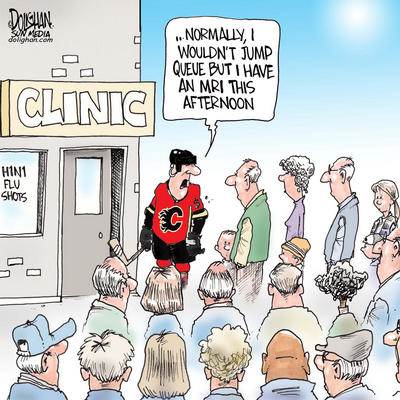
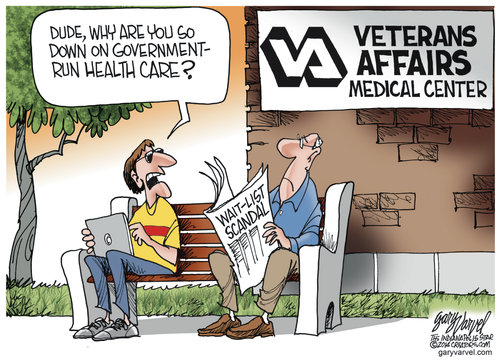
Extending free Medicare to the entire population would cost over $30 trillion in the first 10 years, and that’s a conservative estimate. And be forewarned: single-payer health care is government health care, which invariably leads to rationed access and protracted waiting times, poor quality, and escalating costs. For a detailed look at many of the quality problems suffered by Medicare patients, see this paper by Michael Cannon and Jacqueline Pohida. Don’t be deceived by claims that Medicare’s administrative costs are lower than private insurance: The real cost of Medicare is largely hidden through the imposition of low reimbursement rates to providers, while taxpayers get stuck with a significant bill.

Avik Roy has discussed variations on “Medicare For All” (M4A), most of which share very little with today’s Medicare. Not only would they fail to address its shortcomings; they would be much worse. Some do not include the range of private plans currently offered through Medicare Advantage. In fact, under the plans offered by Bernie Sanders and Elizabeth Warren, Medicare Advantage would be terminated, as would all other private insurance for the working-age population. Medicaid would also be eliminated. “Medicare”, in its surviving form, would be the single-payer system, “free” at the point of care and without premiums. Again, a free health care buffet would unleash gluttonous demand, so certain restrictions must be in place to limit pricing and access to care. Think rationing, which should sound ominous to those whose health is failing.

Physician reimbursement rates under traditional Medicare are now only about 60% of private reimbursements, and that filters down to the wages earned by other workers in the health care sector. Naturally, broadening Medicare’s reach will cause providers and their employees to drop-out or cut back. And again, services will be subject to various other forms of rationing. These are unavoidable failings of free or heavily-subsidized health care systems, not to mention the massive burden on taxpayers. And by the way, the “rich” are nowhere near rich enough to pay for all of it.

As to the overall effects, here’s what CBO Director Phillip L. Swagel told the Senate Budget Committee recently, as quoted in Reason by JD Tuccille:

“The increase in demand for personal health care would exceed the increase in supply, resulting in greater unmet demand than the amount under current law. The increase in unmet demand would correspond to increased congestion in the health care system, including delays and forgone care.”

The “increase in supply” mentioned by Swagel is something of a pipe dream.

Buy-Ins and Public Option

There are less drastic proposals than full-blown M4A, such as so-called Medicare buy-ins. For example, those age 50 – 64 might be given the option to “buy-in” to Medicare coverage. It’s not clear whether that would include a choice of Medicare Advantage plans. Many would find the coverage available through traditional Medicare and Medicare Advantage to be inadequate. It is often inferior to private plans, including the lack of dependent coverage and no out-of-pocket maximum for traditional Medicare. Supplemental coverage would be necessary for many individuals choosing the latter.

Another question is how employers would adjust to a segment of their work force in the 50-64 age group opting-out of sponsored coverage. Would the company be required to pick-up the Medicare tab? Would there be compensatory adjustments in wages? Fully compensatory changes are unlikely. Even with partial adjustments, how would an employer adjust company-wide wage scales for younger workers who perform the same or similar duties as those opting into Medicare. And what of the tax-free benefit for workers on employer-paid premiums? Medicare premiums are not tax deductible… at least not yet!

All of the other concerns about low provider reimbursement rates would apply to a Medicare buy-in. The supply of medical care, particularly to the segment buying in, might prove thin. The buy-in option would have very little impact on the number of uninsured individuals. However, several studies have found that the buy-in option would increase premiums for private plans on the individual market (see the last link). That’s largely because providers will try to stick private insurers and patients with the burden of cross-subsidizing Medicare buy-ins.

Another proposal is for a Medicare plan or similar public option to be made available to all in the exchange marketplace. This would take a more massive toll on taxpayers and health care access and quality than the buy-in approach. Moreover, because of pressure for cross-subsidies, private plans will struggle to stay in business. The destruction would be gradual, but the public option would slowly eliminate choice from the marketplace. Cannon and Pohida believe that offering a public option could lead to improvements if the private and public plans are allowed to compete on a level playing field, largely in terms of subsidies and regulatory hurdles, but that is highly unlikely.

Cuts Ahead?

A lesser known issue is the impact of spending caps put in place under the Affordable Care Act. These apply to Medicare and Medicaid as well as federal subsidies on policies purchased on the Obamacare exchanges. When those caps are exceeded, access becomes temporarily restricted, with some practices actually closing their doors for a period of days or weeks. Health economist John Goodman notes that seniors tend to eat into the allowable spending amounts much faster than younger cohorts. That means seniors might be denied costlier forms of care. To the extent that any variation on M4A covers a broader age range, there might be more pressure to curtail certain forms of care for seniors, which would be a most unfortunate case of policy-induced age discrimination.

As for Medicare as it stands now, Goodman describes the potential cuts that are coming. These include the possibility of reduced amenities (e.g., hospital wards with more patients per room and lower-cost meals), and as already mentioned, longer waits and restricted availability of costlier treatments. Goodman states that the necessary cuts to make Medicare whole would be equivalent to the loss of three years of coverage for a 65-year old, and the cuts will affect both traditional Medicare and privately-issued (but publicly subsidized) Advantage plans.

Conclusion

There’s no chance any form of M4A would reduce the cost of care or improve access to care. An expanded Medicare would bear the hallmarks of central planning that have accelerated the monopolization of health care under Obamacare. And like Obamacare, the final form of any M4A plan will be the product of negotiations between self-interested politicians, corporatists and regulators. Big pharmaceutical companies, insurers, large hospital systems, and other interest groups will wrangle for the rents that “reform” legislation might bring. Costs will rise and access to care will be restricted. Taxpayers will be saddled with a large chunk of the cost.

In the end it’s likely to be a mess. Far better to adopt reforms that would bring more innovation, choice, and competition to the markets for health insurance and health care. That includes expanding the range of options available under private Medicare (Advantage). At the same time, Obamacare should be scrapped in favor of a range of a greater range of private options with income-dependent subsidies, including catastrophic coverage only, as well as reduced regulation of insurers and providers.
Health Insurance Profits Are Not the Problem

08 Thursday Jul 2021

Posted by Nuetzel in Health Insurance, Profit Motive

≈ Leave a comment

Tags

Capitalization, COBRA, Community Rating, Cronyism, Death Spiral, Economies of Scale, Health Insurance, Medical Loss Ratio, Monopsony, Obamacare, Premium Subsidies, Profit, Profit Motive, Single-Payer System

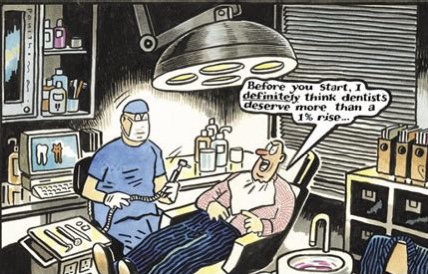
My dentist said, “Oh well, these days it’s really only about whether the insurance company makes a profit….” A giant appliance was in my mouth at the time, propping it open, so I couldn’t respond. But I made a mental note because it reminded me of the hypocrisy so common in how people regard the concept of profit. That’s especially true of the Left, and I happen to know that my dentist, whom I personally like very much, stands well to my left. 

Profit Is Income

It’s worth pointing out that profit is merely compensation. My dentist collects revenue, often paid to him by insurers. If he runs an efficient practice, then he earns an income after paying staff, office rent, various suppliers, and for equipment, including interest on any debt outstanding. You wouldn’t be wrong to call that profit, and he does pretty well for himself, but somehow he thinks it’s different.

My dentist probably feels locked into an adversarial position with my insurer, and of course he is in the short run. He says his price is $750; the insurer says, “Sorry Charlie, you get $250”. So as far as he’s concerned, it’s a zero-sum game. Not so in the long run, however. He needs to partner with insurers to get and keep patients, so the exchange is mutually beneficial. And while he might do some picking and choosing among insurers, he’s essentially a price taker. His “price” of $750 is something of a fiction, as he’s clearly willing to do the work for the insurer’s reimbursement. 

I think the key qualitative difference between my dentist’s income and that of any wage earner is that his income is always at risk. After all, profit is often regarded as a return to entrepreneurial risk-taking. As it happens, he’s taking a loss on my new crown because it cracked as soon as he put it in. Then, he had to start from scratch with new impressions, after painstakingly removing the cemented, cracked pieces with what felt like a tiny circular saw.

Middling Profitability

But what about those profit-hungry health insurers? In fact, they are not known for outrageously high profits, and their earnings are typically not valued as highly by the market as those of other industries, dollar for dollar. Competition helps restrain pricing and enhance performance, of course. And since the advent of Obamacare, profits have been subject to a loose “cap” (more on that below).

The profitability of health insurers improved in 2020, however, because so many tests and elective procedures were postponed or foregone due to the coronavirus pandemic. That also prompted the government to make more generous subsidies available to consumers to pay COBRA insurance premiums.

Profits Drive Efficiency

I’ll put aside concerns about the crony capitalism inherent in the health system-insurer-regulator nexus, at least for a moment. The profit motive is the fundamental driver of efficiency in the production of insurance contracts and pooling of risks, as well as efficient servicing and administration of those contracts. Absent the possibility of profit, these tasks would become mere bureaucratic functions with little regard for cost and resource allocation. Furthermore, managing risk requires a deep pool of capital to ensure the ability of the insurer to meet future claims. Reinvestment and growth of the enterprise also requires capital. That capital is always at risk and it is costly because its owners demand a return as fair compensation. 

Poor Alternatives

Eliminating profit from the insurance function implies that resources must be put at risk without compensation. That’s one of the reasons why non-profit insurers, over the years, have tended to be thinly capitalized and unstable, or limited in their offerings to “health maintenance” benefits, like primary or preventative care, as opposed to insuring against catastrophic events. Capital grants to non-profits (private or governmental) usually come with strings attached, which can severely limit the effectiveness of the capital for meeting existing or future needs of the operation. Growth requires reinvestment, so a profit margin must be earned in order to grow with internal funds. Where non-profits are concerned, you can call the “margin” whatever you want, but it is functionally equivalent to a profit margin. 

On the other hand, insurance provided by the public sector puts the taxpayer at risk, and the potential liability to taxpayer “capital” is never rewarded nor indemnified. But it is not free. Now, you might insist that we’d all benefit from government-sponsored health insurance because of the broader risk pool. The problem with that perspective is that it turns the pricing of risk into a political exercise. We’ve already seen the destructive effects of community rating. Younger, healthier, but budget-constrained individuals tend to opt out due to excessive premiums, leading to a systemic “death spiral” of the pool.

Administrative Costs

A puzzling contention is that private insurers drive up administrative costs, presumably when compared to a single-payer system. Obamacare regulations limit the so-called Medical Loss Ratio of a health plan. To simplify a bit, this requires rebates to customers if premiums exceed claims by a certain threshold, which varies across individual, small, and large group markets. This regulation obviously places a loose cap on profits. It is also arbitrary and probably has hampered competition in the individual market. And of course there have always been suspicions that the ratio can be “gamed”. 

Nevertheless, under a single-payer system, it would be shocking if economies of scale were sufficient to reduce administrative costs to levels below those incurred by private insurers (especially if we exclude profit!). After all, scale is seldom a prescription for government efficiency, and that’s largely due to the absence of a profit motive and any semblance of competition! What administrative savings might be achieved by a monopsony public payer are likely to derive mainly from “one-size-fits-all” decision-making and product design, with little heed to consumer preferences and choice.

I’ll Take the Profit-Maker’s Coverage

There is plenty to criticize about the health insurance industry. In important ways, it has already succeeded in shifting risks to taxpayers with the help of its policy-making cronies. The insurers are further protected by a flow of government premium subsidies to the individual market; and the largest insurers have benefitted from Obamacare regulations, which encourages increased market power by large hospital networks, which are happy to negotiate charges that benefit themselves and insurers. All else equal, however, I’d rather have a few choices from profit-making health insurers than a single, community-rated choice from the government. I’d rather see risk priced correctly, with direct subsidies made available to individuals in high-risk segments unable to afford their premiums. And I’d rather see less government involvement in health care delivery and insurance. We’d all be better off, including my dentist!

Barrett v. Obamacare

04 Sunday Oct 2020

Posted by Nuetzel in Health Insurance, Obamacare

≈ Leave a comment

Tags

ACA, Affordable Care Act, Amy Coney Barrett, California v. Texas, Chief Justice John Roberts, Donald Trump, Essential Benefits, Individual Mandate, Inseverability Claude, Jonathon Adler, Josh Blackman, National Federation of Independent Businesses, NFIB v. Sebelius, Obamacare, Recusal, Ruth Bader Ginsburg, Severability

Obamacare’s survival has emerged as the democrats’ big talking point against Amy Coney Barrett’s nomination to the Supreme Court, especially since a case challenging the health care law is scheduled be heard by the Court on November 10th. I’m certainly no a fan of the Affordable Care Act (ACA, or Obamacare). It is anticompetitive and it is a regulatory and pricing nightmare. However, the chances it will be struck down in its entirety are slim to none, whether Barrett is confirmed or not.

The Case Before the Court

The case at hand is California v. Texas, in which 21 democrat state attorneys general appealed a decision by a lower court that the ACA’s individual mandate is unconstitutional. The case against the ACA was originally brought by 20 republican state attorneys general based on Congress’ earlier repeal of the “tax” levied on violations of the law’s individual mandate. With that repeal, the mandate itself became unenforceable because it effectively disqualified the mandate as a matter of congressional intent. More background on the case can be found here.

The reinterpretation of the ACA penalty as a tax was the key turning point in an earlier case, National Federation of Independent Business v. Sebelius, in which Chief Justice John Roberts’ deciding vote upheld the ACA’s individual mandate under Congress’ taxing power. Now, in California v. Texas, a District Court ruled for the plaintiffs that the entire ACA is unconstitutional, not just the individual mandate. Subsequently, however, an Appeals Court ruled only against the mandate. Thus, the case before the Supreme Court is primarily about the standing of the states that originally brought the suit and the status of the individual mandate. The case is unlikely to involve other components of the law, such as the list of minimum essential benefits and protections on pre-existing conditions.

Severability

The Appeals Court decision can be upheld by the Supreme Court without striking down the whole of the ACA. This rests on the doctrine of severability, which holds that a law’s unconstitutional provision(s) do not invalidate other provisions within the same law. The Court has often applied this doctrine in deference to the intent of legislation, to the extent that other parts of a law can stand on their own. Jonathan Adler, who has filed a brief with the Court in California v. Texas, writes that the individual mandate is clearly severable from the rest of the ACA:

“When part of a statute becomes unenforceable, a court usually must ask whether Congress would have preferred what remains of the statute to no statute at all. Typically, it is a court that renders a provision unenforceable, and the court must hypothesize what Congress would have intended in that scenario. Courts also will sometimes assess whether the statute functions without the provision— a proxy for legislative intent.

But this case is unusual. It presents no need for any of these difficult inquiries because Congress itself—not a court—eliminated enforcement of the provision in question and left the rest of the statute standing. So congressional intent is clear; it is embodied in the text and substance of the statutory amendment itself.”

Furthermore, contrary to the claims of the republican plaintiffs in the case, the ACA does not contain an inseverability clause. The Court is likely to invoke the severability doctrine, so Amy Coney Barrett’s (ACB’s) confirmation prior to the hearing would not lead to a ruling against the whole of Obamacare. The Court seems to like small steps.

What She Said

ACB has written that the Court’s original interpretation of the penalty for violating the mandate as a tax was flawed. Again, the argument was attributable to the opinion written by Chief Justice Roberts in NFIB v. Sebelius. The ACA never used the term “tax” in the context of an individual’s failure to comply with the mandate. Instead, it referred to the “penalty” multiple times. In the law’s original form, the clear legislative intent was to penalize certain behavior: failing to buy a product. ACB wrote the following of Roberts’ opinion in 2017:

“He construed the penalty imposed on those without health insurance as a tax, which permitted him to sustain the statute as a valid exercise of the taxing power. Had he treated the payment as the statute did—as a penalty—he would have had to invalidate the statute as lying beyond Congress’s commerce power. … One would be hard-pressed to find many originalists who think that a court should find a way to uphold a statute when determinate text points in the opposite direction.”

Recusal

Josh Blackman says ACB need not recuse herself from hearing California v. Texas. First, the case is not a reconsideration of NFIB because the “tax” no longer exists; second, the current challenge to the mandate does not hinge on the plausibility of Roberts’ opinion in that case; and finally, recusals at the Supreme Court typically require a higher bar than lower courts in order to avoid a short-handed Court. Jonathon Adler discusses a recent moot court on California v. Texas in which ACB participated, and he seems to agree that recusal is unnecessary.

So ACB said the penalty was a penalty, not a tax, but the penalty no longer exists in any case. Congress left the individual mandate with no enforcement mechanism, a clear signal of its intent to set the mandate aside. The severability of the mandate from the ACA, and the “tax vs. penalty” focus of ACB’s remarks on the NFIB decision, offer little rationale for the view that ACB would argue to overturn the entirety of the ACA in California vs. Texas.

Essential Benefits

ACB has had another beef with the ACA, however, which has to do with certain items on the list of minimum essential benefits mandated by the law. The purpose of the list was much like that of the individual mandate: to force payment by all parties to cross-subsidize those who desired certain benefits. The list included contraceptives, abortifacients, and sterilization, and the requirements applied to individual policies as well as plans offered by private organizations, including those having moral and religious objections to the use of these products or services. Those individuals would be forced to offer and pay for the objectionable benefits just the same. In 2012, ACB signed a statement that called the requirement an “assault on religious liberty and the rights of conscience“. That argument seems even more compelling with today’s availability of cheap contraceptives over-the-counter. But the point raised by ACB is now irrelevant: this summer, the Court ruled against the requirement on contraceptives, but the Court didn’t say the whole list is unconstitutional. That aside, the list of essential benefits impedes the objective of offering low-cost coverage to the broadest swath of the population, and it is one of the reasons for the astonishingly high deductibles on Obamacare health policies.

Conclusion

The ACA has many flaws and has prompted a large number of legal challenges. It will continue to do so. Seven of those cases have already risen to the level of the Supreme Court, and there could be more. The ACA is a terrible law: it has driven up the cost of health insurance coverage through community rating and benefits mandates. It has driven up the cost of care through excessive regulatory measures and incentives for providers to consolidate. But while I am no fan of the law, the appointment of Amy Coney Barrett to the Court does not presage its complete overturn. That will almost certainly have to wait for legislation on a complete replacement for Obamacare, which doesn’t seem imminent.

Single-Payer: Queue Up and Die Already

19 Sunday Jan 2020

Posted by Nuetzel in Health Care, Health Insurance

≈ 1 Comment

Tags

Australia, Bernie Sanders, Canada, Catastrophic Coverage, Chris Pope, Competitive Payer, Dual Payer, Employer-Paid Coverage, France, Germany, Individual Mandate, Manhattan Institute, Medicaid, Medicare, Netherlands, Out-of-Pocket Costs, Portability, Premium Deductibility, Segmented Payer, Single-Payer, Switzerland, third-party payments, Uncompensated care, United Kingdom, Universal Coverage

I constantly hear this sort of naive remark about health care in “other major countries”, and while Chris Pope’s rejoinder below should chasten the ignorant, they won’t listen (emphasis is mine):

“[Bernie] Sanders recently argued that ‘our idea is to do what every other major country on earth is doing,’ but this claim is … fictitious. In fact, there is not a single country in the world that offers comprehensive coverage with an unlimited choice of providers, fully paid for by taxpayers, without insurer gatekeeping, service rationing, or out-of-pocket payments. In reality, there is a direct trade-off between ease of access to providers and the cost borne by individuals in out-of-pocket expenses.”

Pope’s statement pretty much strips bare the fiction of “universal” coverage, a concept too loosely defined to be of any real use except as a rhetorical device. It also highlights the non-monetary costs inflicted on consumers by non-price rationing of care. The presumption that government must provide universal health care coverage and that all other developed countries actually have that arrangement is incorrect.

Pope has another article at the Manhattan Institute site, written late last year, on the lessons we can learn on health care from experience abroad under various payer systems. This offers a more detailed comparison of the structure of the U.S. payment system versus seven other countries, including Canada, the U.K., Australia, and Germany. Single-payer tends to be the “gold standard” for the Left, but the only systems that “approximate” single-payer are in Canada and the U.K. Here is one blurb about Canada:

“Canadians have easy access to general practitioners, but getting an appointment to see a specialist is more difficult than in all the other nations studied in this report. The Canadian medical system provides the least hospital care, delivers consistently fewer outpatient procedures, and provides much less access to modern diagnostic technology.

Canadians also have limited access to drugs, according to Pope. And out-of-pocket (OOP) spending is about the same as in the U.S. At the first link above, Pope says:

“Canadians spend less on health care than Americans mostly because they are not allowed to use as much — not because they are getting a better deal. … Waiting lists are generally seen as the single-payer budgeter’s friend, as some patients will return to health by themselves, others will be discouraged from seeking treatment, and a large proportion of the most expensive cases will die before any money is due to be spent on them.”

Pope says this about the U.K. at the second link:

“U.K. hospitals often lack cutting-edge technology, and mortality after major emergency hospitalizations compares poorly with that of other nations in this report. Access to specialists is very limited, and the system falls well short of most other nations in the delivery of outpatient surgery.” 

Waiting times in the U.K. tend to be long, but in exchange for all these shortcomings in care, at least OOP costs are low. Relative to other payment systems, single payer seems to be the worst in several respects.

The other systems described by Pope are:

  • “dual payer” in Australia and France, with public entitlements and the choice of some private or supplemental coverage;
  • “competing payer” in Switzerland, Germany, and the Netherlands, whereby subsidies can be used to purchase coverage from private plans (and in Germany some “quasi-public” plans; and
  • “segmented payer” in the U.S., with two public plans for different segments of the population (Medicare for the elderly and Medicaid for the non-elderly poor), employer-sponsored coverage primarily from larger employers, individually-purchased private coverage, and subsidies to providers for “uncompensated care” for the uninsured.

Here is what Pope says about the various “multi-payer” systems:

“Dual-payer and competitive-payer systems blend into each other, according to the extent of the public entitlement in dual-payer countries …

… limitations in access to care are closely tied to the share of the population enrolled in private insurance—with those in Britain and Canada greatly limited, Australians facing moderate restrictions, and those in the other countries studied being more able to get care when they need it. 

The competing-payer model ideally gives insurers the freedom and responsibility to procure health-care services in a way that attracts people to their plans by offering them the best benefits and the lowest medical costs. While all competing-payer systems fall short of this ideal, in practice they consistently offer good access to high-quality medical care with good insurance protection. The competing-payer model is, therefore, best understood as an objective that is sought rather than yet realized—and countries including Germany, the Netherlands, France, and the U.S., which have experienced the most significant health-care reform over recent years, are each moving toward it.”

The U.S. has very high health care costs as a percent of GDP, but OOP costs are roughly in line with the others (except the Swiss, who face very high OOP costs). The U.S. is wealthier than the other countries reviewed by Pope, so a large part of the cost gap can be attributed to demand for health care as a luxury good, especially late in life. Insured U.S. consumers certainly have access to unrivaled technology and high-quality care with minimal delays.

Several countries, including the U.S., are plagued by a lack of competition among hospitals and other providers. Government regulations, hospital subsidies, and pricing rules are at the root of this problem. Third-party payments separate consumers from the pricing consequences of their health-care decisions, which tends to drive up costs. If that weren’t enough, the tax deductibility of employer-paid insurance premiums in the U.S. is an subsidy ironically granted to those best-able to afford coverage, which ultimately heightens demand and inflates prices.

Notably, unlike other countries, there is no longer an individual mandate in the U.S. or any penalty for being uninsured, other than the potential difficulty in qualifying for coverage with pre-existing conditions. Consumers who lack employer-sponsored or individual coverage, but have incomes too high to qualify for Medicaid or premium subsidies, fall into a gap that has been the bane of would-be reformers. There are a few options for an immediate solution: 1) force them to get insured with another go at an individual mandate; 2) offer public subsidies to a broader class; 3) let them rely on emergency-room services (which cannot turn them away) or other forms of uncompensated care; 4) allow them to purchase cheap temporary and/or catastrophic coverage at their own expense; 5) allow portability of coverage for job losers. Recently, the path of least political resistance seems to have been a combination of 3, 4, and 5. But again, the deficient option preferred by many on the Left: single-payer. Again, from Pope:

“Single-payer systems share the common feature of limiting access to care according to what can be raised in taxes. Government revenues consistently lag the growth in demand for medical services resulting from increased affluence, longevity, and technological capacity. As a result, single-payer systems deliver consistently lower quality and access to high-cost specialty care or surgical procedures without reducing overall out-of-pocket costs. Across the countries in this paper, limitations in access to care are closely tied to the share of the population enrolled in private insurance—with those in Britain and Canada greatly limited…”

Hospital Price Insanity

15 Sunday Dec 2019

Posted by Nuetzel in Health Care, Health Insurance

≈ 2 Comments

Tags

Affordable Care Act, Allowable Amounts, Avik Roy, Certificate of Need, Chris Pope, Claims Repricing, Disproportionate Share Hospital Payments, Dr. Keith Smith, DSH Payments, EconTalk, First Amendment, John C. Goodman, John Cochrane, Mandated Price Transparency, Medicare, Robert Laszewski, Russ Roberts, Shoppable Sevices, Surgery Center of Oklahoma, Uncompensated care

Almost nothing is less transparent than hospital pricing. If you’re shopping for a procedure, you probably won’t hear about the negotiated prices worked out with large insurers…. you’re likely to be quoted something much higher. A high price is billed to an insurer, but the excess above their negotiated prices is “disallowed” via contractual adjustment. You and/or your small insurer might not get the same deal. As Robert Laszewski says:

“The chargemaster is complete nonsense that really doesn’t matter — unless you are an uninsured person and you’re getting these huge bills driving you toward bankruptcy. The biggest irony of the U.S. healthcare system is that only the uninsured — often people who don’t have a lot of money — are the only ones the hospital expects to pay these incredibly inflated prices!”

An uninsured patient might be billed at the higher rate, but of course few end up paying. But there is harm in this arrangement, and it extends well beyond the uninsured. You might not be surprised to learn that the government is right in the middle of it. Read on…

What a Racket!

There’s some slight of hand going on in hospital pricing that creates perverse incentives. Who has something to gain from a huge gap between the full price and the hospital’s allowable charge? The answer is both the hospital and insurers, and that’s true whether the hospital is for-profit or nonprofit. When the list price and the size of the discount increase, the insurer gets to brag to employer-plan sponsors about the great savings it negotiates. In an episode on EconTalk, Dr. Keith Smith, a partner in the ultra-competitive and cash-only Surgery Center of Oklahoma, says (only partly in jest) that the conversation between the insurer and hospital might go something like this:

“Now, what the insurers actually do is ask the hospital administrators, ‘Can you do a brother a favor and actually charge $200,000 for that, so that our percentage savings actually looks larger?‘”

This does two things for the insurer: it impresses employers as prospective plan sponsors, and it might also earn the insurer a bonus known as Claims Repricing, whereby the employer pays a commission on the discounts the insurer “negotiates”.

What about the hospitals? How do they benefit from this kind of arrangement? By inflating the “list price” of procedures, the hospital creates the appearance of a write-down or loss on a substantial share of the care it provides, despite the fact that its real costs are far below list prices and usually below the discounted “allowable amounts” negotiated with insurers as well. The appearance of loss serves to benefit the hospitals because they are compensated by the government on that basis through so-called Disproportionate Share Hospital (DSH) payments. These are, ostensibly, reimbursements for so-called uncompensated care.

This would not be such a travesty if the prices approximated real costs, but they don’t, and the arrangement creates incentives to inflate. The DSH payments to hospitals are used in a variety of ways, as Smith notes:

“Yeah; and before we get to feeling too sorry for the hospitals, all of the ones I know of claiming to go broke have a crane in front of them building onto their Emergency Room. …

So, I don’t know: again, the hospitals that are complaining about this, they are buying out physician practices, they’re buying out competitors. They seem to have a whole lot of money. They’re not suffering. Now, what they have done is used the situation you described–the legitimate non-payer–they’ve used that as a propaganda tool, I would argue, to develop a justification for cost shifting where they charge us all a whole lot more to make up for all the money that they’re losing. But they really need a lot of this red ink to maintain the fiction of their not-for-profit status.”

Non-profit hospitals are also entirely tax-exempt (income and property taxes), despite the fact that many use their “free cash flows” in ways similar to for-profit hospitals. The following describes a 2015 court ruling in New Jersey:

“The judge stated ‘If it is true that all non-profit hospitals operate like the hospital in this case… then for purposes of the property tax exemption, modern non-profit hospitals are essentially legal fictions.’ Judge Bianco found that the hospital ‘operated and used the property for a profit-making purpose’ by, in part, providing substantial loans, capital, and subsidies to for-profit entities, including physician groups.“

The bad incentives go beyond all this. Smith adds the following:

“Waste in a big hospital system is actually encouraged, many times because hospitals are paid based on what they use…. So, to the extent that the hospital uses a lot of supplies, that typically raises and increases the amount of revenue that they receive.”

Hospitals have been shielded from competition for years by the government. As Chris Pope explains, hospital pricing is designed “to accommodate rather than to constrain the growth of hospital costs“. This encourages hospitals that are inefficient in terms of costs, quality of care, and over-investment in equipment. Conversely, duplicated facilities and equipment simply add costs and don’t encourage competition given the cost-plus nature of hospital pricing and government efforts to prevent entry by more efficient operators. These restrictions include “Certificates of Need” for new entrants, and the ban on physician-owned hospitals in the Affordable Care Act (ACA). At the same time, the ACA encouraged hospital consolidation by rewarding the formation of so-called Accountable Care Organizations, which are basically exempt from anti-trust review. In the end, any reductions in administrative costs that consolidation might offer are swamped by the anti-consumer force of monopoly power.

Mandated Transparency?

The lack of price transparency really isn’t the root problem, in my view, but it is undesirable. Can government action to create transparency foster a more competitive market for the services hospitals offer? A recent Trump Administration Executive Order would require that hospitals publicly post prices for 300 “shoppable” services or procedures. The effective date of this order was recently delayed by a year, to January 2021. Hospital trade groups have challenged the order in court on the grounds that the First Amendment protects private businesses from being compelled to reveal details of privately-negotiated deals for complex services. While I try to be a faithful defender of constitutional rights, I find this defense rather cynicical. I’m not sure the First Amendment was intended to aid in concealing dishonest schemes for private benefit at the expense of taxpayers and consumers.

Avik Roy likes the price transparency rule. It would require the posting of gross charges for procedures as well as specific negotiated prices. The executive order would also require Medicare to pay no more to hospital-owned clinics than to independent clinics for the same procedure, which is laudable. Roy is sanguine about the ability of these rules to bring more competition to the market. He predicts a more level playing field for small insurers in negotiating discounts, and he thinks the order would spur development of on-line tools to assist consumers.

John C. Goodman is mildly skeptical of the benefits of a transparency mandate (also see here). Consumers with decent levels of coverage aren’t terribly motivated to make hospital price comparisons, especially if it means a delay in treatment. Also, Goodman points out a few ways in which hospitals try to “game” transparency requirements that already exist. John Cochrane worries about gaming of the rules as well. Competition and price discipline are better prescriptions for price transparency and might be better addressed by eliminating the incentives for third-party payment arrangements, like the unbalanced tax deductibility of health insurance premiums, but that kind of reform isn’t on the horizon. Goodman concedes that many procedures are “shoppable”, and he does not minimize the extent to which pricing varies within local hospital markets.

Conclusion

The most insane thing about hospital revenue generation is its reliance on fictitious losses. And hospitals, profit and non-profit, have a tendency to spend excess cash in ways that fuel additional growth in cost and prices. Sadly, beyond their opacity, hospital prices do not reflect the true value of the resources used by those institutions.

In my view, the value of price transparency does not hinge on whether the average health care consumer is sensitive to hospital prices, but on whether the marginal consumer is sensitive. That includes those willing to pay for services out-of-pocket, such as those who seek care at the Surgery Center of Oklahoma. Third-party payers lacking significant market power would undoubtedly prefer to have more information on pricing as well. Mandated price transparency won’t fix all of the dysfunctions in the delivery and payment for health care. That would require more substantial free-market reforms to the insurance and health care industries, which ideally would involve replacing price subsidies with direct payments to the uninsured. The transparency mandate itself might or might not intrude on domains over which privacy is protected by the Constitution, a question that has already been brought before the courts. Nonetheless, transparency would lead to better market information for all participants, which might help rationalize pricing and encourage competitive forces.


Health Reform and Pre-Existing Confusion

24 Wednesday Apr 2019

Posted by Nuetzel in Health Care, Health Insurance

≈ Leave a comment

Tags

Capitation, Centers for Medicare and Medicaid Services, Concierge Medicine, Group Market, Individual Mandate, Individual Market, Insurance Subsidies, John C. Goodman, Medicaid, Medicare Advantage, Mediprex Advantage, Obamacare, Pre-Existing Conditions, Premium Tax, Public Option, Tax Deductibility, Wage controls

Several Democrats vying for the party’s presidential nomination are pushing Medicare For All (MFA) as a propitious avenue for health care reform. They make the dubious claim that universal government health insurance would broaden real access to health care. As we know from experience with Medicaid, Medicare, and Obamacare, broader coverage does not necessarily imply better access. Even more dubious is the claim that MFA would reduce the costs of insurance and health care.

Single-Payer Perils

MFA appeals to the Democrats’ extreme leftist flank, a segment likely to have an out-sized influence in the early stages of the nomination process. Their fixation on MFA is borne of leftist romanticism more than analytics. Democrats have long-championed less ambitious plans, such as a public option, but those are stalling in “blue” states precisely due to their costs.

MFA would demand a massive transfer of resources to the public sector and would completely decimate the private health insurance industry, upon which 90% of Americans rely. As John C. Goodman explains, MFA would lead to less choice, misallocated health resources, long waiting times to obtain care for serious illnesses, and even greater inequalities in access to care because those who can afford private alternatives will find them.

Goodman also discusses a new health plan proposed by House Democrats that is more of an effort to save Obamacare. It won’t, he says, because among other issues, it fails to address the narrowing in-network choices faced by people with chronic conditions, and it would aggravate cost pressures for those who do not qualify for subsidies.

Outlining A Plan

There are many obstacles to a health care deal. Democrats are bitter after the effective repeal of the individual mandate, but despite their assertions, subsidized coverage of pre-existing conditions is not a principle about which most Republicans disagree. Really, the question is how to get it done. MFA is pretty much dead-on-arrival, despite all the bluster. But those who wish to protect choice and the efficient allocation of risk prefer to leverage a combination private insurance and targeted subsidies to achieve broad coverage.

Capitation: Goodman suggests an approach to high-risk patients that has proven successful in private Medicare Advantage (MA) coverage. These plans are structured around “capitated” payments to the insurer from the Centers for Medicare and Medicaid Services (CMS): per patient fees that cover in-network costs above the patient’s out-of-pocket limit. The insurer bears the risk of a shortfall. Assuming that the capitated payment makes coverage of high-risk patients a fair risk, insurers will compete for those buyers. That competition is what makes MA so appealing. Patients with pre-existing conditions under an MA-like system, which I’ll call “Mediprex Advantage”, or just Mediprex for short, would be pooled in “special needs” plans with relatively large capitations.

Risk-Shifting: The other major issue addressed by Goodman is the need to eliminate incentives for risk-shifting from the employer-paid, group insurance market to the individual market. The population of employed individuals in the group market is less costly, on average, and the sickest individuals often have to stop working. Goodman recommends state-level premium taxes on group policies, dedicating the proceeds to subsidies for individuals who must migrate from the group to the individual market. Employers could avoid the tax by offering full portability.

Tax Treatment: The bifurcation of health insurance coverage between employer and individual markets might not have lasted were it not for the favorable tax treatment afforded to employer plans. Deductibility of premiums on employer plans has inflated both premiums and health care costs, much to the detriment of those in the individual market. I would be happy to see deductibility repealed. An obvious alternative to.repeal, extending deductibility to the individual market, would balance incentives, but it would also tend to inflate costs somewhat. Still, the status quo is probably inferior to either repeal or deductibility for all.

Future Insurability: The concept of insuring future insurability is highly attractive. That is precisely what employer guaranteed-portability does, and the actuarial cost could be funded at employer/employee initiative, by a premium tax, or simply mandated. Voluntary action is preferred, but there are reasons why it is not a natural progression in the group market. First, renewability is usually guaranteed for the duration of employment, though job tenures have declined substantially since the early years of employer-based coverage. Nevertheless, health coverage is a retention tool that full portability would nullify. Second, employer coverage is itself a creature of government intervention, a result of the wage controls put into place during World War II. Since then, the features of health coverage have partly been driven by the tax-deductibility of premiums, which makes the cost of coverage cheaper after-tax. That, in turn, has encouraged the extension of coverage into areas of health maintenance and preventative care, but that increases the burden of paying for portability.

Plan Migration: If you’re not already covered under a group plan, another mechanism is needed to insure your future insurability. For example, Obamacare requires guaranteed issue and renewability in the individual market with a few exceptions related to non-payment, fraud, and product availability. Lower-income premium payers are eligible for subsidies. The suggestion here is that a guaranteed issue, renewable contract must remain available in the individual market with subsidized premiums for some individuals. This might also apply when an individual’s employment terminates. An individual who has fallen ill might be placed into a different risk class via the sort of “Mediprex Advantage” program outlined above, perhaps with subsidies to fully cover the premium and capitation.

Catastrophic Plans: Affordable catastrophic policies with guaranteed renewability should be available in both the individual and group markets. But what becomes of an individual seeking a change to broader coverage? They’ll pay a higher premium to cover the actuarial cost as well as the greater level of future insurability they choose to insure. But if they are not eligible for broader coverage, then it’s on to Mediprex.

Belated Signups: Finally, under guaranteed-issue Mediprex, individuals who refuse coverage but then get sick might or might not be entitled to the same panoply of services available to other insureds. It is reasonable to expect that late-comers would pay a penalty premium and higher out-of-pocket costs, assuming they have the income or resources to do so, or they might face a curtailed set of benefits.

Conclusion

The ability to “insure future insurability” should be a key component of any health insurance reform plan. That means portability of group insurance, which requires funding. And it means premiums in the individual market reflecting the actuarial cost associated with future insurability. A healthy individual entering the individual market should have competitive insurance options from which to choose. A sick individual new to the individual market might have access to the portable coverage provided by their former employer, other risk-rated private plans, or they might need access to an individual plan that covers pre-existing conditions: what I have called Mediprex Advantage. A certain percentage of these individuals will have to be subsidized, but the cost will be supported, at least in part, by the premiums paid by healthy individuals to insure their future insurability. Finally, individuals should be free to opt-out of traditional insurance coverage, choosing concierge providers for various aspects of their health care.


Insuring Health Insurability

22 Saturday Dec 2018

Posted by Nuetzel in Health Insurance

≈ Leave a comment

Tags

Community Rating, Consumer Sovereignty, Death Spiral, Eugene Volokh, Health Insurance Options, Health Status Insurance, Individual Mandate, John C. Goodman, John Cochrane, Obamacare, Pre-Existing Conditions, Premium Subsidies, Tax Subsidies

The latest blow to Obamacare went down just before the holidays when a federal judge in Texas ruled that the individual mandate was unconstitutional. The decision will be appealed, so it will have no immediate impact on the health-care law or insurance markets. But as Eugene Volokh noted, the mandate itself became meaningless from an enforcement perspective after the repeal of the penalty tax for non-coverage in 2017, despite the fact that some individuals might still opt for coverage out of “respect for the law”. What will really matter, when and if the decision is upheld, is the nullification of the complex web of regulations created by Obamacare, officially known as the Affordable Care Act or ACA. Perhaps most important among these is the requirement that buyers in good health and those in poor health must be charged the same price for coverage. That is “community rating” and it is the chief reason for the escalation of insurance premiums under Obamacare.

One Size Misfits All

Community rating means that everyone pays the same premium regardless of health. Those in good health must pay higher than actuarially fair premiums to subsidize the sick or high-risk with premiums that are less than actuarially fair. Two provisions of the ACA were intended to make this work: first, the individual mandate required everyone to remain in the game (and paying the subsidies) rather than going uninsured and paying the “tax” penalty. But the penalty was so light that many preferred it to actually buying insurance. Now, of course, the penalty has been repealed. Second, individuals with incomes below 250% of poverty line receive premium subsidies from the federal government to offset the high cost of coverage. That means low-income buyers do not have to confront the high premiums, which was hoped to keep them in the game.

Community rating caused premiums in the individual insurance market to increase dramatically. This was compounded by the law’s minimum coverage requirements, which are more comprehensive than many consumers would have preferred. Lots of younger, healthier consumers opted out while the sick opted in, or even worse, opted in only when they became sick. This deterioration in the “risk pool” is the so-called insurance “death spiral”. The pool of insureds becomes increasingly risky, premiums escalate, more healthy consumers opt out, and the process repeats. At the root of it is the distortion in the way that risk is priced by community rating.

Tailored Coverage

The coverage and pricing of risk is better left to markets. That means consumers and insurers will reach agreement on policy provisions that are mutually beneficial ex ante. Insurers will offer to cover risks up to the point at which the expected marginal cost of underwriting is equal to value, or the buyer’s willingness to pay. An insurer who offers unattractive policies or charges too much will find its business undercut by competitors. But when risk is priced by government fiat and community rating, this natural form of market information discovery is impossible.

Tax vs. Premium Subsidies

Many in the high-risk population will be unable to afford coverage in the absence of community rating. There are only two general options: they pay what they can for care but otherwise go without insurance coverage, accepting charity care if they are willing; or, taxpayers pay, as under Medicaid. Most lack coverage because they simply cannot afford it, even when they earn too much to qualify for Medicaid.

That situation can be resolved in the long-term (as I’ll describe below), but an overhang of individuals with pre-existing conditions in need of subsidies will persist for a period of years. Under Obamacare, subsidies were paid by charging higher premia to healthy individuals through community rating. Again, that distorted signals about risk and value, creating unhealthy incentives among insurance buyers. The death spiral is the outcome. Subsidies funded by general taxation do not create these price distortions, however, and should be relied upon for assisting the high-risk population, at least those who are determined to qualify.

Health Status Insurance

The overhang of individuals with pre-existing conditions requiring subsidies can never be eliminated entirely—every day there are children born with critical, unanticipated health needs. However, the overhang can shrink drastically over time under certain conditions. A development that is already receiving meaningful attention in the market is the sale of health insurance options, as described by John Cochrane. I have written about this method of protecting future insurability here.

Cochrane raises the subject within the context of new HHS rules allowing insurance companies to offer “temporary” insurance coverage up to a year, but with guaranteed renewability through a total of 36 months of coverage. Unfortunately, if you get sick before the end of the 36th month, you’ll have to give up your policy and pay more elsewhere.  But Cochrane speculates:

“Unless, perhaps, they really are letting insurance companies offer the right to buy health insurance as a separate product, and that can have as long a horizon as you want? If they haven’t done that, I suggest they do so! I don’t think the ACA forbids the selling of options on health insurance of arbitrary duration.”

Cochrane links to this earlier article in which John C. Goodman discusses the ruling allowing the sale of temporary plans:

“The ruling pertains to ‘short-term, limited duration’ health plans. These plans are exempt from Obamacare regulations, including mandated benefits and a prohibition on pricing based on expected health expenses. Although they typically last up to 12 months, the Obama administration restricted them to 3 months and outlawed renewal guarantees that protect people who develop a costly health condition from facing a big premium hike on their next purchase.

The Trump administration has now reversed those decisions, allowing short-term plans to last up to 12 months and allowing guaranteed renewals up to three years. The ruling also allows the sale of a separate plan, call ‘health status insurance,’ that protects people from premium increases due to a change in health condition should they want to buy short-term insurance for another 3 years.”

That is far from permanent insurability, but the concept has nevertheless taken hold. An active market in health status insurance would reduce the pre-existing conditions problem to a bare minimum. The financial risks of deteriorating health would be underwritten in advance. Once stricken with illness, those unlucky individuals would then have coverage at standard rates by virtue of the earlier pooling of the risk of future changes in health status. At standard rates, relatively few high-risk individuals would require subsidies in order to afford coverage .

Will healthy, temporarily insured or uninsured individuals buy these options? Some, but not all, so subsidies will never disappear entirely. Still, the population of uninsured individuals with pre-existing conditions will shrink drastically. In the meantime, a healthy market for health insurance coverage should flourish, reestablishing the authority of the consumer over the kind of health care coverage they wish to purchase and the kinds of financial risks they are willing to bear.


Perspective on U.S. Health Care Spending & Outcomes

05 Sunday Aug 2018

Posted by Nuetzel in Health Care, Health Insurance

≈ Leave a comment

Tags

Bernie Sanders, Charles Blahous, John Cochrane, Joseph Walker, Life Expectancy, Mahdi Barakat, Medicare For All, Mercatus Center, Obesity, Random Critical Analysis, SwedenCare

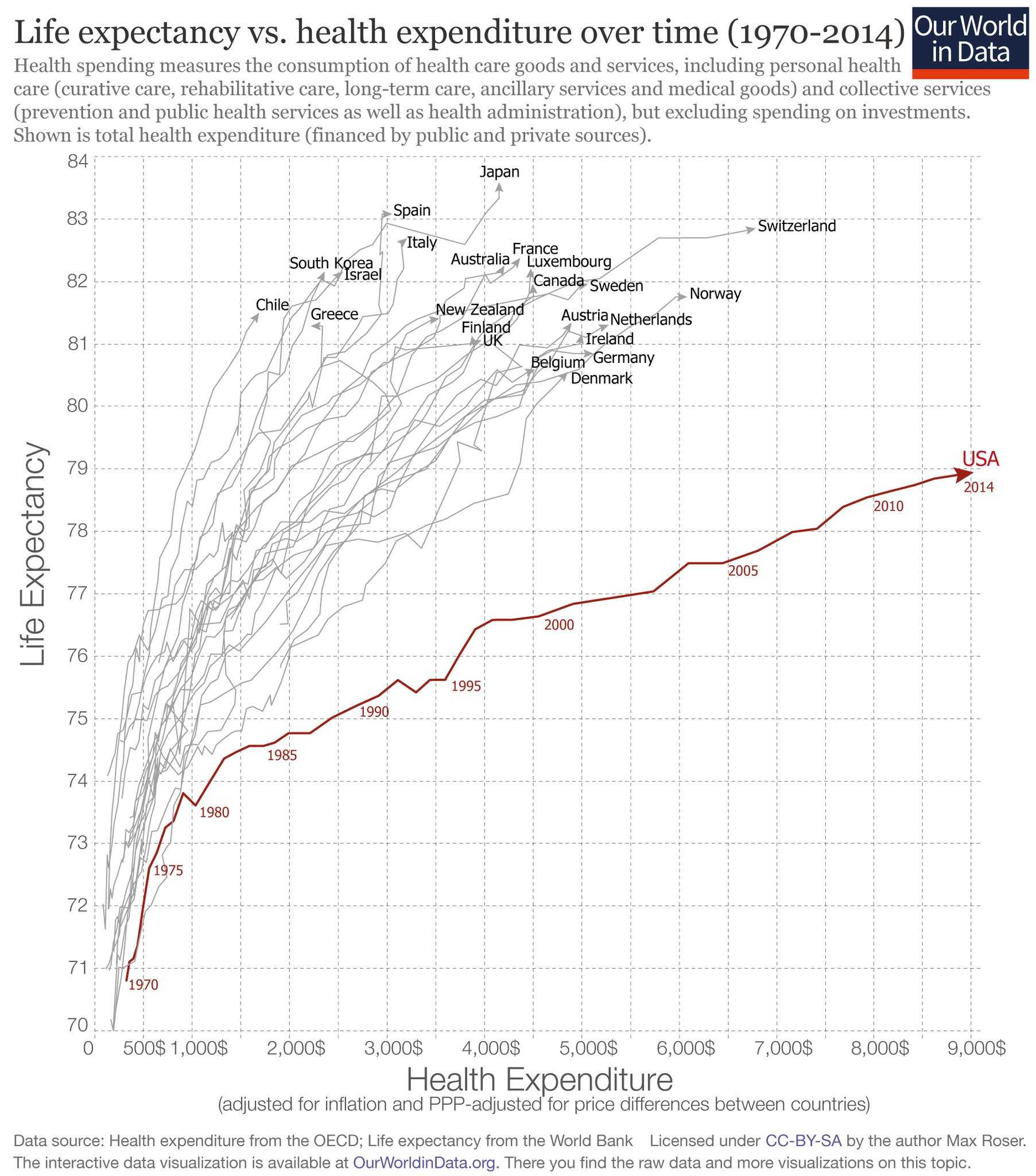
The U.S. spends a lot on health care, and our health care system is frequently criticized for poor health outcomes. The chart below is an example of evidence used to buttress this argument. It shows combinations of health care spending and life expectancy over time for the OECD countries. The U.S. appears to be a severe outlier and inferior to the other countries. A variation on this chart appeared on the home page of The Wall Street Journal this week. It accompanied (but was not part of) a good article by Joseph Walker in which he used 12 other charts in an effort to explain why the U.S. spends so much on health care. (Sorry, this link is probably gated.) Walker discusses several important cost factors, including third-party payments, tax treatment, and the deployment of expensive technology in the U.S. However, the claim that the U.S. is really an outlier is worth examining on other grounds.

The chart’s construction suggests that a reliable link should exist between health care spending and life expectancy, but there are several reasons to question whether that is the case. U.S. life expectancy has been held down historically by high rates of smoking, but reduced smoking rates should help moderate the U.S. life expectancy gap in coming years. Obesity in the U.S. is a more persistent problem, especially for the poor, and an even bigger contributor to low U.S. life expectancy than smoking at present. (See this report for evidence on the contributions of smoking and obesity to shorter life expectancy for older adults.) Other contributors to low life expectancy in the U.S. include high motor-vehicle deaths and homicides, the latter attributable in large part to the war on drugs. All of these factors contribute to higher health care spending and directly reduce life expectancy.

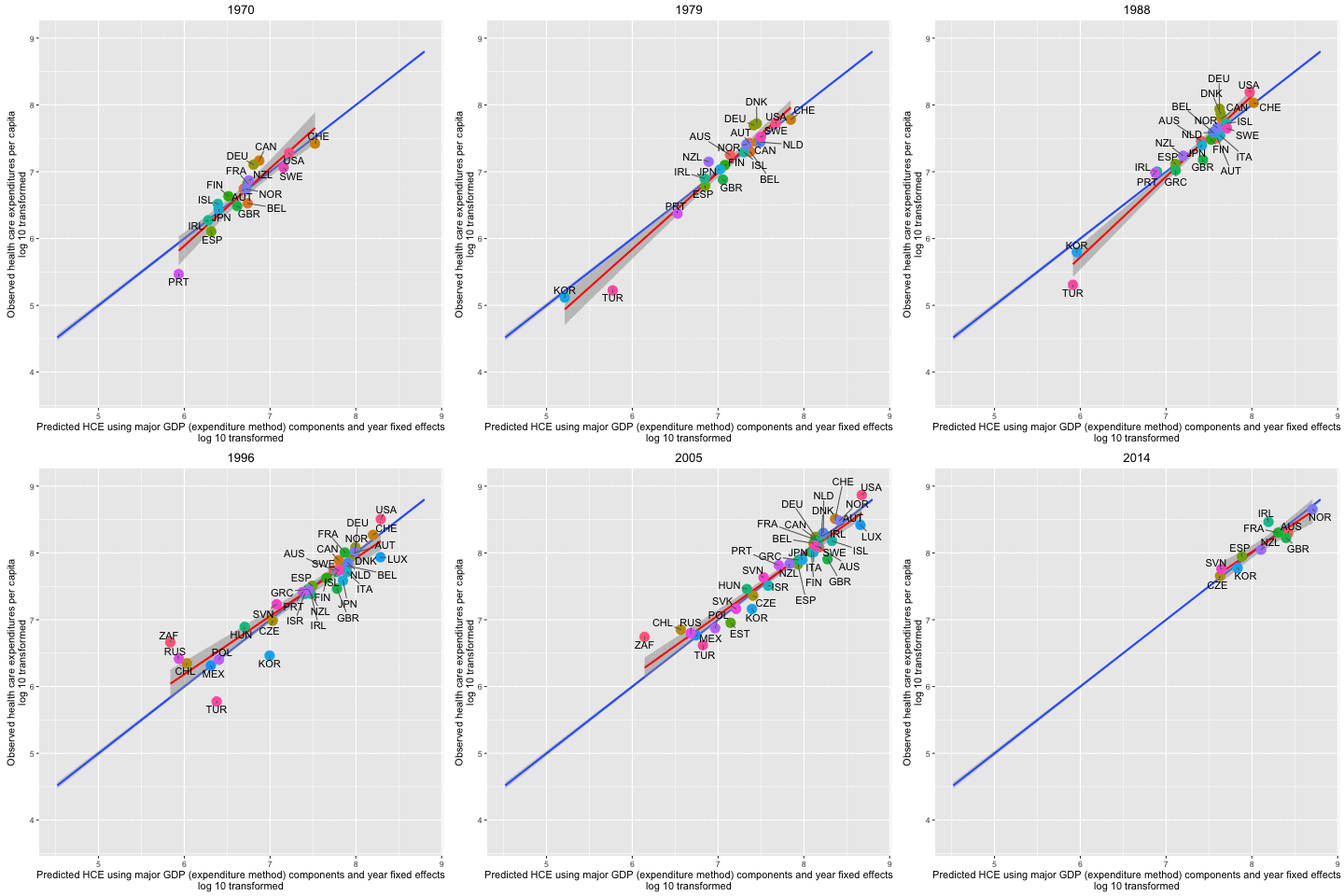
The status of the U.S. as an outlier in terms of health care spending is questioned on the Random Critical Analysis blog (RCA). The author’s detailed analysis includes the following points among many others of interest:

  • Health care is a superior good: as income rises, spending on health care rises faster;
  • The U.S. has a much higher standard of living than any of its peer nations;
  • U.S. consumption spending relative to GDP is an “outlier”, like health care spending relative to GDP;
  • Consumption is a stronger predictor of health care spending than income;
  • Relative to consumption, health care spending in the U.S. is not an outlier, nor is spending on pharmaceuticals, physician/nursing compensation, and the levels of health price indices.

Take a look at the following sequence from the RCA blog linked above (the animation might not be visible on a phone):

So the argument that the U.S. health care system is inferior to peer countries based on cross-county spending comparisons and life expectancy, to the extent that it holds up at all, is subject to strong qualifications. Inferior lifestyle choices, diets, and lack of exercise might be problematic in the U.S., but the healthcare system cannot be faulted based on spending levels relative to other OECD countries.

In fact, the superiority of the U.S. health care system in many areas is not even in dispute. As Mahdi Barakat points out, wait times for care, cancer survival rates, and stroke mortality are all clearly better in the U.S. than in many peer countries:

“Lives are indeed saved by the many types of superior medical outcomes that are often unique to the US. This is not to mention the innumerable lives saved each year around the world due to medical innovations that are made possible through vibrant US markets.”

Barakat compares dubious progressive claims that up to 45,000 American lives are lost each year due to a lack of insurance with the likely incremental lives lost if various performance measures in the U.S. were equivalent to those in other countries:

  • 25,000 additional female deaths per year with Canada’a wait times for care (no estimate for additional male deaths is given by Mahdi’s source);
  • 64,000 additional stroke deaths each year with the UK’s overall stroke mortality;
  • 72,000 additional cancer deaths each year with the UKs survival rates.

Theoretically, the national spending figures could be adjusted for the cost of queuing, i.e. wait times. While Obamacare certainly increased wait times in the U.S., the adjustment would likely reduce or eliminate the spending advantages that several OECD countries appear to have over the U.S.

The performance of health care systems in many countries with single-payer systems or universal care is subject to challenge, as some of the statistics offered by Barakat demonstrate. In “The Truth About SwedenCare“, Klaus Bernpaintner expresses his dismay at the romanticized view of health care in Sweden among so many Americans. His effort to convey the truth about Sweden’s stultifying health care bureaucracy is illuminating. There are few private physician practices in Sweden. Care is generally rationed and waits are lengthy, and it is delivered by disinterested, centrally-assigned providers.

“For non-emergency cases in Sweden, you must go to the public ‘Healthcare Central.’ This is always the starting point for anything from the common flu to brain tumors. You must go to your assigned Central, according to your healthcare district. Admission is by appointment only. Usually they have a 30-minute window every morning, when you call to claim one of the budgeted slots. Make sure to call early or they run out. Rarely will you get an appointment for the same day. You will be assigned a general practitioner, probably one you have never met before; likely one who does not speak fluent Swedish; and very likely one who hates his job. If you have a serious condition, you will be started on a path of referrals to experts. This process can take months.”

Bernpaintner calls this Sweden’s health care “bread line”, where people go to die. He mentions several other nightmarish features of health care in Sweden that Americans should hope to avoid. In particular, we should resist calls for a single-payer system, like Bernie Sanders’ Medicare-For-All proposal. An analysis by Charles Blahous of the Mercatus Center at George Mason University has shown that it would increase federal spending by $32.6 trillion over ten years. This estimate is basically in-line with others mentioned by Blahous. Much of the additional federal spending would represent a transition away from private spending, a process that would be massively disruptive. However, the study gives the plan the benefit of several doubts by accepting the assumptions made by Sanders: 1) a huge saving in prescription drug costs; 2) a huge saving in administrative costs; 3) providers will happily accept Medicare reimbursement levels; and 4) new immigrants will not be attracted by an essentially free health care program. Fat chance. But given all of these questionable assumptions, total health care spending would fall even as the government takes on the massive new outlays. Take away just fantasy #3 and total national health care spending would rise, a swing of $700 billion by 2031.

John Cochrane makes a useful distinction between two conceptions of universally-accessible coverage: one that all must use vs. one that all can use. (He calls them both forms of single-payer systems, though that usage sounds a bit awkward to me.) The voluntary form is preferable for several reasons: it can preserve choice in terms of coverage and providers; while the public-payer’s share must be funded, it demands little or nothing in the way of cross-subsidized pricing; and it does not imply that government must act as a single “price setter”. Cochrane warns of the possible consequences of a universally-mandated single payer:

“Not only is there some sort of single easy to access health care and insurance scheme for poor or unfortunate people, but you and I are forbidden to escape it, to have private doctors, private hospitals, or private insurance outside the scheme. Doctors are forbidden to have private cash paying customers. That truly is a nightmare, and it will mean the allocation of good medical care by connections and bribes.”

The presumption that universal health care will improve quality and save lives is unsupported by any real evidence. Its proponents incorrectly assume that the uninsured do not get care at all. Providers might go uncompensated, but the uninsured can often get needed care with more immediacy than they could with the lengthy wait times typical of many single-payer systems. The quality of care is likely to deteriorate under a single-payer system given the stresses placed on providers, the highly regulated conditions under which they would be forced to operate, and restricted treatment options. And of course a single-payer system would suspend the price mechanism and any semblance of competition in the health care marketplace.

The health care system in the U.S. has massive problems, but they were created and exacerbated by a series of governmental intrusions on the marketplace over many years. A flourishing market requires choice for consumers and competition between providers—in both health care delivery and insurance coverage. It also requires a roll-back of regulation on providers and insurers. But as Cochrane emphasizes, such a marketplace can exist apart from a voluntary, tax-funded payer-of-last-resort.

The Destructive Pooling of Risks and Outcomes

29 Friday Jun 2018

Posted by Nuetzel in Health Insurance, Obamacare, Uncategorized

≈ 2 Comments

Tags

Benefit Mandates, Catastrophic Coverage, Death Spiral, Flood Planes, Free Riders, High-Risk Pool, Individual Mandate, Insurability Rider, Obamacare, Portability, Pre-Existing Conditions, Rate Regulation, Social Safety Net

Forcing health insurers to cover pre-existing conditions at standard rates is like asking home insurers to cover homes in flood plains at standard rates. If the government says home insurers must do so, standard rates will rise as well as the cost of homeownership. Lenders generally won’t accept homes as collateral unless they are adequately insured against flooding, and by raising the cost of insurance, the government requirement that all must share in the burden of high flood risk would discourage homeownership generally. But you’ll get a break if you’re in a flood plain! Coercive government regulations like rate regulation and coverage mandates have destructive (but predictable) consequences.

The difference between flood plains and health conditions is that sooner or later, a lot of us will be burdened with the latter. The trick is to get underwritten for health insurance before that happens. If the government says that health insurers must offer standard rates to those already afflicted with serious health conditions, à la Obamacare, standard rates will rise, which will induce some potential buyers to opt out. In fact, it will lead the youngest and healthiest potential buyers to opt out. This is the genesis of the so-called insurance death spiral.

Some then ask why the government shouldn’t prevent opt-outs by requiring all individuals to carry health insurance… an individual mandate. Perhaps doubling down on government coercion via compelled coverage might rectify the ill effects of rate regulation. However, requiring low-risk individuals to pay rates that exceed their willingness to pay cross-subsidizes individuals who belong in a different risk pool. Aside from it’s doubtful constitutionality and infringement on individual liberty, this policy forces low-risk individuals to insure and pay as if they are high-risk, and high-risk individuals to pay as if they are low risk, and it leaves the task of pricing to the arbitrary decisions of bureaucrats. It may also lead to massive distortions in the use of medical resources.

Direct Subsidies Are Better

There is a better way to provide coverage for individuals with pre-existing conditions, one that does not destroy the risk-mitigating function of health insurance markets. High-risk individuals can be covered through a combination of self-paid standard premiums and a direct public subsidy that does not distort the market’s social function in pricing risk. Such a subsidy would be funded by individuals in their roles as taxpayers, not as premium payers. Now, I’m the last person to advocate big-government solutions to social and economic problems, but this approach requires only that government serve as a pass-through entity. Government need not play any role in providing or regulating health care, and it should not interfere with the pricing of risk in private markets for health insurance.

Insurability Protection

The high-risk segment’s reliance on subsidies can be minimized over time with certain innovations. In particular, healthy individuals should be able to purchase riders protecting their future insurability at standard rates. Their premium would include a component reflecting the discounted expected costs of developing health conditions in the future. The additional premium could even be structured as level payments over time. People will develop health conditions, of course, a few much sooner than others, but without an incremental impact on their future premiums, as the additional risk  would be covered by the cost of the rider for future insurability.

To see how the situation would evolve, suppose that the standard risk pool includes everyone free of pre-existing conditions, young and old, with guaranteed future insurability. The high-risk segment is already afflicted with conditions and mostly reliant on the direct subsidies discussed above, but that segment will shrink over time as the population ages and mortality takes its toll. Therefore, the proportion of individuals reliant on subsidies will decline. Meanwhile, the standard risk pool transforms into a combination of healthy and sick, but it is actuarily sustainable without subsidies. Of course, some fraction of individuals will always be born with serious health conditions, though one day prospective parents could conceivably purchase future insurability protection for their children at conception… well, perhaps just a little after. The point is that the initial level of subsidies should be transitional. For a permanently small share of individuals, however, it will be a part of the social safety net.

To extend the foregoing, there is considerable latitude in the composition of “standard risks” and the willingness of individual buyers to pay premiums that might reflect interpersonal differences. For example, individuals should be free to self-insure, foregoing participation in the insurance market altogether. If they do so, the insured risk pool will e of lower quality. Some people might prefer to purchase insurance covering catastrophic health events only, paying for health maintenance out-of-pocket as well as care for conditions less immediately threatening. Health maintenance is not really a risk anyway, but more of a constant, so excluding it from insurance contracts is sensible. In fact, less “comprehensive” insurance coverage keeps the cost of coverage down, encouraging wider participation and enhancing the quality of the risk pool.

Mandates

These insurability riders might not accomplish much under a regime of mandated comprehensive benefits. That would increase the cost of coverage as well as the cost of the insurability rider, making it more likely that healthy individuals would opt-out. That brings us back to the “elephant in the room”: whether a so-called individual mandate is required to ensure that 1) the “standard” risk pool is of high quality; and 2) the uninsured don’t “free-ride” by capturing the public subsidy once their health deteriorates for any reason. But again, the availability of less comprehensive coverage will keep premiums low and help to accomplish both objectives. Moreover, free-riders whose health fails could always be denied the public subsidy if they had been uninsured over a period of any length prior to their diagnosis. That would leave them with several less attractive alternatives: pay high-risk-pool premiums out of their own pockets, or rely on assistance from family, friends, charitable organizations and providers.

Dumb Intervention

Requiring insurers to cover pre-existing health conditions at standard rates is destructive to insurance markets. It imposes liabilities for more certain, costly events in a market for which sustainable operation depends on the pooling of events of similar risk. It harms consumers directly by increasing the cost of mitigating those risks. It worsens the uninsured free-rider problem, causing additional deterioration in the risk pool and adding more cost pressure. It also may lead to increases in out-of-pocket deductibles and copayment rates as insurers attempt to manage high claim levels. And it invites further regulatory intervention, as policymakers engage in misguided attempts to “fix” problems created by the original intervention (while blaming the market, of course).

A further question is whether the alternative I have outlined would involve federal subsidies or state outlays funded in part by federal block grants. I prefer the latter, but either way, it is less costly and distortionary to pay for insuring against the costs of pre-existing conditions via direct subsidies to needy individuals as part of the social safety net than by destroying insurance markets.

Liar-Left, Daft-Left Bellow: It’s the Unkindest Tax Cut of All

08 Friday Dec 2017

Posted by Nuetzel in Health Insurance, Taxes

≈ Leave a comment

Tags

Bernie Sanders, Bubble Tax, Cross Subsidies, David Harsanyi, Individual Mandate, Insurability, Jeffrey Tucker, Medical Expense Deduction, Medicare, Obamacare, Paygo, Penalty Tax, Progressive Left, Snopes, Standard Deduction, Tax Reform, Veronique de Rugy

A misapprehension of progressive leftists is that the tax reform bills under debate by the GOP will revoke something from the needy: the poor, cancer patients, the working class, the aged, you name it. Well, that is a misapprehension held by many earnest leftists, but it amounts to deceitful rhetoric from others. David Harsanyi, in an article about the Left’s penchant for corrupting the English language, attempts to set the record straight:

“Whenever the rare threat of a passable Republican bill emerges, we learn from Democrats that thousands, or perhaps millions, of lives are at stake. …

… the most obvious and ubiquitous of the Left’s contorted contentions about the tax bill deliberately muddles the concept of giving and the concept of not taking enough. This distortion is so embedded in contemporary rhetoric that I’m not sure most of the foot soldiers even think it’s odd to say anymore. …  Whatever you make of the separate tax bills the House and Senate have passed, though, the authors do not take one penny from anyone. In fact, no spending is being cut (unfortunately). Not one welfare program is being block-granted. Not one person is losing a subsidy. It’s just a wide-ranging tax cut without any concurrent spending cuts.“

The Left may have a basic math incompetency, or maybe they know better when they insist that the GOP plans will inflict a new burden on the middle class. The middle class actually receives larger reductions in taxes than higher strata. Veronique de Rugy highlighted this point recently:

“President Trump’s intention to give a real tax break to the middle class is counter-productive considering the middle class barely shoulders any of the income tax as it is. The top 10 percent of income earners—households making $133K [or more], not $1 million as most assume—currently pay more than 70 percent of all income tax revenue. The middle quintile pays, on average, 2.6 percent of the federal income tax.

And yet, in both the House and Senate plans the middle class receives the largest tax relief by reducing their marginal tax rates, increasing the child tax credit and doubling the standard deduction. The result is fewer taxpayers would be paying income tax at all, problematic from a small government perspective. It also means a more progressive income tax code than it already is.

The House plan also effectively jacks up the top marginal rate for some high earners by using a 39.6 percent bubble rate on the first $90K earned by single taxpayers making $1 million and married taxpayers making $1.2 million and a 12 percent rate like everyone else.“

I have listened to horror stories about school teachers who, in the past, were able to deduct supplies they purchased for their students. Now, the cruel GOP is trying to take that away! This argument neatly ignores the doubling of the standard deduction. Many teachers will find that it no longer makes sense to itemize deductions, and they will come out ahead. But for the sake of argument, suppose a teacher earning $50,000 itemizes and spends $2,500 on unreimbursed supplies for their students every year. At the Senate plan’s new rate in that bracket, the lost deduction will cost the teacher $550, but about $300 would be saved via rate reductions for every $10,000 of taxable income. The teacher is likely to come out ahead even if he unwisely passes on the improved standard deduction.

Liberal thought-whisperers have goaded their minions into believing that the GOP intends to cut Medicare funds by $25 billion a year going forward. The bills under discussion would do no such thing. However, in a rare gesture of fiscal responsibility, President Obama in 2010 signed the Statutory Pay-As-You-Go Act (Paygo), which may require automatic reductions in outlays when spending or tax changes lead to an increase in federal debt. The act has never been enforced, and Republican leadership in both houses insists that Paygo can and will be waived. Clearly, the GOP’s intent is not to allow the Paygo cuts to take place. Even the left-leaning Snopes.com is reasonably neutral on this point. But if Paygo takes hold, the lefties will have themselves to blame.

At the last link, Snopes also touches on one actual provision of the Senate tax plan, the repeal of the Obamacare individual mandate, or rather, the repeal of the “penalty tax” imposed by the IRS on uninsured individuals. The Supreme Court ruled that it is a tax in 2012, at the time giving rise to a mixture of delight and embarrassment on the Left. The ruling saved Obamacare, but the Left had been loath to call the penalty a tax. The supposed rub here is that repeal of the mandate will be greeted enthusiastically by many young and healthy individuals. Freed from coercion, many of them will elect to go without coverage, leading to a deterioration of the exchange risk pools and causing premiums paid by the remaining exchange buyers to rise. However, the critics conveniently ignore the fact that Obamacare individual subsidies will automatically ratchet upward with increases in the premium on the Silver Plan. So the panic related to this portion of the Senate tax bill is misplaced.

One other point about the mandate: because it coerces the payment of cross-subsidies by the young and healthy to higher-risk insurance buyers, the mandate distorts the pricing of risk, the incentives to insure, and the use of resources in the provision of health insurance and health care itself. This is how the proper function of a market is destroyed. And this is how resources are wasted. Good riddance to the mandate. The high-risk population should be subsidized directly, not through distorted pricing, at least until such time as a market for future insurability can be established. As Jeffrey Tucker has said, repeal of the mandate is a very good first step.

The loss of the medical expense deduction is not a done deal. While the House plan eliminates the deduction, the Senate plan reduces the minimum medical expense requirement from 10% to just 7.5% of qualified income, so it is more generous than under current law. I’ve seen bloggers commit basic misstatements of facts on this and other provisions, such as confusing this limit with a total limit on the amount of the medical deduction. This deduction tends to benefit higher-income individuals who itemize deductions, which will represent a higher threshold under the increased standard deduction. Of course, this deduction appeals to our sense of fairness, but like all the complexities in the tax code, it comes with costs: not only does it add to compliance costs and create a need for higher tax rates, but it subsidizes demand for medical care, much like the tax breaks available on employer-provided health care, and it therefore inflates health care costs for everyone. To the extent that these deductions and many others are still in play, the GOP plans fall short of real tax reform.

The GOP tax bills certainly have their shortcomings. I hope some of them are rectified in conference. The bills do not offer extensive simplification of the tax code, and they would not be truly historic: in real terms, an earlier version of the House bill would have been the fourth biggest cut in U.S. history relative to GDP, and I believe the version that passed the House is smaller. However, many of the arguments mounted by the Left against the bills are without merit and are often deceitful. The Left strongly identifies with the zero-sum philosophy inherent in collectivism, and the misleading arguments I’ve cited are plausible to the less-informed among that crowd. That brings me back to David Harsanyi’s point, discussed at the top of this post: “intellectuals” on the progressive Left find value in corrupting the meaning of words and phrases like “budget cuts”, “giving” and “taking”:

“Everyone tends to dramatize the consequences of policy for effect, of course, but a Democratic Party drifting towards Bernie-ism is far more likely to perceive cuts in taxation as limiting state control and thus an attack on all decency and morality.“

“There is a parallel explanation for the hysterics. With failure comes frustration, and frustration ratchets up the panic-stricken rhetoric. It’s no longer enough to hang nefarious personal motivations on your political opponents — although it certainly can’t hurt! — you have to corrupt language and ideas to imbue your ham-fisted arguments with some kind of basic plausibility.“

← Older posts
Follow Sacred Cow Chips on WordPress.com

Recent Posts

  • Immigration and Merit As Fiscal Propositions
  • Tariff “Dividend” From An Indigent State
  • Almost Looks Like the Fed Has a 3% Inflation Target
  • Government Malpractice Breeds Health Care Havoc
  • A Tax On Imports Takes a Toll on Exports

Archives

  • December 2025
  • November 2025
  • October 2025
  • September 2025
  • August 2025
  • July 2025
  • June 2025
  • May 2025
  • April 2025
  • March 2025
  • February 2025
  • January 2025
  • December 2024
  • November 2024
  • October 2024
  • September 2024
  • August 2024
  • July 2024
  • June 2024
  • May 2024
  • April 2024
  • March 2024
  • February 2024
  • January 2024
  • December 2023
  • November 2023
  • August 2023
  • July 2023
  • June 2023
  • May 2023
  • April 2023
  • March 2023
  • February 2023
  • January 2023
  • December 2022
  • November 2022
  • October 2022
  • September 2022
  • August 2022
  • July 2022
  • June 2022
  • May 2022
  • April 2022
  • March 2022
  • February 2022
  • January 2022
  • December 2021
  • November 2021
  • October 2021
  • September 2021
  • August 2021
  • July 2021
  • June 2021
  • May 2021
  • April 2021
  • March 2021
  • February 2021
  • January 2021
  • December 2020
  • November 2020
  • October 2020
  • September 2020
  • August 2020
  • July 2020
  • June 2020
  • May 2020
  • April 2020
  • March 2020
  • February 2020
  • January 2020
  • December 2019
  • November 2019
  • October 2019
  • September 2019
  • August 2019
  • July 2019
  • June 2019
  • May 2019
  • April 2019
  • March 2019
  • February 2019
  • January 2019
  • December 2018
  • November 2018
  • October 2018
  • September 2018
  • August 2018
  • July 2018
  • June 2018
  • May 2018
  • April 2018
  • March 2018
  • February 2018
  • January 2018
  • December 2017
  • November 2017
  • October 2017
  • September 2017
  • August 2017
  • July 2017
  • June 2017
  • May 2017
  • April 2017
  • March 2017
  • February 2017
  • January 2017
  • December 2016
  • November 2016
  • October 2016
  • September 2016
  • August 2016
  • July 2016
  • June 2016
  • May 2016
  • April 2016
  • March 2016
  • February 2016
  • January 2016
  • December 2015
  • November 2015
  • October 2015
  • September 2015
  • August 2015
  • July 2015
  • June 2015
  • May 2015
  • April 2015
  • March 2015
  • February 2015
  • January 2015
  • December 2014
  • November 2014
  • October 2014
  • September 2014
  • August 2014
  • July 2014
  • June 2014
  • May 2014
  • April 2014
  • March 2014

Blogs I Follow

  • Passive Income Kickstart
  • OnlyFinance.net
  • TLC Cholesterol
  • Nintil
  • kendunning.net
  • DCWhispers.com
  • Hoong-Wai in the UK
  • Marginal REVOLUTION
  • Stlouis
  • Watts Up With That?
  • Aussie Nationalist Blog
  • American Elephants
  • The View from Alexandria
  • The Gymnasium
  • A Force for Good
  • Notes On Liberty
  • troymo
  • SUNDAY BLOG Stephanie Sievers
  • Miss Lou Acquiring Lore
  • Your Well Wisher Program
  • Objectivism In Depth
  • RobotEnomics
  • Orderstatistic
  • Paradigm Library
  • Scattered Showers and Quicksand

Blog at WordPress.com.

Passive Income Kickstart

OnlyFinance.net

TLC Cholesterol

Nintil

To estimate, compare, distinguish, discuss, and trace to its principal sources everything

kendunning.net

The Future is Ours to Create

DCWhispers.com

Hoong-Wai in the UK

A Commonwealth immigrant's perspective on the UK's public arena.

Marginal REVOLUTION

Small Steps Toward A Much Better World

Stlouis

Watts Up With That?

The world's most viewed site on global warming and climate change

Aussie Nationalist Blog

Commentary from a Paleoconservative and Nationalist perspective

American Elephants

Defending Life, Liberty and the Pursuit of Happiness

The View from Alexandria

In advanced civilizations the period loosely called Alexandrian is usually associated with flexible morals, perfunctory religion, populist standards and cosmopolitan tastes, feminism, exotic cults, and the rapid turnover of high and low fads---in short, a falling away (which is all that decadence means) from the strictness of traditional rules, embodied in character and inforced from within. -- Jacques Barzun

The Gymnasium

A place for reason, politics, economics, and faith steeped in the classical liberal tradition

A Force for Good

How economics, morality, and markets combine

Notes On Liberty

Spontaneous thoughts on a humble creed

troymo

SUNDAY BLOG Stephanie Sievers

Escaping the everyday life with photographs from my travels

Miss Lou Acquiring Lore

Gallery of Life...

Your Well Wisher Program

Attempt to solve commonly known problems…

Objectivism In Depth

Exploring Ayn Rand's revolutionary philosophy.

RobotEnomics

(A)n (I)ntelligent Future

Orderstatistic

Economics, chess and anything else on my mind.

Paradigm Library

OODA Looping

Scattered Showers and Quicksand

Musings on science, investing, finance, economics, politics, and probably fly fishing.

  • Subscribe Subscribed
    • Sacred Cow Chips
    • Join 128 other subscribers
    • Already have a WordPress.com account? Log in now.
    • Sacred Cow Chips
    • Subscribe Subscribed
    • Sign up
    • Log in
    • Report this content
    • View site in Reader
    • Manage subscriptions
    • Collapse this bar
 

Loading Comments...