• About

Sacred Cow Chips

Sacred Cow Chips

Tag Archives: ACA

May No Window Be Unbroken

24 Tuesday Feb 2015

Posted by Nuetzel in Obamacare, Uncategorized

≈ 1 Comment

Tags

ACA, Broken window fallacy, Coyote Blog, Frederick Bastiat, Government intervention, misallocation of resources, Obamacare, regulation, Sheldon Richman, third-party payments, Warren Meyer, WW II wage controls

Obama Work Done

The misallocation of resources precipitated by regulation is sometimes so thorough that proponents are apt to describe it as a feature, and not a bug! Apparently, that is how some think of new business startups and venture capital funding stimulated by Obamacare. Warren Meyer describes the situation in his post, “Worst Argument For Regulation Ever“. Providers confronting a thicket of new regulations, including a mandate for a massive reconfiguration of medical records, necessarily requires services that were heretofore unnecessary. As Meyer says:

“All this investment and activity is going into trying to get back to even from productivity losses imposed by the government, or is being spent addressing government mandates for new services that the market did not want or value. This is a diversion of resources from new value-creation to fixing things, and as such is just the broken windows fallacy re-written in a new form.”

The fallacy to which Meyer refers has a deep tradition in economic thinking, with a lineage tracing to Frederick Bastiat. A simple telling is that a broken window leads to more work for the glazier, more spending, and an apparent lift in income. Of course, someone must pay, and the broken window itself represents a loss of physical capital. But there are other consequences, since the glazier receives a payment that could have, and would have, purchased other goods and services that would have been preferred to window repairs. There are many broken windows in the case of Obamacare, including direct hits to providers, medical device manufacturers, and many of the previously insured. It was not enough for proponents to simply extend coverage to the uninsured. That simpler approach would have created plenty of challenges. But instead, Obamacare became a legal and regulatory behemoth in the hope that it would transform the health care industry… into what?

Noble intentions frequently motivate destructive actions out of sheer economic ignorance. That encompasses almost every effort to use government as an active manager of economic or social affairs. That’s the cogent message from Sheldon Richman in “The Economic Way of Thinking About Health Care“. Richman agrees that “health insurance for all” is an outcome to be hoped for, but he derides the notion that activist government can achieve it effectively. First,  the redistributive element in many government intrusions is a questionable economic strategy:

“When government provides health insurance through subsidies or Medicare or Medicaid, it presides over the disposal of the fruits of other people’s labor. Government personnel decide who gets what, even though they had no hand in producing the resources they “redistribute.” In other words, they traffic in pilfered property. Hence H.L. Mencken’s immortal insight: ‘Every election is a sort of advance auction sale of stolen goods.’”

The central planners decide who gets what in ways that are more destructive than simple redistribution. By way of demonstrating this phenomenon, Richman goes on to discuss the health insurance third-party payment system encouraged by government policy. Employer-paid coverage started as an unintended consequence of WW II wage controls. It also has tax-favored status as a popular fringe benefit. Unfortunately, this led to the bastardization of the concept of insurance itself:

“That [tax-favored status] gives employer-provided insurance an appeal it would never have in a free society, where taxation would not distort decision-making. Moreover, the system creates an incentive to extend “insurance” to include noninsurable events simply to take advantage of the tax preference for noncash compensation. Today pseudo-insurance covers screening services and contraception, which of course are elective. (This does not mean they are trivial, only that they are chosen and are not happenings.)”

Excess demand, owing to a marginal cost of routine care and elective services to the consumer that appears to be zero, sets off a series of unintended consequences:

“… the real prices of medical inputs to rise … the price of insurance goes up; the government’s health care budget rises, requiring higher taxes now or later (because of the debt); and resources and labor flow into the stimulated health care industry and away from other valued purposes, raising the prices of other goods and services. Higher insurance premiums in turn prompt demand for more government subsidies, higher taxes, and more debt.”

May that circle be broken. Richman mentions several steps at the link to promote more competitive, comprehensive and affordable health care.

Consequentialists Dismiss Obamacare Consequences

15 Sunday Feb 2015

Posted by Nuetzel in Obamacare

≈ Leave a comment

Tags

ACA, Burr Hatch Upton plan, Consequentialism, Exchange subsidies, Federal exchanges, Health care mandates, Jonathan Gruber, King vs. Burwell, Laurence Tribe, Michael Cannon, Obamacare, Peter Suderman, Reason, Robert Laszewski, SCOTUS, Washington Free Beacon

supreme-court-obama

The King vs. Burwell case now before the U.S. Supreme Court turns on whether the Affordable Care Act (ACA, or Obamacare) authorizes the payment of federal subsidies to consumers in states that do not sponsor their own state health insurance exchanges (up to 37 states, by some counts, depending on how certain “hybrid” exchanges are treated). In those states, Obamacare must be purchased on the federal (or a hybrid) exchange. Proponents of the law strongly desire the court to uphold the subsidies. However, the “plain language” of the law states that tax credits apply only to insurance purchased “through an Exchange established by the state.” That language does not appear to support the governments position in the case. In addition, one of the chief architects of the ACA, Jonathan Gruber, seemingly exposed the real intent of this provision:

“What’s important to remember politically about this is if you’re a state and you don’t set up an exchange, that means your citizens don’t get their tax credits — but your citizens still pay the taxes that support this bill. So you’re essentially saying [to] your citizens you’re going to pay all the taxes to help all the other states in the country. I hope that that’s a blatant enough political reality that states will get their act together and realize there are billions of dollars at stake here in setting up these exchanges.”

Who could have given a better description of the motive?

Others insist that the awkward language in the ACA on this point might have been a typographical error, that the tax credits were intended to subsidize purchases on any exchange, and that other wording in the legislation makes the legislative intent “ambiguous” at worst. Harvard law professor Laurence Tribe subscribes to this view. Tribe argues elsewhere that a ruling which finds federal-exchange subsidies illegal would throw the health insurance market into turmoil. Thus, taking a “consequentialist” approach, Tribe argues that the court should be reluctant to disrupt the market by ruling that subsidies were intended to be unavailable to states without exchanges under the ACA. This conveniently dismisses the fact that Obamacare itself has had and will continue to have so many negative “consequences.”

Obviously, not all agree that a ruling against the government would be such a travesty. A victory for the King plaintiffs would not increase anyone’s premiums. What it would do is prevent the IRS from shifting the burden of those premiums from enrollees to taxpayers. According to  Michael Cannon,  arguments against the plaintiff’s case have:

“… misrepresented the impact of a potential ruling for the plaintiffs by ignoring three crucial facts: (1) a victory for the Halbig [and King] plaintiffs would increase no one’s premiums, (2) if federal-Exchange enrollees lose subsidies, it is because those subsidies are, and always were, illegal, and (3) the winners under such a ruling would outnumber the losers by more than ten to one.”

Nevertheless, the  consequentialist argument suggests that the court might be reluctant to rule against the government in the absence of a viable and immediate alternative to Obamacare. That belief helped motivate the most recent GOP plan, sponsored by Senators Richard Burr, Orin Hatch and Representative Fred Upton, which is due for a vote in the House of Representatives next week. This alternative has been called “Obamacare Lite” by some GOP critics, and it does retain a few of the most popular Obamacare provisions. However, it eliminates some highly intrusive aspects of the ACA (the individual and employer mandates) and attempts greater reliance on markets to control costs. This review in the Washington Free Beacon is mostly favorable. Peter Suderman at Reason explains that the proposal would involve tax credits designed to promote affordability, but they would be less distorting and less generous than under the ACA. Here is a fairly complete but mixed review of the GOP alternative.by Robert Laszewski:

“My sense is that voters will end up liking parts of both Republican and Democratic ideas. They might ask a reasonable question: Why can’t we take the best from both sides? If Democrats would just admit Obamacare needs some pretty big fixes, and Republicans would be willing to work on making those fixes by putting some of these good ideas on the table, the American people would be a lot better off. In fact, I am hopeful that this is eventually what will happen once Obamacare’s failings become even more clear (particularly the real premium costs) and both sides come to understand that neither will have a unilateral political upper hand.”

Laszewski is critical of the plan’s potential for creating a new set of winners and losers, but his objection losses sight of the fact that distortions in the ACA create so many winners and losers as to be indefensible. For example, the ACA limits differences in age rating, effectively transferring wealth from younger premium payers to much wealthier seniors, while the GOP plan loosens those limits. Similar distortions were created by Obamacare’s mandates, taxes, lack of choice in health coverage, revocation of individual coverage, poorly designed provider incentives and reduced physician reimbursements, to give a short list.

I like many of the ideas in the Republican plan, but it is a compromise. Its reforms should reduce the cost of coverage. It increases choice, leverages market incentives, and reduces tax distortions, including the tax advantage of employer-provided coverage. At the same time, it wholly or partially retains ACA provisions that make coverage more affordable at low incomes and provide continuous coverage for those with pre-existing conditions. It also encourages the creation of state pools for high-risk individuals. These provisions might or might not  mollify “consequentialist” sentiment on the Supreme Court, leading to a majority ruling against the government in King vs. Burwell. If not, and while the question before the court is more narrow, the irony would be for the court to uphold the many destructive consequences of Obamacare.

Obamacare’s Medical Road To Serfdom

03 Tuesday Feb 2015

Posted by Nuetzel in Government, Obamacare, Regulation, The Road To Serfdom

≈ 1 Comment

Tags

ACA, central planning, health care law, Kristen Held MD, Obamacare, Price Controls, regulation, Relative Value Units, The Road To Serfdom

HealthCareCrisis

The arrogance and shortsightedness of regulators and central planners is often astonishing and sometimes worthy of disgust. Here is a case of the latter, and it is one of the most damning things I have read about Obamacare, and that takes some doing.

Dr. Kristin Held is a physician who gained some notoriety last year when she live-tweeted a professional conference as ophthalmologists walked-out on a presentation about implementing and complying with Obamacare. More recently, she has written about the health care law’s perverse incentives for physicians. It is an excellent piece about a sickening effort at medical central planning by the government. Please read it!

What good can be said of a law that discourages physicians from performing procedures that would be of great benefit to most patients with a particular health issue; discourages physicians from tackling the more complex cases; encourages them to prolong an operation, having made the decision to operate. The standards by which outcomes are judged successful under Obamacare, and other rules governing remuneration to providers (Relative Value Units), represent crippling impediments to effective care and innovation in many areas of specialization. Here is part of Dr. Held’s summary:

“Consider again the perverse incentives created by government medicine. If I take a really long time operating — even though it subjects the patient to greater risk — and if I pick and choose who I will operate on, refusing the sickest, neediest patients, I am rated more highly by the government’s published “physician feedback” reports and hospital “performance scores” — and paid commensurately. If, on the other hand, I am skilled and quick and tackle the sickest, most challenging cases, subjecting me and my family to great risk, I am paid less or nothing and potentially punished. ”

HT: Dr. John Probst

Fifty Ways To Wreck Your Health Care

29 Thursday Jan 2015

Posted by Nuetzel in Obamacare

≈ 1 Comment

Tags

ACA, central planning, EHR mandate, Electronic Health Records, health care rationing, John Boehner, Matt Battaglioni, Medicare payments, Mises Daily, Obamacare, Obamacare exchange subsidies, Politico

health care wait times

It’s getting to be a challenge to keep track of the myriad ways in which Obamacare is screwing up the medical insurance and health care markets. This is a government initiative, after all, but was there ever a law so rife with unintended consequences, or a law implemented with such stunning incompetence? I’ve posted on the fallout from the so-called Affordable Care Act (ACA) a number of times in the past, but there’s always some new revelation at which to marvel. Here’s one you might not have heard, but it actually contains a bit of good news: some people are refusing Obamacare exchange subsidies, despite the sometimes strange fact that they qualify at all, which of course is the bad news.

“… some people who qualify for subsidies based on their income could afford to pay their own way. ‘There is no question that we are enrolling  people through these programs who would otherwise be considered middle-class or even affluent,’ says Ed Haislmaier, a senior research fellow for health policy studies at the right-leaning Heritage Foundation think tank. ‘We are seeing people with enrollment in these programs that have significant assets, but for whatever reason – usually a temporary reason – fall below the income line.’ Those reasons could range from early retirement to a midcareer job change. But whatever the case, some of those who are turning down subsidies are aware others are gaming the system, and they think it’s wrong.”

Well, apparently there is still some honor in the world, even in the face of seduction by the welfare state.

Obamacare contained provisions on electronic health records (EHRs) and was expected to leverage a separate federal initiative on EHRs in the 2009 economic stimulus bill. This too is proving disastrous. Beyond the privacy implications of making medical records accessible to the prying eyes of government bureaucrats and potential hackers, the mandate faced by providers to convert to the EHR system necessitates an extremely time-consuming and costly effort. And the penalty for failing to meet deadlines is a cut in Medicare payments to the provider. No one seems to have considered the supply-side incentive this might create:

“It would thus appear that one method for avoiding the fine would be to stop serving Medicare patients altogether. Well, that’s one way to ration care for the elderly.”

So, in the fashion typical of central planners, the bureaucrats have failed to consider the effects of their policies on real market conditions. The author quotes a recent piece in Politico on the EHR mandate:

“Rather than saving physicians and health care money, the program in effect has created a new industry — the medical scribe. About 100,000 of these glorified typists are expected to be working for doctors by 2020. ‘After five years I can’t really do anything I couldn’t do before the program started,’ says Martin O’Hara, a cardiologist who practices in northern Virginia. Computers make everything more legible, O’Hara says, but otherwise the payoff has been slim. At one hospital in the D.C. area, administrators were pulling their hair out over the huge fees charged to transmit data including routine lab and radiology tests. ‘I talk to EHR vendors all day long and many of them have these criminal-like practices of setting whatever price tag they want because they can,’ said a medical informatics officer who spoke on condition he not be named. … The slow progress of health IT has also put a drag on research.”

Finally, in a post on some basics of good (and bad) health care reform appearing in Mises Daily, Matt Battaglioli discusses the unavoidable reliance on arbitrary methods of rationing in centrally-planned health care systems. (I like that cartoon above, but it’s no joke.) That need is created by a mis-pricing of services. Subsidies prevent consumers from seeing the real cost of routine and non-catastrophic medical services as well as the ex ante, actuarial cost of catastrophic services. Then, unfortunately, the resultant excess demand tends to push costs upward without the natural restraint of a well-functioning market price mechanism. Battaglioli also bemoans the obstacles to competition in the medical field due to licensing requirements and their impact on the supply of care.

Obamacare is under threat on several fronts, including Congress, the courts, consumers, providers, and it’s own clumsy architecture. Apparently congressional Republicans will soon reveal their “one plan” (as described by John Boehner) for health care reform to replace Obamacare. We’ll see if they can do much better.

The Incredible Glibness of Being Gruber

16 Tuesday Dec 2014

Posted by Nuetzel in Uncategorized

≈ Leave a comment

Tags

ACA, Darrell Issa, federal subsidies, House Oversight Committee, Jonathan Gruber, King vs. Burwell, Obamacare, Peter Suderman, Reason, Transparency

Gruber Comic

Jonathan Gruber is apparently a man of contradictions. He told a congressional committee last week that he “did not write any part of the Affordable Care Act.” He was asked at the hearing why he had claimed in 2012 that he did write part of the law. According to Peter Suderman, writing in Reason, Gruber replied “that it was ‘an effort to seem more important than I was,’ and that he was ‘speaking glibly.’” Video evidence of Gruber’s glibbery keeps stacking up in the wake of his sworn testimony.  He made the same “glib” claim at least twice in 2010 and again in 2012. In those videos, Gruber seemed pleased to issue disclaimers to his econ classes at MIT and other audiences that he “helped write” the ACA (Obamacare). From Suderman:

“There is no way to reconcile his multiple past statements with the statements he made this week while under oath. Either Gruber spent two years lying about his role in writing the law, or he was lying this week in his sworn congressional testimony.”

Now, Gruber has been subpoenaed again by the House Oversight Committee, this time in relation to his work and the income he earned as an Obamacare advisor. However, the subpoena covers all documents and exchanges with government employees, including work product, the results of economic model simulations, and any communications related to contracts and the funding of his research. Poor Gruber is in hot water. Lying to Congress, if that charge were pressed, could earn him up to five years in prison.

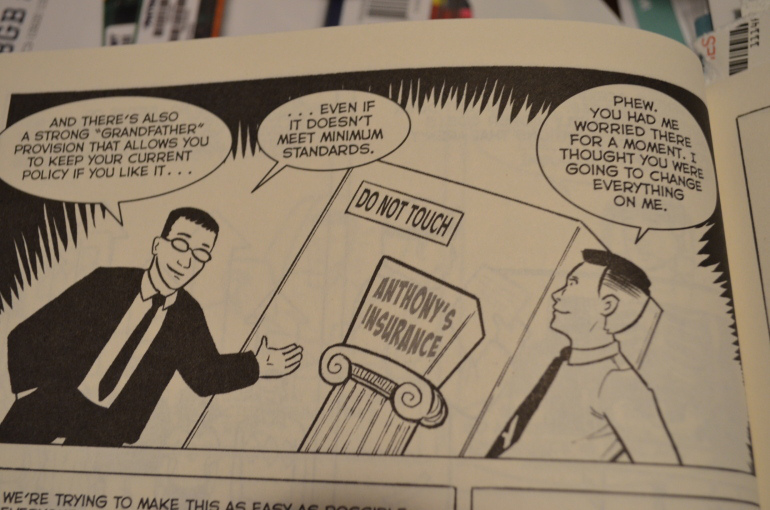
Of greater importance is that he very likely furnished the administration, as the law was being drafted, with economic projections showing that some existing private health plans would be cancelled. In his testimony last week, he admitted that his model simulations showed as much. Of course, President Obama was quite glib in his repeated assertions that “if you like your health plan, you can keep your health plan.” From Reason:

“Shouldn’t that mean that Gruber knew that administration’s repeated promises that those who like their health plans could keep their plans under the law weren’t true? 

Gruber was asked about the promise…. ‘I interpreted the administration’s comments as saying that for the vast majority of Americans the law would not affect the productive health insurance arrangements that they have,’ he said. ‘I did not see a problem with the administration’s statement.’

Of course he didn’t. Gruber is, after all, someone who argued that ‘lack of transparency’ was key to passing the health law.”

In fact, on the question of lost coverage, Gruber’s own comic book on the ACA made the same assurances as the Administration. See the frame at the top of this post! More contradiction.

Another crucial point is that Gruber claimed to have written the part of the ACA related to state health insurance exchanges. He stated on multiple occasions (captured on video) that the federal health insurance subsidies created by the ACA were intended as incentives for states to create their own exchanges. The “plain language of the law” is consistent with that claim; it is explicit in providing for subsidies only when a policy is purchased through a state exchange, not a federal exchange. Next year, the Supreme Court will hear the case King vs. Burwell, which turns upon whether the law itself disqualifies ACA insurance buyers in 36 states from collecting federal subsidies. Gruber’s videos appear to be quite damaging to the government’s case.

Obamacare’s Verity Disparity

26 Wednesday Nov 2014

Posted by Nuetzel in Uncategorized

≈ Leave a comment

Tags

ACA, Clive Crook, deceit, Jonah Goldberg, Jonathan Gruber, King vs. Burwell, Medicaid, medical device tax, Obamacare, Scott Atlas, Timothy Carney

156570_600

Increase demand for health care and reduce the cost of care… that was the the major thrust of the Obamacare sales job. It didn’t take an MIT economist to realize that the promise would be unattainable without major steps to enhance the supply of medical care. Unfortunately, nearly everything in the ACA and its implementation ensured the opposite, from the medical device tax to compliance burdens on providers and low reimbursement rates. Given the supply constraints, it should be no surprise that access to care among the newly insured is limited. Scott Atlas notes that Obamacare placed an emphasis on general care rather than specialist care, despite the growing need for specialists to serve the needs of an increasingly elderly population:

“Virtually all patients with serious diseases today are managed by specialists and with advanced technology. For seniors, visits to specialists have increased from 37% of visits two decades ago to 55% today. And that’s appropriate, because those are the doctors who have necessary training and expertise to use the complex diagnostic tests and devices, state-of-the-art procedures, and novel drugs of modern medicine. … Fittingly, Americans unambiguously prioritize the latest medical technology.”

Atlas also points out that most of the newly insured obtained their coverage via Medicaid:

“Medicaid is already refused by more than half of doctors across America, according to 2013 data from a 2014 Merritt Hawkins survey. Likewise, more than 20% of primary care doctors already accept no new Medicare patients, five times the percentage who refuse new privately insured patients.

In 2012 alone, CMS reported that almost 10,000 doctors opted out of Medicare, tripling from 2009. And, counter to the administration’s demonization of private insurers, it is Medicare that consistently ranks at the top of the charts for the highest rates of claim refusals….”

In describing the campaign to make Obamacare law, the pejorative “sales job” never seemed more appropriate in light of the recent revelations provided by the Jonathan Gruber videos. He is the aforementioned MIT economist, and his statements indicate that the law’s team of elite architects knew full well that selling it would require deceit. Here are links to two perspectives on this crew’s dishonesty and contempt for voters: first, Clive Crook provides a Democrat voter’s perspective on certain tendencies in the party that he finds regrettable:

“This syndrome of Democratic disdain, I think, has two main parts. First, liberals have an exaggerated respect for intellectual authority and technical expertise. Second, they have an unduly narrow conception of the values that are implicated in political choices. These things come together in the conviction that if you disagree with Democrats on universal health insurance or almost anything else, it can only be because you’re stupid.

Voters recognize this as insufferable arrogance and, oddly enough, they resent it. Democrats who might be asking where they went wrong in the mid-term elections — not that many of them are — ought to give this some thought. The conviction that voters are stupid, however, isn’t just bad tactics. It’s also substantively wrong.”

Jonah Goldberg offers a view of the Obamacare deceit from the right:

“Speaking of transparency, the Washington Examiner’s Timothy Carney notes that Obama frequently attacked the ‘special interests’ opposed to the bill even though the very same interests supported the bill thanks to the generous bribes — er, ‘subsidies’ — included therein. From the Rose Garden in 2009, Obama attacked drug companies for opposing the bill, even though he knew the drug lobby helped craft it. (Carney notes, ‘Behind closed doors, the White House apologized to drugmakers for that line, blaming a ‘young speechwriter.’’)”

Here is an earlier SCC post on the Gruber videos, including the damage wrought by Gruber to the government’s argument in the upcoming King v. Burwell case to be heard by the Supreme Court next year.

Obamacare Gets a Whole New Grube

13 Thursday Nov 2014

Posted by Nuetzel in Uncategorized

≈ 1 Comment

Tags

ACA, Individual Mandate, Jonathan Gruber, King vs. Burwell, Obamacare, Ron Fournier, Sacred Cow Chips, state exchanges, Subsidies, Supreme Court

obamacare-cartoon

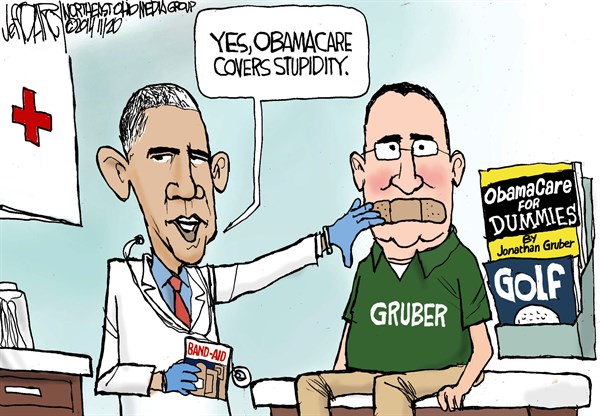
Is anyone unaware at this point that Obamacare (the ACA) was built on a foundation of lies? The “tax vs. penalty” controversy was squirrelly, as the administration shifted positions in defending the individual mandate before the Supreme Court in 2012. Surprisingly, that court decision went in favor of the ACA despite the obvious flip-flop. Of course, we heard Obama say, “if you like your plan, you can keep your plan,” and “if you like your doctor, you can keep your doctor,” both of which were patently false statements. Now, we have the curious case of Jonathan Gruber, the celebrated MIT economist and a chief architect of the ACA. A citizen journalist (“real” journalists were asleep at the switch) uncovered a series of video clips of Gruber in which he strongly asserts that there was willful deceit involved in the crafting and selling of the health care law. Some Gruber:

“This bill was written in a tortured way to make sure CBO did not score the mandate as taxes. If CBO [Congressional Budget Office] scored the mandate as taxes, the bill dies. Okay, so it’s written to do that. In terms of risk rated subsidies, if you had a law which said that healthy people are going to pay in – you made explicit healthy people pay in and sick people get money, it would not have passed… Lack of transparency is a huge political advantage. And basically, call it the stupidity of the American voter or whatever, but basically that was really really critical for the thing to pass….”

Ron Fournier, at the first link above, writes:

“Liberals should be the angriest. Not only were they personally deceived, but the administration’s dishonest approach to health care reform has helped make Obamacare unpopular while undermining the public’s faith in an activist government. A double blow to progressives. …Gruber’s remarks are evidence that the administration intentionally deceived the American public on the costs of the programs. …And so even I have to admit, as a supporter, that Obamacare was built and sold on a foundation of lies.”

Even worse for those clinging to hope that the ACA will survive intact, in July, a year-old video came to light in which Gruber confirmed that the Obamacare subsidies were intended as an inducement  to states to provide their own insurance exchanges, rather than relying on the federal exchange. This is now the subject of another case before the Supreme Court, King vs. Burwell. Sacred Cow Chips featured a post on Gruber’s statement in July, when he attempted to pass-off the remarks as mistaken, a “speak-o” as he put it, but he said the same thing on at least three separate occasions. In so doing, Gruber helped to make the case that subsidies were not intended for individuals purchasing insurance through the federal exchange.

There has been a spate of recent contentions that Obamacare is “working” after all. Lest any hypocrite take solace that the lies and deceit were worthwhile after all, the positive news is scant. Of course, the number of uninsured has declined to some extent, but almost entirely via Medicaid enrollment, for which access to providers is often problematic. Premia have increased for many previously insured under individual policies. Overall measures of premia are distorted by subsidies and the so-called “risk corridors,” basically bailout funds kicked back to health insurers to keep them profitable. There are a host of other problems. You can read about some of them here.

Obamacare Shills Try Heroic Measures

01 Saturday Nov 2014

Posted by Nuetzel in Uncategorized

≈ 1 Comment

Tags

ACA, Business Week, CHIP, Cronyism, Death Spiral, Employer Sponsored Plans, Forbes, Government Failure, Health Care Exchanges, Mandates, Medicaid, Obamacare, USA Today, Welfare Programs

obama-health-care

Die-hard Obamacare supporters are in full denial over the lousy results of the health care plan in its first year. They’re tone deaf, living a delusion. This piece from Forbes.com notes that the Affordable Care Act (ACA) has been an abject failure thus far on six of seven major counts, and even the one “success” is terribly blemished. Close to 90% of the increase in the number of insured is due to expansion in the Medicaid and state Children’s Health Insurance Program roles. Both of those welfare programs predate the ACA and certainly could have been expanded without Obamacare and its collateral damage to existing health plans and the health care industry. In fact, according to Business Week, less than half of physicians now accept Medicaid, so it’s not always easy for those “newly insured” individuals to gain access to actual care.

In fact, Medicaid patients are not the only ones with access problems. This USA Today article linked by Forbes notes that physicians are limiting the number of Obamacare exchange-covered patients they’ll accept. After the disastrous unraveling of the “if-you-like-your-plan-you-can-keep-it” fiction, it was revealed that many of the policies foisted upon the “previously-insured-but-no-longer” group through Obamacare exchanges offered severely limited provider networks. If you liked your doctor, you might well have lost your doctor.

For the majority who do not qualify for taxpayer subsidies under Obamacare, the health insurance premia on policies acquired on the exchanges have risen drastically. This problem is covered in the Forbes article. Far less expensive short-term plans are being offered by insurers as an alternative to Obamacare, but they are only renewable if the insured remains healthy. It is precisely these kinds of circumstances that might devolve into a death spiral for Obamacare: an increasingly sick risk pool and universal rating may lead to accelerating premium hikes for the exchange policies.

So, prospects for improvement under the ACA are quite bleak. We’ve seen a botched rollout of the Obamacare website, the chief enrollment vehicle, which is still problematic; a wrecked individual market with policies cancelled and replaced by coverage with limited provider networks; a medical device industry battered by new taxes; a negative impact on full-time employment as firms reduce hours to avoid coverage requirements; expanded welfare programs with a concomitant burden on taxpayers; increased emergency room utilization; physicians opting out due to inadequate reimbursement and high compliance costs; healthy individuals opting out and sick individuals opting in; higher premia with more increases on the way and the prospect of an insurance death spiral; and we’ve seen arbitrary exemptions carved out for various cronies of the Obama administration all along the way. Oh, and we’ve seen lies, delays, and every effort to back-load costs and front-load benefits, an implementation governed by political considerations rather than improving health care. The next shoe to drop is likely to be widespread cancellation of employer-sponsored coverage as the ACA coverage mandate hits employers in 2015.

Desperate propaganda continues to flow, but that can’t change the fact that Obamacare is terrible policy with results to prove it. Here is government failure.

Executive Privilege and Constitutional Shrivelage

01 Friday Aug 2014

Posted by Nuetzel in Uncategorized

≈ Leave a comment

Tags

ACA, Andrew Napolitano, Daniel Rivkin, Elizabeth Price-Foley, Executive Privilege, Separation of Powers

Sue-Me

There is disagreement about the merits and wisdom of a lawsuit filed this week by the House of Representatives against President Obama for his refusal to enforce various provisions of the Affordable Care Act, even among those who have opposed the president’s decisions. David Rivkin and Elizabeth Price Foley, the attorneys who crafted the suit, explain its rationale in “The Case for Suing the President.” (I hope the link remains ungated, but if not, search “rivkin foley wsj” and you might get in.) The subtitle: “Rewriting ObamaCare laws on the fly is a violation of the constitutionally mandated separation of powers.” They explain the duties assigned to the branches of government by the constitution, certain principles underlying the separation of powers, and they review some relevant case law. They say:

… the Supreme Court has come to recognize that preserving the constitutional separation of powers between the branches of government at the federal level, and between the states and the federal government, is among the judiciary’s highest duties.

A separate WSJ editorial  (I hope ungated) notes some of the doubts about the merits of the suit. Courts have ruled that individual lawmakers do not have standing to bring a suit of this kind, but:

…the House is making an institutional challenge to executive abuse. The courts may take such a challenge seriously, in particular because the suit claims that Mr. Obama’s abuses are usurping the institutional power of Congress under the Constitution. [emphasis added]

Some salient points are established in “Top Ten Myths about the House’s Proposed Suit Against Obama.” My favorite is myth #8: “It’s a huge waste of money since the suit is just a political stunt.” Many contend that the suit will be dismissed on the grounds that it is political, but this argument is a straw man. Conflicts between the branches of government will often have a political dimension. The reality of politics does not diminish the importance of the principles at stake. Quite the opposite.

Surprisingly, Judge Andrew Napolitano believes that the lawsuit is frivolous because it is political, despite his strong condemnation of Obama’s many attempts to exploit executive privilege. He explains his view in “Is the President Incompetent or Lawless?.” Napolitano’s solution to this constitutional crisis is the more extreme impeachment route, which is more risky politically for those pressing the case, even with a GOP landslide in this fall’s election. Nevertheless, the judge asserts that impeachment is the correct constitutional remedy.

I view the lawsuit against Obama as politically risky, but I believe it has merit and may well succeed.

More Obamacare Follies

31 Thursday Jul 2014

Posted by Nuetzel in Uncategorized

≈ Leave a comment

Tags

ACA, adverse selection, crony capitalism, Don Boudreaux, Medicare, Megan McArdle, Obamacare, rent seeking

follies
Disconcerting news regarding the administration of the ACA just keeps on coming. The so-called “risk corridors” represent a bailout for health insurers for whom Obamacare premium revenue proves inadequate. Sure enough, but more interesting is how the Obama administration attempted to manipulate several provisions of the law on reimbursement in order to keep insurers happy after other changes with negative implications for their risk pools. In addition, when insurers expressed alarm about the “budget neutrality” of the corridors, the administration backtracked on that position. “… the administration had a choice: provide a bailout, or face the unpleasant prospect of having insurers price their products honestly.” The unfolding of these events is detailed in Emails Show Cozy Government- Insurer Alliance….

Don’t get too excited about the improvement in Medicare’s finances under the ACA. The chief actuary for the Centers for Medicaid and Medicare Services says that the ACA’s Medicare changes aren’t sustainable. Reimbursement rates under the ACA are inadequate barring “an unprecedented change in health care delivery systems and payment mechanisms.” In other words, an unlikely advance in productivity will be necessary in order to make Medicare’s finances work.

A few days ago, I posted about the Halbig vs. Sebelius District Court decision here, highlighting Jonathan Gruber’s one-time defense of the ACA’s rules that premium subsidies could be paid only on policies purchased on state exchanges. More recently, he claimed that the rule was not the intent of the legislation. Here are some further thoughts from Don Boudreaux on Gruber’s memory lapse, in which he links to a piece by Megan McArdle. Boudreaux:

The very claim that such a simple “mistake” infects the ACA calls into question the competence (or the incentives, or both) of elites, both political and intellectual, who seek ever more power for government.

← Older posts
Newer posts →
Follow Sacred Cow Chips on WordPress.com

Recent Posts

  • The Case Against Interest On Reserves
  • Immigration and Merit As Fiscal Propositions
  • Tariff “Dividend” From An Indigent State
  • Almost Looks Like the Fed Has a 3% Inflation Target
  • Government Malpractice Breeds Health Care Havoc

Archives

  • January 2026
  • December 2025
  • November 2025
  • October 2025
  • September 2025
  • August 2025
  • July 2025
  • June 2025
  • May 2025
  • April 2025
  • March 2025
  • February 2025
  • January 2025
  • December 2024
  • November 2024
  • October 2024
  • September 2024
  • August 2024
  • July 2024
  • June 2024
  • May 2024
  • April 2024
  • March 2024
  • February 2024
  • January 2024
  • December 2023
  • November 2023
  • August 2023
  • July 2023
  • June 2023
  • May 2023
  • April 2023
  • March 2023
  • February 2023
  • January 2023
  • December 2022
  • November 2022
  • October 2022
  • September 2022
  • August 2022
  • July 2022
  • June 2022
  • May 2022
  • April 2022
  • March 2022
  • February 2022
  • January 2022
  • December 2021
  • November 2021
  • October 2021
  • September 2021
  • August 2021
  • July 2021
  • June 2021
  • May 2021
  • April 2021
  • March 2021
  • February 2021
  • January 2021
  • December 2020
  • November 2020
  • October 2020
  • September 2020
  • August 2020
  • July 2020
  • June 2020
  • May 2020
  • April 2020
  • March 2020
  • February 2020
  • January 2020
  • December 2019
  • November 2019
  • October 2019
  • September 2019
  • August 2019
  • July 2019
  • June 2019
  • May 2019
  • April 2019
  • March 2019
  • February 2019
  • January 2019
  • December 2018
  • November 2018
  • October 2018
  • September 2018
  • August 2018
  • July 2018
  • June 2018
  • May 2018
  • April 2018
  • March 2018
  • February 2018
  • January 2018
  • December 2017
  • November 2017
  • October 2017
  • September 2017
  • August 2017
  • July 2017
  • June 2017
  • May 2017
  • April 2017
  • March 2017
  • February 2017
  • January 2017
  • December 2016
  • November 2016
  • October 2016
  • September 2016
  • August 2016
  • July 2016
  • June 2016
  • May 2016
  • April 2016
  • March 2016
  • February 2016
  • January 2016
  • December 2015
  • November 2015
  • October 2015
  • September 2015
  • August 2015
  • July 2015
  • June 2015
  • May 2015
  • April 2015
  • March 2015
  • February 2015
  • January 2015
  • December 2014
  • November 2014
  • October 2014
  • September 2014
  • August 2014
  • July 2014
  • June 2014
  • May 2014
  • April 2014
  • March 2014

Blogs I Follow

  • Passive Income Kickstart
  • OnlyFinance.net
  • TLC Cholesterol
  • Nintil
  • kendunning.net
  • DCWhispers.com
  • Hoong-Wai in the UK
  • Marginal REVOLUTION
  • Stlouis
  • Watts Up With That?
  • Aussie Nationalist Blog
  • American Elephants
  • The View from Alexandria
  • The Gymnasium
  • A Force for Good
  • Notes On Liberty
  • troymo
  • SUNDAY BLOG Stephanie Sievers
  • Miss Lou Acquiring Lore
  • Your Well Wisher Program
  • Objectivism In Depth
  • RobotEnomics
  • Orderstatistic
  • Paradigm Library
  • Scattered Showers and Quicksand

Blog at WordPress.com.

Passive Income Kickstart

OnlyFinance.net

TLC Cholesterol

Nintil

To estimate, compare, distinguish, discuss, and trace to its principal sources everything

kendunning.net

The Future is Ours to Create

DCWhispers.com

Hoong-Wai in the UK

A Commonwealth immigrant's perspective on the UK's public arena.

Marginal REVOLUTION

Small Steps Toward A Much Better World

Stlouis

Watts Up With That?

The world's most viewed site on global warming and climate change

Aussie Nationalist Blog

Commentary from a Paleoconservative and Nationalist perspective

American Elephants

Defending Life, Liberty and the Pursuit of Happiness

The View from Alexandria

In advanced civilizations the period loosely called Alexandrian is usually associated with flexible morals, perfunctory religion, populist standards and cosmopolitan tastes, feminism, exotic cults, and the rapid turnover of high and low fads---in short, a falling away (which is all that decadence means) from the strictness of traditional rules, embodied in character and inforced from within. -- Jacques Barzun

The Gymnasium

A place for reason, politics, economics, and faith steeped in the classical liberal tradition

A Force for Good

How economics, morality, and markets combine

Notes On Liberty

Spontaneous thoughts on a humble creed

troymo

SUNDAY BLOG Stephanie Sievers

Escaping the everyday life with photographs from my travels

Miss Lou Acquiring Lore

Gallery of Life...

Your Well Wisher Program

Attempt to solve commonly known problems…

Objectivism In Depth

Exploring Ayn Rand's revolutionary philosophy.

RobotEnomics

(A)n (I)ntelligent Future

Orderstatistic

Economics, chess and anything else on my mind.

Paradigm Library

OODA Looping

Scattered Showers and Quicksand

Musings on science, investing, finance, economics, politics, and probably fly fishing.

  • Subscribe Subscribed
    • Sacred Cow Chips
    • Join 128 other subscribers
    • Already have a WordPress.com account? Log in now.
    • Sacred Cow Chips
    • Subscribe Subscribed
    • Sign up
    • Log in
    • Report this content
    • View site in Reader
    • Manage subscriptions
    • Collapse this bar
 

Loading Comments...