• About

Sacred Cow Chips

Sacred Cow Chips

Tag Archives: Discretionary Budget

Choosing DOGE Over a Prodigal State Apparatus

03 Thursday Apr 2025

Posted by Nuetzel in Big Government, DOGE

≈ Leave a comment

Tags

Al Gore, Barack Obama, Bernie Sanders, Bill Clinton, Border Security, Chuck Schumer, DEI, Department of Education, Department of Government Efficiency, Department of Interior, Discretionary Budget, DOGE, Donald Trump, Elon Musk, entitlements, FDA, Force Reductions, Fourth Branch, Fraud, Graft, HHS, Indirect Costs, Jimmy Carter, Joe Biden, Mandatory Budget, Medicaid, Medicare, Nancy Pelosi, NIH Grants, Obamacare, Provisional Employees, Public debt, Severance Packages, Social Security, U.S. Digital Service, U.S. Postal Service, USAID, Voluntary Separations, Waste
I prefer a government that is limited in size and scope, sticking closely to the provision of public goods without interfering in private markets. Therefore, I’m delighted with the mission of the Department of Government Efficiency (DOGE), a rebranded version of the U.S. Digital Service created by Barack Obama in 2014 to clean up technical issues then plaguing the Obamacare web site. The “new” DOGE is fanning out across federal agencies to upgrade systems and eliminate waste and fraud.

A Strawman

For years, democrats such as Barack Obama and Joe Biden have advocated for eliminating waste in government. So did Bill Clinton, Al Gore, Bernie Sanders, Chuck Schumer, and Nancy Pelosi. Here’s Mark Cuban on the same point. Were these exhortations made in earnest? Or were they just lip service? Now that a real effort is underway to get it done, we’re told that only fascists would do such a thing.

I’m seeing scary posts about DOGE even on LinkedIn, such as the plight of Americans unable to get federal public health communications due to layoffs at HHS, while failing to mention the thousands of new HHS employees hired by Biden in recent years. As if HHS was particularly effective in dispensing good public health advice during the pandemic!

Those kinds of assertions are hard to take seriously. For reasons like these and still others, I tend to dismiss nearly all of the horror stories I hear about DOGE’s activities as nitwitted virtue signals or propaganda.

Many on the left claim that DOGE’s work is careless, and especially the force reductions they’ve spearheaded. For example, they claim that DOGE has failed to identify key employees critical to the functioning of the bureaucracy. The tone of this argument is that “this would not pass muster at a well-managed business”. A “sober” effort to achieve efficiencies within the federal bureaucracy, the argument goes, would involve much more consideration. In other words, given political realities, it would not get done, and they really don’t want it to get done.

The best rationale for the ostensible position of these critics might be situations like the dismissal of several thousand provisional employees at the FDA, a few of whom were later rehired to help manage the work load of reviewing and approving drugs. However, thus far, only a tiny percentage of the federal force reductions under consideration have involved immediate layoffs.

Of course, DOGE is not being tasked to review the practices of a well-managed business or a well-managed governmental organization. What we have here is a dysfunctional government. It is a bloated, low productivity Leviathan run by management and staff who, all too frequently, seem oblivious to the predicament. Large force reductions at all levels are probably necessary to make headway against entrenched interests that have operated as a fourth branch of government.

Thus, I see the leftist critique of Trump’s force reductions as something of a strawman, and it falls flat for several other reasons. First, the vast bulk of the prospective reduction in headcount will be voluntary, as the separating employees have been offered attractive severance packages. Second, force reductions in the private sector always feel chaotic, and they often are. And they are sometimes executed without regard to the qualifications of specific employees. Tough luck!

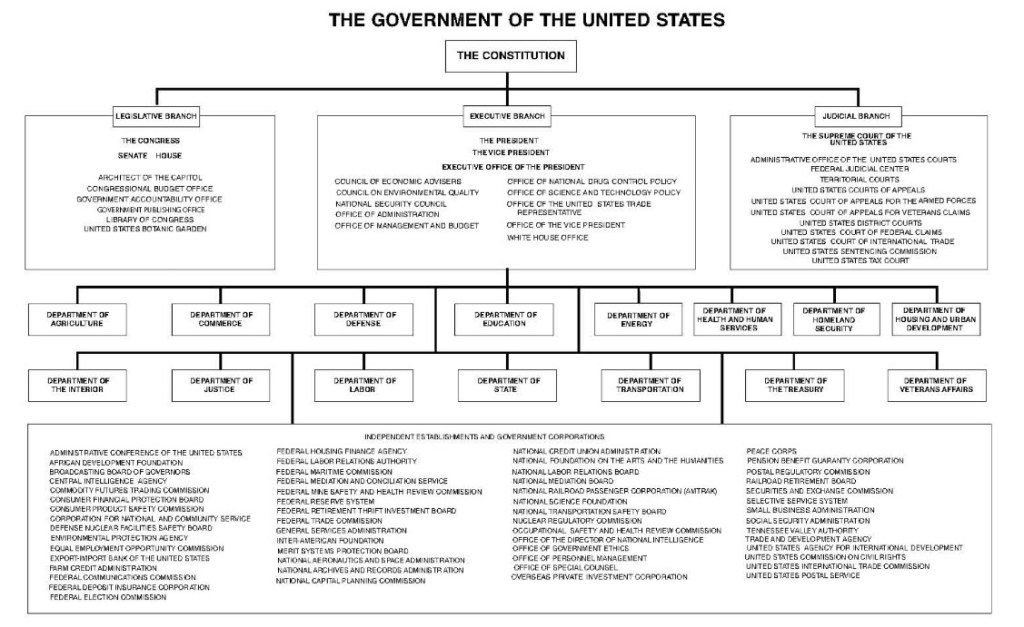
Duplicative functions, poor data systems, and a lack of control have led to massive misappropriations of funds. The dysfunction has been enabled by a metastasization of nests of administrative authority inside agencies with “incomprehensible” org charts, often having multiple departments with identical functions that do not communicate. These departments frequently use redundant but unconnected systems. A related problem is the inadequacy of documentation for outgoing payments. Needless to say, this is a hostile environment for effective spending controls.

It’s worth emphasizing, by the way, DOGE’s “open book” transparency. It’s not as if Elon Musk and DOGE are attempting to sabotage the deep state in the dark of night. Indeed, they are shouting from the rooftops!

Doing It Fast

Every day we have a new revelation from DOGE of incredible waste in the federal bureaucracy. Check out this story about a VA contact for web site maintenance. All too ironically, what we call government waste tends to have powerful, self-interested, and deeply corrupt constituencies. This makes speed an imperative for DOGE. In a highly politicized and litigious environment, the extent to which the Leviathan can be brought to heel is partly a function of how quickly the deconstruction takes place. One must pardon a few temporary dislocations that otherwise might be avoided in a world free of rent seeking behavior. Otherwise, the graft (no, NOT “grift”) will continue unabated.

The foregoing offers sufficient rationale not only for speedy force reductions, but also for system upgrades, dissolution of certain offices, and consolidation of core functions under single-agency umbrellas.

The Bloody Budget

It’s difficult to know when budget legislation will begin to reflect DOGE’s successes. The actual budget deficit might be affected in fiscal year 2025, but so far the savings touted by DOGE are chump change compared to the expected $2 trillion deficit, and only a fraction of those savings contribute to ongoing deficit reduction.

Uncontrolled spending is the root cause of the deficit, as opposed to insufficient tax revenue, as evidenced by a relatively stable ratio of taxes to GDP. The spending problem was exacerbated by the pandemic, but Congress and the Biden Administration never managed to scale outlays back to their previous trend once the economy recovered. Balancing the budget is made impossible when the prevailing psychology among legislators and the media is that reductions in the growth of spending represent spending cuts.

Federal spending is excessive on both the discretionary and mandatory sides of the budget. Ultimately, eliminating the budget deficit without allowing the 2017 Trump tax cuts to expire will require reform to mandatory entitlements like Social Security, Medicare, and Medicaid, as well as reductions across an array of discretionary programs.

DOGE’s focus on fraud and waste extends to entitlements. At a minimum, the data and tracking systems in place at HHS and SSA are antiquated, sometimes inaccurate, and are highly susceptible to manipulation and fraud. Systems upgrades are likely to pay for themselves many times over.

But all indications are that it’s much worse than that. Social security numbers were issued to millions of illegal immigrants during the Biden Administration, and those enrollees were cleared for maximum benefits. There were a significant number of illegals enrolled in Medicaid and registered to vote. While some of these immigrants might be employed and contributing to the entitlement system, they should not be employed without legal status. Of course, one can defend these entitlement benefits on purely compassionate grounds, but the availability of benefits has served to attract a massive flow of illegal border crossings. This illustrates both the extent to which the entitlement system has been compromised as well as the breakdown of border security.

On the discretionary side of the budget, DOGE has identified an impressive array programs that were not just wasteful, but by turns ridiculous or politically motivated (for example, the bulk of USAID’s budget). Many of these funding initiatives belong on the chopping block, and components that might be worthwhile have been moved to agencies with related missions. In addition, authorized but unspent allocations have been identified that seem to have been held in reserve, and which now can be used to reduce the public debt.

Research Grants?

Of course, like the initial scale of the FDA layoffs, a few mistakes have and will be made by DOGE and agencies under DOGE’s guidance. Many believe another powerful argument against DOGE is the Trump Administration’s 15% limit on indirect costs as an add-on to NIH grants. Critics assert that this limit will hamstring U.S. scientific advancement. However, it won’t “kill” publicly funded research. As this article in Reason points out, historically public funding has not been critical to scientific advancement in the U.S. In fact, private funding accounts for the vast bulk of U.S. R&D, according to the Congressional Research Service. Moreover, it’s broadly acknowledged that indirect costs are subject to distortion, and that generous funding of those costs creates bad incentives and raises thorny questions about cross-subsidies across funders (15% is the rate at which charities typically fund indirect costs).

No doubt some elite research universities will suffer declines in grants, but their case is weakened politically by a combination of lax control over anti-Semitic protests on campus, the growing unpopularity of DEI initiatives in education, and public awareness of the huge endowments over which these universities preside. Nevertheless, I won’t be surprised to see the 15% limit on indirect research costs revised upward somewhat.

More DOGE Please

I’ve criticized the numbers posted on DOGE’s website elsewhere. They could do a much better job of categorizing and reporting the savings they’ve achieved, and they have far to go before meeting the goals stated by Elon Musk. Be that as it may, DOGE is making progress. Here is a report on a few of the latest cuts.

As I’ve emphasized on numerous occasions, the federal government is a strangling mass of tentacles, squeezing excessive resources out of the private sector and suffocating producers with an endless catalogue of burdensome rules. There are many examples of systemic waste taking place within the federal bureaucracy. For example, since its creation by Jimmy Carter, the Department of Education has managed to piss away trillions of dollars while student performance has declined. The Small Business Administration has doled out millions of dollars in subsidized loans to super-centenarians as well as children. The U.S. Postal Service keeps losing money and mail while deliveries slow to a crawl. Big projects become mired in endless iterations of reviews and revisions, such as Obama’s infrastructure plan and Joe Biden’s infrastructure and rural broadband initiative.

And again, regulatory agencies are often our worst enemies, imposing burdensome requirements with which only the largest industry players can afford to comply. Indeed, the savings achieved through the DOGE process might pale in comparison to the resources that could be liberated by rationalizing the tangle of regulations now choking private business.

A significant narrowing of the budget deficit would be a major accomplishment for DOGE. Even one-time savings to help pay down the public debt are worthwhile. In this latter regard, I hope DOGE’s work with the Department of Interior helps facilitate the sale of dormant federal assets. This includes land (not parks) and buildings worth literally trillions of dollars, and sometimes costing billions annually to maintain.

Social Insurance, Trust Fund Runoff, and Federal Debt

28 Thursday Apr 2022

Posted by Nuetzel in Deficits, Social Security

≈ 1 Comment

Tags

Anti-Deficiency Act, Charles Blahous, Deficits, DI, Disability Income, Discretionary Budget, entitlements, Federal Reserve, Fiscal Inflation, Fiscal Tiger, Hospitalization Insurance, Joe Biden, Mandatory Spending, Medicaid, Medicare Part A, Medicare Part B, Medicare Part D, Medicare Reform, Medicare Trust Fund, Monetization, OASI, Old Age and Survivorship Income, Pay-As-You-Go, payroll taxes, SMI, Social Security Reform, Social Security Trust Fund, Student Loan Forgiveness, Supplementary Medical Insurance

The Social Security and Medicare trust funds are starting to shrink, but as they shrink something else expands in tandem, roughly dollar-for-dollar: government debt. There is a widespread misconceptions about these entitlement programs and their trust funds. Many seem to think the trust funds are like “pots of gold” that will allow the government to meet its mandatory obligations to beneficiaries. But, in fact, the government will have to borrow the exact amounts of any “assets” that are “cashed out” of the trust funds, barring other reforms or legislative solutions. So how does that work? And why did I put the words “assets” and “cashed out” in quote marks?

The Trust Funds

First, I should note that there are two Social Security trust funds: one for old age and survivorship income (OASI) and one for disability income (DI). Occasionally, for summary purposes, the accounts for these funds are combined in presentations. There are also two Medicare trust funds: one for hospitalization insurance (HI – Part A) and one for Supplementary Medical Insurance (SMI – Parts B and D). The first three of these trust funds are represented in the chart at the top of this post, which is from the Summary of the 2021 Annual Reports by the Boards of Trustees. It plots a measure of financial adequacy: the ratio of trust fund assets at the start of each year to the annual cost. The funds are all projected to be depleted, HI and OASI much sooner than DI.

Fund Accumulation

The first step in understanding the trust funds requires a clearing up of another misconception: the payroll taxes that workers “contribute” to these systems are not invested specifically for each of those workers. These programs are strictly “pay-as-you-go”, meaning that the payroll taxes (and premiums in the case of Medicare) paid this year by you and/or your employer are generally distributed directly to current beneficiaries.

Back when demographics of the American population were more favorable for these programs, with a larger number of workers relative to retirees, payroll taxes (and premiums) exceeded benefits. The excess was essentially loaned by these programs to the U.S. Treasury to cover other forms of spending. So the trust funds accumulated U.S. Treasury IOUs for many years, and the Treasury pays interest to the trust funds on that debt. On the upside, that meant the Treasury had to borrow less from the public to cover its deficits during those years. So the government spent the excess payroll tax proceeds and wrote IOUs to the trust funds.

Draining the Funds

The demographic profile of the population is no longer favorable to these entitlement programs. The number of retirees has increased so that benefit levels have grown more quickly than program revenue. Benefits now exceed the payroll taxes and premiums collected, so the trust funds must be drawn down. Current estimates are that the Social Security Trust Fund will be depleted in 2034, while the Medicare Trust Fund will last only to 2026. These dates are reflected in the chart above. It is the mechanics of these draw-downs that get to the heart of the first “pot of gold” misconception cited above.

To pay for the excess of benefits over revenue collected, the trust funds must cash-in the IOUs issued to them by the Treasury. And where does the Treasury get the cash? It will almost certainly be borrowed from the public, but the government could hike other forms of taxes or reduce other forms of spending. So, while the earlier accumulation of trust fund assets meant less federal borrowing, the divestment of those assets generally means more federal borrowing and growth in federal debt held by the public.

Given these facts, can you spot the misconception in this quote from Fiscal Tiger? It’s easy to miss:

“In the cases of Social Security, Medicare, and Medicaid, payroll taxes provide some revenue. Social Security also has trust funds that cover some of the program costs. However, when the government is short on funds for these programs after getting the revenue from taxes and trust funds, it must borrow money, which contributes to the deficit.”

This kind of statement is all too common. The fact is the government has to borrow in order to pay off the IOUs as the trust funds are drawn down, roughly dollar-for-dollar.

A second mistake in the quote above is that federal borrowing to pay excess benefits after the trust funds are fully depleted is not really assured. At that time, the Anti-deficiency Act prohibits further payments of benefits in excess of payroll taxes (and premiums), and there is no authority allowing the trust funds to borrow from the general fund of the Treasury. Either benefits must be reduced, payroll taxes increased, premiums hiked (for Medicare), or more radical reforms will be necessary, any of which would require congressional action. In the case of Social Security (combining OASI and DI), the projected growth of “excess benefits” is such that the future, cumulative shortfall represents 25% of projected benefits!

Again, the mandatory entitlement spending programs are technically insolvent. Charles Blahous discusses the implications of closing the funding gap, both in terms of payroll tax increases or benefit cuts, either of which will be extremely unpopular:

“How likely is it that lawmakers would immediately cut benefits by 25% for everyone, rich and poor, retiring next year and beyond? More likely, lawmakers would phase in reforms gradually, necessitating much larger eventual benefit changes for those affected—perhaps 30% or 40%. And if we want to spare lower-income individuals from reductions, they’d need to be still greater for everyone else.”

It should be noted that Medicaid is also a budget drain, though the cost is shared with state governments.

Discretionary vs. Mandatory Budgets

When it comes to federal budget controversies, discretionary budget proposals receive most of the focus. The federal deficit reached unprecedented levels in 2020 and 2021 as pandemic support measures led to huge increases in spending. Even this year (2022), the projected deficit exceeds the 2019 level by over $160 billion. Joe Biden would like to spend much more, of course, though the loss of proceeds from his student loan forgiveness giveaway does not even appear in the Administration’s budget proposal. Biden proposes to pay for the spending with a corporate tax hike and a minimum tax on very high earners, including an unprecedented tax on unrealized capital gains. Those measures would be disappointing in terms of revenue collection, and they are probably worse for the economy and society than bigger deficits. None of that is likely to pass Congress, but we’ll still be running huge deficits indefinitely..

In a further complication, at this point no one really believes that the federal government will ever pay off the mounting public debt. More likely is that the Federal Reserve will make further waves of monetization, buying government bonds in exchange for monetary assets. (Of course, money is also government debt.) The conviction that ever increasing debt levels are permanent is what leads to fiscal inflation, which taxes the public by devaluing the public debt, including (or especially) monetary assets. The insolvency of the trust funds is contributing to this process and its impact is growing..

Again, the budget discussions we typically hear involve discretionary components of the federal budget. Mandatory outlays like Social Security, Medicare, and Medicaid are nearly three times larger. Here is a good primer on the mandatory spending components of the federal budget (which includes interest costs). Blahous notes elsewhere that the funding shortfall in these programs will ultimately dwarf discretionary sources of budgetary imbalance. The deficit will come to be dominated by the borrowing required to fund mandatory programs, along with the burgeoning cost of interest payments on the public debt, which could reach nearly 50% of federal revenues by 2050.

Conclusion

It would be less painful to address these funding shortfalls in mandatory programs immediately than to continue to ignore them. That would enable a more gradual approach to changes in benefits, payroll taxes, and premiums. Politicians would rather not discuss it, however. Any discussion of reforms will be controversial, but it’s only going to get worse over time.

Political incentives being what they are, current workers (future claimants) are likely to bear the brunt of any benefit cuts, rather than retirees already enrolled. Payroll tax hikes are perhaps a harder sell because they are more immediate than trimming benefits for future retirees. Other reforms like self-directed Social Security contributions would create better tradeoffs by allowing investment of contributions at competitive (but more risky) returns. Medicare has premiums as an extra lever, but there are other possible reforms.

Again, the time to act is now, but don’t expect it to happen until the crisis is upon us. By then, our opportunities will have become more hemmed in, and something bad is more likely to be promulgated in the rush to save the day.

Follow Sacred Cow Chips on WordPress.com

Recent Posts

  • Immigration and Merit As Fiscal Propositions
  • Tariff “Dividend” From An Indigent State
  • Almost Looks Like the Fed Has a 3% Inflation Target
  • Government Malpractice Breeds Health Care Havoc
  • A Tax On Imports Takes a Toll on Exports

Archives

  • December 2025
  • November 2025
  • October 2025
  • September 2025
  • August 2025
  • July 2025
  • June 2025
  • May 2025
  • April 2025
  • March 2025
  • February 2025
  • January 2025
  • December 2024
  • November 2024
  • October 2024
  • September 2024
  • August 2024
  • July 2024
  • June 2024
  • May 2024
  • April 2024
  • March 2024
  • February 2024
  • January 2024
  • December 2023
  • November 2023
  • August 2023
  • July 2023
  • June 2023
  • May 2023
  • April 2023
  • March 2023
  • February 2023
  • January 2023
  • December 2022
  • November 2022
  • October 2022
  • September 2022
  • August 2022
  • July 2022
  • June 2022
  • May 2022
  • April 2022
  • March 2022
  • February 2022
  • January 2022
  • December 2021
  • November 2021
  • October 2021
  • September 2021
  • August 2021
  • July 2021
  • June 2021
  • May 2021
  • April 2021
  • March 2021
  • February 2021
  • January 2021
  • December 2020
  • November 2020
  • October 2020
  • September 2020
  • August 2020
  • July 2020
  • June 2020
  • May 2020
  • April 2020
  • March 2020
  • February 2020
  • January 2020
  • December 2019
  • November 2019
  • October 2019
  • September 2019
  • August 2019
  • July 2019
  • June 2019
  • May 2019
  • April 2019
  • March 2019
  • February 2019
  • January 2019
  • December 2018
  • November 2018
  • October 2018
  • September 2018
  • August 2018
  • July 2018
  • June 2018
  • May 2018
  • April 2018
  • March 2018
  • February 2018
  • January 2018
  • December 2017
  • November 2017
  • October 2017
  • September 2017
  • August 2017
  • July 2017
  • June 2017
  • May 2017
  • April 2017
  • March 2017
  • February 2017
  • January 2017
  • December 2016
  • November 2016
  • October 2016
  • September 2016
  • August 2016
  • July 2016
  • June 2016
  • May 2016
  • April 2016
  • March 2016
  • February 2016
  • January 2016
  • December 2015
  • November 2015
  • October 2015
  • September 2015
  • August 2015
  • July 2015
  • June 2015
  • May 2015
  • April 2015
  • March 2015
  • February 2015
  • January 2015
  • December 2014
  • November 2014
  • October 2014
  • September 2014
  • August 2014
  • July 2014
  • June 2014
  • May 2014
  • April 2014
  • March 2014

Blogs I Follow

  • Passive Income Kickstart
  • OnlyFinance.net
  • TLC Cholesterol
  • Nintil
  • kendunning.net
  • DCWhispers.com
  • Hoong-Wai in the UK
  • Marginal REVOLUTION
  • Stlouis
  • Watts Up With That?
  • Aussie Nationalist Blog
  • American Elephants
  • The View from Alexandria
  • The Gymnasium
  • A Force for Good
  • Notes On Liberty
  • troymo
  • SUNDAY BLOG Stephanie Sievers
  • Miss Lou Acquiring Lore
  • Your Well Wisher Program
  • Objectivism In Depth
  • RobotEnomics
  • Orderstatistic
  • Paradigm Library
  • Scattered Showers and Quicksand

Blog at WordPress.com.

Passive Income Kickstart

OnlyFinance.net

TLC Cholesterol

Nintil

To estimate, compare, distinguish, discuss, and trace to its principal sources everything

kendunning.net

The Future is Ours to Create

DCWhispers.com

Hoong-Wai in the UK

A Commonwealth immigrant's perspective on the UK's public arena.

Marginal REVOLUTION

Small Steps Toward A Much Better World

Stlouis

Watts Up With That?

The world's most viewed site on global warming and climate change

Aussie Nationalist Blog

Commentary from a Paleoconservative and Nationalist perspective

American Elephants

Defending Life, Liberty and the Pursuit of Happiness

The View from Alexandria

In advanced civilizations the period loosely called Alexandrian is usually associated with flexible morals, perfunctory religion, populist standards and cosmopolitan tastes, feminism, exotic cults, and the rapid turnover of high and low fads---in short, a falling away (which is all that decadence means) from the strictness of traditional rules, embodied in character and inforced from within. -- Jacques Barzun

The Gymnasium

A place for reason, politics, economics, and faith steeped in the classical liberal tradition

A Force for Good

How economics, morality, and markets combine

Notes On Liberty

Spontaneous thoughts on a humble creed

troymo

SUNDAY BLOG Stephanie Sievers

Escaping the everyday life with photographs from my travels

Miss Lou Acquiring Lore

Gallery of Life...

Your Well Wisher Program

Attempt to solve commonly known problems…

Objectivism In Depth

Exploring Ayn Rand's revolutionary philosophy.

RobotEnomics

(A)n (I)ntelligent Future

Orderstatistic

Economics, chess and anything else on my mind.

Paradigm Library

OODA Looping

Scattered Showers and Quicksand

Musings on science, investing, finance, economics, politics, and probably fly fishing.

  • Subscribe Subscribed
    • Sacred Cow Chips
    • Join 128 other subscribers
    • Already have a WordPress.com account? Log in now.
    • Sacred Cow Chips
    • Subscribe Subscribed
    • Sign up
    • Log in
    • Report this content
    • View site in Reader
    • Manage subscriptions
    • Collapse this bar
 

Loading Comments...