• About

Sacred Cow Chips

Sacred Cow Chips

Tag Archives: Richard Epstein

Liz Warren Pitches Another Goofball

23 Thursday Aug 2018

Posted by Nuetzel in Central Planning, Property Rights, Regulation

≈ Leave a comment

Tags

Accountable Capitalism Act, Board Activism, Don Boudreaux, Elizabeth Warren, Fifth Amendment, Kevin Williamson, Matt Yglesias, Richard Epstein, Unconstitutional Conditions
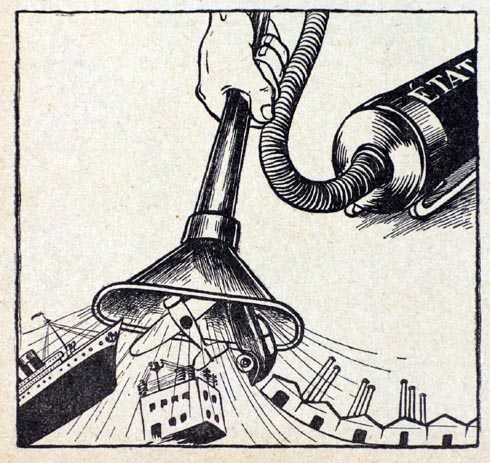
Elizabeth Warren wants to nationalize all private businesses with more than $1 billion in annual revenue. She plans to introduce legislation called the “Accountable Capitalism Act” that would, if enacted, authorize an outright theft of private property from the owners of these companies. Among other things, her plan would require large companies to obtain a federal charter and set aside 40% of their board seats for members to be elected by employees. In addition, henceforth these businesses would be answerable not merely to shareholders, but to employees along with a limitless array of other “stakeholders”. That’s because under their federal charters, firms would have a duty to create a “general public benefit”. The operative assumption here is that merely creating a product or service does not produce adequate value for society, regardless of the benefits to buyers, income to employees and suppliers, taxes paid, and the returns earned by millions of working people who have invested in these companies via pension and 401(k) plans.

In the very first place, Warren’s bill is unconstitutional, as Richard Epstein points out. Owning a business is protected as a property right under several amendments to the U.S. Constitution, but particularly the Fifth Amendment. Warren would place unconstitutional conditions on this right via the requirements for a federal charter and the so-called public benefit. If enacted, her bill would quite likely be ruled unconstitutional by the courts. But if it stood, capital would quickly take flight from the U.S., depressing asset values.

Don Boudreaux notes that absent ownership, vaguely-defined “stakeholders” have risked nothing in the success of the company. Shareholders bear the financial risk that the company will fail to produce adequate earnings, lose value, or fail. Management has a fiduciary duty to protect the funds that shareholders invest in the firm, including a duty to protect the firm’s ability to acquire credit. Warren’s legislation would compromise these duties by elevating the objectives of non-owners to the same or greater status than those who have provided the equity capital. Again, this would happen in at least two ways: required representation of employee-elected board members, and the vague public-benefit mandate under the firm’s federal charter.

Significant employee representation on the board is likely to distort decisions about labor compensation and virtually any decision affecting employment. While 40% is short of a board majority, union pension funds already purchase shares in companies both as investments and as a way of driving labor issues before shareholders and into boardrooms. Those votes, along with the 40% board representation and oversight from federal bureaucrats, would give additional leverage to labor in influencing the firm’s decision-making. To take the simplest case, economic efficiency requires that the rate of labor compensation be the same as the marginal value of labor productivity. Warren’s proposal would surely result in wage payments exceeding this threshold, diminishing the economic value of the firm and its ability to raise capital. And by reducing the efficiency of the production process, it would raise costs to consumers and/or business customers.

There any number of other worker demands that would gain viability. For example, extended break times or extra paid-time-off would certainly raise costs, and such demands from a plurality of the board would be unrestrained by the need to negotiate other terms. Or how about a plant-closing decision? The upshot is that mandated board representation for labor would create instability and lead to a decline in the firm’s performance, competitiveness, and attractiveness to suppliers of capital. Ultimately, the very jobs on which labor depends would be threatened.

Further dilution of business objectives would arise from the requirement under the federal charter to produce a “public benefit”. Serving customers is not enough, but what will satisfy federal overseers that the firm has fulfilled its social obligations? And what are the limits of those social obligations? Again, these amorphous requirements would constitute a theft of resources from the business owners, requiring the payment of alms in order to produce something of value. There is already evidence that board activism in pursuit of non-business, social objectives destroys business value:

“Labor-affiliated pensions regularly file shareholder proposals, usually involving social and political concerns. Those social and political shareholder-proposal campaigns are associated with lower shareholder value. These labor investors also tend to attack companies facing ongoing union-organizing campaigns, as well as companies with political action committees that support Republicans.”

In time, the dilution of objectives undermines a firm’s viability, its health of its suppliers, and its ability to employ workers and hire other resources. Many of the suppliers hurt by Warren’s proposal would be smaller firms. It would ripple through the ranks of consultants, repair shops, electricians, plumbers, accounting firms, janitorial services, and any number of other businesses. But even before that, Warren’s proposal would send capital scrambling overseas.

I share Don Boudreaux’s astonishment that writers such as Matt Yglesias in Vox can assert that the Warren plan would have no costs. It might or might not have an impact on the federal budget, but the cost of destroyed economic value in the business sector would be massive, not to mention the jobs that ultimately would be lost in the process. It’s also astonishing that proponents can pretend that Warren’s bill would “save capitalism” when in fact it would do great harm.

Finally, here is Kevin Williamson expressing his disdain for Warren’s true intent in putting her bill forward:

“Warren’s proposal is dishonestly called the ‘Accountable Capitalism Act.’ Accountable to whom?  you might ask. That’s a reasonable question. The answer is — as it always is — accountable to politicians, who desire to put the assets and productivity of private businesses under political discipline for their own selfish ends. It is remarkable that people who are most keenly attuned to the self-interest of CEOs and shareholders and the ways in which that self-interest influences their decisions apparently believe that members of the House, senators, presidents, regulators, Cabinet secretaries, and agency chiefs somehow are liberated from self-interest when they take office through some kind of miracle of transcendence.”

Gays and Bakers: Expression or Repression?

26 Monday Feb 2018

Posted by Nuetzel in Discrimination, Free Speech

≈ Leave a comment

Tags

Anti-discrimination law, CO Anti-Discrimination Act, Common Carrier, David Henderson, Eugene Volokh, Freedom of Association, Freedom of Speech, Gay Wedding Cake, Masterpiece Bakeshop, Public Accommodations, Richard Epstein, Unruh Act

A lot rides on the legal interpretation of “expression” in the gay-wedding-cake dispute. Eugene Volokh discusses a recent ruling in California in which a trial court judge ruled that the baker’s right to free expression, buttressed by her right to free exercise of religion, protected her from demands that she participate in a form of expression to which she objected. Specifically, she had no legal obligation to create a cake for the celebration of a gay couple’s wedding, according to the ruling.

The facts in the case, CA Dept. of Fair Employment and Housing v. Cathy’s Creations, are that the baker refused to bake the couple a wedding cake but expressed a willingness to sell them anything that was already available in the shop. Thus, she did not discriminate against the couple by denying them access to her “public accommodations”. She also gave the couple a referral to another baker whom she believed would be willing to produce the cake. So there were probable alternatives available to the couple, and the baker’s assistance in locating one mitigated against any harm suffered by the gay couple. That sort of mitigation is an important factor to consider in weighing the rights of conflicting parties. Courts have tended to view “dignitary harm” as less compelling than forced expression.

Volokh argues that the baker’s role in the episode did not demand expression on her part. He says the proposed cake was a pre-existing design and did not involve writing of any kind. Otherwise, Volokh would have supported the ruling. He and a coauthor discuss the distinctions between an artist (who expresses) and an artisan (who merely executes), and an expressive and a non-expressive cake, in an amicus brief, as noted in the article linked above. Here is Volokh’s summary of his view:

“While creating photographs, videos, and text would be constitutionally protected speech (so we support the right of, for instance, photographers not to photograph same-sex weddings), creating wedding cakes with no text or symbolic design on them is not.“

The Volokh article is a little confusing because the amicus brief seems to have been filed in a different but similar case, Masterpiece Bakeshop v. Colorado Civil Rights Commission, which is now before the U.S. Supreme Court. A ruling is expected this summer. Here is a transcript of the oral arguments in that case, which were heard late last year. It’s a fascinating discussion.

Volokh’s analysis is fine as far as it goes. However, a wedding cake is likely to be considered expressive to both the baker and the cake’s buyers. The baker’s effort in executing even a pre-existing design may involve meaning for her beyond mere execution, since the usual intent of a wedding cake is to celebrate a sacred union. Likewise, the baker knows that the buyers consider the cake to be expressive of their union. The baker doesn’t want any involvement in that expression, asserting that it is not for the government to intercede, forcing them to participate by producing the cake.

Does the baker’s offer to supply an existing cake (or any other bakery good) undermine their case? Does the necessity of baking a new cake for a gay wedding differ from offering a cake already on the shelf for the same purpose? That may be irrelevant to the cases at hand, because no other wedding cakes were available at the time, and freshness might demand the preparation of a new cake for such an occasion. Nevertheless, that sort of line between an acceptable sale for the baker and unacceptable expression strikes me as thin.

As for the matter of the baker’s religious beliefs and their importance to her expressive rights, Volokh derides some of the language of the ruling. Those beliefs, Volokh says, are irrelevant to the question of whether a particular kind of expression is protected or compelled:

“By the way, I take it that it’s clear that the Free Speech Clause issue can’t turn on whether Miller’s belief ‘is part of the orthodox doctrines’ of many religions, or whether it’s instead ‘trivial, arbitrary, nonsensical, or outrageous’ — the Free Speech Clause protects views regardless of whether they express views that are seen as orthodox, outrageous, or nonsensical.“

Bravo! However, when the rights of two parties are in conflict, it is appropriate to weigh any impingement upon other, secondary rights of both parties.

A disturbing aspect of these cases is that they do not turn in any way on freedom of association, a freedom that encompasses a right not to associate (since any association must be voluntary for both parties). The presumption is that the baker’s right to freely associate or not associate with whomever they please is superseded by their obligations under public accommodation laws, despite the fact that freedom of association is an enumerated right in the U.S. Constitution. While public accommodation laws have generally been found to be constitutional, those laws do not apply in all circumstances, such as when a particular product or service involves expression. But on its own, a violation of the baker’s freedom of association seems to matter less, in today’s legal environment, than abridgment of her free expression, and perhaps less than any obligation she has to provide public accommodation.

Richard Epstein gives a general treatment of the balance between freedom of association and anti-discrimination law. David Henderson has bemoaned the dilution of the freedom of association suffered in the name of non-discrimination. He does not defend discrimination on the basis of race, gender or sexual preference. Quite the contrary. However, as a matter of individual liberty, he prefers that we retain our right to associate on any basis of our choosing and pay the price imposed by the market for discrimination. For example, if you hang a sign outside your restaurant saying that you won’t serve African Americans, you are likely to suffer a loss of business from all who find your preference offensive, as many will. That solution is obviously unappealing to those who believe that participation in civil society requires public standards of equal access in private transactions. Still, there is some truth to a quote Henderson provides from an anonymous individual comparing the idea of non-discrimination in public accommodations to the “common carrier” designation:

“‘Either way, the theory boils down to “you brought forth a good or service and abracadabra you now have fewer rights”‘”.

The legal actions against the bakers in the cases discussed above rely on anti-discrimination law (in CA, the Unruh Act, and in CO, the Anti-Discrimination Act). Those laws must face limits in their application, as may be necessary in the case of compelled expression, especially expression against one’s most deeply-held convictions, religious or otherwise. The most basic question in this regard is whether the creation of the proposed wedding (or union) cakes can be described as expression. Whether the bakers are acting as mere fabricators or as artists, there is no doubt that the wedding parties desired the cakes as part of the celebration of their unions. That use of a cake constitutes expression on their part, and it is a kind of expression and an association from which the bakers would prefer to demure.

I support the right of homosexuals to enter into legal marriage, but I also support the bakers’ right to refuse the business. To invoke a phrase used by Richard Epstein in the article linked above, the world would be a better place if all agreed to simply “live and let live”.

Hamburger Nation: An Administrative Nightmare

04 Friday Mar 2016

Posted by Nuetzel in Big Government, Judicial Branch, Legislative Branch, Regulation

≈ 4 Comments

Tags

Administrative Law, Administrative State, Constitutional convention, Delegated Powers, Due Process, Extralegal Powers, Fourth Branch, George Akerlof, Glenn Reynolds, Ham Sandwich Nation, Ilya Somin, IRS Targeting, Ivan Carrino, Joseph Postell, Marginal Revolution, Mia Love, Michael Ramsey, Philip Hamburger, Richard Epstein, Robert Shiller, Rule of Consent, Takings, The Originalism Blog, Volokh Conspiracy

nanny-state

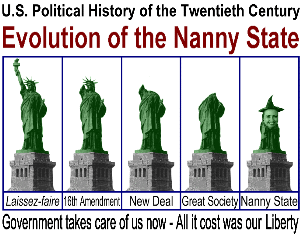
By what authority do unelected bureaucrats in administrative agencies increasingly make laws, enforce those laws and adjudicate violations? The fact that all of these activities take place within the executive branch of government appears to be an obvious contradiction of the separation of powers required by the first three articles of the Constitution, the principle of “Rule By Consent” of the governed, and protections of individual liberty. In a strong sense, the regulatory apparatus has grown so unwieldy that the powers routinely exercised by administrative agencies today seem beyond even the reach of elected executives. The rules promulgated by this “fourth branch” of government are essentially extralegal, a point discussed at length in Philip Hamburger’s “Is Administrative Law Unlawful“. He has also explained these issues at the Volokh Conspiracy blog in “Extralegal power, delegation, and necessity“, and “The Constitution’s repudiation of extralegal power“.

Hamburger examines the assertion that rule-making must be delegated by Congress to administrative agencies because legislation cannot reasonably be expected to address the many details and complexities encountered in the implementation of new laws. Yet this is a delegation of legislative power. Once delegated, this power has a way of metastasizing at the whim of agency apparatchiks, if not at the direction of the chief executive. If you should want to protest an administrative ruling, your first stop will not be a normal court of law, but an administrative review board or a court run by the agency itself! You’ll be well advised to hire an administrative attorney to represent you. Eventually, and at greater expense, an adverse decision can be appealed to the judicial branch proper.

This adds up to a dangerous lack of accountability and power. Marginal Revolution points out that critics of Hamburger’s book overlook the potential for harm that could be done by a “vindictive” president. But we should not lose sight of the fact that bureaucrats themselves, at any level, can be vindictive, as the IRS targeting scandal has shown. But that is only one motive for abuse of power; another motive may be more pervasive: the ability to reward those in a position to promote the self-interests of those who populate the administrative state. These are dangers that are endemic to big government. In a post entitled “Are Government Regulators More Virtuous than Everyone Else” (No!), Ivan Carrino highlights the weakness of arguments like those made by George Akerlof and Robert Shiller in “Phishing For Phools“, who call for greater government regulation on the grounds that consumers are vulnerable to manipulation by businesses. Carrino says:

“One can’t help but notice the central contradiction in this analysis. On the one hand, it is assumed that markets fail because of ‘normal human weakness.’ On the other hand, it is assumed that regulation, which must necessarily be implemented by human beings with equal or greater ‘weaknesses,’ will somehow solve the problem.

Akerlof and Shiller simultaneously demonize human beings who operate in the private sector while idealizing human beings who operate in the public sector.“

Glenn Reynolds has been a prominent critic of the administrative state. As a consequence of the vast and growing body of regulatory rules, it’s become increasingly difficult for individuals, acting on their own or as businesspeople, to know whether they are in acting in violation of administrative law. Reynolds discusses regulatory crime and over-criminalization in “You May Be Breaking The Law Right Now“, and in his great paper “Ham Sandwich Nation: Due Process When Everything is a Crime” (free download).

Hamburger’s main position is that law should be made by elected representatives, not by bureaucrats who lack direct accountability to voters. Ilya Somin believes that with time, Hamburger will have great influence on legal theorists in this regard. He compares Hamburger’s insights on administrative law to Richard Epstein’s work on takings. Epstein insisted that “almost all regulations that restrict property rights should be considered ‘takings’ that require compensation under the Fifth Amendment.” Somin notes that Epstein’s position, despite harsh criticism from certain quarters, has influenced legal thinking in a dramatic way over the years.

What’s to be done? Can a line reasonably be drawn between constitutional legislative power and delegated rule-making authority? Somin is skeptical that absolute restrictions on lawmaking by the administrative state are practical, in the sense that there will always be details that cannot be addressed in enabling legislation. Others have suggested practical paths forward: Joseph Postell attempts to give a roadmap in “From Administrative State to Constitutional Government“. A recent Glenn Reynolds op-ed, “Blow Up The Administrative State“, gives a qualified defense of Texas Governor Greg Abbot’s proposed amendments to the Constitution. Among other things, Abbot proposes to:

“–Prohibit administrative agencies … from creating federal law.
  –Prohibit administrative agencies … from preempting state law.
  –Give state officials the power to sue in federal court when … officials overstep their bounds.
  –Allow a two-thirds majority of the states to override a federal law or regulation.”

I would add that administrative review and adjudication should be independent of the agencies themselves. Also, Representative Mia Love (R-UT) has proposed legislation that would restrict Congress to bills focused on points directly related to a single issue (i.e., no omnibus bills), which would help to check the growth of the administrative state.

All of these measures seem consistent with Hamburger’s views. Reynolds is fully cognizant of the dangers of a constitutional convention. Nevertheless, he recognizes that Abbot’s proposals would impose harder limits on the size of government, and defends them in colorful fashion:

“A smaller government would mean fewer phony-baloney jobs for college graduates with few marketable skills but demonstrated political loyalty. It would mean fewer opportunities for tax dollars to be directed to people and entities with close ties to people in power. It would mean less ability to engage in social engineering and ‘nudges’ aimed at what are all-too-often seen as those dumb rubes in flyover country. The smaller the government, the fewer the opportunities for graft and self-aggrandizement — and graft and self-aggrandizement are what our political class is all about.“

For further reading, Michael Ramsey at The Originalism Blog posts links to several other essays by Hamburger at The Volokh Conspiracy, where he acted as a guest-blogger.


Follow Sacred Cow Chips on WordPress.com

Recent Posts

  • The Case Against Interest On Reserves
  • Immigration and Merit As Fiscal Propositions
  • Tariff “Dividend” From An Indigent State
  • Almost Looks Like the Fed Has a 3% Inflation Target
  • Government Malpractice Breeds Health Care Havoc

Archives

  • January 2026
  • December 2025
  • November 2025
  • October 2025
  • September 2025
  • August 2025
  • July 2025
  • June 2025
  • May 2025
  • April 2025
  • March 2025
  • February 2025
  • January 2025
  • December 2024
  • November 2024
  • October 2024
  • September 2024
  • August 2024
  • July 2024
  • June 2024
  • May 2024
  • April 2024
  • March 2024
  • February 2024
  • January 2024
  • December 2023
  • November 2023
  • August 2023
  • July 2023
  • June 2023
  • May 2023
  • April 2023
  • March 2023
  • February 2023
  • January 2023
  • December 2022
  • November 2022
  • October 2022
  • September 2022
  • August 2022
  • July 2022
  • June 2022
  • May 2022
  • April 2022
  • March 2022
  • February 2022
  • January 2022
  • December 2021
  • November 2021
  • October 2021
  • September 2021
  • August 2021
  • July 2021
  • June 2021
  • May 2021
  • April 2021
  • March 2021
  • February 2021
  • January 2021
  • December 2020
  • November 2020
  • October 2020
  • September 2020
  • August 2020
  • July 2020
  • June 2020
  • May 2020
  • April 2020
  • March 2020
  • February 2020
  • January 2020
  • December 2019
  • November 2019
  • October 2019
  • September 2019
  • August 2019
  • July 2019
  • June 2019
  • May 2019
  • April 2019
  • March 2019
  • February 2019
  • January 2019
  • December 2018
  • November 2018
  • October 2018
  • September 2018
  • August 2018
  • July 2018
  • June 2018
  • May 2018
  • April 2018
  • March 2018
  • February 2018
  • January 2018
  • December 2017
  • November 2017
  • October 2017
  • September 2017
  • August 2017
  • July 2017
  • June 2017
  • May 2017
  • April 2017
  • March 2017
  • February 2017
  • January 2017
  • December 2016
  • November 2016
  • October 2016
  • September 2016
  • August 2016
  • July 2016
  • June 2016
  • May 2016
  • April 2016
  • March 2016
  • February 2016
  • January 2016
  • December 2015
  • November 2015
  • October 2015
  • September 2015
  • August 2015
  • July 2015
  • June 2015
  • May 2015
  • April 2015
  • March 2015
  • February 2015
  • January 2015
  • December 2014
  • November 2014
  • October 2014
  • September 2014
  • August 2014
  • July 2014
  • June 2014
  • May 2014
  • April 2014
  • March 2014

Blogs I Follow

  • Passive Income Kickstart
  • OnlyFinance.net
  • TLC Cholesterol
  • Nintil
  • kendunning.net
  • DCWhispers.com
  • Hoong-Wai in the UK
  • Marginal REVOLUTION
  • Stlouis
  • Watts Up With That?
  • Aussie Nationalist Blog
  • American Elephants
  • The View from Alexandria
  • The Gymnasium
  • A Force for Good
  • Notes On Liberty
  • troymo
  • SUNDAY BLOG Stephanie Sievers
  • Miss Lou Acquiring Lore
  • Your Well Wisher Program
  • Objectivism In Depth
  • RobotEnomics
  • Orderstatistic
  • Paradigm Library
  • Scattered Showers and Quicksand

Blog at WordPress.com.

Passive Income Kickstart

OnlyFinance.net

TLC Cholesterol

Nintil

To estimate, compare, distinguish, discuss, and trace to its principal sources everything

kendunning.net

The Future is Ours to Create

DCWhispers.com

Hoong-Wai in the UK

A Commonwealth immigrant's perspective on the UK's public arena.

Marginal REVOLUTION

Small Steps Toward A Much Better World

Stlouis

Watts Up With That?

The world's most viewed site on global warming and climate change

Aussie Nationalist Blog

Commentary from a Paleoconservative and Nationalist perspective

American Elephants

Defending Life, Liberty and the Pursuit of Happiness

The View from Alexandria

In advanced civilizations the period loosely called Alexandrian is usually associated with flexible morals, perfunctory religion, populist standards and cosmopolitan tastes, feminism, exotic cults, and the rapid turnover of high and low fads---in short, a falling away (which is all that decadence means) from the strictness of traditional rules, embodied in character and inforced from within. -- Jacques Barzun

The Gymnasium

A place for reason, politics, economics, and faith steeped in the classical liberal tradition

A Force for Good

How economics, morality, and markets combine

Notes On Liberty

Spontaneous thoughts on a humble creed

troymo

SUNDAY BLOG Stephanie Sievers

Escaping the everyday life with photographs from my travels

Miss Lou Acquiring Lore

Gallery of Life...

Your Well Wisher Program

Attempt to solve commonly known problems…

Objectivism In Depth

Exploring Ayn Rand's revolutionary philosophy.

RobotEnomics

(A)n (I)ntelligent Future

Orderstatistic

Economics, chess and anything else on my mind.

Paradigm Library

OODA Looping

Scattered Showers and Quicksand

Musings on science, investing, finance, economics, politics, and probably fly fishing.

  • Subscribe Subscribed
    • Sacred Cow Chips
    • Join 128 other subscribers
    • Already have a WordPress.com account? Log in now.
    • Sacred Cow Chips
    • Subscribe Subscribed
    • Sign up
    • Log in
    • Report this content
    • View site in Reader
    • Manage subscriptions
    • Collapse this bar
 

Loading Comments...