• About

Sacred Cow Chips

Sacred Cow Chips

Tag Archives: TikTok

Trump’s New Corporatist Plunder Will Cost U.S.

05 Friday Sep 2025

Posted by Nuetzel in Central Planning, Protectionism, Socialism

≈ Leave a comment

Tags

AMD, central planning, CHIPS Act, Corporatism, Don Boudreaux, Donald Trump, Extortion, fascism, Golden Share, Howard Lutnick, Intel, MP Materials, National Security, Nippon Steel, NVIDIA, Protectionism, Public debt, Scott Bessent, Socialism, Tad DeHaven, TikTok, U.S. Steel, Unfunded Obligations, Veronique de Rugy
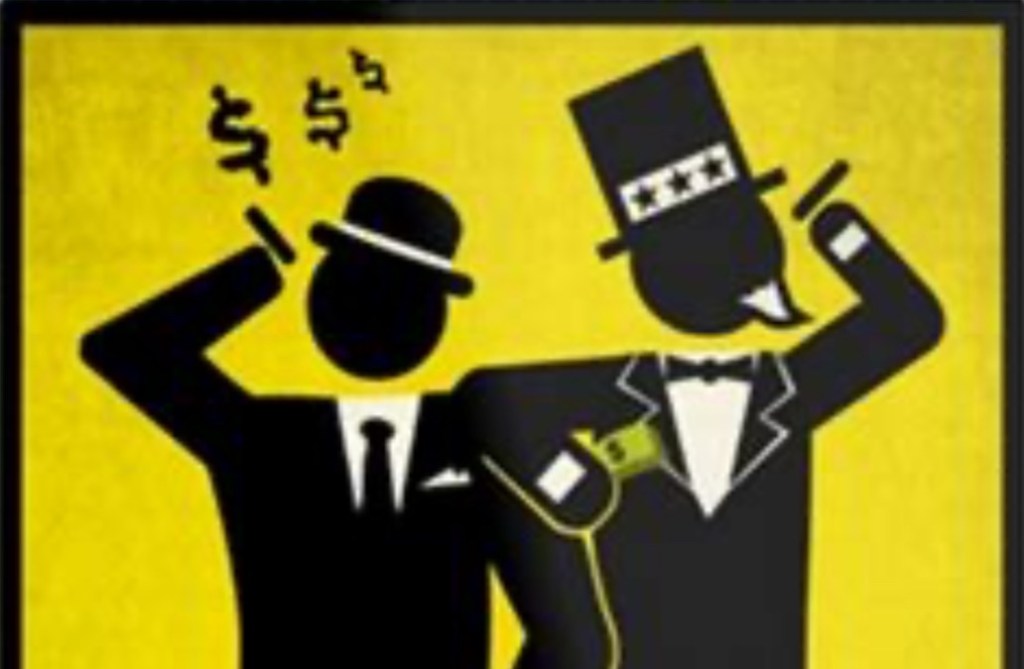
Since his inauguration, Donald Trump has been busy finding ways for the government to extort payments and ownership shares from private companies. This has taken a variety of forms. Tad DeHaven summarizes the major pieces of booty extracted thus far in the following bullet points (skipping the quote marks here):

  • June 13: Trump issues an executive order allowing the Nippon Steel-US Steel deal contingent on giving the government a “golden share” that enables the president to exert extensive control over US Steel’s operations.
  • July 10: The Department of Defense (DoD) unveils a multi-part package with convertible preferred stock, warrants, and loan guarantees, making it the top shareholder of rare earth metals producer MP Materials.
  • July 23: The White House claims an agreement with Japan to reduce the president’s so-called reciprocal tariff rate on Japanese imports comes with a $550 billion Japanese “investment fund” that Trump will control.
  • July 31: Trump claims an agreement with South Korea to reduce the so-called reciprocal tariff on South Korean imports comes with a $350 billion South Korean-financed investment in projects “owned and controlled by the United States” that he will select.
  • August 11: The White House confirms an “unprecedented” deal with Nvidia and AMD that allows them to sell particular chips to China in exchange for 15 percent of the sales.
  • August 12: In a Fox Business interview, Bessent points to the alleged investments from Japan, South Korea, and the EU “to some extent” and says, “Other countries, in essence, are providing us with a sovereign wealth fund.”
  • August 22: Fifteen days after calling for Intel CEO Lip-Bu Tan to resign, Trump announces that the US will take a 10 percent equity stake in Intel using the CHIPS Act and DoD funds, becoming Intel’s largest single shareholder.

Each of these “deals” has a slightly different back story, but national security is a common theme. And Trump says they’ll all make America great again. They are touted as a way for American taxpayers to benefit from the investment he claims his policies are attracting to the U.S. However, all of these are ill-advised for several reasons, some of which are common to all. That includes the extortionary nature of each and every one of them.

Short Background On “Deals”

The June 13 deal (Nippon/US Steel), the July 10 deal (MP Materials), and the August 22 deal (Intel) all involve U.S. government equity stakes in private companies. The August 11 deal (NVIDIA/AMD) diverts a stream of private revenue to the government. The July 23 and July 31 deals (Japan and South Korea) both involve “investment funds” that Trump will control to one extent or another.

The August 12 entry adds “expected” EU investments with some qualification, but that bullet quotes Treasury Secretary Bessent referring to these investments as part of a sovereign wealth fund (SWF). Secretary of Commerce Lutnick now denies that an SWF will exist. My objections might be tempered slightly (but only slightly) by an SWF because it would probably need to place constraints on an Administation’s control. That might give you a hint as to why Lutnick is now downplaying the creation of an SWF.

I object to the Nippon/US Steel “deal” in part (and only in part) because it was extortion on its face. There is no valid anti-trust argument against the deal (US Steel is the nation’s third largest steelmaker and is broke), and the national security concerns that were voiced (Japan! for one thing) were completely bogus. Even worse, the “Golden Share” would give the federal government authority, if it chose to exercise it, over a variety of the company’s decisions.

The Intel “deal” is another highly questionable transaction. Intel was to receive $11 billion under the CHIPS Act, a fine example of corporate welfare, as Veronique de Rugy once described the law. However, Intel was to receive its grants only if it stood up four fabrication facilities. But it did not. Now, instead of demanding reimbursement of amounts already paid, the government offered to pay the remainder in exchange for a 9.9% stake in the company. And there is no apparent requirement that Intel meet the original committment! This could turn out a bust!

The MP Materials transaction with the Department of Defense has also been rationalized on national security grounds. This excuse comes a little closer to passing the smell test, but the equity stake is objectionable for other reasons (to follow).

The Nvidia/AMD deal has been justified as compensation for allowing the companies to sell chips to China, which is competing with the U.S. to lead the world in AI development. This is another form of selective treatment, here applied to an export license. The chips in question do not have the same advanced specifications as those sold by the companies in the U.S., but let’s not let that get in the way of a revenue opportunity.

While nothing about TikTok appears on the list above, I fear that a resolution of its operational status in the U.S. presents another opportunity for extortion by the Trump Administration. I’m sure there will be many other cases.

Root Cause: Protectionism

The so-called investment funds described in the timeline above are nearly all the result of trade terms negotiated by a dominant and belligerent trading partner: the U.S. My objections to tariffs are one thing, but here we are extorting investment pledges for reductions in the taxes we’ll impose on our own citizens! Additionally, the belief that these investments will somehow prevent a general withdrawal of foreign investment in the U.S. is misguided. In fact, a smaller trade deficit dictates less foreign investment. The difference here is that the government will wrest ownership control over a greater share of less foreign investment.

Trump the Socialist?

Needless to say, I don’t favor government ownership of the means of production. That’s socialism, but do matters of national security offer a rationale for public ownership? For example, rare earth minerals are important to national defense. Therefore, it’s said that we must ensure a domestic supply of those minerals. I’m not convinced that’s true, but in any case, fat defense contracts should create fat profit opportunities in mining rare earths (enter MP Materials). None of that means public ownership is necessary or a good idea.

All of these federal investments are construed, to one extent or another, as matters of national security, but that argument for market intervention is much too malleable. Must we ensure a domestic supply of semiconductors for national security reasons? And public ownership? Is the same true of steel? Is the same true of our “manufacturing security”? It can go on and on. The next thing you know, someone will argue that grocery stores should be owned by the government in the name of “food security”! Oh, wait…

Trump the Central Planner

Government ownership takes the notion of industrial planning a huge step beyond the usual conception of that term. Ordinarily, when government takes the role of encouraging or discouraging activity in particular industries or technologies, it attempts to select winners and losers. The very idea presumes that the market is not allocating resources in an optimal way, as if the government is in any position to gainsay the decisions of private market participants who have skin in the game. This is a foolhardy position with predictably negative consequences. (For some examples, see the first, second, and fourth articles linked here by Don Boudreaux.) The fundamental flaw in central planning always comes down to the inability of planners to collect, process, and act on the information that the market handles with marvelous efficiency.

When government invests taxpayer funds in exchange for ownership positions in private concerns, the potential levers of control are multiplied. One danger is that political guidance will replace normal market incentives. And as de Rugy points out, the government’s potential role as a regulator creates a clear conflict of interest. In a strong sense, a government ownership stake is worse for private owners than a mere dilution of their interests. It looms as a possible taking, as private owners and managers surrender to creeping government extortion.

Financial Malfeasance

In addition to the objections above, I maintain that these investments represent poor stewardship of public funds. The U.S. public debt currently stands at $37 trillion with an entitlement disaster still to come. In fact, according to one estimate, the federal government’s total unfunded obligations amount to additional $121 trillion! Putting aside the extortion we’re witnessing, any spare dollar should be put toward retiring debt, rather than allowing its upward progression.

As I’ve noted before, paying off a dollar of debt entails a risk-free “return” in the form of interest cost avoidance, let’s say 3.5% for the sake of argument. If instead the dollar is “invested” in risk assets by the government, the interest cost is still incurred. To earn a net return as high as the that foregone from interest avoidance, the government must consistently earn at least 7% on its invested dollar. But of course that return is not risk-free!

A continuing failure to pay down the public debt will ultimately poison the debt market’s assessment of the government’s will to stay within its long-run budget constraint. That would ultimately manifest in an inflation, shrinking the real value of the public debt even as it undermines the living standards of many Americans.

One final thought: Though few MAGA enthusiasts would admit it even if they understood, we’re witnessing a bridging of two ends of the idealogical “horseshoe”. Right-wing populism and protectionism meet the left-wing ideal of central planning and public ownership. There is a name for this particular form of corporatist state, and it is fascism.


Only a Statist Could Love a Sovereign Wealth Fund

12 Wednesday Feb 2025

Posted by Nuetzel in Central Planning, Public debt

≈ 7 Comments

Tags

Bitcoin, Blockchain, Capital Reserve, Carnegie Endowment for International Peace, Crypto Reserve, Donald Trump, Federal Asset Sales, Fiscal Sustainability, Government Corruption, Interest Expense, Joe Biden, Knowledge Problem, Pension Reserves, Peter Earle, Public debt, Sovereign Wealth Fund, Strategic Petroleum Reserve, Tariffs, Taxes, TikTok

I want a federal government with a less pervasive presence in the private sphere. That’s why I oppose a U.S. sovereign wealth fund (SWF), but President Trump issued an executive order (EO) on February 3 setting in motion the creation of an SWF. It would hold various assets with the ostensible intent to earn a return benefiting American taxpayers.

Here are a few comments on the form an SWF might take:

1) How would the SWF be funded?

—Sales of federal assets like federal land, buildings, and the sale of extraction rights? These are probably the least offensive possibilities for funding an SWF, but the proceeds, if and when they materialize, should be used to pay off our massive federal debt, not to fund a governmental piggy bank.

—Taxes/Tariffs? Funding an SWF via taxes or tariffs would be contrary to the EO’s stated objective to “lessen the burden of taxes on American families and small businesses”. Moreover, it would be contrary to a pro-growth agenda, undermining any gains an SWF might produce.

—Borrowing? Another contradiction of a basic rationale for the SWF, which is “to promote fiscal sustainability”. It would mean more debt on top of a mountain of debt that is already growing at an unsustainable rate.

—“Deals” that might place assets under government ownership? Already, potential buyers of TikTok are singing the praises of a partnership with the SWF. Trump seems to think the government can acquire interests in certain enterprises in exchange for allowing them to operate in the U.S. He also believes that federal dollars can be used for development in order to acquire ownership capital. The federal government should not engage in the development of private resources. Business enterprises should remain private or be privatized, to the extent that their ownership has nothing to do with the provision of public goods.

2) What kinds of investments would be held in the SWF? Stocks and bonds? TikTok shares? Private equity? Crypto? The Gaza Riviera REIT?

These are all terrible ideas. Government ownership of the means of production, or socialism, virtually guarantees underperformance and subservience to political objectives. Federal acquisition of private businesses is not a legitimate function of the state.

There is no point in having the government hold a Bitcoin or crypto reserve. First, giving the U.S. government an interest in the private blockchain undermines the very purpose that most users feel gives the blockchain value. Second, the return on crypto depends only on price changes, and most forms of crypto are volatile. It is a stretch to believe that crypto assets have value in promoting “fiscal sustainability” or national security.

3) How would the SWF’s assets and earnings ultimately be used?

The EO plainly states that earnings in the SWF are to be used to promote fiscal sustainability and benefit taxpayers. In the presence of a large and growing national debt, the best path toward those objectives would be to use any and all spare funds to pay off debt and limit the explosive interest burden it imposes. This puts the funds back into hands of private investors, who will respond to market incentives by deploying the capital as they see fit. Does anyone truly think government planners know better how to put those funds to use?

SWF and Future Debt Service

Just to clarify matters, let’s quantify two alternatives: 1) pay off debt immediately; 2) create an SWF to invest funds and pay off debt later. Suppose the government stumbles upon a spare $100. It can immediately pay off $100 of debt and avoid a certain $3.50 in interest expense in year one. If instead an SWF invests the funds at an expected (but uncertain) return of 7%, then perhaps a greater reduction in the debt can be made a year later. How much? Not $107, but only $103.50 (assuming the 7% return is realized) because the $3.50 interest expense on the debt was not avoided in year one. The SWF must earn twice the interest cost on debt to break even on the proposition. That might be possible for an average return over many years, but the returns will vary and the government is likely to botch the job in any case.

An Itch For Intervention

The SWF is subject to dangers inherent in many government activities. One is that the funds held in reserve might be used as a tool of market intervention and/or political mischief, much as Joe Biden attempted to tamp down oil prices by releasing millions of barrels from the Strategic Petroleum Reserve. An administration having available a large pool of financial assets might be tempted to use it to intervene in various markets to manipulate asset prices. And even if you happen to like the interventions of one administration, you might hate the interventions of another.

The Scratch That Corrupts

In testament to the inefficacy and corruption inherent in government intervention in private markets, Peter Earle offers a number of examples of government planning gone awry. It’s not difficult to understand the dysfunction:

“A sovereign wealth fund would not, whatever the intentions of its government administrators, be guided purely by market signals but rather by political interests. That virtually ensures poor investment choices, investments in politically favored industries, and/or wasteful subsidies tending to yield subpar returns. 

“Government officials will not have the same rigorous concern for opportunity costs that drives private investors and for-profit managers, as bureaucratic decision-making is often guided by political priorities and budget cycles rather than the disciplined allocation of capital to its most productive use. The Knowledge Problem is real — and ignoring it is expensive.“

Big money in government is an invitation to corruption, and an SWF is no exception. According to the Carnegie Endowment for International Peace:

“…there are systemic governance issues and regulatory gaps that can enable SWFs to act as conduits of corruption, money laundering, and other illicit activities.“

Therefore, the management and operations of an SWF require great transparency as well as strong governance and oversight. This obviously adds a layer of cost as well.

Sound Planning

There is an economic rationale for holding funds in reserve for certain, earmarked purposes. For example, private businesses usually maintain reserves for the upkeep or replacement of physical capital. Shouldn’t the government do the same for public infrastructure such as highways or harbors? Public investments in physical capital should be planned such that the flow of tax revenue is adequate to replenish infrastructure from wear and tear. To the extent that the necessary expenditures are “lumpy”, however, a maintenance reserve fund is sound practice, as long as its management is transparent and accountable, and its holdings represent prudent risks.

Another example is the maintenance of a reserve fund for pension payments. This is a reasonable and even necessary practice under traditional defined benefit plans, but those plans have often fallen short of their obligations in practice. The private sector stayed ahead of this risk by shifting overwhelmingly to defined contribution plans. As part of this shift, the existing pension obligations of many private entities were converted to vested “cash value” balances. The public sector should do the same, putting employees in charge of their own retirement savings.

Countries with SWFs tend to be small and also tend to run budget surpluses. Very often, they are funded with revenue earned from abundant natural resources. But even those governments short-change their citizens by failing to reduce tax rates, which would promote growth.

Nonsensical Appeal to Nationalism

Why does the creation of an SWF sound so good to people who should know better? I think it has something to do with the nationalist urge to embrace symbols of patriotic strength. An SWF might evoke the emotive impact of phrases like “sound money” or “a strong dollar”. But in the presence of a large public debt and large, continuing budget deficits, the kind of SWF envisioned by Trump would be counterproductive. Future obligations to pay down the public debt are better addressed in the present, to the extent possible. The government has no business hoarding private financial assets as a means of outrunning debt. Sure, the return on equity usually exceeds the interest rate on public debt, but private investors are better at allocating capital than government, so government should not attempt to take on that role.

Fix TikTok? Or Nix It? The Authoritarian RESTRICT Act

08 Saturday Apr 2023

Posted by Nuetzel in anti-Semitism, Big Government, Liberty, Technology

≈ 1 Comment

Tags

AI, Artificial Intelligence, Attention Span, ByteDance, CATO Institute, Caveat Emptor, ChatGPT, Community Standards, Data Privacy, Elon Musk, First Amendment, Free Speech, Hate Speech, L. Frank Baum, Munger Test, National Security, Open Source, PATRIOT Act, People’s Republic of China, Philip Hamburger, Protectionism, RESTRICT Act, Scott Lincicome, Separation of Powers, The Land of Oz, TikTok, Twitter

There’s justifiable controversy surrounding TikTok, the social media app. I find much to dislike about TikTok but also much to dislike about the solutions some have proposed, such as a complete ban on the app in the United States. Such proposals would grant the federal executive branch powers that most of us wouldn’t grant to our worst enemy (i.e., they fail the “Munger test”).

Congressional Activity

The proposed RESTRICT Act (Restricting the Emergence of Security Threats that Risk Information and Communications Technology) is a bipartisan effort to eliminate the perceived threats to national security posed by technologies like TikTok. That would include a ban on the app. Proponents of a ban go further than national security concerns, arguing that TikTok represents a threat to the health and productivity of users. However, an outright ban on the app would be a drastic abridgment of free speech rights, and it would limit Americans’ access to a popular platform for creativity and entertainment. In addition, the proposed legislation would authorize intrusions into the privacy of Americans and extend new executive authority into the private sphere, such as tampering with trade and commerce in ways that could facilitate protectionist actions. In fact, so intrusive is the RESTRICT Act that it’s been called a “Patriot Act for the digital age.” From Scott Lincicome and several coauthors at CATO:

“… the proposal—at least as currently written—raises troubling and far‐reaching concerns for the First Amendment, international commerce, technology, privacy, and separation of powers.”

Bad Company

TikTok is owned by a Chinese company, ByteDance, and there is understandable concern about the app’s data collection practices and the potential for the Chinese government to access user data for nefarious purposes. The Trump administration cited these concerns when it attempted to ban TikTok in 2020, and while the ban was ultimately blocked by a federal judge, the Biden administration has also expressed concerns about the app’s data security.

TikTok has also been accused of promoting harmful content, including hate speech, misinformation, and sexually explicit material. Critics argue that the app’s algorithm rewards provocative and controversial content, which can lead to the spread of harmful messages and the normalization of inappropriate behavior. Of course, those are largely value judgements, including labels like “provocative”, “inappropriate”, and many interpretations of content as “hate speech”. With narrow exceptions, such content is protected under the First Amendment.

Unlike L. Frank Baum’s Tik-Tok machine in the land of Oz, the TikTok app might not always qualify as a “faithful servant”. There are some well-founded health and performance concerns related to TikTok, however. Some experts have expressed reservations about the effects of the app on attention span. The short-form videos typical of TikTok, and endless scrolling, suggest that the app is designed to be addictive, though I’m not aware of studies that purport to prove its “addictive nature. Of course, it can easily become a time sink for users, but so can almost all social media platforms. Nevertheless, some experts contend that heavy use of TikTok may lead to a decrease in attention span and an increase in distraction, which can have negative implications for productivity, learning, and mental health.

Bad Government

The RESTRICT Act, or a ban on TikTok, would drastically violate free speech rights and limit Americans’ access to a popular platform for creativity and self-expression. TikTok has become a cultural phenomenon, with millions of users creating and sharing content on the app every day. This is particularly true of more youthful individuals, who are less likely to be persuaded by their elders’ claims that the content available on TikTok is “inappropriate”. And they’re right! At the very least, “appropriateness” depends on an individual’s age, and it is generally not an area over which government should have censorship authority, “community standards” arguments notwithstanding. Furthermore, allowing access for children is a responsibility best left in the hands of parents, not government.

Likewise, businesses should be free to operate without undue interference from government. The RESTRICT Act would violate these principles, as it would limit individual choice and potentially harm innovation within the U.S. tech industry.

A less compelling argument against banning TikTok is that it could harm U.S.-China relations and have broader economic consequences. China has already warned that a TikTok ban could prompt retaliation, and such a move could escalate tensions between the two countries. That’s all true to one degree or another, but China has already demonstrated a willingness and intention to harm U.S.-China relations. As for economic repercussions, do business with China at your own risk. According to this piece, U.S. investment in the PRC’s tech industry has fallen by almost 80% since 2018, so the private sector is already taking strong steps to reduce that risk.

Like it or not, however, many software companies are subject to at least partial Chinese jurisdiction. The means the RESTRICT Act would do far more than simply banning TikTok in the U.S. First, it would subject on-line activity to much greater scrutiny. Second, it would threaten users of a variety of information or communications products and services with severe penalties for speech deemed to be “unsafe”. According to Columbia Law Professor Philip Hamburger:

“Under the proposed statute, the commerce secretary could therefore take ‘any mitigation measure to address any risk’ arising from the use of the relevant communications products or services, if the secretary determines there is an ‘undue or unacceptable risk to the national security of the United States or the safety of United States persons.’

We live in an era in which dissenting speech is said to be violence. In recent years, the Federal Bureau of Investigation has classified concerned parents and conservative Catholics as violent extremists. So when the TikTok bill authorizes the commerce secretary to mitigate communications risks to ‘national security’ or ‘safety,’ that means she can demand censorship.”

A Lighter Touch

The RESTRICT Act is unreasonably broad and intrusive and an outright ban of TikTok is unnecessarily extreme. There are less draconian alternatives, though all may involve some degree of intrusion. For example, TikTok could be compelled to allow users to opt out of certain types of data collection, and to allow independent audits of its data handling practices. TikTok could also be required to store user data within the U.S. or in other countries that have strong data privacy laws. While this option would represent stronger regulation of TikTok, it could also be construed as strengthening the property rights of users.

To address concerns about TikTok’s ownership by a Chinese company, its U.S. operations could be required to partner with a U.S. company. Perhaps this could satisfied by allowing a U.S. company to acquire a stake in TikTok, or by having TikTok spin off its U.S. operations into a separate company that is majority-owned by a U.S. entity.

Finally, perhaps political or regulatory pressure could persuade TikTok to switch to using open-source software, as Elon Musk has done with Twitter. Then, independent developers would have the ability to audit code and identify security vulnerabilities or suspicious data handling practices. From there, it’s a matter of caveat emptor.

Restrain the Restrictive Impulse

The TikTok debate raises important questions about the role of government in regulating technology and free speech. Rather than impulsively harsh legislation like the RESTRICT Act or an outright ban on TikTok, an enlightened approach would encourage transparency and competition in the tech industry. That, in turn, could help address concerns about data security and promote innovation. Additionally, individuals should take personal responsibility for their use of technology by being mindful of the content they consume and what they reveal about themselves on social media. That includes parental responsibility and supervision of the use of social media by children. Ultimately, the TikTok debate highlights tensions between national security, technological innovation, and individual liberty. and it’s important to find a balance that protects all three.

Note: The first draft of this post was written by ChatGPT, based on an initial prompt and sequential follow-ups. It was intended as an experiment in preparation for a future post on artificial intelligence (AI). While several vestiges of the first draft remain, what appears above bears little resemblance to what ChatGPT produced. There were many deletions, rewrites, and supplements in arriving at the final draft.

My first impression of the ChatGPT output was favorable. It delineated a few of the major issues surrounding a TikTok ban, but later I was struck by its repetition of bland generalities and its lack of information on more recent developments like the RESTRICT Act. The latter shortfall was probably due to my use of ChatGPT 3.5 rather than 4.0. On the whole, the exercise was fascinating, but I will limit my use of AI tools like ChatGPT to investigation of background on certain questions.

An Internet for Users, Not Gatekeepers and Monopolists

09 Wednesday Jun 2021

Posted by Nuetzel in Censorship, Social Media, Uncategorized

≈ Leave a comment

Tags

Alphabet, Amazon, Anti-Trust, Biden v. Knight First Amendment Institute, Big Tech, Censor Track, Censorship, Clarence Thomas, Clubhousse, Common Carrier, Communications Decency Act, Daniel Oliver, Department of Justice, Exclusivity, Facebook, Fairness Doctrine, Gab, Google, Google Maps, Internet Accountability Project, Josh Hawley, Katherine Mangu-Ward, Media Research Center, MeWe, monopoly, Muhammadu Buhari, Murray Rothbard, My Space, Net Neutrality, Public Accommodation, Public Forum, Quillet, Right to Exclude, Ron DeSantis, Scholar, Section 230, Social Media, Statista, Street View, Telegram, TikTok, Twitter, Tying Arrangement

Factions comprising a majority of the public want to see SOMETHING done to curb the power of Big Tech, particularly Google/Alphabet, Facebook, Amazon, and Twitter. The apprehensions center around market power, censorship, and political influence, and many of us share all of those concerns. The solutions proposed thus far generally fall into the categories of antitrust action and legislative changes with the intent to protect free speech, but it is unlikely that anything meaningful will happen under the current administration. That would probably require an opposition super-majority in Congress. Meanwhile, some caution the problem is blown out of proportion and that we should not be too eager for government to intervene. 

Competition

There are problems with almost every possible avenue for reining in the tech oligopolies. From a libertarian perspective, the most ideal solution to all dimensions of this problem is organic market competition. Unfortunately, the task of getting competitive platforms off the ground seems almost insurmountable. In social media, the benefits to users of a large, incumbent network are nearly overwhelming. That’s well known to anyone who’s left Facebook and found how difficult it is to gain traction on other social media platforms. Hardly anyone you know is there!

Google is the dominant search engine by far, and the reasons are not quite as wholesome as the “don’t-be-evil” mantra goes. There are plenty of other search engines, but some are merely shells using Google’s engine in the background. Others have privacy advantages and perhaps more balanced search results than Google, but with relatively few users. Google’s array of complementary offerings, such as Google Maps, Street View, and Scholar, make it hard for users to get away from it entirely.

Amazon has been very successful in gaining retail market share over the years. It now accounts for an estimated 50% of retail e-commerce sales in the U.S., according to Statista. That’s hardly a monopoly, but Amazon’s scale and ubiquity in the online retail market creates massive advantages for buyers in terms of cost, convenience, and the scope of offerings. It creates advantages for online sellers as well, as long as Amazon itself doesn’t undercut them, which it is known to do. As a buyer, you almost have to be mad at them to bother with other online retail platforms or shopping direct. I’m mad, of course, but I STILL find myself buying through Amazon more often than I’d like. But yes, Amazon has competition.

Anti-Trust

Quillette favors antitrust action against Big Tech. Amazon and Alphabet are most often mentioned in the context of anti-competitive behavior, though the others are hardly free of complaints along those lines. Amazon routinely discriminates in favor of products in which it has a direct or indirect interest, and Google discriminates in favor of its own marketplace and has had several costly run-ins with EU antitrust enforcers. Small businesses are often cited as victims of Google’s cut-throat business tactics.

The Department of Justice filed suit against Google in October, 2020 for anti-competitive and exclusionary practices in the search and search advertising businesses. The main thrust of the charges are:

  • Exclusivity agreements prohibiting preinstallation of other search engines;
  • Tying arrangements forcing preinstallation of Google and no way to delete it;
  • Suppressing competition in advertising;

There are two other antitrust cases filed by state attorneys general against Google alleging monopolistic practices benefitting its own services at the expense of sellers in various lines of business. All of these cases, state and federal, are likely to drag on for years and the outcomes could take any number of forms: fines, structural separation of different parts of the business, and divestiture are all possibilities. Or perhaps nothing. But I suppose one can hope that the threat of anti-trust challenges, and of prolonged battles defending against such charges, will have a way of tempering anti-competitive tendencies, that is, apart from actual efficiency and good service.

These cases illustrate the fundamental tension between our desire for successful businesses to be rewarded and antitrust. As free market economists such as Murray Rothbard have said, there is something “arbitrary and capricious” about almost any anti-trust action. Legal thought on the matter has evolved to recognize that monopoly itself cannot be viewed as a crime, but the effort to monopolize might be. But as Rothbard asserted, claims along those lines tend to be rather arbitrary, and he was quite right to insist that the only true monopoly is one granted by government. In this case, many conservatives believe Section 230 of the Communications Decency Act of 1996 was the enabling legislation. But that is something anti-trust judgements cannot rectify.

Revoking Immunity

Section 230 gives internet service providers immunity against prosecution for any content posted by users on their platforms. While this provision is troublesome (see below), it is not at all clear why it might have encouraged monopolization, especially for web search services. At the time of the Act’s passage, Larry Page and Sergey Brin had barely begun work on Backrub, the forerunner to Google. Several other search engines had already existed and others have sprung up since then with varying degrees of success. Presumably, all of them have benefitted from Section 230 immunity, as have all social media platforms: not just Facebook, but Twitter, MeWe, Gab, Telegram, and others long forgotten, like MySpace.

Nevertheless, while private companies have free speech rights of their own, Section 230 confers undeserved protection against liability for the tech giants. That protection was predicated on the absence of editorial positioning and/or viewpoint curation of content posted by users. Instead, Section 230 often seems designed to put private companies in charge of censoring the kind of speech that government might like to censor. Outright repeal has been used as a threat against these companies, but what would it accomplish? The tech giants insist it would mean even more censorship, which is likely to be the result. 

Other Legislative Options

Other legislative solutions might hold the key to establishing true freedom of speech on the internet, a project that might have seemed pointless a decade ago. Justice Clarence Thomas’s concurring opinion in Biden v. Knight First Amendment Institute suggested the social media giants might be treated as common carriers or made accountable under laws on public accommodation. This seems reasonable in light of the strong network effects under which social media platforms operate as “public squares.” Common carrier law or a law designating a platform as a public accommodation would prohibit the platform from discriminating on the basis of speech.

I do not view such restrictions in the same light as so-called net neutrality, as some do. The latter requires carriers of data to treat all traffic equally in terms of priority and pricing of network resources, despite the out-sized demands created by some services. It is more of a resource allocation issue and not at all like managing traffic based on its political content.

The legislation contemplated by free speech activists with respect to big tech has to do with prohibiting viewpoint discrimination. That could be accomplished by laws asserting protections similar to those granted under the so-called Fairness Doctrine. As Daniel Oliver explains:

“A law prohibiting viewpoint discrimination (Missouri Senator Josh Hawley has introduced one such bill) would be just as constitutional as the Fairness Doctrine, an FCC policy which adjusted the overall balance of broadcast programming, or the Equal Time Rule, which first emerged in the Radio Act of 1927 and was established by the Communications Act of 1934. Under such a law, a plaintiff could sue for viewpoint discrimination. That plaintiff would be someone whose message had been suppressed by a tech company or whose account had been blocked or cancelled….”

Ron DeSantis just signed a new law giving the state of Florida or individuals the right to sue social media platforms for limiting, altering or deleting content posted by users, as well as daily fines for blocking candidates for political office. It will be interesting to see whether any other states pass similar legislation. However, the fines amount to a pittance for the tech giants, and the law will be challenged by those who say it compels speech by social media companies. That argument presupposes an implicit endorsement of all user content, which is absurd and flies in the face of the very immunity granted by Section 230. 

Justice Thomas went to pains to point out that when the government restricts a platform’s “right to exclude,” the accounts of public officials can more clearly be delineated as public forums. But in an act we wouldn’t wish to emulate, the government of Nigeria just shut down Twitter for blocking President Buhari’s tweet threatening force against rebels in one part of the country. Still, any law directly restricting a platform’s editorial discretion must be enforceable, whether that involves massive financial penalties for violations or some other form of discipline.

Private Action

There are private individuals who care enough about protecting speech online to do something about it. For example, these tech executives are fighting against internet censorship. You can also complain directly to the platforms when they censor content, and there are ways to react to censored posts by following prompts — tell them the information provided on their decision was NOT helpful and why. You can follow and support groups like the Media Research Center and its Censor Track service, or the Internet Accountability Project. Complain to your state and federal legislators about censorship and tell them what kind of changes you want to see. Finally, if you are serious about weakening the grip of the Big Tech, ditch them. Close your accounts on Facebook and Twitter. Stop using Google. Cancel your Prime membership. Join networks that are speech friendly and stick it out.

Individual action and a sense of perspective are what Katherine Mangu-Ward urges in this excellent piece:

“Ousted from Facebook and Twitter, Trump has set up his own site. This is a perfectly reasonable response to being banned—a solution that is available to virtually every American with access to the internet. In fact, for all the bellyaching over the difficulty of challenging Big Tech incumbents, the video-sharing app TikTok has gone from zero users to over a billion in the last five years. The live audio app Clubhouse is growing rapidly, with 10 million weekly active users, despite being invite-only and less than a year old. Meanwhile, Facebook’s daily active users declined in the last two quarters. And it’s worth keeping in mind that only 10 percent of adults are daily users of Twitter, hardly a chokehold on American public discourse.

Every single one of these sites is entirely or primarily free to use. Yes, they make money, sometimes lots of it. But the people who are absolutely furious about the service they are receiving are, by any definition, getting much more than they paid for. The results of a laissez-faire regime on the internet have been remarkable, a flowering of innovation and bountiful consumer surplus.”

Conclusion

The fight over censorship by Big Tech will continue, but legislation will almost certainly be confined to the state level in the short-term. It might be some time before federal law ever recognizes social media platforms as the public forums most users think they should be. Federal legislation might someday call for the wholesale elimination of Section 230 or an adjustment to its language. A more direct defense of First Amendment rights would be strict prohibitions of online censorship, but that won’t happen. Instead, the debate will become mired in controversy over appropriate versus inappropriate moderation, as Mangu-Ward alludes. Antitrust action should always be viewed with suspicion, though some argue that it is necessary to establish a more competitive environment, one in which free speech and fair search-engine treatment can flourish.

Organic competition is the best outcome of all, but users must be willing to vote with their digital feet, as it were, rejecting the large tech incumbents and trying new platforms. And when you do, try to bring your friends along with you!

Note: This post also appears at The American Reveille.

TikTok Tax: The Heavy Wants a Cut

05 Wednesday Aug 2020

Posted by Nuetzel in Industrial Policy, Regulation, Trump Administration

≈ Leave a comment

Tags

AOC, Barack Obama, CCP, Chinese Communist Party, Coyote Blog, Cronyism, Donald Trump, Hong Kong, Larry Kudlow, Likee, Microsoft, Muslim Uighurs, Peter Navarro, Regulatory State, statism, Steve Bannon, Taiwan, TikTok, Varney & Co, Video Sharing, Warren Meyer

I have a certain ambivalence toward Donald Trump, and I could go on and on about why it’s so “complicated” for me. One thing for which I’ve credited the Trump Administration is its effort to “deconstruct the administrative state”, as Steve Bannon so aptly put it shortly after the 2016 election. Of course, the progress thus far hasn’t always lived up to my hopes, but the effort to deregulate continues. And after all, the regulatory state is deeply entrenched and difficult to uproot.

Then my eyes glazed over as Trump floated an idea so bad, an intervention so awful, that I can hardly gather it in! It has to do with TikTok, the Chinese video sharing service that has gained popularity worldwide. Crazy as this might sound, it’s not so much Trump’s threat to shut down TikTok’s U.S. operations. Like most libertarians, I’d find that appalling in and of itself, except for the legitimate data security issues at stake. The company’s ties to the Chinese Communist Party (CCP) are a national security concern and an ethical blot on the company, given the CCP’s brutal treatment of Muslim Uighurs, its roughshod treatment of Hong Kong, and its threats to Taiwan. In any case, at least Trump said he’s amenable to a sale of the company’s U.S. operations to a domestic firm. Several large tech firms have expressed strong interest, including Microsoft. So, while any government imposed shutdown or forced sale makes me squirm, it’s not my main issue here.

What really stunned me was to hear Trump say the U.S. Treasury must get a cut of the deal! This is “Hall-of-Fame” statism. Where in the hell does the U.S. government get a legitimate financial claim to the value of any private business that changes hands? Well, Trump seems to think the federal government is adding value as the heavy:

“But if you buy [TicTok], the United States, which is making it possible to buy, because without us they can’t do anything, should be compensated.”

Yes, the buyer would be the beneficiary of a shakedown, and the demand is another poke in the eye to the Chinese. Of course, it might well threaten the transaction, and I’m not even sure it’s in Trump’s interest politically. But that’s not even the worst of it: as Warren Meyer explains, it would be hard to think of a better way to weaponize financial regulation than having the Treasury at the bargaining table in private negotiations for corporate control:

“Already there are too many regulatory hurdles to doing about anything, and Trump wants agencies to use regulatory approvals to hold up corporations for payments. And you can be sure this is a precedent the Democrats will be only too happy to latch onto — want a pipeline built, where’s our vig? Who wants [this to be] the first Trump decision AOC comes out in support of? The Republican Party sure has come a long way in my lifetime.”

The Left would certainly love to exercise this kind of coercion as a revenue source, as a cudgel of industrial policy to wield against disfavored firms and industries, and as a way to favor cronies. It’s a ready extension of Barack Obama’s deranged “You-didn’t-build-that” theme.

Is this one of trade advisor Peter Navarro‘s brainstorms? I was relieved to see Trump economic advisor Larry Kudlow cast some doubt on whether the government would follow through on Trump’s idea:

“‘I don’t know if that’s a key stipulation. …. A lot of options here,’ Kudlow told ‘Varney & Co.’ on Tuesday. ‘Not sure it’s a specific concept that will be followed through.’“

I think Trump would really like to kill TikTok. Maybe his grudge is driven in part by the presumptive role that TikTok played in his under-attended Tulsa rally. But there are domestic competitors to TikTok, so consumers will have alternatives. The most popular of those seems to be another Chinese app called Likee. In any case, downloads of other video sharing apps have spiked over the past few weeks. If Trump’s real aim is simply to shut down TikTok in the U.S., I’d almost rather see him do that than start making a practice of horse trading with cronies over shares of corporate booty.

Follow Sacred Cow Chips on WordPress.com

Recent Posts

  • Immigration and Merit As Fiscal Propositions
  • Tariff “Dividend” From An Indigent State
  • Almost Looks Like the Fed Has a 3% Inflation Target
  • Government Malpractice Breeds Health Care Havoc
  • A Tax On Imports Takes a Toll on Exports

Archives

  • December 2025
  • November 2025
  • October 2025
  • September 2025
  • August 2025
  • July 2025
  • June 2025
  • May 2025
  • April 2025
  • March 2025
  • February 2025
  • January 2025
  • December 2024
  • November 2024
  • October 2024
  • September 2024
  • August 2024
  • July 2024
  • June 2024
  • May 2024
  • April 2024
  • March 2024
  • February 2024
  • January 2024
  • December 2023
  • November 2023
  • August 2023
  • July 2023
  • June 2023
  • May 2023
  • April 2023
  • March 2023
  • February 2023
  • January 2023
  • December 2022
  • November 2022
  • October 2022
  • September 2022
  • August 2022
  • July 2022
  • June 2022
  • May 2022
  • April 2022
  • March 2022
  • February 2022
  • January 2022
  • December 2021
  • November 2021
  • October 2021
  • September 2021
  • August 2021
  • July 2021
  • June 2021
  • May 2021
  • April 2021
  • March 2021
  • February 2021
  • January 2021
  • December 2020
  • November 2020
  • October 2020
  • September 2020
  • August 2020
  • July 2020
  • June 2020
  • May 2020
  • April 2020
  • March 2020
  • February 2020
  • January 2020
  • December 2019
  • November 2019
  • October 2019
  • September 2019
  • August 2019
  • July 2019
  • June 2019
  • May 2019
  • April 2019
  • March 2019
  • February 2019
  • January 2019
  • December 2018
  • November 2018
  • October 2018
  • September 2018
  • August 2018
  • July 2018
  • June 2018
  • May 2018
  • April 2018
  • March 2018
  • February 2018
  • January 2018
  • December 2017
  • November 2017
  • October 2017
  • September 2017
  • August 2017
  • July 2017
  • June 2017
  • May 2017
  • April 2017
  • March 2017
  • February 2017
  • January 2017
  • December 2016
  • November 2016
  • October 2016
  • September 2016
  • August 2016
  • July 2016
  • June 2016
  • May 2016
  • April 2016
  • March 2016
  • February 2016
  • January 2016
  • December 2015
  • November 2015
  • October 2015
  • September 2015
  • August 2015
  • July 2015
  • June 2015
  • May 2015
  • April 2015
  • March 2015
  • February 2015
  • January 2015
  • December 2014
  • November 2014
  • October 2014
  • September 2014
  • August 2014
  • July 2014
  • June 2014
  • May 2014
  • April 2014
  • March 2014

Blogs I Follow

  • Passive Income Kickstart
  • OnlyFinance.net
  • TLC Cholesterol
  • Nintil
  • kendunning.net
  • DCWhispers.com
  • Hoong-Wai in the UK
  • Marginal REVOLUTION
  • Stlouis
  • Watts Up With That?
  • Aussie Nationalist Blog
  • American Elephants
  • The View from Alexandria
  • The Gymnasium
  • A Force for Good
  • Notes On Liberty
  • troymo
  • SUNDAY BLOG Stephanie Sievers
  • Miss Lou Acquiring Lore
  • Your Well Wisher Program
  • Objectivism In Depth
  • RobotEnomics
  • Orderstatistic
  • Paradigm Library
  • Scattered Showers and Quicksand

Blog at WordPress.com.

Passive Income Kickstart

OnlyFinance.net

TLC Cholesterol

Nintil

To estimate, compare, distinguish, discuss, and trace to its principal sources everything

kendunning.net

The Future is Ours to Create

DCWhispers.com

Hoong-Wai in the UK

A Commonwealth immigrant's perspective on the UK's public arena.

Marginal REVOLUTION

Small Steps Toward A Much Better World

Stlouis

Watts Up With That?

The world's most viewed site on global warming and climate change

Aussie Nationalist Blog

Commentary from a Paleoconservative and Nationalist perspective

American Elephants

Defending Life, Liberty and the Pursuit of Happiness

The View from Alexandria

In advanced civilizations the period loosely called Alexandrian is usually associated with flexible morals, perfunctory religion, populist standards and cosmopolitan tastes, feminism, exotic cults, and the rapid turnover of high and low fads---in short, a falling away (which is all that decadence means) from the strictness of traditional rules, embodied in character and inforced from within. -- Jacques Barzun

The Gymnasium

A place for reason, politics, economics, and faith steeped in the classical liberal tradition

A Force for Good

How economics, morality, and markets combine

Notes On Liberty

Spontaneous thoughts on a humble creed

troymo

SUNDAY BLOG Stephanie Sievers

Escaping the everyday life with photographs from my travels

Miss Lou Acquiring Lore

Gallery of Life...

Your Well Wisher Program

Attempt to solve commonly known problems…

Objectivism In Depth

Exploring Ayn Rand's revolutionary philosophy.

RobotEnomics

(A)n (I)ntelligent Future

Orderstatistic

Economics, chess and anything else on my mind.

Paradigm Library

OODA Looping

Scattered Showers and Quicksand

Musings on science, investing, finance, economics, politics, and probably fly fishing.

  • Subscribe Subscribed
    • Sacred Cow Chips
    • Join 128 other subscribers
    • Already have a WordPress.com account? Log in now.
    • Sacred Cow Chips
    • Subscribe Subscribed
    • Sign up
    • Log in
    • Report this content
    • View site in Reader
    • Manage subscriptions
    • Collapse this bar
 

Loading Comments...