• About

Sacred Cow Chips

Sacred Cow Chips

Tag Archives: Zero Interest Rate Policy

Central Banks Stumble Into Negative Rates, Damn the Savers

01 Tuesday Mar 2016

Posted by Nuetzel in Central Planning, Monetary Policy

≈ 1 Comment

Tags

Bank of Japan, central planning, Federal Reserve, Helicopter Drop, Income Effect vs. Substitution Effect, Interest Rate Manipulation, Intertemporal Tradeoffs, Malinvestment, Mises Institute, Monetary policy, negative interest rates, NIRP, Printing Money, Privacy Rights, QE, Quantitative Easing, Reach For Yield, regulation, War on Cash, Zero Interest Rate Policy, ZIRP
Dollar Cartoon

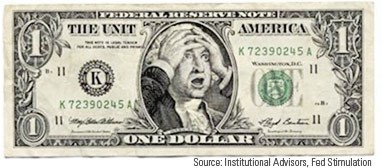
Should government actively manipulate asset prices in an effort to “manage ” economic growth? The world’s central bankers, otherwise at their wit’s end, are attempting just that. Hopes have been pinned on so-called quantitative easing (QE), which simply means that central banks like the U.S. Federal Reserve (the Fed) buy assets (government and private bonds) from the public to inject newly “printed” money into the economy. The Fed purchased $4.5 trillion of assets between the last financial crisis and late 2014, when it ended its QE. Other central banks are actively engaged in QE, however, and there are still calls from some quarters for the Fed to resume QE, despite modest but positive economic growth. The goals of QE are to drive asset prices up and interest rates down, ultimately stimulating demand for goods and economic growth. Short-term rates have been near zero in many countries (and in the U.S. until December), and negative short-term interest rates are a reality in the European Union, Japan and Sweden.

Does anyone really have to pay money to lend money, as indicated by a negative interest rate? Yes, if a bank “lends” to the Bank of Japan, for example, by holding reserves there. The BOJ is currently charging banks for the privilege. But does anyone really “earn” negative returns on short-term government or private debt? Not unless you buy a short-term bill and hold it till maturity. Central banks are buying those bills at a premium, usually from member banks, in order to execute QE, and that offsets a negative rate. But the notion is that when these “captive” member banks are penalized for holding reserves, they will be more eager to lend to private borrowers. That may be, but only if there are willing, credit-worthy borrowers; unfortunately, those are scarce.

Thus far, QE and zero or negative rates do not seem to be working effectively, and there are several reasons. First, QE has taken place against a backdrop of increasingly binding regulatory constraints. A private economy simply cannot flourish under such strictures, with or without QE. Moreover, government makes a habit of manipulating investment decisions, partly through regulatory mandates, but also by subsidizing politically-favored activities such as ethanol, wind energy, post-secondary education, and owner-occupied housing. This necessarily comes at the sacrifice of opportunities for physical investment that are superior on economic merits.

The most self-defeating consequence of QE and rate manipulation, be that zero interest rate policy (ZIRP) or negative interest rate policy (NIRP), is the distortion of inter-temporal tradeoffs that guide decisions to save and invest in productive assets. How, and how much, should individuals save when returns on relatively safe assets are very low? Most analysts would conclude that very low rates prompt a strong substitution effect toward consuming more today and less in the future. However, the situation may well engender a strong “income effect”, meaning that more must be saved (and less consumed in the present) in order to provide sufficient resources in the future. The paradox shouldn’t be lost on central bankers, and it may undermine the stimulative effects of ZIRP or NIRP. It might also lead to confusion in the allocation of productive capital, as low rates could create a mirage of viability for unworthy projects. Central bank intervention of this sort is disruptive to the healthy transformation of resources across time.

Savers might hoard cash to avoid a negative return, which would further undermine the efficacy of QE in creating monetary stimulus. This is at the root of central bank efforts to discourage the holding of currency outside of the banking system: the “war on cash“. (Also see here.) This policy is extremely offensive to anyone with a concern for protecting the privacy of individuals from government prying.

Another possible response for savers is to “reach for yield”, allocating more of their funds to high-risk assets than they would ordinarily prefer (e.g., growth funds, junk bonds, various “alternative” investments). So the supply of saving available for adding to the productive base in various sectors is twisted by central bank manipulation of interest rates. The availability of capital may be constrained for relatively safe sectors but available at a relative discount to risky sectors. This leads to classic malinvestment and ultimately business failures, displaced workers, and harsh adjustment costs.

With any luck, the Fed will continue to move away from this misguided path. Zero or negative interest rates imposed by central banks penalize savers by making the saving decision excessively complex and fraught with risk. Business investment is distorted by confusing signals as to risk preference and inflated asset prices. Central economic planning via industrial policy, regulation, and price controls, such as the manipulation of interest rates, always ends badly. Unfortunately, most governments are well-practiced at bungling in all of those areas.


ZIRP’s Over, But Fed Zombies Linger Over Seed Corn

24 Thursday Dec 2015

Posted by Nuetzel in Central Planning, Monetary Policy, Price Controls

≈ Leave a comment

Tags

Capital investment, Central Bank Intervention, central planning, negative interest rates, Price Ceilings, Price Controls, Ronald-Peter Stoferle, Saving Incentives, The Federal Reserve, Time Preference, Zero Interest Rate Policy, ZIRP, Zombie Banks

Fed Rate Cuts

The Federal Reserve plans a few more increases in short-term interest rates in 2016, which should be welcome to savers who are not overexposed to market risk. The Fed took its first step away from the seven-year zero-interest-rate policy (ZIRP) last week, increasing its target rate on overnight loans between banks (“federal” funds) for the first time in almost ten years. ZIRP was grounded in the Fed’s desire to stimulate the economy after the last financial crisis, an objective that met with limited success. ZIRP’s most profound “success” was to distort prices, with negative consequences for conservative savers, those dependent on retirement assets, and the long-term growth of the economy.

ZIRP necessarily constitutes a price ceiling when expected inflation is positive. It implies negative real rates of return, but real rates of time preference are not and cannot be negative. Given the choice, no one intends to forego present pleasure to purposefully suffer a loss later. The imperative to earn positive real returns does not end simply because the Fed and ZIRP make it more difficult. 

Anyone with funds parked in near zero-return assets, such as money market funds and certificates of deposit, earned a negative real return during the ZIRP regime, as inflation remained positive despite misplaced fears to the contrary. Those kinds of savings vehicles earn relatively low returns and should carry little risk to savers.

What are savers and retirees to do under a ZIRP regime? If they absolutely must defer consumption, they can accept the predicament and leave funds to decay in real value. They can dis-save in response to the disincentive, consuming their accumulated wealth. Some, for whom retirement is near, might even put more aside with the full knowledge that it will erode in real terms. But many will seek out yield in other ways, investing in assets bearing greater risk than they would otherwise prefer. All of these alternatives are likely to be less-preferred by the public than rates of saving and portfolios constructed in the absence of the Fed’s rate distortions.

The Fed’s policies and zero rates have contributed to inflated equity prices over the past six years as savers sought enhanced returns, and those valuations are certainly vulnerable. Over the past week, market jitters have shown the extent to which traders and investors feel threatened by the Fed’s tightening move.

The impact of ZIRP on the well-being of savers is only part of the story, however. Such a regime compromises the fundamental process of aligning preferences with the physical transformation of present resources into future consumption. Like any price distortion, ZIRP misallocates resources, but it misallocates across time and across sectors of the economy. When discounted at ultra-low rates, the values of future financial flows are grossly inflated, diminishing the need to set additional amounts aside today. At the same time, zero or near-zero rate borrowing confuses the evaluation of alternative capital investment projects. Resources may be committed to projects that would be rejected given accurate price signals. The artificially-enabled bidding for resources prompted by ZIRP, and the distortion of the risk-return trade off, might even cause more worthy projects to be rejected. And there is every reason to expect that saving by some individuals will be channeled into immediate consumption by others.

Who would do such wasteful things, undertaking projects with low or nonexistent future returns? Those facing distorted price signals, most prominently government technocrats for whom meaningful price signals are seldom a concern. And that also goes for the subsidy-hungry private beneficiaries of the state’s tax-extracted and borrowed largess. The ultimate consequence of this behavior is a deterioration in the economy’s growth potential.

Ronald-Peter Stoferle provides a short catalogue of ZIRP’s destructive impacts in the “Unseen Consequences of ZIRP“. One of his more interesting statements is the following, with reference to “zombie” banks:

“Low interest rates prevent the healthy process of creative destruction. Banks are enabled to roll over potentially non-performing loans practically indefinitely and can thus lower their write-off requirements.“

Thus, ZIRP promotes economic rot in several ways. Last week’s rate move by the Fed is a step in the right direction, away from zero rates and drastic overvaluation of consumption flows now and in the future. However, the monetary excesses of the past six years will not be reversed by this one move. The Fed is still imposing an artificial ceiling on rates. Even if that restriction is eased in further steps during 2016, the Fed is committed for the long-term to the manipulation of interest rates in the execution of policy. That sort of activist market manipulation is likely to continue; like all forms of central planning, it will be based on woefully incomplete information, a poor understanding of individual and market behavior, and bad timing. It will degrade economic conditions and have the classic boom-and-bust repercussions typical of central bank intervention.

Central Bank Bubbles Pop On Our Heads

09 Wednesday Sep 2015

Posted by Nuetzel in Big Government, Macroeconomics, Monetary Policy

≈ Leave a comment

Tags

Asset Bubble, Asset Price Distortion, Boom and bust, capital costs, Capital investment, Easy Money, Jim Grant, Market Manipulation, Martin Feldstein, Quantitative Easing, Ryan McMaken, Seigniorage, Supportive Earnings, Zero Interest Rate Policy, ZIRP

boom_and_bust

Printing money is a temptation that central banks can’t resist. And they distort prices when they do it. The new “liquidity” finds its way into higher asset values: stocks, bonds, real estate, even art. But as Jim Grant points out (as quoted by Ryan McMaken), the inflated prices are artificial, decoupled from the actual value those assets are capable of generating. The high asset prices are unsustainable:

“The idea is that you put the cart of asset values before the horse of enterprise. By raising up asset values, you mobilize spending by people who have assets… It was otherwise known as trickle-down economics before the enlightenment, then it became something much fancier in economic lingo. But that’s essentially the idea. So what you have seen is an artificial structure of prices worldwide.”

This comports with the general drift one gets from chatting with financial market professionals about the Federal Reserve and other central banks. These advisors usually add a reflexive assurance that corporate earnings are adequate to support stock prices. So which is it? Those very earnings might reflect trading gains on assets held by financial institutions and others, so the “supportive earnings” argument is circular to some degree. That aside, it’s suggestive that the recent market selloff has been centered on tighter monetary conditions:

“‘The risk of global liquidity conditions swinging is real for the markets, justifying a significant reduction in exposure for all asset classes,’ said Didier Saint-Georges, managing director at Carmignac, in a note to clients.“

Likewise, significant rebounds have been attributed, at least in part, to softening expectations that the Fed will move to increase short-term interest rates next week. If asset values are so heavily dependent on a continuation of a zero-interest rate, easy-money policy at this stage of an economic expansion, then it looks like a bubble is waiting to pop. More liquidity might delay the inevitable.

How did we get here? Martin Feldstein describes the policy of “quantitative easing” (QE) in “The Fed’s Stock Price Correction“:

“When the Obama administration’s poorly designed 2009 stimulus legislation failed to produce a strong economic turnaround, then-Fed Chairman Ben Bernanke announced that the central bank would pursue an ‘unconventional monetary policy’ by purchasing immense amounts of long-term bonds and promising to hold short-term interest rates near zero for an extended period.

Mr. Bernanke explained that the Fed’s policy was designed to drive down long-term interest rates, inducing portfolio investors to shift from bonds to stocks. This ‘portfolio substitution’ strategy, as he labeled it, would increase share prices, raising household wealth and therefore consumer spending.“

Feldstein does not buy the contention that “earnings are supportive”. Despite his conventional demand-side approach to macroeconomics, he too emphasizes that loose monetary policy has distorted asset prices.

The process is exacerbated by the bloated federal government’s appetite for funds. The Treasury is able to float debt at very low interest rates, thanks to the Fed’s willingness to provide liquidity to the banking system. By that, I mean the Fed’s willingness to buy Treasury bonds and monetize federal deficit spending.

Jim Grant’s argument regarding price distortion goes further. Increases in the prices of financial assets artificially deflate the cost of raising new capital, translating into over-investment in physical assets such as office buildings and machinery. Here’s Grant:

The prices themselves are the cosmetic evidence of underlying difficulty. So if you misprice something, it’s not just the price that’s wrong. It’s the thing itself that has been financed by the price. So you have perhaps too many oil derricks, too many semi-conductor fabs. We have too much of something, which is financed by an excess of credit or debt.“

Thus, the boom feeds the inevitable bust. That is certainly a danger. I’m sympathetic to Grant’s reasoning, but we have not experienced much of a boom in physical capital investment in the U.S., except perhaps for commercial real estate and in capital-intensive oil and gas extraction, and the latter is now on the skids. China, however, has been aggressively over-investing, and that is coming to an end.

While asset values have likely been inflated, it is fair to ask why the Fed’s accommodative policy has not led to a more general inflation in the prices of goods and services. For one thing, the strong dollar has held import prices down. (The international value of the dollar has been buttressed by the view that dollar-denominated assets are relatively safe, despite the risks created by the Fed.) More importantly, aging baby boomers have contributed to relatively strong saving activity (and less spending). Paradoxically, it’s possible that saving has been reinforced by the zero-rate policy of the Fed, as noted before on Sacred Cow Chips. Buying extra comfort in retirement requires greater set-asides if rates are low.

I am not optimistic about the direction of asset values, but I am not adjusting my own investment profile. Market timing is generally a bad strategy, and I will do my best to ride out the market’s ups and downs, even if they are manipulated by the Fed. However, we should all demand more discipline from the federal government and more restraint from the Fed. Better yet, limit the Fed’s discretion in the conduct of monetary policy by relying on a monetary standard that is less prone to manipulation and seigniorage.

Follow Sacred Cow Chips on WordPress.com

Recent Posts

  • The Case Against Interest On Reserves
  • Immigration and Merit As Fiscal Propositions
  • Tariff “Dividend” From An Indigent State
  • Almost Looks Like the Fed Has a 3% Inflation Target
  • Government Malpractice Breeds Health Care Havoc

Archives

  • January 2026
  • December 2025
  • November 2025
  • October 2025
  • September 2025
  • August 2025
  • July 2025
  • June 2025
  • May 2025
  • April 2025
  • March 2025
  • February 2025
  • January 2025
  • December 2024
  • November 2024
  • October 2024
  • September 2024
  • August 2024
  • July 2024
  • June 2024
  • May 2024
  • April 2024
  • March 2024
  • February 2024
  • January 2024
  • December 2023
  • November 2023
  • August 2023
  • July 2023
  • June 2023
  • May 2023
  • April 2023
  • March 2023
  • February 2023
  • January 2023
  • December 2022
  • November 2022
  • October 2022
  • September 2022
  • August 2022
  • July 2022
  • June 2022
  • May 2022
  • April 2022
  • March 2022
  • February 2022
  • January 2022
  • December 2021
  • November 2021
  • October 2021
  • September 2021
  • August 2021
  • July 2021
  • June 2021
  • May 2021
  • April 2021
  • March 2021
  • February 2021
  • January 2021
  • December 2020
  • November 2020
  • October 2020
  • September 2020
  • August 2020
  • July 2020
  • June 2020
  • May 2020
  • April 2020
  • March 2020
  • February 2020
  • January 2020
  • December 2019
  • November 2019
  • October 2019
  • September 2019
  • August 2019
  • July 2019
  • June 2019
  • May 2019
  • April 2019
  • March 2019
  • February 2019
  • January 2019
  • December 2018
  • November 2018
  • October 2018
  • September 2018
  • August 2018
  • July 2018
  • June 2018
  • May 2018
  • April 2018
  • March 2018
  • February 2018
  • January 2018
  • December 2017
  • November 2017
  • October 2017
  • September 2017
  • August 2017
  • July 2017
  • June 2017
  • May 2017
  • April 2017
  • March 2017
  • February 2017
  • January 2017
  • December 2016
  • November 2016
  • October 2016
  • September 2016
  • August 2016
  • July 2016
  • June 2016
  • May 2016
  • April 2016
  • March 2016
  • February 2016
  • January 2016
  • December 2015
  • November 2015
  • October 2015
  • September 2015
  • August 2015
  • July 2015
  • June 2015
  • May 2015
  • April 2015
  • March 2015
  • February 2015
  • January 2015
  • December 2014
  • November 2014
  • October 2014
  • September 2014
  • August 2014
  • July 2014
  • June 2014
  • May 2014
  • April 2014
  • March 2014

Blogs I Follow

  • Passive Income Kickstart
  • OnlyFinance.net
  • TLC Cholesterol
  • Nintil
  • kendunning.net
  • DCWhispers.com
  • Hoong-Wai in the UK
  • Marginal REVOLUTION
  • Stlouis
  • Watts Up With That?
  • Aussie Nationalist Blog
  • American Elephants
  • The View from Alexandria
  • The Gymnasium
  • A Force for Good
  • Notes On Liberty
  • troymo
  • SUNDAY BLOG Stephanie Sievers
  • Miss Lou Acquiring Lore
  • Your Well Wisher Program
  • Objectivism In Depth
  • RobotEnomics
  • Orderstatistic
  • Paradigm Library
  • Scattered Showers and Quicksand

Blog at WordPress.com.

Passive Income Kickstart

OnlyFinance.net

TLC Cholesterol

Nintil

To estimate, compare, distinguish, discuss, and trace to its principal sources everything

kendunning.net

The Future is Ours to Create

DCWhispers.com

Hoong-Wai in the UK

A Commonwealth immigrant's perspective on the UK's public arena.

Marginal REVOLUTION

Small Steps Toward A Much Better World

Stlouis

Watts Up With That?

The world's most viewed site on global warming and climate change

Aussie Nationalist Blog

Commentary from a Paleoconservative and Nationalist perspective

American Elephants

Defending Life, Liberty and the Pursuit of Happiness

The View from Alexandria

In advanced civilizations the period loosely called Alexandrian is usually associated with flexible morals, perfunctory religion, populist standards and cosmopolitan tastes, feminism, exotic cults, and the rapid turnover of high and low fads---in short, a falling away (which is all that decadence means) from the strictness of traditional rules, embodied in character and inforced from within. -- Jacques Barzun

The Gymnasium

A place for reason, politics, economics, and faith steeped in the classical liberal tradition

A Force for Good

How economics, morality, and markets combine

Notes On Liberty

Spontaneous thoughts on a humble creed

troymo

SUNDAY BLOG Stephanie Sievers

Escaping the everyday life with photographs from my travels

Miss Lou Acquiring Lore

Gallery of Life...

Your Well Wisher Program

Attempt to solve commonly known problems…

Objectivism In Depth

Exploring Ayn Rand's revolutionary philosophy.

RobotEnomics

(A)n (I)ntelligent Future

Orderstatistic

Economics, chess and anything else on my mind.

Paradigm Library

OODA Looping

Scattered Showers and Quicksand

Musings on science, investing, finance, economics, politics, and probably fly fishing.

  • Subscribe Subscribed
    • Sacred Cow Chips
    • Join 128 other subscribers
    • Already have a WordPress.com account? Log in now.
    • Sacred Cow Chips
    • Subscribe Subscribed
    • Sign up
    • Log in
    • Report this content
    • View site in Reader
    • Manage subscriptions
    • Collapse this bar
 

Loading Comments...