• About

Sacred Cow Chips

Sacred Cow Chips

Monthly Archives: May 2023

No Radar, No Rudder: Fiscal & Monetary Destabilization

31 Wednesday May 2023

Posted by Nuetzel in Fiscal policy, Monetary Policy

≈ 1 Comment

Tags

budget deficits, Credible Committments, crowding out, David Beckworth, David Henderson, Discretionary Spending, economic stimulus, Federal Reserve, Great Depression, Housing Bubble, Inflation Reduction Act, Long and Variable Lags, Lucas Critique, Mortgage Crisis, Pandemic Relief, Rational Expectations, Robert Lucas, Shovel-Ready Projects, Spending Multipliers, Stabilization policy, Tyler Cowen

Policy activists have long maintained that manipulating government policy can stabilize the economy. In other words, big spending initiatives, tax cuts, and money growth can lift the economy out of recessions, or budget cuts and monetary contraction can prevent overheating and inflation. However, this activist mirage burned away under the light of experience. It’s not that fiscal and monetary policy are powerless. It’s a matter of practical limitations that often cause these tools to be either impotent or destabilizing to the economy, rather than smoothing fluctuations in the business cycle.

The macroeconomics classes seem like yesterday: Keynesian professors lauded the promise of wise government stabilization efforts: policymakers could, at least in principle, counter economic shocks, particularly on the demand side. That optimistic narrative didn’t end after my grad school days. I endured many client meetings sponsored by macro forecasters touting the fine-tuning of fiscal and monetary policy actions. Some of those economists were working with (and collecting revenue from) government policymakers, who are always eager to validate their pretensions as planners (and saviors). However, seldom if ever do forecasters conduct ex post reviews of their model-spun policy scenarios. In fairness, that might be hard to do because all sorts of things change from initial conditions, but it definitely would not be in their interests to emphasize the record.

In this post I attempt to explain why you should be skeptical of government stabilization efforts. It’s sort of a lengthy post, so I’ve listed section headings below in case readers wish to scroll to points of most interest. Pick and choose, if necessary, though some context might get lost in the process.

  • Expectations Change the World
  • Fiscal Extravagance
  • Multipliers In the Real World
  • Delays
  • Crowding Out
  • Other Peoples’ Money
  • Tax Policy
  • Monetary Policy
  • Boom and Bust
  • Inflation Targeting
  • Via Rate Targeting
  • Policy Coordination
  • Who Calls the Tune?
  • Stable Policy, Stable Economy

Expectations Change the World

There were always some realists in the economics community. In May we saw the passing of one such individual: Robert Lucas was a giant intellect within the economics community, and one from whom I had the pleasure of taking a class as a graduate student. He was awarded the Nobel Prize in Economic Science in 1995 for his applications of rational expectations theory and completely transforming macro research. As Tyler Cowen notes, Keynesians were often hostile to Lucas’ ideas. I remember a smug classmate, in class, telling the esteemed Lucas that an important assumption was “fatuous”. Lucas fired back, “You bastard!”, but proceeded to explain the underlying logic. Cowen uses the word “charming” to describe the way Lucas disarmed his critics, but he could react strongly to rude ignorance.

Lucas gained professional fame in the 1970s for identifying a significant vulnerability of activist macro policy. David Henderson explains the famous “Lucas Critique” in the Wall Street Journal:

“… because these models were from periods when people had one set of expectations, the models would be useless for later periods when expectations had changed. While this might sound disheartening for policy makers, there was a silver lining. It meant, as Lucas’s colleague Thomas Sargent pointed out, that if a government could credibly commit to cutting inflation, it could do so without a large increase in unemployment. Why? Because people would quickly adjust their expectations to match the promised lower inflation rate. To be sure, the key is government credibility, often in short supply.”

Non-credibility is a major pitfall of activist macro stabilization policies that renders them unreliable and frequently counterproductive. And there are a number of elements that go toward establishing non-credibility. We’ll distinguish here between fiscal and monetary policy, focusing on the fiscal side in the next several sections.

Fiscal Extravagance

We’ve seen federal spending and budget deficits balloon in recent years. Chronic and growing budget deficits make it difficult to deliver meaningful stimulus, both practically and politically.
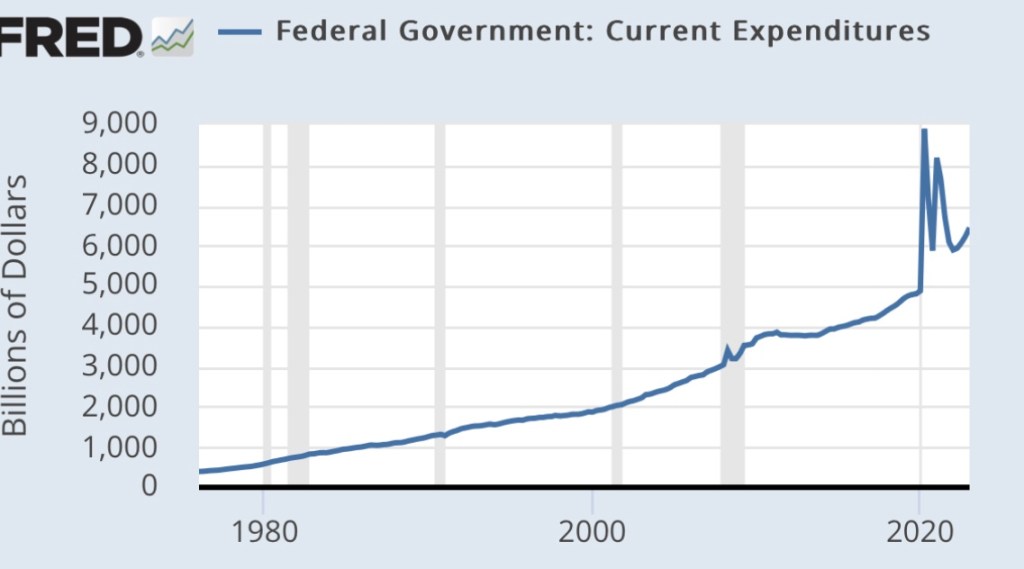
The next chart is from the most recent Congressional Budget Office (CBO) report. It shows the growing contribution of interest payments to deficit spending. Ever-larger deficits mean ever-larger amounts of debt on which interest is owed, putting an ever-greater squeeze on government finances going forward. This is particularly onerous when interest rates rise, as they have over the past few years. Both new debt is issued and existing debt is rolled over at higher cost.
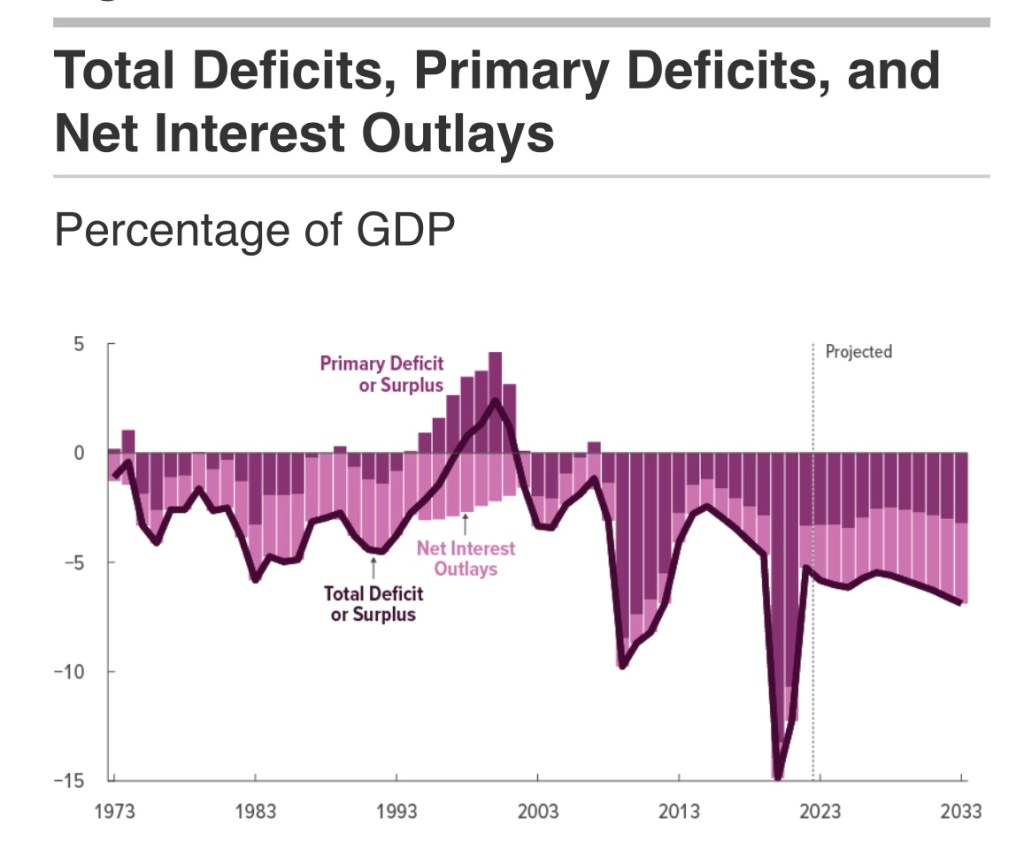
Relief payments made a large contribution to the deficits during the pandemic, but more recent legislation (like the deceitfully-named Inflation Reduction Act) piled-on billions of new subsidies for private investments of questionable value, not to mention outright handouts. These expenditures had nothing to do with economic stabilization and no prayer of reducing inflation. Pissing away money and resources only hastens the debt and interest-cost squeeze that is ultimately unsustainable without massive inflation.

Hardly anyone with future political ambitions wants to address the growing entitlements deficit … but it will catch up with them. Social Security and Medicare are projected to exhaust their respective trust funds in the early- to mid-2030s, which will lead to mandatory benefit cuts in the absence of reform.

If it still isn’t obvious, the real problem driving the budget imbalance is spending, not revenue, as the next CBO chart demonstrates. The “emergency” pandemic measures helped precipitate our current stabilization dilemma. David Beckworth tweets that the relief measures “spurred a rapid recovery”, though I’d hasten to add that a wave of private and public rejection of extreme precautions in some regions helped as well. And after all, the pandemic downturn was exaggerated by misdirected policies including closures and lockdowns that constrained both the demand and supply sides. Beckworth acknowledges the relief measures “propelled inflation”, but the pandemic also seemed to leave us on a permanently higher spending path. Again, see the first chart below.

The second chart below shows that non-discretionary spending (largely entitlements) and interest outlays are how we got on that path. The only avenue for countercyclical spending is discretionary expenditures, which constitute an ever-smaller share of the overall budget.
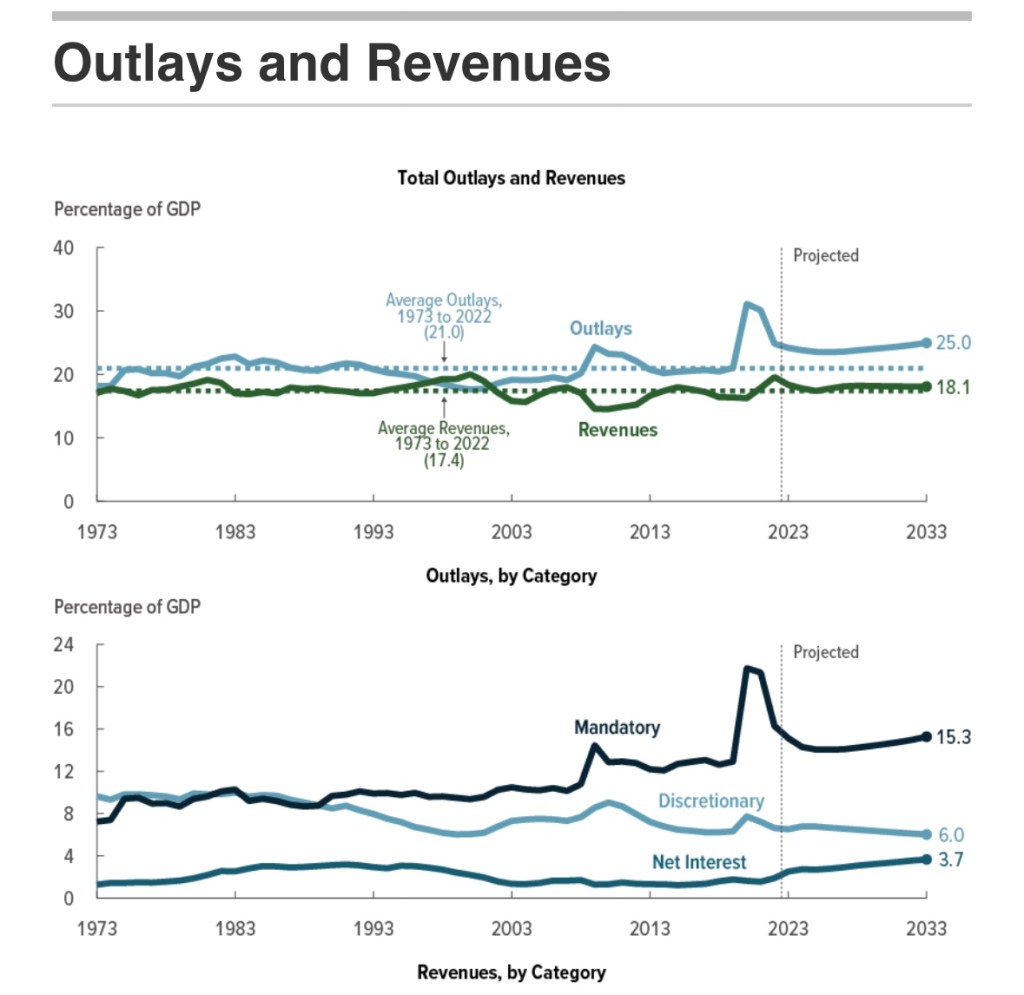
We’ve had chronic deficits for years, but we’ve shifted to a much larger and continuing imbalance. With more deficits come higher interest costs, especially when interest rates follow a typical upward cyclical pattern. This creates a potentially explosive situation that is best avoided via fiscal restraint.

Putting other doubts about fiscal efficacy aside, it’s all but impossible to stimulate real economic activity when you’ve already tapped yourself out and overshot in the midst of a post-pandemic economic expansion.

Multipliers In the Real World

So-called spending multipliers are deeply beloved by Keynesians and pork-barrel spenders. These multipliers tell us that every dollar of extra spending ultimately raises income by some multiple of that dollar. This assumes that a portion of every dollar spent by government is re-spent by the recipient, and a portion of that is re-spent again by another recipient. But spending multipliers are never what they’re cracked up to be for a variety of reasons. (I covered these in “Multipliers Are For Politicians”, and also see this post.) There are leakages out of the re-spending process (income taxes, saving, imports), which trim the ultimate impact of new spending on income. When supply constraints bind on economic activity, fiscal stimulus will be of limited power in real terms.

If stimulus is truly expected to be counter-cyclical and transitory, as is generally claimed, then much of each dollar of extra government spending will be saved rather than spent. This is the lesson of the permanent income hypothesis. It means greater leakages from the re-spending stream and a lower multiplier. We saw this with the bulge in personal savings in the aftermath of pandemic relief payments.

Another side of this coin, however, is that cutting checks might be the government’s single-most efficient activity in execution, but it can create massive incentive problems. Some recipients are happy to forego labor market participation as long as the government keeps sending them checks, but at least they spend some of the income.

Delays

Another unappreciated and destabilizing downside of fiscal stimulus is that it often comes too late, just when the economy doesn’t need stimulus. That’s because a variety of delays are inherent in many spending initiatives: legislative, regulatory, legal challenges, planning and design, distribution to various spending authorities, and final disbursement. As I noted here:

“Even government infrastructure projects, heralded as great enhancers of American productivity, are often subject to lengthy delays and cost overruns due to regulatory and environmental rules. Is there any such thing as a federal ‘shovel-ready’ infrastructure project?”

Crowding Out

The supply of savings is limited, but when government borrows to fund deficits, it directly competes with private industry for those savings. Thus, funds that might otherwise pay for new plant, equipment, and even R&D are diverted to uses that should qualify as government consumption rather than long-term investment. Government competition for funds “crowds-out” private activity and impedes growth in the economy’s productive capacity. Thus, the effort to stimulate economic activity is self-defeating in some respects.

Other Peoples’ Money

Government doesn’t respond to price signals the way self-interested private actors do. This indifference leads to mis-allocated resources and waste. It extends to the creation of opportunities for graft and corruption, typically involving diversion of resources into uses that are of questionable productivity (corn ethanol, solar and wind subsidies).

Consider one other type of policy action perceived as counter-cyclical: federal bailouts of failing financial institutions or other troubled businesses. These rescues prop up unproductive enterprises rather than allowing waste to be flushed from the system, which should be viewed as a beneficial aspect of recession. The upshot is that too many efforts at economic stabilization are misdirected, wasteful, ill-timed, and pro-cyclical in impact.

Tax Policy

Like stabilization efforts on the spending side, tax changes may be badly timed. Tax legislation is often complex and can take time for consumers and businesses to adjust. In terms of traditional multiplier analysis, the initial impact of a tax change on spending is smaller than for expenditures, so tax multipliers are smaller. And to the extent that a tax change is perceived as temporary, it is made less effective. Thus, while changes in tax policy can have powerful real effects, they suffer from some of the same practical shortcomings for stabilization as changes in spending.

However, stimulative tax cuts, if well crafted, can boost disposable incomes and improve investment and work incentives. As temporary measures, that might mean an acceleration of certain kinds of activity. Tax increases reduce disposable incomes and may blunt incentives, or prompt delays in planned activities. Thus, tax policy may bear on the demand side as well as the timing of shifts in the economy’s productive potential or supply side.

Monetary Policy

Monetary policy is subject to problems of its own. Again, I refer to practical issues that are seemingly impossible for policy activists to overcome. Monetary policy is conducted by the nation’s central bank, the Federal Reserve (aka, the Fed). It is theoretically independent of the federal government, but the Fed operates under a dual mandate established by Congress to maintain price stability and full employment. Therein lies a basic problem: trying to achieve two goals that are often in conflict with a single policy tool.

Make no mistake: variations in money supply growth can have powerful effects. Nevertheless, they are difficult to calibrate due to “long and variable lags” as well as changes in money “velocity” (or turnover) often prompted by interest rate movements. Excessively loose money can lead to economic excesses and an overshooting of capacity constraints, malinvestment, and inflation. Swinging to a tight policy stance in order to correct excesses often leads to “hard landings”, or recession.

Boom and Bust

The Fed fumbled its way into engineering the Great Depression via excessively tight monetary policy. “Stop and go” policies in the 1970s led to recurring economic instability. Loose policy contributed to the housing bubble in the 2000s, and subsequent maladjustments led to a mortgage crisis (also see here). Don’t look now, but the inflationary consequences of the Fed’s profligacy during the pandemic prompted it to raise short-term interest rates in the spring of 2022. It then acted with unprecedented speed in raising rates over the past year. While raising rates is not always synonymous with tightening monetary conditions, money growth has slowed sharply. These changes might well lead to recession. Thus, the Fed seems given to a pathology of policy shifts that lead to unintentional booms and busts.

Inflation Targeting

The Fed claims to follow a so-called flexible inflation targeting policy. In reality, it has reacted asymmetrically to departures from its inflation targets. It took way too long for the Fed to react to the post-pandemic surge in inflation, dithering for months over whether the surge was “transitory”. It wasn’t, but the Fed was reluctant to raise its target rates in response to supply disruptions. At the same time, the Fed’s own policy actions contributed massively to demand-side price pressures. Also neglected is the reality that higher inflation expectations propel inflation on the demand side, even when it originates on the supply side.

Via Rate Targeting

At a more nuts and bolts level, today the Fed’s operating approach is to control money growth by setting target levels for several key short-term interest rates (eschewing a more direct approach to the problem). This relies on price controls (short-term interest rates being the price of liquidity) rather than allowing market participants to determine the rates at which available liquidity is allocated. Thus, in the short run, the Fed puts itself into the position of supplying whatever liquidity is demanded at the rates it targets. The Fed makes periodic adjustments to these rate targets in an effort to loosen or tighten money, but it can be misdirected in a world of high debt ratios in which rates themselves drive the growth of government borrowing. For example, if higher rates are intended to reduce money growth and inflation, but also force greater debt issuance by the Treasury, the approach might backfire.

Policy Coordination

While nominally independent, the Fed knows that a particular monetary policy stance is more likely to achieve its objectives if fiscal policy is not working at cross purposes. For example, tight monetary policy is more likely to succeed in slowing inflation if the federal government avoids adding to budget deficits. Bond investors know that explosive increases in federal debt are unlikely to be repaid out of future surpluses, so some other mechanism must come into play to achieve real long-term balance in the valuation of debt with debt payments. Only inflation can bring the real value of outstanding Treasury debt into line. Continuing to pile on new debt simply makes the Fed’s mandate for price stability harder to achieve.

Who Calls the Tune?

The Fed has often succumbed to pressure to monetize federal deficits in order to keep interest rates from rising. This obviously undermines perceptions of Fed independence. A willingness to purchase large amounts of Treasury bills and bonds from the public while fiscal deficits run rampant gives every appearance that the Fed simply serves as the Treasury’s printing press, monetizing government deficits. A central bank that is a slave to the spending proclivities of politicians cannot make credible inflation commitments, and cannot effectively conduct counter-cyclical policy.

Stable Policy, Stable Economy

Activist policies for economic stabilization are often perversely destabilizing for a variety of reasons. Good timing requires good forecasts, but economic forecasting is notoriously difficult. The magnitude and timing of fiscal initiatives are usually wrong, and this is compounded by wasteful planning, allocative dysfunction, and a general absence of restraint among political leaders as well as the federal bureaucracy..

Predicting the effects of monetary policy is equally difficult and, more often than not, leads to episodes of over- and under-adjustment. In addition, the wrong targets, the wrong operating approach, and occasional displays of subservience to fiscal pressure undermine successful stabilization. All of these issues lead to doubts about the credibility of policy commitments. Stated intentions are looked upon with doubt, increasing uncertainty and setting in motion behaviors that lead to undesirable economic consequences.

The best policies are those that can be relied upon by private actors, both as a matter of fulfilling expectations and avoiding destabilization. Federal budget policy should promote stability, but that’s not achievable institutions unable to constrain growth in spending and deficits. Budget balance would promote stability and should be the norm over business cycles, or perhaps over periods as long as typical 10-year budget horizons. Stimulus and restraint on the fiscal side should be limited to the effects of so-called automatic stabilizers, such as tax rates and unemployment compensation. On the monetary side, the Fed would do more to stabilize the economy by adopting formal rules, whether a constant rate of money growth or symmetric targeting of nominal GDP.
Health Care & Education: Slow Productivity Growth + Subsidies = Jacked Prices

14 Sunday May 2023

Posted by Nuetzel in Education, Health Care, Priductivity

≈ Leave a comment

Tags

Abundance Agenda, Alex Tabarrok, Baumol's Disease, Beethoven’s String Quartet No. 14, CHIPS, competition, Consumer Sovereignty, Education Cost, Education Grants, Education Productivity, Employer-Paid Coversge, Eric Helland, Exchange subsidies, health care costs, Health Care Productivity, Industrial Concentration, Mark Perry, Medicaid, Medical Technology, Medicare, Obamacare, Peter Suderman, Relative Prices, Slow Productivity Growth, Student Loans, Subsidies, Tax Subsidies, third-party payments, Willian Baumol

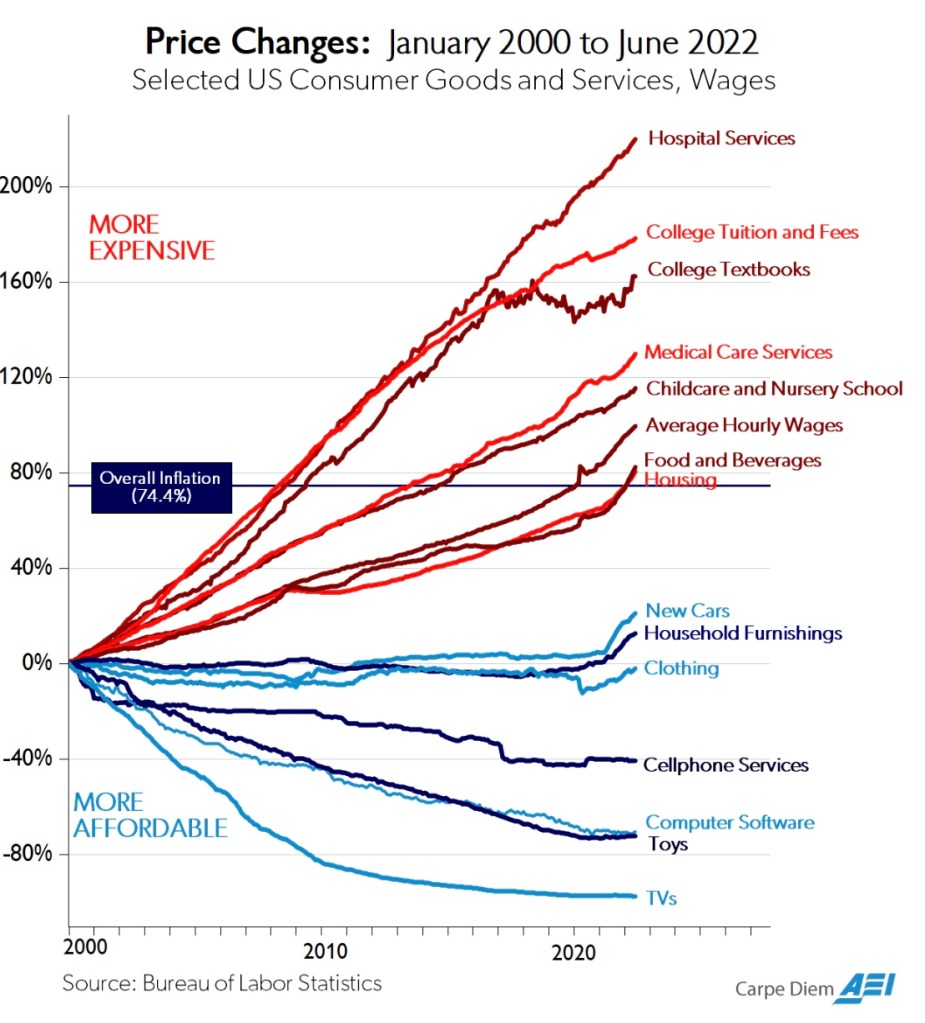
This post is about relative prices in two major sectors of the U.S. economy, both of which are hindered by slow productivity growth while being among the most heavily subsidized: education and health care. Historically, both sectors have experienced rather drastic relative price increases, as illustrated for the past 20 years in the chart from Mark Perry above.

Baumol’s Cost Disease

These facts are hardly coincidental, though it’s likely the relative costs education and health care would have risen even in the absence of subsidies. Over long periods of time, the forces primarily guiding relative price movements are differentials in productivity growth. The tendency of certain industries to suffer from slow growth in productivity is the key to something known among economists as Baumol’s Disease, after the late William Baumol, who first described the phenomenon’s impact on relative prices.

Standards of living improve when a sufficient number of industries enjoy productivity growth. That creates a broad diffusion of new demands across many industries, including those less amenable to productivity growth, such as health care and education. But slow productivity growth and rising demand in these industries are imbalances that push their relative prices upward.

Alex Tabarrok and Eric Helland noted a few years ago that it took four skilled musicians 44 minutes to play Beethoven’s String Quartet No. 14 in 1826 and also in 2010, but the inflation-adjusted cost was 23 times higher. Services involving a high intensity of skilled labor are more prone to Baumol’s Disease than manufactured goods. As well, services for which demand is highly responsive to income or sectors characterized by monopoly power may be more prone to Baumol’s disease.

Tabarrok wonders whether we should really consider manifestations of Baumol’s Disease a blessing, because they show the extent to which productivity and real incomes have grown across the broader economy. So, rather than blame low productivity growth in certain services for their increasing relative prices, we should really blame (or thank) the rapid productivity growth in other sectors.

The Productivity Slog

There are unavoidable limits to the productivity growth of skilled educators, physicians, and other skilled workers in health care. Again, in a growing economy, prices of things in relatively fixed supply or those registering slow productivity gains will tend to rise more rapidly.

Technology offers certain advantages in some fields of education, but it’s hard to find evidence of broad improvement in educational success in the U.S. at any level. In the health care sector, new drugs often improve outcomes, as do advances in technologies such as drug delivery systems, monitoring devices, imaging, and robotic surgery. However, these advances don’t necessarily translate into improved capacity of the health care system to handle patients except at higher costs.

There’s been some controversy over the proper measurement of productivity in the health care sector. Some suggest that traditional measures of health care productivity are so flawed in capturing quality improvements that the meaning of prices themselves is distorted. They conclude that adjusting for quality can actually yield declines in effective health care prices. I’d interject, however, that patients and payers might harbor doubts about that assertion.

Other investigators note that while real advances in health care productivity should reduce costs, the degree of success varies substantially across different types of innovations and care settings. In particular, innovations in process and protocols seem to be more effective in reducing health care expenditures than adding new technologies to existing protocols or business models. All too often, medical innovations are of the latter variety. Ultimately, innovations in health care haven’t allowed a broader population of patients to be treated at low cost.

Superior Goods

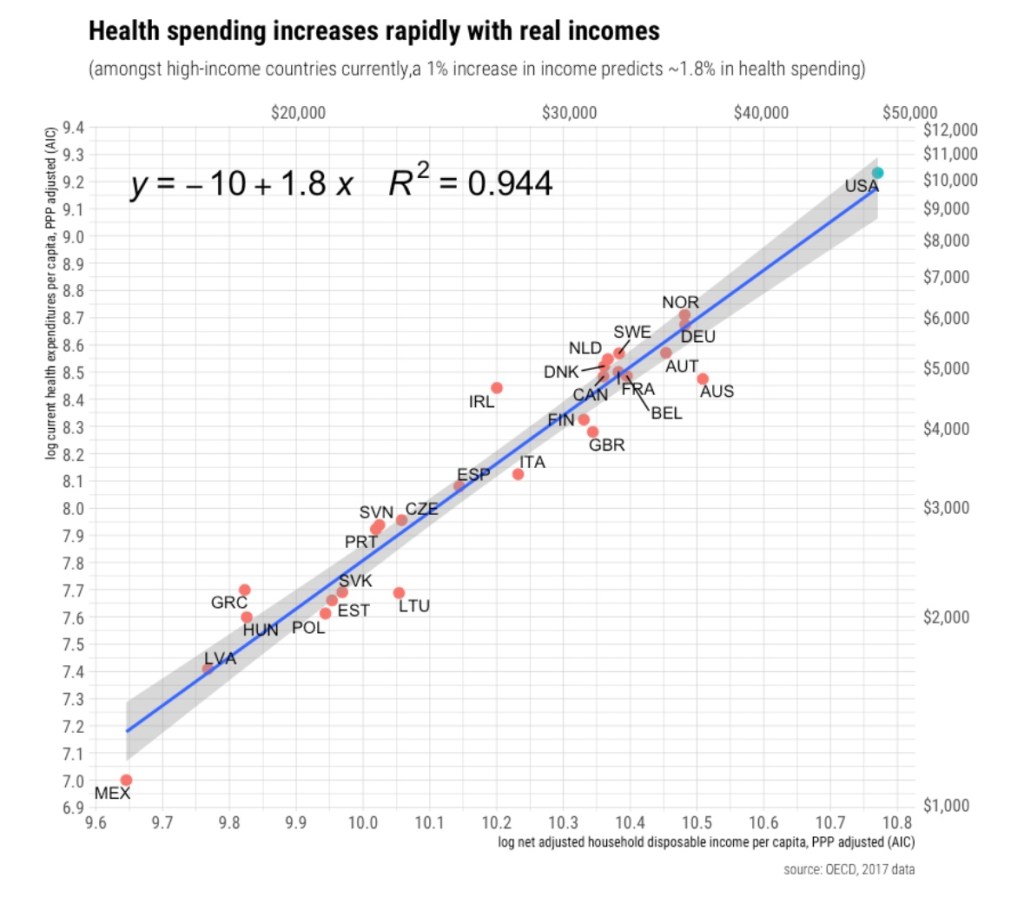
Therefore, it appears that increases in the relative prices of education and health care over time have arisen as a natural consequence of the interplay between disparities in productivity growth and rising demand. Indeed, this goes a long way toward explaining the high cost of health care in the U.S. compared to other developed nations, as standards of living in the U.S. are well above nearly all others. In that respect, the cost of health care in the U.S. is not necessarily alarming. People demand more health care and education as their incomes rise, but delivering more health care isn’t easy. To paraphrase Tabarrok, turning steelworkers into doctors, nurses and teachers is a costly proposition.

The Role of Subsidies

In the clamor for scarce educational and health care resources, natural tensions over access have spilled into the political sphere. In pursuit of distributing these resources more equitably, public policy has relied heavily on subsidies. It shouldn’t surprise anyone that subsiding a service resistant to productivity gains will magnify the Baumol effect on relative price. One point is beyond doubt: the amounts of these subsidies is breathtaking.

Education: Public K -12 schools are largely funded by local taxpayers. Taxpayer-parents of school-aged children pay part of this cost whether they send their children to public schools or not. If they don’t, they must pay the additional cost of private or home schooling. This severely distorts the link between payments and the value assigned by actual users of public schools. It also confers a huge degree of market power to public schools, thus insulating them economically from performance pressures.

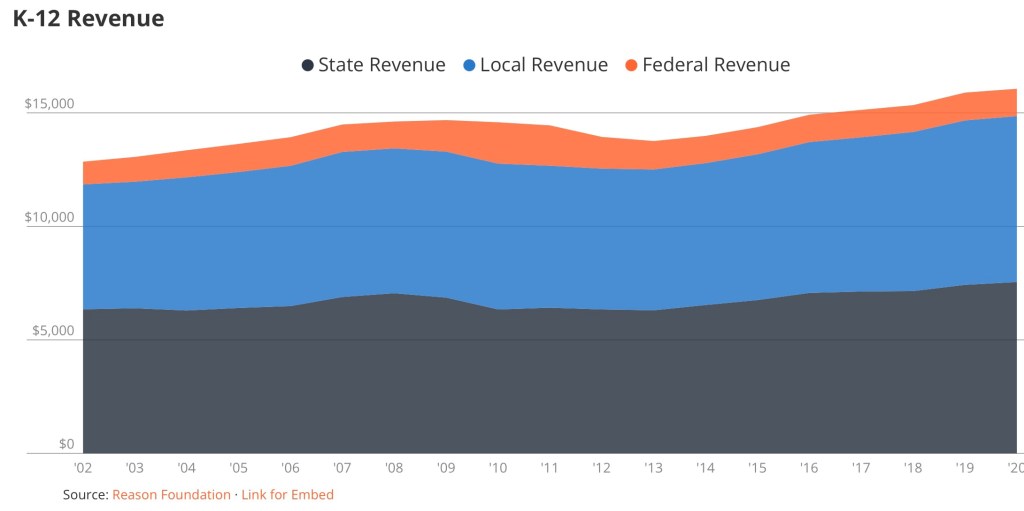
Public K – 12 schools are also heavily subsidized by state governments and federal grants. The following chart shows the magnitude and growth of K – 12 revenue per student over the past couple of decades.

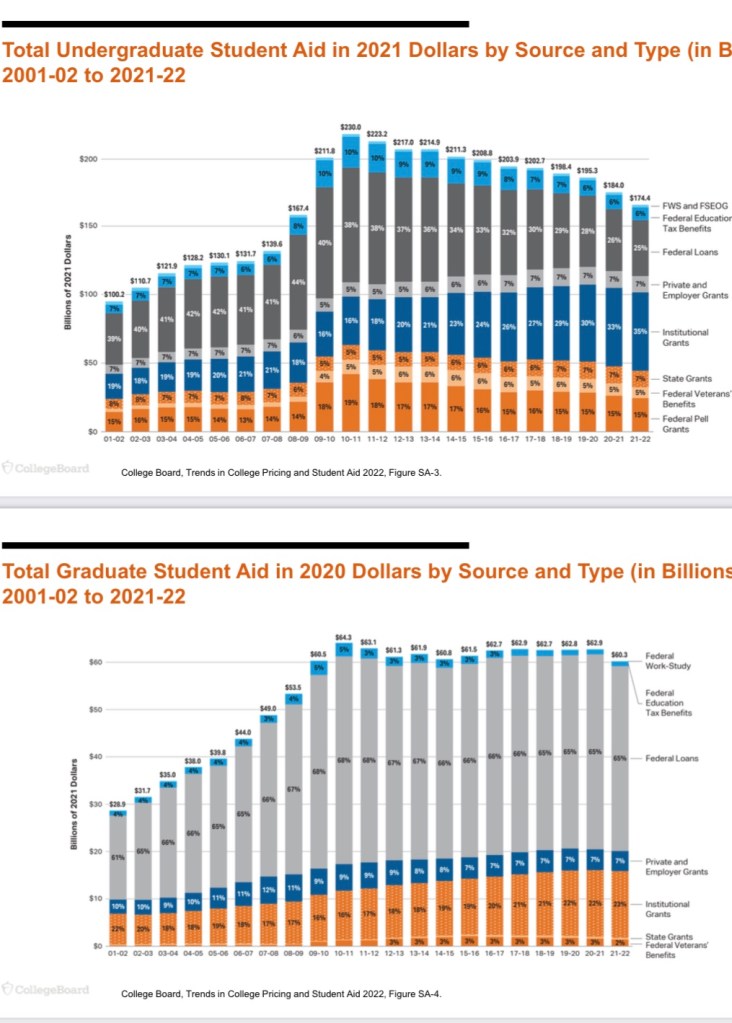
Subsidies for higher education take the form of student aid, including federal student loans, grants to institutions, as well as a variety of tax subsidies. Here’s a nice breakdown:

This represents a mix of buyer and seller subsidies. That suggests less upward pressure on price and more stimulus to output, but we still run up against the limits to productivity growth noted above. Moreover, other constraints limit the effectiveness of these subsidies, such as lower academic qualifications in a broader student population and the potential for rewards in the job market to diminish with a potential excess of graduates.

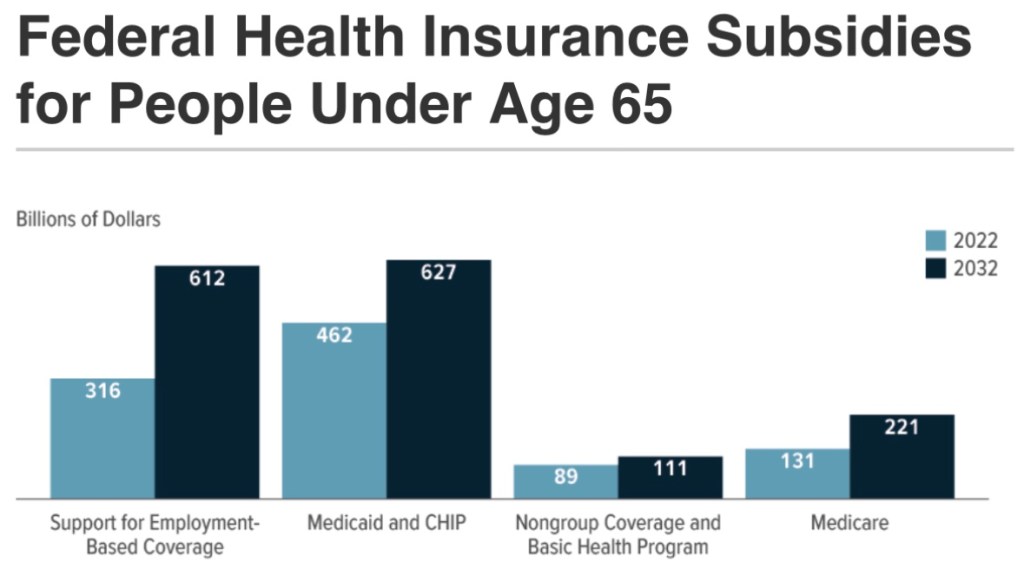
Health care: Subsidies here are massive and come in a variety of forms. They often directly provide or reduce the cost of health insurance coverage: Medicaid, the Children’s Health Insurance Program (CHIP), Obamacare exchange subsidies, Medicare savings programs, tax-subsidies on employer-paid health coverage, and medical expense tax deductions. Within limits, these subsidies reduce the marginal cost of care patients are asked to pay, thus contributing to over-utilization of various kinds of care.

The following are CBO projections from June 2022. They are intended here to give an idea of the magnitude of health care insurance subsidies:

Still Other Dysfunctions

There are certainly other drivers of high costs in the provision of health care and education beyond a Baumol effect magnified by subsidies. The third-party payment system has contributed to a loss of price discipline in health care. While consumers are often responsible for paying at least part of their health insurance premiums, the marginal cost of health care to consumers is often zero, so they have little incentive to manage their demands.

Another impediment to cost control is a regulatory environment in health care that has led to a sharply greater concentration of hospital services and the virtual disappearance of independent provider practices. Competition has been sorely lacking in education as well. Subsidies flowing to providers with market power tend to exacerbate behaviors that would be punished in competitive markets, and not just pricing.

Summary

Baumol’s Disease can explain a lot about the patterns of relative prices shown in the chart at the top of this post. That pattern is a negative side effect of general growth in productivity. Unfortunately, it also reflects a magnification engendered by the payment of subsidies to sectors with slow productivity growth. The intent of these subsidies is to distribute health care and education more equitably, but the impact on relative prices undermines these objectives. The approach forces society to exert wasted energy, like an idiotic dog chasing its tail.

Peter Suderman wrote an excellent piece in which he discussed health care and education subsidies in the context of the so-called “abundance agenda”. His emphasis is on the futility of this agenda for the middle class, for which quality education and affordable health care always seem just out of reach. The malign effects of “abundance” policies are reinforced by anti-competitive regulation and payment mechanisms, which subvert market price discipline and consumer sovereignty. We’d be far better served by policies that restore consumer responsibility, deregulate providers, and foster competition in the delivery of health care and education.

Debt Ceiling Stopgaps and a Weak Legal Challenge

07 Sunday May 2023

Posted by Nuetzel in Federal Budget, Public debt

≈ Leave a comment

Tags

Bank Liquidity, Biden Administration, Bing, Capital Gains Income, Chuck Schumer, Civil War, Debt Ceiling, Debt Limit Suspension, Default, Discharge Petition, Extraordinary Measures, Federal Deficits, Fourteenth Amendment, Google, Janet Yellen, Kevin McCarthy, Minting Coin, Modern Monetary Theary, Par Value, Perpetuities, Premium Bonds, Spending Restraint, statism

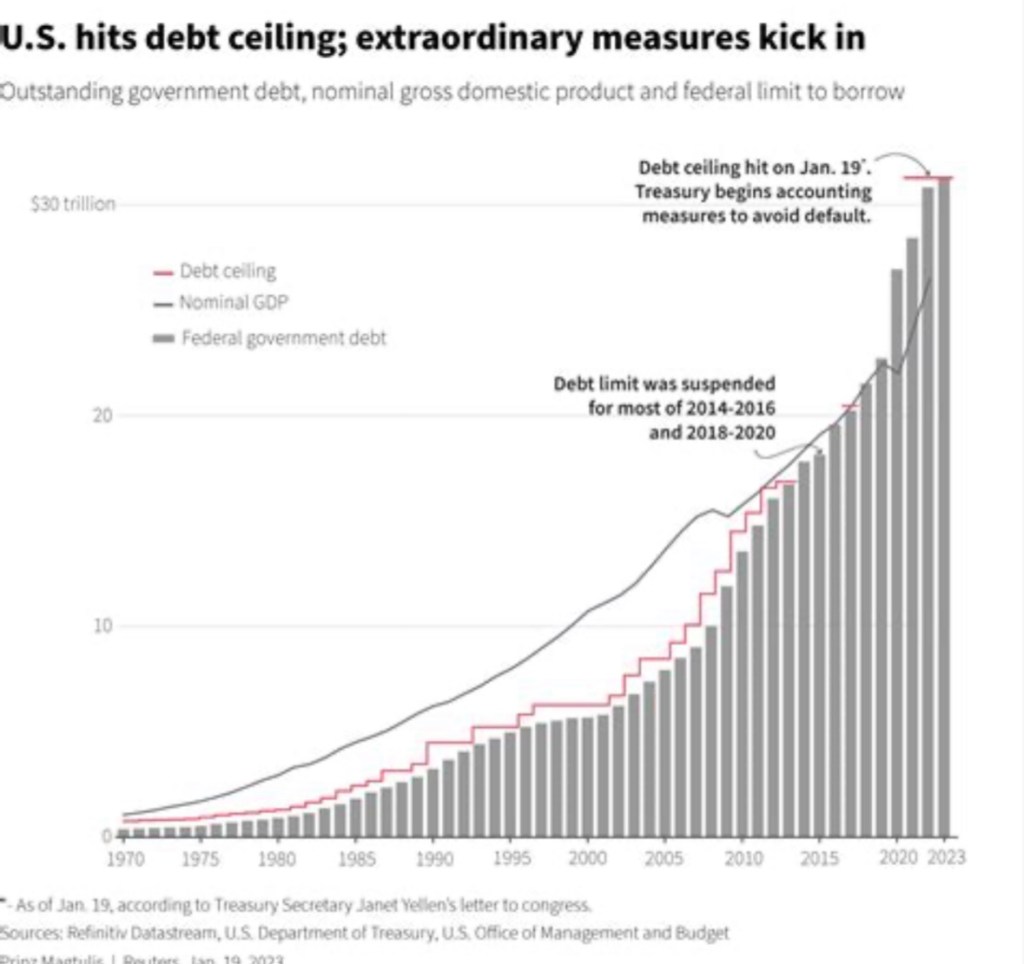
Long-awaited developments in the federal debt limit standoff shook loose in late April when Republicans passed a debt limit bill in the House of Representatives. Were it signed into law, the bill would extend the debt ceiling by about $1.5 trillion while incorporating elements of spending restraint. That approach is highly unpopular with democrats, but the zero-hour looms: Treasury Secretary Janet Yellen says the Treasury will run out of funds to pay all of the government’s obligations in early June. Soon we’ll have a better fix on President Biden’s response to the republicans, as he’s invited congressional leaders to the White House this Tuesday, May 8th to discuss the issue.

Biden wants a “clean” debt limit bill without changes impacting the budget path or existing appropriations. Senate Majority Leader Chuck Schumer would like to see a “clean” suspension of the debt limit. Republicans would like to use a debt limit extension to impose some spending restraint. They’ve focused only on the discretionary side of the budget, however, while much-needed reforms of mandatory programs like Social Security and Medicare were left aside. In fairness, both political parties have made massive contributions over the years to the burgeoning public debt, so not many are free of blame. But any time is a good time to try to enforce some fiscal discipline.

The Extraordinary Has Its Limits

Three months ago I wrote that the Treasury’s “extraordinary measures” to avoid breaching the debt limit would probably allow adequate time to break the impasse. In other words, accounting maneuvers allowed spending to continue without the sale of new debt. That bought some time, but perhaps not as much as hoped … tax filing season has revealed that revenue is coming in short of expectations, probably because weak asset markets have not generated anticipated levels of taxable capital gains income. In any case, very little progress was made over the past three months on settling the debt limit issue until the House passed the plan pushed by McCarthy. So we await the results of the pow-wow at the White House this week.

A Legislative Trick?

There’s been talk that House democrats will try to push through a “clean” debt limit bill of one sort or another by using a so-called discharge petition. They conveniently snuck this measure into an unrelated piece of legislation back in January. The upshot is that a bill meeting certain conditions must go to the floor for a vote if the discharge petition on the issue has at least 218 signatures. That means at least five republicans must join the democrats to force a vote and then join them again to pass a clean debt limit bill. That’s a long shot for democrats. Given the odds, will Biden deign to negotiate with House Speaker Kevin McCarthy? Even if he does, Biden will probably stall a while longer to extend the game of chicken. His hope would be for a few House republicans to lose their resolve for budget discipline in the face of looming default.

An Aside On Some Falsehoods

There’s a good measure of jingoistic BS surrounding the public debt. For example, you’ve probably heard from prominent voices in the debate that the U.S. has never defaulted on its debt and dad-gummit, it won’t start now! But the federal government has defaulted on its debt four times in the past! In three of those cases, the government reneged on commitments to convert bills or certificates into precious metals. The first default occurred during the Civil War, however, when the Union was unable to pay its war costs and subsequently went on a money printing binge. Unfortunately, we’re now engaged in a civil war of public versus private claims on resources, but the government can’t pay its bills without piling on debt. The statist forces now in control of the executive branch continue to insist that every American should demand more federal borrowing.

Here’s more BS in the form of linguistics that seemingly pervade all budget discussions these days: the House bill includes modest spending restraints, but mostly these are reductions in the growth of spending. Yet these are routinely described by democrats and the media as spending cuts. We could use another bill in the House demanding clear language that abides by the commonly accepted meaning of words. Fat chance!

The Trillion Dollar Coin

In my earlier debt limit post, I discussed two unconventional solutions to the Treasury’s financing dilemma. Both are conceived as short-term workarounds.

One is the minting of a $1 trillion platinum coin by the Treasury, which would deposit the coin at the Federal Reserve. The Fed would then sell back to the public (banks) existing Treasury bonds out of its massive holdings (> $8 trillion). The Treasury could then use the proceeds to pay the government’s bills. Thus, the Fed would do what the Treasury is prohibited from doing under the debt ceiling: selling debt.

When the debt ceiling is ultimately lifted, the “coin” process would be reversed (and the coin melted) without any impact on the money supply. As described, this is wholly different from earlier proposals to mint coins that would feed growth in the stock of money. Those were the brainchildren of so-called Modern Monetary Theorists and a few left-wing members of Congress.

There hasn’t been much discussion of “the coin” in recent months. In any case, the Fed would not be obligated to cooperate with the Treasury on this kind of workaround. The Fed has urged fiscal discipline, and it could simply refuse to take the coin if it felt that debt limit negotiations should be settled between Congress and the President.

Premium Bonds

The other workaround I discussed earlier is the sale by the Treasury of premium bonds or even perpetuities. This involves a little definitional trickery, as the debt limit is expressed in terms of the par value of debt. An example of premium bonds is given at the link above. High interest, low par bonds could be issued by the Treasury with the proceeds used to pay off older discounted bonds and pay the government’s bills. Perpetuities are an extreme case of premium bonds because they have zero par value and would not count against the debt limit at all. They simply pay interest forever with no return of principle. Paradoxically, perpetuities might also be less controversial because they would not involve payments to retire older debt.

Constitutional Challenge

The Biden Administration has pondered another way out of the jam, one that is perhaps more radical than either premium bonds or minting a big coin: challenge the debt ceiling on constitutional grounds. The idea is based on a clause in the Fourteenth Amendment stating that the: “validity of the public debt of the United States… shall not be questioned.” That’s an extremely vague provision. Presumably, as an amendment to the Constitution, this “rule” applies to the federal government itself, not to anyone dumping Treasury debt because its value is at risk. Any fair interpretation would dictate that the government should do nothing to undermine the value of outstanding public debt.

Let’s put aside the significant degree to which the real value of the public debt has been eroded historically by inflationary fiscal and monetary policy. That leaves us with the following questions:

  • Does a legislated debt limit (in and of itself) undermine the value of the public debt? Why would restraining the growth of debt or setting a limit on its quantity do such a thing?
  • Would a refusal to legislate an increase in the debt limit undermine or “question” the debt’s value? No, because belt-tightening is always a valid alternative to default. The Fourteenth Amendment is not a rationale for fiscal over-extension.
  • If we frame this as a question of default vs. fiscal restraint, only the former undermines the value of the debt.

From here, it looks like the blame for bringing the value of the public debt into question is squarely on the spendthrifts. Profligacy undermines the value of one’s commitments, so one can hardly blame those wishing to use the debt ceiling to promote fiscal responsibility. Any challenge to the debt ceiling based on the Fourteenth Amendment is likely to be guffawed out of court.

The Market’s Likely Rebuke

The market will probably react harshly if the debt ceiling impasse continues. That would bring higher yields on outstanding Treasury debt and a sharp worsening of the liquidity crisis for banks holding devalued Treasury debt. Naturally, Biden will attempt to blame the GOP for any bad outcome. His Treasury could attempt to buy more time by announcing the minting of a large coin or the sale of premium bonds, including perpetuities. Ultimately, neither of those moves would do much to stem the damage. The real problem is fiscal incontinence.

Some Critical Issues In the Gun Rights Debate

01 Monday May 2023

Posted by Nuetzel in Gun Rights, Second Amendment

≈ Leave a comment

Tags

Antifa, ArmaLite Rifle, Assault Rifles, Auto Sears, Auto Switch, Black Market, Black on Black Violence, BLM, Brownshirts, Bump Stock, Defensive Gun Use, Defund the Police, Due Process, Enumerated Right, Feral Hogs, Fully Automatic, Gun Ownership, Gun-Free Zones, KKK, Machine Guns, Magazine Capacity, Mass Shootings, Mental Health, Politico, Rand Corporation, Red Flag Laws, Rep. Dan Crenshaw, Self-Defense, Semi-Automatic, Sporting Rifles, Tyranny, War on Drugs, Well-Regulated Militia

It’s long past time for me to revisit a few key issues surrounding gun rights, as well as a few sacred cows accepted uncritically by the press and nurtured by interventionists. Tragic gun violence and mass shootings have given rise to strong public reaction, but one undeniable result is that gun purchases have surged, bringing household gun ownership rates up sharply to levels of the 1980s and 1990s. This owes in part to the growing reality that police in many communities are under-resourced, unable to respond effectively to crimes and disorder in the wake of defunding and activist sentiment opposing police use of force. Under these circumstances, many private citizens believe they must be ready to defend themselves. And after all, even under better circumstances, counting on the ability of police to arrive and act promptly at a time of extreme need is a crap shoot.

As a preview, here’s a list of the sections/topics addressed below. You can skip what might not interest you, though earlier sections might provide more context.

  • What’s An “Assault Weapon”?
  • Deadlier Gun Modifications
  • Homicide Data
  • Crime and Gun Violence
  • Lone Wolf Psychopaths
  • Private Intervention and Reporting
  • Red Flag Laws
  • Defensive Gun Uses
  • Invitations To Kill
  • Second Amendment Protections

Modern Sporting Rifles

Not many politicians or people can define exactly what they mean by “assault weapons”, even those strongly opposed to … whatever they are. Scary looking things. Contrary to the implication promoted by the anti-gun lobby, what they call “assault rifles” today are not machine guns. Those have been heavily regulated since 1934, must be registered, and are now illegal for civilians to own if produced after May 19, 1986. In other words, what are frequently called “assault rifles” are not fully automatic weapons that fire a continuous stream of bullets. Rather, they are semiautomatic, which means they load the next bullet automatically but do not fire multiple bullets with a single pull of the trigger. You have to pull the trigger each time you fire a bullet. There are many semiautomatic handguns as well. Here’s a little history on semi-automatics:

“Semi-automatic, magazine-fed rifles were introduced to the civilian market here in the US in 1905. The US military adopted them about three decades later for use in World War II. … The civilian version of the modern sporting rifle, the AR-15, was introduced in 1956 so it has been with us for over six decades.”

So… it’s also misleading to call semiautomatics “military rifles” because they were originally produced for the civilian market. By the way, “AR” stands for ArmaLite Rifle, NOT “assault rifle”.

It’s more accurate to use the term “modern sporting rifle” for a semiautomatic today, rather than “assault rifle”. The vast bulk of the 15 million semiautomatic rifles held by the public were purchased for sport shooting, and people actually think they’re a lot of fun to shoot. Of course, they are also kept as a defensive weapons. By defensive, I include their use as a weapon against predators or invasive species on farms and ranches. If you don’t think that kind of weapon is especially useful for that purpose, remember that the task often involves firing with accuracy over a significant range. A modern sporting rifle is far superior to alternatives under those circumstances, especially when multiple shots at a moving target are likely to be necessary.

Obviously, a semiautomatic rifle is advantageous if there are multiple intruders. I was reminded of this by a recent article about feral hogs and the destruction they’re causing in the south, and especially in Texas. They breed fast and are so numerous that they are wreaking unprecedented damage to farms, ranches, and even suburban lawns and gardens. A handgun, shotgun, or a bolt action rifle won’t be nearly as effective against these beasts because they travel in groups of two to 30+.

Deadly Modifications

An accessory called an “auto sears” or “auto switch” can transform a semiautomatic pistol or rifle into a fully automatic weapon, but it’s a felony to possess an unregistered auto sears. Bump stocks allow semiautomatic rifles to fire more rapidly, sort of like machine guns, but they sacrifice accuracy. Bump stocks were outlawed a few years ago under an ATF rule, but their legality is still pending in court. These modifications do have legitimate uses, but I won’t argue the soundness of these bans other than to note their consistency with prior restrictions on machine guns. However, illegal bump stocks and auto sears circulate and they are easy to produce, so it’s not clear that these laws can ever produce their hoped-for result.

There are restrictions on magazine capacity in 13 states. The biggest problem with these restrictions is that they limit the effectiveness of defensive gun use. People miss their targets in high-pressure situations… a lot. Furthermore, dangerous confrontations often involve more than one attacker to defend against. Changing a magazine in the middle of all that presents a challenge that should be unnecessary. It’s no coincidence that 15+ bullet magazines are standard issue with some of the most popular guns on the market.

Homicide Data

It’s difficult to get refined data on the use of sporting rifles in gun homicides because reported categories of weapons are too broad. Nevertheless, we know semiautomatic rifles are not commonly used in violent crimes. There were 20,138 firearm deaths in the U.S. in 2022 excluding suicides, which is obviously tragic. In 2020, handguns were used in 59% of all gun homicides, while rifles (including semiautomatics) were used in just 3%. It’s possible these percentages undercount, as there is a sizable category labeled as “Type Not Stated”.

Mass shootings, defined by the FBI as four or more people killed, accounted for 3.2% of firearm deaths, for a total of 648 including deaths of shooters themselves. Rifles were used in about 30% of the mass shootings. That’s roughly consistent with the range of estimates shown in this 2021 report from the RAND Corporation.

It’s important to note that internationally, the U.S. has not been the outlier in mass public shootings that many believe it to be. In any case, you’ll hope in vain if you think a ban on sporting rifles will put a stop to mass shootings. In addition to interfering with the rights of millions of law-abiding gun owners, the decade-long ban on so-called assault weapons ending in 2004 had no impact on mass public shootings or any other type of crime (also see this post). Of course, there are plenty of other available means of committing mass murder, and there are plenty of illegal guns on the street, so this shouldn’t be a surprise.

One more important fact to bear in mind: despite efforts to convince us otherwise, gun violence is not the leading cause of death among children. By that I mean real children, not 18 – 19 year-old gang members. Kids age 12 and under die in car crashes at double the rate of gun deaths, for example.

Crime and Gun Violence

Gun violence has many causes, and criminal activity is foremost. According to this analysis, arguments or gang-related incidents accounted for 57% of 303 mass shooting deaths over a six-month period in 2021, while also accounting for more than 75% of the injuries. Much of this mayhem is black-on-black violence, and it’s odd that few seem willing to admit it. Law-abiding inner-city households and minorities just might have the most to gain from gun ownership.

A poorly conceived and politically motivated article in Politico claimed that gun violence was heavily concentrated in southern “red states”. The author’s heavy-handed attempt to focus on state-level statistics blurred more relevant distinctions. For example, he failed to emphasize the heavy concentration of gun violence in urban areas (which are heavily “blue”) and crime-ridden neighborhoods populated by those at the lowest rungs of the socioeconomic ladder.

The predominance of criminal and gang-related shootings suggests that major solutions to gun violence can be found within the criminal justice system: stiff bail, aggressive prosecution, and long sentences for criminal actions, whether gang-related or otherwise. Lately, we’ve been veering in the other direction.

On the other hand, gangs would be far less active and deadly if black market opportunities were minimized. Those tend to be created by government when it interferes with otherwise voluntary transactions. Most conspicuous in this regard is the prosecution of the drug war. This creates risk-fueled profits for dealing and trafficking that are highly enticing to hard-luck gang members. Unfortunately, competitive pressure on the black market often takes violent forms. Legalization or even decriminalization of a wider assortment of drugs would undercut black market profitability, however. This approach would be far more effective if governments avoid imposing high taxes on newly-legalized drugs, because taxes simply recreate black-market opportunities.

Psychopathic Homicide

It’s no secret that severe mental illness can lead to acts of violence, including mass shootings. One analysis found that so-called “lone wolf” attacks accounted for 15% of mass shooting deaths and less than 5% of injuries during the first half of 2021.

We can probably all agree that anyone in the grips of a severe psychosis should not be in possession of guns. The obvious problem is that we can’t easily identify such persons without severe infringements on constitutional rights. Furthermore, we won’t always accurately identify true threats and we’ll mistakenly finger some harmless individuals. So how do we decide who’s really and legally crazy? Can we agree on some threshold of craziness and who meets it? Respect for civil liberties demands restraint in limiting individual rights without just cause. The revocation of a person’s Second Amendment rights should require a high degree of certainty that the individual is a threat.

Not all disturbed individuals seek or ever receive care, and not all disturbed individuals are dangerous, so attempting to identifying them through their utilization of mental health care is imperfect at best. Indeed, most mass shooters are thought to have had an undiagnosed disorder. Should a therapist be required to report to authorities a patient whom they’ve diagnosed as psychotic or dangerous? Would that be sufficient cause to confiscate a patient’s guns? That is not as straightforward for therapists as it might seem:

“Mandatory reporting of persons believed to be at imminent risk for committing violence or attempting suicide can pose an ethical dilemma for physicians, who might find themselves struggling to balance various conflicting interests. Legal statutes dictate general scenarios that require mandatory reporting to supersede confidentiality requirements, but physicians must use clinical judgment to determine whether and when a particular case meets the requirement. In situations in which it is not clear whether reporting is legally required, the situation should be analyzed for its benefit to the patient and to public safety. Access to firearms can complicate these situations, as firearms are a well-established risk factor for violence and suicide yet also a sensitive topic about which physicians and patients might have strong personal beliefs.”

If physicians or therapists approach these questions with the greatest deference to public safety, we’re liable to see a lot fewer people seeking therapy. I would not rule out, however, that such deference might be the best for society.

Private Intervention and Reporting

Less formal mechanisms to promote public safety require vigilance by private individuals, families, and other groups. A large number of perpetrators of mass killings were known to be deeply troubled well beforehand by family and/or acquaintances. Signs of maladjustment in loved ones are easily dismissed or forgiven, but families must take great responsibility for the potential actions of their own. Seeking therapeutic help is one thing, but when a family member shows more obvious signs of psychosis, then it might be time for contact with authorities and possibly institutionalization.

There have also been many cases in which mass killers have previewed their violent thoughts on-line. Anyone connected with such an individual on social media or witnessing deranged behavior should not hesitate to contact police to intervene. Of course, things aren’t always clear cut, but it’s important to be attentive and take responsible action when an individual’s behavior appears to take an ominous turn. This too can be abused, and authorities must be fair-minded about reviewing reports of threats to be sure they aren’t motivated by petty differences, whether personal, business, or political. This is at the heart of the right to due process of law under the Fifth and Fourteenth Amendments of the Constitution.

Red Flag Laws

Among the proposals for reducing gun violence are additional measures for controlling ownership and access to guns. Red flag laws are intended to restrict more formally and comprehensively the ability of persons at risk of harming themselves or others from owning or acquiring guns. At present, 19 states and DC have some form of red flag law(s), while one state (OK) has enacted an anti-red flag law.

Broadly, restrictions on gun possession, whether technically part of a red flag law or otherwise, can be invoked on account of age (< 21), a federal or state criminal record, a documented alcohol or drug addiction, a formally diagnosed mental illness, or a pattern of threatening or suicidal behavior. The latter may include threats arising from domestic disputes. All of these possibilities are potentially troublesome from the perspective of civil liberty, but under red flag laws, usually a court order is required to enforce the restriction. The key point is that the individual in question must have due process rights before restrictions are imposed or guns are confiscated. Otherwise, as Rep. Dan Crenshaw (TX) objects:

“What you’re essentially trying to do with the red flag law is enforce the law before the law has been broken. And it’s a really difficult thing to do, it’s difficult to assess whether somebody is a threat. Now if they are such a threat that they’re threatening somebody with a weapon already, well, then they’ve already broken the law. So why do you need this other law?”

The answer to Crenshaw’s question is that mere threats are difficult to prosecute. Likewise, it should be difficult to revoke anyone’s Second Amendment rights. Red flag laws should ensure that anyone whose gun rights are under review will receive due process. A huge difficulty is that such reviews must be speedy. If a real danger is convincingly shown to exist, then guns are confiscated and/or the individual is placed on a red flag list, at least temporarily.

Defensive Gun Use

One of the most under-reported phenomena in the gun debate is that of defensive gun uses (DGUs), which are hard to count because they often go unreported. One component of DGUs is so-called justifiable homicide by police and private citizens, which (when reported) typically contribute 700 – 800 deaths to total homicides each year. However, a DGU does not imply that a shot is fired or that a gun is pointed in the direction of a criminal threat. At a minimum, it means a threat was deterred by the presence of an armed defender.

The 2021 Georgetown National Firearms Survey reported an estimated 1.67 million DGUs per year. Of these, 25% occur inside the gun owner’s home and another 54% on their property. There is no question that DGUs save lives, and probably many thousands of lives every year. There is also no doubt that the prospect of an armed defender inside a home or business deters criminals.

Killing Zones

As one might gather from the evidence on DGUs, one of the most misguided efforts to promote safety within environments like schools and churches is their designation as “gun-free zones”. This is an invitation to anyone crazy enough to perpetrate deadly violence against large numbers of innocents, as we learned once more in the recent Nashville school shooting. Someone on staff should be trained and always armed with a gun, whether that be a resource officer, another employee, or a volunteer. Preferably several designated individuals would be armed in buildings such as large schools, or perhaps one or two trusted and designated volunteers at gatherings in houses of worship.

Second Amendment Protections

Second Amendment rights are critical to effective self-defense, which is usually a matter of protecting one’s life and property from thieves, home invaders, and predatory or destructive beasts. Anti-gun radicals find even this rationale objectionable, demonstrating no regard for gun rights whatsoever. Another claim is that the right to bear arms was given specific purpose only by the need to maintain “a well-regulated militia”, and it is further asserted that this need is out-dated.

Despite those objections, a right’s stated purpose in the text of the Constitution does not by itself define any limit on its applicability. The fact that the Second Amendment recognizes and enumerates gun rights gives emphasis to the founders’ awareness that gun-grabbers might push any advantage were that right to be left unenumerated. Furthermore, a civilian militia, whether formal or informal, might well be needed to defend against any tyrannical force as might arise in the event of a breakdown of the constitutional order.

I’m willing to stipulate that there is no immediate threat today of physical coercion by government intended to subjugate classes of individuals, or of any federal military aggression against the sovereignty of any state. That may owe in part to private gun ownership, however, which deters against open acts of tyranny. It also tends to foster a preference for more nuanced applications of government power. There’s no need for privately-owned tanks, fighter aircraft, and missiles to offer meaningful deterrence. Direct, bloody confrontations are a bad look and no way to gain broad support for other forms of coercion by government.

A better alternative for regimes or political movements who wish to radically change the social order is to offer subtle and plausibly deniable encouragement of destructive or coercive acts by proxy forces (e.g., Brownshirts, Antifa, BLM, KKK). While possession of guns by these proxies can make them more dangerous, a general public under arms is not as vulnerable as an unarmed population. Private gun owners can defend themselves more effectively and represent a significant and healthy impediment to extensions of political power of this nature.

Follow Sacred Cow Chips on WordPress.com

Recent Posts

  • Immigration and Merit As Fiscal Propositions
  • Tariff “Dividend” From An Indigent State
  • Almost Looks Like the Fed Has a 3% Inflation Target
  • Government Malpractice Breeds Health Care Havoc
  • A Tax On Imports Takes a Toll on Exports

Archives

  • December 2025
  • November 2025
  • October 2025
  • September 2025
  • August 2025
  • July 2025
  • June 2025
  • May 2025
  • April 2025
  • March 2025
  • February 2025
  • January 2025
  • December 2024
  • November 2024
  • October 2024
  • September 2024
  • August 2024
  • July 2024
  • June 2024
  • May 2024
  • April 2024
  • March 2024
  • February 2024
  • January 2024
  • December 2023
  • November 2023
  • August 2023
  • July 2023
  • June 2023
  • May 2023
  • April 2023
  • March 2023
  • February 2023
  • January 2023
  • December 2022
  • November 2022
  • October 2022
  • September 2022
  • August 2022
  • July 2022
  • June 2022
  • May 2022
  • April 2022
  • March 2022
  • February 2022
  • January 2022
  • December 2021
  • November 2021
  • October 2021
  • September 2021
  • August 2021
  • July 2021
  • June 2021
  • May 2021
  • April 2021
  • March 2021
  • February 2021
  • January 2021
  • December 2020
  • November 2020
  • October 2020
  • September 2020
  • August 2020
  • July 2020
  • June 2020
  • May 2020
  • April 2020
  • March 2020
  • February 2020
  • January 2020
  • December 2019
  • November 2019
  • October 2019
  • September 2019
  • August 2019
  • July 2019
  • June 2019
  • May 2019
  • April 2019
  • March 2019
  • February 2019
  • January 2019
  • December 2018
  • November 2018
  • October 2018
  • September 2018
  • August 2018
  • July 2018
  • June 2018
  • May 2018
  • April 2018
  • March 2018
  • February 2018
  • January 2018
  • December 2017
  • November 2017
  • October 2017
  • September 2017
  • August 2017
  • July 2017
  • June 2017
  • May 2017
  • April 2017
  • March 2017
  • February 2017
  • January 2017
  • December 2016
  • November 2016
  • October 2016
  • September 2016
  • August 2016
  • July 2016
  • June 2016
  • May 2016
  • April 2016
  • March 2016
  • February 2016
  • January 2016
  • December 2015
  • November 2015
  • October 2015
  • September 2015
  • August 2015
  • July 2015
  • June 2015
  • May 2015
  • April 2015
  • March 2015
  • February 2015
  • January 2015
  • December 2014
  • November 2014
  • October 2014
  • September 2014
  • August 2014
  • July 2014
  • June 2014
  • May 2014
  • April 2014
  • March 2014

Blogs I Follow

  • Passive Income Kickstart
  • OnlyFinance.net
  • TLC Cholesterol
  • Nintil
  • kendunning.net
  • DCWhispers.com
  • Hoong-Wai in the UK
  • Marginal REVOLUTION
  • Stlouis
  • Watts Up With That?
  • Aussie Nationalist Blog
  • American Elephants
  • The View from Alexandria
  • The Gymnasium
  • A Force for Good
  • Notes On Liberty
  • troymo
  • SUNDAY BLOG Stephanie Sievers
  • Miss Lou Acquiring Lore
  • Your Well Wisher Program
  • Objectivism In Depth
  • RobotEnomics
  • Orderstatistic
  • Paradigm Library
  • Scattered Showers and Quicksand

Blog at WordPress.com.

Passive Income Kickstart

OnlyFinance.net

TLC Cholesterol

Nintil

To estimate, compare, distinguish, discuss, and trace to its principal sources everything

kendunning.net

The Future is Ours to Create

DCWhispers.com

Hoong-Wai in the UK

A Commonwealth immigrant's perspective on the UK's public arena.

Marginal REVOLUTION

Small Steps Toward A Much Better World

Stlouis

Watts Up With That?

The world's most viewed site on global warming and climate change

Aussie Nationalist Blog

Commentary from a Paleoconservative and Nationalist perspective

American Elephants

Defending Life, Liberty and the Pursuit of Happiness

The View from Alexandria

In advanced civilizations the period loosely called Alexandrian is usually associated with flexible morals, perfunctory religion, populist standards and cosmopolitan tastes, feminism, exotic cults, and the rapid turnover of high and low fads---in short, a falling away (which is all that decadence means) from the strictness of traditional rules, embodied in character and inforced from within. -- Jacques Barzun

The Gymnasium

A place for reason, politics, economics, and faith steeped in the classical liberal tradition

A Force for Good

How economics, morality, and markets combine

Notes On Liberty

Spontaneous thoughts on a humble creed

troymo

SUNDAY BLOG Stephanie Sievers

Escaping the everyday life with photographs from my travels

Miss Lou Acquiring Lore

Gallery of Life...

Your Well Wisher Program

Attempt to solve commonly known problems…

Objectivism In Depth

Exploring Ayn Rand's revolutionary philosophy.

RobotEnomics

(A)n (I)ntelligent Future

Orderstatistic

Economics, chess and anything else on my mind.

Paradigm Library

OODA Looping

Scattered Showers and Quicksand

Musings on science, investing, finance, economics, politics, and probably fly fishing.

  • Subscribe Subscribed
    • Sacred Cow Chips
    • Join 128 other subscribers
    • Already have a WordPress.com account? Log in now.
    • Sacred Cow Chips
    • Subscribe Subscribed
    • Sign up
    • Log in
    • Report this content
    • View site in Reader
    • Manage subscriptions
    • Collapse this bar
 

Loading Comments...