• About

Sacred Cow Chips

Sacred Cow Chips

Category Archives: Big Government

Omnibusted: Make Congress Stick To Single-Subject Bills

04 Thursday Feb 2016

Posted by Nuetzel in Big Government, Legislative Branch

≈ 3 Comments

Tags

Committee Review, Cronyism, Federal Profligacy, Glenn Reynolds, Mia Love, Omnibus Legislation, Public debt, Single-Subject Legislation

Omnibus-Bill

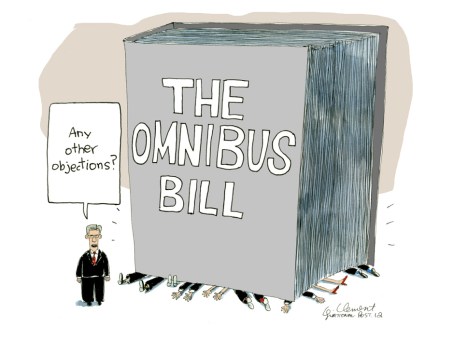
Here’s a great idea for making the federal government more transparent and accountable: force Congress to stick to single-subject legislation. Every bill should focus on a single issue with a clear statement of that issue. There would be no last-minute, unrelated amendments to legislation, and no omnibus bills as thick as several phone directories. This is the purpose of a three-page bill to be introduced by Representative Mia Love (R-UT). Glenn Reynolds explains the bill in more detail in “Want To Know Why Voters Are So Mad? Mia Love Has The Answer“. I’ll quote Reynolds at length, but do read the whole thing:

“A bill that’s so long that nobody can read it is, naturally, pretty likely to escape scrutiny. With thousands of pages and hundreds or thousands of provisions in the bill, what’s the chance that any particular provision will be noticed or criticized?

And even if a few provisions are criticized, when they’re tied to a bill that rewards literally hundreds of constituencies, there’s not much chance they’ll be shot down. Legislators, and special interests, have a vested interest in sticking together and being sure that the whole bill passes. Individually, most of these lousy provisions wouldn’t pass, but when banded together for mutual protection they can.   .…

Often, most of the provisions are written by lobbyists and inserted by tame members of Congress. The public isn’t really represented at all. That’s not an accident — it’s by design.“

No wonder the federal government and the public debt have grown to outrageous proportions. Reynolds would prefer a constitutional amendment on this issue similar to some state constitutions, but he supports Love’s bill as a second-best solution. The bill would also enable judicial review of potentially unrelated provisions of legislation, should they be challenged as such. Reynolds notes that cronyism often relies on the ability to sneak provisions into legislation to avoid scrutiny. Love’s bill might even encourage a return to the older congressional practice of subjecting appropriations to more thorough review in committee before going to the floor.

The tendency for legislation to grow seemingly misplaced appendages is also one of the reasons for the confusing accusations heard in the debates for the presidential nominations. Apparently, it’s possible for sponsors of legislation to be unaware of certain provisions attached to their bills. At the very least, it facilitates a less transparent form of political “horse trading”: I’ll vote for your bill if you allow me to attach an unrelated  provision that won’t be noticed.

The Love single-issue bill is a great idea, but there is likely to be strong resistance given the extenuatory pressures faced by many members of Congress, and their predictable reluctance to change the status quo. Hmm, perhaps Love can get her bill attached to another piece of legislation. Wouldn’t that be sweet irony!

Minority Politics and The Redistributionist Honey Trap

22 Friday Jan 2016

Posted by Nuetzel in Big Government, Free markets

≈ Leave a comment

Tags

Affirmative Action, Economic justice, Glenn Reynolds, Homeownership, Housing Subsidies, Joel Kotkin, Living Wage, Minority Interests, Old Confederacy, Political or Economic, Rent Control, Reynolds' Law, School Choice, The View From Alexandria

obama-zombie-hope-change

Minorities are not well-served by political, big-government solutions to social and economic advancement. Joel Kotkin weighs in on this point in “What’s the Best Way Up For Minorities?” He discusses the experiences of African Americans and Hispanics with two starkly different approaches to moving up:

“Throughout American history, immigrants and minorities have had two primary pathways to success. One, by using the political system, seeks to redirect resources to a particular group and also to protect it from majoritarian discrimination, something particularly necessary in the case of the formerly enslaved African Americans.

The other approach, generally less well-covered, has defined social uplift through such things as education, hard work and familial values. This path was embraced by early African American leaders such as Booker T. Washington and Marcus Garvey. Today, the most successful ethnic groups – Koreans, Middle Easterners, Jews, Greeks and Russians – demonstrate the validity of this method through high levels of both entrepreneurial and educational achievement.“

Minorities have largely succeeded in achieving political stature, and minority politicians garnering the most support from minority constituencies have advocated statist solutions, as opposed to emphasizing individual initiative. A leader advocating for public provision of transfers or any form of “economic justice” is undoubtedly attractive to many disadvantaged voters. Unfortunately, those policies offer little more than support. They are incapable of lifting the disadvantaged out of poverty.

“From 2007-13, African Americans have experienced a 9 percent drop in incomes, far worse than the 6 percent decline for the rest of the population. In 2013, African American unemployment remained twice that of whites, and, according to the Urban League, the black middle class has conceded many of the gains made over the past 30 years. Concentrated urban poverty – on the decline in the booming 1990s – now appears to be growing.“

Kotkin notes that blacks are in worsening economic straits in cities that are considered “exemplars of black political power and redistributionist politics”, and even in more affluent but “progressive” coastal cities. And paradoxically, according to Kotkin, African Americans have achieved greater economic gains in the “old Confederacy”, and that is where they are moving. The same is true of Hispanics, though most of their population growth in the south is from immigration. African Americans are reversing an older pattern of migration to the north.

Kotkin cites statistics on minority homeownership and educational performance in the south relative to northern cities, and he compares results for Texas and California. The south wins convincingly. He emphasizes the role of education and housing policies in helping minorities overcome disadvantages, but he is rightly critical of housing subsidies and affirmative action. Bad housing policies, such as rent control and zoning ordinances, hurt minorities by limiting the stock of good housing, ultimately raising its cost. The public education system, usually shielded from competitive pressures in urban areas, has often failed minorities and the urban poor.

Unfortunately, calls to expand government support extend well beyond the optimal size and scope of the social safety net: free college education, subsidized home ownership, proportional representation in virtually any occupation, and “living wage” demands are very much a part of the economic justice narrative. Supporters of these policies among the poor, convinced that they are deserving, cannot be expected to understand the implications of Reynolds’ Law, named by The View From Alexandria blog after Instapundit‘s Glenn Reynolds:

“Subsidizing the markers of status doesn’t produce the character traits that result in that status; it undermines them.“

Higher education is not a birthright. It is for those who demonstrate sufficient learning skills, and it is often free to the most promising students. The value of education provides a powerful incentive to those possessing the “trait” of prescience. Homeownership is a choice that should follow from resources earned by hard work or from one’s long-term prospects. Representation in certain occupational categories, and higher pay, reflect “traits” (skills, effort and reliability) that must be developed or demonstrated. As Reynolds says, subsidies destroy incentives by creating the illusion of  success, a thin simulacrum revealed by long-term dependency. Subsidies do not create self-sustaining success. They do not create the real thing. And the resources confiscated to pay for subsidies punish those those bearing the most positive traits.

Minority voters, especially African Americans, placed great hope in the Obama Administration to improve their economic success. Unfortunately, Obama favors the political route to minority material gains, not the economic route. The results have been dismal (and see this) in terms of poverty, dependency, labor force participation, wages, income, and wealth:

“On every leading economic issue, in the leading economic issues Black Americans have lost ground in every one of those leading categories. So in the last ten years it hasn’t been good for black folk. This is the president’s most loyal constituency that didn’t gain any ground in that period.“

The answer to promoting economic gains for minorities lies in encouraging market opportunities, freedom and the rule of law. This includes wage and price flexibility, labor rights, choice in schools, even-handed law enforcement and criminal justice, secure property rights, low taxes, and ending prohibitions that promote black markets and crime. The political route to success undermines the vibrancy of the economy, opportunities faced by minorities, and their ability to capitalize on them.

Enduring A Dead-Weight Dominion

13 Wednesday Jan 2016

Posted by Nuetzel in Big Government, Macroeconomics

≈ Leave a comment

Tags

Anthony de Jasay, Automatic Stabilizers, Big government, Boom and Bust Cycle, central planning, Code of Federal Regulations, Double Taxation, Federal Reserve, Final Output, Government intervention, infrastructure, Intermediate Transactions, John Maynard Keynes, Keynesian Economics, Malinvestment, Mark Skousen, Mercatus Center, Shovel-Ready Projects, Spontaneous Order, Stabilization policy, Too big to fail, Underconsumption

government-intervention

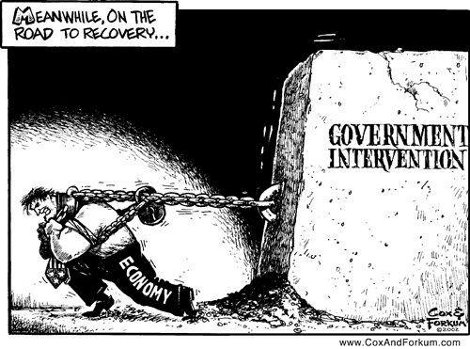
If you hope for government to solve economic problems, try to maintain some perspective: the state has unique abilities to botch it, and its power to distort and degrade the economy in the process of “helping” is vast. Government spending at all levels copped about 18% of the U.S.  economy’s final output in 2014, but the public sector’s impact is far more pervasive than that suggests. Private fixed investment in new structures and equipment accounted for only about 16% of Gross Domestic Product (GDP); the nonresidential portion of fixed investment was less than 13% of GDP. I highlight these two components of GDP because no one doubts the importance of capital investment as a determinant of the economy’s productive capacity. But government is a larger share of spending, it can divert saving away from investment, and it creates a host of other impediments to productivity and efficient resource allocation.

The private economy is remarkable in its capacity to satisfy human wants. The market is a manifestation of spontaneous order, lacking the conscious design of any supreme authority. It is able to adjust to dynamic shifts in desires and resource constraints; it provides reliable feedback in the form of changing prices to modulate and guide the responses of participants through all stages of production. Most forms of government activity, however, are not guided by these signals. Instead, the state imposes binding and sometimes immediate constraints on the decisions of market participants. The interference takes a number of forms, including price controls, but they all have the power to damage the performance and outcomes of markets.

The productive base at each stage of the market process is a consequence of the interplay of perceived business opportunities and acts of saving or deferred consumption. The available flow of saving depends on its rewards, which are heavily influenced by taxes and government intervention in financial markets. It’s worth noting here that the U.S. has the highest corporate tax rates in the developed world, as well as double taxation of corporate income paid out to owners. In addition, the tax system is used as a tool to manipulate the allocation of resources, drawing them into uses that are politically favored and punishing those in disfavor. The damaging impact is compounded by the fact that changes in taxes are often unknown ex ante. This adds a degree of political risk to any investment decision, thus discouraging capital spending and growth in the economy’s productive base.

The government is also a massive and growing regulator of economic activity. Over 100,000 new regulatory restrictions were added to the Code of Federal Regulations between 2008 and 2012. Regulation can have prohibitive compliance costs and may forbid certain efficiencies, often based on flimsy or nonexistent cost/benefit comparisons. It therefore damages the value and returns on embedded capital and discourages new investment. It is usually uneven in its effects across industries and it typically reduces the level of competition in markets because small firms are less capable of surviving the costs it imposes. Innovation is stifled and prices are higher as a result.

From a philosophical perspective, even the best cost/benefit comparisons are suspect as tools for evaluating government intervention. Don Boudreaux quotes Anthony de Jasay’s The State on this point:

“What could be more innocuous, more unexceptional than to refrain from intervening unless the cost-benefit comparison is favourable? Yet it treats the balancing of benefits and costs, good and bad consequences, as if the logical status of such balancing were a settled matter, as if it were technically perhaps demanding but philosophically straightforward. Costs and benefits, however, stretch into the future (problems of predictability) and benefits do not normally or exclusively accrue to the same persons who bear the costs (problems of externality). … Treating it as a pragmatic question of factual analysis, one of information and measurement, is tacitly taking the prior and much larger questions as having been somehow, somewhere resolved. Only they have not been.“

Poorly-executed and inappropriate stabilization policy is another way in which government distorts decisions at all stages of production. There are many reasons why these policies tend to be ineffective and potentially destructive, especially in the long run. Keynesian economics, based on ideas articulated by John Maynard Keynes, offers prescriptions for government action during times of instability. That means “expansionary” policy when the economy is weak and “contractionary” policy when it is strong.  At least that is the intent. This framework relies on the notion that components of aggregate demand determine the economy’s output, prices and employment.

The major components of GDP in the National Income and Product Accounts are consumer spending, private investment, government spending, and net foreign spending. In a Keynesian world, these are treated as four distinct parts of aggregate “demand”, and each is governed by particular kinds of assumed behavior. Supply effects are treated with little rigor, if at all, and earlier stages of production are considered only to the extent that their value added is included, and that the finished value of  investment (including new inventories) is one of the components of aggregate demand.

Final spending on goods and services (GDP) may be convenient because it corresponds to GDP, but that is simply an accounting identity. In fact, GDP represents less than 45% of all transactions. (See the end note below.) In other words, intermediate transactions for raw materials, business-to-business (B2B) exchange of services and goods in a partly fabricated state, and payments for distributional services are not counted, but they exceed GDP. They are also more variable than GDP over the course of the business cycle. Income is generated and value is added at each stage of production, not only in final transactions. To say that “value-added” is counted across all stages is a restatement of the accounting identity. It does not mean that those stages are treated behaviorally. Technology, capital, employees, and complex decision-making are required at each stage to meet demands in competitive markets. Aggregation at the final goods level glosses over all this detail.

The focus of the media and government policymakers in a weak economy is usually on “underconsumption”. The claim is often heard that consumer spending represents “over two-thirds of the economy”, but it is only about one-third of total transactions at all levels. It is therefore not as powerful an engine as many analysts assert. Government efforts to stimulate consumption are often thwarted by consumers themselves, who behave in ways that are difficult for models to capture accurately.

Government spending to combat weakness is another typical prescription, but such efforts are usually ill-timed and are difficult to reverse as the economy regains strength. The value of most government “output” is not tested in markets and it is not subject to competitive pressure, so as the government absorbs additional resources, the ability of the economy to grow is compromised. Programmatic ratcheting is always a risk when transfer payments are expanded. (Fixed programs that act as “automatic stabilizers”, and that are fiscally neutral over the business cycle, are less objectionable on these grounds, but only to the extent that they are not manipulated by politicians or subject to fraud.) Furthermore, any measure that adds to government deficits creates competition for the savings available for private capital investment. Thus, deficits can reduce the private economy’s productive capacity.

Government investment in infrastructure is a common refrain, but infrastructure spending should be tied to actual needs, not to the business cycle. Using public infrastructure spending for stabilization policy creates severe problems of timing. Few projects are ever “shovel-ready”, and rushing into them is a prescription for poor management, cost overruns and low quality.

Historically, economic instability has often been a consequence of poorly-timed monetary policy actions. Excessive money growth engineered by the Federal Reserve has stimulated excessive booms and inflation in the prices of goods and assets. These boom episodes were followed by market busts and recessions when the Fed attempted to course-correct by restraining money growth. Booms tend to foster misjudgments about risk that end in over-investment in certain assets. This is especially true when government encourages risk-taking via implicit “guarantees” (Fannie Mae and Freddie Mac) and “too-big-to-fail” promises, or among individuals who can least afford it, such as low-income homebuyers.

Given a boom-and-bust cycle inflicted by monetary mismanagement, attempts to stimulate demand are usually the wrong prescription for a weak economy. Unemployed resources during recessions are a direct consequence of the earlier malinvestment. It is better to let asset prices and wages adjust to bring them into line with reality, while assisting those who must transition to new employment. The best prescription for instability is a neutral stance toward market risks combined with stable policy, not more badly-timed countercyclical efforts. The best prescription for economic growth is to shrink government’s absorption of resources, restoring their availability to those with incentives to use them optimally.

The more that central authorities attempt to guide the economy, the worse it gets. The torpid recovery from the last recession, despite great efforts at stimulus, demonstrates the futility of demand-side stabilization policy. The sluggishness of the current expansion also bears witness to the counterproductive nature of government activism. It’s a great credit to the private market that it is so resilient in the face of long-standing government economic and regulatory mismanagement. A bureaucracy employing a large cadre of technocrats is a “luxury” that only a productive, dynamic economy can afford. Or can it?

~~~~~~~~~~~~~~~~~~~~~~~~~~~~~~~~~~~~~~~~~~~~~~~~~~~~~~~~~~~~~~~~~~~~

A Note On Output Measures

More complete aggregations of economic activity than GDP are gross output (GO) and gross domestic expenditures (GDE). These were developed in detail by economist Mark Skousen in his book “The Structure of Production“, published in 1990. GO includes all final transactions plus business-to-business (B2B) transactions, while GDE adds the costs of wholesale and retail distribution to GO. Or as Skousen says in this paper:

“GDE is defined as the value of all transactions (sales) in the production of new goods and services, both finished and unfinished, at all stages of production inside a country during a calendar year.“

GO and GDE show the dominance of business transactions in economic activity. GDE is more than twice as large as GDP, and B2B transactions plus business investment are twice the size of consumer spending. According to Skousen, GDE varies with the business cycle much more than GDP. Many economic indicators focus on statistics at earlier stages of production, yet real final spending is often assumed to be the only measure of transactions that matters.


Pundits Get Played But Earn Rents From the Trade

04 Friday Dec 2015

Posted by Nuetzel in Big Government

≈ Leave a comment

Tags

Corporatism, Influence Trading, Jeremy Shapiro, Policy Validation, rent seeking, Selling Policy, The Brookings Institution, Think Tank Influence

pundits-under-my-bed

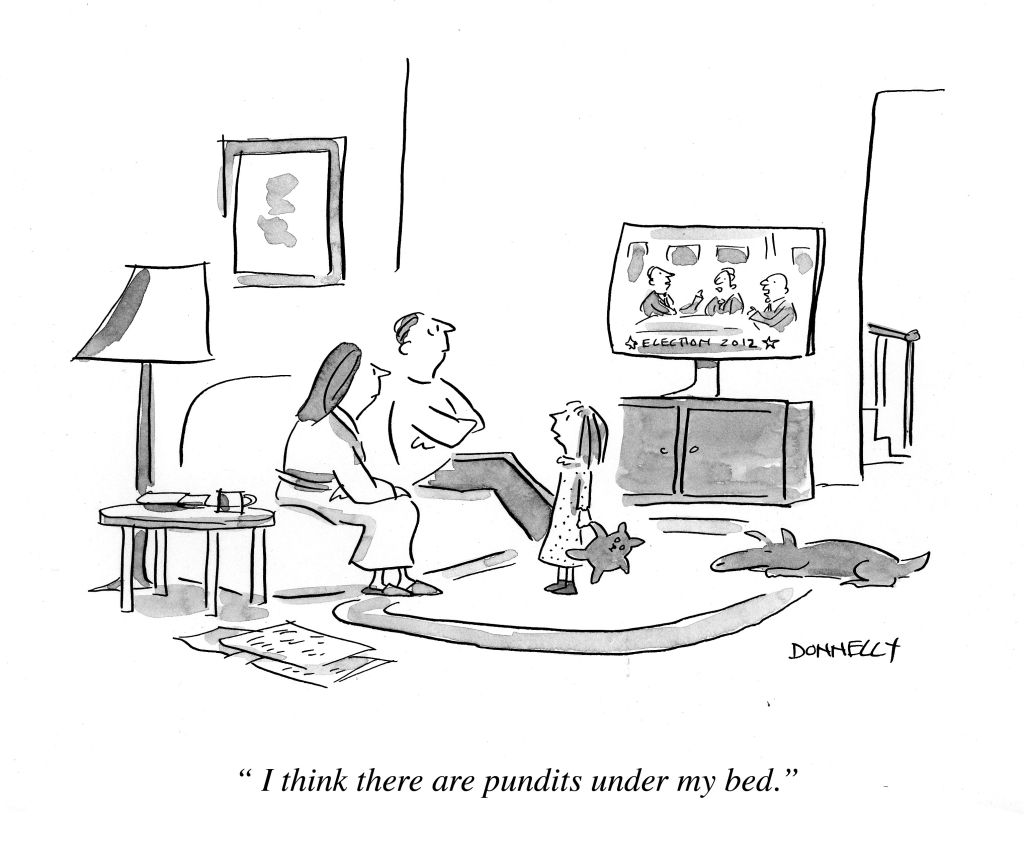
Powerful officials often seek to influence “thinkers” and pundits by flattering them with access and requesting advice that ultimately is treated as superfluous. That is the upshot of this interesting post from Jeremy Shapiro at The Brookings Institution: “Who Influences Whom? Reflections on U.S. Government Outreach to Think Tanks“.

These relationships are of a different character than the symbioses often existing between government officials (elected and unelected) and private corporations and unions. The corporatist relationships that most often come to mind are infamous for bleeding taxpayers, distorting the economy and using the power of government to advance private interests. The nexus highlighted by Shapiro between officialdom and think-tank experts, as well as influencers in the media and academia, is a different corner of the rent-seeking world, but it is rent seeking nevertheless.

Shapiro, himself a former government official, describes a sequence of events that might be experienced by an outside expert leading up to an “important” meeting with a high government official. Such experts have a strong interest in their areas of study and naturally hope to promote their own views and analyses. An opportunity to provide input to a policymaker is obviously attractive to such a person. Interactions with officials also confer status on experts, who can then trade on the impressive access they’ve been granted. Invitations to meetings like these, in and of themselves, represent successful rent-seeking by policy experts, regardless of whether their policy advice is given serious consideration by public officials.

While outside experts are often called upon for real policy advice, the government official is frequently after something else; in all likelihood, the official already has a policy position:

“The government official desperately wants the thinkers to give him the benefit of the doubt when his inevitably flawed policy comes up for critical examination, as they are an important source of its ultimate evaluation by the Congress and the public. The briefings therefore tend to take place before important diplomatic meetings or foreign trips that will predictably occasion a round of media coverage on the policy in question.“

So the official hopes to engineer mutually beneficial trades with outside experts. Trades of this kind may have no real value to anyone outside of the direct parties. Shapiro’s example relates to foreign policy, but the same dynamic takes place in almost every area of government policymaking:

“The thinkers are the validators. They will write op-eds, give pithy quotes to important newspapers, and appear on network news programs.“

As Shapiro tells it, an intriguing aspect of this process is that the experts are often well aware of the circumstances. Usually, they can be counted upon to pay for their access and the esteem it bestows by offering at least subtle forms of support for the official’s policy initiative:

“The meetings, their grandeur and secrecy, are intended to foster a sense that the thinkers have been listened to and thus are somehow complicit in the policy—the illusion of inclusion. A meeting that seems to the thinker to be an opportunity to persuade is actually an opportunity to be persuaded. It doesn’t always work, of course. Fundamental positions are rarely altered and many of the supposed validators will remain fierce critics. But the biggest secret of all is that, even if the thinker does understand the real purpose, it often works at least at the margins.“

Large numbers of tremendously talented, well-compensated people are engaged in charades like this on a regular basis. We know there are beneficiaries and there are real costs, but who pays for the largess? Obviously taxpayers, but private parties pay in other ways: Media time devoted to pundits is often paid by advertisers and, ultimately, consumers. Private think tanks are supported by private contributors who expect their own views to be validated by analyses and promoted in policy debates. The activity described by Shapiro may subvert those intentions. The real cost to society, however, is the value of resources diverted from productive, private activity to support the circle of rent-jerking. The bigger the government, the bigger the circle.

Egalitarian Aggression

15 Thursday Oct 2015

Posted by Nuetzel in Big Government, Equality, Liberty

≈ Leave a comment

Tags

Comparative advantage, Dylan Matthews, Egalitarianism, Equality of Opportunity, Inequality, Integrity of the Family, John Rawls, Llewellyn Rockwell Jr., Mises Institute, Redistribution, Robert Nisbet, The Mises Daily, Vox, Wilt Chamberlain Problem

communism Lady liberty in rear view mirror

In what sense is “equality” a rational objective? Can it ever be achieved without aggression? It’s certainly admirable for individuals to treat all others fairly and without bias against personal traits. A society composed of individuals possessing that kind of integrity is one in which “equal opportunity” exists in an intuitive sense. Such a society would yield market outcomes that are free from personal discrimination.

There are many social pitfalls when central authorities attempt to enforce this sort of equality. There will always be minor and even random cases of treatment that someone considers unfair. Any effort to adjudicate such incidents comes at a great resource cost. The potential for moral hazard in pursuing grievances is also strong, and the enforcement authority may well have biases of its own.

Stronger forms of equality are even more difficult to achieve in a free society. There are many barriers to “equality” that most people would regard as natural, like genetics and the integrity of the family. And like family, many other barriers to equality are cultural virtues, such as educational and occupational rewards based on merit. The institution of strong private property rights provides an effective system of incentives that fosters efficient resource allocation, promoting economic growth and human well-being, but it’s rewards will not be distributed equally.

Institutionalized tampering with any of these features for the sake of equality tends to legitimize envy as a cause of social action. And the intrusions require design and enforcement of a system of social “overrides” by a central authority possessing police power. Needless to say, this must involve elements of aggression and tyranny. These overrides introduce significant risks to individual freedom and the functioning of markets, and are likely to cause widespread destruction of welfare. In that sense, forced equality cannot be a rational objective.

These points are developed more fully in “The Menace of Egalitarianism“, a piece by Llewellyn Rockwell Jr. at the Mises Daily blog.

“A libertarian is perfectly at peace with the universal phenomenon of human difference. He does not wish it away, he does not shake his fist at it, he does not pretend not to notice it. It affords him another opportunity to marvel at a miracle of the market: its ability to incorporate just about anyone into the division of labor. … Indeed the division of labor is based on human difference.“

Rockwell goes on to explain the law of comparative advantage, which allows more productive and less productive individuals to profit by specializing in areas for which each has the lowest opportunity cost. And when producers compete for rewards, as Rockwell notes, average consumers (and rich ones and poor ones) are the ultimate beneficiaries.

Outcomes such as the inequality of wealth and income are not only impossible to avoid, they are natural consequences of economic freedom. Several earlier posts on Sacred Cow Chips have dealt with this topic, and can be viewed from the Home page by typing “inequality” into the search box near the top. For his part, Rockwell discusses the “Wilt Chamberlain” problem, whereby private demand to witness great athletic prowess results in a shift towards an unequal distribution of income:

“… the pattern of wealth distribution is disturbed as soon as anyone engages in any exchange at all. Are we to cancel the results of all these exchanges and return everyone’s money to the original owners? Is Chamberlain to be deprived of the money people freely chose to gave [sic] him in exchange for the entertainment he provided?“

The fact that “equality” is seldom well-defined as an actual objective should be met with skepticism. Here’s more Rockwell:

“It is precisely this lack of clarity that makes the idea of equality so advantageous for the state. No one is entirely sure what the principle of equality commits him to. And keeping up with its ever-changing demands is more difficult still. … Equality is a concept that cannot and will not be kept restrained or nailed down.”  

He takes a dismal view of “cultural inequality” and “equality of opportunity” as worthwhile causes for invoking the power of the state. For example, two families in different economic circumstances will generally confer different opportunities to their children. Dylan Matthews at Vox makes the same point in “Equality of Opportunity“, though Matthews’ analysis is weak in several respects. The point here is that there is only so much that can be done to correct for unequal family-related endowments without undermining the integrity of the family (not to mention property rights). This has long been a bone of contention with respect to the design of U.S. welfare programs. But the problem is much deeper:

“In the course of working toward equality, the state expands its power at the expense of other forms of human association, including the family itself. The family has always been the primary obstacle to the egalitarian program. The very fact that parents differ in their knowledge, skill levels, and devotion to their offspring means that children in no two households can ever be raised ‘equally.’

Robert Nisbet, the Columbia University sociologist, openly wondered if [John] Rawls would be honest enough to admit that his system, if followed to its logical conclusion, had to lead to the abolition of the family. ‘I have always found treatment of the family to be an excellent indicator of the degree of zeal and authoritarianism, overt or latent, in a moral philosopher or political theorist,’ Nisbet said.“

And here is Rawls himself expressing doubts, as quoted by Rockwell:

“It seems that when fair opportunity (as it has been defined) is satisfied, the family will lead to unequal chances between individuals. Is the family to be abolished then? Taken by itself and given a certain primacy, the idea of equal opportunity inclines in this direction.“

The quest for “equality” is a creeping force. It infects economic life in a way that makes widespread gains in welfare difficult to achieve, diminishes expectations and fosters social devolution. It also leads to demands for eliminating useful distinctions, which can only be erased though aggression by the state. This forces a convergence toward the least common denominator throughout the culture. I believe the following statement by Rockwell rings true:

“The obsession with equality… undermines every indicator of health we might look for in a civilization. It involves a madness so complete that although it flirts with the destruction of the family…. It leads to the destruction of standards — scholarly, cultural, and behavioral. It is based on assertion rather than evidence, and it attempts to gain ground not through rational argument but by intimidating opponents into silence. There is nothing honorable or admirable about any aspect of the egalitarian program.“

Must Support For “Family Planning” Be Compelled?

05 Monday Oct 2015

Posted by Nuetzel in Big Government, Liberty, Presumptive rights, Property Rights

≈ Leave a comment

Tags

Abortion, Compulsion, Federal funding, Free Association, Libertarians, Nonexclusive benefits, Planned Parenthood, Property Rights, Public goods, Reproductive rights, Sheldon Richman, Slate

Fund Me

Where do Libertarians stand on the issue of federal funding of Planned Parenthood? What sort of balance should be struck between the rights of conscientiously-objecting taxpayers and the rights of women to use Planned Parenthood (PP) services? The correct answer has nothing to do with abortion, an issue on which Libertarians lack unanimity. However, the existence of moral objections by any segment of society, whether considered valid by a majority or not, is an important consideration.

Do Individual Freedoms Require Taxpayer Support?

Sheldon Richman discusses the funding question on his Free Association blog in “Planned Parenthood, Social Peace and  the Libertarian approach“. He first makes a basic point: “… no one’s freedom is violated by lack of access to taxpayer money.” I agree, but this statement requires some context. For Libertarians, the baseline is a society in which individual liberty is a presumption. That cannot be the case if taxes and transfers dominate our economic lives. If we’re all busy picking each other’s pockets, then perhaps anyone can lay claim to a dollop of public funds to pay for any damn thing they want. But in a society that explicitly limits the powers of coercive government, private individuals cannot, on the public dime, lay claim to whatever they wish to compel from others. What they desire, after all, is almost always available privately. Therefore, the denial of public funding for PP does not constitute a denial of anyone’s rights.

Individual’s are free to exercise their reproductive or non-reproductive rights as they see fit, and to pay for related services themselves or by seeking a benefactor. Nothing is deprived to that individual other than an invalid claim on the belongings of others.

“Individual rights ultimately boil down to the single right to be free from aggression, that is, to self-ownership. Rights would be defined out of existence if they could be ignored whenever doing so would make someone else’s objectives easier to accomplish. Such an approach to “rights” would turn rights theory on its head by making us a mere means to other people’s ends rather than ends in ourselves.“

Consistent Application of Property Rights

Richman asserts that the right of ownership of one’s body applies equally to the right of individuals to the income they produce:

“Ironically, the right to choose abortion is defended as an application of the right of women to their bodies, that is, as a property right (self-ownership). Another implication of the right to one’s own body is the right to control the fruits of one’s labor (income). No coherent theory of rights can permit a clash of the right to one’s body with the right to the fruits of one’s labor. Thus implicit in the pro-choice case is an argument against tax funding of Planned Parenthood (and anything else), that is, against taxation itself.“

Leftist elites say that a denial of public funding for PP is tantamount to a denial of service to low-income women. Richman asks the elites to put up or shut up: if they believe the services in question are critical, they are free support PP financially, but they much prefer to extract resources from taxpayers without regard to possible moral objections.

Protection of Religious and Moral Principles

Richman adds the following thoughts on public funding of Planned Parenthood near the end of his post:

“Reasonable people of all persuasions should see that it is simply unreasonable to force people to finance an organization they find morally offensive. Thomas Jefferson famously said, ‘To compel a man to furnish contributions of money for the propagation of opinions which he disbelieves is sinful and tyrannical.’ Compelling men and women to furnish contributions for the performance of services they deem immoral (whether or not they are) is worse.“

Supporters of public PP funding have sought to deflect morality-based opposition with the contention that abortions represent only 3% of PP’s services, but Slate debunked that claim over two years ago. It was based on a count of tests and procedures performed, not on revenue. PP also claims that tax funds never pay for abortion, but as Richman points out, once available, the revenue is fungible and may be used to cover the cost of any procedure. In short, the argument is specious.

The Public Good Argument Is Weak

One more elephant in the PP funding debate concerns the appropriate functions of government. Does PP provide a truly “public” good, one having benefits that are nonexclusive to the primary user? Health services are sometimes assumed to confer public benefits; that is an easy argument in the case of infectious diseases and to some extent for medical research, but not for most health services. The benefits of individual health services are largely private, providing little justification for government funding of PP from a public finance perspective.

Collective Action Needs Strict Limits

Collective action should be confined to the provision of public goods, but even then it can be fraught with conflicts, such as the difficulty of accommodating pacifists during wartime. A truly liberal society will do all it can to accommodate diverse beliefs by allowing objectors to opt out, if possible, or avoiding the funding of private activities, especially those over which there is significant dissent. Under no circumstances should one be compelled to pay for private services that they find to be morally objectionable.

The Insane Substitution Of Regulation For Value

21 Monday Sep 2015

Posted by Nuetzel in Big Government, Regulation

≈ Leave a comment

Tags

Broadband Investment, Code of Federal Regulation, Compliance Costs, Coyote Blog, Dodd Frank Act, e-Verify, Great Stagnation, Jimmy Carter, L. Gordon Crovitz, Mercatus Center, Net Neutrality, Obamacare penalties, Regulatory Burdens, Regulatory State, Vestigial Regulations, Warren Meyer

Regulatory Burdens

My day-job at a financial institution has become increasingly dominated by governance and compliance issues, due largely to the Dodd-Frank Act. Much less of my time these days is dedicated to activities that are of direct value to the business or its customers. It’s not just me, but a large number of talented professionals with whom I work, many having advanced degrees. And a platoon of government regulators with advanced degrees often resides in a conference room on our floor. As I overheard one colleague say the other day, even a sneeze now requires permission from regulators. It feels very much like working for a regulated public utility, or worse yet, a government agency. This is obviously costly for shareholders, customers and taxpayers. If asked, I would be hard-pressed to explain how such massive compliance activity adds value for anyone, except perhaps the regulators themselves, or those who like the job guarantee provided by the situation. Does it offer some extra guarantee of stability for our institution, which remained stable and viable throughout the last financial crisis? Not likely, especially if actually managing the business has anything to do with it. Does it guarantee the stability of the larger financial system to impose massive compliance costs and ossify an otherwise dynamic enterprise?

The financial industry is not the only sector plagued by this phenomenon. At Coyote Blog, Warren Meyer provides a great perspective based on his own experience (and he deserves the inspirational hat-tip for this post). Meyer owns and operates a company that manages public parks. Here is his summary:

“Ten years ago, most of my company’s free capacity was used to pursue growth opportunities and refine operations. Over the last four years or so, all of our free capacity has been spent solely on compliance.“

Meyer offers details of compliance issues that have robbed his business of productive time and energy:

  • Managing hours of seasonal employees to avoid Obamacare penalties;
  • Seeking government approval of price increases to recover minimum wage hikes;
  • Implementing and running e-Verify on new hires;
  • Additional employee hiring documentation requirements;
  • Compliance with California regulation of chairs, hot-day practices, meal breaks, overtime assignments, employee sick days, and other processes;

He goes on to note some economy-wide implications of these entanglements:

“… for folks who are scratching their head over recent plateauing of productivity gains and reduced small business origination numbers, you might look in this direction.

By the way, it strikes me that regulatory compliance issues set a minimum size for business viability. You have to be large enough to cover those compliance issues and still make money. What I see happening is that as new compliance issues are layered on, that minimum size rises, like a rising tide slowly drowning companies not large enough to keep their head above water.“

There is no doubt that heavy regulation favors large firms over small firms, and it makes competing with entrenched businesses more difficult for new entrants. Here is the first of a trio of relevant posts from the Mercatus Center, a summary of research finding that regulation reduces new business start-ups and hiring activity.

A heavily regulated economy is likely to suffer from an accumulation of old, irrelevant, or often conflicting rules. A second Mercatus Center post, “‘Regulatory Appendicitis’ and the Dangers of Vestigial Regulations” focuses on an additional problem: the application of old rules to regulate new technologies:

“From a regulatory agency’s perspective, recycling old rules makes sense: Old rules have withstood legal challenges and offer a relatively safe legal route. However, the rules are unlikely to optimally fit the new context for which they are employed. The use of rules that aren’t optimized for the task at hand can significantly hamper innovation and the development of technology. Even worse, due to poor design, they may not actually accomplish the new objective.“

A case in point is the recent imposition of “net neutrality” rules, which prevent ISPs and internet backbone providers from charging incremental rates to network hogs. This involves the application of regulatory rules designed for railroads 130 years ago and applied to the phone system 80 years ago. L. Gordon Crovitz writes of the early, negative impact of this regulation on investment in broadband in a piece entitled “Obamanet Is Hurting Broadband” (if the link fails, Google “wsj Crovitz Obamanet Broadband” and choose the first link returned):

“Today bureaucrats lobbied by special interests determine what is ‘fair’ and ‘reasonable’ on the Internet, including rates, tariffs and business arrangements. The FCC got thousands of requests for new regulations within weeks of the new rules. … Before Obamanet went into effect, economist Hal Singer of the Progressive Policy Institute predicted in The Wall Street Journal that if price and other regulations were introduced, capital investments by ISPs could quickly fall … 5% and 12% a year …. Now Mr. Singer has analyzed the latest data, and his prediction has come true.“

Crovitz correctly states that consumers want more broadband, and broadband growth requires investment. Systematically punishing those who make such investments will not bring improvements in service. And this is not an isolated result. Apart from the absorption of staff time (which is often required to manage new investment), regulation discourages productive capital investment in new facilities, equipment and technology. The potential growth of the economy suffers as a result, including the potential growth of wages.

Several past posts on Sacred Cow Chips have dealt with the heavy costs imposed by regulation, including “Life’s Bleak When Your Goal Is Compliance“, “You Probably Broke The Law Today“, and “There Oughtta NOT Be a Law“.

Is there really a trend toward greater regulation? Yes, and it is not new. Has it accelerated? A third Mercatus Center post demonstrates that the Obama Administration, in terms of new regulatory restrictions, is on a pace to exceed all preceding presidents over the past 40 years. This is based on the Code of Federal Regulation (though Jimmy Carter edged Obama slightly over Obama’s first four years). Obama’s penchant for executive orders shows no sign of abating, and Congress is apparently incapable of over-riding any veto. Much of this can be reversed, in principle, but new regulations have a way of creating political constituencies, so reversals might be easier to say than do.

Central Bank Bubbles Pop On Our Heads

09 Wednesday Sep 2015

Posted by Nuetzel in Big Government, Macroeconomics, Monetary Policy

≈ Leave a comment

Tags

Asset Bubble, Asset Price Distortion, Boom and bust, capital costs, Capital investment, Easy Money, Jim Grant, Market Manipulation, Martin Feldstein, Quantitative Easing, Ryan McMaken, Seigniorage, Supportive Earnings, Zero Interest Rate Policy, ZIRP

boom_and_bust

Printing money is a temptation that central banks can’t resist. And they distort prices when they do it. The new “liquidity” finds its way into higher asset values: stocks, bonds, real estate, even art. But as Jim Grant points out (as quoted by Ryan McMaken), the inflated prices are artificial, decoupled from the actual value those assets are capable of generating. The high asset prices are unsustainable:

“The idea is that you put the cart of asset values before the horse of enterprise. By raising up asset values, you mobilize spending by people who have assets… It was otherwise known as trickle-down economics before the enlightenment, then it became something much fancier in economic lingo. But that’s essentially the idea. So what you have seen is an artificial structure of prices worldwide.”

This comports with the general drift one gets from chatting with financial market professionals about the Federal Reserve and other central banks. These advisors usually add a reflexive assurance that corporate earnings are adequate to support stock prices. So which is it? Those very earnings might reflect trading gains on assets held by financial institutions and others, so the “supportive earnings” argument is circular to some degree. That aside, it’s suggestive that the recent market selloff has been centered on tighter monetary conditions:

“‘The risk of global liquidity conditions swinging is real for the markets, justifying a significant reduction in exposure for all asset classes,’ said Didier Saint-Georges, managing director at Carmignac, in a note to clients.“

Likewise, significant rebounds have been attributed, at least in part, to softening expectations that the Fed will move to increase short-term interest rates next week. If asset values are so heavily dependent on a continuation of a zero-interest rate, easy-money policy at this stage of an economic expansion, then it looks like a bubble is waiting to pop. More liquidity might delay the inevitable.

How did we get here? Martin Feldstein describes the policy of “quantitative easing” (QE) in “The Fed’s Stock Price Correction“:

“When the Obama administration’s poorly designed 2009 stimulus legislation failed to produce a strong economic turnaround, then-Fed Chairman Ben Bernanke announced that the central bank would pursue an ‘unconventional monetary policy’ by purchasing immense amounts of long-term bonds and promising to hold short-term interest rates near zero for an extended period.

Mr. Bernanke explained that the Fed’s policy was designed to drive down long-term interest rates, inducing portfolio investors to shift from bonds to stocks. This ‘portfolio substitution’ strategy, as he labeled it, would increase share prices, raising household wealth and therefore consumer spending.“

Feldstein does not buy the contention that “earnings are supportive”. Despite his conventional demand-side approach to macroeconomics, he too emphasizes that loose monetary policy has distorted asset prices.

The process is exacerbated by the bloated federal government’s appetite for funds. The Treasury is able to float debt at very low interest rates, thanks to the Fed’s willingness to provide liquidity to the banking system. By that, I mean the Fed’s willingness to buy Treasury bonds and monetize federal deficit spending.

Jim Grant’s argument regarding price distortion goes further. Increases in the prices of financial assets artificially deflate the cost of raising new capital, translating into over-investment in physical assets such as office buildings and machinery. Here’s Grant:

The prices themselves are the cosmetic evidence of underlying difficulty. So if you misprice something, it’s not just the price that’s wrong. It’s the thing itself that has been financed by the price. So you have perhaps too many oil derricks, too many semi-conductor fabs. We have too much of something, which is financed by an excess of credit or debt.“

Thus, the boom feeds the inevitable bust. That is certainly a danger. I’m sympathetic to Grant’s reasoning, but we have not experienced much of a boom in physical capital investment in the U.S., except perhaps for commercial real estate and in capital-intensive oil and gas extraction, and the latter is now on the skids. China, however, has been aggressively over-investing, and that is coming to an end.

While asset values have likely been inflated, it is fair to ask why the Fed’s accommodative policy has not led to a more general inflation in the prices of goods and services. For one thing, the strong dollar has held import prices down. (The international value of the dollar has been buttressed by the view that dollar-denominated assets are relatively safe, despite the risks created by the Fed.) More importantly, aging baby boomers have contributed to relatively strong saving activity (and less spending). Paradoxically, it’s possible that saving has been reinforced by the zero-rate policy of the Fed, as noted before on Sacred Cow Chips. Buying extra comfort in retirement requires greater set-asides if rates are low.

I am not optimistic about the direction of asset values, but I am not adjusting my own investment profile. Market timing is generally a bad strategy, and I will do my best to ride out the market’s ups and downs, even if they are manipulated by the Fed. However, we should all demand more discipline from the federal government and more restraint from the Fed. Better yet, limit the Fed’s discretion in the conduct of monetary policy by relying on a monetary standard that is less prone to manipulation and seigniorage.

Social Security: Saving or Tax? Proceeds or Aid?

17 Monday Aug 2015

Posted by Nuetzel in Big Government

≈ 3 Comments

Tags

CATO Institute, Federal entitlements, FICA Tax, George W. Bush, Lump Sum vs. Annuity, Michael Tanner, Michigan Retirement Research Center, National Bureau of Economic Research, NBER, payroll taxes, Privatization, retirement, Social Safety Net, Social Security Privatization, Social Security Trust Fund, Treasury Special Purpose Bonds, Welfare Payments

SOCSEC Negative Return

In general parlance, an entitlement is a thing to which one is entitled. If you have paid into Social Security (FICA payroll “contributions”), you should feel entitled to receive benefits one day. Why do I so often hear indignant complaints about the use of the term “entitlement” when applied to Social Security and Medicare? I’ve heard it from both ends of the political spectrum, but more often from the Left. It is usually accompanied by a statement about having “paid for those benefits!”. Exactly, you should feel entitled to them. You are not asking society to pay you alms!

Yet there seems to be resentment of an imagined implication that such “entitlements” are equivalent to “welfare” of some kind. That might be because the definition of an entitlement is somewhat different in the federal budget: it is a payment or benefit for which Congress sets eligibility rules with mandatory funding, as contrasted with discretionary budget items with explicit approval of funding. Because payments are based solely on eligibility, Social Security, Medicare and many forms of welfare benefits are all classified as entitlements in the federal budget. Obviously, those complaining about the use of the term in connection with Social Security believe there is a difference between their entitlement and welfare. But as long as they are willing to leave their “contributions” and future eligibility in the hands of politicians, their claim on future benefits is tenuous. Yes, you will pay FICA TAXES, and then you might be paid benefits (alms?) if you are eligible at that time. Certainly, the government has behaved as if the funds are fair game for use in the general budget.

Having made that minor rant, I can get to another point of this post: the Social Security retirement system offers terrible returns for its “beneficiaries”. Furthermore, it is insolvent, meaning that its long-term promises are, and will remain, unfunded under the current program design. However, there is a fairly easy fix for both problems from an economic perspective, if not from a political perspective.

The chart at the top of this post shows that Social Security benefits paid to eligible retirees are less than the payroll taxes those same individuals paid into the system. The chart is a couple of years old, but the facts haven’t changed. It’s boggling to realize that you’ll receive a negative return on the funds after a lifetime of “contributions”. That kind of investment performance should be condemned as unacceptable. However, you should know that the program is not “invested” in your retirement at all! Social Security’s so-called “trust fund” is almost a complete fiction. Most FICA tax revenue is not held “in trust”. Instead, it is paid out as an intergenerational transfer to current retirees. In the past, any surplus FICA tax revenue was invested in U.S. Treasury special purpose bonds, which funded part of the federal deficit. Here is a fairly good description of the process. The article quotes the Clinton Office of Management and Budget in the year 2000:

“These balances are available to finance future benefit payments … only in a bookkeeping sense. They do not consist of real economic assets that can be drawn down in the future to fund benefits. Instead, they are claims on the Treasury that, when redeemed, will have to be financed by raising taxes, borrowing from the public, or reducing benefits, or other expenditures.“

Unfortunately, for the past few years, instead of annual surpluses for the trust fund, deficits have been the rule and they are growing. Retiring baby boomers, longer life expectancies, slow income growth and declining labor force participation are taking a toll and will continue to do so. Something will have to change, but reform of any kind has been elusive. An important qualification is that almost any reform would have to be phased in as a matter of political necessity and fairness to current retirees. Unfortunately, just about every reform proposal I’ve heard has been greeted by distorted claims that it would harm either current retirees or those nearing retirement. In fact, leaving the program unaltered is likely to be a greater threat to everyone down the road.

There are three general categories of reform: higher payroll taxes, lower benefits, and at least partial privatization. Tax increases have obvious economic drawbacks, while straight benefit reductions would be harmful to future recipients even if that entailed means testing: the return on contributions is already negative, especially at the upper end of the income spectrum. Michael Tanner discusses specific options within each of these categories, including raising the normal and early retirement ages. None of the options close the funding gap, but at least higher retirement ages reflect the reality of longer life expectancies.

Early in his presidency, the George W. Bush administration offered a reform plan involving no tax increases or benefit cuts. Instead, the plan would have offered voluntary personal accounts for younger individuals. Needless to say, it was not adopted, but it would have kept the system in better shape than it is today. The key to success of any privatization is that unlike the Social Security Trust Fund, workers with private accounts can earn market returns on their contributions, which are in turn reinvested, allowing the accounts to grow faster over time. Tanner notes that 20 other countries have moved to private accounts including Chile, Australia, Mexico, Sweden, Poland, Latvia, Peru, and Uruguay. This sort of change does not preclude a separate social safety net for those who have been unable to accumulate a minimum threshold of assets, as Chile has done. Tanner’s article lays out details of a tiered plan that would allow participants a wider range of investments as their accumulated assets grow.

Economic research suggests that participants do not place a high value on their future benefits. From a 2007 National Bureau of Economic Research (NBER) paper by John Geanakoplos and Stephen Zeldes entitled “The Market Value of Social Security“:

“We find that the difference between market valuation and ‘actuarial’ valuation is large, especially when valuing the benefits of younger cohorts. … The market value of accrued benefits is only 2/3 of that implied by the actuarial approach.“

An implication is that younger workers who have already made contributions could be offered the choice of a future lump sum that is less than the actuarial present value of their benefits when they become eligible. Such a program could cut the long-term funding gap significantly, if the results found by Geanakoplos and Zeldes can be taken at face value, though it could create additional short-term funding pressure at the time of payment.

Qualified support for such a program seems apparent from another 2007 NBER paper by Jeffrey R. Brown, Marcus D. Casey and Olivia S. Mitchell entitled “Who Values the Social Security Annuity? New Evidence on the Annuity Puzzle“. They find that:

“Our first finding is that nearly three out of five respondents favor the lump-sum payment if it were approximately actuarially fair, a finding that casts doubt on several leading explanations for why more people do not annuitize. Second, there is some modest price sensitivity and evidence consistent with adverse selection; in particular, people in better health and having more optimistic longevity expectations are more likely to choose the annuity. Third, after controlling on education, more financially literate individuals prefer the annuity. Fourth, people anticipating future Social Security benefit reductions are more likely to choose the lump-sum, suggesting that political risk matters.“

Moreover, lump sums may offer an additional advantage from a funding perspective: a 2012 paper from the Michigan Retirement Research Center at the University of Michigan by Jingjing Chai, Raimond Maurer, Olivia S. Mitchell and Ralph Rogalla called “Exchanging Delayed Social Security Benefits for Lump Sums: Could This Incentivize Longer Work Careers?” found that “... workers given the chance to receive their delayed retirement credit as a lump sum payment would boost their average retirement age by l.5-2 years.”

Certainly, it would be difficult for private accounts to fare as badly in terms of returns on contributions than the system has managed to date. The future appears even less promising without reform. There are several advantages to privatization of Social Security accounts beyond the likelihood of higher returns mentioned above: it would avoid some of the labor market distortions that payroll taxes entail, and it would increase the pool of national savings. Perhaps most importantly, over time, it would release the assets (and future benefits) accumulated by workers from the clutches of the state and self-interested politicians. They are not entitled to pursue their political ends with those assets; they are yours!

Government Supplies a Cliff; Would you Jump?

14 Friday Aug 2015

Posted by Nuetzel in Big Government, Welfare State

≈ Leave a comment

Tags

Benefits Cliff, Dan Mitchell, dependency, Earned Income Tax Credit, EITC, Federalism, Fight Club, Illinois Policy Institute, Labor Force Participation, LiberalForum, Marginal tax rate, National Bureau of Economic Research, NBER, Obamacare incentives, Pennsylvania welfare cliff, Tyler Durden, War on Drugs, Welfare Cliff, Welfare State, Work Disincentives, Work Effort, Zero Hedge

welfare cliff

People respond to incentives. That does not, in and of itself, make some people “energetic” and others “lazy”. To the contrary, it really means they are responsive and capable of calculating rewards. Critics of the welfare state are sometimes accused of labeling welfare recipients as “lazy”, which is absurd and a cop-out response to serious questions about the size, effectiveness, and even the fairness of means-tested benefits. The structure of welfare benefits in the U.S. often penalizes work effort and market earnings. That being the case, who can blame a recipient for minimizing work effort? From their perspective, that is what society wants them to do. Note that this has nothing to do with the provision of a social safety net for those who are unable to help themselves.

The welfare incentive phenomenon is explored by Zero Hedge under the Fight Club nom de guerre Tyler Durden in “When Work Is Punished: The Ongoing Tragedy Of America’s Welfare State“:

“At issue is the so-called “welfare cliff” beyond which families will literally become poorer the higher their wages, as the drop off in entitlements more than offsets the increase in earnings.“

The cliff looks different in different states and even differs by county. The chart at the top of this post is for Pennsylvania, from the state’s Secretary of Public Welfare, though I saw it on this post from LiberalForum. (Go to the link if the image is not clear). The Zero Hedge post linked above includes a dramatic illustration for Cook County in Illinois. Not many welfare recipients participate in all of the programs shown in the charts, but the point is that many of the programs create nasty incentives that tend to “trap” families at low income levels. Often, these workers and their families would be better off in the long-run if they were to suffer the consequences of the cliff in order to gain more work experience. Unfortunately, few have the resources to ride out a period of lower total income precipitated by the cliff. Another obvious implication is that increases in the minimum wage would actually harm some families by pushing them over the cliff.

Welfare cliffs differ by the recipients’ family structure (one- versus two-parent households, number of children) and do not apply to every welfare program. For example, the Earned Income Tax Credit (EITC) is very well-behaved in the sense that additional work and/or wage income flows through as a net gain the household. While most welfare programs involve a benefits cliff, incentives are undermined even before that point. A flattening in the level of total income as earned income rises indicates that the recipient faces an increasing marginal tax rate. The chart above shows that total income is relatively flat over a range of earned income below the income at which they’d encounter the cliff. This flat range starts at an earned income of $15,000 to $20,000 and extends up to the severe cliff at almost $30,000.

Zero Hedge quotes a report from the Illinois Policy Institute:

“We realize that this is a painful topic in a country in which the issue of welfare benefits and cutting (or not) the spending side of the fiscal cliff have become the two most sensitive social topics. Alas, none of that changes the matrix of incentives for Americans who find themselves facing a comparable dilemma: either remain on the left side of minimum US wage and rely on benefits, or move to the right side at far greater personal investment of work, and energy, and… have the same (or much lower) disposable income at the end of the day.“

Another interesting take on this issue is offered by Dan Mitchell, who cites a recent National Bureau of Economic Research (NBER) paper, which finds:

“…the decline in desire to work since the mid-90s lowered the unemployment rate by about 0.5 ppt and the participation rate by 1.75 ppt. This is a large effect…“

The findings suggest that the welfare reforms of the 1990s actually had positive effects on work effort, though even the EITC creates some incentive problems for second earners. Worst of all is the incentive impact of expanded disability benefits, which have undone some of the gains from reform. Newer programs like Mortgage Assistance and now, Obamacare, have added to the work disincentives. Mitchell cites other research that reinforce these conclusions.

The welfare cliff harms economic efficiency by distorting the offer price of labor, by increasing costs to taxpayers, and by reducing the availability of productive resources. It is grossly unfair because it consigns its intended beneficiaries to a life of dependency. What a waste! Here is Mitchell’s prescription:

“Regarding the broader issue of redistribution and dependency, I argue that federalism is the best approach, both because states will face competitive pressure to avoid excessively generous benefits and because states will learn from each other about the best ways to help the truly needy while minimizing the negative impact of handouts on incentives for productive behavior.“

A side effect of negative welfare incentives is that they increase the relative benefits of participating in illegal income-earning activity. The “War on Drugs” exacerbates this effect by driving up drug prices. Of course, this activity is untaxed, and because it is unreported, it does not push the recipient toward the benefits cliff. This is another example of different government policies working at cross purposes, which is all too common.

← Older posts
Newer posts →
Follow Sacred Cow Chips on WordPress.com

Recent Posts

  • The Case Against Interest On Reserves
  • Immigration and Merit As Fiscal Propositions
  • Tariff “Dividend” From An Indigent State
  • Almost Looks Like the Fed Has a 3% Inflation Target
  • Government Malpractice Breeds Health Care Havoc

Archives

  • January 2026
  • December 2025
  • November 2025
  • October 2025
  • September 2025
  • August 2025
  • July 2025
  • June 2025
  • May 2025
  • April 2025
  • March 2025
  • February 2025
  • January 2025
  • December 2024
  • November 2024
  • October 2024
  • September 2024
  • August 2024
  • July 2024
  • June 2024
  • May 2024
  • April 2024
  • March 2024
  • February 2024
  • January 2024
  • December 2023
  • November 2023
  • August 2023
  • July 2023
  • June 2023
  • May 2023
  • April 2023
  • March 2023
  • February 2023
  • January 2023
  • December 2022
  • November 2022
  • October 2022
  • September 2022
  • August 2022
  • July 2022
  • June 2022
  • May 2022
  • April 2022
  • March 2022
  • February 2022
  • January 2022
  • December 2021
  • November 2021
  • October 2021
  • September 2021
  • August 2021
  • July 2021
  • June 2021
  • May 2021
  • April 2021
  • March 2021
  • February 2021
  • January 2021
  • December 2020
  • November 2020
  • October 2020
  • September 2020
  • August 2020
  • July 2020
  • June 2020
  • May 2020
  • April 2020
  • March 2020
  • February 2020
  • January 2020
  • December 2019
  • November 2019
  • October 2019
  • September 2019
  • August 2019
  • July 2019
  • June 2019
  • May 2019
  • April 2019
  • March 2019
  • February 2019
  • January 2019
  • December 2018
  • November 2018
  • October 2018
  • September 2018
  • August 2018
  • July 2018
  • June 2018
  • May 2018
  • April 2018
  • March 2018
  • February 2018
  • January 2018
  • December 2017
  • November 2017
  • October 2017
  • September 2017
  • August 2017
  • July 2017
  • June 2017
  • May 2017
  • April 2017
  • March 2017
  • February 2017
  • January 2017
  • December 2016
  • November 2016
  • October 2016
  • September 2016
  • August 2016
  • July 2016
  • June 2016
  • May 2016
  • April 2016
  • March 2016
  • February 2016
  • January 2016
  • December 2015
  • November 2015
  • October 2015
  • September 2015
  • August 2015
  • July 2015
  • June 2015
  • May 2015
  • April 2015
  • March 2015
  • February 2015
  • January 2015
  • December 2014
  • November 2014
  • October 2014
  • September 2014
  • August 2014
  • July 2014
  • June 2014
  • May 2014
  • April 2014
  • March 2014

Blogs I Follow

  • Passive Income Kickstart
  • OnlyFinance.net
  • TLC Cholesterol
  • Nintil
  • kendunning.net
  • DCWhispers.com
  • Hoong-Wai in the UK
  • Marginal REVOLUTION
  • Stlouis
  • Watts Up With That?
  • Aussie Nationalist Blog
  • American Elephants
  • The View from Alexandria
  • The Gymnasium
  • A Force for Good
  • Notes On Liberty
  • troymo
  • SUNDAY BLOG Stephanie Sievers
  • Miss Lou Acquiring Lore
  • Your Well Wisher Program
  • Objectivism In Depth
  • RobotEnomics
  • Orderstatistic
  • Paradigm Library
  • Scattered Showers and Quicksand

Blog at WordPress.com.

Passive Income Kickstart

OnlyFinance.net

TLC Cholesterol

Nintil

To estimate, compare, distinguish, discuss, and trace to its principal sources everything

kendunning.net

The Future is Ours to Create

DCWhispers.com

Hoong-Wai in the UK

A Commonwealth immigrant's perspective on the UK's public arena.

Marginal REVOLUTION

Small Steps Toward A Much Better World

Stlouis

Watts Up With That?

The world's most viewed site on global warming and climate change

Aussie Nationalist Blog

Commentary from a Paleoconservative and Nationalist perspective

American Elephants

Defending Life, Liberty and the Pursuit of Happiness

The View from Alexandria

In advanced civilizations the period loosely called Alexandrian is usually associated with flexible morals, perfunctory religion, populist standards and cosmopolitan tastes, feminism, exotic cults, and the rapid turnover of high and low fads---in short, a falling away (which is all that decadence means) from the strictness of traditional rules, embodied in character and inforced from within. -- Jacques Barzun

The Gymnasium

A place for reason, politics, economics, and faith steeped in the classical liberal tradition

A Force for Good

How economics, morality, and markets combine

Notes On Liberty

Spontaneous thoughts on a humble creed

troymo

SUNDAY BLOG Stephanie Sievers

Escaping the everyday life with photographs from my travels

Miss Lou Acquiring Lore

Gallery of Life...

Your Well Wisher Program

Attempt to solve commonly known problems…

Objectivism In Depth

Exploring Ayn Rand's revolutionary philosophy.

RobotEnomics

(A)n (I)ntelligent Future

Orderstatistic

Economics, chess and anything else on my mind.

Paradigm Library

OODA Looping

Scattered Showers and Quicksand

Musings on science, investing, finance, economics, politics, and probably fly fishing.

  • Subscribe Subscribed
    • Sacred Cow Chips
    • Join 128 other subscribers
    • Already have a WordPress.com account? Log in now.
    • Sacred Cow Chips
    • Subscribe Subscribed
    • Sign up
    • Log in
    • Report this content
    • View site in Reader
    • Manage subscriptions
    • Collapse this bar
 

Loading Comments...