Secession and Other Remedies for Intrastate Revolt

Tags

, , , , , , ,

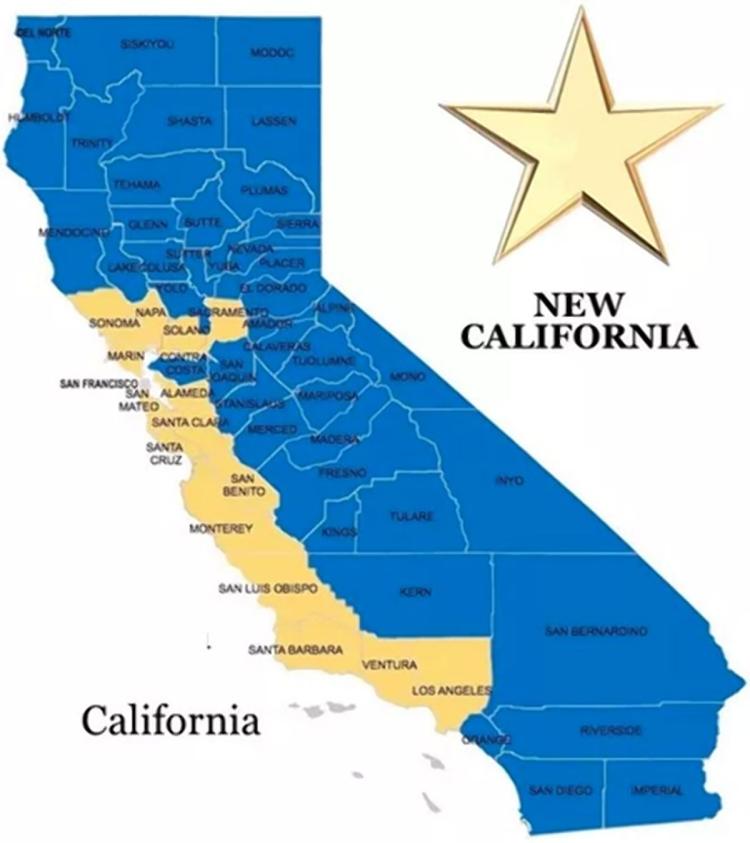
How many states will we have in the Union in twenty years? Probably 50, but there’s an outside chance that the number will be 55 plus. That could include a split of upstate New York from New York City, downstate Illinois from Chicagoland, eastern from western Washington State, eastern from western Oregon (or eastern Oregon combining with Idaho), and a division of California into as many as six states, as one proposal has it. There are secessionist movements alive in all of those states and it has happened before, as Glenn Reynolds notes in his recent paper “Splitsylvania: State Secession and What to Do About It“.

The origins of state boundaries and state governments were probably based on combinations of natural geographic features and confluent economic and political interests existing at the time. It would be surprising if those factors remained in static alignment over time, however. For various reasons, West Virginia seceded from Virginia many years ago, and Tennessee was once part of North Carolina. But to the extent that interests diverge within states, would a series of secessions promote better representative government? Reynolds’ approach to this question is fairly even-handed, though he apparently leans toward less disruptive solutions to the kinds of grievances voiced by secessionists.

Secession is a complex process; it obviously involves a major task in establishing a new state governmental apparatus. Also, legislative roadblocks to secession movements exist at both the state and federal levels. Nevertheless, there is great disaffection among rural interests in the states mentioned above for the policies they say are forced upon them by “urban elites”, as Reynolds calls them. At present, the secession of rural areas would tend to benefit republicans at the federal level, as two new Senate seats would be created to offset the seats held by democrats elected in more urban areas. Conceivably, however, the same process could work in reverse in other states, such as Texas. Even the proposal for six Californias seems designed to at least neutralize any possible negative impact on democrats in national politics.

Reynolds’ paper outline a few ways in which interests represented by legislative minorities, such as rural populations, could be better served without a step so drastic as secession. State regulation is often what rankles secessionists. To add fuel to the fire, states are free to adopt rules that are more strict than rules established under federal legislation, if they so choose, but never rules that are less strict. Today this applies to wages, working conditions, gun regulation, and environmental law. Reynolds suggests turning this on its head:

The federal government’s legislative role has traditionally been the opposite: To use (as in the case of the 1964 Civil Rights Act) a national majority to ensure that local majorities can’t oppress local minorities. I thus suggest that federal laws regulating these key subject-matter areas be recast to pre-empt more restrictive state laws, meaning that urban regions would be unable to impose stricter laws on less- powerful rural areas. If this seems too inflexible, perhaps that pre-emption should in some cases be defeasible at the county level; if the government of a county affirmatively wants to accept stricter state regulations, then it may do so, but if not, then the federal regulations are a ceiling, as well as a floor.”

Reynolds contends that this approach would be relatively easy to defend against state challenges. The idea that federal rules provide minimum standards of regulation is only one interpretation of the Supremacy Clause of Article VI of the Constitution. There is no reason why federal legislation cannot be written in the way Reynolds describes. Moreover, Reynolds asserts that the Guarantee Clause of Article IV, which assures that mandates are to be established according to republican principles, could be used to buttress this argument. But he offers another remedy to curb secessionism among rural voters that states could exercise:

There is nothing to stop a state from being mindful of the differences between urban and rural areas when crafting legislation or regulations, after all. States could adopt a local-option regulatory scheme relating to key subject areas on their own, and by doing so would lighten their footprint in rural areas and lessen the likelihood of festering resentments.”

Perhaps that’s hoping for too much. State majorities are unlikely to cede power to rural minorities, but it’s nice to imagine that sort of cooperation. There is no question that this sort of state regulatory approach would protect local interests from the tyranny of one-size-fits-all state regulation, but it wouldn’t eliminate the burdens created by the standard interpretation of federal supremacy.

In general, federal preemption of stricter state laws is no less consistent with the principles of federalism than federal pre-emption of more lenient state laws. One could even argue that the best way to apply federal supremacy depends on the issue, so there is some symmetry in Reynolds’ proposal. In terms of representative democracy, it is less an evil than federal preemption of less restrictive laws. It does what a democratic republic is supposed to do: protect minorities from the tyranny of a majority.

Secession from states is an intriguing possibility. Perhaps it is even the best approach in some cases. Nevertheless, Reynolds’ suggestions for revising federal and state regulatory approaches would be less costly and would avoid a nationwide race to subdivide states in order to gain a federal political advantage.

A Voluntary Redistribution of Sex

Tags

, , , , , , , , , ,

“Incels” have received plenty of bad publicity since the horrifying van attack in Toronto two weeks ago. It was preceded in 2014 by a killing rampage in California perpetrated by an individual with a similar profile. In case you haven’t heard, an incel is an involuntary celibate, either male or female, though male incels have garnered nearly all of the recent attention. Whatever their other characteristics, incels share a loneliness and an unmet desire for intimacy with other human beings.

Lux Alptraum shares her views about the differences between male and female incels. She blames “angry, straight men” and “toxic masculinity” for both the violence that’s recently come to be associated with incels and the relative inattention paid to the plight of female incels. I value her perspective on the issue of female incels. There are obviously extreme misogynists among males in the incel “community”. Some are so enraged by their plight that they engage in on-line bullying, and a plainly deranged segment of incels, including the perpetrators of the crimes mentioned above, have advocated violent retribution against those they deem responsible for their low sexual status. That means just about anyone who can find a partner.

Alptraum paints male incels with a very broad brush, however. Similarly, various leftist writers have categorized incels as predominantly “right wing” and even racist, but involuntary celibacy and misogyny do not lie conveniently along a two-dimensional political spectrum. Incels are present in many groups, crossing racial, religious, and political lines. There are incels among the transgendered and undoubtedly in the gay community. Gay individuals can exist in relative isolation in towns across America. Physical disabilities may condemn individuals to involuntary celibacy. And not all incels are “ugly”; instead, they may suffer from severe social awkwardness. But there are bound to be incels who live quiet lives, unhappy, but adjusted to their circumstances, more or less.

The recent focus on incels has prompted some interesting questions. Ross Douthat’s opinion piece in The New York Times asks whether anyone has a “right to sex”, as some incels have asserted. Robin Hanson discusses the idea of a “redistribution of sex“, noting in a follow-up post that governments throughout history have influenced the distribution of sex through policies enforcing monogamy, for example, or banning prostitution. Voluntary agreements to exchange sex for remuneration are one way to alter the distribution. In fact, to demonstrate the lengths to which a government could go to redistribute sex and intervene against “sex inequality”, Hanson mentions policies of cash redistribution, funded by taxpayers, to compensate incels for the services of prostitutes. There are examples of such benefits for the disabled. Here is Alex Tabarrok on that subject:

In the UK charities exist to help match sex workers with the disabled. Similar services are available in Denmark and in the Netherlands and in those countries (limited) taxpayer funds can be used to pay for sexual disability services.”

Subsidies and charity aside, it’s easy to understand why prohibition of sexual services for hire would be seen as an injustice by those unable to find partners willing to grant sexual benefits. From a libertarian perspective, trade in sex should be regarded as a natural right, like the freedom to engage in any other mutually beneficial transaction, so long as it does no harm to third parties. One’s body is one’s own property, and it should not be for government — or others — to decide how it will be used.

Laws against prostitution do great harm to society and to the individuals involved in the sex business. Forget about ending prostitution. That will never happen. According to  Abigail Hall, there are about 1 million prostitutes working in the U.S. They almost all work underground, with the exception of those operating in legal brothels in Nevada. Prohibition keeps the price up, but the workers capture a low share of those returns. Their bosses are harsh masters relative to those in legal businesses. These workers cannot report crimes against them, so they are often subject to the worst kinds of abuse. Illegality usually means they don’t have access to good health care, which places customers at greater risk. Legalizing (or decriminalizing) prostitution would reduce or eliminate these problems. From Hall:

By legalizing the sex trade, we would allow those involved in the sex trade to come out from the shadows, use legitimate business practices and legal channels, and decrease the likelihood that women will be trafficked by violent groups of criminals. … As prostitution becomes a legitimate profession, it allows for prostitutes to be more open with their doctors about their sexual history and seek treatment for STIs and other problems.”

Many object that prostitution exploits women, legal or not, and that it exploits low-income women disproportionately. But there will be voluntary sellers as long as there is a market, again, legal or not. And there will be a market. As for a disparate impact on the poor, Hall says:

“The fact that those who select prostitution as a profession may be poor is inconsequential…. It may be true that some women who work as prostitutes would strongly prefer another profession. Even if this is the case, women who voluntarily choose prostitution as a means of income should be allowed to practice their profession in the safest environment possible.”

The ongoing development of “sex robots” offers an avenue through which incels might enjoy activity that approximates sex with a human being. These robots are becoming increasingly realistic, and their costs are likely to decline dramatically in coming years. For incels with a congenital inability to interact with other human beings, this option might be far preferable to hiring the services of a prostitute. And the introduction of both male and female sex robots into senior care facilities might reduce the likelihood that sexually aggressive residents will abuse others. It happens.

Free markets are amazing in their ability to maximize the well being of both consumers and producers of a good or service. Trades are mutually beneficial and therefore are voluntary, and price signals redirect resources to their most valued uses. The prohibition on prostitution, however, has made it a very dangerous business for practitioners and customers alike. Prohibition has led to dominance by organized crime interests and local strong-men and -women. It has also thickened the intersection of prostitution with other prohibited activities, such as the drug trade. This creates a toxic criminal environment within which women are trapped and abused. Legalizing prostitution would liberate these individuals and create safer conditions for them and their customers. Private solutions would still be available to those who wish to keep prostitution out of their buildings or neighborhoods. And legalization is one way that sex could be made safely and voluntarily accessible to incels. Perhaps, one day soon, the availability of sex robots will help incels satisfy their desires as well. Some incels will still harbor strong resentment toward those for whom sex is not out of reach. Nevertheless, it is reasonable to ask whether such a “voluntary redistribution of sex” would not produce unambiguous social benefits. To deny these benefits to groups like the disabled, or really to anyone with a physical or emotional inability to find a willing partner, and to insist that sex workers be exposed to danger and abuse, is not just priggish, but cruel.

Multipliers Are For Politicians

Tags

, , , , , , , , , , , , , , ,

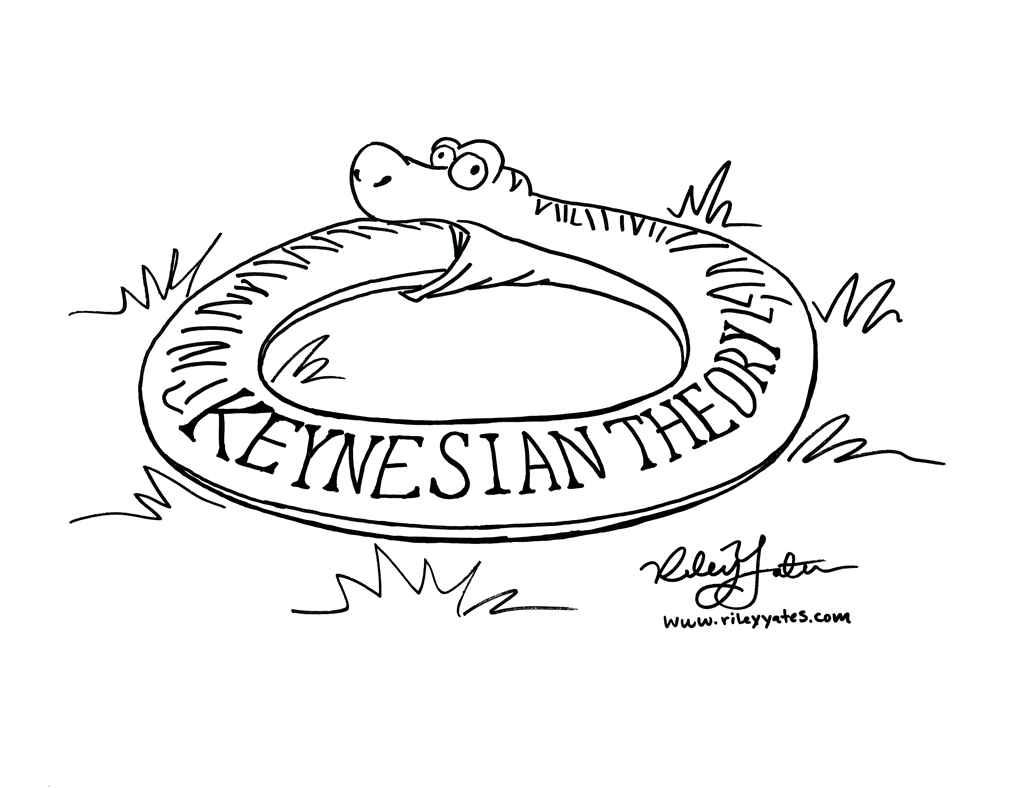
Here’s a major macroeconomic sacred cow among professional economists and the politicians whose fiscal profligacy they enable: the presumed salutary effect of an increase in government spending on economic activity, including its so-called “multiplier effect”. Government fiscal stimulus is prescribed by the Keynesian school of economics to remedy any decline in the total demand for goods. A classic case is “underconsumption”, or excess saving, such that labor and capital resources are in excess supply. The idea is that government will mop-up some of this excess saving by borrowing and spending the proceeds on goods and services, putting resources back to work. In the standard telling, digging holes and refilling them is as effective as anything else. The increased income earned by those resources will be re-spent, creating income for the recipients and leading to repeated rounds of re-spending, each successively smaller due to “leakage” into saving. Adding up all these rounds of extra spending yields a multiple of the original government stimulus, hence the Keynesian multiplier effect. The stimulation of the demand for goods and services pushes the economy back in the direction of full employment, thus correcting the original problem of underconsumption. Nice story.

Keynesian economics is a short-run, demand-based framework that delineates behavior by the constructs of national income accounting, segmenting demand into consumer spending, investment in productive capital, government spending, and net foreign spending (net exports). Except for the limit imposed by full employment, the supply side of the economy and the processes giving rise to growth in productive capacity are ignored.

Within the Keynesian framework, can offer many qualifications to the story of a shortfall in demand to which even a dyed-in-the-wool Keynesian would agree. First, government stimulus cannot have an effect on the real economy at a time when the economy is operating at full capacity, or full employment. The increased government spending will only lead to bidding against other uses of the same resources, increasing the level of wages and prices.

Another qualification within the Keynesian framework is that the leakage from spending at each round of re-spending is made greater by taxes on marginal income, thus reducing the magnitude of the multiplier. In addition, some of the extra income will be spent on foreign goods — another leakage that reduces the multiplier effect on the domestic economy. In fact, this is why multipliers for spending at local levels are thought to be relatively small. The more local the analysis, the more income will be re-spent outside the locality at each round. More fundamentally, private parties should know that increased government borrowing must be repaid eventually. At some level, they know that additional taxes (or an inflation tax) will be necessary to do so. Therefore, their reaction to the additional income derived from government demand will be muted by the need to save for those future liabilities. Put differently, consumers do not view the gain as an increase in their permanent income. That’s essentially the mechanism underlying the “Ricardian equivalence” between methods of funding government spending (government debt or taxes).

In the “real world” there are many other practical problems that lead to ineffectual and even counter-productive government stimulus. One is the problem of cost control endemic to the public sector. Related to this are seemingly unavoidable timing issues. These factors have a strong tendency to make counter-cyclical fiscal programs too costly and too late. There is also the tendency toward graft and cronyism wherever the government spreads its largess. The “perfectibility of man” is certainly not evident in the execution of government stimulus programs. Their economic impacts often become pro-cyclical, or even worse, they become permanent increases in spending authority. More on the latter below.

Deeper objections to the Keynesian framework have to do with its demand-side orientation and the conceit that government, solely by borrowing and spending, can contribute to “real demand” and add to a nation’s output. And even if government spending takes up slack at a time of unemployed resources or excess supplies, it is unlikely to resolve the conditions that led to the decline in private demand. Therefore, even if government stimulus is successful in spurring a temporary increase in actual production and utilization of resources, it is likely to delay or prevent the downward wage and price adjustments necessary to permanently do so.

Recessions are typically characterized by an effort to work off over-investment in various sectors: housing, commercial structures, oil and gas extraction and processing, technology assets, inventories, or factories. Over-inflation of asset values is usually at the root of malinvestment, often accompanied by overinflation of wages and prices. These dislocations do not occur evenly, but the market process acts to correct misallocations and mispricing precisely where they occur. It might take time, but if government steps in to prop-up weak sectors, forgive the economic consequences of mistakes, and place more upward pressure on wages and prices, the dislocations will persist. So again, even if stimulus and the multiplier effect offer a short-term palliative, the benefits are illusory in a real sense. The long-run consequences of failing to allow markets to repair the damage will be negative.

One of the greatest skills that economists should possess is the ability to discern the most plausible counterfactual in a given situation: the world as it would have played out in the absence of a particular event, often a policy initiative. This is a great shortcoming among those who subscribe to the efficacy of government stimulus programs. In the scenario just described, there will be a decline in capital investment, consumption, and saving, but that saving, whatever its level, will still be channeled into capital investments unless the funds sit idle in bank vaults. If the saving is instead absorbed by the government’s effort to fund a stimulus program, even that reduced level of investment will not take place. The net effect is zero! Thus, the Keynesian stimulus and multiplier effect represent a failure of the economics profession to “see the unseen”, as Frederic Bastiat would have put it. Unless government can produce something of value to generate income, perhaps something that improves private returns, it will not contribute to income growth.

Permanent displacement of private capital investment is the most fundamental detriment of government fiscal activism. That it might well supplant private production should come as no surprise. Matthew D. Mitchell and Jakina R. Debnam describe the phenomenon this way:

The tendency for ostensibly temporary spending to become permanent spending helps explain why policy makers fail to take the Keynesians’ advice when it comes to surpluses. Though governments invariable go into deficit during recessionary periods, they rarely run surpluses during expansionary periods.”

Mitchell and Debnam provide an interesting quote:

… Richard Wagner and Nobel Laureate James Buchanan concluded: ‘Keynesian economics has turned the politicians loose; it has destroyed the effective constraint on politicians’ ordinary appetites. Armed with the Keynesian message, politicians can spend and spend without the apparent necessity to tax.'”

In a footnote, Mitchell and Debnam note that Milton Friedman once said, “Nothing is so permanent as a temporary government program.” The Keynesian prescription for stimulus allows politicians to assert that they are empowered to rescue the unemployed or those suffering a loss of income. They want you to believe that they can do something. The multiplier gives license to still greater mischief on the part of politicians, because it can help politicians sell almost any pork-barrel project. But continuing government expansion requires that it extract resources from the private economy. That’s true whether the government spends directly on goods or redistributes, and the mechanics of these processes involve additional resource costs. As long as government can borrow private savings, politicians will disguise the true cost of their munificence to constituents. Economists should not be their enablers.

Bernie’s Backdoor Minimum Wage Hike

Tags

, , , , , , , , , , , , , , ,

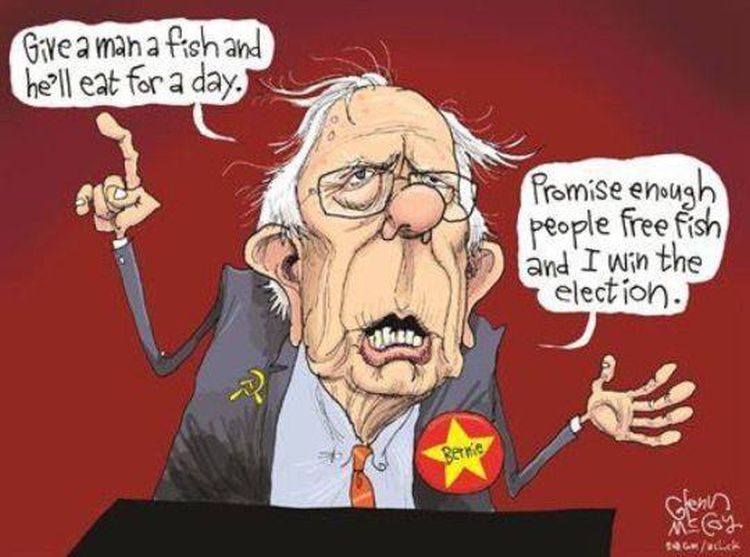
Bernie Sanders’ latest jobs plan is a political fantasy, but also a fantasy insofar as he imagines such a program could improve job market outcomes and the U.S. economy. Sanders wants the government to guarantee a job to anyone who is unemployed and pay them a wage of $15 an hour. But what job roles will be identified and by whom? Will the unemployed be required to accept these jobs or else lose other benefits? Which unemployed workers will come forward voluntarily for “workfare”? What will qualify them for particular roles? How many public-sector workers will be diverted from their existing responsibilities to administer the program and manage these new workers? How much will the program cost? How will the above-market wages and administration of the program be funded? These questions deal only with the first-order mechanics of the Sanders proposal. What will be the second-order effects on the private economy?

Scott Shackford delves into these and other gory consequences that are likely under the Sanders plan, most of which should be obvious to anyone with a modicum of economic literacy. Apparently, that does not include the so-called economists at the Levy Economics Institute at Bard College, who produced a “study” on guarantees of public sector jobs that manages to prove their ignorance of basic economic principles.

The headline for this proposal is about jobs, but the real motive is to impose wage controls through the backdoor. The plan is announced at a time of full employment (now 4.1%), traditionally defined as an unemployment rate of roughly 4%. That level accounts for “frictional unemployment”, which recognizes that job transitions and the normal market process of matching worker skills with jobs are not instantaneous. It’s true that certain segments of the labor force typically experience higher than average unemployment. So Perhaps i should give Bernie the benefit of the doubt by stipulating that the program is geared toward addressing cyclical and structural unemployment, or that it’s intended to benefit minorities. But if the goal is to keep everyone working all the time, it is impossible in view of the informational frictions, skill mismatches, and mobility issues that characterize the labor market. Workers would have difficulty conducting a job search were they employed in Sanders workfare program, and that sacrifice would be particularly costly for skilled workers seeking employment at wages greater than $15/hour.

Again, all “guaranteed” jobs under the Sanders plan are to pay a wage of at least $15/hour. Low-skilled workers whose productivity is not consistent with such a wage can thumb their noses at private employers. Either pay your low-skilled workers $15 or lose them. This is Sanders’ way of implementing a de facto federal minimum wage without actually requiring employers to pay that rate by diktat. Of course, under the plan, the taxpayer is on the hook for the excess of wage payments over and above the value of these workers’ productive contributions. The bulk of those workers lack the skills and job experience to contribute value commensurate with that wage rate, and sometimes they lack even the temperament and comportment necessary to make a sufficient contribution to output, or to keep steady work absent the gift of a wage from government.

But that’s not the worst of it: Sanders’ program is cloaked in terms suggesting that it would have countercyclical effects: government hiring would increase in association with increases in the unemployment rate, and vice versa, or so we are told. But “vice versa” is a stretch: government programs have a tendency to be self-perpetuating. And this program creates instability by allowing government to compete for workers on a distorted basis. The private sector will lose workers as the government gains workers. The tax bill and its burden on the private sector will lead to business failures, still fewer private workers, and still more public-sector workfare. And as the government displaces private activity, good luck to consumers finding the plentiful goods and services to which they are accustomed. The Sanders program is a prescription for economic and social decline.

Public sector competition for workers under Sander’s plan would be distorted because work would be assigned by special interests, not by market demand. Bob Bryan of The Business Insider has the following details:

Sanders’ plan would create 12 districts within the US that would approve jobs plans from municipalities, states, and American Indian tribal governments and then pass those plans along to the Labor Department for final approval.”

Thus, a new administrative layer of government, 12 districts, would be created wielding the authority to winnow the pool of projects for a new category of spending. In the parlance of public budgeting, this spending would be called an “entitlement” because the spending would be programmatic rather than discretionary. State and local governments would create wish lists, and their wishes would then be constrained by the decisions of district authorities and the Labor Department. Those decisions, however, would very likely be responsive to special interests. Like most administrative decisions, the spending allocations would be guided by politics, not economics.

Shackford quotes the Levy Institute:

A local artist collective employs painters, actors, musicians, and stage hands to run year-round productions for the community. They organize school outreach programs, run summer camps, and offer free art, music, and literacy classes for disadvantaged/special needs youths. They collaborate with local schools in offering art enrichment programs.”

Those aren’t Sanders words, but he might well entertain such notions. Should we all just agree that the government ought to tax us more heavily and spend the proceeds on supporting local, “unemployed” artists (I use quotes because many artists are not fully employed at their art for lack of demand, and they often work at other jobs from which they would quickly separate given a flow of government funds for their art). Usually those who insist on such things belong to the very interests who would benefit from the programs. One can argue that the “external benefits” of the arts justify public expenditure, but there is no objective measure of those benefits, and those who benefit directly will always want more. Therefore, the Sanders program, like so many other public initiatives, would violate standards of governmental fiduciary duty to taxpayers.

What about construction and repair of public infrastructure? Those projects should be chosen and initiated on their merits and on taxpayers’ willingness to fund them, not because there are people unemployed at the moment. What’s more, construction and maintenance of infrastructure requires various levels of skills that might not be readily available in a pool of unemployed workers.

Regardless of the specifics, the jobs program promoted by Sanders substitutes a wholly unrelated goal, jobs, for the underlying rationale of particular projects. As such, Sanders’ proposal would provide opportunities for special interests to collect rents without a programatic justification for the expense to taxpayers. Shackford says:

… the examples in the Levy study seem like descriptions of programs that certain types of local government-connected people with very particular ideas would like to see the government doing. Their plan leans heavily on the assumption that all these unemployed or underemployed people would happily do the grunt work that aligns with left-leaning environmental and public policy project goals. The report openly uses the Works Progress Administration of the New Deal as a model to support it. …

But how does one determine what a community needs while ignoring market responses? Why should taxpayers fund community plays if they have no interest in actually sitting through them? This report makes it very clear that the task falls to local public institutions and job centers, not market demands. That necessarily means it will be driven, much like this report is, by the interests of the people who are in charge of the programs or have the most influence over the programs. That these programs could end up as a corrupt breeding ground for government cronyism and nepotism in who gets assigned for which jobs is utterly absent from the study.

Here is more from Bryan:

“The plan would also utilize job training centers to train and connect workers with jobs on the new projects.”

This is either another new agency or a demand on private job training organizations. Presumably the training would be free to the trainee, in addition to the $15/hour paid during the training period. I would have fewer objections to an explicit job training program than to the sprawling job-making and wage-paying authority called for in Sanders’ plan. Unfortunately, the absence of apprentice wage levels in the U.S. often eliminates the best training of all: on-the-job training.

Shackford wonders whether workers hired under the program could ever be fired for cause:

I mean, given how hard it is to fire bad teachers or dangerous cops, it’s worth wondering whether people who get these jobs will continue to get paid if they fail to show up for their job trimming the hedges of their community skate park or surveying people about their food insecurities. (According to the Post, Sanders’ plan calls for something sinisterly called the Division of Progress Investigation to handle discipline.)

The program could employ as many as 15 million people if the Levy Institute study can be taken as a guide. That would represent a huge increase in government employment. Presumably, the burden would be spread across federal, state and local governments, all of which are facing degrees of fiscal crisis.

Bernie Sanders’ jobs program is ill-defined, but we know enough about it to safely conclude that it is economically preposterous. It will compete with job search activity that is necessary to the function of the labor market; lure low-skill workers away from their current employers, or indeed from their highest valued uses; require massive public borrowing and ultimately higher taxes; compromise other functions of government by diluting fundamental program goals and diverting human and other resources; place further strain on government budgets at all levels; lead to business failures; and lead to a permanently larger role for government in the economy. Governments, of course, do not operate under market discipline, so the program would degrade the overall productive potential of the U.S. economy. 

As David Byrge, aka Iowahawk, says about Sanders:

Who better to get America back to work than a guy who was actually fired from a Vermont hippie commune for being too lazy.”

For a fairly thorough compendium of Sanders’ policy proposals over the years, here is Matt Welch on “Bernie’s Bad Ideas“.

CDC Data Corroborates High Defensive Gun Use Estimates

Tags

, , , , , ,

Since 1996, the Center for Disease Control (CDC) has kept under wraps its own survey data confirming so-called “high-end” estimates of annual defensive gun uses (DGUs). That’s the upshot of a paper by criminologist Gary Kleck of Florida State University, which came to my attention thanks to an article at Reason.com by Brian Doherty. DGUs occur any time a person uses a gun or threatens to use it in self-defense. DGU’s have been a controversial aspect of the gun debate, primarily because the anti-gun faction refuses to acknowledge that DGUs are significant. There is no official count of DGUs, just as there is no official count of crimes deterred by would-be criminals’ fears of armed would-be victims. The only DGUs that can conceivably be counted are those in which a crime prompting a DGU is reported, and even those incidents might not be counted.

The CDC survey data discovered by Kleck is from the agency’s nationwide surveys from 1996-1998. In those years, the survey asked a question of individuals who had reported owning a gun earlier in the survey, but excluded those whose jobs required them to carry a gun:

During the last 12 months, have you confronted another person with a firearm, even if you did not fire it, to protect yourself, your property, or someone else?”

The survey responses imply total annual DGUs of about 2.46 million for the period in question, according to Kleck. He makes two adjustments to arrive at that figure: one upward adjustment because his own work suggests that non-owners of guns account for about 20% of all DGUs, so they would be undercounted by the survey; and one downward adjustment to discount for the absence of information from CDC’s survey on the exact circumstances of reported DGUs.

The number of DGU’s implied by CDC’s survey data is roughly in line with Kleck’s 1995 estimate if 2.5 million. It is likely that DGUs have declined since then along with declines in gun violence. But there is no reason to suspect that DGUs have declined relative to gun violence. Most importantly, these estimates of DGUs far outweigh incidents of gun violence reported by the FBI.

Kleck suspects that the DGU question on CDC’s survey was prompted by his earlier results. Whether that is true or not, it’s curious that the CDC never published the results. It’s even more curious because the CDC has issued at least one report with commentary on DGU estimates. And as Doherty reports, while the CDC was prohibited from conducting research in support of gun control (President Obama reportedly lifted that restriction), it was never restricted from objective reporting on gun safety issues and gun violence.

The Second Amendment is predicated on the right to defend oneself, among other things. The DGU estimates suggest that it is a right exercised with some frequency. In a nation that promotes gun violence through policies like drug prohibition, the right of self defense is critical. Gun rights supporters should not allow anti-gun activists to easily dismiss or ignore the CDC’s survey results on DGUs.

The Bad News Industrial Complex

Tags

, , , , , , , , , ,

Matt Ridley had an interesting piece on his blog last month entitled “Bad News Is Sudden, Good News Is Gradual“. It’s about the timing of news, as stated, and it’s about our bias toward bad news more generally. There is no question that bad news tends to be more dramatic than good news. But with steadily increasingly lifespans, growing prosperity, and world poverty at an all-time low, surely good news must come as much or more frequently than bad. But good news can be inconvenient to certain narratives. It is therefore often ignored, and some other purported disaster is found as a substitute:

Poverty and hunger are the business Oxfam is in, but has it shouted the global poverty statistics from the rooftops? Hardly. It has switched its focus to inequality. When The Lancet published a study in 2010 showing global maternal mortality falling, advocates for women’s health tried to pressure it into delaying publication ‘fearing that good news would detract from the urgency of their cause’, The New York Times reported. The announcement by Nasa in 2016 that plant life is covering more and more of the planet as a result of carbon dioxide emissions was handled like radioactivity by most environmental reporters.

Tales of bad outcomes can be alluring, especially if they haven’t happened yet. In fact, bad things might even happen gradually, but dark visions of a world beyond the horizon impart a spooky sense of immediacy, and indeed, urgency. Ridley notes the tendency of people to regard pessimists as “wise”, while optimists are viewed as Pollyannas. And he recognizes that risk aversion plays an important role in this psychology. That brings me to the point I found most interesting in Ridley’s piece: the many vested interests in disasters, and disasters foretold.

Risk management is big business in an affluent society. There is a lot to lose, and a squeamish populace is easily cowed by good scare stories. The risk management and disaster-prevention narrative can be wrapped around any number of unlikely or exaggerated threats, serving the interests of the administrative state and private rent-seekers. One particular tool that has been most useful to this alliance is the precautionary principle. It is invoked to discourage or regulate activities presumed to pose risks to the public or to the environment. But there are three dimensions to the application of the precautionary principle: it provides a rationale for public funding of research into the risk-du-jour, for funding projects designed to mitigate its consequences, and for subsidizing development of alternative technologies that might help avoid or reduce the severity of the risk, often at great expense. The exaggeration of risk serves to legitimize these high costs. Of course, the entire enterprise would be impossible without the machinery of the state, in all its venality. Where money flows, graft is sure to follow.

Well-publicized disaster scenarios are helpful to statists in other ways. Risk, its causes, and its consequences are not distributed evenly across regions and populations. A risk thought to be anthropomorphic in nature implies that wealthier and more productive communities and nations must shoulder the bulk of the global costs of mitigation. Thus, the risk-management ethic requires redistribution. Furthermore, wealthier regions are better situated to insulate themselves locally against many risks. Impoverished areas, on the other hand, must be assisted. Finally, an incredible irony of our preoccupation with disaster scenarios is the simultaneous effort to subsidize those deemed most vulnerable even while executing other policies that harm them.

Media organizations and their newspeople obviously benefit greatly from the subtle sensationalism of creeping disaster. As Ridley noted, the gradualism of progress is no match for a scare story on the nightly news. There is real money at stake here, but the media is driven not only by economic incentives. In fact, the dominant leftist ideology in media organizations means that they are more than happy to spread alarm as part of a crusade for state solutions to presumed risks. There are even well-meaning users of social media who jump at the chance to signal their virtue by reposting memes and reports that are couched not merely in terms of risks, but as dire future realities.

Mitigating social risks is a legitimate function of government. Unfortunately, identifying and exaggerating risks, and suppressing contradictory evidence, is in the personal interest of politicians, bureaucrats, crony capitalists, and many members of the media. Everything seems to demand government intervention. Carbon concentration, global warming and sea level changes are glaring examples of exaggerated risks. As Ridley says,

The supreme case of unfalsifiable pessimism is climate change. It has the advantage of decades of doom until the jury returns. People who think the science suggests it will not be as bad as all that, or that humanity is likely to mitigate or adapt to it in time, get less airtime and a lot more criticism than people who go beyond the science to exaggerate the potential risks. That lukewarmers have been proved right so far cuts no ice.”

Other examples include the “beepocalypse“, genetic modification, drug use, school shootings, and certain risks to national security. Ridley offers the consequences of Brexit as well. There, I’ve listed enough sacred cows to irritate just about everyone.

In many cases, the real crises have more to do with government activism than the original issue with which they were meant to reckon. Which brings me to a discomfiting vision of my own: having allowed the administrative state to metastasize across almost every social organ and every aspect of our lives, a huge risk to our future well-being is continuing erosion of personal and economic liberties and our ability to prosper as a society. Here’s Ridley’s close:

“Activists sometimes justify the focus on the worst-case scenario as a means of raising consciousness. But while the public may be susceptible to bad news they are not stupid, and boys who cry ‘wolf!’ are eventually ignored. As the journalist John Horgan recently argued in Scientific American: ‘These days, despair is a bigger problem than optimism.'”

Social Media and the Antitrust Reflex

Tags

, , , , , , , , , , , , , , , , , , ,

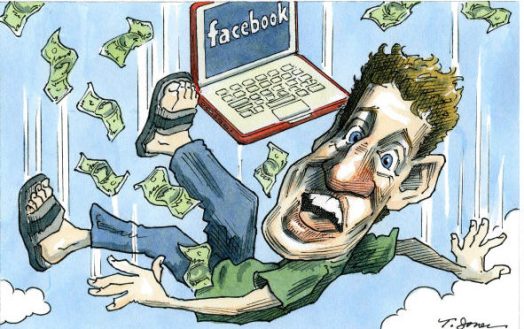
Falling Zuckerberg

Facebook is under fire for weak privacy protections, its exploitation of users’ data, and the dangers it is said to pose to Americans’ free speech rights. Last week, Mark Zuckerberg, who controls all of the voting stock in Facebook, attempted to address those issues before a joint hearing of the Senate Judiciary and Commerce Committees. It represented a major event in the history of the social media company, and it happened at a time when discussion of antitrust action against social media conglomerates like Facebook, Google, and Amazon is gaining support in some quarters. I hope this intervention does not come to pass.

The Threat

At the heart of the current uproar are Facebook’s data privacy policy and a significant data breach. The recent scandal involving Cambridge Analytica arose because Facebook, at one time, allowed application developers to access user data, and the practice continued for a few developers. Unfortunately, at least one didn’t keep the data to himself. There have been accusations that the company has violated privacy laws in the European Union (EU) and privacy laws in some states. Facebook has also raised ire among privacy advocates by lobbying against stronger privacy laws in some states, but it is within its legal rights to do so. Violations of privacy laws must be adjudicated, but antitrust laws were not intended to address such a threat. Rather, they were intended to prevent dominant producers from monopolizing or restraining trade in a market and harming consumers in the process.

Matt Stoller, in an interview with Russ Roberts on EconTalk, says antitrust action against social media companies may be necessary because they are so pervasive in our lives, have built such dominant market positions, and have made a practice of buying nascent competitors over the years. Steps must be taken to “oxygenate” the market, according to Stoller, promoting competition and protecting new entrants.

Tim Wu, the attorney who coined the misleading term “network neutrality”, is a critic of Facebook, though Wu is more skeptical of the promise of antitrust or regulatory action:

In Facebook’s case, we are not speaking of a few missteps here and there, the misbehavior of a few aberrant employees. The problems are central and structural, the predicted consequences of its business model. From the day it first sought revenue, Facebook prioritized growth over any other possible goal, maximizing the harvest of data and human attention. Its promises to investors have demanded an ever-improving ability to spy on and manipulate large populations of people. Facebook, at its core, is a surveillance machine, and to expect that to change is misplaced optimism.”

Google has already been subject to antitrust action in the EU due to the alleged anti-competitive nature of its search algorithm, and Facebook’s data privacy policy is under fire there. But the prospect of traditional antitrust action against a social media company like Facebook seems rather odd, as acknowledged by the author at the first link above, Navneet Alang:

… Facebook specifically doesn’t appear to be doing anything that actively violates traditional antitrust rules. Instead, it’s relying on network effects, that tendency of digital networks to have their own kind of inertia where the more people get on them the more incentive there is to stay. It’s also hard to suggest that Facebook has a monopoly on advertising dollars when Google is also raking in billions of dollars.

Competition

The size of Facebook’s user base gives it a massive advantage over most of the other platforms in terms of network effects. I offer myself as an example of the inertia described by Alang: I’ve been on Facebook for a number of years. I use it to keep in touch with friends and as a vehicle for attracting readers to my blog. As I contemplated this post, I experimented by opening a MeWe account, where I joined a few user groups. It has a different “feel” than Facebook and is more oriented toward group chats. I like it and I have probably spent as much time on MeWe in the last week as Facebook. I sent MeWe invitations to about 20 of my friends, nearly all of whom have Facebook accounts, and a few days later I posted a link to MeWe on my Facebook wall. Thus far, however, only three of my friends have joined MeWe. Of course, none of us has deactivated our Facebook account, and I speculate that none of us will any time soon. This behavior is consistent with “platform inertia” described by Alang. Facebook users are largely a captive market.

But Facebook is not a monopoly and it is not a necessity. Neither is Google. Neither is Amazon. All of these firms have direct competitors for both users and advertising dollars. It’s been falsely claimed that Google and Facebook together control 90% of online ad revenue, but the correct figure for 2017 is estimated at less than 57%. That’s down a bit from 2016, and another decline is expected in 2018. There are many social media platforms. Zuckerberg claims that the average American already uses eight different platforms, which may include Facebook, Google+, Instagram, LinkedIn, MeWe, Reddit, Spotify, Tinder, Tumblr, Twitter, and many others (also see here). Some of these serve specialized interests such as professional networking, older adults, hook-ups, and shopping. Significant alternatives for users exist, some offering privacy protections that might have more appeal now than ever.

Antitrust vs. Popular, Low-Priced Service Providers

Facebook’s business model does not fit comfortably into the domain of traditional antitrust policy. The company’s users pay a price, but one that is not easily calculated or even perceived: the value of the personal data they give away on a daily basis. Facebook is monetizing that data by allowing advertisers to target individuals who meet specific criteria. Needless to say, many observers are uncomfortable with the arrangement. The company must maintain a position of trust among its users befitting such a sensitive role. No doubt many have given Facebook access to their data out of ignorance of the full consequences of their sacrifice. Many others have done so voluntarily and with full awareness. Perhaps they view participation in social media to be worth such a price. It is also plausible that users benefit from the kind of targeted advertising that Facebook facilitates.

Does Facebook’s business model allow it to engage in an ongoing practice of predatory pricing? It is far from clear that its pricing qualifies as “anti-competitive behavior”, and courts have been difficult to persuade that low prices run afoul of U.S. antitrust law:

Predatory pricing occurs when companies price their products or services below cost with the purpose of removing competitors from the market. … the courts use a two part test to determine whether they have occurred: (1) the violating company’s production costs must be higher than the market price of the good or service and (2) there must be a ‘dangerous probability’ that the violating company will recover the loss …”

Applying this test to Facebook is troublesome because as we have seen, users exchange something of value for their use of the platform, which Facebook then exploits to cover costs quite easily. Fee-based competitors who might complain that Facebook’s pricing is “unfair” would be better-advised to preach the benefits of privacy and data control, and some of them do just that as part of their value proposition.

More Antitrust Skepticism

John O. McGinnis praises the judicial restraint that has characterized antitrust law over the past 30 years. This practice recognizes that it is not always a good thing for consumers when the government denies a merger, for example, or busts up a firm deemed by authorities to possess “too much power”. An innovative firm might well bring new value to its products by integrating them with features possessed by another firm’s products. Or a growing firm may be able to create economies of scale and scope that are passed along to consumers. Antitrust action, however, too often presumes that a larger market share, however defined, is unequivocally bad beyond some point. Intervention on those grounds can have a chilling effect on innovation and on the value such firms bring to the market and to society.

There are more fundamental reasons to view antitrust enforcement skeptically. For one thing, a product market can be defined in various ways. The more specific the definition, the greater the appearance of market dominance by larger firms. Or worse, the availability of real alternatives is ignored. For example, would an airline be a monopolist if it were the only carrier serving a particular airport or market? In a narrow sense, yes, but that airline would not hold a monopoly over intercity transportation, for which many alternatives exist. Is an internet service provider (ISP) a monopoly if it is the only ISP offering a 400+ Mbs download speed in a certain vicinity? In a very narrow sense, yes, but there may be other ISPs offering slower speeds that most consumers view as adequate. And in all cases, consumers always have one very basic alternative: not buying. Even so-called natural monopolies, such as certain public utilities, offer services for which there are broad alternatives. In those cases, however, a grant of a monopoly franchise is typically seen as a good solution if exchanged for public oversight and regulation, so antitrust is generally not at issue.

One other basic objection that can be made to antitrust is that it violates private property rights. A business that enjoys market dominance usually gets that way by pleasing customers. It’s rewards for excellent performance are the rightful property of its owners, or should be. Antitrust action then becomes a form of confiscation by punishing such a firm and its owners for success.

Political Bias

Another major complaint against Facebook is political bias. It is accused of selectively censoring users and their content and manipulating user news feeds to favor particular points of view. Promises to employ fact-check mechanisms are of little comfort, since the concern involves matters of opinion. Any person or organization held to be in possession of the unadulterated truth on issues of public debate should be regarded with suspicion.

Last Tuesday at the joint session, Zuckerberg acted as if such a bias was quite natural, given that Facebook’s employee base is concentrated in the San Francisco Bay area. But his nonchalance over the matter partly reflects the fact that Facebook is, after all, a private company. It is free to host whatever views it chooses, and that freedom is for the better. Facebook is not like a public square. Instead, the scope of a user’s speech is largely discretionary: users select their own network of friends; they can choose to limit access to their posts to that group or to a broader group of “friends of friends”; they can limit posts to subgroups of friends; or they can allow the entire population of users to see their posts, if interested. No matter how many users it has, Facebook is still a private community. If its “community standards” or their enforcement are objectionable, then users can and should find alternative outlets. And again, as a private company, Facebook can choose to feature particular news sources and censor others without running afoul of the First Amendment.

Revisiting Facebook’s Business Model

The greatest immediate challenge for Facebook is data privacy. Trust among users has been eroded by the improprieties in Facebook’s exploitation of data. It’s as if everyone in the U.S. has suddenly awoken to the simple facts of its business model and the leveraging of user data it requires. But it is not of great concern to some users, who will be happy to continue to use the platform as they have in the past. Zuckerberg did not indicate a willingness to yield on the question of Facebook’s business model in his congressional testimony, but there is a threat that regulation will require steps to protect data that might be inconsistent with the business model. If users opt-out of data sharing in droves, then Facebook’s ability to collect revenue from advertisers will be diminished.

As Jonathan Zittrain points out, Facebook might find new opportunity as an information fiduciary for users. That would require a choice between paying a monthly fee or allowing Facebook to continue targeted advertising on one’s news feed. Geoffrey A. Fowler writes that the idea of paying for Facebook is not an outrageous proposition:

Facebook collected $82 in advertising for each member in North America last year. Across the world, it’s about $20 per member. … Netflix costs $11 and Amazon Prime is $13 per month. Facebook would need $7 per month from everyone in North America to maintain its current revenue from targeted advertising.”

Given a choice, not everyone would choose to pay, and I doubt that a fee of $7 per month would cost Facebook much in terms of membership anyway. It could probably charge slightly more for regular memberships and price discriminate to attract students and seniors. Fowler contends that a user-paid Facebook would be a better product. It might sharpen the focus on user-provided and user-linked content, rather than content provided by advertisers. As Tim Wu says, “… payment better aligns the incentives of the platform with those of its users.” Fowler also asserts that regulatory headaches would be less likely for the social network because it would not be reliant on exploiting user data.

A noteworthy aspect of Zuckerberg’s testimony at the congressional hearing was his stated willingness to consider regulatory solutions: the “right regulations“, as he put it. That might cover any number of issues, including privacy and political advertising. But as Brendan Kirby warns, regulating Facebook might not be a great idea. Established incumbents are often capable of bending regulatory bodies to their will, ultimately using them to gain a stronger market position. A partnership between the data-rich Facebook and an agency of the government is not one that I’d particularly like to see. Tim Wu believes that what we really need are competitive alternatives to Facebook: he floats a few ideas about how a Facebook competitor might be structured, most prominently the fee-based alternative.

Let It Evolve 

Like many others, I’m possessed by an anxiety about the security of my data on social media, an irritation with the political bias that pervades social media firms, and a suspicion that certain points of view are favored over others on their platforms. But I do not favor government intervention against these firms. Neither antitrust action nor regulation is likely to improve the available platforms or their services, and instead might do quite a bit of damage. “Trust-busting” of social media platforms would present technological challenges, but even worse, it would disrupt millions of complex relationships between firms and users and attempt to replace them with even more numerous and complex relationships, all dictated by central authorities rather than market forces. Significant mergers and acquisitions will continue to be reviewed by the DOJ and the FTC, preferably tempered by judicial restraint. I also oppose the regulatory option. Compliance is costly, of course, but even worse, the social media giants can afford it and will manipulate it. Those costs would inevitably present barriers to market entry by upstart competitors. The best regulation is imposed by customers, who should assert their sovereignty and exercise caution in the relationships they establish with social media platforms … and remember that nothing comes for free.

Federal Unaccountability Beyond My Wildest Dreams

Tags

, , , , , , , , , , , , , , ,

In December, Laurence Kotlikoff wrote in Forbes about large chunks of federal spending over many years that have not been reconciled with known accounting transactions. (The link is to a cached version of Kotlikoff’s article because Forbes blocks its site to those using adblockers). I first learned of these massive discrepancies at The Solari Report, which covered the issue in February. At first, I was so dumbfounded by the numbers that I thought it might have been a joke, or worse: fake news on Solari? But the story is real and it is shocking: $21 TRILLION of spending that cannot be explained, spanning the years 1998-2015! That’s more than five times the level of federal spending in 2017. It’s also shocking that the gap has gone almost unnoticed by the news media, though a few specifics have garnered attention at different stages of the disgorgement, as demonstrated by the various links provided in the Solari article.

The discrepancies are concentrated mainly in two departments of the federal government: Defense (DOD) and Housing and Urban Development (HUD). Kotlikoff quotes a description of the “accounting adjustments” from the Comptroller General of the General Accounting Office (GAO). These adjustments are akin to the entries people make in their checkbook registers when the balance can’t be reconciled to their bank statement:

“‘Journal vouchers are summary-level accounting adjustments made when balances between systems cannot be reconciled. Often these journal vouchers are unsupported, meaning they lack supporting documentation to justify the adjustment or are not tied to specific accounting transactions…. For an auditor, journal vouchers are a red flag for transactions not being captured, reported, or summarized correctly.'”

The article at Solari makes the following observations:

There appear to be at least five possibilities: 1-The missing money was spent appropriately, but existing accounting infrastructure is incapable of tracking it. 2-The money was “wasted,” i.e. spent unwisely. 3-The money was directed into black projects and Special Access Programs in massive amounts outside the Constitutional appropriations process, and therefore without the knowledge of Congress and the citizenry, for purposes unknown. 4-The money was used to manipulate markets to maintain the reserve status of the dollar. 5-The money is being stolen by fraud and collusion between government and private interests. Or perhaps a combination of all of these.

All five explanations represent a form of failure of governance or government administration. Some are more nefarious than others. While #1 might seem fairly innocuous, it nevertheless would demonstrate a slovenly approach to record-keeping and accountability as well as a ripe temptation to anyone seeking opportunities for graft. Furthermore, one cannot trust that #1 is the full explanation. The amounts are so massive that they far exceed the waste in government that even I thought possible. And no one in the federal agencies seems to have an explanation. Mark Skidmore, a Michigan State University economist who has studied the issue and made inquiries with these agencies, describes what sounds like a runaround. In December, however, the DOD announced a positive step: it’s first-ever department-wide independent audit. The Office of the Inspector General (OIG), the Congressional Budget Office, and the General Accounting Office are certainly aware of the discrepancies. Links to supporting documentation at the OIG and DOD web sites appear in both the Solari and Kotlikoff articles.

If these funds have been wasted or misused, taxpayers are the victims, of course. There are a few well-known examples of private and even public companies that have victimized investors to perhaps a similar (proportionate) extent over the years. Bernie Madoff and Exxon come to mind. But in general, public companies cannot escape demands that their books be in order and that they produce value over time. The federal government, however, has received a pass for this fecklessness over many years. Perhaps it’s because the public has such low expectations for the government’s effective use of tax dollars. Federal agencies such as HUD and DOD seem almost as budgetary “black holes” into which tax dollars are sucked, with an apparent lack of scrutiny.

Kotlikoff closes by urging a thorough investigation into the government’s cockeyed accounts:

Taken together these reports point to a failure to comply with basic Constitutional and legislative requirements for spending and disclosure. We urge the House and Senate Budget Committee to initiate immediate investigations of unaccounted federal expenditures as well as the source of their payment.”

The Solari piece is no less emphatic in demanding a full probe of the causes of the budgetary discrepancies:

We must recognize the possibility that massive fraud is being perpetrated against the American people. If that is not the case, it would take relatively little effort and expense to put that concern to rest. On the other hand, what malfeasance might investigation reveal, and who might be responsible?

At the very least, we should be asking the secretaries of DOD, HUD, and the Treasury, the chairman of the Federal Reserve, and the President of the NY Fed what they know, and we need independent audits of all those entities plus the Exchange Stabilization Fund. Anything less will be to acquiesce in an ongoing financial coup d’état.

Corporate Lapdogs of the Left

Tags

, , , , , , , , , , , ,

ceo

Now don’t get me wrong, I definitely prefer to see private goods and services produced privately, not publicly. Private ownership of the means of production makes the world a better place because ownership and self-interest drive performance and value, to put it all too briefly. But corporate America is now so thoroughly encumbered by ideological distractions that it compromises the mission of creating value, risking shareholder returns and invested capital as well. Having spent the past 31 years employed successively by three gigantic corporate hairballs (with a 2-year stint at the central bank), the following thesis about corporate CEOs, and corporate America by extension, strikes me as wholly accurate:

CEOs … mostly [reject] the ethos of rugged individualism in favor of a more collectivist view of the world. The capitalists [are] not much interested in defending the culture of capitalism. … the psychological and operational mechanics of large corporations [are] much like those of other large organizations, including government agencies … American CEOs [believe] that expertise deployed through bureaucracy [can] impose rationality on such unruly social entities as free markets, culture, family, and sexuality. The supplanting of spontaneous order with political discipline is the essence of progressivism….

I changed the tenses used above by Kevin Williamson, who attempts to explain why American corporations became such progressive activists. The beginning of the quote describes interviews conducted by William H. Whyte in the 1950s, but it’s as true now as it was then, and probably much more so. The technocratic view of organizational efficacy may be true up to a point. In fact, there is undoubtedly an optimal size for any organization that is dependent upon it’s mission, the technologies at its disposal, and the range of prices it is likely to face in input and output markets. It’s all too easy for a successful firm to expand beyond that point, however, as many now-defunct businesses have learned the hard way. However, the quote merely highlights the sympathetic view often held by corporate managements toward the notion of a planned society, guided by a class of technocrats. They share this scientistic line of thinking with the statist left, though the corporatist vision is a world in which their private organizations play a critical role, with risks mitigated by “partners” in government.

Private incentives can produce wonderful results, but they are corrupted by the scent of private advantage that can be gained via government intervention in markets. The corporate practice of seeking rents through legislative and administrative action has been going on since at least the 1880s, when railroads sought protection from competition and other shipping interests via federal regulatory action.The symbiosis between government and corporate interests, or corporatism, has been growing ever since. Whether it is lucrative contract awards, subsidies, or favorable regulation, government has lots of goodies at its disposal by virtue of its exclusive ability to exert coercive power. This quote of David Cay Johnston describes the end-product of corporate rent-seeking behavior:

Corporate socialism is where we socialize losses and privatize gains. Companies that have failed in the marketplace stick the taxpayers with their losses, but when they make money they get to keep it, and secondly, huge amounts of capital are given to companies by taxpayers.”

Risk mitigation is at the heart of a second variety of corporate leftism, and Williamson notes the asymmetry in the political risks faced by most corporations:

Conservatives may roll their eyes a little bit at promises to build windmills so efficient that we’ll cease needing coal and oil, but progressives (at least a fair portion of them) believe that using fossil fuels may very well end human civilization. The nation’s F-150 drivers are not going to organize a march on Chevron’s headquarters if it puts a billion bucks into biofuels, but the nation’s Subaru drivers might very well do so if it doesn’t. … The same asymmetry characterizes the so-called social issues.

At this point, Williamson goes on to describe a few social issues on which corporate leaders are frequently harangued by the left. Those leaders may view conservative positions on those issues as aberrant, according to Williamson, because the leaders inhabit an insulated world of elitist, media-driven, politically-correct opinion. They wish to be seen as “progressive” and discount the risk of offending conservatives. While I do not take Williamson’s side on all of the social issues he mentions, I concede that there is some truth to the asymmetry he describes.

An avenue through which corporate America is strongly influenced by the left is identity politics. This is partly an unfortunate side-effect of civil rights legislation and other anti-discrimination law, but in today’s litigious environment, there are excessive legal risks against which corporations must take precautions. This is embedded in human resource policies to the point at which hiring the best individual to fill a role is subject to a series of costly, time-consuming hurdles, and is sometimes impossible. Then, there are the mandatory “Diversity and Inclusion” courses that all employees are required to complete. These overbearing attempts to “educate” the work force consume valuable staff time and are of questionable value in light of the aggravation and resentment they inspire in employees. Finally, I can’t keep count of all the corporate-sponsored activities devoted to celebrating one identity group after another. Can we please get back to work?

Today, as a consumer, it is becoming more difficult to engage in commerce without exposure to a seller’s political positioning. For example, I buy about 90% of my clothing from a particular clothier, but last weekend I learned that the company had taken an objectionable position (to me) in the debate over gun legislation. I am certain that activists badgered the company, and it succumbed, and so I will change my shopping habits. People often find that it’s easier to engage in arms-length transactions when the other party stays off the soapbox. But it goes further than that. Here is Williamson:

Whereas the ancient corporate practice was to decline to take a public position on anything not related to their businesses, contemporary CEOs feel obliged to act as public intellectuals as well as business managers.

Well, “ancient” might take it a bit too far, but as a customer, employee, and especially as a shareholder, I would urge any company to steer clear of political posturing. Do not dilute your mission of delivering value to customers, which dovetails with serving the interests of shareholders. You must pursue that mission in a way that you consider responsible and ethical, which just might narrow the scope of the mission. And that’s okay. Just be as neutral as possible on extraneous issues as you reach out to potential customers, and do not respond to politically-motivated threats except in the most diplomatic terms.

Should I bother to say that corporations should eschew public subsidies? That they should respond to competition by improving value, rather than lobbying for advantages and protection from lawmakers or regulators? That they should not badger their employees to give to their company’s Political Action Committee (PAC)?

I must be fantasizing! Corporations would never follow that advice, not as long as they can capture rents through the seductive expedient of big government. If that were the only reason for the hate reserved by leftists for corporate America, I’d be right with them. But in fact, leftist rhetoric condemns the profit motive generally, both in principle and as a method of scapegoating for any social ill. Williamson marvels at the incredible irony of the corporate enterprise-cum-lapdog of the Left, which is especially palpable as the Left beats the dog so unrelentingly.

March of the Benighted Pawns

Tags

, , , , , , , , , , , , , ,

I’ll say one thing for the high schoolers participating in the March For Our Lives political front: they are no more ignorant about guns and the Constitution than their anti-gun, adult counterparts. These naive kids are learning the charms of virtue signaling, newly imbued with so much superstition, misconception, misplaced blame, and inflated self-regard that you’d be hard-pressed to engage most of them in reasoned discussion. But I reserve my highest disdain for adults who shake their fingers and say, “How dare you speak critically of these poor kids, who survived the tragedy that took place at their very own school.” Indeed, some of the Parkland students saw the mayhem with their own eyes. but that admonition is a sham show of indignance designed to squelch legitimate debate. The debate would be unnecessary if not for the anti-gun lobby’s opportunistic exploitation of children befallen by tragedy.

First, as I noted recently on SacredCowChips, the supposed escalation in mass shootings at schools is a myth. Northeastern University provides this summary of the research quoted in my post, including the chart on the long-term decline in school shootings shown above. In light of these statistics, the lead researcher, James Alan Fox, believes that most school security measures are counter-productive, including proposals to arm teachers. I do not fully agree, but be that as it may, it is astonishing that the media and large swaths of the public have accepted as fact the myth of a school shooting epidemic.

The ignorance of would-be gun controllers about guns themselves is legendary. Few of them can actually define an “assault weapon” yet are convinced that they must be banned. The cosmetic addition of certain features to a standard semi-automatic rifle apparently makes these guns too “scary”. And there is little understanding that standard rifles sold today, which fire one shot at a time, are semi-automatic weapons! Rifles, by the way, are involved in only a small fraction of gun homicides, so the focus on “assault weapons” is misplaced. Given this level of ignorance, it’s all too easy to dismiss the gun control crowd as unworthy of a real debate over gun regulation.

Of course, the crux of the debate revolves around constitutional rights. While many of those in favor of stricter gun regulation disavow any desire to repeal the Second Amendment or to actually confiscate guns, there is a significant contingent among them harboring that as an end-goal. Their ideal is politically laughable because it would never get a two-thirds vote of each house of Congress, let alone ratification by 3/4 of the states.

The Second Amendment is described by its foes as outdated and dangerous. I submit, however, that the right to defend oneself against predators, human or otherwise, is a natural right and not subject to obsolescence. The Second Amendment was also intended as protection against tyranny by government, and it serves as protection against a tyranny of any majority or rogue minority. Gun-rights critics argue that the founders of our country did not anticipate the powerful weapons available today, and that they would never have intended citizens to be armed with them. The claim is dubious because the founders certainly would have believed that citizens should have the freedom to arm themselves at least in proportion to the arms used by potential predators (please forgive the use of the term “assault weapons” at the link).

Frankly, I do not expect government tanks to roll down my street on a mission to confiscate guns. Instead, the first step would be a strongly-suggested voluntary sacrifice of weapons. Later, perhaps actual confiscations would be attempted via small detachments of authorities or perhaps by marauding, black-shirted proxies. But confiscations won’t happen as long as a serious threat of reprisal exists, with reasonably powerful weapons, and that is a credit to the Second Amendment.

There are serious misconceptions (not to mention plentiful media propaganda) about the likelihood that stricter gun laws can reduce gun homicides, or that they could have prevented the mass shooting tragedies that have occurred. Some of those shootings are better viewed as failures of law enforcement — examples are the lack of official follow-up on prior tips about the shooter in Parkland, FL, the failure of the school’s resource officer to engage the shooter, the failure of the FBI to detain a shooter prior to an attack at the Pulse nightclub in Orlando, and in still other cases, the failure of background checks to identify individuals as ineligible to purchase guns. There is little doubt that proper enforcement of existing law and protocol would have prevented a number of mass shootings. The focus should be on improving the existing system before expecting responsible citizens to happily consent to further erosion of their natural and constitutional rights.

Strict gun regulation would certainly infringe on liberty, leaving private citizens defenseless in exchange for tenuous assertions of social benefits. Defensive gun uses (DGUs) are thought to far outstrip gun homicides (seven posts touching on that subject are at this link). If guns could be effectively outlawed in the U.S., other instruments of homicide would replace guns because so much killing is driven by the drug war, gang activity, and other social dysfunctions. The same is true of suicides. If you recognize the futility of the war on drugs, you shouldn’t expect much success from a war on guns. Criminals will acquire guns whether they are illegal or not, so the ability to defend oneself with equal force is critical. There is a lively debate over the empirical research on the efficacy of stricter gun laws, but it’s always good to be skeptical when it comes to government prohibitions. Control advocates often cite Australia as an example of successful firearms control, but the country’s gun ban and buy-back program was ineffective in reducing gun homicides (also see here).

Finally, it’s appalling to see the depths to which certain radical enemies of gun ownership will sink in attempting to cast blame on their opponents for mass shootings. In fact, they have blamed not just the NRA, but all gun owners for the Parkland shooting and gun homicides generally. But the NRA represents responsible, law-abiding gun owners and promotes safe and responsible gun use. Roughly 47% of adults in the U.S. have guns in their homes, and they own guns for self-defense or sporting purposes. Attempts to shame them into supporting curtailments on their liberties is obnoxious and rather foolish because it is so unlikely to be fruitful approach. Successful codification always hinges on consensus, which just doesn’t exist with respect to gun law in the U.S.

The media have fawned over the students who have participated in the March For Our Lives campaign. The childrens’ ignorance of constitutional principles, and guns of course, is noteworthy, but their exploitation by powerful political and economic forces is pathetic. The significance of their numbers has been exaggerated as well: reports show the crowd size at the march in Washington, DC was about a quarter of what the organizers claimed. And the anti-gun students have failed to convince many of their peers, according to a poll conducted by USA Today/Ipsos. Perhaps as the spotlight fades, more of these student protestors will have occasion to study the U.S. Constitution and the natural rights it protects against government overreach. No matter how the kids feel now, I’m certain that many of them will be responsible gun owners someday.