Precautionary Genocide

Tags

, , , , , , , ,

LifeCoachCartoon

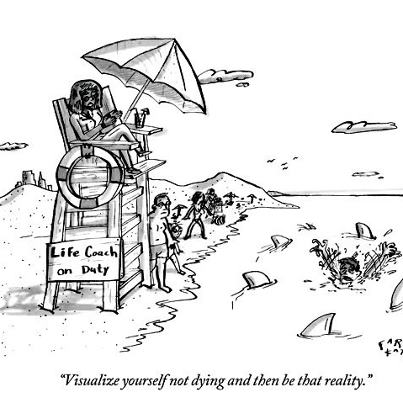
The claims of radical food purists, promoters of natural healing, medical skeptics and conspiracy theorists carry a high cost. For an articulate delineation of some major varieties of this sort of hogwash, take a look at “‘What’s The Harm’: The Body Count of Pseudoscience” at The Skeptical Libertarian blog:

The answer is that the cost of misinformation is too large to ignore. It is real. It is devastating. It is counted in billions of dollars wasted on junk cures, in billions spent on treating preventable diseases. It is measured in lifetimes shortened, bodies crippled, eyes blinded, and children lost.

The costs of medical conspiracy theories and baseless fear-mongering are immense and ghastly. Millions upon millions of people are hurt and killed because [of] them every year. It is a veritable holocaust of ignorance. But it is a holocaust that is still happening, year after year, extinguishing countless of lives that could have been saved by good science, free markets, and sound policy.

The bogus scientific claims are often simply examples of the precautionary principle gone berserk. Medical and biotechnology that has been proven safe and effective is rejected at the urging of activists whose goals are political, or snake oil salesmen whose goals are pecuniary, while innocents are put at risk. The author(s) of the post linked above cover several areas of pseudoscience worthy of condemnation. Read the whole thing, as they say.

One special topic mentioned in the post is scaremongering related to GMOs, which have demonstrated potential to enhance agricultural productivity and nutrition. That such anti-GMO nonsense can gain any traction with the public and policymakers is a tribute to effective promotion of bad science disguised as legitimate research. The Farmer’s Daughter USA blog has a couple of recent posts on GMO safety worth reading: “Just Ignore Those 2,000+ Studies Showing GMOs are Safe!” and “1 Trillion Meals Later: The GMO Safety Debate Is Over“. From the latter:

Anti-GMO activists always refer to “scientific” studies done on animals eating genetically modified food with horrid results as proof that biotech isn’t safe. Yet, we have never encountered similar side effects or results in animal agriculture. Unlike the claims of tumors in rats, inflamed pig stomachs, or infertile sheep, animal agriculture has not encountered these problems while feeding their animals GMO feed.

Never.

Enabling Disparate Impact Seekers

Tags

, , , , , ,

State Gobbles Man

The cause of racial unity is not well-served by abusive application of the “disparate impact” doctrine. A dispute has reached the U.S. Supreme Court over tax credits for Section 8 (low income) housing in the Dallas area, which are dispensed by the Texas Department of Housing. The Inclusive Community Project (ICP) alleges that too many permits are issued in low-income areas, leading to segregation of minorities. Of course, housing prices may limit the feasibility of Section 8 housing in higher-income communities, so the result is a natural consequence of reasonable decision-making. The case is of  broad importance, however, as discussed in this IBD opinion.

Established business and social practices based on sound principles may have, as a by-product, a disproportionate or disparate impact on disadvantaged minorities. For example, if a minority population has less savings, on average, than non-minorities, they will tend to require higher loan-to-value ratios when applying to lenders for similar mortgage amounts. They are therefore more likely to have their applications declined or priced less favorably. This obviously differs from outright discrimination against the minority, and it should not rise to a cause of action against a lender who merely attempts to protect investors from excessive risk or to comply with regulations against excessive risk-taking. From the IBD opinion piece:

‘The risk of disparate-impact lawsuits, in the absence of guidance from the court, pressures the residential mortgage lending industry to arrive at particular outcomes and end numbers to avoid such lawsuits,’ the American Bankers Association wrote the high bench in a joint amicus brief. …

Such pressure can force lenders to water down underwriting standards and take on more risk, since ‘down-payment requirements, debt-to-income requirements, loan-to-value requirements, and other neutral, risk-based underwriting requirements can all affect various racial and ethnic groups differently,’ ABA added.

Policy goals should be at least compatible. Whether or not the plight of disadvantaged populations justifies some form of redistributive “justice,” there is no reasonable excuse for undermining prudent business practices that are otherwise free of any intent to discriminate against minorities. And in any case, a less efficient economy diminishes society’s capacity to redress such ills. Indeed, it’s more likely to aggravate them and allow disharmony to fester.

Truthy’s In The Eye of The Beholder

Tags

, , , , , , , , ,

Snoop on Civil Libs

Over the top: The federal government, through the NSF, is funding the development of a tool  to “mitigate the diffusion of false and misleading ideas, detect hate speech and subversive propaganda, and assist in the preservation of open debate.” Oh really? Should anyone find this reassuring? FCC Commissioner Ajit Pai condemns this initiative in the Washington Post. The project’s name is “Truthy,” a term credited to Steven Colbert, who otherwise seems to have nothing to do with it. Pai sums up the project nicely:

Hmm. A government-funded initiative is going to ‘assist in the preservation of open debate’ by monitoring social media for ‘subversive propaganda’ and combating what it considers to be ‘the diffusion of false and misleading ideas’? The concept seems to have come straight out of a George Orwell novel.

The NSF has already poured nearly $1 million into Truthy. To what end? Why is the federal government spending so much money on the study of your Twitter habits?

Some possible hints as to Truthy’s real motives emerge in a 2012 paper by the project’s leaders, in which they wrote ominously of a ‘highly-active, densely-interconnected constituency of right-leaning users using [Twitter] to further their political views.’

Does anyone of good faith on the Left actually think this is a good idea? And make no mistake: technology of this sort can be reversed. If anyone on the Left thinks it’s a good idea, are they willing to live with the consequences if things don’t go their way, say, if their avowed enemies take power? Have some more Pai:

To those who wish to shape the nation’s political dialogue, social media is dangerous. No longer can a cadre of elite gatekeepers pick and choose the ideas to which Americans will be exposed. But today’s democratization of political speech is a good thing. It brings into the arena countless Americans whose voices previously might have received inadequate or slanted exposure.

The federal government has no business spending your hard-earned money on a project to monitor political speech on Twitter. How should it instead have reacted when funding for Truthy was proposed? The proper response wouldn’t have required anywhere near 140 characters. It could have been, and should have been, #absolutelynot.

“Credit” On Nanny’s Terms

Tags

, , , , , , ,

dentures_on_lay_away

Senator Elizabeth Warren would have you believe that buying on layaway is a wonderful deal. In “Layaway: Live After Death” in The Freeman, the authors discuss the horrible economics of layaway, Warren’s predilection for the practice, and the reason why it has risen from the dead.

First, the economics: these programs allow consumers to defer possession but “keep the dream alive” for a limited time, for a small down payment, which might be forfeited if the balance isn’t paid by the deadline. What a deal!

In a sense, customers do not actually need Walmart to offer a layaway program; they can simply start saving the money themselves. Layaway essentially offers Walmart an interest-free loan. Put another way, while credit cards allow consumers to enjoy their goods today and pay later, layaway reverses this transaction by allowing Walmart to enjoy the customer’s money today and pay back the customer in the form of goods later. Layaway thus represents a shift in credit away from consumers and toward corporations. So much for consumer protection!

But will supplies last? Usually they do. What if the availability of a “hot new item” is limited? That’s when the availability of credit can be extremely valuable. It’s up to the consumer as to whether the cost of buying the product on credit is worthwhile, but immediate possession is certainly of value. Ah, but statists like Warren want to intrude, er… help, so Congress passed the Dodd-Frank Act. It established the Consumer Financial Protection Bureau’s (CFPB) to regulate the financial industry, and in so doing, the agency has succeeded in limiting the availability of many forms of credit, especially to potential borrowers who pose high risks. The increasing availability of layaway programs is an attempt to fill the breach, though their similarity to real credit is slight. Or perhaps “slight of hand” is a better description.

Fostering Dependency: The Candyman’s Conundrum

Tags

, , , , ,

extend unemp benefits

I’ve been taken to task before for asserting that extended unemployment benefits aggravated the increase in the jobless rate during the so-called “Great Recession.” New research finds that those extensions actually were a primary contributor to the increase. Richard Rahn describes a new study that draws this conclusion by economists at the Federal Reserve Bank of New York. From Rahn:

The irony here is that President Obama and the congressional Democrats kept voting to extend the unemployment benefits, which had the effect of keeping unemployment far higher for a much longer time than if they had not done so. …

The money to pay the unemployment benefits had to come from higher taxes on the employed; greater borrowing, which sucked potentially productive capital out of the economy; or money creation, which undermines the value of money for everyone. All of these are big economic downers. As the Fed researchers explained: ‘Our results lead us to expect that the stimulative effect of higher spending by the unemployed is largely offset by the dramatic negative effect on employment.’

Incentives are powerful. The recession itself was largely induced by government policy — deductible mortgage interest, community lending programs, favorable regulatory rules for bank mortgage assets, subsidized lending through Fannie Mae and Freddie Mac with increasingly risky credit standards — that encouraged over-investment in housing fueled by excessive mortgage debt. Here is a summary of a recent paper showing that “real estate lending booms are chiefly responsible for financial crises and weak recoveries.” But the government’s role in the sluggish recovery goes well beyond that, and the extended jobless benefits are one more example.

Rahn goes on to discuss the myriad ways that government inhibits employment growth; in particular, he emphasizes the continued burgeoning of federal regulation during the Obama administration. The government plays a broadly obstructive role in the process of economic growth and alleviating poverty, as Sacred Cow Chips has emphasized in the past:

More often than not, government policies erect obstacles to employment (e.g., taxes, wage floors, licensure, regulations, mandates, and negative work incentives created by many aid programs). Reversing those entanglements is imperative if we are to foster broad self-sufficiency.

Vibrant Capitalism Promotes Public Health

Tags

, , , , , , , , , , , ,

Africa When it comes to “diseases of poverty,” Bryan Caplan knows that the right prescription has nothing to do with redistribution and everything to do with creating conditions that foster capitalism and economic growth. He marvels at the inattention of populist pundits and politicians to the realities of economic history:

It’s almost like the last two centuries never happened. Quick recap: During the last two hundred years, living standards exploded even though the distribution of income remained quite unequal. How is such a thing possible? Because total production per person drastically increased. During this era, no country escaped dire poverty via redistribution, but many escaped dire poverty via increased production.

I linked to an article yesterday about prerequisites for prosperity in my post entitled “Ending Terror With Economic Empowerment.” The author of that article, Harry Veryser, might just as well have said that those conditions are prerequisites for enhanced public health, since as Caplan notes, economic development and public health are inextricably connected.

Dr. Ron Paul makes this same general point in “Liberty, Not Government, Key To Containing Ebola.” He gives great emphasis to the destructive effect of war on the ability of any country to develop an effective health care system:

It is no coincidence that many of those countries suffering from mass Ebola outbreaks have also suffered from the plagues of dictatorship and war. The devastation wrought by years of war has made it impossible for these countries to develop modern healthcare infrastructure. For example, the 14-year civil war in Liberia left that country with almost no trained doctors. Those who could leave the war-torn country were quick to depart. Sadly, American foreign aid props up dictators and encourages militarism in these countries.

As Paul says, powerful government often inhibits a country’s ability to prosper and improve public health. The ebola epidemic offers a case in point, not simply with respect to controlling the spread of the disease in Western Africa, but in the counterproductive calls for government bans on travel to and from the region. Shikha Dalmia lays out the case against such a ban, which include its questionable efficacy in preventing the disease from traveling, the insurmountable obstacle the ban would present to private relief efforts, and the instability it would create in the region. Dalmia calls out Republicans for their hypocrisy in this regard:

Republicans would do themselves and everyone else a big favor by suspending their calls for a travel ban and sticking to their alleged opposition to heavy-handed government intervention.

Ending Terror With Economic Empowerment

Tags

, , , , , , ,

root evil

Certain institutions are under-appreciated in our society for their ability to foster prosperity. And not just under-appreciated, but often denigrated, attacked and undermined by factions favoring easy economic rents at the expense of others: this is the zero-sum crowd. This list of “10 Prerequisites for Prosperity” is offered by Harry Veryser, and it includes several such important institutions or social arrangements. (He includes a few excellent quotes from the likes of Hayek, Thomas Aquinas and Aristotle.) I find some of the prerequisites on the list to be of greater importance than others. For example, I’m not sure “leisure” deserves a place there, if only because it flows from some of the others. Nevertheless, it is a good list. Several of the pre-conditions have come under great threat in the U.S., and it is no coincidence that these threats have occurred in tandem with our society’s drift toward a collectivist dystopia.

Chronically impoverished societies are prone to instability, violent internal conflict, and even terrorism. Needless to say, these societies usually lack the prerequisites for prosperity enumerated by Veryser. Hernando de Soto writes of how creating such prerequisites can lead to more than a flourishing economy; it can also bring an end to terrorism. He witnessed such a change as a key player in Peru’s successful effort to use economic development to end the threat posed by the Shining Path guerillas in the 1980s and early 1990s. He asserts:

The people of the “Arab street” want to find a place in the modern capitalist economy. But hundreds of millions of them have been unable to do so because of legal constraints to which both local leaders and Western elites are often blind. They have ended up as economic refugees in their own countries. 

To survive, they have cobbled together hundreds of discrete, anarchic arrangements, often called the “informal economy.” Unfortunately, that sector is viewed with contempt by many Arabs and by Western development experts, who prefer well-intended charity projects like providing mosquito nets and nutritional supplements.

de Soto recommends that governments start by allowing entrepreneurs to build capital from the ground up, enabling them to obtain secure title to property, and by eliminating restraints on economic activity imposed by coercive authorities. Liberty can go a long way toward solving the most intractable social problems.

As countries from China to Peru to Botswana have proved in recent years, poor people can adapt quickly when given a framework of modern rules for property and capital. The trick is to start. We must remember that, throughout history, capitalism has been created by those who were once poor.

Due Process Is the Enemy of Racism

Tags

, , , , , , ,

due process casualty

There is nothing racist about upholding the 14th Amendment right to due process under the law. The tragic Michael Brown shooting this summer in Ferguson, Missouri has led to shocking calls for denial of due process to Darren Wilson, the police officer involved. The African-American community in Ferguson may have legitimate grievances with aspects of their local government, including their representation on the local police force. However, the calls for Wilson’s immediate conviction appear to be motivated by simple ignorance of the legal system.

The image above appeared in several publications as the controversy surrounding the shooting escalated. That the mainstream media, or even alternative media outlets, and politicians would make calls for immediate charges against Officer Wilson led some to ask whether due process was a casualty of the Michael Brown shooting:

The idea that you can tell who is innocent and who is guilty by the color of their skin is a notion that was tried out for generations, back in the days of the Jim Crow South. I thought we had finally rejected that kind of legalized lynch law.

As the quote makes clear, due process rights should be respected as a source of protection against racism in law enforcement and the prosecution of crimes. Citizens should also be aware that they have a due process right to record the police; those engaged in acts of protest or civil disobedience would be wise to do so in order to defend themselves against false accusations.

Some would argue, of course, that Michael Brown himself was denied due process in his altercation with Officer Wilson, but that unproven assertion does not trump Wilson’s right to due process. Alan Dershowitz bemoans the lack of video evidence in the Brown shooting, but he staunchly defends Officer Wilson’s due process right. It is too easy to vilify those accused or suspected of the most serious and despicable offenses; that is why due process must be respected, even if the system isn’t free of errors. Of course, even accused murderers and rapists are entitled to due process.

In the end, the verdicts that come out of the system must be respected, or there is no hope of moving closer to perfect justice. Let us hope that is remembered when the grand jury ends its deliberations over whether to charge Darren Wilson in the Brown shooting, no matter the verdict.

Can White Elephants Cheer the Public?

Tags

, , , , , , , , , ,

infrastructure bridge

Has the American public’s sense of progress been diminished by the lack of “big projects” in recent memory? No moon shots or space elevators, no Hoover dams, no ubiquitous high-speed rail? Would these types of massive projects bring with them a new sense of optimism? Virginia Postrel doubts it, quite aside from whether such efforts would be successful in technical or economic terms. In her critique of business icon Peter Theil and science fiction writer Neal Stephenson on this point, Postrel says they confuse satisfaction from an improved quality of life in the mid-twentieth century with optimism about the future impact of iconic public investments in infrastructure and technology:

People believed the future would be better than the present because they believed the present was better than the past. They constantly heard stories — not speculative, futuristic stories but news stories, fashion stories, real-estate stories, medical stories — that reinforced this belief. They remembered epidemics and rejoiced in vaccines and wonder drugs. They looked back on crowded urban walk-ups and appreciated neat suburban homes. They recalled ironing on sweaty summer days and celebrated air conditioning and wash-and-wear fabrics. They marveled at tiny transistor radios and dreamed of going on airplane trips.

Postrel also points out that technology has always provoked some anxiety about the future, just as it does today. In addition, Theil and Stephenson under-appreciate noteworthy projects of the not so distant past, both public and private. That’s not to say that all of those projects were well-executed (the Big Dig?) or economically successful.

Postrel’s argument suggests that the current sense of malaise has more to do with weak economic growth and its causes. She emphasizes an excessive application of the precautionary principle. The growth of the regulatory state and arbitrary, czarist rule-making is an outgrowth of this phenomenon. As I said earlier this week, “Life’s Bleak When Your Goal Is Compliance.” Poor results of most public initiatives (e.g., public education, student loans, the war on poverty) do nothing to inspire confidence, with an increasing proportion of the population dependent on public support. Meanwhile, rewards seem to flow to well-connected cronies, a result that seems assured when resources are allocated to big public projects. There is a growing sense that not much can be accomplished without privilege or luck.

Above all, let’s hope we never take to evaluating massive projects based on their potential to foster a renewed sense of public optimism.

Mortgage Mania at the Fed

Tags

, , , , , , , , ,

bernanke-fed-qe

The Federal Reserve has no business distorting incentives by dabbling with billions in markets for private debt. Kudos to two officials at the Richmond Fed for making this point forcefully in the Wall Street Journal** today.

Normally, the Fed conducts monetary policy by buying or selling Treasury debt, which is thought to be neutral with respect to relative private interest rates. In other words, the Fed’s impact on the Treasury market, whatever that might be, does not encourage investment in housing at the expense of factory investment or vice versa. Since 2009, however, the Fed has attempted to support the housing and mortgage markets via massive purchases  of mortgage securities originally issued by Fannie Mae and Freddie Mac. This has the effect of reducing mortgage interest rates relative to rates on other kinds of private debt. It also constitutes a form of bailout for mortgage investors, who tend to receive favorable bids from the Fed for these assets. Free money! And more free money is dolled out by the Fed when it pays banks interest on the new reserve balances these transactions ultimately create.

One might object that the struggling mortgage market needed the Fed’s support in the wake of the housing crash. I do not accept that view because the mortgage and housing markets needed to unwind their excesses and monetary stimulus did not require mortgage purchases. But this also begs the question: what gave rise to the crisis? Over-investment in housing and a home price bubble fueled by tax-deductible interest, easy Fed monetary policy, regulatory capital standards that favored mortgage lending, prospective bailouts in case of failure, and loose bank credit standards. Those should all sound familiar. Now, the Fed believes it’s necessary to re-inflate the mortgage market via continuing asset purchases.

The Fed’s policies can be criticized on other grounds, but interfering in private debt markets should be avoided. It is an example of industrial policy that is clearly not even part of the Fed’s so-called mandate, and it ultimately means a continuing massive misallocation of resources into housing at the expense of other forms of investment.

** The article at the link should be ungated. If not, try Googling “wsj Fed’s Mortgage Favoritism.”