• About

Sacred Cow Chips

Sacred Cow Chips

Tag Archives: Bill of Rights

Lawyers Sowing Legal Chaos

11 Monday Jul 2022

Posted by Nuetzel in Big Government, Litigation, Living Constitution

≈ Leave a comment

Tags

Activism, Administrative State, Bill of Rights, Homelessness, John O. McGinnis, Legal Formalism, Legal Realism, Leviathan, Living Constitution, Mark Pulliam, Martin v. Boise, Ninth Circuit Court, Originalism, Pro Bono Litigation, Supreme Court, Trial Lawyers, West Virginia v. EPA

It goes without saying that the legal profession played a huge role in the development and growth of the administrative state. I reviewed some history about that growth in my last post, which dealt primarily with the Supreme Court’s recent ruling in West Virginia v. EPA. It’s certainly clear that courtrooms have served as venues for many of the steps in creating the federal Leviathan we know too well today. So has a large representation of attorneys in Congress. Environmental law? Tax law? Antitrust? Labor law? Civil Rights? Bank regulation? The examples and sub-examples are numerous, and while all might have laudable dimensions, there is no question that all present lucrative opportunities for attorneys… and for manipulative abuses. The burgeoning domain of administrative law enforced and adjudicated by federal agencies was itself a by-product of growth in the array of economic and social regulation, and it too was abetted by the legal profession. Moreover, it’s not inaccurate to say that the active rent-seeking efforts of private special interests, which undergird the “demand” for public intervention and regulation, are likely as not to have been spearheaded by corporate legal departments.

Ex post losses of various kinds are effective drivers of public intervention. Obviously, trial attorneys seek redress against various harms to clients who come their way, and they manage to stretch monetary damages to absurd levels. Public intervention, however, often takes the form of ex ante risk avoidance, and attorneys frequently take lead roles in agitating for ever-greater precautions against risk. A key characteristic of these measures is that they tend to be zero- and even negative-sum in nature. That is, in this kind of world, it is not atypical for one person’s gain to be less than another’s loss. This dynamic creates a formidable obstacle to economic growth.

Country Club Subversives

John O. McGinnis puts all this into a tidy nutshell in “Lawyers for Radical Change”:

“Since the birth of the modern regulatory state, lawyers are no longer primarily the allies of commercial classes, as they were in the early republic, but instead the technocrats and enablers of regulation and redistribution. The more the nation intervenes in economic affairs to regulate and redistribute, the greater slice of compliance costs and transfer payments lawyers can expect to receive. Thus, they cannot be counted on as supporters of property rights or even of a stable rule of law. Their interest lies frequently in dynamic forms of legal transformation and the uncertainty they bring. Far from supporting a sound, established social order, they are likely to seek to undermine it.”

McGinnis highlights the legal profession’s remarkable transition from once-active guardians of personal liberty, property rights, and the rule of law to active agitators for a nation grounded in non-productive rent seeking. The populist penchant for “do-something-ism” in response to every perceived risk, injustice, or grievance plays right into their skill set. And there are vast opportunities for attorneys in regulatory and fiscal matters. Compliance and legal work-arounds are enormously profitable to attorneys, to say nothing of the many forms of litigation. In all cases, one might say, “follow the fees”.

This is not exclusively a pecuniary matter, however. It’s also one of raw political ambition and status. A spectacular and perverse phenomenon has been the legal profession’s agitation for dismantling the rule of law, denying certain rights enumerated in the Constitution (e.g., free speech, gun rights) and insisting upon the enforcement of imagined rights through novel interpretations of the Bill of Rights and its amendments (e.g, guaranteed income, “equity”), even so-called rights and demands involving demonstrable harm to others (reparations, no bail laws, abortion).

Here’s McGinnis on the legal profession’s nearly complete sellout of the original text of the Constitution:

“Under living constitutionalism, lawyers and judges are not simply servants of the law but potentially tribunes of the people, because they can choose to create new rights and discard others. In a legal world without the formal anchoring in text and precedents that characterized the lawyer’s craft of the past, innovation and, indeed, radicalism are prized as sources of power.”

Legal “Realism”

There are other dimensions to the aberrant drift in the interests of the mainstream legal profession. Over 20 years ago, Mark Pulliam discussed some of these issues in “The Lawyer’s War on Law”. In that article, he decried so-called “legal realism”, which elevates prevailing attitudes about social policy and justice over legal formalism and originalism. This philosophy is used to justify what amounts to predation among trial lawyers seeking to smear the defense, especially those who suffer from unpopularity among current elites or the media. Gone is the idea of fighting for what is right under the law; instead the goal is to “win at all costs”. Here is Pulliam on this phenomenon:

“… lawsuits succeed without credible proof of injury or causation–‘junk science’ experts, paid by the hour, provide whatever pretext a jury requires–because of a combination of judge-made liability rules that tilt the playing field in favor of plaintiffs’ gripes, trial judges determined to redistribute wealth, and the brute force of endless dishonest lawsuits that seek unlimited, bankruptcy-threatening damages. Many businesses, having lost faith in courts’ ability or willingness to make rational rulings, routinely pay the equivalent of ransom just to escape the system. Most ominously, the trial lawyers have recently joined forces with state and local governments to loot unpopular industries for political purposes. Litigation is no longer just a way to bilk opponents; it is a political weapon.”

The legal realist school of thought is used as a ready excuse for nearly any form of judicial activism, including nullification of controlling statutes in election procedures, allowing lawyers and judges to run elections.

Pro Bono Subversion

More recently, Pulliam provided another example of a perverse activity sponsored by the legal profession, and in particular large law firms. In “Lawyers Cause Homelessness”, he discusses pro bono litigation and its paradoxical harms. Of course, pro bono work sounds so very good and generous. And, in fact, it can be very nice, as when attorneys offer free legal advice to those who cannot otherwise afford it. However, it is not uncommon to see these efforts used in the service of political activism. Pulliam contends that prestigious law firms use pro bono litigation as an inducement to attract young associates, fresh out of law school and full of the social justice blather taught there. How exciting to be offered a position at an elite firm with the opportunity to work on activist causes!

The case used by Pulliam to illustrate this dynamic is Martin v. Boise, decided by the Ninth Circuit Court in 2018, which he describes thusly:

“Martin v. Boise … declared unconstitutional—as ‘cruel and unusual punishment,’ of all things—any city ordinances that prohibit homeless people from sleeping or camping overnight on public property (such as parks, sidewalks, and, in California, beaches) unless the jurisdiction provides enough shelter beds to house every single ‘person experiencing homelessness,’ a burden no city will ever be able to meet. …

With a wave of the activist wand, the Ninth Circuit relieved vagrants of any responsibility to provide their own shelter. Society has this duty, and it must accept the consequences of its failure to provide cradle-to-grave care, no matter how improvident the lifestyle decisions of individual actors. In one fell swoop, in the absence of any relevant Supreme Court precedent, three unelected judges on the Ninth Circuit rendered more than 1,600 municipalities within the court’s jurisdiction powerless to curb urban homeless encampments.”

According to Pulliam, the Washington DC law firm Latham and Watkins dedicated more than 7,000 hours of attorney time to the case:

“Latham … publicly bragged about its ‘major Ninth Circuit victory’ and was honored for it by the Legal Services Corporation’s Board of Directors with a Pro Bono Service Award.”

This is a stark illustration of the depths of activism to which the legal profession has descended. And the case is hardly unique, as Pulliam goes on to illustrate. Despite the literal meaning of the term pro bono, this kind of activity is anything but for “the public good”.

Conclusion

Who really benefits from the kind of legalistic mayhem we see today? The written words of the Constitution are now said to mean things that are often diametrically opposed to the framers’ intent. The federal government absorbs ever greater shares of the nation’s resources. Private parties use federal power to petition for rents that could never have been gained in private markets. Laws are made by federal agencies who, in turn, internally adjudicate disputes between those very agencies and private parties. Litigation runs rampant in search of deep pockets. And elite law firms are somehow deemed praiseworthy for working to undermine safety, cleanliness, property rights, and the enumerated rights guaranteed under the Constitution.

Who benefits? Perhaps most of all it is the attorneys! The more chaotic, the better! Then again, if you’re at risk of legal trouble, you better damn well consult an attorney. We can’t seem to live without lawyers, but sadly, we can’t live free with them.
Dobbs, Roe, and the Freakout Over Federalism

25 Wednesday May 2022

Posted by Nuetzel in Abortion, Federalism, Uncategorized

≈ Leave a comment

Tags

Abortion, Adoption, Akhil Amar, Artificial Womb, Bill of Rights, Birth Control, CDC, Classism, Court Leak, dependency, Disparate impact, Dobbs v. Jackson Women’s Health Organization, Due Process Clause, Emergency Contraception, Equal Protection Clause, Establishment Clause, Eugene Volokh, Eugenics, Federalism, Fetal Homicide Laws, Fetal Rights, Fetal Viability, First Amendment, Fourteenth Amendment, Great Society, Josh Blackman, Judicial Activism, Later-Term Abortion, Margaret Sanger, Morning After Pill, Personhood, Planned Parenthood v. Casey, Privacy Rights, Pro-Life, racism, Roe v. Wade, Ruth Bader Ginsburg, Samuel Alito, Supreme Court, War Drugs, World Health Organization

The leak of a Supreme Court draft opinion in Dobbs v. Jackson Women’s Health Organization has created uproars on several fronts. The opinion, written by Justice Samuel Alito, represented a 5-4 majority at the time of its writing, but it is a draft opinion, and the substance and the positions of other justices might change before a final decision is handed down by the Court by the end of June. The draft would essentially uphold a Mississippi law restricting abortions after the first 15 weeks of pregnancy. This would overturn the Roe v. Wade (1973) and Planned Parenthood v. Casey (1992) decisions. The former established that states could regulate abortion only beyond a certain stage of pregnancy (originally the first trimester), while the latter allowed states to regulate once a pregnancy reached the stage of fetal viability. While 24 weeks is often cited as the lower limit of viability, it is considered to be as early as 20 weeks by the World Health Organization, an estimate that could decline with future advances in prenatal and neonatal care (such as artificial wombs). In any case, viability would no longer be the standard if the draft opinion stands. Indeed, it would once again be up to states as to how they wish to regulate abortion.

Here is an update on where things stood on May 11th. Reportedly, the 5-4 majority still stood, and no other draft opinions existed in the case at that time. No news since.

Due Process and Privacy Rights

Was Roe v. Wade a good legal decision? Ruth Bader Ginsburg did not hold the opinion in high regard as a matter of the jurisprudence. Apparently, she felt that the Court should have simply struck down the restrictive Texas law in question without imposing a set of rules, which amounted to an aggressive infringement on the legislative function and the evolution of law, and case law, at the state level. Her words were:

“Doctrinal limbs too swiftly shaped, experience teaches, may prove unstable. The most prominent example in recent decades is Roe v. Wade.”

She also felt the Court should not have leaned on the Due Process Clause of Fourteenth Amendment, which prohibits the denial of “life, liberty or property, without due process of law”. And she believed that relying on due process and the privacy rights of a woman and her physician made Roe vulnerable to challenge. She was probably right.

Yale Law School professor Akhil Amar, who is pro-choice, also believes the Roe decision was misguided and calls its reliance on due process “textual gibberish”. The objection to substantive due process is based on the absence of any principle establishing which “rights” not found explicitly in the Bill of Rights are valid, and which are not.

Equal Protection

In fact, Amar defends Justice Alito’s draft opinion and believes, as Ginsberg did, that the Equal Protection Clause of the Fourteenth Amendment is a better defense of abortion rights. The contention is that unless a woman possesses the right to terminate a pregnancy, she is not on an equal footing with similarly situated men in terms of self-determination and life opportunities. Of course, none of this weighs the interests of the unborn child.

Establishment Clause

Josh Blackman has an interesting series of comments about whether the Establishment Clause of the First Amendment may be a valid defense of abortion rights. That seemingly preposterous claim relies on abortion as a right, in some cases, protected by the free exercise of religion. As Blackman sums up in his sixth point:

“… abortion rights groups should be careful what they wish for. If the Court recognizes a Free Exercise right to perform or receive an abortion, then conservatives can cook up even more aggressive religious liberty strategies. I’ll bring the bagels for the next meeting of the Temple of Automatic Weapons.”

Eugene Volokh makes several interesting points on attempts to use the Establishment Clause “to obtain exemptions from generally applicable laws”. A separate, misguided take at the Establishment Clause is that a law must be unconstitutional if it was based on religious beliefs. Volokh handily disposes of that contention here.

Judicially-Prescribed Rights vs. Constitutional Rights

Blackman has written that the Alito draft is a tour de force, addressing many constitutional principles and concerns expressed by other justices. In another post, Blackman explains a very basic rationale for a decision to overturn Roe. It is related to the objections expressed by Ginsberg and Amar, and to the many “lamentations” expressed in the Court’s abortion opinions over the years since Roe. Namely, that rule and establishment of new rights by court decision was not a mechanism intended by the framers of the Constitution, but self-government and federalist principles were:

“It is a mistake to argue that Dobbs extinguishes a right, without also acknowledging that the decision would restore another right. Overruling Roe would extinguish a judicially-created right to abortion, but it would restore a very different right: the right of the people to govern themselves.”

Personhood

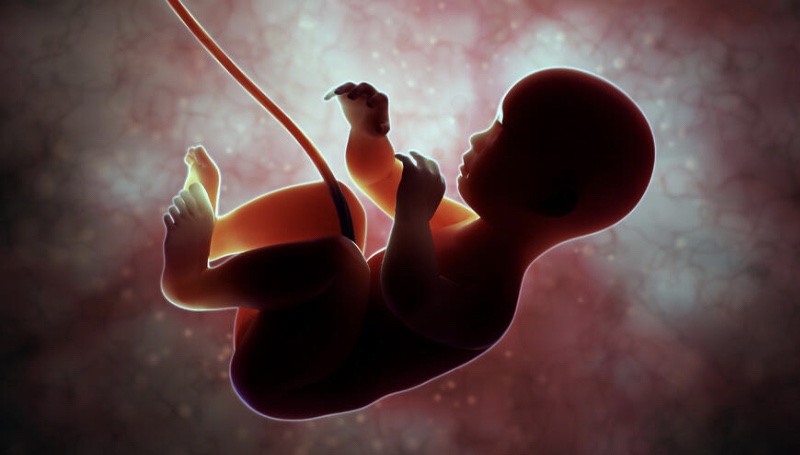
Of course, none of these points are really germane to the crux of the pro-life argument to which I subscribe. However, both Roe and Casey acknowledge the state’s interest in protecting the fetus beyond some point in a pregnancy. The closer to term, the greater the interest. The implication is that a fetus gradually takes on degrees of “personhood” through the course of gestation, and that rights attach to that nascent individual at some point. Both Roe and Casey, by allowing states to regulate abortion beyond some point, offer recognition that the closer an abortion occurs to full term, the stronger the case that it may be prohibited.

The law in most European nations carries the same implication, and if anything leans more heavily in favor of fetal rights than Roe. Furthermore, there are 38 states with fetal homicide laws, which treat the fetus as a person in the case of a murder of a pregnant woman. In 29 of those states, the law applies at the earliest stages of pregnancy. This suggests that in most states, sentiments may weigh in favor of treating the fetus as a person imbued with constitutional rights.

In the end, this is not an exclusively religious argument, as the pro-abortion Left always suggests. For me, it’s purely an ethical one. At what point beyond conception are pro-abortion activists willing to concede that a human life is at stake? Apparently a heartbeat is not enough to convince them. Neither does the appearance of small fingers and toes. Nor the ability to feel pain. These are all things that happen before the child is “viable”. But even viability is not enough for some of the more radical abortion activists, who are proposing choice right up to the moment of birth. Incredibly, and despite the real limitations imposed on mid- or late-term abortions in many states (in line with Roe and Casey), some pro-choice advocates are now acting as if overturning these cases causes women to lose such an unfettered right!

Practical Matters

Anyone can obtain a variety of birth control alternatives without a prescription (and often for free). This includes emergency contraception, or the “morning after pill”. Granted, sometimes birth control measures fail, which places the prospective mother (and perhaps an involved or conscientious father) in a difficult position. Nevertheless, careful use of birth control would minimize the abortion problem and obviate much of the debate, but people are often too impulsive or careless about sex.

Late term abortions are a fairly small percentage of all abortions. The CDC reported that in 2018, 50,000 (~8%) abortions occurred after the first trimester (14+ weeks), and 6,200 (1%) took place at or beyond the point of theoretical viability (21+ weeks). This study found that of abortions at 20+ weeks, mothers tended to be younger (20 -24), discovered their pregnancies somewhat later, faced logistical and financial delays in arranging the abortion, or faced other challenging life circumstances. However, the researchers rebut a common rationale for late-term abortion when they say:

“… most women seeking later terminations are not doing so for reasons of fetal anomaly or life endangerment.”

Eugenics and Classism

Pregnancies among black women are terminated at a disproportionately high rate. That’s consistent with the original, eugenicistic and racist goals of Planned Parenthood founder Margaret Sanger. This is an outcome to top all disparate impacts. I have witnessed pro-abortion activists counter that these aborted lives would have been miserable, impoverished, and without opportunity — essentially not worth living — but these are value judgements of the most monstrous kind. I’ve also heard the pathetic argument that fiscal conservatives should be happy that abortions will reduce spending on aid programs. Of course, the plight of the would-be mother is also emphasized by pro-abortion advocates, but we should not be so eager to accept the tradeoff here: abortion gets the mother is off the hook, but a child’s life is at stake. No matter the odds of success, human beings are all endowed with potential and opportunity, and it’s not necessary to be economically secure to be happy or pursue dreams.

It’s easy to be pessimistic that public policy can ever mitigate the economic burden on impoverished women who bring unexpected or unwanted pregnancies to term, or to brighten the economic future of their children. After all, over the decades since the Great Society program was conceived, the welfare state has proven no better than a dependency treadmill. Family structure has been decimated by those programs and the destructive consequences of the failed (but ongoing) war on drugs. Likewise, public education is a disaster. However, there are also alternatives such as adoption, and there are many private individuals and organizations working to encourage prospective mothers and ease those burdens.

The Leak

The leak of the draft opinion in Dobbs is unfortunate as it compromises the ongoing integrity of the Court’s internal debates and proceedings. In addition to this institutional damage, the impropriety of staging protests outside the homes of justices and inside places of worship should be roundly condemned by people with respect for judicial integrity, privacy and free exercise. These protests are partly attempts to intimidate, and they have even been accompanied by threats of violence. The belligerent posture of these activists is unconscionable.

Long Live Federalism

Again, the Court’s final decision in Dobbs might not be the opinion in the leaked draft. However, if the Court does indeed overturn Roe, it would not outlaw abortion. Rather, it would allow voters in each state to have a voice in aligning the law with public sentiment. Some states will have more restrictive abortion laws than others, but even the Mississippi law at issue in Dobbs allows abortion up through week 15, almost two weeks longer than the original Roe limitation.

The country is still deeply divided on the issue of abortion. Fundamentally, a broader acceptance of the life-and-death reality of abortion would help bring more consensus on the issue. One theory I have is that many who oppose overturning Roe would simply rather not think about that reality. In their minds, Roe keeps abortion compartmentalized, safely walled off from conscience and sometimes even spiritual convictions. They rationalize Roe based on their inability to observe the person whose life is at stake, and they accept justifications that minimize the value of that life.

A single rule imposed by the Court has not and will not resolve these differences. Indeed, Roe and Casey were failed acts of judicial activism that should be reversed. While bad legislation is regrettable, it is always subject to review and challenge by the people. In a federalist system, a bad law is contained like a single experimental treatment in a large trial with multiple arms. However, in this case, unlike a trial with random selection of subjects, one treatment group may differ from others in important respects, and the objective is not to identify one single-best solution, but different solutions that work best for different groups. That is a closer approximation to real self-government than federal legislation and especially one-size-fits-all Court rule-making.

Lockdowns Subvert Public Health and Life Itself

15 Thursday Oct 2020

Posted by Nuetzel in Coronavirus, Lockdowns, Public Health, Uncategorized

≈ 1 Comment

Tags

Bill of Rights, CDC, City Journal, Coronavirus, Covid-19, David Miles, Deaths of Despair, dependency, Dr. David Nabarro, Excess Deaths, Flatten the Curve, Great Barrington Declaration, John Tierney, Lockdown Deaths, Lockdowns, Ninth Amendment, Oxfam International, Pandemic, Quality Adjusted Life Years, School Closures, Suicide, The Ethical Skeptic, The Lancet, WHO, World Health Organization

Acceptance of risk is a necessary part of a good life, and extreme efforts to avoid it are your own business. Government has no power to guarantee absolute safety, nor should we presume to have such a right. Ongoing COVID lockdowns are an implicit assertion of exactly that kind of government power, despite the impotence of those efforts, and they constitute a rejection of more fundamental rights.

Lockdowns have had destructive effects on health and economic well being while conferring little if any benefit in mitigating harm from the virus. The lockdowns were originally sold as a way to “flatten the curve”, that is, to avoid a spike in cases and an overburdened health care system. However, this arguably well-qualified rationale later expanded in scope to encompass the mitigation of smaller and much less deadly outbreaks among younger cohorts, and then to the very idea of extinguishing the virus altogether. It’s become painfully obvious that such measures are not capable of achieving those goals.

In the U.S., the ongoing lockdowns have been a cause célèbre largely on the interventionist Left, and they have been prolonged mainly by Democrats at various levels of government. In a way, this is not unlike many other policies championed by the Left, often ostensibly designed to help members of the underclasses: instead, those policies often destroy or wrongly obviate incentives and promote dependency on the state. In this case, the plunge into dependency is a reality the Left would very much like to ignore, or to blame on someone else. You know who.

The lockdowns have been largely unsuccessful in mitigating the spread of the virus. At the same time, they have been used as a pretext to deny constitutional rights such as the free practice of religion, assembly, and a broad range of unenumerated rights under the “penumbra” of the Bill of Rights and the Ninth Amendment. What’s more, the severity of the economic blow caused by lockdowns has been borne disproportionately by the working poor and the small businesses who employ so many of them.

Lockdowns are deadly. It’s not clear that they’ve saved any lives, but they have massively disrupted the operation of the health care system with major consequences for those with chronic and undiagnosed conditions. The lockdowns have also led to spikes in mental health issues, alcoholism, drug abuse, and deaths of despair. A recent study found that over 26% of the excess deaths during the pandemic were non-COVID deaths. Those deaths were avoidable or accelerated, whereas the lockdowns have failed to meaningfully curtail COVID deaths. Don’t tell me about reduced traffic fatalities: that reduction is relatively small relative to the increase in non-COVID excess deaths (see below).

What proof do we have that lockdowns cause excess deaths? See this study in The Lancet on cancer deaths due to lockdown-induced delays in diagnoses. See this study on UK school closures. See this Oxfam International report on lockdown-induced starvation. Other reports from the UK suggests that lockdown deaths are widespread, having taken nearly 2,800 per week early in the pandemic, and many other deaths yet to occur have been made inevitable by lockdowns. Doctors in the U.S. have warned that lockdowns are a “mass casualty incident”, and a German government study warned of the same.

The Ethical Skeptic (TES) on Twitter has been tracking a measure of lockdown deaths for some time now. The following graphic provides a breakdown of excess non-COVID deaths since the start of the pandemic. The total “pie” shows almost 320,000 excess deaths through September 26th (avoiding less complete counts in recent weeks), as reported by the CDC. COVID accounted for 202,000 of those deaths, based on state-level reporting. Of the remaining 117,000 excess deaths, TES uses CDC data to allocate roughly 85,000 to various causes, the largest (more than half) being “Suicide, Addiction, Abandonment, and Abuse”. Other large categories include Cardio/Diabetes, Stroke, premature Alzheimers/Dementia death, and Cancer Access. Nearly 32,000 excess deaths remain as a “backlog”, not yet reported with a cause by states.

Also of interest in the graphic are estimates of life-years lost. The vast bulk of COVID victims are elderly, of course, which means that any estimate of lost years per victim must be relatively low. On the other hand, most non-COVID, lockdown-related deaths are among younger victims, with correspondingly greater life-years lost. TES’s aggregate estimate is that lockdown-related excess deaths involve double the life-years lost of COVID deaths. Of course, that is an estimate, but even granting some latitude for error, the reality is horrifying!

John Tierney in City Journal cites several recent studies concluding that lockdowns have been largely ineffective in Europe and in the U.S. While Tierney doesn’t rule out the possibility that lockdowns have produced some benefits, they have carried excessive costs and risks to public health going forward, such as lingering issues for those having deferred important health care decisions as well as disruption in future economic prospects. Ultimately, lockdowns don’t accomplish anything:

“While the economic and social costs have been enormous, it’s not clear that the lockdowns have brought significant health benefits beyond what was achieved by people’s voluntary social distancing and other actions.”

Tierney also discusses the costs and benefits of lockdowns in terms of life years: quality-adjusted life-years (QALY), which is a widely-used measure for evaluating of the use of health care resources:

“By the QALY measure, the lockdowns must be the most costly—and cost-ineffective—medical intervention in history because most of the beneficiaries are so near the end of life. Covid-19 disproportionately affects people over 65, who have accounted for nearly 80 percent of the deaths in the United States. The vast majority suffered from other ailments, and more than 40 percent of the victims were living in nursing homes, where the median life expectancy after admission is just five months. In Britain, a study led by the Imperial College economist David Miles concluded that even if you gave the lockdown full credit for averting the most unrealistic worst-case scenario (the projection of 500,000 British deaths, more than ten times the current toll), it would still flunk even the most lenient QALY cost-benefit test.”

We can now count the World Health Organization among the detractors of lockdowns. According to WHO’s Dr. David Nabarro:

“Lockdowns just have one consequence that you must never ever belittle, and that is making poor people an awful lot poorer…. Look what’s happened to smallholder farmers all over the world. … Look what’s happening to poverty levels. It seems that we may well have a doubling of world poverty by next year. We may well have at least a doubling of child malnutrition.”

In another condemnation of the public health consequences of lockdowns, number of distinguished epidemiologists have signed off on a statement known as The Great Barrington Declaration. The declaration advocates a focused approach of protecting the most vulnerable from the virus, while allowing those at low risk to proceed with their lives in whatever way they deem acceptable. Those at low risk of severe disease can acquire immunity, which ultimately inures to the benefit of the most vulnerable. With few, brief, and local exceptions, this is how we have always dealt with pandemics in the past. That’s real life!

Follow Sacred Cow Chips on WordPress.com

Recent Posts

  • Immigration and Merit As Fiscal Propositions
  • Tariff “Dividend” From An Indigent State
  • Almost Looks Like the Fed Has a 3% Inflation Target
  • Government Malpractice Breeds Health Care Havoc
  • A Tax On Imports Takes a Toll on Exports

Archives

  • December 2025
  • November 2025
  • October 2025
  • September 2025
  • August 2025
  • July 2025
  • June 2025
  • May 2025
  • April 2025
  • March 2025
  • February 2025
  • January 2025
  • December 2024
  • November 2024
  • October 2024
  • September 2024
  • August 2024
  • July 2024
  • June 2024
  • May 2024
  • April 2024
  • March 2024
  • February 2024
  • January 2024
  • December 2023
  • November 2023
  • August 2023
  • July 2023
  • June 2023
  • May 2023
  • April 2023
  • March 2023
  • February 2023
  • January 2023
  • December 2022
  • November 2022
  • October 2022
  • September 2022
  • August 2022
  • July 2022
  • June 2022
  • May 2022
  • April 2022
  • March 2022
  • February 2022
  • January 2022
  • December 2021
  • November 2021
  • October 2021
  • September 2021
  • August 2021
  • July 2021
  • June 2021
  • May 2021
  • April 2021
  • March 2021
  • February 2021
  • January 2021
  • December 2020
  • November 2020
  • October 2020
  • September 2020
  • August 2020
  • July 2020
  • June 2020
  • May 2020
  • April 2020
  • March 2020
  • February 2020
  • January 2020
  • December 2019
  • November 2019
  • October 2019
  • September 2019
  • August 2019
  • July 2019
  • June 2019
  • May 2019
  • April 2019
  • March 2019
  • February 2019
  • January 2019
  • December 2018
  • November 2018
  • October 2018
  • September 2018
  • August 2018
  • July 2018
  • June 2018
  • May 2018
  • April 2018
  • March 2018
  • February 2018
  • January 2018
  • December 2017
  • November 2017
  • October 2017
  • September 2017
  • August 2017
  • July 2017
  • June 2017
  • May 2017
  • April 2017
  • March 2017
  • February 2017
  • January 2017
  • December 2016
  • November 2016
  • October 2016
  • September 2016
  • August 2016
  • July 2016
  • June 2016
  • May 2016
  • April 2016
  • March 2016
  • February 2016
  • January 2016
  • December 2015
  • November 2015
  • October 2015
  • September 2015
  • August 2015
  • July 2015
  • June 2015
  • May 2015
  • April 2015
  • March 2015
  • February 2015
  • January 2015
  • December 2014
  • November 2014
  • October 2014
  • September 2014
  • August 2014
  • July 2014
  • June 2014
  • May 2014
  • April 2014
  • March 2014

Blogs I Follow

  • Passive Income Kickstart
  • OnlyFinance.net
  • TLC Cholesterol
  • Nintil
  • kendunning.net
  • DCWhispers.com
  • Hoong-Wai in the UK
  • Marginal REVOLUTION
  • Stlouis
  • Watts Up With That?
  • Aussie Nationalist Blog
  • American Elephants
  • The View from Alexandria
  • The Gymnasium
  • A Force for Good
  • Notes On Liberty
  • troymo
  • SUNDAY BLOG Stephanie Sievers
  • Miss Lou Acquiring Lore
  • Your Well Wisher Program
  • Objectivism In Depth
  • RobotEnomics
  • Orderstatistic
  • Paradigm Library
  • Scattered Showers and Quicksand

Blog at WordPress.com.

Passive Income Kickstart

OnlyFinance.net

TLC Cholesterol

Nintil

To estimate, compare, distinguish, discuss, and trace to its principal sources everything

kendunning.net

The Future is Ours to Create

DCWhispers.com

Hoong-Wai in the UK

A Commonwealth immigrant's perspective on the UK's public arena.

Marginal REVOLUTION

Small Steps Toward A Much Better World

Stlouis

Watts Up With That?

The world's most viewed site on global warming and climate change

Aussie Nationalist Blog

Commentary from a Paleoconservative and Nationalist perspective

American Elephants

Defending Life, Liberty and the Pursuit of Happiness

The View from Alexandria

In advanced civilizations the period loosely called Alexandrian is usually associated with flexible morals, perfunctory religion, populist standards and cosmopolitan tastes, feminism, exotic cults, and the rapid turnover of high and low fads---in short, a falling away (which is all that decadence means) from the strictness of traditional rules, embodied in character and inforced from within. -- Jacques Barzun

The Gymnasium

A place for reason, politics, economics, and faith steeped in the classical liberal tradition

A Force for Good

How economics, morality, and markets combine

Notes On Liberty

Spontaneous thoughts on a humble creed

troymo

SUNDAY BLOG Stephanie Sievers

Escaping the everyday life with photographs from my travels

Miss Lou Acquiring Lore

Gallery of Life...

Your Well Wisher Program

Attempt to solve commonly known problems…

Objectivism In Depth

Exploring Ayn Rand's revolutionary philosophy.

RobotEnomics

(A)n (I)ntelligent Future

Orderstatistic

Economics, chess and anything else on my mind.

Paradigm Library

OODA Looping

Scattered Showers and Quicksand

Musings on science, investing, finance, economics, politics, and probably fly fishing.

  • Subscribe Subscribed
    • Sacred Cow Chips
    • Join 128 other subscribers
    • Already have a WordPress.com account? Log in now.
    • Sacred Cow Chips
    • Subscribe Subscribed
    • Sign up
    • Log in
    • Report this content
    • View site in Reader
    • Manage subscriptions
    • Collapse this bar
 

Loading Comments...